




Abstract
BACKGROUND:
Several revolutions are currently taking place in the healthcare industry to provide accurate, reliable, and valid healthcare to patients. Among these is artificial intelligence (AI).
OBJECTIVE
: This study aimed to assess the CP’s awareness, perceptions, and opinions of AI in health care among community pharmacists.
METHODS:
This cross-sectional survey-based study was conducted over 3 months in 2023 using structured prevalidated 34 items questionnaires.
RESULTS:
In this study, 94.5% (
CONCLUSION:
This study concluded that most of the CPs were aware of AI and agreed that AI is a tool that helps healthcare professionals. In addition, the majority of the CPs thought that AI adoption in healthcare practice will benefit healthcare practitioners.
Introduction
Several revolutions are currently taking place in the healthcare industry to provide accurate, reliable, and valid healthcare to patients [1, 2]. Among these is artificial intelligence (AI) [1, 2]. AI facilitates access to information for healthcare professionals such as pharmacists and physicians, as well as access to healthcare for patients, while reducing medication errors [2]. AI is defined as a computer-based technology or robotic system that can carry out tasks that would typically need human cognition [3]. Its applications in the field of health care could range from scientific research to decision-based health chores, among others [2, 3]. Robotics in the pharmacy helps with prescription filling and barcode-based medicine dispensing, and there is evidence that they minimize error rates, speed up prescription filling, and ensure that prescriptions are accurate [3].
Pharmacists are front-line healthcare professionals available to patients and customers, without prior appointment during their working hours [4, 5]. The role of a pharmacist in symptom monitoring, adherence tracking, or even delivery of therapy itself [6]. Furthermore, pharmacists play an integral role in leveraging technologies to improve patient experiences and outcomes. AI has grown in popularity both in the pharmacy and medical industries [6, 7]. Every pharmacist has a responsibility to provide pharmaceutical care, which lowers medication-related morbidity, mortality, and clinical outcomes while also enhancing the quality of life and reducing medical expenses. Furthermore, a success full pharmaceutical care is achieved by the collaboration of the patient – pharmacist relationships and delivery of adequate health care, errors, free prescribing, and reaching the medication promptly to the patients, which can be further possible by using advanced tools and computers such as robots in health care [6, 7].
The literature claims that pharmacists have employed AI in pharmacy settings to deliver data-driven therapies using Clinical Decision Support Systems (CDSS). With the use of this technology, pharmacists may sift through data and take action to avoid pharmaceutical mistakes, reduce patient difficulties, and lower expenses [8, 9]. For instance, earlier research discovered that the use of CDSS decreased the frequency of improper medicine use among elderly patients as well as drug-drug interactions (DDIs) [10]. Another recent study in Saudi Arabia that evaluated robotic pharmacy implementation and outcomes found that there was a decrease in patient wait times and an increase in overall patient satisfaction with pharmacy services [11]. In addition, the literature also revealed that there was no dispensing error rate in the pharmacy setting [11].
The Kingdom of Saudi Arabia has long been actively involved in pharmacy automation. The first robot-operated smart pharmacy in Saudi Arabia opened its doors in the Tabuk region in July 2018 [12]. This smart pharmacy assists to distribute up to 1,500 packages of medication an hour without any complications [12]. The robotic pharmacy can also process 240 prescriptions every hour, reject out-of-date medications, and store over 20,000 packages of medicine [12]. Six pharmacies are currently operating in Saudi Arabia, one of which specializes in treating people with strong will [12]. Studies on pharmacy automation often present an optimistic view of robotics, with the caveat that the original pack dispensing via robotic picking can be expected to deliver larger results in terms of dispensing speed than can unit-dose dispensing [11, 13].
Many factors influence the future use of AI by CPs, including the availability of trained CPs and its implementation in pharmacy outlets. Although CPs will need to be trained in the usage of AI, applications for dispensing in pharmacy, and healthcare organizations will need to invest in the development and implementation of AI systems in pharmacy outlets across the country. Furthermore, the successful integration of AI into a pharmacy will be dependent on the availability of data as well as the creation of ethical and regulatory frameworks to govern its usage. As the AI revolution continues, concerns have been expressed regarding its potential impact on pharmacy practice and healthcare results. Our study will investigate these concerns by assessing CPs’ awareness and understanding of the usage of AI in the pharmacy context. [11, 13]. Therefore, CPs’ knowledge, awareness, and perception of AI are essential. Hence, this study aimed to assess the CP’s awareness, perceptions, and opinions of AI.
Material and methods
Design, setting, and population
A cross-sectional study was carried out between March 1
Flow chart of the study.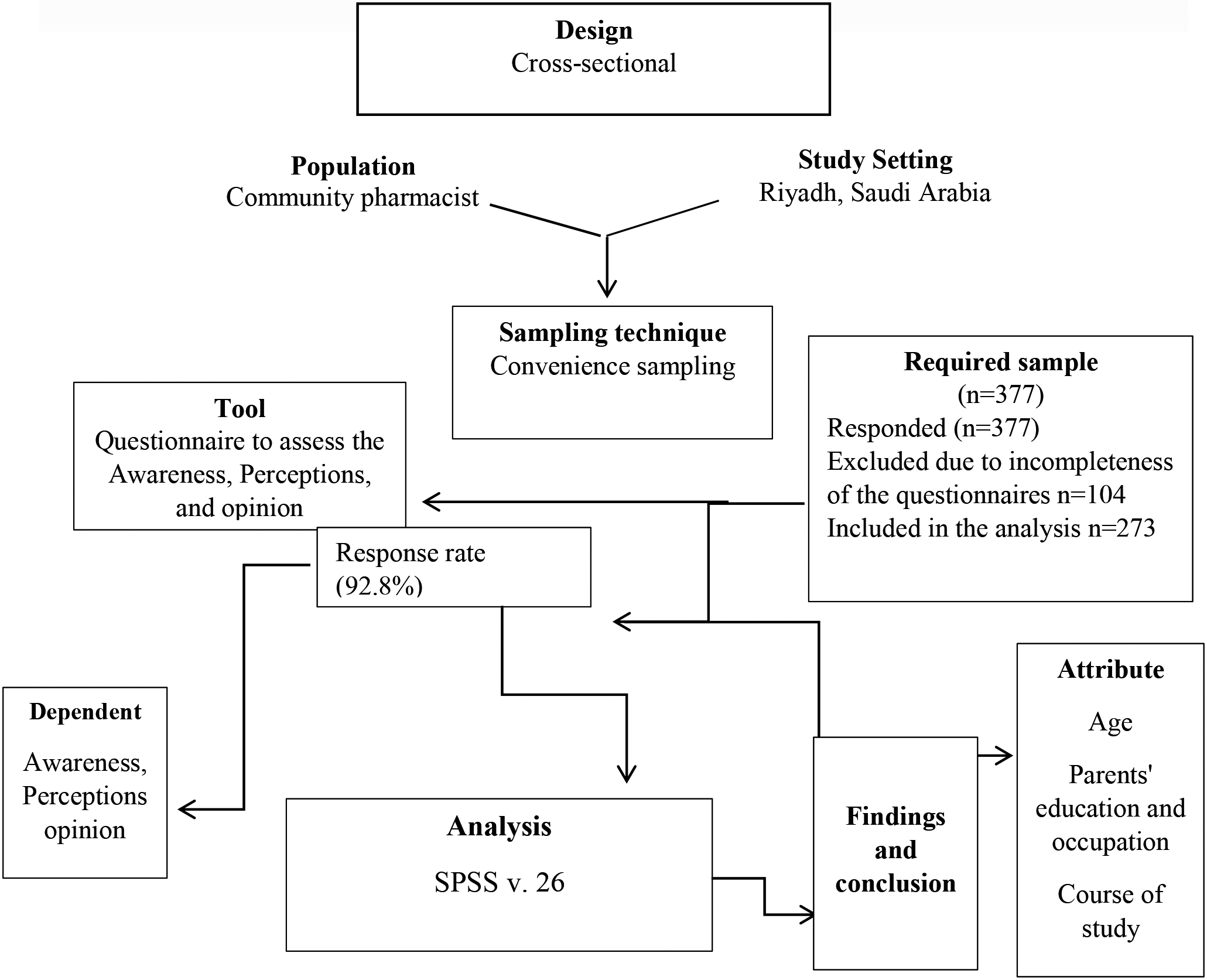
The required sample size was calculated using the Raosoft sample size calculator (
Study tool and data collection
The questionnaire used for this study was adopted from previous studies and composed of 3 main sections with a total of 34 items [2]. Section one was composed of demographic details of the CPs and formed the first section of the questionnaire, comprised of a total of 7 multiple-choice questions relating to age, gender, nationality, current practice site, and the highest level of education. The second section of the study was composed of 4 statements in which CPs were asked about the awareness of AI and the effects of AI on job status, opinion on AI, and education about AI. All these items were measured and collected their answers. The third section consisted of 12 items that reflected the CP’s perception of AI in health care. The participants were asked to rate their level of agreement with these statements on a Likert scale ranging from agree to strongly disagree (1–5). The last section of the study composed of 9 items, collected CP’s opinions about the inclusion of AI in the curriculum, measured on a 3-point scale.
The initial draft of the questionnaire was subjected to content validity and face validity by the experts in the field (independent researchers and primary investigator) before the questionnaire was subjected to data collection. Furthermore, a pilot study was conducted among randomly selected CPs to check the understanding, clarity, and time taken to complete the study. The reliability of the questionnaires was checked using Cronbach’s
A convenient sampling strategy was used to recruit CPs. CPs were approached via social media (WhatsApp) for data collection. The information was gathered via a computerized questionnaire created on Google Forms. The form was created with an invitation letter at the beginning of the questionnaire and was distributed to the CPs via WhatsApp. Although studies in Saudi Arabia found that WhatsApp
Data analysis
The data were analyzed using SPSS (Statistical Package for the Social Sciences; version 26 for Windows; SPSS Inc., Chicago, IL, USA). Descriptive statistics like frequency (n) and percentages (%) were used to describe the demographic variables. A Chi square
Results
A total of 273 community pharmacists (CPs) took part in this research. Among the whole sample, 91.9% were male, 8.1% (
Demographics characters of the CPs
Demographics characters of the CPs
In this study, 94.5% (
Awareness of the CPs toward AI
According to the current study findings, 24.17 % (
Frequencies of Perceptions of the CPs pharmacist towards AI
Concerning the inclusion of various courses about AI in the pharmacy curriculum, the majority 77.7%(
Opinions of pharmacists about AI in the academic curriculum
Figure 2 depicts CPs’ perceptions of AI based on their academic qualifications. The four colors show the levels of agreement with the phrase “AI reduces errors in practice” among CPs. From left to right, the bar depicts CPs with Master, PharmD, bachelor’s, and diploma in pharmacy qualifications. A Chi-square test for the relationship between academic qualification and agreement level yielded a p-value of 0.004, with a bachelor’s in pharmacy qualification more likely to agree with the statement.
The Association between Academic qualification and the Perceptions towards AI (AI reduces errors in practice).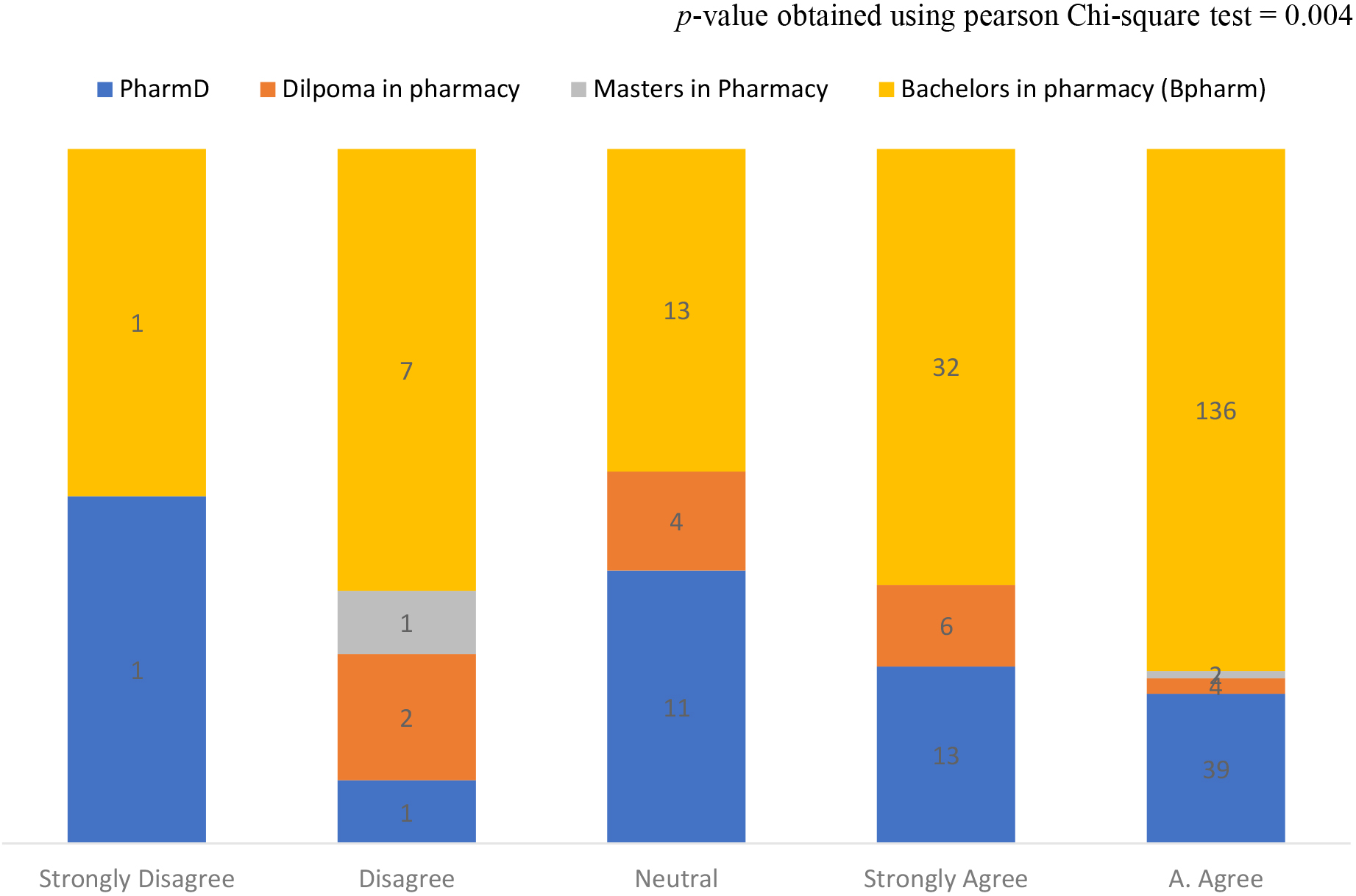
Figure 3 depicts CPs’ perceptions of AI based on their academic qualifications. The four colors show the degrees of agreement with the phrase “Artificial intelligence (AI) facilitates healthcare professionals’ access to information” among CPs. A Chi-square test for the relationship between academic qualification and agreement level yielded a
The association between academic qualification and the perceptions towards AI (AI facilitates healthcare professionals’ access to information).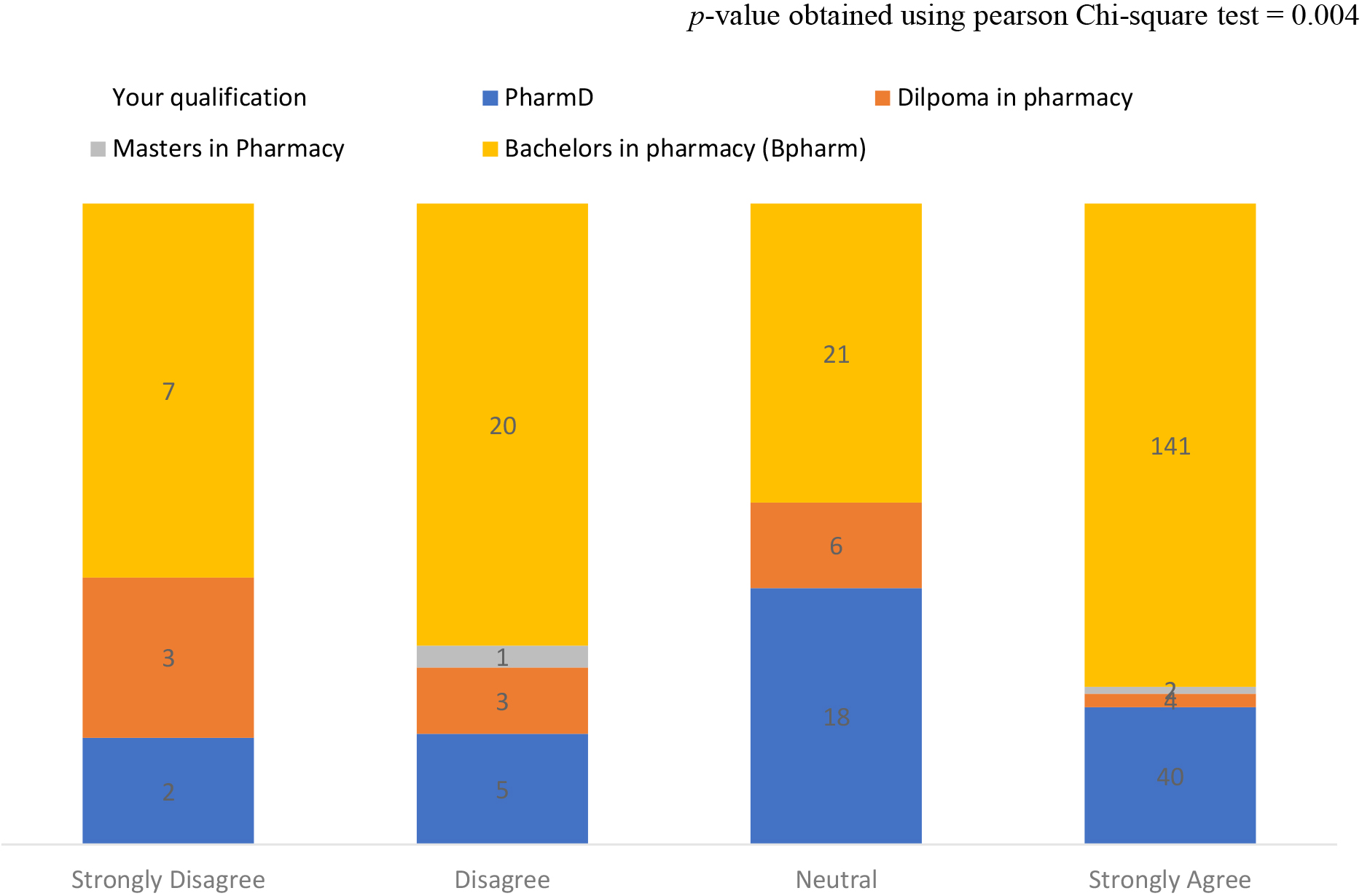
Figure 4 depicts CPs’ perceptions of AI based on their academic qualifications. The four colors show the levels of agreement with the phrase “AI enables healthcare professionals to make more accurate decisions” among CPs. The bar displays CPs with Master, PharmD, bachelor’s, and diploma in pharmacy degrees. A Chi-square test for the relationship between academic qualification and agreement level yielded a
The Association between Academic qualification and the Perceptions towards AI (AI enables healthcare professionals to make more accurate decisions).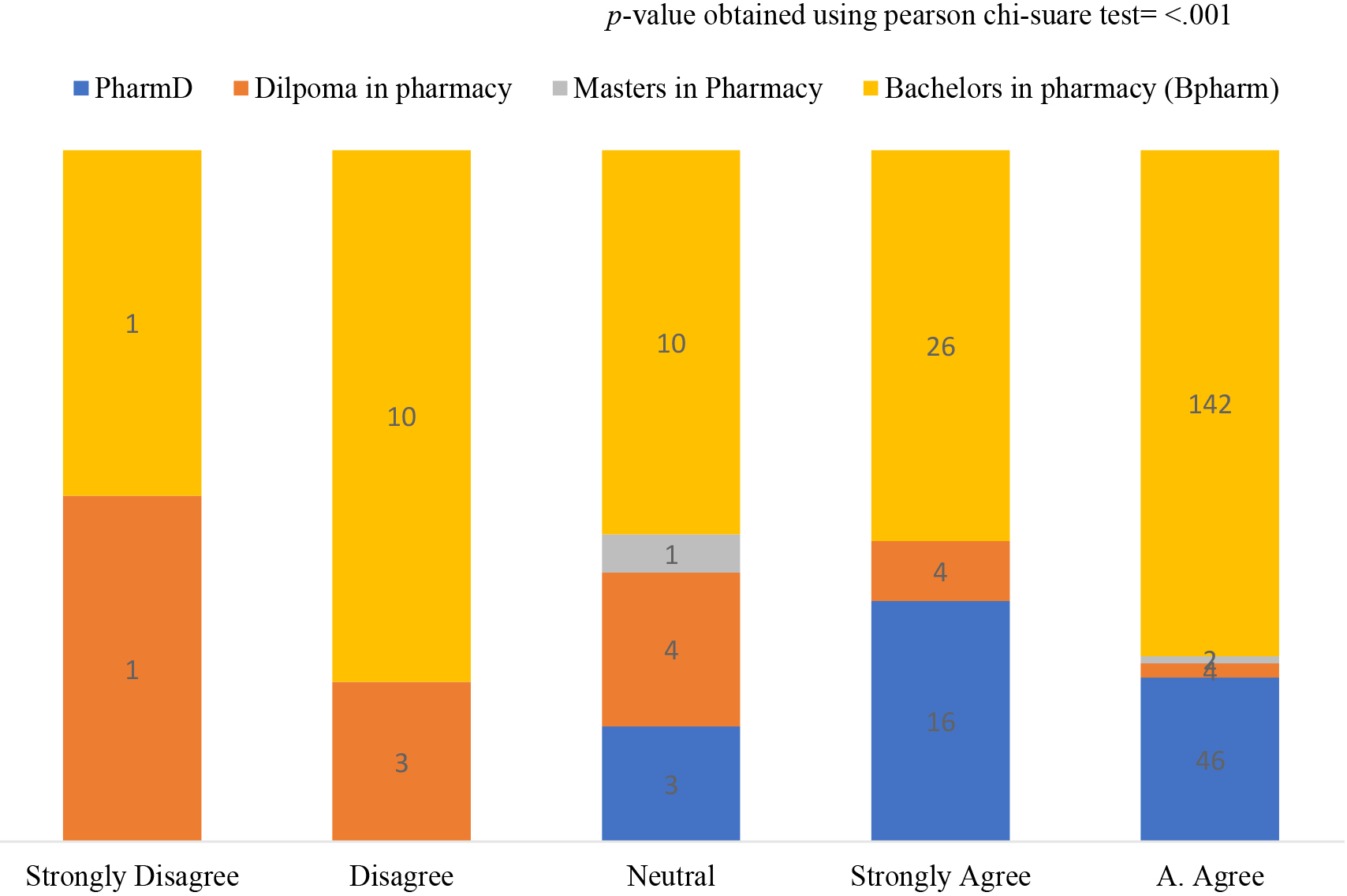
To the best of our knowledge, this is the first study in Saudi Arabia that analyzed the awareness and views of AI among community pharmacies in the Riyadh region. There have been no studies in Saudi Arabia that evaluated the various features of AI using CPs. Although not much literature on AI in health care has been recognized internationally, some literature exists among students and other health care professionals [15, 16, 17, 18, 19] about AI use in medical devices, diagnostic medical imaging, data modeling, and cardiovascular health [20, 21, 22, 23]. This study would significantly advance healthcare, particularly in pharmacy outlets in community settings for the timely and safe distribution of medications to patients and individuals in Saudi Arabia and other nations, and it would act as a guide for further, required research. The results may be used by healthcare and educational institutions to develop pertinent course initiatives that will increase pharmacists’ and other healthcare professionals’ understanding of and respect for AI.
The current findings revealed that 95.4% of the CPs were aware of AI, the majority of the CPs reported that AI is a tool that helps healthcare professionals, and only 25.6% of the CPs agreed that AI might replace the healthcare force (pharmacists and physicians) in health care settings. Similar findings were reported in other countries. For instance, a recent study among practicing physicians and undergraduates reported that 70% of the respondents knew about AI and 23.7% of participants know about its application in the medical field [18]. Similarly, another recent study by Abdullah and Fakieh assessed Health Care Employees’ perceptions towards AI and reported that 74% of them were found to have good knowledge of AI, while 78% of them perceived that AI could replace humans and results in termination from their jobs [16]. In contrast, 11% of the CPs in the current study believed that AI lessens the humanistic component of the medical profession. These results were nevertheless superior to earlier research conducted among medical students by Jha et al., who found that 49% of participants strongly agreed that AI is reducing the number of employment available for healthcare professionals [15]. Similar results were found in recent research of medical students and doctors, which found that 25.5% of doctors and 23.4% of medical students agreed that AI might eventually replace human healthcare workers [17]. Even though another recent study revealed that more than 50% of participants were concerned about a potential decline in the services of healthcare staff [2]. These findings suggested that participants in the current study and previous studies were not fully aware of the benefits of AI, clearly indicating their unpreparedness for AI technology in health care.
CPs generally concur that AI reduces pharmaceutical errors in healthcare. This is in line with the results of a survey of medical professionals and students in a developing nation, which found that implementation of AI will decrease diagnostic errors while 3.2% of medical students and 6.3% of doctors strongly agreed and 27.1% of medical students and 30% of doctors agreed [17]. On the other hand, a recent study of medical students revealed that 70.5% of students agreed that AI reduces drug mistakes [2]. Applying AI algorithms to primary care settings has been demonstrated to reduce unneeded prescription errors, which lowers the need for ER visits, hospital admissions, and mortality [13].
In this study, 68.7% of the CPs agreed that AI improves healthcare professionals’ access to information, and the majority of the CPs (71.1%) agreed that AI allows healthcare professionals to make more accurate decisions, while 67.8% of the CPs agreed that AI boosts patients’ trust in medicine and 63% agreed that AI aids in patient health education. These findings were consistent with previous studies, which demonstrated that AI is an assistive tool that might improve physicians’ access to knowledge (85.8%) and patients’ access to healthcare (76.7%) [2]. Similarly, a recent study conducted among patients and their companions at a German tertiary referral hospital assessed their perceptions of AI and discovered that 53.18% of respondents had positive perceptions of the use of AI in medicine, while only 4.77% had negative perceptions of AI [19].
Qualifications of CPs were shown to be strongly related to perceptions of AI in this study. For example, AI minimizes errors in practice and is significantly associated with CPs with bachelor’s degrees in pharmacy when compared to other qualifications (
There are some limitations to this study. For example, the study was limited to the central region of Saudi Arabia, therefore the findings cannot be applied to the entire Saudi pharmacy workforce working in Saudi Arabia or other countries. The data were obtained utilizing a web-based electronic tool rather than physical or paper-based surveys, which may have resulted in a selection bias that influenced our findings. Third, the nature of the small sample size despite all efforts to include as many CPs as possible. Despite these limitations, our study has some merits. For example, this is the first study in Saudi Arabia among CPs to assess AI awareness and perception. Second, this study analyzes the importance of AI awareness in improving AI use in health care. In addition, there is a dearth of such research in this field, particularly among CPs in this area in Saudi Arabia and other countries. Furthermore, future studies should investigate by involving the entire pharmacist workforce to improve the generalizability of the results.
Conclusion
This study concluded that most of the CPs were aware of AI and agreed that AI is a tool that helps healthcare professionals. In addition, the majority of the CPs thought that AI adoption in healthcare practice will benefit healthcare practitioners. Furthermore, most of the CPs were found to have positive perceptions about AI and its applications in healthcare and were willing to practically adopt it. CPs also suggested that various AI courses be included in the pharmaceutical curriculum. As a result, it is advised that greater education on AI and its application in health care delivery be provided. Policymakers, stakeholders, and researchers should collaborate to introduce AI and its uses. More actions are needed to improve the present dispensing procedures at community pharmacies around the country. Additional research is required to discover more about people’s thoughts and perspectives on the importance of AI in the present world.
Footnotes
Conflict of interest
None to report.
Funding
The authors would like to extend their sincere appreciation to the Researchers Supporting Project (number RSP2024R378) of King Saud University, Riyadh, Saudi Arabia for financially supporting this work.