Abstract

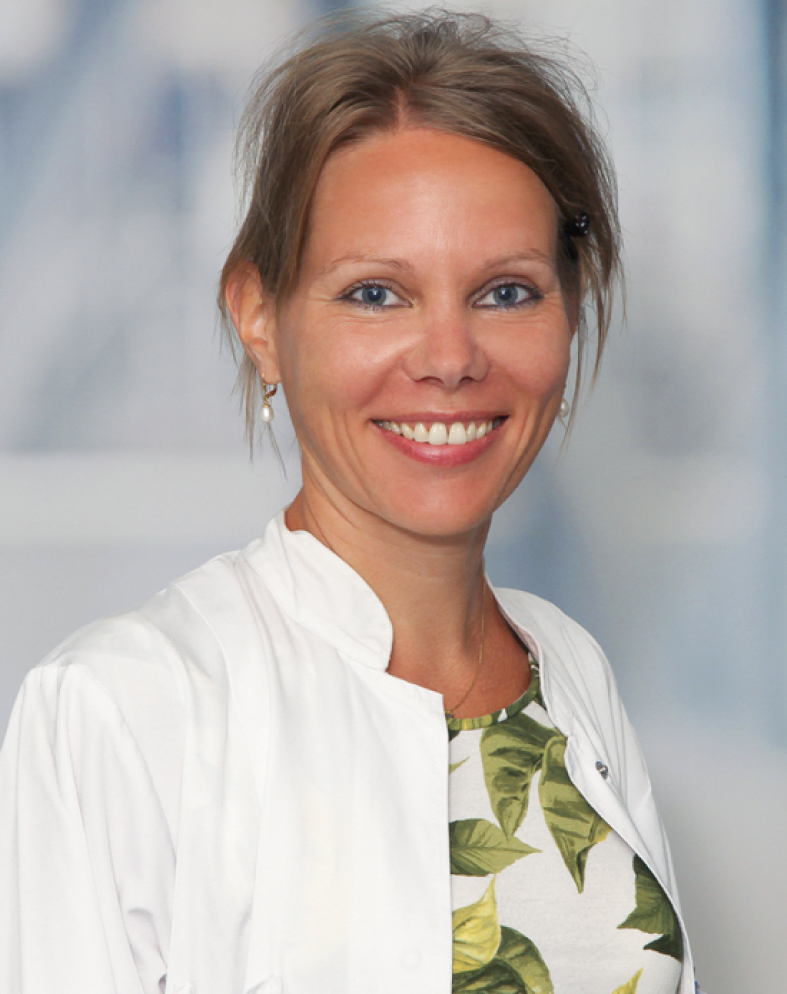
The Journal of Parkinson’s Disease is proud to announce the two articles that have won this year’s Parkinson Prize, recognizing these outstanding contributions to the advancement to Parkinson’s disease (PD) research. Recipients of the award are co-authors Kathrin Brockmann, MD, (Center of Neurology at the University of Tübingen, Germany) and Milan Zimmermann, MD (University Hospital of Tuebingen, Germany) for best
These papers were selected by the Associate Editors of the Journal of Parkinson’s Disease’s from over 220 articles published in the 2022 volume. Awardees will receive a commemorative trophy and a cash award of $1,000 (per article). The Parkinson Prize will continue as an annual award.
“On behalf of the entire editorial board of the Journal of Parkinson’s Disease, we congratulate the authors of the winning papers. We are pleased to have the opportunity to publish these important contributions to the field, and we look forward to more high quality submissions to the Journal of Parkinson’s Disease in the upcoming year,” state Editors-in-Chief Bastiaan Bloem, MD, PhD, FRCPE, and Lorraine Kalia, MD, PhD, FRCPC.
IMPORTANCE OF THE WORKS
The study by Zimmermann and Brockmann builds on findings over the last decade when it became clear that inflammation plays an important role in the pathogenesis of Parkinson’s disease (PD) and has a relevant impact on incidence and phenotypical characteristics. However, the field still faces several open questions in preparation of clinical trials targeting the immune system. Consequently, this study provides a comprehensive overview with focus on inflammatory biofluid markers in serum, plasma and cerebrospinal fluid (CSF) and specifically addresses the following questions: 1. What evidence do we have for pro-inflammatory profiles in blood and in CSF of sporadic and genetic PD patients? 2. Is there a role of anti-inflammatory mediators in blood/CSF? 3. Do inflammatory profiles in blood reflect those in CSF indicative of a cross-talk between periphery and brain? 4. Do blood/CSF inflammatory profiles change over the disease course as assessed in repeatedly taken biosamples? 5. Are blood/CSF inflammatory profiles associated with phenotypical trajectories in PD? 6. Are blood/CSF inflammatory profiles associated with CSF levels of neurodegenerative/PD-specific biomarkers? Thereby, this study should help inform future strategies for patient stratification and cohort enrichment as well as suitable target engagement measures for clinicaltrials.
“This work has only been possible through the dedicated work of all membes of my Research Group and through the tremendous engagement of people with PD over all the years”, commented Dr. Kathrin Brockmann. “It is an honour to receive this award and I would also like to thank the many scientific collaborators as well as the support of the Michael J. Fox Foundation, the Hertie Institute for Clinical Brain Research, and the German Center for Neurodegenerative Diseases (DZNE).”
The clinical study by Roos and co-authors analyzed the prevalence of six non-motor prodromal symptoms of Parkinson’s disease and determined and systematically documented these in the Longitudinal Aging Study Amsterdam (LASA) study. The six symptoms were hyposmia, cognitive impairment, possible RBD, constipation, depression, and anxiety. More than 10% in this late middle-aged population had two or more known Parkinson disease risk factors. These subjects also had reduced physical performance and reported more Parkinson disease symptoms; which suggests that at least some of these subjects may be in the prodromal phase of Parkinson’s disease. Longitudinal follow-up of the study sample is necessary. With the current development of disease-modifying treatment, the need to accurately identify prodromal Parkinson’s disease patients increases. The study contributes to this early recognition using non-invasive tests. The group looks forward to analyze thefollow-up data.
My co-authors and I are very proud to have won this prize. We would like to thank the editorial team at the Journal of Parkinson’s Disease for this honor”, commented Dr. Dareia Roos. “We are very pleased that attention is paid to our study that determines the prevalence of a selection of non-motor symptoms that are known to be associated with an increased risk of developing Parkinson’s disease in a large middle-aged population.”
2022 PARKINSON PRIZE RECIPIENTS