




Abstract
The EI is an important pillar of modern economic development and a key factor in ensuring national strategic energy security. The upgrading of China’s Energy Industry (EI) faces a series of problems and challenges, such as excessive energy production, difficulty in energy technology innovation, and low energy efficiency. The significance of this study lies in its endeavor to tackle these challenges by focusing on several facets, including the promotion of innovation in energy technology and the enhancement of energy management. Utilizing the Kuznets Curve (KC) theory and considering energy export restrictions (ER) as a constraint, the study analyzed the impact of China’s EI upgrading. It analyzed the relationship between changes in indicators such as EI resource utilization rate, degree of ERs, export proportion, and resource allocation proportion of energy enterprises and the impact of China’s EI upgrading. According to the experimental results, it can be concluded that when the resource utilization rate was between 30% and 60%, the energy export volume showed a significant growth trend. As it gradually approached saturation, the contribution of energy production growth began to weaken and showed an inverted U-shape. Examining how the expansion of Economic Relations (ERs) affects the enhancement of China’s Economic Infrastructure (EI) within the framework of the Knowledge Capital (KC) can provide valuable insights. It offers guidance on striking a balance between exports and domestic demand in China’s economic development, facilitating the formulation of export policies, supporting structural adjustments and advancements in China’s EI, and contributing to the promotion of sustainable development (SD). Additionally, this analysis aids in preventing potential issues and safeguarding both the ecological environment and the interests of citizens.
Keywords
Introduction
The KC is usually used to study the economic development stage of a country, in order to obtain the correlation between wealth distribution and income inequality. The analysis of the impact of ERs on China’s EI upgrading based on the KC is a study conducted on the issue of EI upgrading under China’s current ER policies. In the EI, ERs refer to the extent to which the government or other institutions manage and restrict the export volume of energy products from a country. As energy is an important strategic resource for the country, ERs can help regulate and control the use of national energy resources, avoiding waste and loss. At the same time, ERs can promote technological innovation among energy enterprises and guide energy production towards a more efficient, environmentally friendly, and sustainable direction. Therefore, the analysis of the impact of ERs on the upgrading of China’s EI based on the KC can help people understand the impact of ERs on factors such as economic development level, energy production efficiency, market share, etc., and help evaluate whether ERs can promote the upgrading and transformation of the EI, as well as whether they can generate positive economic and social benefits. This article selects the KC model and the impact of ERs on China’s EI as the research objects. The influence mechanism of ERs on EI upgrading is explored, which provides a reference basis for relevant government decisions.
China is one of the world’s major energy consuming countries and also the world’s largest energy producer. Green finance is a mechanism that provides financial support for green projects, promotes technological progress, and promotes green and sustainable economic development. Developing green finance is a strategic measure to promote the upgrading of industrial structure, achieve green development and accelerate the construction of ecological civilization. Based on the data from 2008 to 2010, Lixin Tang empirically tested the relationship between green finance and China’s industrial structure upgrading by using the gray correlation method [1]. China’s CO2 emissions are predicted to peak at 110
The KC indicates that energy consumption follows a certain pattern with the development of the national economy, and the current situation of China’s EI needs to be upgraded to meet the needs of SD. On the eve of energy resource depletion and global warming, Organization for Economic Cooperation and Development (OECD) and other economies have sincerely promoted sustainable energy consumption. This change in mindset is mainly aimed at changing people’s attitudes towards future generations. Hanif Nadia aimed to evaluate the impact of human capital development on renewable and non renewable energy consumption choices. In addition, the interactive effects of technological innovation were deeply explored, proposing an early turning point for the KC of energy and human capital in emerging countries, both OECD and non OECD [4]. Reducing environmental degradation during economic growth has become a crucial policy agenda for governments around the world. Therefore, contemporary growth policies should also be consistent with environmental sustainability goals. In this context, Murshed Muntasir aimed to evaluate the effectiveness of the environmental KC hypothesis [5]. However, they did not conduct empirical analysis on the ERs of the KC.
In order to promote the structural adjustment and industrial upgrading of China’s EI, this article analyzes the impact of ERs on the upgrading of China’s EI based on the KC. It can be concluded that the resource utilization rate and EI show an inverted U-shape. The innovation of this article lies in the widespread use of the KC and its derivative models in economic research, but it has not been widely used in analyzing the development of the EI before. This article combines the two economic concepts of KC and ERs, and through combination analysis, can further explore the impact mechanism of ERs on the upgrading of China’s EI. After analyzing the impact of ERs on the upgrading of China’s EI, this article adopts a series of feasible suggestions aimed at providing guidance for relevant government departments to formulate and implement strategies for the transformation and upgrading of the EI.
ERs on the KC
Kuznets curve
The KC is a type of curve proposed by economists in the 1950s, also known as the inverted U curve or the Kuznets inverted U-shaped curve hypothesis. It indicates the relationship between income distribution inequality and the level of economic development in the process of economic growth. Although the shape of the KC is constrained by the national basic system, it has a certain universality in many countries and regions, that is, there is an inverted U-shaped relationship between economic inequality and economic growth in the process of economic development.
The calculation formula is:
Among them,
The Kuznets ratio is calculated:
The calculation formula can be decomposed into:
Among them,
Economists have proposed the “inverted U” hypothesis when studying the relationship between economic growth and income distribution. With the development of the economy, “creation” and “destruction” not only change the socio-economic structure, but also have a certain impact on income distribution. He compared and analyzed data from several countries and believed that when a country’s economic development level is not high, its income distribution would gradually develop towards inequality with economic development. After this, there would be no significant changes in income distribution after a period of time, and when comprehensive development is achieved, income distribution would tend towards fairness. If the level of economic development (generally per capita output) is taken as the horizontal coordinate, the degree of inequality in income distribution is taken as an inverted U-shape in the vertical coordinate, so it is called the Kuznets “inverted U-shape” hypothesis, or the KC, as shown in Fig. 1.
KC. 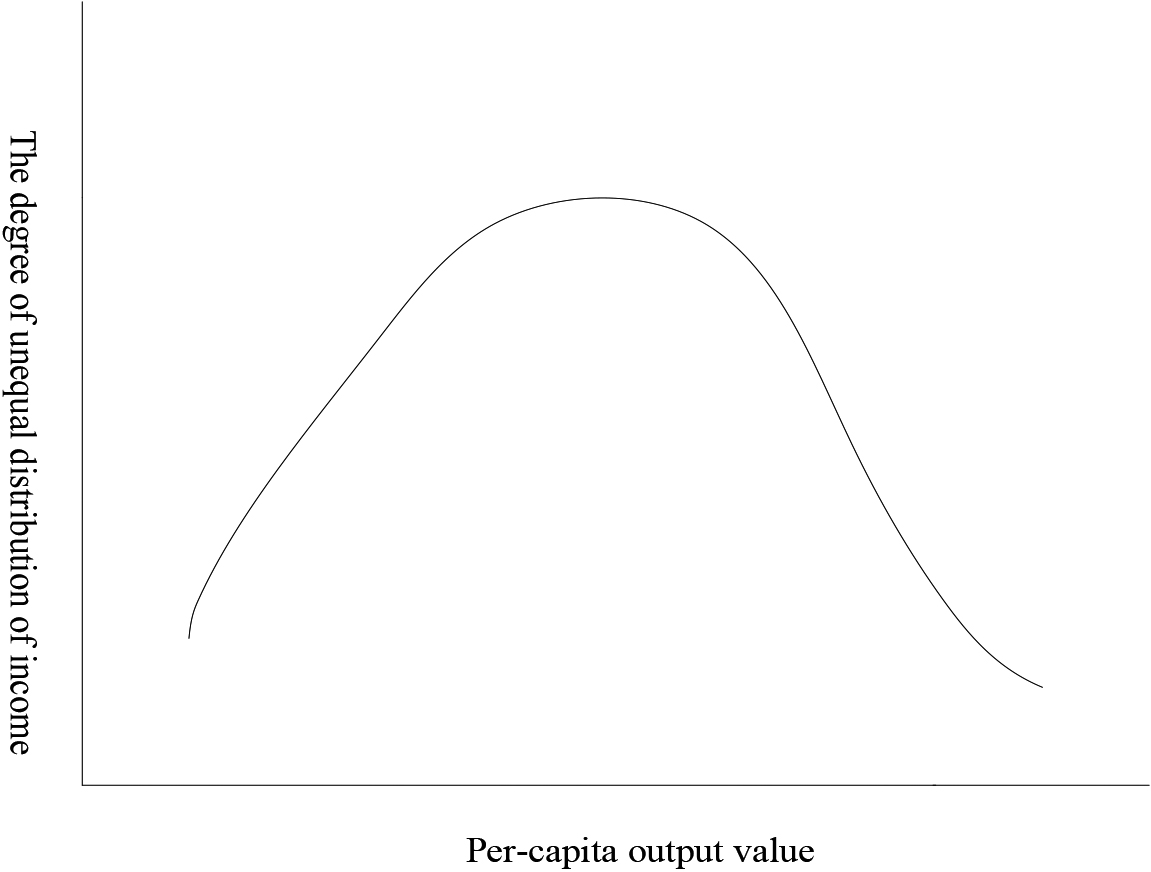
The proportion of the area under the KC to the total area is called the area ratio under the Lorentz curve, and its formula is:
The income inequality index is commonly measured by the Gini coefficient, and its formula is:
Among them:
ERs refer to various measures taken by the government to restrict Chinese enterprises from exporting goods and services to other countries or regions, with the aim of protecting Chinese industries, preventing the outflow of Chinese resources, and controlling the balance of international payments. They may lead to overcapacity, lack of competition and technological progress in the domestic market, as well as trade tensions and economic conflicts with other countries.
The characteristics of ERs mainly include the following:
Guided by “import substitution”: Import substitution policy is a common trade policy aimed at reducing imports, increasing Chinese production, protecting Chinese industries, and enhancing the competitiveness of Chinese manufacturing in the global market. Relatively speaking, ER policy is an opposite policy, with the main purpose of restricting the export of Chinese products, in order to protect the Chinese market and avoid the impact of external competition on Chinese industries. Therefore, when implementing import substitution and ER policies, it is necessary to balance the relationship between protection and openness, while continuously promoting industrial upgrading and trade liberalization to achieve SD of China’s industries.
Multiple means are used interchangeably: in addition to trade barriers, export quotas, export voucher management, export tariffs, and export subsidies, the government can also adopt various means to restrict exports. For example, the government can indirectly limit the export scale by adopting measures such as technical barriers, standardized management, certification and recognition to improve the quality requirements and technical barriers of exported products. It is also possible to protect the intellectual property and brand image of Chinese enterprises by strengthening intellectual property protection and cracking down on counterfeit and inferior goods, thereby reducing the market share of competitors. In addition, the government can also achieve ERs by coordinating China’s external environment. For example, the government can sign bilateral or multilateral agreements such as free trade agreements and investment protection agreements with some international organizations or relevant countries to avoid trade disputes and pressures, and create a more stable and transparent trade environment for Chinese enterprises’ exports.
Impact on economic efficiency: ERs may lead to reduced market competition faced by Chinese enterprises, thereby reducing their production efficiency. They are a protective measure for enterprises, which can effectively protect them from the competitive pressure of foreign enterprises. However, such protection may also cause laziness and low efficiency of enterprises themselves. Therefore, when formulating ER policies, the government should not only protect the interests of Chinese industries, but also improve the competitiveness and innovation capabilities of Chinese enterprises. ERs may reduce the innovation capabilities of Chinese enterprises. Due to ERs, it would reduce the market demand and pressure for Chinese enterprises, thereby reducing their motivation for innovation. Therefore, the government needs to appropriately formulate ER policies to avoid adverse effects on innovation for Chinese enterprises.
Easy to cause trade friction: ERs are a type of protectionist measure that can easily cause trade friction and war in international trade, and affect economic relations between countries.
The relationship between the degree of ERs and energy production efficiency can be obtained through regression analysis. One possible model formula is:
Among them:
Evaluation of the current situation of China’s EI
China is a major consumer of energy resources and has become the world’s largest consumer of oil, natural gas, and coal. Due to its large population base and rapidly developing economic strength, it requires a large amount of energy resources such as coal, oil, and natural gas to support its industrialization and urbanization process. However, there are serious problems in China’s energy structure. China’s energy structure still faces issues such as excessive reliance on fossil fuels, insufficient proportion of clean energy, low energy consumption efficiency, and carbon emissions, mainly manifested as a high proportion of coal, a high dependence on oil and gas, and a low proportion of clean energy. At the same time, there are also some problems in the EI, including outdated production methods, low technological level, and low resource utilization efficiency. The upgrading of the EI refers to promoting SD of the EI by transforming energy production methods, optimizing energy consumption structure, and improving energy resource utilization efficiency. The driving forces for the upgrading of the EI mainly include multiple aspects such as national energy security needs, environmental protection, and the transformation of energy consumption structure. The necessity of upgrading the EI lies in accelerating the transformation and upgrading of China’s EI, improving energy utilization efficiency and reducing energy consumption, while also promoting sustainable economic development.
Motivation and necessity of upgrading the EI
The upgrading of the EI is an important measure to promote sustainable energy development, and its motives and necessity mainly include the following aspects:
The shortage of energy resources and environmental pollution are becoming increasingly severe. The demand for energy has sharply increased, and the corresponding pressure on energy resource supply is constantly increasing. At the same time, the problem of environmental pollution is becoming increasingly serious. These issues force people to upgrade the EI, improve resource utilization efficiency, and reduce environmental pollution.
The adjustment and transformation of energy structure are necessary conditions for achieving national strategic goals, because it can promote sustainable economic development, reduce pollution emissions, improve energy efficiency, and enhance China’s influence in global economic and environmental affairs. China has formulated a series of energy development strategic goals, including reducing fossil energy consumption. These goals need to be achieved through the upgrading of the EI.
Energy technology is becoming increasingly mature and international competition is intensifying. With the continuous progress and maturity of global energy technology, China is facing increasingly fierce international competition pressure in the field of energy technology. The upgrading of the EI is one of the important means for China to maintain competitiveness in the international market.
Problems and challenges faced by China’s EI upgrading
In the process of promoting the upgrading of the EI, China still faces a series of problems and challenges, mainly manifested in the following aspects:
Resource constraints and environmental pressures are constantly increasing. China’s energy structure is too single and highly dependent. With economic development and population growth, the contradiction between supply and demand of energy resources intensifies, and environmental pollution continues to worsen, increasing the difficulty of upgrading the EI.
Technological innovation and transformation are difficult. The EI is a technology intensive industry, and industrial upgrading needs to be promoted through technological innovation. China still has shortcomings in energy technology. In addition, the characteristics of long cycle, high risk, and high investment in the energy field make technological innovation and transformation more difficult.
Insufficient policy and financial support: The current upgrading of the EI still requires strong government support, but the government’s financial support in promoting industrial upgrading is relatively insufficient, and policy measures and implementation efforts also need to be further strengthened.
The industry management and regulatory system is not perfect enough. At present, China’s EI still faces the problem of imperfect management and regulatory systems, low level of industry governance and marketization, and some illegal operations and behaviors, which restrict the smooth implementation of EI upgrading.
Resolving these issues and challenges would be the key to promoting the upgrading of the EI, requiring the joint efforts of the government and all sectors of society.
Correlation evaluation between the KC and energy exports
In the EI, the KC is also widely used. China’s EI has achieved rapid development through exports, but it is also constrained by ERs. Therefore, this article would analyze the correlation between the KC and energy exports.
The impact of ERs on the upgrading of China’s EI depends not only on the degree and form of ERs, but also on the characteristics and current situation of China’s EI [6, 7]. Specifically, the impact of ERs on the upgrading of China’s EI can be analyzed from the following aspects:
ERs have a direct impact on the economic benefits and market position of Chinese energy enterprises. Especially for enterprises with higher export ratios, the impact is more significant [8, 9]. ERs have constrained the technological innovation and progress of Chinese energy enterprises, thereby reducing the competitiveness and innovation capability of the entire industry [10, 11]. They would also lead to utilitarianism market behavior, further exacerbating the difficulties of technological innovation and industrial upgrading. In response to these issues, corresponding policies and measures need to be continuously explored and improved in practice to achieve SD of China’s EI upgrading [12, 13].
This article analyzes Chinese energy enterprises and examines the relationship between changes in indicators such as resource utilization rate, ERs, export ratio, and resource allocation ratio of energy enterprises and the impact of China’s EI upgrading. The experimental results are shown below.
This article selects different levels of EI resource utilization, such as 30%, 40%, 50%, 60%, 70%, 80%, 90%, and 100%, and records the corresponding energy exports, keeping other conditions unchanged. The energy consumption and per capita GDP (Gross Domestic Product) levels at each level are recorded. The experimental results are shown in Fig. 2.
The relationship between resource utilization efficiency and energy exports in the EI.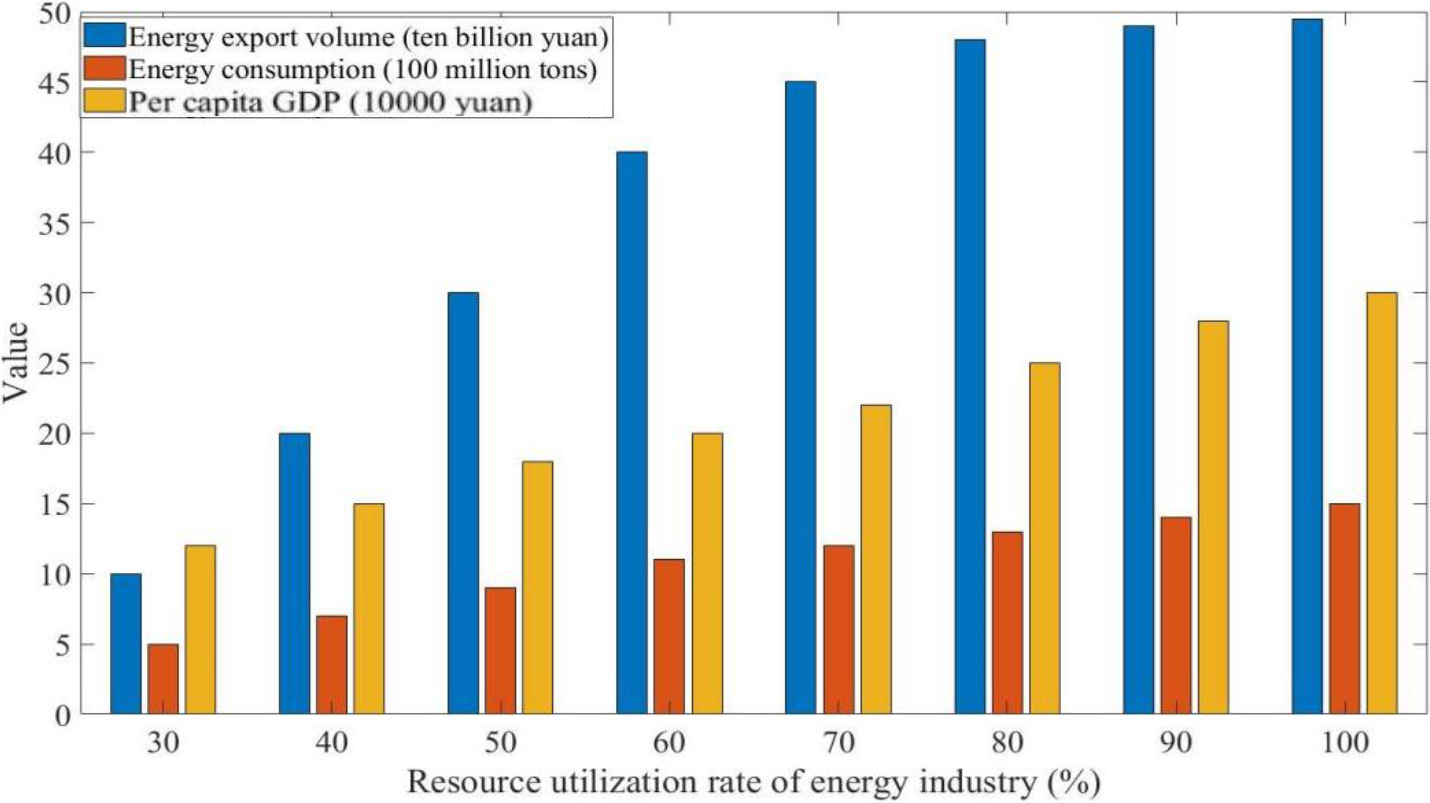
According to the theory of the KC, when the resource utilization rate was at a low level, the contribution of energy exports to the growth of energy production was significant. From Fig. 2, it can be seen that when the resource utilization rate was between 30% and 60%, the energy export volume showed a significant growth trend. However, as the resource utilization rate gradually approached saturation, the contribution of energy exports to energy production growth began to weaken.
This article selected different levels of ERs, such as 0%, 10%, 20%, 30%, and 40%, and recorded the corresponding changes in the profit space of energy enterprises. Similarly, keeping other conditions unchanged, the energy consumption and per capita GDP level at each level were recorded. The experimental results are shown in Fig. 3.
The relationship between the degree of ERs and the profit margin of energy enterprises.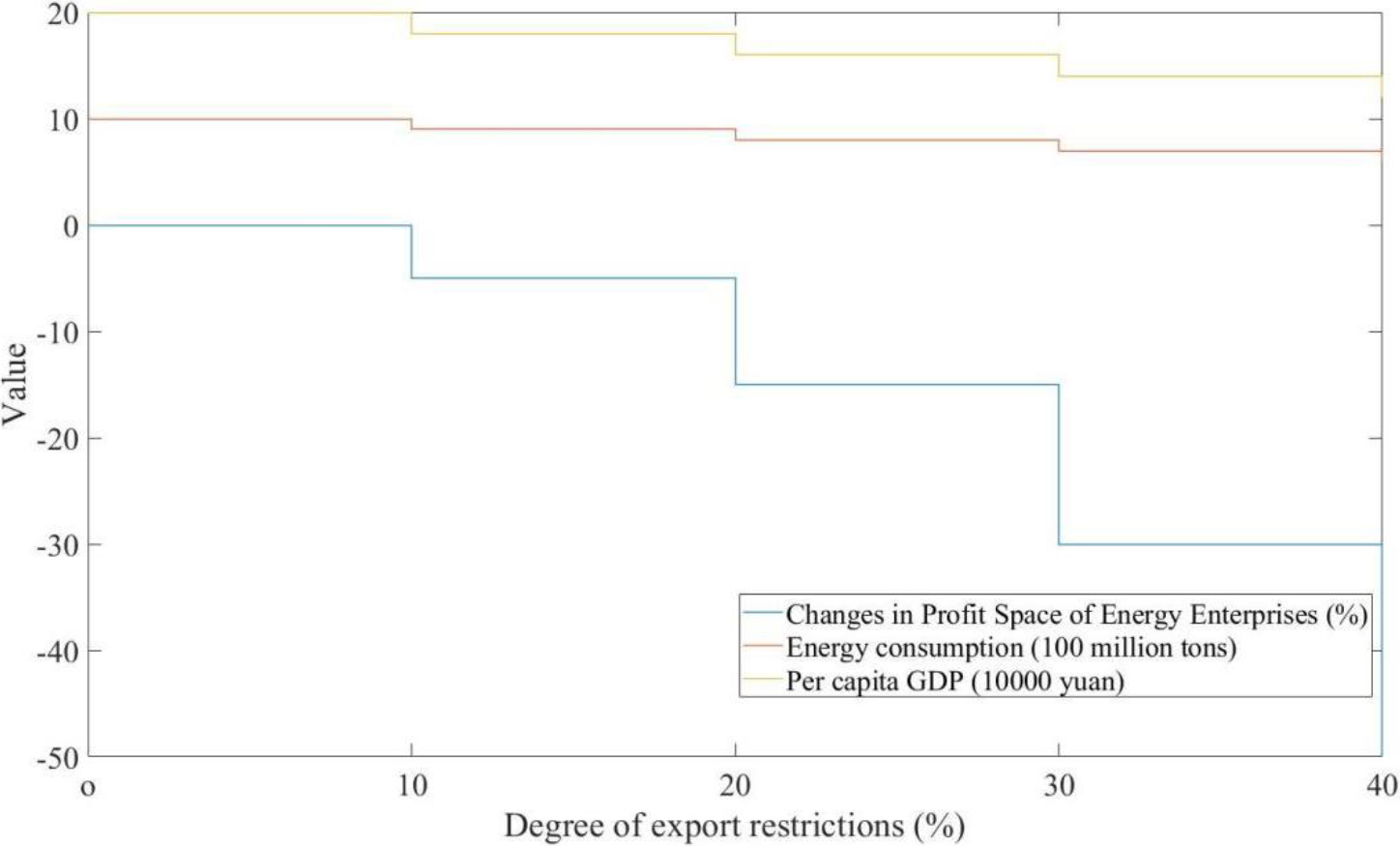
As shown in Fig. 3, the degree of ERs had a significant impact on the profitability of energy enterprises. With the deepening of ERs, the profit space of energy enterprises was gradually decreasing. When the degree of ERs reached 40%, the profit margin of enterprises decreased by 50%, and the impact was extremely severe.
This article selected different export proportion levels, such as 0%, 10%, 20%, 30%, and 40%, and recorded the corresponding proportion of scientific and technological innovation investment in revenue, keeping other conditions unchanged. The energy consumption and per capita GDP level at each level were recorded, and the experimental results are shown in Fig. 4.
Relationship between export proportion and proportion of technological innovation investment in revenue.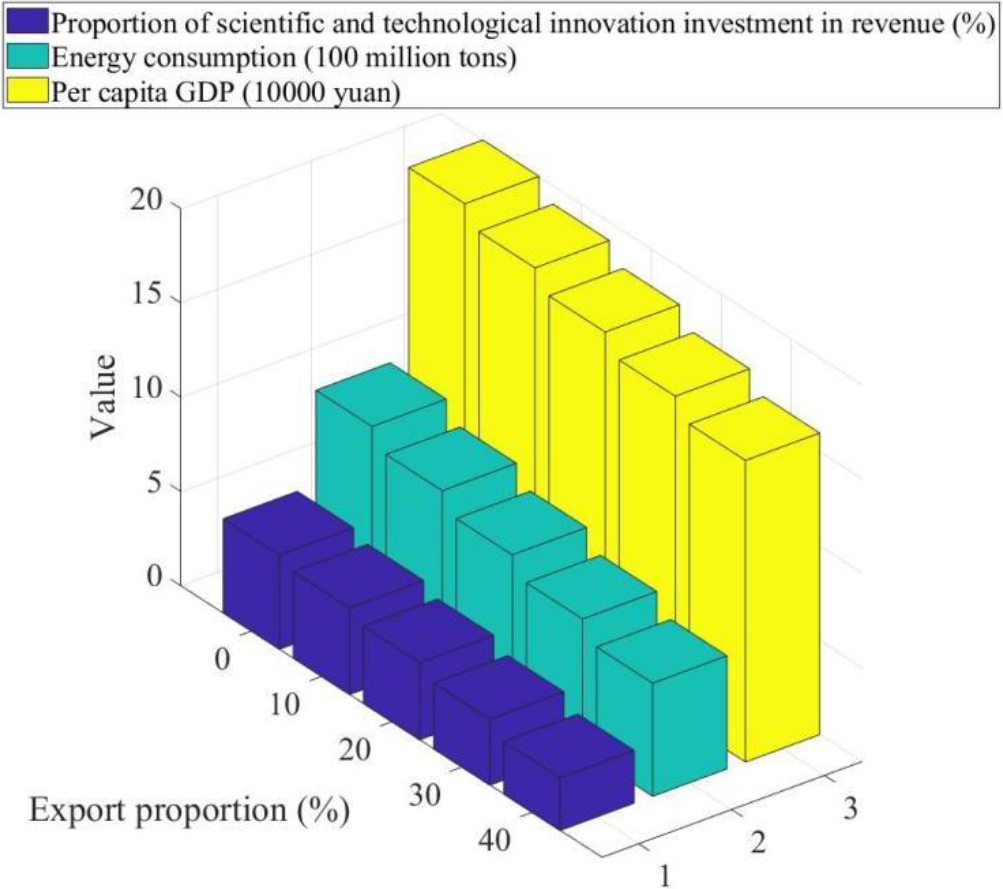
As shown in Fig. 4, the higher the proportion of exports, the lower the proportion of technological innovation investment in revenue. This is mainly the result of the impact of ERs on corporate profit margins and the combined effect of factors such as excessive pursuit of export scale and profits, leading to insufficient investment in technological innovation. When the export proportion reached 40%, the proportion of investment in scientific and technological innovation was only 2.8%.
This article selected different levels of resource allocation for energy enterprises, such as 30%, 40%, 50%, 60%, and 70%, and recorded the corresponding growth rate of energy enterprise output value, keeping other conditions unchanged. The energy consumption and per capita GDP levels at each level were recorded, and the experimental results are shown in Fig. 5.
Relationship between resource allocation ratio and output growth rate of energy enterprises.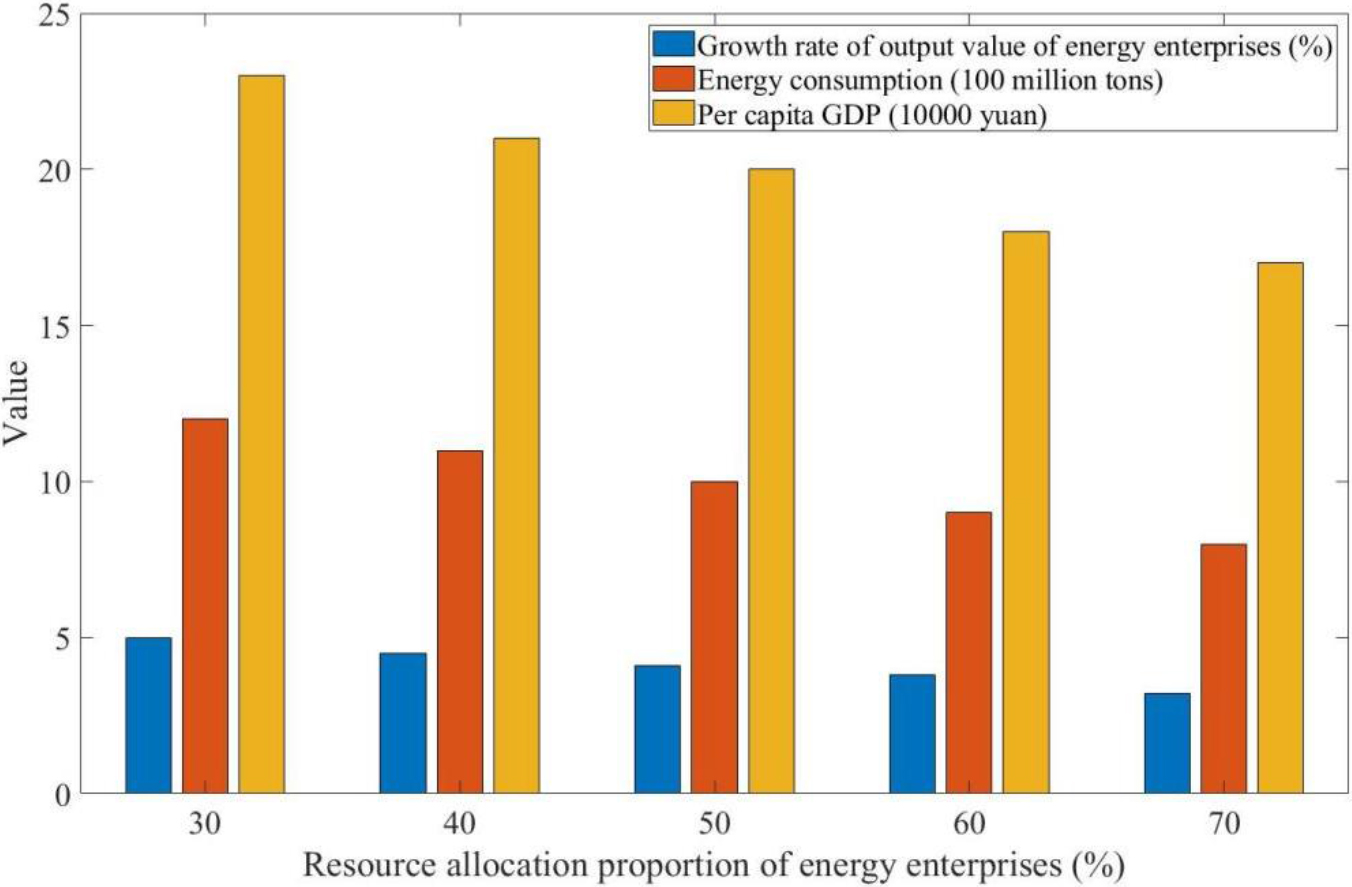
The impact of ERs on resource allocation and structural imbalances in energy enterprises is also very significant. When enterprises excessively pursue exports while neglecting internal resource allocation and industrial structure adjustment, it would lead to a gradual decrease in the growth rate of energy enterprise output value. As shown in Fig. 5, when the proportion of resource allocation was low, the growth rate of enterprise output value was higher. However, when the proportion of resource allocation reached 50% or more, the growth rate of enterprise output value dropped to 4.1% or even lower, indicating that internal resource allocation and structural imbalance have become one of the important factors hindering the upgrading of the EI.
Strengthening China’s demand side management and promoting industrial upgrading
Strengthening China’s demand side management is a crucial step in the upgrading of the EI [14, 15]. Strengthening demand side management in China refers to a management approach that guides and regulates energy consumption behavior by promoting the upgrading of energy consumption structure, improving energy efficiency, and strengthening energy conservation and emission reduction measures. For the management of energy demand, the government needs to adopt differentiated measures. For industries with high energy consumption and high pollution, industry restrictions or elimination should be adopted. For energy-saving and environmentally friendly industries, more policy support and discounts should be given [16]. In addition to these measures, this article can also strengthen demand side management from the following aspects:
Improving the energy pricing mechanism: In terms of energy prices, the government should develop a reasonable energy price system, improve the transparency of energy prices, reduce price discrimination, minimize policy intervention, and enhance the competitiveness of enterprises based on a healthy market [17].
Tax or financial incentives are needed to encourage enterprises and individuals to use energy-saving and environmentally friendly new energy equipment [18]. The government can also guide the public to save energy, protect the environment, and reduce energy consumption in daily life and production by establishing charging facilities, promoting new energy vehicles, and encouraging green travel.
There is a need to increase investment in energy technology innovation, improve the intelligence and automation level of energy equipment, promote the application of new technologies and equipment, and improve China’s energy production efficiency and quality [19]. The government can also encourage enterprises to continuously explore and practice to achieve green and SD by increasing scientific and technological innovation funds, increasing investment in technology research and development, and other means.
It is necessary to establish a sound energy consumption supervision mechanism and strictly regulate energy consumption behavior. The government should strengthen regulation of energy consumption, improve energy efficiency, promote energy-saving and emission reduction technologies, and advocate green production and lifestyle, in order to optimize energy structure and improve energy efficiency, and achieve SD goals [20].
Promoting technological innovation and improving energy production efficiency
The upgrading of the EI requires technological innovation. The government should increase its support and guidance for technological innovation, and encourage enterprises to innovate in key technological areas of the EI. At the same time, it is also necessary to improve the technological innovation environment, strengthen the evaluation and management of technological innovation, and promote the participation of the entire society in technological innovation.
In terms of energy production and utilization, the government can promote advanced energy technologies and equipment, including intelligent, automated, energy-saving and environmentally friendly new energy equipment, by introducing policies, increasing capital investment, and establishing technology research and development platforms, to improve energy production efficiency, effectively reduce pollution emissions, and achieve green and SD [21].
There is a need to increase research and development on new energy technologies. The government should increase support and support for new energy technologies, establish multiple special funds, encourage enterprises to innovate in the field of new energy technologies, reduce new energy costs, and promote new energy applications.
The government can also promote the combination of industry, academia and research by taking the lead, funding enterprises and coordinating cooperation, establish a national energy technology research and development platform in high-level research institutions and universities, cultivate a number of high-level and internationally influential new energy technology research and development teams, and enhance China’s technological innovation capability and competitiveness in the field of new energy.
Expanding overseas markets and alleviating ERs
With the continuous development of international trade, energy exports have become an important source of profit for Chinese energy enterprises. However, with the intensification of international competition in the energy sector, China’s exports have been subject to certain restrictions [22]. Therefore, the government should take measures to expand overseas markets and alleviate the pressure of ERs.
The government should encourage energy companies to seek new overseas markets, establish diversified economic cooperation relationships, improve product quality, reduce costs, and further enhance their international competitiveness through technology, capital, and resource cooperation.
The government can strengthen cooperation with energy importing countries and actively promote the energy “going global” strategy to further expand the international market share of China’s EI and increase energy export revenue.
The government should also actively participate in the formulation and approval of international energy standards, promote the standardization and standardization of Chinese energy enterprises, and better adapt to the needs of the international market.
In the upgrading of the EI, the government needs to play an important role in promoting sustainable energy development and achieving coordinated development of economy, society, environmental protection, and energy civilization through policy guidance, technological innovation, and overseas market expansion.
Conclusions
Through the experimental results of this article, the following conclusion can be drawn: there is a U-shaped relationship between the resource utilization rate of the EI and the energy export volume. The extent of energy export restrictions (ERs) exerts a substantial influence on the profitability of energy companies. As ERs become more stringent, the profit margins of energy enterprises progressively diminish. Furthermore, a higher proportion of exports leads to a reduced allocation of revenue for investment in technological innovation. The internal resource allocation and structural imbalance of enterprises have become one of the important factors hindering the upgrading of the EI. Based on the above experimental results, this article can draw the following policy recommendations: strengthening China’s demand side management and achieving industrial upgrading. The government can improve the energy pricing mechanism, adopt tax or fiscal incentives, and establish a sound energy use regulatory mechanism. This article failed to delve into the impact of ERs on the internal structural changes of the EI, and failed to analyze the response of residents in the target market to the prices of Chinese energy products.