




Abstract
BACKGROUND:
Scoliosis affects mainly women and even if its diagnosis relies on clinical evaluation and radiographic assessment, muscular involvement is undeniable impacting possibly on strength and daily activities.
OBJECTIVE:
To assess the strength of sagitally operating trunk muscles in women with scoliosis (WwS) and apparently healthy women (AH) with a similar mean age.
METHODS:
The two groups consisted 114 WwS and 42 AH women. The concentric isokinetic evaluation related to the peak moment (PM) of the trunk flexors and extensors at 30 and 90
RESULTS:
The PM of both muscle groups was not correlated with the location of the scoliosis. However, these muscles manifested a highly significant weakness in WwS compared to the AH group, in both test velocities. In terms of the general severity of the weakness, the PM scores in WwS with Cobb angle
CONCLUSION:
In view of the results, trunk muscles strength should definitely be taken into account when planning therapeutic options for WwS.
Introduction
Impact of curve type on maximal force expressed by the peak moment (PM) in Nm/kgbw, for trunk flexors (FL), trunk extensors (E) at 30
and 90
/s. Results are presented by means (m)
standard deviation
Impact of curve type on maximal force expressed by the peak moment (PM) in Nm/kgbw, for trunk flexors (FL), trunk extensors (E) at 30
Significance thresholds:
The prevalence of adult spinal deformity and scoliosis is not well established, with estimates of more than 8% in adults over the age of 25 [1] and up to 68% in the age of over 60 years [2], caused by degenerative changes in the aging spine. Adults with scoliosis were sometimes adolescents with idiopathic scoliosis, which is a common disease with an overall prevalence of 0.47–5.2% [3]. The female to male ratio ranges from 1.5:1 to 3:1 and increases substantially with increasing age. In particular, the prevalence of curves with higher Cobb angles is substantially higher in girls than in boys [3]. Primary degenerative scoliosis is also a highly prevalent condition, especially in females [4]. Young adult women are therefore particularly troubled by the problem of scoliosis.
Diagnosis and surveillance of adult scoliosis are based on clinical examination of the trunk, and radiographic assessment. The monitoring is justified in view of the evolution of scoliosis in adulthood, which has been known for a long time [5] and even better described more recently in adults [6]. It may be the aggravation of idiopathic scoliosis in adulthood, the occurrence of degenerative phenomena such as discopathy, posterior osteoarthritis, alteration of muscle quality in degenerative scoliosis or de Novo scoliosis, deformations/disorders of the spine which appear in adulthood.
The control of the evolution of scoliosis is based on Cobb’s angle [7] obtained from the tangent of the upper plateau of the upper limit vertebra and the lower plateau of the lower limit vertebra. This angle allows classification of the scoliosis according to its location and severity, to assess its evolution and to propose therapeutic approaches.
This completely underestimates the muscular component of the trunk, its role in scoliosis evolution and its impact on functional daily activities as well which is of particular interest. Measuring trunk muscles strength is possible and the use of isokinetic dynamometers has been shown to be valid and reliable in healthy subjects [8, 9] and patients with scoliosis [10, 11, 12, 13]. These devices are frequently used in spinal retraining programs, and may also be used for monitoring and training the trunk muscles in patients with scoliosis.
The primary aim of this study was thus to measure, in WwS, the concentric strength of the trunk flexors and extensors using an isokinetic dynamometer, and to explore their relationship with the topography and angular variations of this disorder. The second aim was to compare the observed outcome parameters to those in apparently healthy women of a similar age range.
Participants
Participants had to be female, over 18 years and under 45 years of age with a main Cobb angle
Study design
This is a prospective study conducted between 2008 and 2018 in our rehabilitation center. All patients who came for medical consultation (1
At the same time, healthy subjects of equivalent age and gender were recruited on a voluntary basis from hospital staff to form the control group.
Evaluation procedure
Participants were given an overall 20-minute warm-up on a treadmill beforehand. The isokinetic evaluation was then carried out on the CON-TREX
The results of the evaluation are given in terms of the peak moment (PM), without gravity correction, and all values are related to the body weight (in Nm/kg of body weight) [15].
Statistical analysis
The analysis was performed using the R software (version 3.4.2, R Foundation, Vienna) [16]. Characteristics of the participants are described through their age, weight, type of scoliosis according to Ponsetti classification [17], and Cobb angles. Comparisons of the 2 groups was made using Student’s
Within the WwS population, patients were compared according to the scoliosis types and the angulation (below or above 30
Results
Characteristics of participants
Of the 114 WwS, 43 patients presented with an angulation of less than 30
The control group consisted of 42 women recruited from hospital staff. The two groups were similar in age but differed in weight: women with scoliosis weighted on average 1.4 kg more than AH women (
Relationships between strength and scoliosis parameters
Impact of curve type
The isokinetic strength of the WwS group was studied as a function of the scoliosis topography according to Ponsetti’s classification, and no difference was found in the strength levels among the various sub-groups (Table 1).
Impact of angulation
The subgroup with an angulation of less 30
Impact of scoliosis angulation on peak moment (PM) expressed in Nm/kgbw, for trunk flexors (FL), trunk extensors (E) at 30
and 90
/s. Results are presented by means (m)
standard deviation
Impact of scoliosis angulation on peak moment (PM) expressed in Nm/kgbw, for trunk flexors (FL), trunk extensors (E) at 30
Spearman’s non-parametric correlations illustrated in Fig. 1 also show no correlation between the Cobb angle and the PM neither in terms of movement pattern nor in velocity.
Link between scoliosis angle and isokinetic peak moment (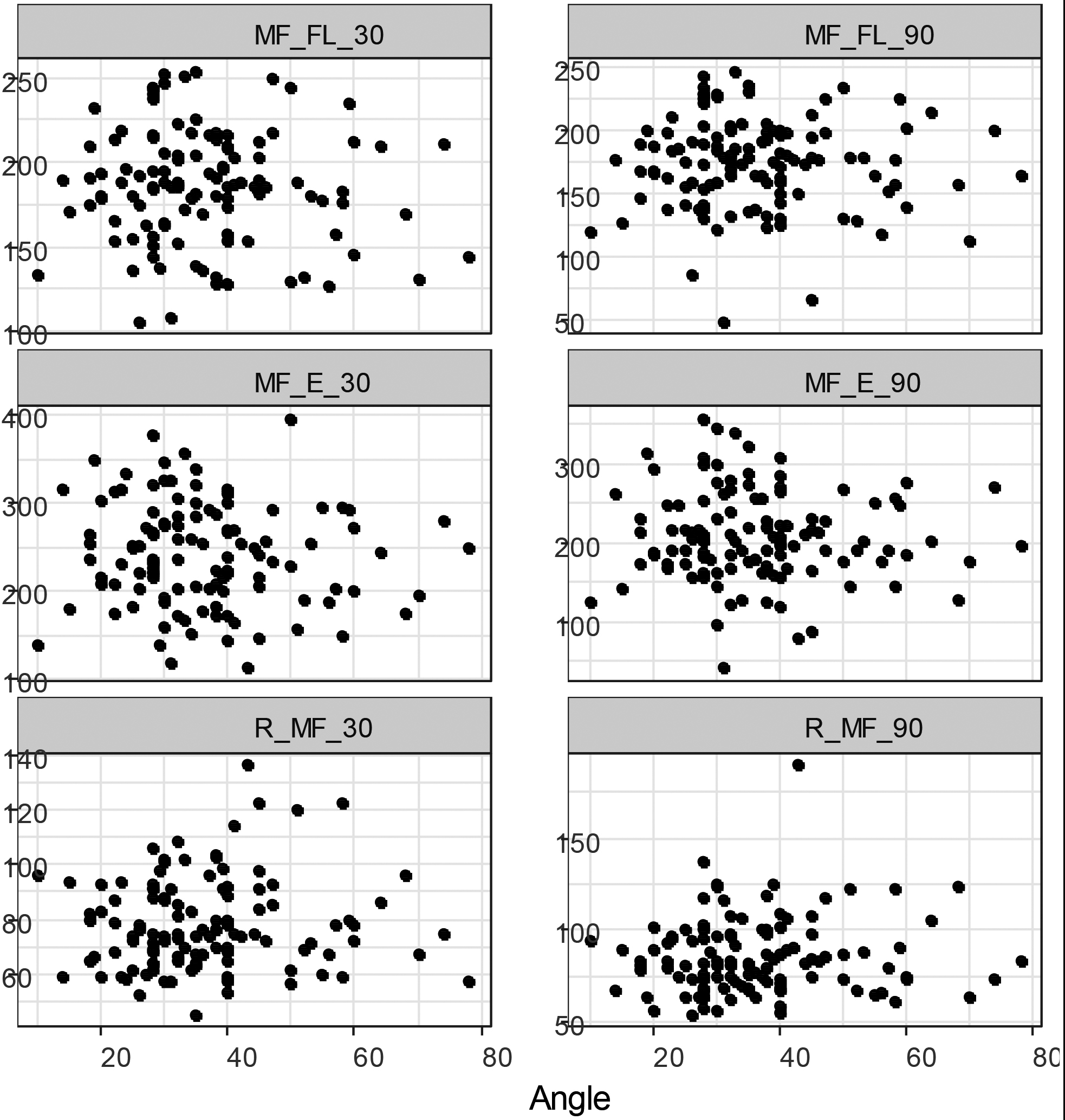
Table 3 shows that for all parameters, patients with the lowest values had significantly higher weights. They were also significantly older, except for the 90
Characteristics of WwS who presented the lowest PM values (1st quartile of PM results), regarding age, weight and type of scoliosis according to Ponsetti’s classification
Characteristics of WwS who presented the lowest PM values (1st quartile of PM results), regarding age, weight and type of scoliosis according to Ponsetti’s classification
T: thoracic, DL: dorsolumbar, DM: double major, L: lumbar.
The type of scoliosis does not seem to be related.
Table 4 presents the results and comparisons between the WwS sugroups and the AH group. The concentric PMs were significantly lower in the scoliosis group, for movement and speed. It was 12% and 13% lower for flexors at 30 and 90
Comparison of scoliotic and control participants for maximal force expressed by peak moment (PM) in Nm/kgbw, of trunk flexors (FL), trunk extensors (E) at 30
and 90
/s. Results are presented by means (m)
standard deviation
Comparison of scoliotic and control participants for maximal force expressed by peak moment (PM) in Nm/kgbw, of trunk flexors (FL), trunk extensors (E) at 30
The PM-based extension/flexion ratios in WwS were respectively 1.34
With respect to the differences between sub-groups of WwS according to Ponsetti’s classification, the results show also significant differences for the PM of the flexors at 30
Comparison of scoliotic Ponsetti’s sub-groups and control participants for maximal force expressed by peak moment (PM) of trunk flexors (FL), trunk extensors (E) at 30
Regarding the different sub-groups of patients according to the angulation (
Comparison of scoliotic angulation sub-groups (Cobb angle
The results for AH women are completely in line with previous studies [18, 19, 20] although the tests were performed using a different isokinetic dynamometer, a fact that significantly enhance the validity of isokinetic trunk testing. Regarding WwS, the results show a significant 12–15% reduction compared to AH women in all parameters and irrespective of movement pattern or speed. These results support those previously reported [21]. Studies have also been published in adolescents, and show that there was a deficit of isokinetic strength in young people with low back pain [22] and in young people with scoliosis [15, 23] and in patients with low back pain, although in the latter the deficit was mainly in extension [24, 25]. Yuan et al. explored posterior muscle strength in a group of young women with non-specific low back pain, with and without lumbar scoliosis, and found that the muscular deficit was specifically in the posterior muscles in non-scoliotic patients, whereas it did not specifically affect the posterior muscles in patients with scoliotic [26]. This finding is in line with our results attesting to general sagittal muscular weakness.
The smaller groups notwithstanding, it is interesting to consider the results for the different locations of curvature. It appears that compared to the AH group, thoracolumbar scoliosis and double major ones led to weaker flexion tested at 30 and 90
With regard to angulation, it was not possible to find a relationship between the angle of scoliosis and isokinetic parameters; this is somewhat surprising because it could be expected that a strong angulation of scoliosis could hinder the production of muscle moment in performing these movements. There appears to be a trend for the extensors’ strength at 30 and 90
A second approach was made by separating the population with scoliosis between the milder (Cobb
The WwS who presented the lowest trunk muscles strength were slightly older and weighted with a higher body mass compared to those who obtained higher values. This finding complies with the work of Danneskiold-Samsøe et al. [20], who found that muscle strength in women is dependent on weight and is only related to age from around 40 years of age.
One limitation of this works clearly lies in the lack of data regarding the level of physical activity of both scoliotic and healthy participants. It is indeed difficult to conclude if the trunk muscles weakness in the scoliotic group is due to a poor physical activity level, or only due to the presence of scoliosis. Further studies should take this aspect into account [27].
Conclusion
This study is the first to unveil a general flexion and extension weakness in WwS. The severity of scoliosis appears to be related to the variation in muscle strength. On the other hand, the location of the scoliosis does not seem to cause a very significant variation in strength parameters. It appears from this work that the evaluation of the strength of the trunk is important, as this parameter can vary from one type of scoliosis to another, especially as a function of its angulation. This work highlights the importance of muscular evaluation of patients with scoliosis, along the radiological assessment, in order to better analyze this disorder and to propose adapted therapeutic solutions, especially targeting the inherent muscular weakness [28, 29, 30].
Author contributions
For every author, his or her contribution to the manuscript needs to be provided using the following categories:
CONCEPTION: Grégoire Le Blay.
PERFORMANCE OF WORK: Anne Pujol.
INTERPRETATION OR ANALYSIS OF DATA: Stéphane Verdun.
PREPARATION OF THE MANUSCRIPT: Rachel Bard-Pondarré.
REVISION FOR IMPORTANT INTELLECTUAL CONTENT: Jean-Claude Bernard.
SUPERVISION: Emmanuelle Chaléat-Valayer.
Ethical considerations
This study was exempt from Institutional Review Board approval.
Funding
None.
Footnotes
Acknowledgments
The authors wish to warmly thank the Association de Recherche Médicale du Centre des Massues, for its support and help in designing the manuscript.
Conflict of interest
The authors have no conflicts of interest to disclose.