




Abstract
OBJECTIVE:
To investigate the effect of ZHX2 on lung cancer cells proliferation and apoptosis.
MATERIALS AND METHODS:
The mRNA and protein expression of ZHX2 were detected by qRT-PCR and western blot, respectively. The human lung cancer cells were divided into Control, NC, ZHX2, SB, and ZHX2
RESULTS:
The expression of ZHX2 gene and protein in the cancer cell lines were significantly decreased. Compared with control and NC groups, the cells proliferation, migration and invasion were inhibited in ZHX2 and SB groups, while the apoptosis and apoptosis related proteins were increased (
CONCLUSION:
ZHX2 could inhibit proliferation and promote apoptosis of lung cancer cells by inhibiting p38MAPK signaling pathway.
Introduction
Lung cancer is one of the most diagnosed malignant tumors, and has been the most frequent cause of cancer-related mortality worldwide[1]. Despite treatment advances, it is still a highly aggressive and fatal disease. Lung cancer is progressed to metastasis, and is not diagnosed until it has progressed to an advanced stage[1]. So, more studies are needed to throw light upon the inherent molecular mechanism and eventually ideal prognostic markers and therapeutic method need to be developed.
Zinc-fingers and homeoboxes (ZHX) is a family of vertebrate transcription factors that contains three members, ZHX1, ZHX2 and ZHX3. These three genes are expressed in many tissues and localized in the nucleus, and have been reported as tumor suppressor genes in many studies[2]. ZHX2 is an important transcriptional repressor, which contains two zinc-finger motifs and five homeodomains[3]. ZHX2 appears to promote cell-cycle repression and involved in tumorigenesis, and the ZHX2 level is associated with the progression and poor outcome of tumor[4]. Furthermore, ZHX2 may be influence drug resistance in cancer cells[5]. Prior study has reported that deficiency of ZHX2 was found in human hepatcellular carcinoma, and ZHX2 deficiency was an early event in the progression of hepatocellular carcinoma[6]. Compared to adjacent none-tumor tissues, the expression of ZHX2 always reduced in human hepatocellular carcinoma tissues[3, 7]. Moreover, decreased ZHX2 expression was associated with hepatocyte proliferation and reduced survival times of the patients[3]. Meanwhile, both in vivo and in vitro experiments, ZHX2 overexpression inhibited the proliferation of hepatocellular carcinoma cells and the growth of tumor xenografts[3]. ZHX2 is an important regulator of hepatic gene regulation in the development of liver cancer, and ZHX2 could suppress the secretion of alpha-fetoprotein (AFP), which suggested that ZHX2 deficiency was associated with AFP reactivation[6, 8].
To the patients with multiple myeloma, the expression of ZHX2 mRNA is low in peripheral blood lymphocytes compared to healthy individuals. Dysregulated ZHX2 levels will increased the risk of multiple myeloma events. The loss of ZHX2 is associated with the poor outcome of this disease, while high ZHX2 expression is associated with a better response and longer survival[9]. After high-dose chemotherapy, high ZHX2 expression heralded a better response and longer survival[10].
As a tumor suppressor, the effect of ZHX2 in the development of tumor has been paid more and more attention. However, there is little research on ZHX2 in lung cancer progression. In the present study, the association between ZHX2 and lung cancer was investigated. We designed a series of experiments to test our hypothesis that ZHX2 may suppress the progress of lung cancer and explore the inherent molecule mechanism.
Materials and methods
Cell culture
Human normal lung epithelial cells BEAS-2B cells, human non-small cell lung cancer A549, H1975, and HCC827 cells were purchased from Shanghai Institute of Cell Biology (Shanghai, China). All cells were grown in RPMI 1640 containing 10% fetal bovine serum (FBS, Gibco, Carlsbad, USA) and 1% penicillin-streptomycin at 37
Transfection and groups
The cells were grown to near confluence and were divided into five group: control group (Control), ZHX2 negative control group (NC), ZHX2 overexpression group (ZHX2), p38MAPK inhibitor control group (SB), and ZHX2
Quantitative real-time polymerase chain reaction (qRT-PCR)
qRT-PCR was used to detect the expression of ZHX 2 mRNA in BEAS-2B, A549, H1975 and HCC827 cells. Cell transfection efficiency was also detected by qRT-PCR.
Total RNA was extracted by TRIzol Reagent (Invitrogen, USA) and RNA was then transcribed into cDNA using SuperScript III Reverse Transcriptase (Thermo Fisher Scientific, USA). qRT-PCR was performed using Mastercycler
Cell counting assay Kit-8 (CCK-8) assay
Logarithmic growth cells were plated in 96-well plastic plates at a density of 2
Transwell assay
50
Matrigel was not coated at the bottom of Transwell chamber in Migration experiment, and other steps were the same as invasive experiment.
Flow cytometry
Cells were digested by trypsin and collected by centrifugation at 1000 rpm for 5 min at 4
Construction and grouping of lung cancer xenograft model
30 SPF Balb/c female nude mice (weighing 16–18 g, 4 weeks old) were purchased from Jinan Pengyue Experimental Animal Breeding Co., Ltd. (Certificate No. SCXK (Lu) 2014-0007). Animals were housed at 26–28
30 mice were randomly divided into 5 group (
Tumor volume calculation
The tumor long diameter (L) and short diameter (W) were measured every 7 days with vernier caliper to calculate the tumor volume. Tumor volume (V)
The effect of ZHX2 on cell proliferation. A: The expression of ZHX2 mRNA in each group of cells. B: The expression of ZHX2 mRNA in the transfected cells. C: CCK8 assay. D: Cell migration (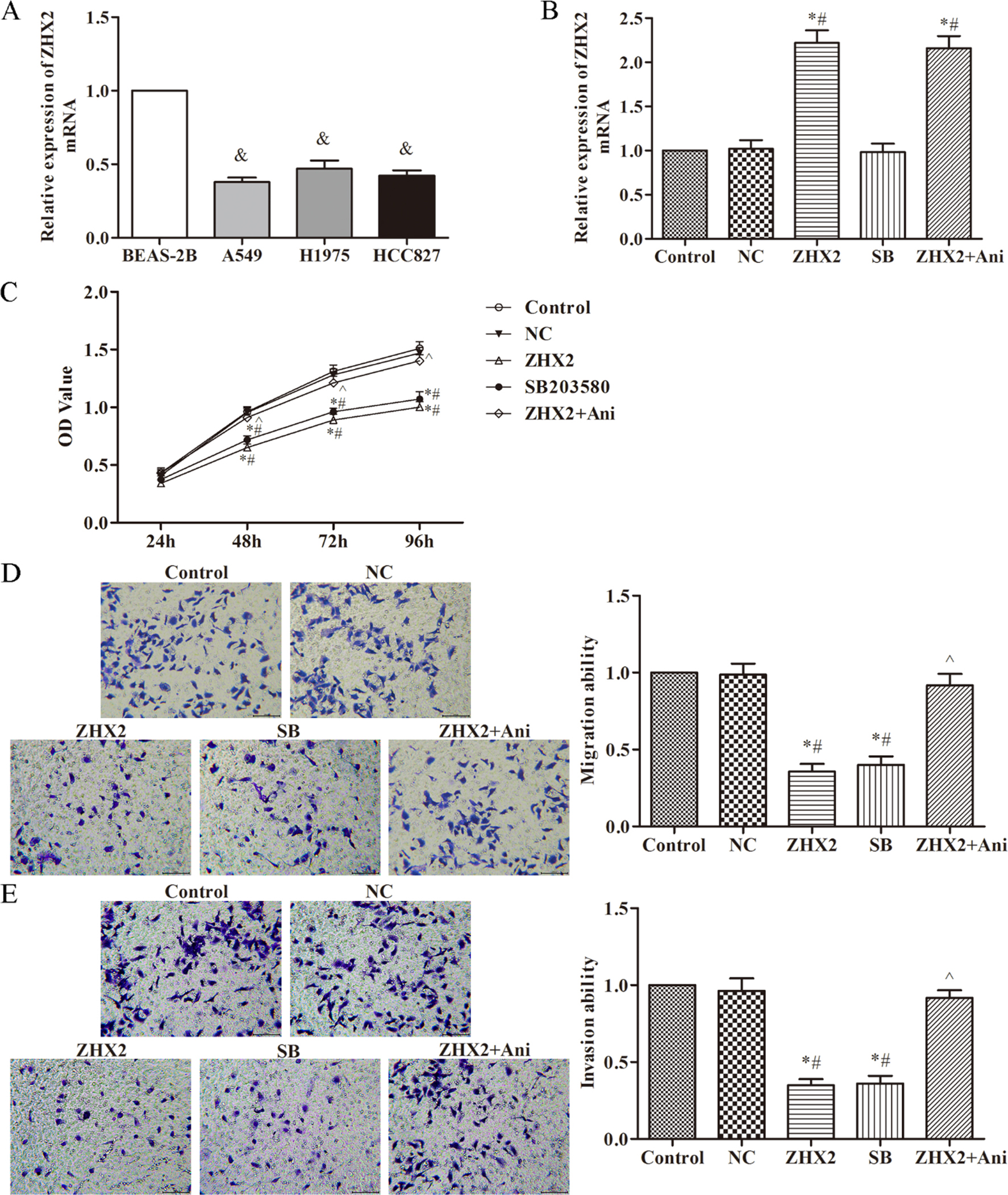
After 28 days, the nude mice were anesthetized by intraperitoneal injection of 0.6% sodium pentobarbital (40 mg/kg), and then the neck was removed. The tumor tissue was taken, partially placed in a cryotube, frozen in a
The effect of ZHX2 on cell apoptosis. A: Flow cytometry. B: Western blot analysis of apoptosis-related proteins. Values are mean 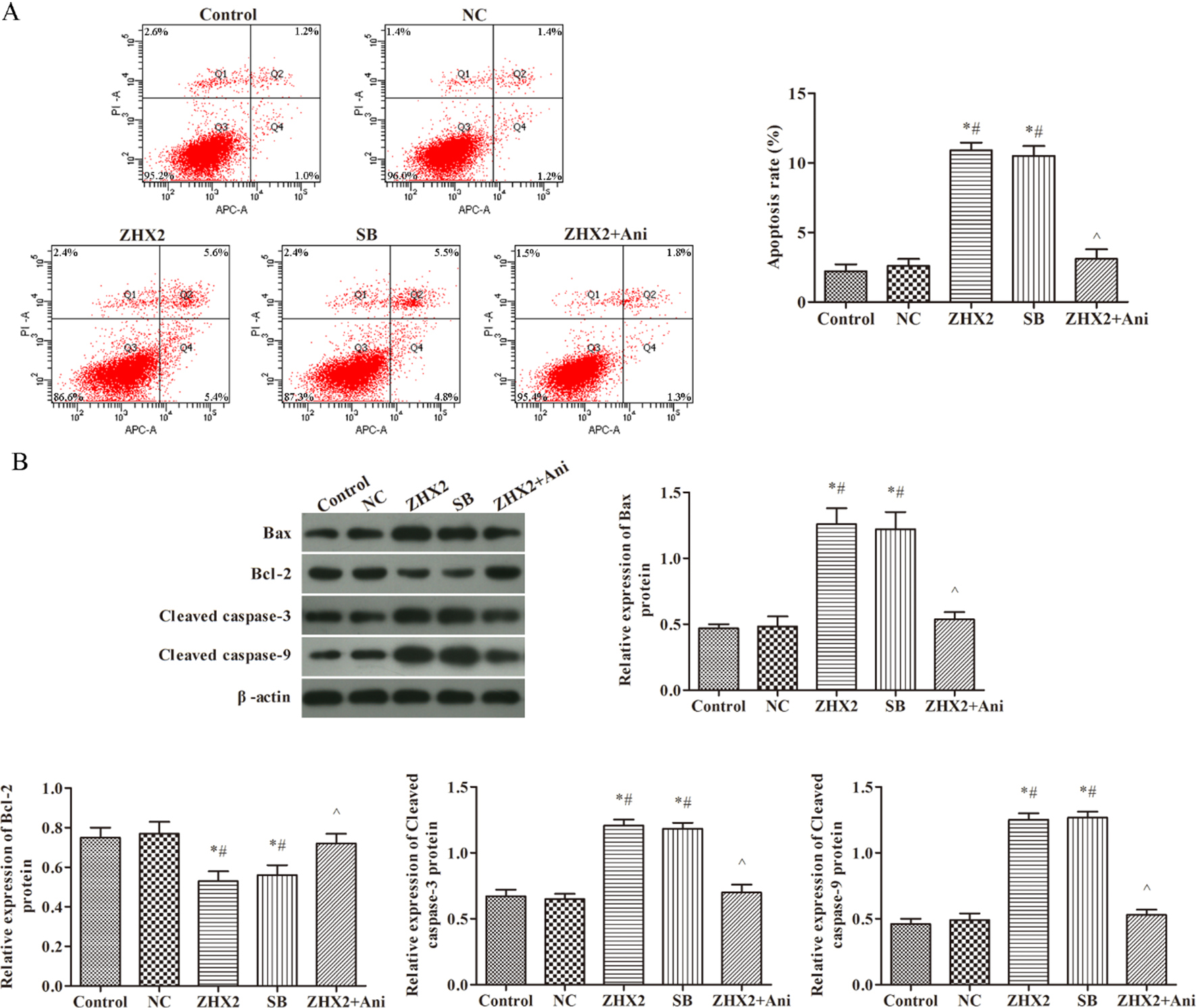
The sections with a thickness of 4
Western blot
The lung tissues of the Balb/c nude mice, and the cells from 5 groups were prepared for western blot. The total proteins were extracted and protein concentration was measured using bicinchoninic acid (BCA) protein assay kit (Beyotime Biotech, Shanghai, China). 40
Statistical analysis
The data are presented as means
The effect of ZHX2 on the expression of p38MAPK signaling pathway-related proteins in cells. A: Protein band diagram. B: The relative expression of MMP-9 protein. C: p-P38 MAPK/P38 MAPK. Values are mean 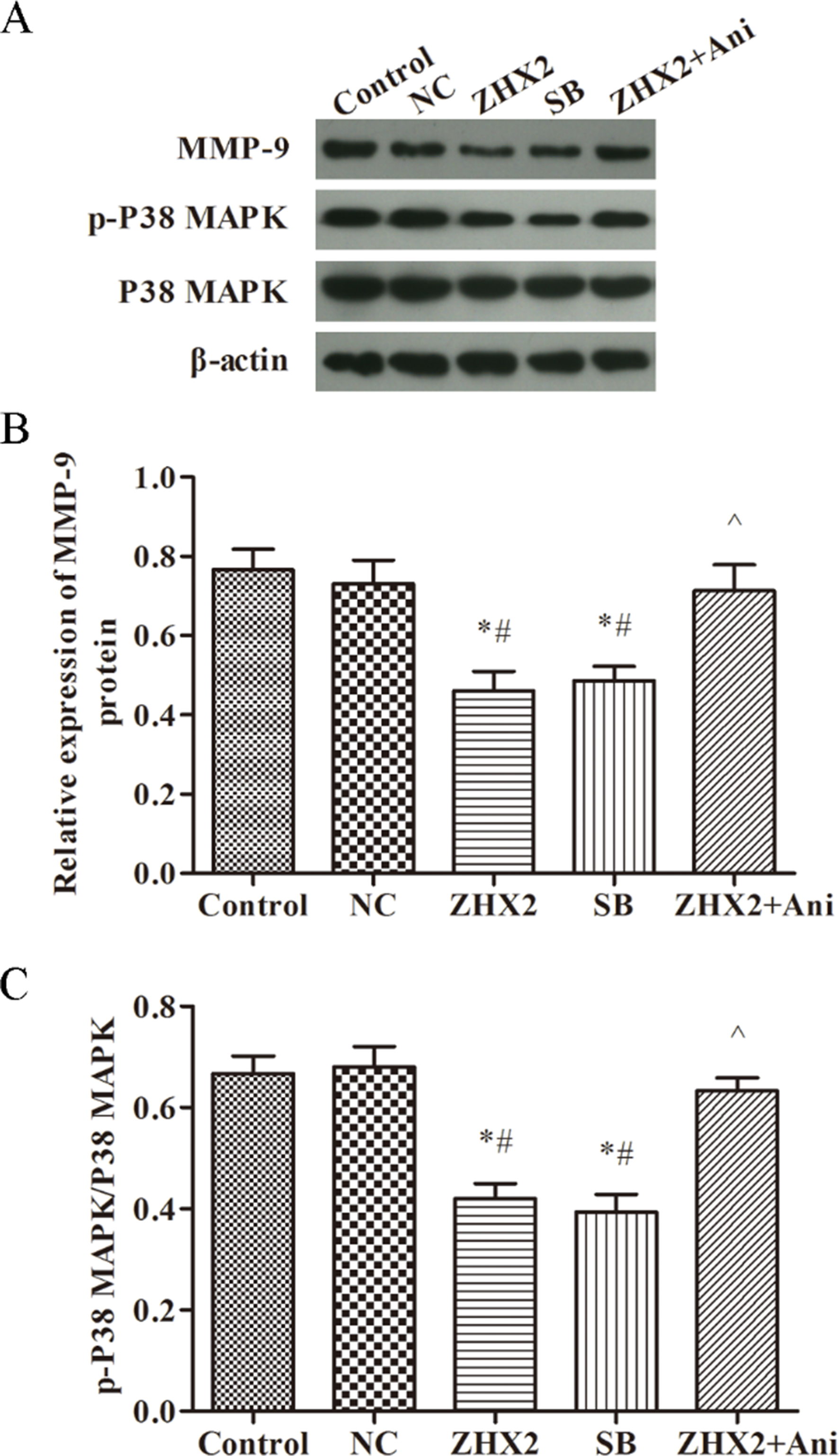
The effect of ZHX2 on tumor growth and apoptosis of A549 cancer cells. A: Tumor volume. B: Tumor photo. C: Tumor weight. D: Immunohistochemistry (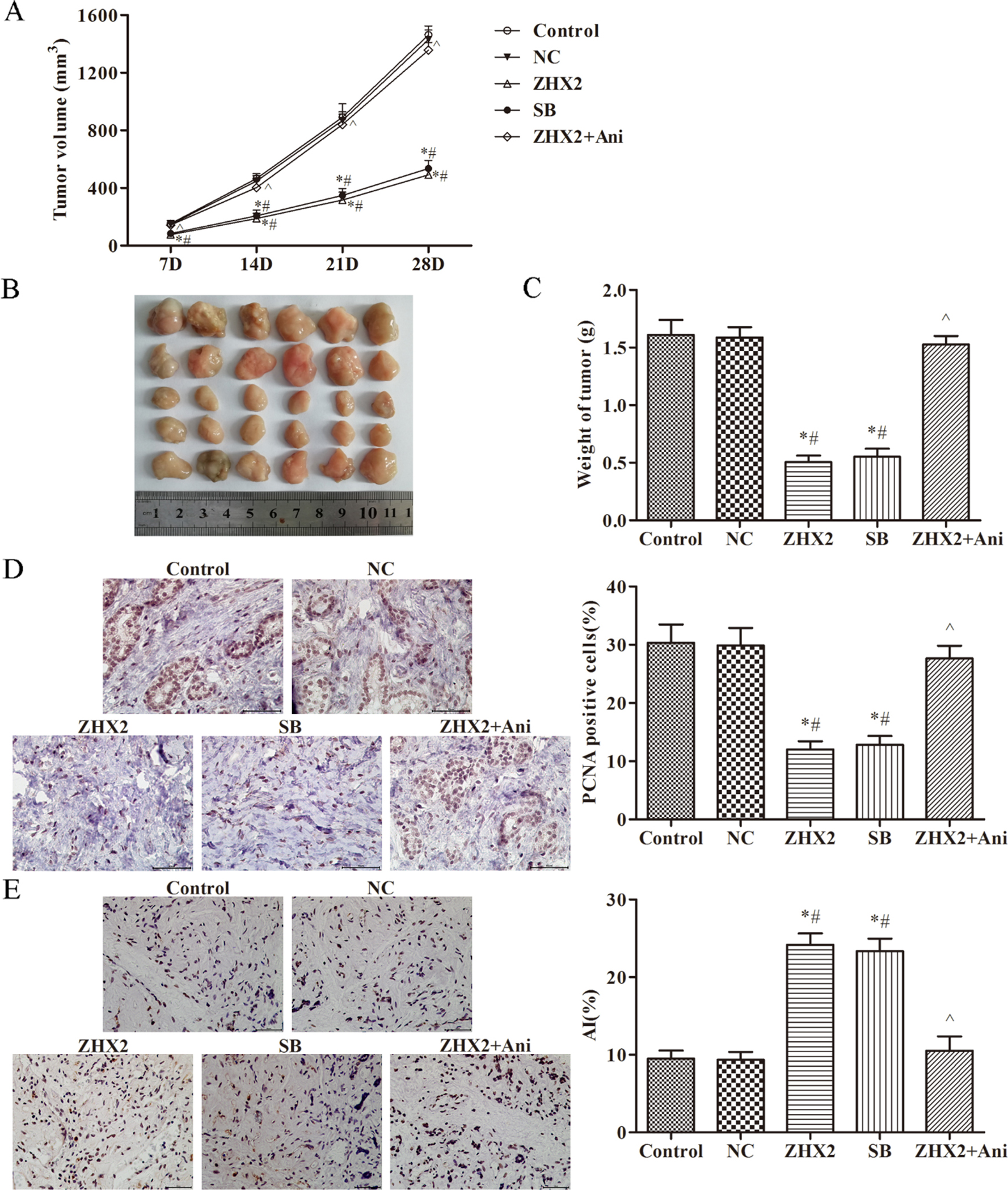
Western blot was used to detect the expression of ZHX2 and p38MAPK signaling pathway-related proteins in mice tumor tissues. A: Protein band diagram. B: The relative expression of ZHX2 protein. C: The relative expression of MMP-9 protein. D: p-P38 MAPK/P38 MAPK. Values are mean 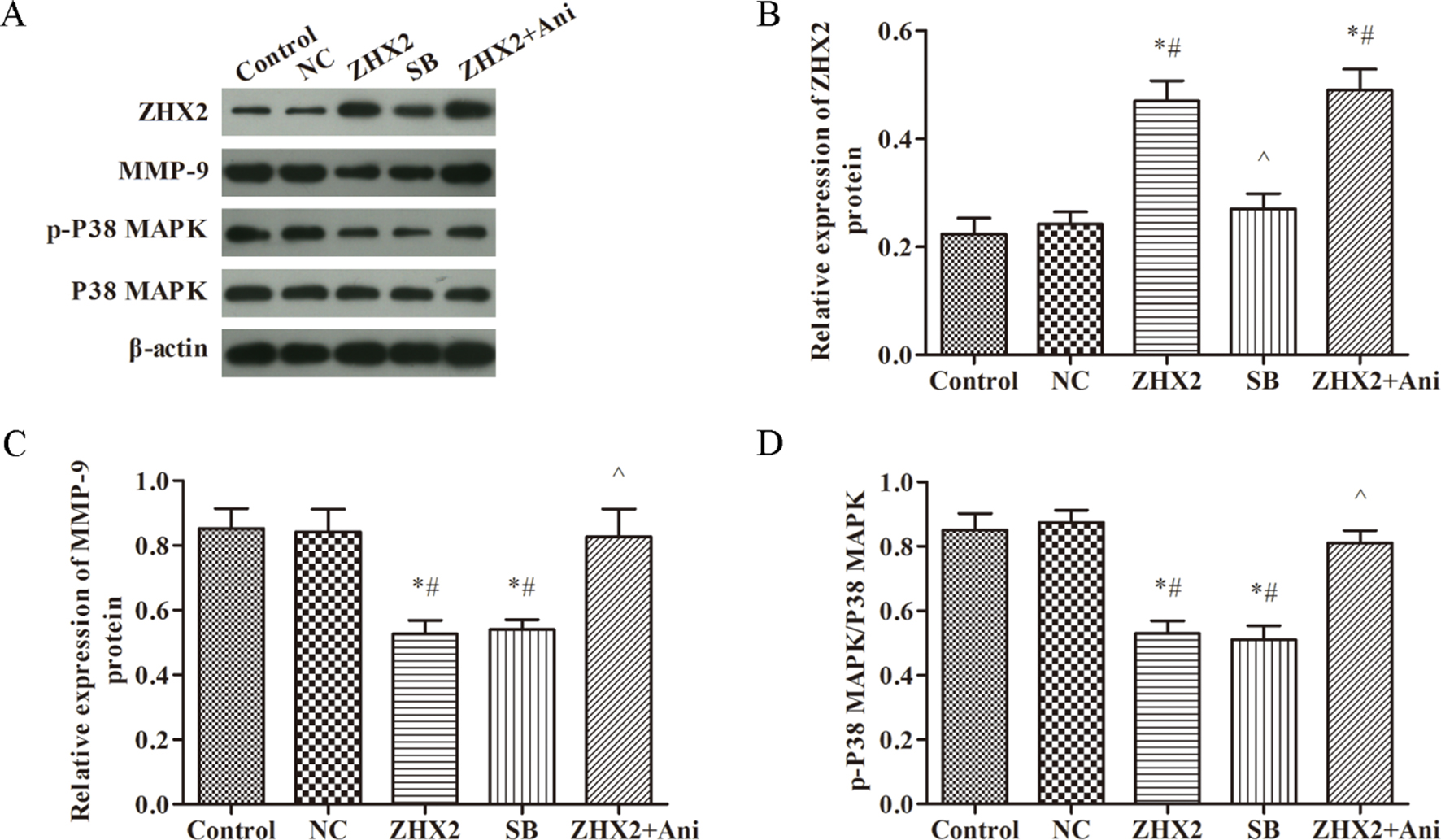
Effect of ZHX2 on cell proliferation
As shown in Fig. 1A, compared with BEAS-2B cells, the expression of ZHX2 mRNA in A549, H1975 and HCC827 cells were significantly decreased (
Compared with control and NC groups, the expression of ZHX2 mRNA in ZHX2 and ZHX2
Effect of ZHX2 on apoptosis
As shown in Fig. 2, compared with control and NC groups, the apoptosis rate and the expression of apoptosis-related proteins in ZHX2 and SB groups were significantly increased (
Effect of ZHX2 on the expression of p38MAPK signaling pathway related proteins in cells
Compared with control and NC groups, the expression of MMP-9 protein in ZHX2 and SB groups were significantly upregulated, while p-P38 MAPK/P38 MA PK was significantly reduced (
Effect of ZHX2 on tumor growth and apoptosis in mice
Compared with control and NC group, the tumor growth rate of ZHX2 and SB groups were significantly slowed down, the tumor volume and weight, and the percentage of PCNA positive cells in tumor tissue were significantly reduced, while the apoptotic index was significantly increased (
The expression of ZHX2 and p38MAPK signaling pathway related proteins in mice tumor tissues
As shown in Fig. 5, compared with the control and NC groups, the expression of ZHX2 protein in the ZHX2 and ZHX2
Discussions
Lung cancer is a major health burden with high mortality and poor prognosis. As a member of ZHX family, ZHX2 levels normally enhanced after birth and participated in some types of cancer[11, 12]. In this study, the potential role of ZHX2 in lung cancer was firstly evaluated. We found that the expression of ZHX2 mRNA and protein were significantly reduced in lung cancer tissues than that in adjacent normal tissues. We further detected the effect of ZHX2 overexpression in A549 cells. The results showed that ZHX2 significantly inhibited the proliferation and migration of A549 cells, induced apoptosis of A549 cells, decreased the expression of MMP9, and inhibited p38MAPK signaling pathways.
In order to detect the expression of ZHX2 in lung cancer tissues, we collected specimens of lung cancer tissues and adjacent normal tissues. We first found that the expression level of ZHX2 in lung cancer tissues was significantly lower compared to adjacent normal tissues, which suggested that ZHX2 might participate in the progress of lung cancer. We further detected the exact role of ZHX2 and the mechanisms in human lung cancer cell line (A549) by overexpressing ZHX2 using lentiviral transfection.
Tumors progression is associated with abnormal cells proliferation. Uncontrolled proliferation provides a survival advantage of cancer cells to resist conventional chemotherapeutic agents[13, 14]. It has been documented that ZHX2 inhibited the proliferation of hepatocellular carcinoma cells[13]. In this study, we overexpressed ZHX2 in A549 cells and analyzed its effect on the cell proliferation. MTT and CCK-8 assays showed that ZHX2 overexpression inhibited the proliferation of lung cancer cells, which consistent with the prior study[13]. Tumor cells migration and invasion also played an important role in the progress of lung cancer. Transwell assay showed that ZHX2 overexpression remarkably reduced the migration of A549 cells. These results suggested that ZHX2 could inhibited the progress of lung cancer partly by suppressing the proliferation and migration of lung cancer cells.
Apoptosis is the main cause of tumor cell death and is the core mechanism for preventing tumor growth. TUNEL staining showed ZHX2 overexpression increased the apoptotic level of A549 cells, which suggested that ZHX2 caused a strong programmed cell death in A549 cells. To further investigate the potential mechanisms, the expression of Cleaved caspase-3 and Cleaved caspase-9 were evaluated. We found that overexpression of ZHX2 significantly increased the mRNA and protein expression of Cleaved caspase-3 and Cleaved caspase-9. Bcl-2 and Bax family played an important role in apoptosis, proliferation and invasion of tumor cells. In this study, the protein expression of Bcl-2 and Bax were assessed by western blot. We found that ZHX2 overexpression upregulated the expression of pro-apoptosis protein Bax and downregulated anti-apoptosis protein Bcl-2 expression in A549 cells. Meanwhile, ZHX2 also increased the ratio of the protein expression levels between Bax and Bcl-2. The effect of ZHX2 on the expression of caspases, Bax and Bcl-2 contributed to the apoptosis of tumor cells.
Tumor metastasis was an important manifestation of tumor progression. Among this progression, MMP-9 played a central role by degrading ECM and allowed the cells to reach distant target sites[15]. In this study, we found that ZHX2 could significantly suppress the expression of MMP-9, which participate in the anti-tumor effect of ZHX2. Tumor cells migration and invasion is a complex progress that involved many signaling pathways. Mitogen-activated protein kinases (MAPKs) family participated in the proliferation and migration of lung cancer[16, 17]. MAPK signaling pathway plays an important role in tumor development, including regulation of survival, proliferation, differentiation and apoptosis in tumor cells[18]. Another study showed that inhibition of MAPKs pathway mediated the downregulation of MMP-9 expression and attenuation of invasion in human leukemia U937 cells[19]. We found that ZHX2 significantly inhibited the expression of MMP9.
In conclusion, ZHX2 played anti-tumor role in lung cancer progression through inhibiting the cells proliferation, migration and the expression of MMP-9, and accelerating apoptosis. The possible mechanism is related to suppress p38MAPK signaling pathway. Therefore, ZHX2 maybe a potential therapeutic agent for further treatment of lung cancer.
Footnotes
Acknowledgments
This work was supported by the National Natural Science Foundation of China (No. 81672292) and Taishan Scholar Program of Shandong Province (NO. ts201712087).