




Abstract
Ubiquitin-specific protease 22 (USP22), as one of the 11 death-from-cancer signature genes, presented high expression in a variety of tumors. Previous studies showed that USP22 played a significant role in cell-cycle, oncogenesis, clinicopathology and survival. Our studies have presented USP22 was over-expressed in glioma tissue and the patients with high expression of USP22 had a poor survival than that with low expression of USP22. However, the concrete effect of USP22 on biological behavior in glioma cells has been rarely reported. The study aimed to clear the effect of USP22 on cell proliferation, migration and invasion in glioma. Using siRNA, USP22 was knocked down in U251 and U87 glioma cells and successful transfection effect was validated. Cell proliferation, migration and invasion were observed by the methods of EdU, Wound healing and Transwell assay, separately. At the same time, the expression of MMP2 was detected by Gelatin zymography after transfecting siRNAs. After the knockdown of USP22 by siRNA, the abilities of glioma cell proliferation, migration and invasion were decreased, accompanying, the expression of MMP2 was also decreased. We drew a conclusion that USP22 could increase the abilities of proliferation, migration and invasion of glioma cells, and promote the growth and development of glioma.
Introduction
Glioma is the most common malignant tumor of the central nervous system, it has strong proliferative and invasive capacity, up to now, there has been not effective measure to cure it [1, 2]. The reason is mainly related to complicated occurrence mechanism, so, it is necessary to detect and clarify the main occurrence mechanism of glioma.
Ubiquitin-specific protease 22 (USP22), a novel tumor stem marker, is over-expressed in many kinds of tumor, it plays a key role in oncogenesis and cell cycle progression [3, 4, 5, 6, 7, 8, 9, 10, 11]. In the molecular mechanism of USP22 regulating the cell cycle, noticeably, USP22 could regulate cell cycle progression and proliferation accompanied with the change of Bmi-1 in many kinds of tumors [3, 10, 12, 13, 14, 15, 16, 17, 18, 19]. Especially, recent studies in glioma found that USP22 was more enriched in stem-like tumorspheres than differentiated glioma cells (U251 and U87), and could deubiquitinate Bmi-1, this result further showed the importance of USP22 in gliomagenesis [20].
Our previous studies have presented USP22 was over-expressed in glioma tissues by Western blot and Immunohistochemistry, and the patients with high expression of USP22 had a poor survival than that with low expression of USP22 [21]. This might speculate USP22 could promote the growth of glioma. Although USP22 could regulate the cell cycle progression [11], then, whether USP22 could affect proliferation, migration and invasion abilities on glioma cells have not been elucidated. In this study, we designed a siRNA specifically targeting the USP22 gene and detected the effects on proliferation, migration and invasion of glioma cells.
Materials and methods
Cell lines, antibodies and reagents
U251 and U87 cells, human glioma cell lines, were purchased from the Shanghai Institutes of the Chinese Academy of Sciences. Cells were cultured at 37
Western blot analysis
Total protein from frozen glioma tissues and U251/ U87 cells (the cells in a designated time after treatment) was extracted in a lysis buffer consisting of protease inhibitors. Equal amount of protein lysates were subjected to 10% SDS-PAGE, then transferred to PVDF membrane (Millipore), and probed with primary Rabbit polyclonal anti-USP22 antibody (1:1000) and Rabbit monoclonal anti-
EdU assay
The impact on the U251 and U87 cells proliferation ability was measured by 5-ethynyl-2’-deoxyuridine (EdU) incorporation assay using EdU assay kit (Ribobio, China) after knockdown USP22 according to the manufacture’s protocol. Briefly, U251 or U87 cells at 4
Wound healing assay
Cell migration assay was performed using wound healing assay. Twelve well plates (Corning, NY, USA) were marked before cultivating cells. Twenty-four hours after transfection, a plastic pipette tip was used to make a lesion referred to the straight scale, and the PBS was used to remove the debris. Incubating the cells with serum-free DMEM and photographing selected fields at the lesion border for 0 h using an inverted microscope (Olympus, IX71). Twenty-four hours later the plates were washed by PBS, we could photograph again for the same fields. Whether photographing or not at specific point in time 72 h depend on requirement. The cells across the wound line were counted.
The validation of USP22 siRNA transfection. A and C: Using Western blot to detect the efficacy of interference (siRNA) to the expression level of USP22 protein. B and D: The quantitative analysis about the efficacy of siRNA. *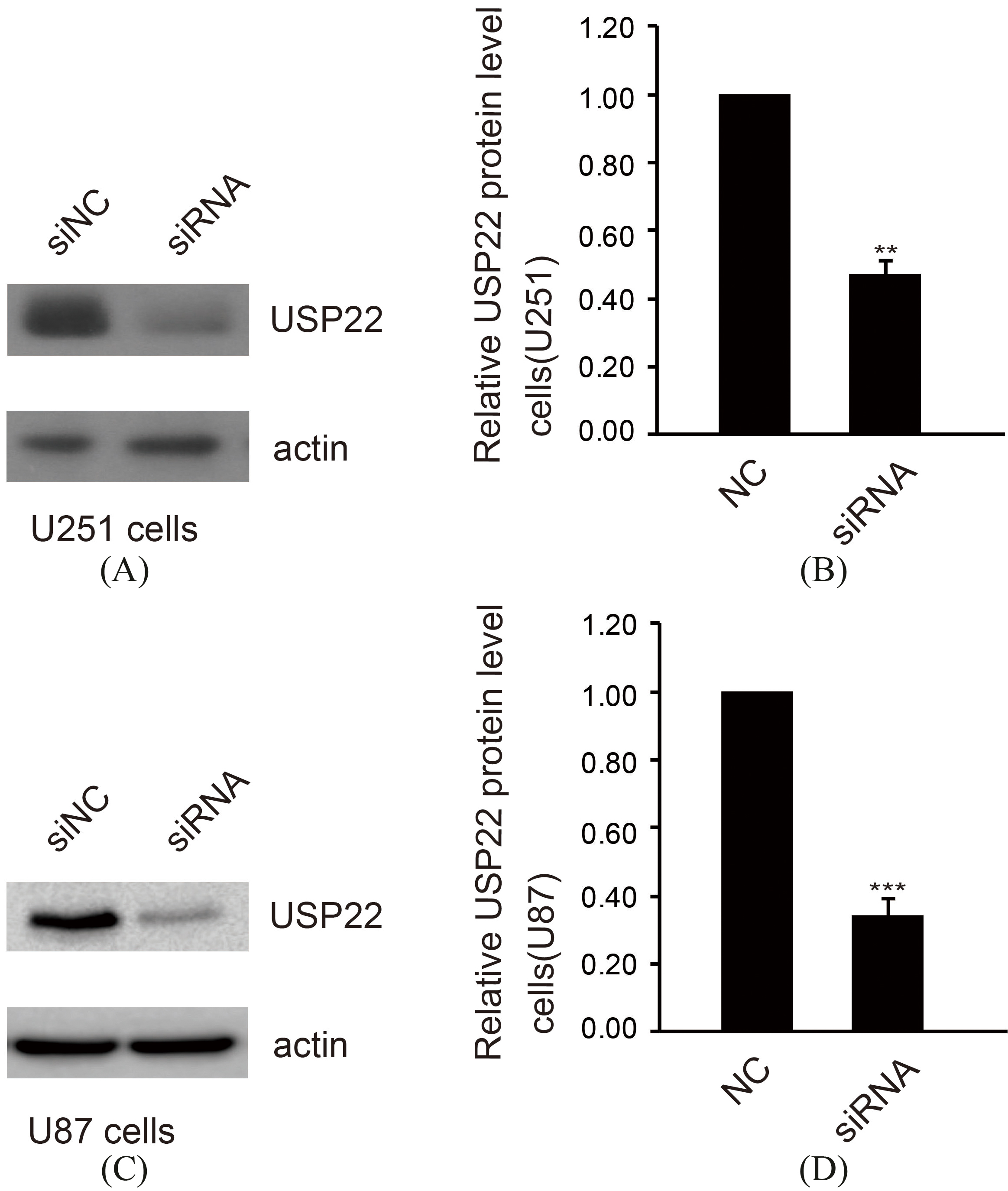
Transwell system (Corning, NY, USA) was used to detect the cell invasion assay. Counting and adjusting the treated cells to the density of 5
Gelatin zymography assay
Gelatin zymography assay was used to measure the level of expression of MMP2 which released into serum-free media. Transfection with siRNA, cells were cultured in serum-free media for 24 h, and the conditioned media was harvested and centrifuged. After the measurement of protein concentration and leveling protein concentration then resuspended the protein in SDS loading buffer without
Statistical analyses
Data was presented as the mean
Results
Cell culture
U251 and U87 are frequently used malignant glioma cells, through our repeating tests, U251 and U87 cells may be cultured better and express USP22 protein more highly and stably in our laboratory.
The validation of USP22 siRNA transfection
Firstly, the effect of USP22 siRNA transfection was validated in U251 and U87 cells, as the Fig. 1 showed, the expression of USP22 was decreased after siRNA transfection.
Effect of USP22 on glioma cell proliferation
Cell proliferation is an important factor in the progression of tumor. The change of cell cycle could affect the ability of cell proliferation. USP22 could regulate the stage of cell cycle [5, 6, 11], so we want to examine the role of USP22 in glioma proliferation. EdU assay was used to detect the possible change of cell proliferation after interfering USP22 by siRNA. The results showed that the EdU positive cells were decreased by 25% in U251 cells (
The effect on proliferation of glioma cells after interfering USP22 by siRNA. A and B: The EdU photographs for the detection of EdU positive cells respectively to U251 and U87 cell lines. C and D: The quantitative statistical results of the changes between NC and siRNA groups for U251 and U87 cells respectively. *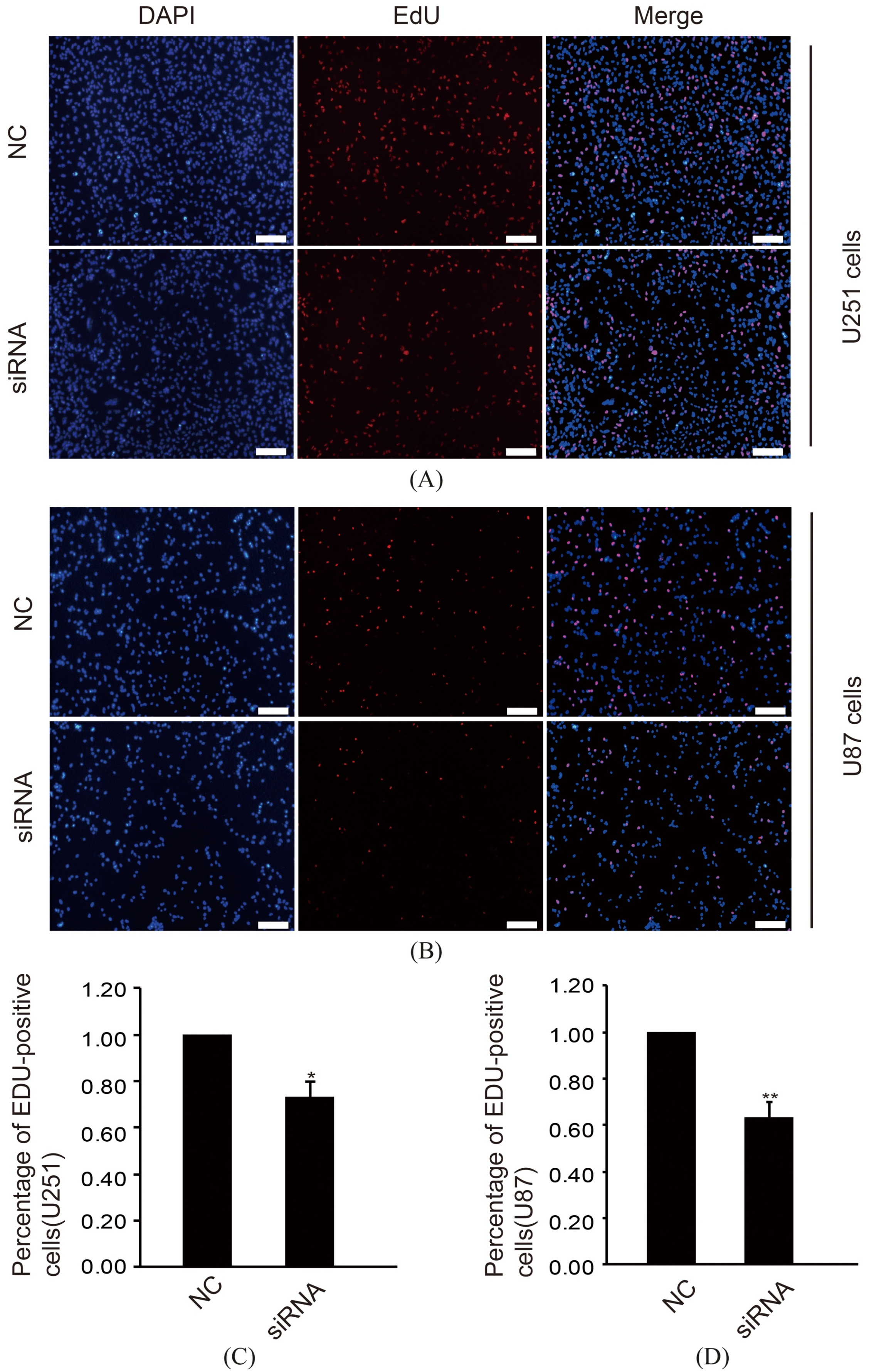
The postoperative remained tumor cells, which can invade the nontumorous tissues on the edge of tumor, are the critical factor for the relapse of tumor. USP22 is a new putative stem cell marker for malignant tumor and plays an important role in the progression of cell cycle and tumorigenesis. But the influence of USP22 on the ability of invasion and migration on glioma cells is little known. Wound healing assay and matrigel-precoated transwell chambers were used to detect the change of migration and invasion after the knockdown of USP22 by siRNA about 24 h, respectively. As shown in Figs 3 and 4, the number of migratory cells was decreased markedly by about 74% in U251 cells and 47% in U87 cells compared with the negative control groups (
The migration and invasion of U251 cells were decreased after interfering USP22 by siRNA. A: U251 cells transfected with siRNA of USP22 were made a lesion about 24 h and got representative pictures at 0 h and 24 h. B: The invasive cells traversing through the filters were detected by transwell chambers with matrigel and got representative pictures at 24 h. C: The migratory cells of the two groups (NC, siRNA) were counted and quantitative analyzed, the number of migratory cells (siNRA) was obviously decreased compared with the NC group. D: The invasive cells of the two groups (NC, siRNA) were counted and quantitative analyzed, the number of invasive cells (siNRA) was obviously decreased compared with the NC group. *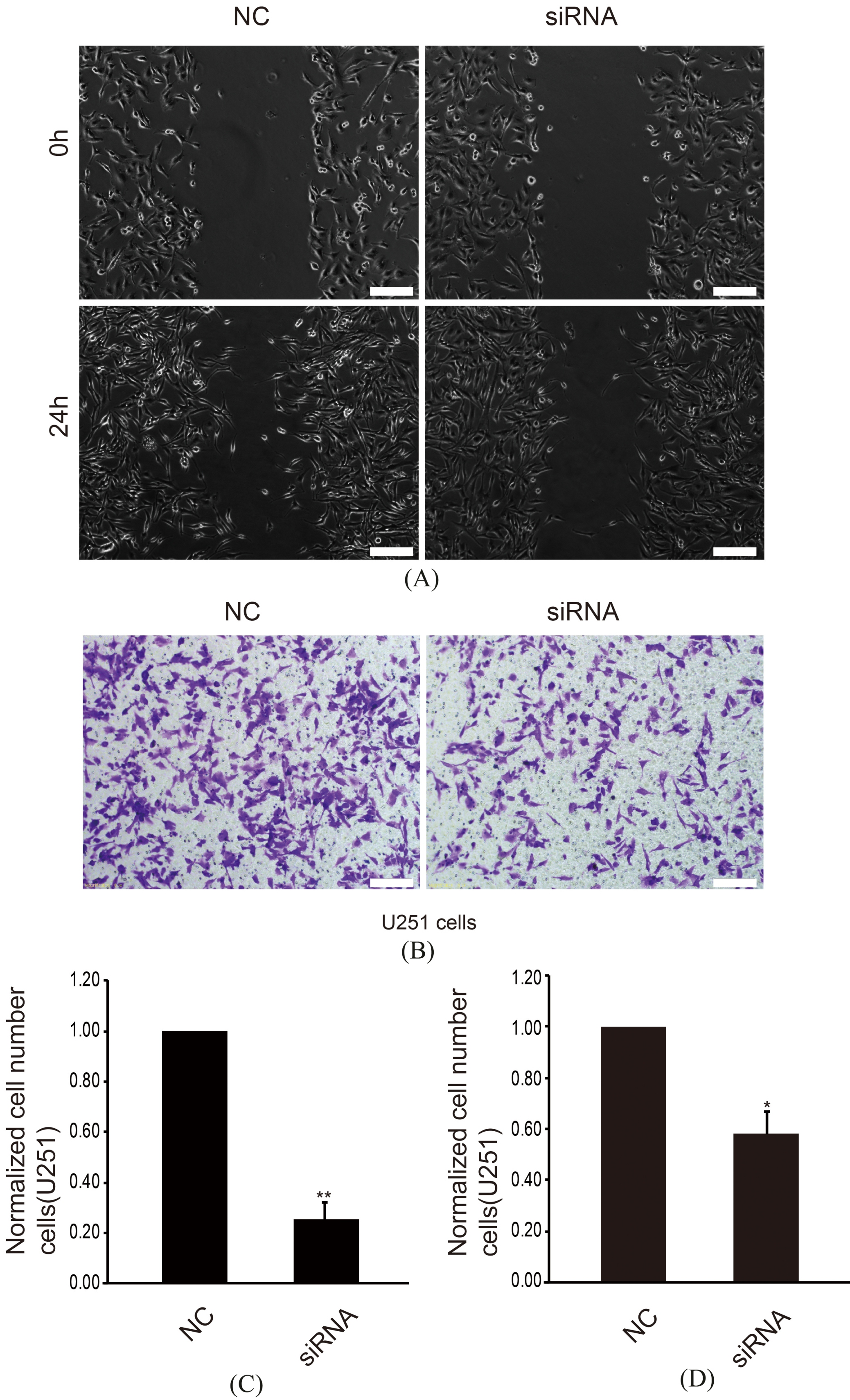
The migration and invasion of U87 cells were decreased after interfering USP22 by siRNA. A: U87 cells transfected with siRNA of USP22 were made a lesion about 24 h and got representative pictures at 0 h and 24 h. B: The invasive cells traversing through the filters were detected by transwell chambers with matrigel and got representative pictures at 24 h. C: The migratory cells of the two groups (NC, siRNA) were counted and quantitative analyzed, the number of migratory cells (siNRA) was obviously decreased compared with the NC group. D: The invasive cells of the two groups (NC, siRNA) were counted and quantitative analyzed, the number of invasive cells (siNRA) was obviously decreased compared with the NC group. *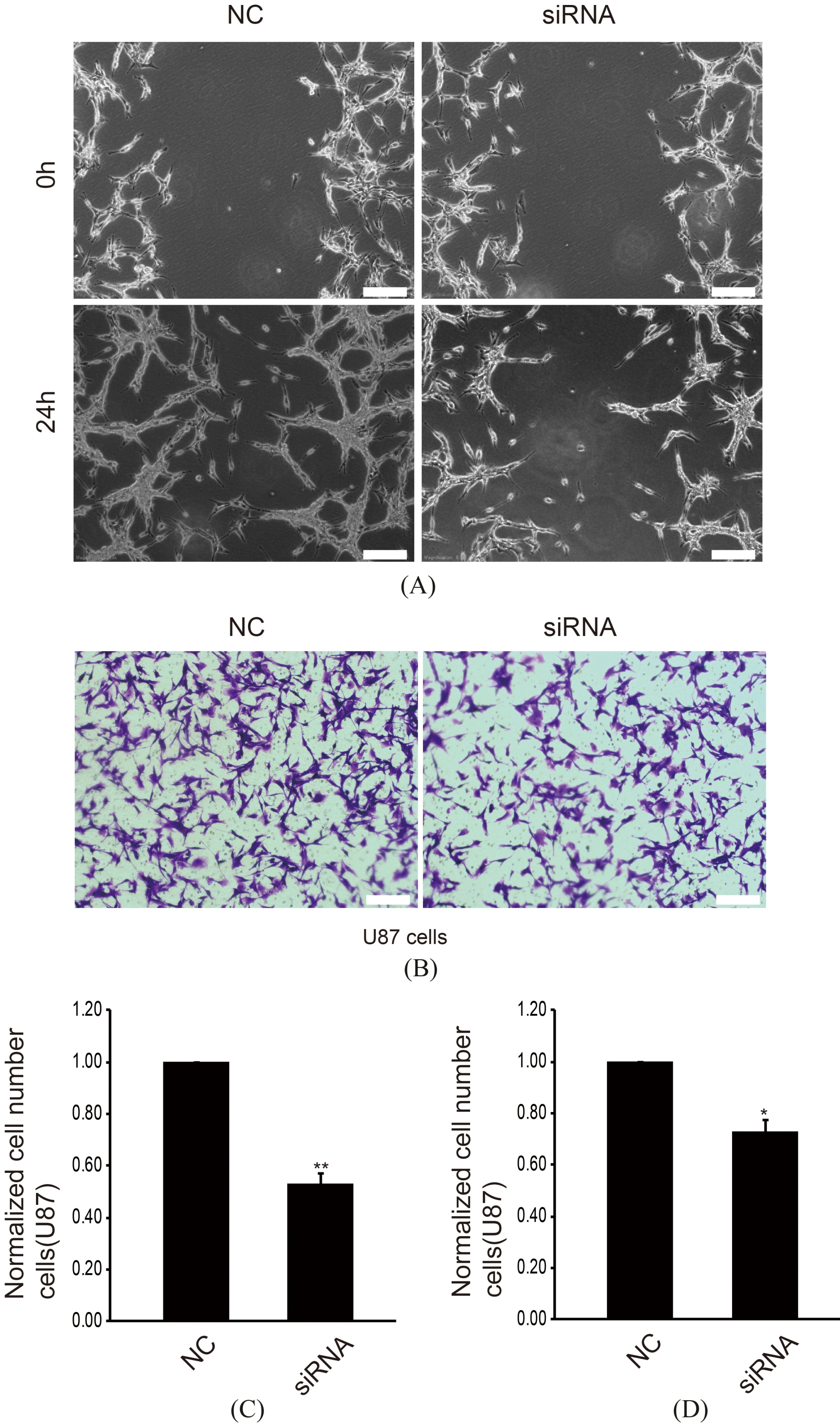
The excretion of MMP2 were reduced after interfering USP22 by siRNA in U251 and U87 cells. A and C: Gelatin zymography assay showed that down-regulation of USP22 suppressed the excretion of MMP2. B and D: The quantitative analysis of the expression of MMP2 after interfering USP22 by siRNA. *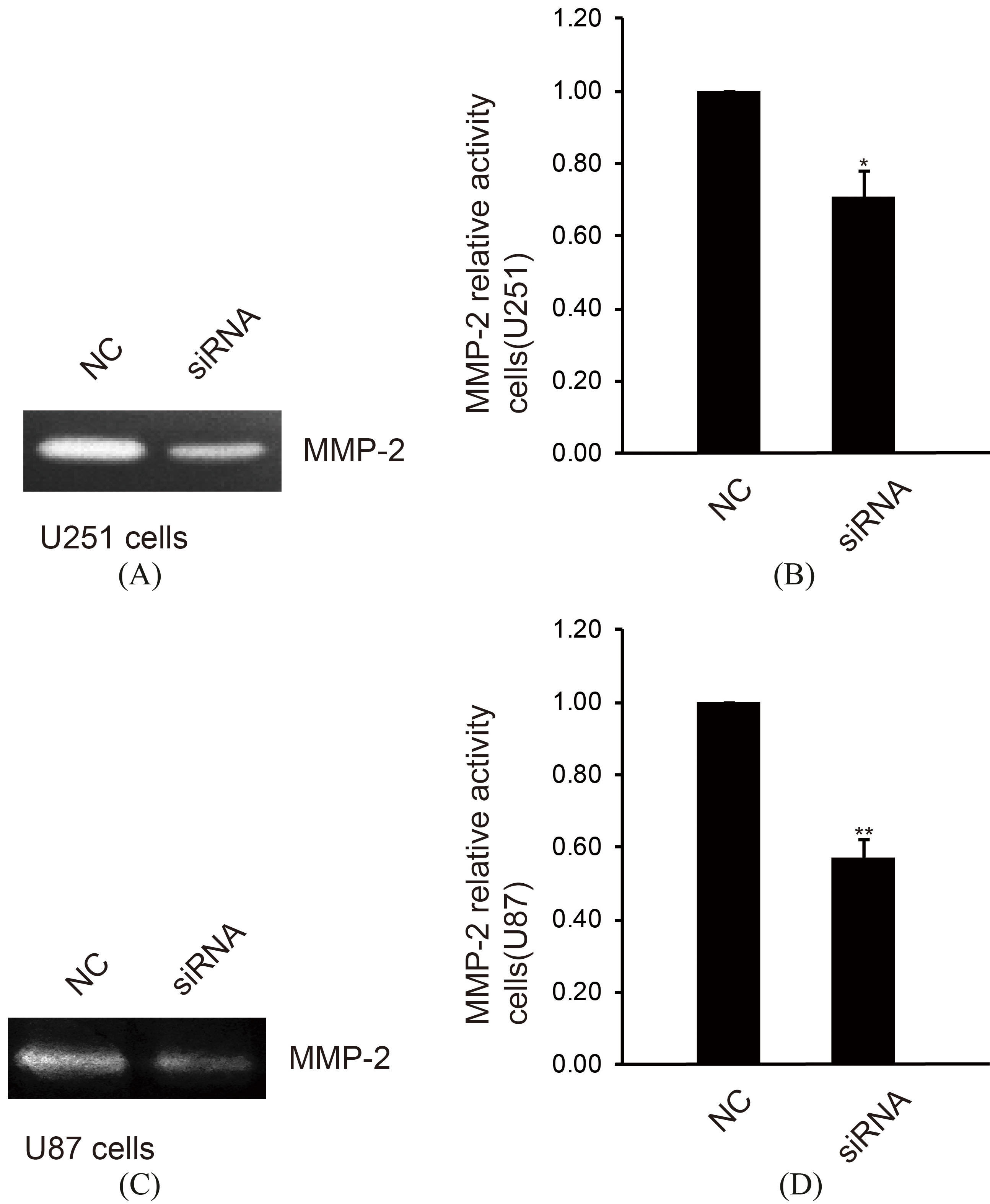
MMP2, which belongs to the family of MMPS and can enhance the ability of invasion, was also detected by the gelatin zymography assay. The level of MMP2 secreted to serum-free medium was decreased compared with the control group after the knockdown of USP22 (
Discussion
Glioma is the most common tumor of the central nervous system, based on the standard of World Health Organization (WHO), glioma is grouped into four grades, grade I and II are low malignant, grade III and IV are high malignant, grade III–IV have stronger proliferative and invasive capacity. Patients with high grade glioma had a poor overall survival compared with patients with low grade glioma. Although the improvement of surgery and adjuvant chemo-radiotherapy for the decades, tumor malignant progression and relapse can not be controlled effectively [1, 2]. Investigation on the role of mechanistic role of USP22 in the development of glioma is needed.
More and more studies have strongly supported the view that USP22 is a novel important tumor stem marker, it is over-expressed in many kinds of tumor, it plays a key role in oncogenesis and cell cycle progression [3, 4, 5, 6, 7, 8, 9, 10, 11]. Kaplan-Meier analysis revealed that the expression level of USP22 was obviously related to the prognosis of patients with oral squamous cell carcinoma, salivary duct carcinoma, papillary thyroid carcinoma and gastric carcinoma [7, 8, 9, 10]. As one of the deubiquitin-proteases, USP22 is a subunit of the human SAGA complex required for activated transcription and cell-cycle progression [5]. In human hepatoma cell line HepG2, knockdown the expression of USP22 by siRNA induced the cell cycle arrest [6], the same result was got in human glioma cell lines [11]. In some tumors, the protein levels of USP22 were high and apparently correlated to the time of recurrence, poor prognosis, distant metastasis and treatment failure [4, 12, 21]. The molecular mechanism of USP22 regulating the cell cycle has had some preliminary findings, noticeably, USP22 could regulate cell cycle progression and proliferation, at the same time, accompanied with the change of Bmi-1 in many kinds of tumors [3, 10, 12, 13, 14, 15, 16, 17, 18, 19].
Our previous studies have presented USP22 was over-expressed in glioma tissues by immunohistochemistry and western blot, and patients with high expression of USP22 had a poor survival than that with low expression of USP22 [21], that is, we have preliminarily determined that USP22 plays a role of promoting glioma development from the levels of tissues and clinics, then, it is necessary to further research the concrete effect on biological activities of glioma cells. In present study, in view of an oncoprotein over-expressed in glioma tissues, we firstly performed siRNA experiment to knockdown the expression of USP22 in U251 and U87 glioma cells, aiming at weakening the role of USP22 in glioma cells. Cell proliferation is the most basic feature in the growth and development of tumor, so, detecting the change of proliferation ability is the most primary method to research the role of oncoprotein or suppressor protein in tumor. In present study, through the method of EdU, proliferation of glioma cells was observed to be decreased after transfecting USP22 siRNA, this indicated that USP22 might enhance the proliferation ability of glioma cells. There was still a phenomenon to be observed in our experiments, that was the influences to U87 cells were stronger than that to U251cells after the knockdown of USP22. The studies by Qiu et al. probable explained this phenomenon [20], USP22 was more enriched in stem-like tumorspheres, that was to say, the stronger the cell’s ability to differentiate, the greater the effect of USP22 on it. The malignancy (division and atypia observed in culture) of U87 cells was greater than that of U251 cells, so, the changes of biological behaviors (proliferation) of U87 were more obvious than that of U251 after the knockdown of USP22.
Besides proliferation, migration and invasion are also important reason for malignant tumor cell extending around. Subsequently, in our experiment, we observed that the migration and invasion abilities of glioma cells were also weakened after USP22 knockdown, this also indicated that USP22 might enhance the migration and invasion abilities of glioma cells.
MMP2 is an important member of matrix metalloproteinases family (MMPs). It is up-regulated in many cancers [23], including glioblastomas [24]. MMP2 may break down type IV collagen, gelatin, elastin, proteoglycans and other collagenous compounds of the enterprise content management [25]. MMP2 plays a vital role in tumorigenesis, angiogenesis and tumor invasion. So, MMP2 was also detected using a gelatin zymography assay, we found that knockdown of USP22 induced a notable reduction in MMP2 secretion, consistent with the effect on invasion.
So taken together, we concluded that USP22 also acted as an important oncoprotein in glioma and could promote the growth and development of glioma. However, its involved mechanism required our further investigation.
Footnotes
Acknowledgments
This study was supported by grants from the College Innovation Project of Jiangsu Province of China (SJCX17_0551).
Conflict of interest
None declared.