




Abstract
BACKGROUND:
An overwhelming amount of evidence has emerged suggesting that dysregulated microRNAs (miRNAs) play crucial roles in tumorigenesis.
OBJECTIVE:
The study was to analyze tissue/serum miR-144 expression in gastric cancer and then evaluate their potential to predict the prognosis of gastric cancer.
METHODS:
We examined miR-144 levels in tissues and peripheral blood samples from 96 gastric cancer patients using real-time PCR. Then the association between tissue/serum miR-144 levels and clinicopathological parameters was determined.
RESULTS:
The expression levels of miR-144 were significantly down-regulated in the cancerous tissue and serum samples from gastric cancer patients. Serum miR-144 was able to differentiate the gastric cancer patients from healthy controls with high accuracy. In addition, tissue and serum miR-144 levels were both associated with clinical stage and lymph node metastasis. Moreover, patients with lower tissue or serum miR-144 suffered worse 5 year overall survival and disease free survival.
CONCLUSIONS:
Taken together, our data support the potential clinical value of tissue and serum miR-144 as prognostic biomarkers in gastric cancer.
Introduction
Gastric cancer is one of the most common malignancy and the third leading cause of cancer mortality around the world [1, 2]. Although improvement has been made in the diagnosis and therapeutic approaches, most of gastric cancer patients have unfavorable prognosis, with an overall five-year survival rate less than 30% [3]. Therefore, exploring molecular biomarkers that contribute to early stratification of gastric cancer patients with poor prognosis would help select most effective and appropriate therapeutic strategies.
MicroRNAs (miRNAs) are a large class of highly conserved post-transcriptional regulatory molecules that regulate gene expression by binding to complementary sequences in the 3’untranslated regions of target mRNAs [4, 5]. Accumulative evidence has showed that aberrant expression of miRNAs is broadly involved in a number of human diseases including cancer [6]. MiRNAs can act as either oncogenes or tumor suppressors during the carcinogenesis [7, 8]. For instance, the expression level of miR-421 was significantly up-regulated in gastric cancerous tissues and increased miR-421 level was associated with poor prognosis of gastric cancer, suggesting miR-421 functioned as an oncomiR in gastric cancer [9]. Reduced miR-26b was correlated with advanced clinical stage and worse survival rate. In addition, ectopic expression of miR-26b suppressed the migration and invasion capacity of cancer cells both in vitro and in vivo, and down-regulation of miR-26b had opposite effects [10].
Deregulated expression of miR-144 has been reported in many types of cancers including gastric cancer [11, 12, 13, 14]. However, its clinical significance is unclear. In the current study, we first evaluated the expression pattern of miR-144 in the tissue and serum samples. Then the diagnostic and prognosis value of tissue/serum miR-144 in gastric cancer was further determined.
Association of tissue miR-144 with clinicopathological factors of gastric cancer
Association of tissue miR-144 with clinicopathological factors of gastric cancer
Association of serum miR-144 with clinicopathological factors of gastric cancer
Patients and samples
A total of 96 patients with biopsy-proven gastric cancer and 40 healthy controls were recruited from Department of the Gastrointestinal Surgery, the First Hospital of Jilin University during 2010–2015. The study design was approved by the Research Ethics Committee of the First Hospital of Jilin University. All participants signed an informed consent form for retrieving medical records and for collection of blood and tissue samples for research. Snap-fresh gastric cancer tissues and paired adjacent normal tissues were obtained from each patient during surgery and then stored in liquid nitrogen until further use. Up to 5 ml of peripheral blood was withdrawn from each participant. The blood was centrifuged at 1200 g for 10 min at 4
Real time qRT-PCR analysis
Total RNA from fresh tissue and serum samples was isolated using the mirVana miRNA Isolation kit (Ambion, Austin, TX, USA) according to the manufacturer’s instructions. Complementary DNA was synthesized using a TaqMan MicroRNA Reverse Transcription Kit (Applied Biosystems, Foster City, CA, USA). Quantification of tissue/serum miR-144 was performed by qRT-PCR using SYBR PrimeScript RT-PCR Kit (Takara, Dalian, China) on the 7900HT Fast Real-time PCR system (Applied Biosystems). All reactions were performed in triplicate and small nuclear RNA U6 was used as the normalization control. The relative expression levels of tissue/serum miR-144 were calculated using the method of 2
Statistical analysis
The Mann-Whitney test was performed to determine tissue miR-144 levels between the gastric cancer and non-tumor adjacent tissues as well as serum miR-144 levels between gastric cancer patients and healthy controls. Differences between categorical variables were evaluated with the Chi-square test. Receiver operating characteristic (ROC) curve was used to determine the discriminatory capability of serum miR-144. For survival analysis, the Kaplan-Meier method was performed to find out the correlation between tissue/serum miR-144 and overall survival/disease free survival, and the log-rank test was used to compare survival curves. All statistical analyses were performed using the SPSS 18.0 statistical software package (SPSS Inc., Chicago, IL, USA).
Tissue miR-144 expression between cancerous tissues and adjacent normal tissues in gastric cancer.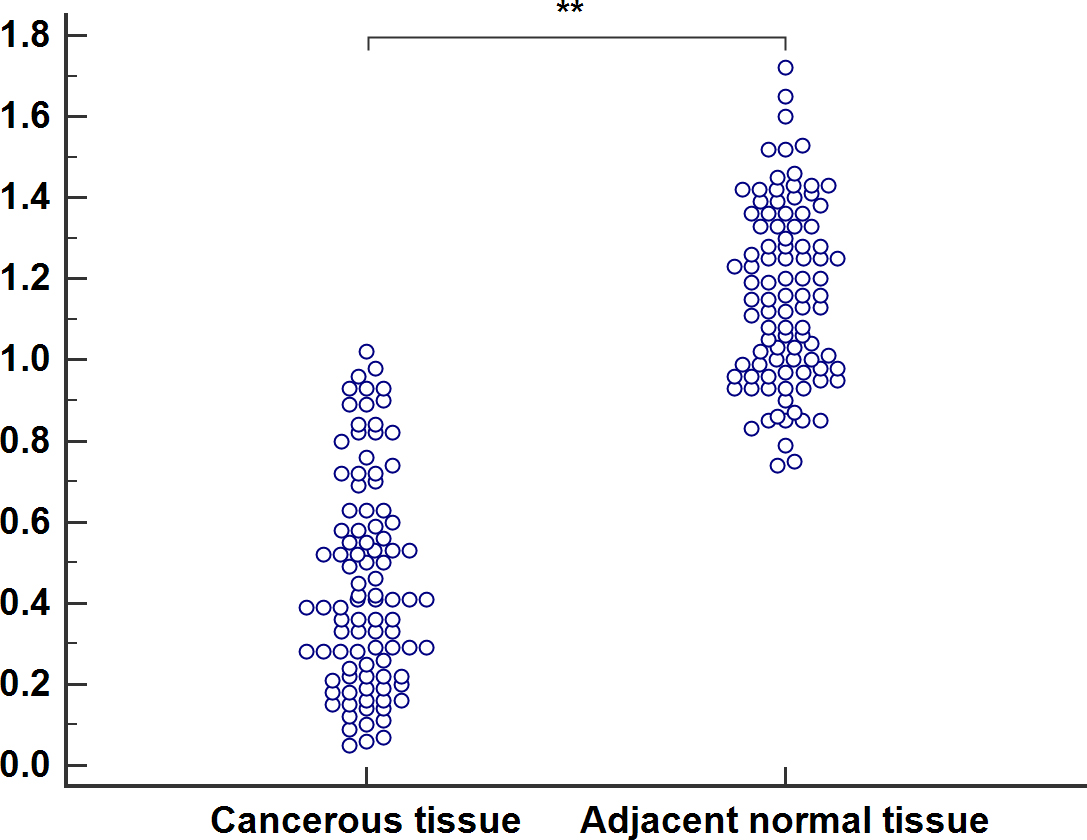
The diagnostic value of serum miR-144 in gastric cancer.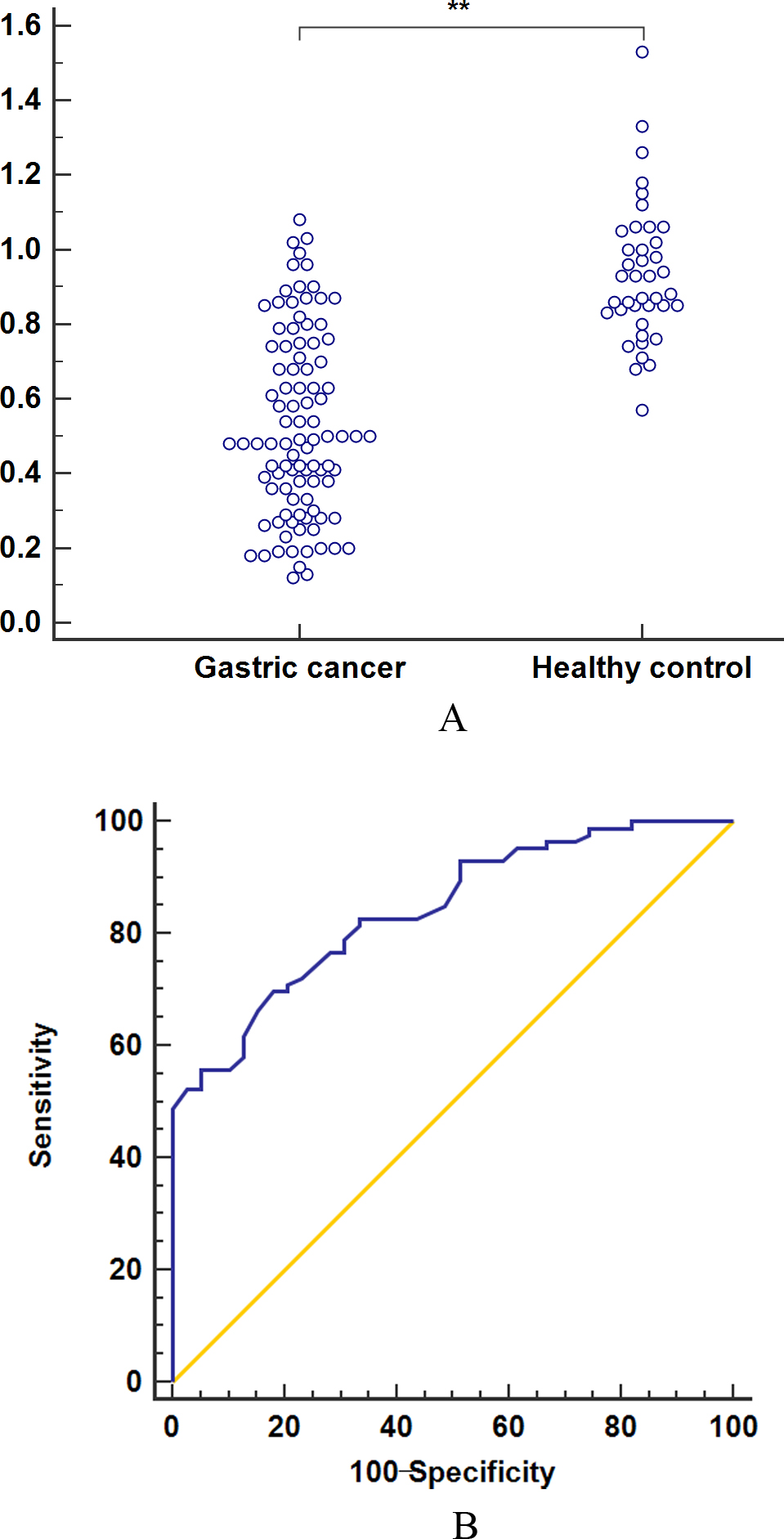
Prognostic value of tissue miR-144 levels in gastric cancer.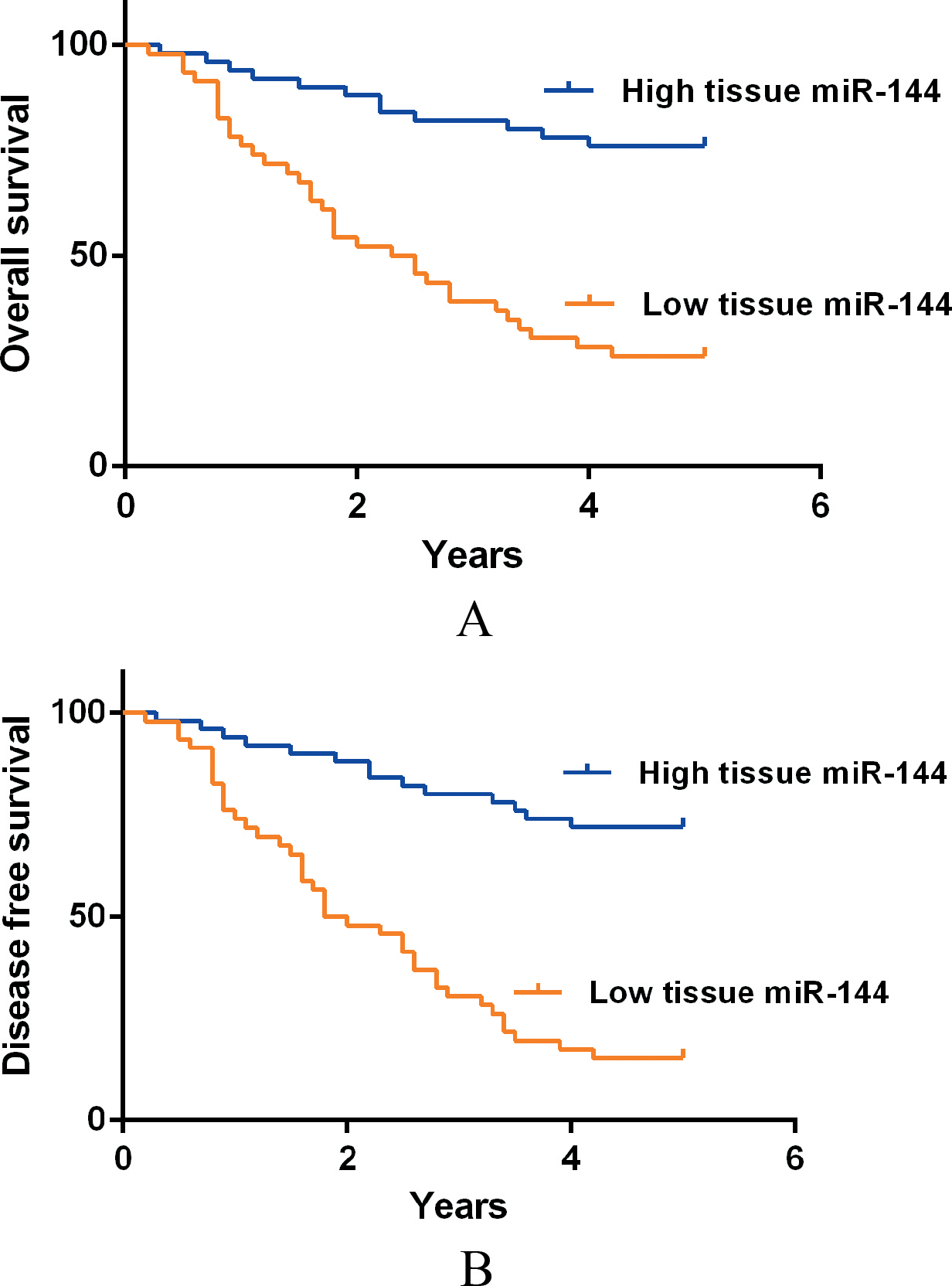
Prognostic value of serum miR-144 levels in gastric cancer.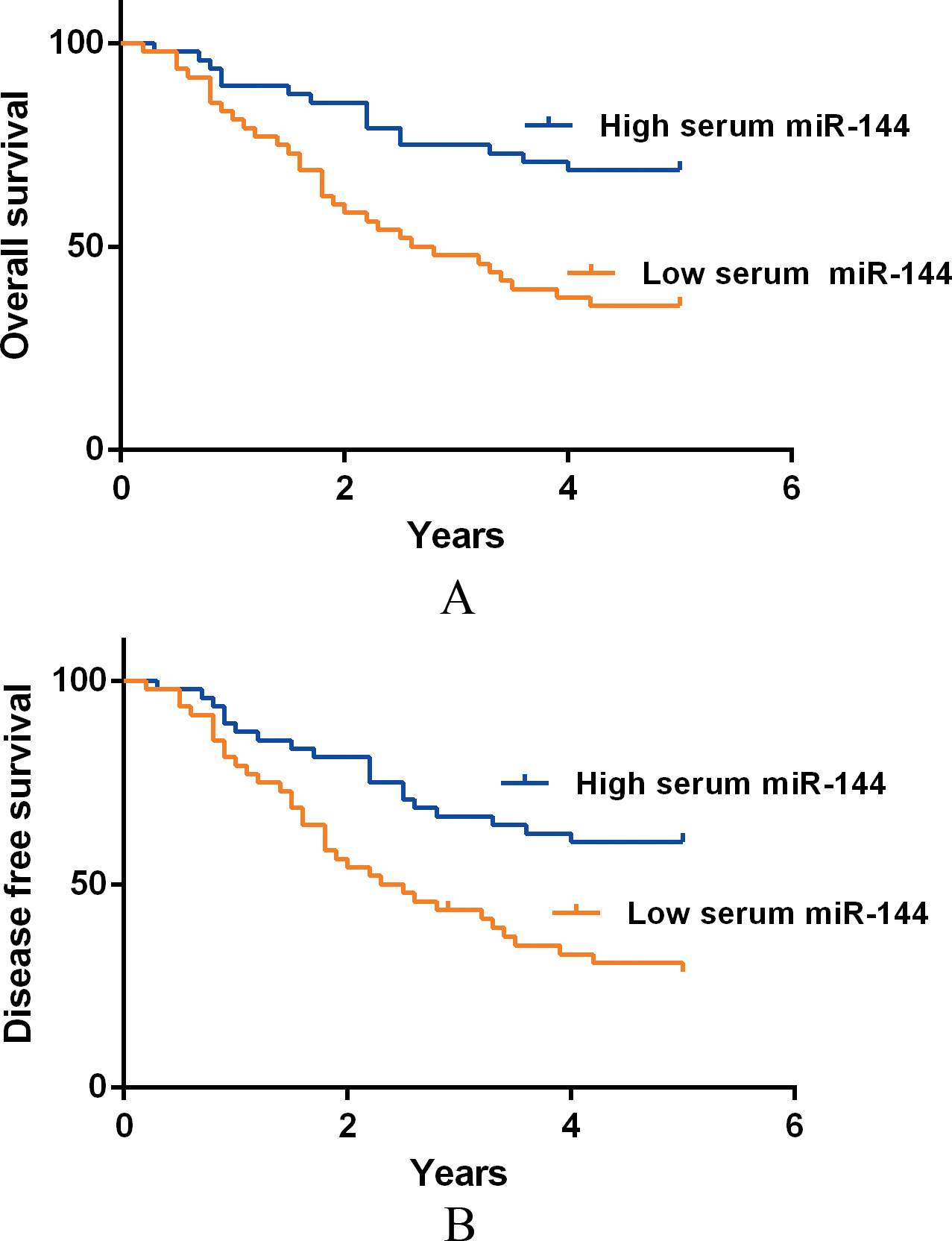
Decreased tissue and serum miR-144 level in gastric cancer
The expression levels of tissue miR-144 in cancerous tissues and adjacent normal tissues were analyzed using real-time PCR. The median tissue miR-144 level in tumor tissues (0.43 fold) was significantly reduced compared to normal tissues (1.06 fold) (
Similarly, the median value of serum miR-144 was remarkably lower in gastric cancer patients (0.45 fold) compared with healthy individuals (1.01 fold) (
Association between miR-144 levels and clinicopathological characteristics in patients with gastric cancer
The gastric cancer patients were classified into the low tissue/serum miR-144 group and the high tissue/ serum miR-144 group based on the median expression level of tissue/serum miR-144. Chi-square test was performed to evaluate the association between tissue/serum miR-144 levels and clinicopathological parameters. Both low tissue miR-144 (
Prognostic value of tissue/serum miR-144 levels in gastric cancer
We then employed Kaplan-Meier analyses to elucidate the prognostic value of tissue/serum miR-144 levels in gastric cancer. The 5-year overall survival rate for gastric cancer patients with low and high levels of tissue miR-144 were 26.09% and 76% respectively (
Similarly, patients with lower levels of serum miR-144 had worse 5-year overall survival (
Discussion
TNM stage is still an important predictor associated with clinical outcome of gastric cancer. However, patients in the same TNM staging group might have a wide range in survival rates and therapeutic responses. Therefore, its calibration capacity needs improvement. Recently, some novel methodologies such as diffusion-weighted magnetic resonance imaging and liquid biopsy have show great promising for staging and predicting the prognosis of gastric cancer [16, 17, 18, 19].
In this study, our results showed that the expression level of miR-144 was significantly down-regulated in the tissue and serum samples from gastric cancer. In addition, tissue and serum levels of miR-144 were lower in cancerous tissues and gastric cancer patients compared to their respective controls. Serum miR-144 could discriminate the gastric cancer patients from healthy volunteers. Moreover, the expression levels of tissue/serum miR-144 were demonstrated to be significantly associated with the prognosis of patients with gastric cancer. To the best of our knowledge, this is by far the first study to evaluate the predictive and prognostic value of tissue/serum miR-144 in gastric cancer. This findings indicate that miR-144 probably acts as a tumor suppressor in gastric cancer.
Our results were consistent with the findings in the previous studies. miR-144 was significantly reduced in highly metastatic gastric cancer cell lines and tissues. In addition, over-expression of miR-144 inhibited the oncogenic associated behaviors of gastric cancer cells both in vitro and in vivo, and vice versa [14]. Similarly, diminished miR-144 was found to be associated with poor clinical outcome of gastric cancer, indicating miR-144 played a critical role in tumor progression of this malignancy [20]. In addition to gastric cancer, miR-144 acted as a tumor suppressor gene in many types of cancers. For instance, both miR-144 and miR-26a were decreased in esophageal squamous cell carcinoma (ESCC) tissues compared with corresponding normal tissues. Co-transfection of miR-26a and miR-144 suppressed the proliferation, migration, and invasion capability of ESCC cells and cyclooxygenase-2 was demonstrated be the downstream target of miR-26a and miR-144 [21]. MiR-144 was reduced in both uveal melanoma cells and tissues. Up-regulation of miR-144 inhibited the proliferation and invasion capacity of uveal melanoma cells by down-regulating the expression level of c-Met [22].
Despite miR-144 functioned as a tumor suppressor in most cancers reported so far, it might also act as an oncogene. The expression level of miR-144 was significantly increased in nasopharyngeal carcinoma (NPC) tissues and cell lines. In addition, miR-144 down-regulation suppressed cell proliferation, clonogenicity, migration, invasion in vitro as well as tumor formation in vivo. Contrary findings were observed when miR-144 was over-expressed. Moreover, phosphatase and tensin homolog (PTEN), a known tumor suppressor gene, was directly regulated by miR-144, indicating miR-144 functions as an onco-miRNA in NPC [23]. MiR-144 was over-expressed in insulinomas and its over-expression promoted cell proliferation by targeting PTEN/AKT pathway [24].
The low sample size is a limitation of this study, which make it difficult to establish the strong association between tissue/serum miR-144 and prognosis of gastric cancer. Future studies with larger sample sizes are needed to better determine the clinical significance of miR-144 in gastric cancer. Some patients did receive chemotherapy before surgery which indeed might affect the analysis associated with prognosis. Biopsies are invasive and can’t be used repeatedly. Therefore, we will further investigate the effects of chemotherapy on the serum miR-144 levels in the future study. In addition, further investigations are required to reveal the underlying molecular mechanisms.
Overall, this is the first study to report low miR-144 expression levels in gastric cancer tissues and serum was significantly correlated with worse clinical outcome of gastric cancer, suggesting miR-144 might be a novel biomarker for predicting the prognosis of patients with gastric cancer.
Conflict of interest
None.