




Abstract
INTRODUCTION:
Breast self-examination (BSE) is a screening method that can help empower, raise awareness, and detect breast abnormalities in women. The use of smartphone applications for breast cancer early detection is able to overcome some of these barriers. This study aimed to conduct a systematic review to assess the effectiveness of the effect of using smartphone application-based technology on breast cancer.
METHODS:
Google Scholar, PubMed, Proquest, and ScienceDirect were searched for “breast self-examination” and “smartphone application” literature. This literature’s study designs were quasi-experimental, prospective cohort, qualitative, and systematic review. The study contained five unique research projects with 828 varied participants.
RESULTS:
The use of smartphones was seen to have advantages in terms of increased knowledge, perceived vulnerability, barriers to breast self-examination (BSE), self-efficacy, health motivation, and BSE practices.
CONCLUSIONS:
The utilization of smartphone apps related to BSE is shown through the availability, accessibility, and focus of information and is in line with the Health Belief Model (HBM).
Introduction
Globally, breast cancer is the leading cause of death for women [1–3]. The World Health Organization’s Global Breast Cancer Initiative (GBCI), to realize the common goal of reducing breast cancer by 2.5% per year to save 2.5 million lives in the next 20 years, implemented three main strategies to achieve this goal, including health promotion and early detection [4].
Early detection is paramount in the fight against breast cancer, as it enables timely intervention and treatment, leading to improved prognosis and increased survival rates [1,2,5,6]. Empowering women with knowledge about breast health and early detection methods is critical to achieving these goals [5,7–9]. A number of studies suggest that breast cancer early detection education can improve knowledge and awareness of early detection methods [10] and can increase utilization of screening services such as clinical breast examination [11].
Early detection can be done by individual breast self-examination or clinical breast examination by a doctor or nurse, and both are screening methods that have long been recommended for early detection and have detected many breast cancers [9,12]. Breast self-examination (BSE) is a screening method that can help empower, raise awareness, and detect breast abnormalities in women [8].
Among the barriers or challenges in performing breast self-examination (BSE), the most dominant is low knowledge accompanied by negative attitudes and perceptions about BSE [8,13–16]. Nevertheless, the utilization of smartphone applications for breast self-examination, termed smartphone breast application, can overcome some of these barriers. Aprianti and colleagues found that using an android-based breast cancer early detection application for adolescent girls can increase their knowledge [10]. Furthermore, a quasi-experimental study found that the scores of perceived vulnerability, BSE barriers, self-efficacy, and health motivation regarding breast self-examination were significantly higher in the intervention group (i.e., using a smartphone application) compared to the control group [17]. The use of smartphone apps accompanied by hands-on practice is an effective method for breast self-examination [18]. Based on these findings, this study aimed to conduct a systematic review to assess the effectiveness of smartphone application-based technology on breast self-examination.
Methods
Search strategy and inclusion criteria
Several databases, including Google Scholar, PubMed, Proquest, and ScienceDirect, were used to search for the desired literature using the keywords “breast self-examination” and “smartphone application”. This study included literature published within the last five years in English or Indonesian and open-access.
Population
This study generally included women in the general population, clinic referrals, hospital attendees, breast cancer, and adolescent girls.
Study design
Study designs in this literature included quasi-experimental, prospective cohort, qualitative, and systematic reviews.
Study selection and data extraction
Two independent reviewers were engaged in selecting literature search results and data extraction. All articles that met the inclusion criteria were deposited into Mandeley software. Any disagreements were resolved through discussion. Data extraction included study characteristics such as title, objective, author, year of publication, study design, sample, instrument, and outcome.
Results
Journal research
A number of databases obtained from the Google Scholar database of as many as 967 studies, Pubmed database of as many as 8 studies, Proquest database of as many as 39 studies, and ScienceDirect database of as many as 31 studies with a total of 1045 studies were identified. A total of 1004 studies were excluded due to duplication and other reasons. Furthermore, out of 41 studies, 34 had to be excluded, leaving 7 studies that were successfully included in this study (Fig. 1).
Study inclusion characteristics
Study setting
A number of literature with observational and experimental studies were conducted in Indonesia with 1 study, Iran with 1 study, Malaysia with 2 studies, and Poland with 1 study. The remaining two studies were systematic review studies. All studies were conducted from 2019–2022, with details of 1 study in 2019, 2 in 2021, 3 in 2022, and 1 in 2023. The purpose of the research in this literature was to test the effectiveness of smartphone application-based technology on breast self-examination.
Population
This study involved literature with a diverse population with an overall sample of 828 people in 5 original research studies. The studies by Yusuf et al. and Bladja et al. used populations of 41 and 500 general women, respectively, which were involved [19,20]. Shakery et al. used women referred to therapy clinics totaling 150 people [17]. Aprianti et al. used 100 adolescent girls [10]. Nasution et al. involved general women attending hospital services plus 37 software and content experts [21]. Systematic review studies by Kanodia et al. and Cruz et al. included general women and women with breast cancer [22,23].
BSE apps
In general, the apps used are mobile or smartphone apps. The study by Shakery et al. used a smartphone application consisting of BSE reminders, training, alarms, therapy feedback, educational movies, and self-assessment [17]. Yusuf et al. used the BrAware app to improve knowledge of BSE risk factors, awareness of warning signs, and confidence in performing breast self-examination [19]. Bladja et al. used a proprietary mobile medical app based on a conditioned algorithm containing personalized education on breast cancer [20]. Aprianti et al. used an android-based adolescent breast cancer early detection application that contained breast health education [10]. Nasution et al. used a mobile application based on Health Belief Model (HBM) components to be integrated with health promotion strategies [21]. Based on their alleged interactive features, Kanodia et al. selected a database using AppAgg and Google Play Store apps [23]. Cruz et al. selected the use of mobile apps for self-care management of side effects of toxicity due to breast cancer therapy [22].
Outcome
All studies reported that smartphone-based mobile apps were effective in breast self-examination (Table 1). The effectiveness of smartphone apps can be perceived through app utilization and perceived app benefits. Study 5 reported that 84.7% of BSE-related smartphone apps focused on disseminating information about breast cancer. A qualitative study (Study 4) also reported that themes and subthemes related to BSE app utilization generally supported the Health Belief Model (HBM). The perceived benefits of using the app included an increase in participants’ knowledge after the intervention (Studies 2 and 7), differences in scores on perceived vulnerability, BSE barriers, self-efficacy, and health motivation (Study 1), and BSE practices (Study 3). In addition, for breast cancer patients, smartphone-based BSE applications can be a readily accepted source of information and can improve patient well-being (Study 6).
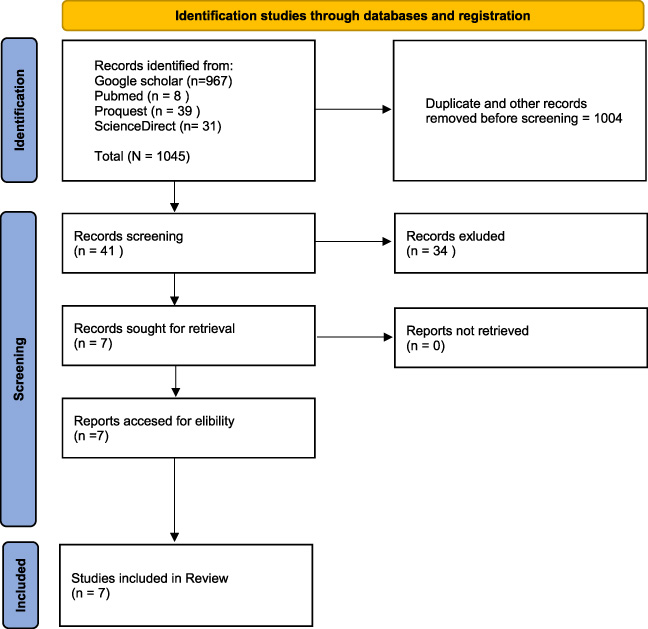
Selection and inclusion study flow (PRISMA diagram).
Characteristics of inclusion studies
This cytatic review study found that smartphone apps were effective for breast self-examination. Of the seven included literature [10,17,19–23], it was reported that the effectiveness of the application was seen along with the perceived benefits. Smartphone apps have practical and versatile functions that are currently difficult to separate daily, so they are more easily integrated into communication and learning [24]. The availability of multimedia content, including images, text, or videos on smartphones that facilitate education, has been associated with improved health and disease screening [24,25]. Yusuf et al. also support the idea that mobile apps have positively impacted health-related behaviors and clinical health outcomes and can be used for educational and personal health purposes [21]. Therefore, the effectiveness of smartphone apps is seen in the availability and accessibility that facilitate learning anytime and anywhere and cannot be replaced by simply reading a textbook [25–27].
Kanodia et al. mentioned in their findings that the use of smartphone apps related to breast self-examination predominantly focuses on disseminating information about breast cancer. This is in line with Coughlin et al., who explained that breast cancer applications generally provide information on breast cancer early detection guidelines [28]. Effective utilization of smartphone applications, according to a study by Nasution et al., is in line with the health belief model (HBM) [21], supported by Yusuf et al. [19]. Shakery et al. [17]. This model can explain a person’s beliefs about the perceived susceptibility of a disease such as breast cancer, benefits and severity, barriers to prevention such as breast self-examination and hospital examination, so that it can affect behavior (self-efficacy) and health outcomes [19,28], and is considered the most popular related to disease prevention and identification of effective determinants in screening behavior [29,30].
Furthermore, the effectiveness of using smartphone apps in breast cancer detection can be perceived through their benefits to early detection, such as breast self-examination. Two studies concluded that there was an increase in participants’ knowledge about breast cancer early detection after interventions using smartphone apps [10,19]. In general, mHealth apps offer education to users [31], containing easily accessible and personalized information associated with increased confidence in decision-making [32], so one of the benefits that will be felt may be increased knowledge. Aprianti et al. reported that the reason participants never performed BSE was because they had never been exposed to information about breast cancer and BSE, which impacted their knowledge about it. Thus, using mobile applications containing practical and multimedia educational content will likely increase knowledge better than controls who do not use it [10].
Another benefit of smartphone applications is increased health-related behaviors, including perceived vulnerability, BSE barriers, self-efficacy, and health motivation. A study by Shakery et al. found that participants with smartphone app interventions scored higher on these behaviors than controls [17]. This increase in behavioral scores is related to the use of applications that are in line with the health belief model (HBM), which emphasizes efforts to increase perceptions of vulnerability, benefits and severity, barriers, efficacy, and motivation for a health behavior [1,17,19,21,29,30].
Furthermore, the use of smartphone applications in the Bladja et al. study can increase the practice of breast self-examination (BSE) [20], and this finding is in line with previous studies that found an increase in the percentage of respondents practicing BSE after receiving interventions through smartphone applications [25,33]. The increase in BSE practice resulted from users’ increased knowledge after using the application. In addition, the knowledge already possessed by users and then exploited with more practical and relevant knowledge from using applications will further encourage the implementation of behavior [25,34]. With their design and content suitability to user needs, smartphone applications can also drive behavioral applications [35]. McKay et al. concluded that there are at least three components of the reason mobile applications can encourage behavior change, including application functions, criticism of application potential, and the quality of content provided by the application [36].
Furthermore, for breast cancer patients, using smartphone applications as a source of information can also improve their well-being [22]. Women who gain knowledge about early detection of breast cancer up to the point of testing positive after screening and follow-up examinations will be better able to promote successful self-care, patient empowerment, and patient well-being. Appropriate app content, high design quality, and satisfaction with the app user experience are among the reasons for such success, which can be demonstrated through increased self-efficacy, decreased symptom distress, and improved quality of life [22,37,38].
The current study has limitations regarding the literature that was included. However, studies related to the effectiveness of smartphone use on early detection of breast cancer are still relatively lacking [19]. In addition, methodological variations in the inclusion studies were not a concern of the researchers but instead focused on the effectiveness of the effect based on the findings, so although the overall inclusion studies point to the effectiveness of using smartphone applications on early detection of breast cancer, potential methodological limitations need to be considered. This research is limited to the findings of studies related to effectiveness through significant effects both originally and analyzed from a number of previous studies but cannot illustrate the magnitude of the effect. In addition, some inclusion studies could not provide a clear picture of the validity of the analyzed application instruments.
Conclusion
The use of smartphone applications for early detection of breast cancer by breast self-examination was found to be effective through the utilization of applications along with the benefits felt both as an effort to prevent and improve breast cancer treatment. The utilization of smartphone applications related to BSE is shown through the availability, accessibility, and focus of information and is in line with the Health Belief Model (HBM). Increased knowledge, perceived susceptibility, BSE barriers, self-efficacy, health motivation, and BSE practices show the effectiveness through perceived benefits. Especially for breast cancer patients, this application facilitates the receipt of information and is able to improve patient well-being.
Footnotes
Acknowledgements
The author would like to Publication Management Unit of the Graduate School for assistance in reviewing this article.
Ethics committee
Not applicable.
Conflict of interest
The authors state that the publishing of this paper does not include any conflicts of interest.
Data availability statement
The data described in this study are accessible upon request from the corresponding author.
Funding
No external funding was used to conduct this article.
Authors contribution
All authors drafted and reviewed the manuscript; NI, ANU, YSB, SS, MA, AAM: design of the work, data collection, and data analysis and interpretation; AAM, NI, and ANU: design of the work, final approval, and supervision; ANU, MA: data collection, and data analysis and interpretation; NI and AAM: final approval and supervision; YSB, SS, MA: supervision.