






Abstract
Population surveys in a number of countries demonstrate the widespread belief that those with a serious mental illness are unpredictable and violent [1–2] and that those committing particularly horrendous crimes are likely to be mentally ill [1,3]. Whilst there is a clear correlation between violent crime, including homicide, and mental illness [4–6], the population attributable risk posed by mentally ill people is low [7] and appears to be largely mediated by comorbid substance abuse and by socio-economic deprivation [8,9]. Indeed the vast majority of those with a mental illness are never violent and are more likely to be the victims of violent crime [10].
Research has consistently shown the media to have an influential role in shaping, predominantly negative, attitudes towards people with mental illness [11–13]. This negativity has been identified in factual and fictitious forms of media [13–15] in many countries around the world [16–18]. Western children's television programmes, especially animated cartoons, for example, contain numerous references to mental illness and frequently portray the mentally ill as criminals, figures of fun, derision or fear with virtually no positive attributes [19–20]. Whilst some argue that these depictions represent journalistic error, or exaggeration in the cause of a good story, others argue that these representations are merely reflections of the ‘commonsense’ view of mental illness shared by both the public and journalists as members of the public [21–22]. Increased television consumption has been found to be associated with the desire for social distance from people with a mental illness, particularly schizophrenia [23], whilst violence-related issues have been identified as the dominant focus of newspaper articles associated with mental illness [24–26]. It has therefore been argued that repeated exposure through the media to negative images of mental illness results in a distorted understanding of the relationship between mental illness and violence and introduces and reinforces stigmatizing beliefs and behaviours regarding people with a mental illness [11–13,22].
Previous studies have found consistent patterns in the selection of homicides for reporting in the media. Rarer and more sensational forms of homicide involving multiple victims, female victims, very young or very old victims, are all over-reported compared to more common homicides involving male victims in their twenties and thirties [27–28]. We are aware of only one study examining the media depiction of mentally ill homicide perpetrators [29]. This New Zealand-based study, contrary to expectation, did not find that the print media differentiated mentally ill homicide offenders found not guilty by reason of insanity (NGRI) from convicted homicide offenders who were not mentally ill. There have been no studies of homicide reporting in the print media that have explored the influence of perpetrator mental illness in general on the likelihood of newspaper reporting. Consequently, the question of whether the media selectively over-report homicides by people with mental illness has not previously been addressed. This cohort study, carried out as part of the National Confidential Inquiry into Suicide and Homicide by People with Mental Illness (NCI) [30], aims to determine whether homicide perpetrators with mental illness are reported in British national newspapers more frequently and/or differently from homicide perpetrators who were not mentally ill. This paper will report the likelihood of homicide reporting, comparing perpetrators with and without prior contact with mental health services as a proxy for mental illness.
Method
Design
A retrospective cohort design was used to explore the relationship between perpetrator mental illness and the likelihood of newspaper reporting of homicide. Multivariate logistic regression was used to estimate the association between previous contact with mental health services and the likelihood of newspaper reporting, adjusting for potentially confounding variables known from earlier studies [27,31–33] to influence the likelihood of newspaper reporting.
Total homicide sample
Demographic and criminal data for all people convicted of homicide (murder, manslaughter or infanticide) in England and Wales between 1 April 2000 and 31 March 2001 were obtained from the Homicide Index at the Home Office, which is the government department responsible for criminal justice matters in England and Wales. The Index contains comprehensive information on all known perpetrators of homicide; including demographic and offence details, sentencing and outcome in court. Psychiatric reports, prepared pre-trial, were then sought on all homicide perpetrators predominantly from court files, but also directly from their authors. From these, details regarding the perpetrator's social and clinical history and mental state at the time of the offence were extracted.
In order to identify those perpetrators with a history of contact with mental health services, identifying details (i.e. name (including aliases), date of birth, date of offence and address) on each perpetrator were submitted to the main hospital and community trust providing mental health services to people resident in the perpetrator's district of residence and adjacent districts. If the perpetrator's address was not known, identifying details were sent to all trusts within the police force area in which the perpetrator had been charged. In those cases where the trust confirmed any previous clinical contact with mental health services, a questionnaire was sent to the supervising clinician responsible for the perpetrator's care. An earlier assessment of the accuracy of this methodology has shown that 95% of patients in contact with mental health services are detected [34].
Newspaper article selection
Articles were sought from six national daily British newspapers and their Sunday sister-publications selected for high circulation rates and broad perspective. The newspapers selected included four popular newspapers, the Sun/News of the World and the Mirror/Sunday Mirror, four middle market papers, the Daily Mail/Mail on Sunday and the Daily Express/Sunday Express and four quality papers, the Guardian/the Observer and The Times/Sunday Times. A homicide article was defined as: ‘a distinct piece of journalism about a crime or missing person which is or will become recorded by the police as a homicide’ [27]. Homicide articles were considered valid if they mentioned one or more of the study homicide perpetrators and were published within two years of the index offence.
Articles were identified from the online database LexisNexis, using the keywords murder, homicide, and manslaughter. To ensure optimal ascertainment a further search was undertaken using perpetrator name for the period of two years from the date of the homicide.
Validity of article selection process
In order to ascertain the validity of the article selection process, the results of a manual search of The Times newspaper, undertaken using microfilm newspaper records and a search using LexisNexis were compared over a one-month timeframe external to the study period (August 2005). Of the total of 26 clearly relevant articles identified manually, LexisNexis identified 25 (96% detection rate) using a keyword search.
Definition of mental disorder
Homicide articles were compared according to the presence of mental disorder using the following definitions: clinical history (a lifetime diagnosis of mental disorder, based on information from psychiatric reports and questionnaires); previous care (contact with mental health services, both lifetime and in the 12 months before the offence, based on questionnaire data), and mental illness at the time of the offence (i.e. symptoms of mood disorder or psychosis at the time of the offence, based on psychiatric reports). As no significant differences were found in the likelihood of newspaper reporting for any of the above definitions, the definition of mental disorder employed in this paper is ‘previous care’. In addition to the above definition, convictions of ‘manslaughter on the grounds of diminished responsibility’ and ‘commitment by the court to a psychiatric institution’ were explored as potential confounders. According to the UK Homicide Act (1957) section 2(1), a conviction of murder may be reduced to manslaughter on the grounds of diminished responsibility where the offender is found to suffer from an ‘abnormality of mind that substantially impairs his mental responsibility for his acts’.
Statistical analysis
Descriptive statistics were calculated for the total homicide cohort and for the newspaper articles. Perpetrators with and without a history of contact with mental health services were compared using the chi-square test of independence. Reported and unreported homicide perpetrators were compared according to demographic, clinical and criminological variables using the chi-square test of independence and reported as odds ratios (OR) with 95% confidence intervals (CI) where appropriate. Missing cases (i.e. items that were not responded to or received an ‘unknown’ response from the psychiatric report or questionnaire) were removed from the analysis of that item; the denominator in all estimates is therefore the number of valid cases for each item. Statistical significance was set at 5%. No adjustments were made for multiple comparisons on the grounds of minimizing the likelihood of a type II error and avoiding missing potentially important associations [35].
Multivariate logistic regression was performed to estimate the association between previous contact with mental health services and the likelihood of newspaper reporting, adjusted for potentially confounding covariates, including victim gender, number of victims (single or multiple), victim age group, method of homicide, convicted offence (murder, manslaughter contrary to common law, manslaughter on the grounds of diminished responsibility, infanticide, unfit to plead or not guilty by reason of insanity (NGRI)), court disposal (prison or hospital order with or without restriction), and relationship between perpetrator and victim (stranger or known). Covariates were selected where there was evidence of an increased likelihood of newspaper reporting on univariate analysis or where there was evidence from previous studies of increased likelihood of reporting.
Results
Total homicide sample
Over the 12-month period from April 2000, the NCI was notified of 577 perpetrators convicted of homicide in England and Wales. These perpetrators were responsible for 491 unique crimes involving 569 victims. Multiple perpetrators were involved in 62 crimes (13%) and 16 crimes (3%) involved more than one victim. At least one psychiatric report was identified for 284 of the 577 convicted perpetrators (49%).
The majority of perpetrators were male (89%). Their median age was 27 years (range: 14–76 years; Table 1). Almost a quarter of perpetrators were from a black or minority ethnic (BME) group, 19% were married at the time of the offence and 14% were in paid employment. The most common method of homicide was with a sharp instrument (190 cases, 33%), followed by hitting and/or kicking (77 cases, 13%), the use of a blunt instrument (66 cases, 11%), strangulation (51 cases, 9%) and shooting (34 cases, 6%).
Comparison of perpetrators with and without previous contact with mental health services
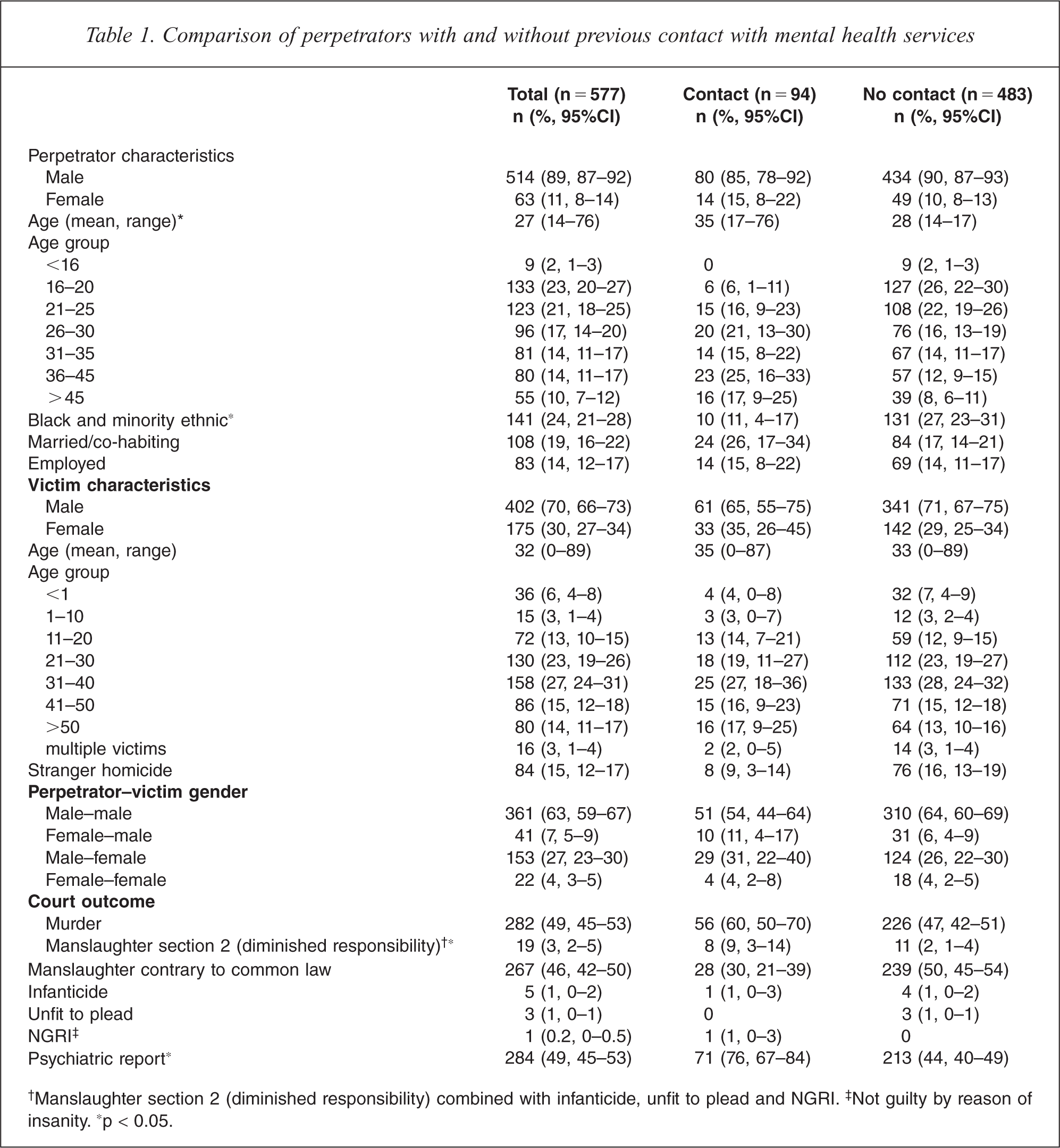
†Manslaughter section 2 (diminished responsibility) combined with infanticide, unfit to plead and NGRI. ‡Not guilty by reason of insanity. *p < 0.05.
Under a fifth (94 cases, 16%) of perpetrators had been in previous contact with mental health services including 58 (10%) within the 12 months prior to the offence (as ascertained by the receipt of a questionnaire from the perpetrator's treating clinican). Over a fifth (119 cases, 21%) were described in their psychiatric reports as being mentally ill at the time of the offence and 22% (127 cases) had been diagnosed with a lifetime history of mental illness. Five percent (30 cases) of perpetrators had a lifetime primary diagnosis of schizophrenia, 5% (27 cases) of affective disorder (bipolar affective disorder or depression), 5% (29 cases) of personality disorder, 5% (28 cases) of alcohol dependence and 3% (17 cases) of drug dependence. Five per cent (28 cases) of perpetrators had a mental health-related court outcome (manslaughter on the grounds of diminished responsibility; infanticide; unfit to plead or NGRI) and 5% (30 cases) were committed to psychiatric hospital under a hospital order with or without restriction (this is a form of compulsory detention under section 37 of the Mental Health Act 1983 (England and Wales) for individuals who have committed a serious crime and who have a severe mental illness).
As rates of reporting were similar for all definitions of mental illness (data not shown, but available from the author on request), the definition of mental illness used here is ‘previous contact with mental health services’. The characteristics of perpetrators with and without previous contact with mental health services are compared in Table 1. Perpetrators with a history of contact with mental health services differed from those without such a history in several ways: they were older, were more likely to have been convicted of manslaughter on the grounds of diminished responsibility, and were more likely to have been assessed for a court psychiatric report. They were also less likely to be from a BME group.
Identified newspaper articles
From the twelve target newspapers, 2735 relevant articles were identified. Of these articles, 2062 (75%) pertained to homicide perpetrators in the study population. Of the 577 homicide perpetrators, 228 were reported in one or more of the study newspapers, a reporting rate of 40%. A further 72 articles pertained to 16 of the 26 cases of homicide-suicide (a reporting rate of 62%). The remaining 601 articles related to cases that either did not result in a conviction of homicide or had not done so within two years of the date of offence. The remainder of this paper will focus on newspaper reporting relating only to the 577 homicide perpetrators.
Likelihood of reporting
Mental disorder
Univariate analysis showed previous contact with mental health services was not associated with an increased likelihood of newspaper reporting, with 39% of those with and 39% of those without previous contact with mental health services reported in newspapers (Table 2).
Likelihood of reporting by perpetrator and clinical characteristics
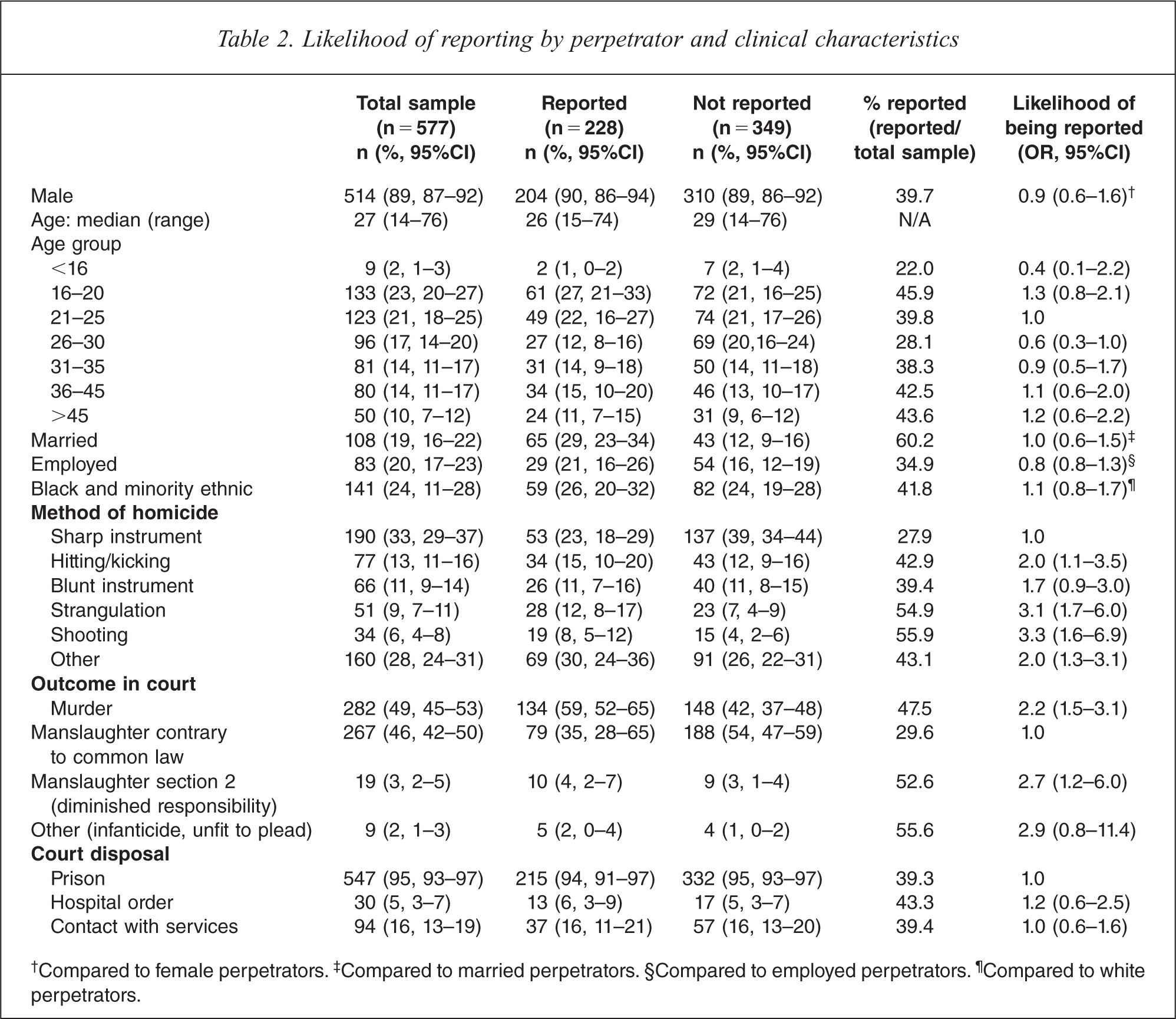
†Compared to female perpetrators. ‡Compared to married perpetrators. §Compared to employed perpetrators. ¶Compared to white perpetrators.
Perpetrator characteristics
A comparison of the characteristics of reported and unreported homicide perpetrators revealed few differences (Table 2). Perpetrators convicted of murder or manslaughter on the grounds of diminished responsibility were associated with a higher likelihood of newspaper reporting than perpetrators convicted of manslaughter contrary to common law. Perpetrators who used hitting and/or kicking, shooting, strangulation or other, rarer methods of homicide, were also significantly more likely to be reported than those who used a sharp instrument, which was the most common method. Despite the high rate of reporting for manslaughter on the grounds of diminished responsibility, commitment to a psychiatric hospital did not predict reporting when compared with those perpetrators who were given a prison sentence.
Victim characteristics
Victim characteristics had a greater influence on reporting patterns than perpetrator characteristics (Table 3). Cases with multiple victims were particularly newsworthy compared to single victim homicides. Male victims were under-reported. Crimes involving a male perpetrator and female victim were more likely to be reported than other perpetrator-victim gender combinations. Infant victims under one year of age were the most likely of any age group to be reported, when compared to the most prevalent age group (31–40 years). Stranger homicides were reported with similar frequency to cases in which the perpetrator and victim were acquainted.
Likelihood of reporting by victim and offence characteristics
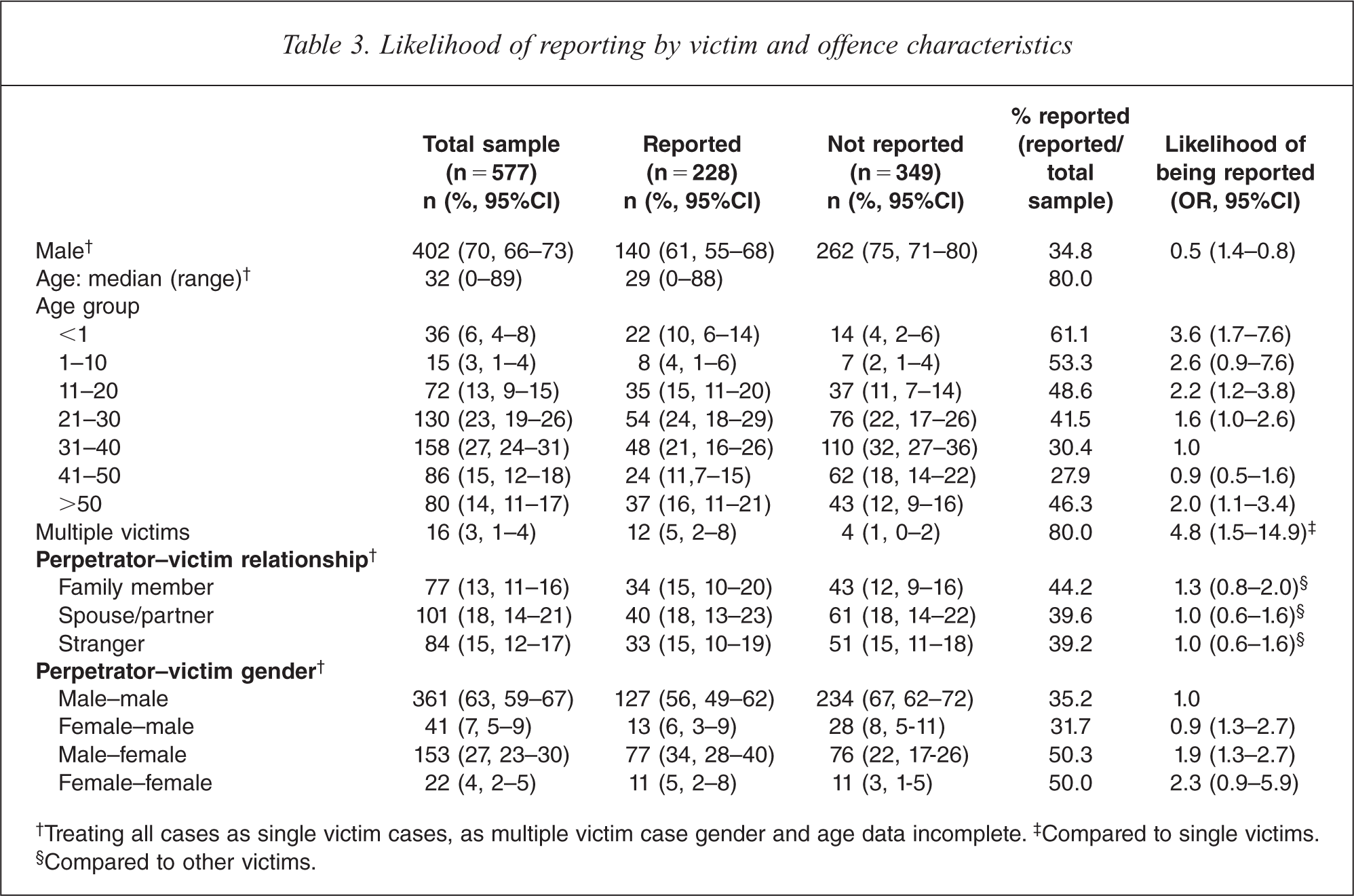
†Treating all cases as single victim cases, as multiple victim case gender and age data incomplete. ‡Compared to single victims. §Compared to other victims.
Predictors of reporting (multivariate analysis)
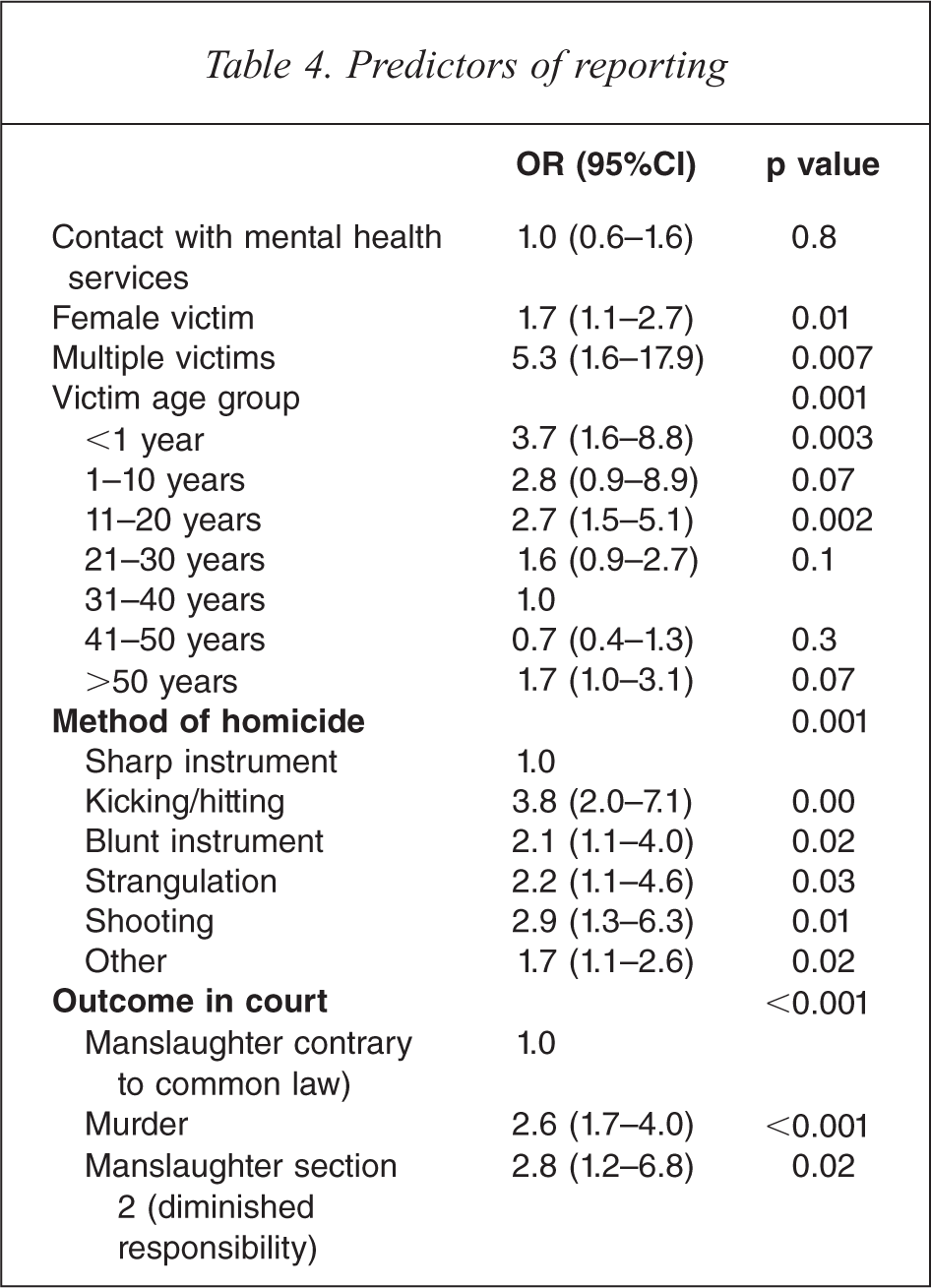
When entered into a multivariate model only one mental illness-related variable, a conviction of manslaughter on the grounds of diminished responsibility, predicted newspaper reporting. In total, five variables were significantly predictive of newspaper reporting (Table 4). Three of these variables were victim-related (female victim, multiple victims and victim aged less than one year or aged 11–20 years). The other variables were a conviction of murder or manslaughter on the grounds of diminished responsibility and the use of particular methods of homicide (blunt instrument, hitting/kicking, shooting, strangulation or other rare methods, including causing to fall, poisoning, suffocation, and arson).
Predictors of reporting
Discussion
This study compared the likelihood of British national newspaper reporting of convicted homicide perpetrators with and without a history of contact with mental health services. During the 12-month study period, 577 convicted homicide perpetrators were notified to the NCI. Of these, almost two fifths (228 cases, 39%) were reported in at least one of the study newspapers. Similar rates of newspaper reporting have been seen in previous UK [27] and international studies [31–32], although a study of Italian newspapers found a higher proportion of homicide reporting at 54% [36]. A history of contact with mental health services was not found to be associated with an increased likelihood of newspaper reporting of homicide. Overall, victim characteristics were found to be more important in predicting newspaper reporting than perpetrator characteristics. A court outcome of manslaughter on the grounds of diminished responsibility was the only measure of mental disorder found to be predictive of reporting. No other study has previously addressed the newsworthiness of mental illness in relation to homicide in this manner.
In this study, multiple, female and younger victims; method of homicide (blunt instrument, hitting and/or kicking, shooting, strangulation and other rare methods), and a court outcome of murder or manslaughter on the grounds of diminished responsibility were the only variables found to be predictive of homicide reporting. These findings are similar to previous studies emphasizing the ‘newsworthiness’ of such homicides. Journalists’ news values, although not universal and likely to vary between cultures, are also influenced by sensational and bad news stories. Some homicides may be considered to have greater shock value because they are particularly tragic, involve a prominent or ‘respectable’ citizen or a particularly vulnerable victim [33]. Journalists are, after all, trained to focus on rare and sensational events that attract broader readership interest and, thus, increased newspaper sales.
The failure to detect any significant influence of perpetrator mental illness on the choice of homicides for newspaper reporting in this study was surprising in the light of previous observations on the newsworthiness of homicide and widespread opinion that homicide by people with mental illness is given excessive prominence by the press [37]. There are a number of possible explanations for the lack of observed effect. Firstly, that the rare contribution of people with mental illness to homicide is not an important news value for journalists except in extreme cases, or at times of raised awareness within the community, e.g. to coincide with the publication of a public inquiry into a homicide by a person with a mental illness. Indeed, mental illness in itself is described by journalists as not being a ‘subject worthy of reporting it its own right’ [38]. Secondly, that the editorial decision to publish is based on other characteristics of the homicide, particularly if information on mental illness is not known or suspected by the journalist. Thirdly, even where a mental illness connection is identified, it may not be reportable because of limitations on the freedom of journalists to report certain aspects of the crime until at least the time of the trial. By the time the mental illness angle to the story can be reported, interest in the story may have waned in favour of more topical stories. A fourth consideration is whether the adoption of guidelines for the reporting of mental illness has reduced the likelihood of mental illness-related homicides being reported.
Codes of practice and guidelines for journalists are available in the UK, Australia and other countries to promote more informative, accurate and balanced portrayals of mental illness [39–42]. Historically, however, the uptake and impact on either reporting styles or on stigmatization of mental illness is unclear and evidence suggests limited awareness of reporting guidelines amongst journalists in the UK [43]. Nonetheless, the results of this study concur with other studies of the Australian media [16,44] in particular, which suggest there has been a decline in the prevalence of reporting of crime and violence in association with mental illness, and indicate that media strategies have been successful in changing discourses about mental illness [44].
Finally, the perceived stigmatizing effect of newspaper reporting of homicide by people with mental illness may have its foundations in the manner in which mental illness is reported rather than selective over-reporting. There is no doubt that where mental illness is reported it is frequently done so in a stigmatizing fashion [11–12]. Negative articles that perpetuate the stereotype of violence and mental illness are more memorable than neutral or good-news stories. Furthermore, stigmatizing media reports will be particularly obvious and memorable to those individuals (e.g. patients, their families and mental health care providers) who are already feeling stigmatized or particularly aware of the problem of stigma. Such observation bias may explain the prevalent opinion amongst these groups that homicide perpetrators with mental illness are over-represented in the media.
Limitations
Although this study utilized a single electronic database (LexisNexis) to search for relevant newspaper articles, thus allowing a systematic approach to locating and searching news stories, there are some limitations to using LexisNexis that should be highlighted. Firstly, it is likely that occasional articles did not contain one of the three keywords; however, a comparison of the search results of a manual check of one month of The Times newspaper with the LexisNexis electronic record of the same period yielded almost identical results. Secondly, as Greer and colleagues [45] have argued, a huge drawback of online searchable databases is that ‘they strip stories of much of their textual and visual meaning’, allowing the news to ‘become decontextualised and disconnected from defining images and surrounding stories’ [45, p.6]. Thus we are unable to understand the full and subtle meaning in any given news story.
In addition, clinical data used in this study relied upon the non-research-based opinions of mental health professionals, which may have been biased by their awareness of outcome. Another limitation is that the study may not be generalizable to other countries and their newspaper reporting systems; however, it did have the advantage of examining newspaper reporting of all perpetrators of homicide in England and Wales in the study period. The demographic, clinical and criminological characteristics of this sample also show it to be similar to other recent British cohorts of homicide perpetrators [30] and allows for comparison with those of other countries. Finally, by examining a single year it is possible our results could be biased if particularly sensational homicides occurred in that year.
Clinical and research implications
The stigma generated by the repeated association in the press between violence and mental illness is considered to be highly damaging to self-esteem and reputation [38]. Furthermore, it is considered to contribute to discrimination, to worsen mental health status and discourage people from seeking help for fear of discrimination [46–47]. The results of this study suggest that in the UK, perpetrator mental illness per se is rarely a primary reason for newspaper story selection in cases of homicide. The victims and circumstances of the crime itself were the primary stimulus to reporting, whilst the mental illness ‘angle’ was secondary. Unfortunately, it is not clear how this fits with observed patterns of reporting of mental illness-related issues in general.
Consequently, this study serves to dissect the reporting of homicide by people with mental illness into three separate issues. First, there is the issue of article selection. Second, there is the manner in which an article is reported, and third, there is the issue of audience perception. This paper suggests that over-selection is not the major issue in the stigmatizing reporting of mental illness-related homicide. Future publications will address differences in the prominence and framing of newspaper articles relating to homicide perpetrators with and without mental illness.
Ethical approval
The NCI received Multi Centre Research Ethics Committee (MREC) approval on 1 October 1996 and is registered under the Data Protection Act. The NCI also obtained exemption under Section 251 of the NHS Act 2006 (originally enacted under Section 60 of the Health and Social Care Act 2001), enabling access to confidential and identifiable information without informed consent in the interest of improving patient care.
Footnotes
Acknowledgements
We thank the other members of the research team: Kirtsen Windfuhr, Alyson Williams, Harriet Bickley, Jimmy Burns, Isabelle Hunt, Rebecca Lowe, Philip Stones, Pauline Turnbull, Pooja Saini, David While, Kelly Hadfield and Huma Daud. We acknowledge the help of health authorities and trust contacts and consultant psychiatrists for completing the questionnaires. We also acknowledge the help of Philip Roscoe and Timothy Shaw in the data extraction process.