






Abstract
Social phobia (social anxiety disorder), characterized by anticipatory anxiety regarding negative evaluation and avoidance of social situations [1], is one of the more prevalent mental disorders in community samples [2]. Large epidemiological surveys in western cultures estimate lifetime prevalence of social phobia as between 7% and 13% [2–4]. Consistent with its chronic course and early onset, social phobia has high social and personal costs and is a risk factor for the development of co-morbid mental disorders [5–9]. Despite these concerns, the current categorical conceptualizations of social phobia used in research and practice lack empirical support [10]. Without validation, it is unclear whether current categorical models are useful or whether other conceptualizations would be more accurate. Support for categorical models include Kessler, Stein and Berglund's [11] identification of two classes of social fears using latent class analysis in a US population survey. In addition, three distinct clusters of social fears ranging from mild to severe were identified with cluster analysis in a clinical sample [12]. Other researchers favour dimensional conceptualization including Furmark and colleagues [13] and Kollman and colleagues [14]. Some report evidence of both linear relationships between social fears and impairment, as well as qualitative differences between subgroups such as people with primarily public speaking fears and those with multiple social fears [8].
Some of the disagreement between studies may reflect differences between statistical methods utilized, with some naturally extracting categories (cluster or latent class analyses) or dimensions (factor analysis). This means dimensional and categorical models are not directly compared [15,16]. Clarifying the underlying structure of social phobia informs diagnosis, assessment, research design, treatment and resourcing [17] so it is important to explore underlying (latent) structure using techniques that are not biased towards a certain latent structure [18]. Taxometrics overcomes these inherent structural biases by using techniques with no assumption of underlying structure to ‘carve nature at its joints’ [19]. Taxometrics explores whether systematic changes occur between observable indicators at various levels of the underlying construct [18,20]. Categorical (taxonic) structure can be inferred when relationships between indicator variables systematically change with changes in group membership. An example of this might be how relationships between height and baldness systematically vary as a function of male or female sex. Dimensional structure can be inferred when there is no evidence of systematic changes amongst observable indicators throughout the underlying distribution [21]. Taxometric analysis does not use significance testing, and relies on multiple non-redundant techniques, comparison to simulated data and other consistency tests to support outcomes [18,20,22].
Two studies have used taxometric techniques to explore the latent structure of limited aspects of social phobia latent structure. Kollman and colleagues [14] found support for dimensional structure using only situational aspects of social phobia in a large US clinical sample (n = 2035) derived from standardized clinical interview and self-report. Weeks and colleagues [23] also found support for social phobia dimensionality using selected cognitive indicators (fear of negative and positive evaluation) in an undergraduate sample. Whilst these studies provide initial support for dimensionality, they did not incorporate all aspects (e.g. cognitive, physiological, emotional and behavioural) of social phobia. Generalizing results from clinical and undergraduate samples is also problematic as over-sampling people with more severe disorders tends to skew results [17]. Additionally, social phobia shares features and commonly overlaps with avoidant personality disorder (APD), leading some researchers to hypothesize that APD is merely a more severe presentation of social phobia [24–27]. If the social phobia construct does extend to include APD, taxometric analyses should include APD indicators in order to capture this dimension. Therefore the current study aims to 1) extend current research by including both social phobia diagnostic criteria and related avoidant personality traits in taxometric analyses and 2) conduct these analyses in larger and more representative community samples.
Materials and methods
Participants
Australian National Survey of Mental Health and Wellbeing
The Australian National Survey of Mental Health and Wellbeing (NSMHWB) was conducted by the Australian Bureau of Statistics (ABS) in 1997 to estimate prevalence of mental disorders and subsequent impairment within a multi-stage stratified random sample of adults in private dwellings representative of the Australian population. In total, 10,641 adults participated in the voluntary face-to-face survey (response rate of 78.1%) [28,29]. Of 10 641 respondents, 1755 (16.5%) endorsed fear or avoidance of at least one of seven possible social scenarios (e.g. eating or talking in front of other people); and were thus asked questions assessing social phobia diagnostic criteria. This subset of responders was used in current analyses.
National Comorbidity Survey: Replication
The National Comorbidity Survey: Replication (NCS-R) was conducted in the USA between 2001 and 2003 as part of the World Health Organization's (WHO) World Mental Health Survey initiative. Households were selected in a multi-stage clustered area probability design representative of the US adult population; with 9282 people responding to the survey [30–32]. Of these respondents, a subset of 2262 (23%) endorsed social phobia screening items such as being ‘really really shy with people’ and were asked questions assessing social phobia diagnostic criteria. This subset of respondents was used in subsequent analyses.
Measures
Composite International Diagnostic Interview (CIDI)
Both the NSMHWB and the NCS-R used variations of the CIDI, a fully structured, standardized diagnostic interview covering both ICD-10 [33] and DSM-IV [1] diagnostic criteria. The CIDI has strong psychometric properties [32,34] and was administered by trained lay interviewers via computer-assisted interview [29,30]. The NSMHWB used the CIDI version 2.1 [35], assessing social phobia diagnostic criteria over the previous 12 months [28,29]. The NCS-R used the World Mental Health CIDI (WMH-CIDI) assessing lifetime social phobia and estimating 12 month and 30 day prevalence [36]. Both surveys also included the International Personality Disorder Examination ICD-10 screener (IPDE) [37] to screen for ICD-10 anxious personality disorder (comparable to DSM-IV APD).
Taxometric analyses
Taxometric procedures were selected to provide non-redundant evidence from mathematically and conceptually distinct analyses [19]. They were conducted using programmes developed by Ruscio [38] within version 2.8.0 of the R [39] statistical environment.
Maximum Eigen value (MAXEIG) [40] is a multivariate procedure examining patterns of covariation using Eigen values from a covariance matrix; with overall covariation indexed by the largest Eigen values [21,40,41]. The current MAXEIG analyses used 100 windows overlapping by 90%.
Mean above minus below a cut (MAMBAC) [42] uses two indicators to locate an optimal cutting score distinguishing two groups with minimal false positives and negatives [41,42]. Analyses in the current study used 100 cuts on each indicator after moving in 25 cases from either end to stabilize curves [41].
Latent mode (Lmode) [40] uses factor-analytic procedures to detect latent modes on factor density plots, with factor scores plotted along the x-axis and relative frequency plotted on the y-axis [17,40,41]. In the present study, all indicators were entered simultaneously into analyses.
Other considerations
Each analysis was replicated ten times to reduce confounding effects of using more cuts than available scores. In each replication, identically scoring cases were re-ordered and averages of replications interpreted [41]. Simulated datasets with known dimensional and taxonic structure were created via bootstrapping techniques to clarify whether research data was suitable for taxometric analysis and provide a template of how each latent structure is likely to look [43,44]. Analysis of simulated comparison data also enables use of the comparison curve fit index (CCFI) [45] which calculates an estimate of relative fit between research data and both dimensional and taxonic comparison outcomes. CCFI values under 0.4 represent better fit with simulated dimensional data and those greater than 0.6 represent better fit to taxonic data. Results between 0.4 and 0.6 are ambiguous and may reflect either good or poor fit with both curves [45]. Consistent base rate estimates across analyses also support taxonic structure [18].
Indicator construction
A broad range of potential indicators theoretically and empirically related to the social phobia/APD construct were considered [46,47]. Highly correlated items were combined to increase indicator range, and the unidimensionality of each resulting indicator was evaluated using exploratory factor analysis [19,41,48,49]. Indicator parameters were estimated subsequently by separating each sample into tentative taxon and complement groups based on the base rate classification method [50].
NSMHWB: Social phobia diagnostic items and responses to the IPDE APD screener were considered. Feared or avoided social situations were highly correlated, and combined to form the first indicator situations. Scores on APD items formed a separate personality indicator. Cognitive processes (e.g. fear of negative evaluation) and distress (e.g. being upset by social fears) were strongly associated and combined to form the third cognitive/distress indicator. Items related to physical anxiety symptoms were excluded as they were not sufficiently valid to differentiate the putative taxon and complement groups.
NCS-R: Again, WMH-CIDI social phobia diagnostic items and items from the IPDE APD screener were considered. Similar to the NSMHWB, feared or avoided social situations were highly correlated, and combined to form the situations indicator. Items related to impairment (e.g. interference with daily activities) and distress were highly correlated and combined into an impairment/distress indicator. In contrast to the NSMHWB, cognitive items (e.g. fear of embarrassment) were strongly related to APD items, and were thus combined into a cognitive/personality indicator. Items related to physical anxiety symptoms again were excluded due to poor discriminative validity. Parameter estimates for all indicators (Table 1) were favourable for taxometric analysis [19].
Validity, overall correlations and within group correlations for taxon and complement groups as determined by average base rate estimates
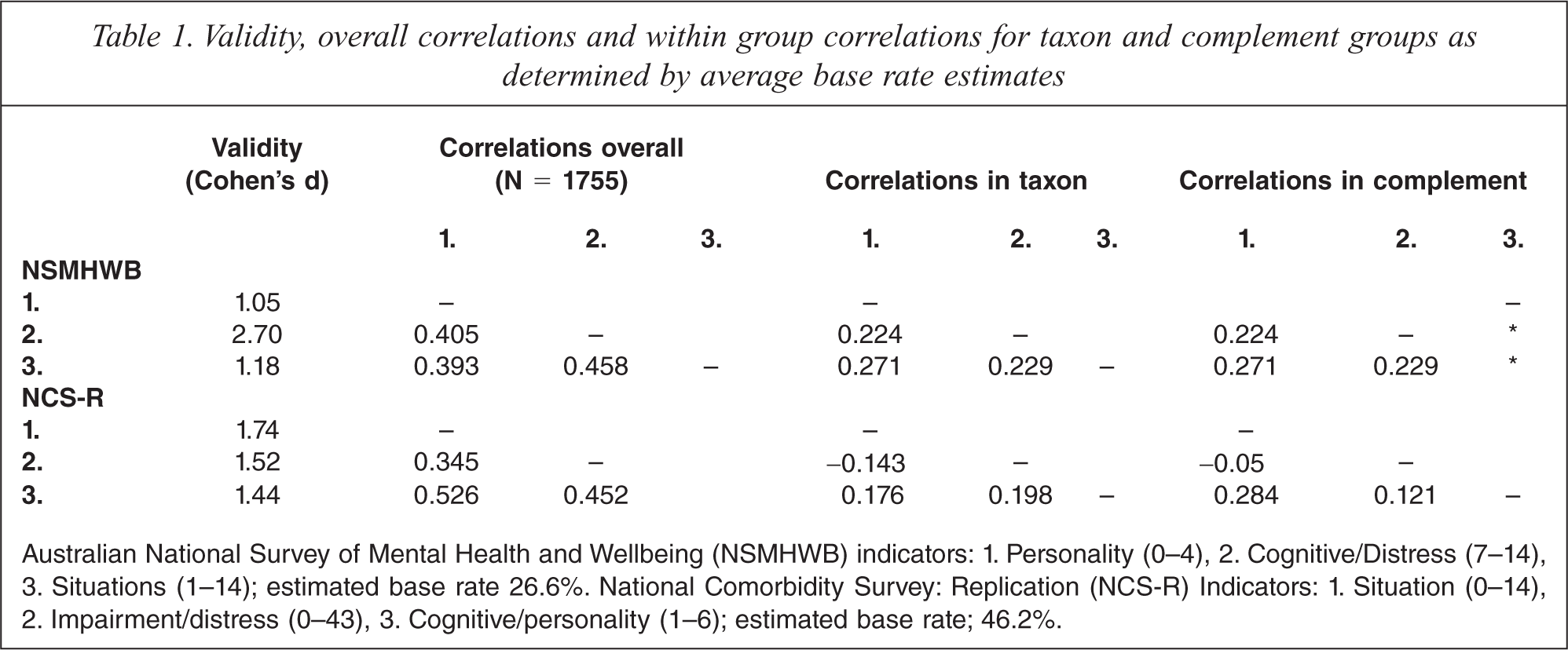
Australian National Survey of Mental Health and Wellbeing (NSMHWB) indicators: 1. Personality (0–4), 2. Cognitive/Distress (7–14), 3. Situations (1–14); estimated base rate 26.6%. National Comorbidity Survey: Replication (NCS-R) Indicators: 1. Situation (0–14), 2. Impairment/distress (0–43), 3. Cognitive/personality (1–6); estimated base rate; 46.2%.
Results
NSMHWB (n = 1755)
MAXEIG: As seen in Figure 1A, comparison data highlighted this analysis was capable of differentiating latent structures, and visual inspection of curves largely supported dimensional structure in the research data. This was consistent with a CCFI value below 0.4 (Table 2).
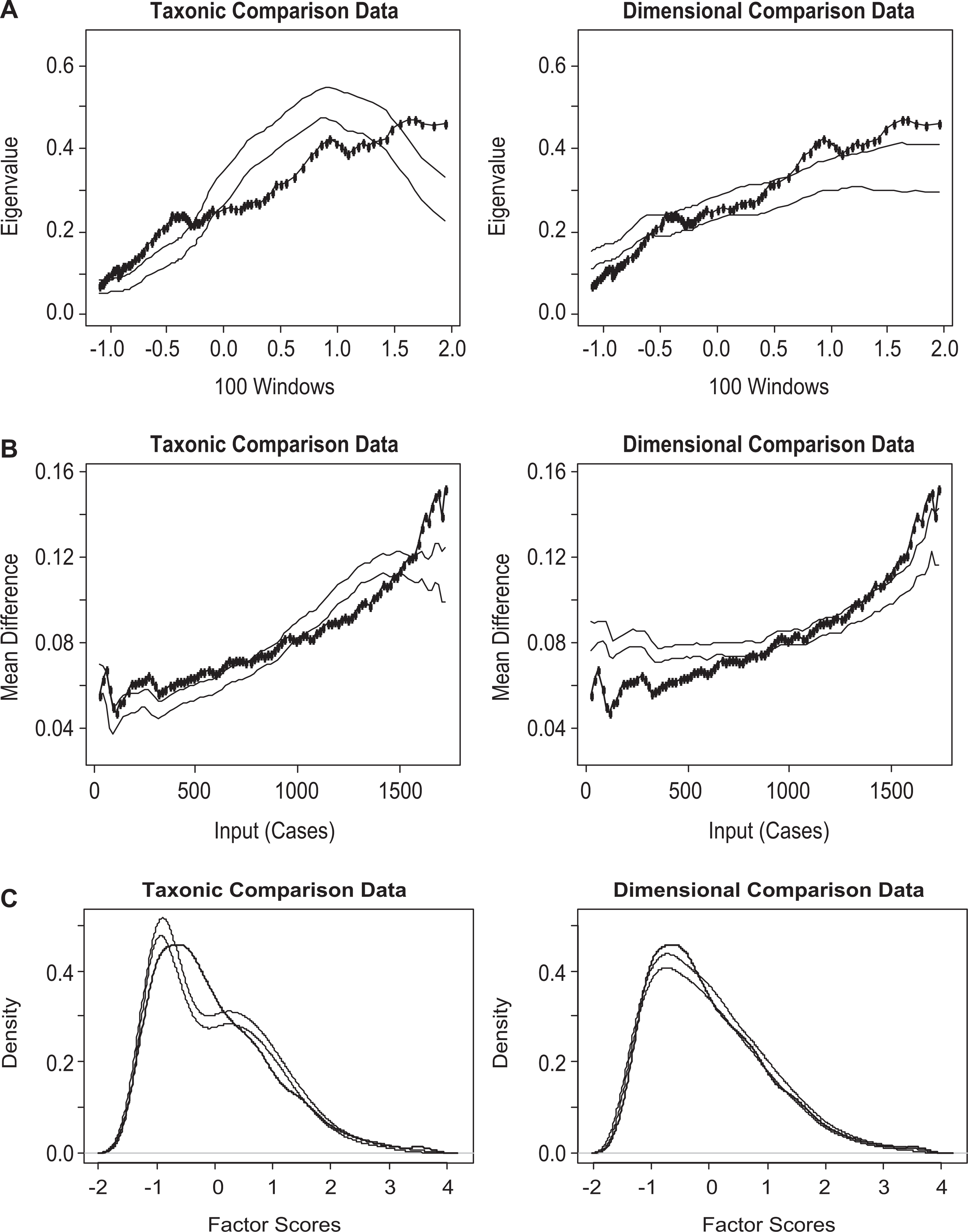
Average taxometric curve imposed on taxonic and dimensional comparison data. (A) NSMHWB: MAXEIG, (B) NSMHWB: MAMBAC, (C) NSMHWB: LMode.
Comparison Curve Fit Indicies (CCFI) and Base Rate Estimates for National Survey of Mental Health and Wellbeing (NSMHWB) and National Comorbidity Survey: Replication (NCS-R) samples.
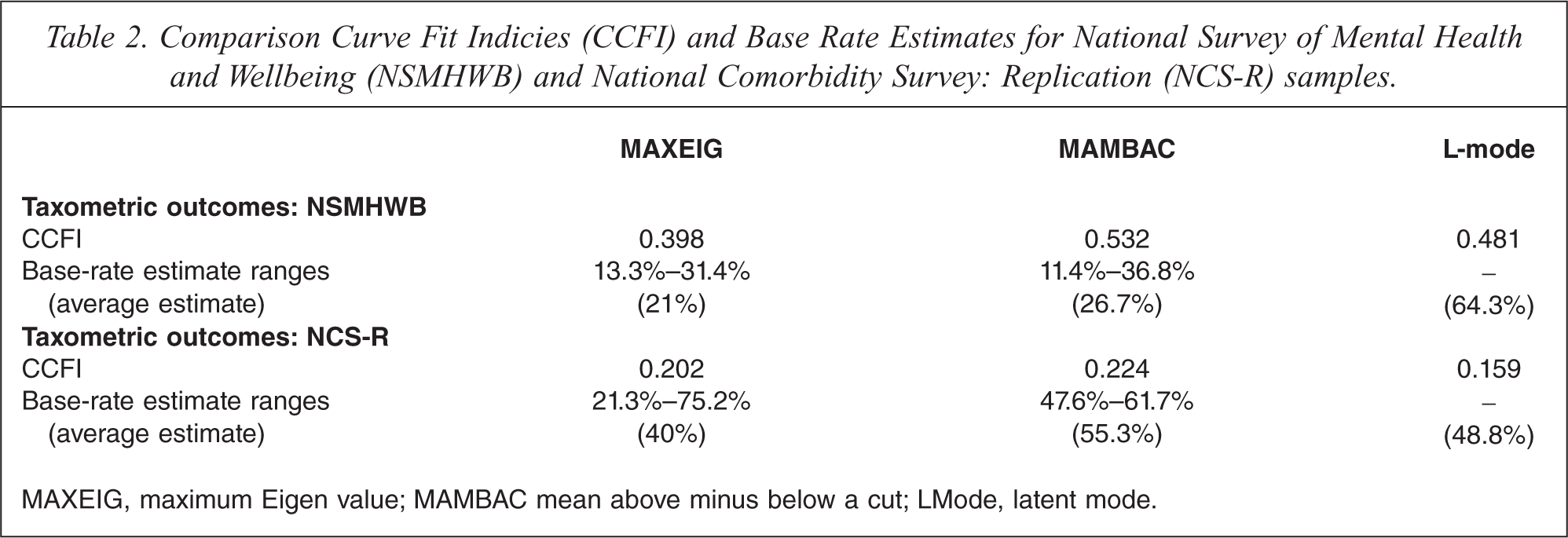
MAXEIG, maximum Eigen value; MAMBAC mean above minus below a cut; LMode, latent mode.
MAMBAC: In contrast to MAXEIG analyses, differences between simulated taxonic and dimensional datasets were less pronounced (Figure 1B). Whilst visual inspection of the curves supported dimensional structure, the CCFI indicated an ambiguous fit (Table 2).
Lmode: Comparison data indicated dimensional and taxonic structures were distinct, and visual inspection supported dimensional structure (Figure 1C). The CCFI, however, indicated ambiguous fit (Table 2).
NCS-R (n = 2262)
MAXEIG: Again, clear differences between taxonic and dimensional simulated datasets emerged (Figure 2A). Both visual inspection and comparison to simulated data supported dimensional structure, as did large variations in base rate estimates (Table 2).
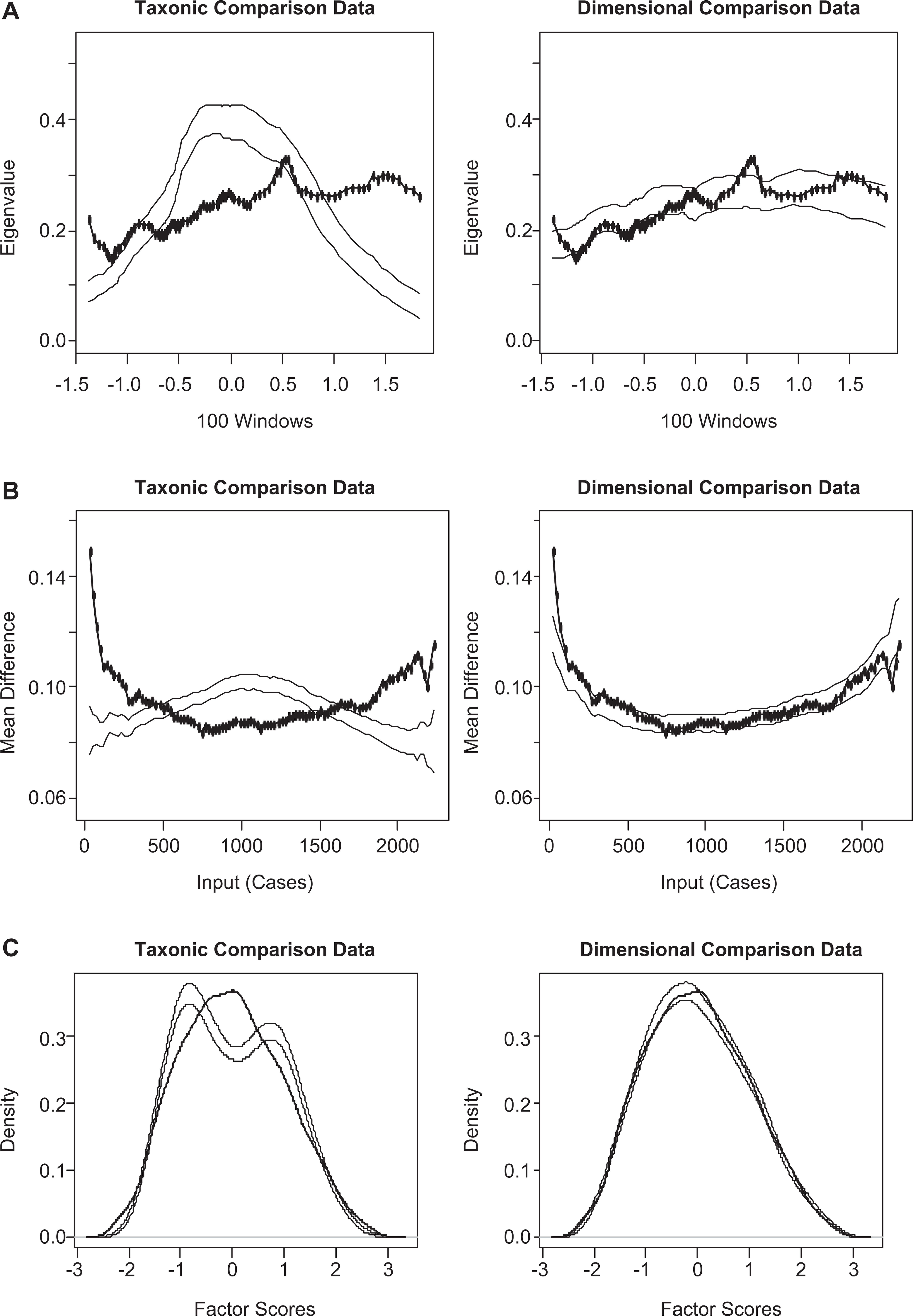
Average taxometric curve imposed on taxonic and dimensional comparison data. (A) NCS-R: MAXEIG, (B) NCS-R: MAMBAC, (C) NCS-R: L-mode.
MAMBAC: Discernible differences between taxonic and dimensional simulated datasets were observed (Figure 2B) and a CCFI of 0.224 supported the close visual match between research data and dimensional comparison data.
LMode: Visual inspection supported differences between simulated taxonic and dimensional datasets, and both visual inspection (Figure 2c) and the CCFI (Table 2) supported dimensional structure.
Discussion
A majority of taxometric analyses supported dimensional structure of a social phobia/APD construct in two large epidemiological samples of people reporting social fears. Support for dimensional structure converged from visual inspection and statistical comparison to simulated data. Outcomes not consistent with dimensional structure were largely due to ambiguous or uninterpretable outcomes. The predominant support for dimensionality is consistent with previous taxometric studies [14,23] and it expands previous research by incorporating broader indicators and features of social phobia in two large community samples [51]. These results provide support for research indicating that social phobia and APD differ in severity on the same underlying social phobia dimension [52]. This may help account for the high co-morbidity and minimal qualitative difference between social phobia and APD [6,52].
It was interesting that, whilst avoidant personality traits were valid predictors of social phobia diagnosis, physical anxiety symptoms required for a CIDI diagnosis of social phobia were not valid indicators in taxometric analyses. This may be attributable to ceiling effects created by interview skip patterns or inaccurate reporting of physical experiences [53]. However, physical symptoms may also reflect more non-specific markers of distress as opposed to specific symptoms of social phobia [54,55]. Another possible explanation for physical symptoms failing to distinguish between groups may be that assessment of criterion B (‘exposure to the feared social situation almost invariably provokes anxiety, which may take the form of a situationally bound or situationally predisposed panic attack’ [1,p.456]) by physical symptoms alone fails to adequately capture this criterion. It may be that people experience anxiety upon exposure in ways not captured by either version of the CIDI.
Outcomes were predominantly consistent despite differences between measures and indicators used in the two samples. This consistency, despite differences in indicator combinations, measures and cultural factors, strengthens inferences of dimensionality [41]. These outcomes can be argued to be inconsistent with evidence of discrete social phobia sub-types with different profiles of age, onset, and comorbidity [9,11,12,56]. However, subtypes such as those reported by Eng and colleagues [12] may instead capture different levels of social phobia and associated distress at different points along the same dimension [57,58]. This has led some authors to question the utility of distinguishing between subtypes with substantial overlap [59].
Support for dimensionality suggests it should be integrated more into diagnosis, assessment, research, treatment and public policy regarding social phobia [60–62]. This would recognize people with ‘sub-threshold’ social phobia who still experience significant distress and impairment [63]. Extending a social phobia dimension to incorporate APD may also overcome the high ‘co-morbidity’ between social phobia and APD [10,64,65]. Dimensional models support the use of treatment outcome measures assessing meaningful reductions of distressing symptoms, as opposed to presence or absence of disorder [62]. And acknowledging dimensionality in research would inform measurement model selection (e.g. correlational designs) to preserve clinically meaningful information, statistical power and precision [15,51,61,66]. Finally, differences in degree have important implications for public policy (e.g. allocation of resources); with efficiency enhanced by early intervention programmes based on high risk factors [62]. However, whilst dimensional assessment presumably would improve diagnosis, a new concern regarding locating efficient cut-points to guide funding and treatment decisions emerges [63,67].
Limitations to the current study included developing indicators from a single information source [66,68] and being restricted to the same diagnostic criteria as that being evaluated [69]. The presence of screening items meant all participants who responded to diagnostic items reported at least one social fear; this means that the lower end of the distribution of social fears was removed. Whilst unlikely, this may have resulted in the current study missing a taxon with a high base rate and low threshold of social fears. However, the combination of a large range of social fears and the sensitivity of analyses to base rates as low as 10%, means analyses more than likely had sufficient power to detect any latent classes. Another limitation of using self report and structured questionnaires is the potential for differential interpretation or response bias between participants [34]. However, using a standardized and accepted measure of social phobia enhances comparability with other studies.
Taxometric analyses also have inherent limitations, including limited ability to distinguish complex latent structures [70] and allowing only one taxon to be identified per analysis [69]. This means that potential differences between generalized and non-generalized types of social phobia were not explored in the current study. However, support for a latent dimension indicates these analyses would be best conducted using techniques such as confirmatory factor analysis, more suited to latent dimensions [17]. Dimensional outcomes could also reflect masking of true taxa by sampling biases, invalid indicators and small effect sizes [22]. These concerns were reduced, however, by important strengths of the current samples for taxometric analyses, including their large size and detailed assessment of symptoms using a psychometrically sound instrument [41].
In conclusion, a substantial majority of the above analyses supported dimensionality of a social phobia/APD construct in two large population samples of people reporting one or more social fear. This lends support to a growing body of literature supporting dimensionality of social phobia over different techniques, measures and samples. Recognizing dimensional structure has important implications for diagnosis, treatment, assessment, research and public policy [16,22,71]. These outcomes provide an basis for developing testable theories and hypotheses of a continuum of social fears and suggest future research should focus on how best to translate this latent structure knowledge into efficient policy, treatment and research [16,31,49,72,73]. This may include trying to locate dimensional thresholds which optimally identify people who may benefit from early intervention and treatment, or establishing what differences on this dimension mean.
Footnotes
Acknowledgements