




Abstract
Aggression has significant physical and emotional consequences for the perpetrators and for the staff and other inpatients who are witnesses to and victims of aggression in the psychiatric inpatient setting. In the adult literature aggression has been defined as ‘an act carried out with the intention or perception as having the intention, of physically hurting another person’ [1]. Studies of aggressive behaviour in child inpatient settings frequently include aggressive acts towards oneself and to property [2,3]. Aggression is one of the most frequently reported reasons for psychiatric hospitalization of children [4] and is one of the most frequent acts that precipitates restraint. Perpetrators of aggression suffer emotional damage and distress at their actions, and the consequences of aggression. Aggression has also been found to have a potentiating effect in other children [5] and it has consequences for staff injury [6].
The effective management and prevention of aggression is a major priority in mental health settings. Interventions to manage aggression can also carry risks and are cause for controversy. The practice of interventions such as restraints and seclusion are well established but are criticized as being ‘understudied and overused’ [7].
Inpatient units are faced with the challenge of balancing the requirement to maintain a safe and secure milieu, against the responsibility of respecting the dignity and well-being of residents. A number of interventions are utilized in an attempt to offset and manage aggressive behaviours. Restraint is defined as placing a limitation on the patient's freedom of movement and may include the application of a device, a therapeutic hold or the administration of a drug. Mechanical devices include restraining sheets, leather restraints, and chairs that restrict movement [3], but these are rarely used with children and do not seem to be used in Australia.
Therapeutic holds are the most common form of physical restraint used to manage aggression in children in Australia. Holds are conducted by two or more nurses who restrict the child's movement by applying ‘the least amount of force necessary’ [8]. Seclusion is also used and refers to a situation where a child is removed from the group to spend time alone in a specific area [9]. Medication can also be used as a form of chemical restraint. The use of chemical restraint is controversial with children and there is little information regarding its use in the literature.
The negative effects of restraint and seclusion have been chronicled in the research literature [10–12]. Few studies have examined the effectiveness of seclusion and restraint [3]. In 1992, 50% of US States put forth the view that restraint had necessary therapeutic value. Eight years later, the consensus was that it had no therapeutic value whatsoever, in spite of lack of data [13]. Debate about the use of restraint and seclusion continues and a recent review found highly variable rates (19–60%) of the use of restraint and seclusion in child psychiatric settings [3].
Australian nurses continue to use holds and seclusion because they are considered the only effective way to manage immediate aggression [3]. It has been stated that although there are some instances when it is necessary to use restraint, it should only be when ‘every available option is exhausted’ [14]. The Australian National Mental Health Working Group identified seclusion and restraint practices as one of the four national safety priorities in mental health [15]. When inpatient aggression does occur, staff are expected to utilize the least restrictive intervention necessary. The policy mandates that restraint and seclusion can be used only to stop someone from hurting themselves, another person or to prevent them from damaging property. This requirement is applicable to everyone irrespective of age, gender or mental ability [15].
Several studies have attempted to identify the patient factors associated with aggression and the need for intervention. These have found equivocal relationships between gender [16–19] and age [3,20] and aggressive behaviour and the need for restraint in psychiatric settings. The majority of studies have found that children diagnosed with disruptive behaviours (conduct disorder and oppositional defiant disorder) and physical abuse [3] are at high risk for restraint [3,21,22]. A small number of studies have found moderate correlations between risk assessment and aggression [23,24] in the adult setting but this has not been investigated in child inpatient units. Longer length of stay has been associated with higher rates of seclusion and restraint [19]. Change in rates of aggression during admission has been studied but both increases [25] and decreases [20] over time have been found.
The State Wide Child Inpatient Unit (SWCIU) is a 12-bed inpatient unit at the Austin Health Child and Adolescent Mental Health Service in Melbourne, Australia. It offers assessment and treatment for children aged up to 12 years, living in Victoria, Southern New South Wales and Tasmania with severe and complex behavioural and mental health problems. Aggressive incidents are a frequent occurrence. Concern about the frequency of these events has prompted an attempt at understanding the causes of and the possible prediction of aggression and associated interventions.
The first aim of the present study was to describe various aspects of episodes of aggressive behaviour and the associated interventions at the SWCIU through an audit of incident report forms. The second aim was to identify variables that are associated with or predict aggressive episodes such as age, gender, diagnosis, risk assessment and variables associated with the admission. The third aim of the study was to determine if aggression and restraint decline over the admission period.
Method
Ethics approval was obtained from Austin Health and La Trobe University. A file audit of SWCIU incident report forms was conducted during the period April 2006–March 2007. Incident reports were completed after a child committed an aggressive act (towards staff, other patients, self or property) by nursing staff as part of hospital policy. Each incident report included basic demographic information (age and gender) regarding the child involved, risk assessment, type of admission (planned or crisis), the day of the week and the week of admission, descriptors of the interventions (holds, inhouse suspensions (IHS) and medication) and severity of the incident. A number of different types of holds were used. One of these holds requires three staff and the remaining three holds require two staff. An IHS refers to a form of seclusion where a child is removed from the group program and remains in their room (supervised and unlocked). According to SWCIU policy, seclusion, or IHS, is used as a child becomes unsettled or agitated and physical holds are used as a last resort after all other strategies have been unsuccessful or a child is putting themselves or others at risk or in danger.
A risk assessment ranking from 1 to 4, based on presenting history, was assigned to the child upon admission and indicated the level of risk of aggression, vulnerability to abuse, self-harm and substance abuse by clinical staff.
Analyses were conducted using Windows SPSS version 14 (SPSS, Chicago, IL, USA). Descriptive statistics were conducted on demographic and clinical information. Pearson's correlation was calculated with dichotomous and interval level factors. Further analyses were conducted when a significant correlation was found. Categorical data were analysed using the χ2 statistic or Fisher's exact test. Binary logistic regression was used to investigate the extent to which risk assessment and diagnosis could predict the number of holds used and severity of aggression.
Results
Seventy children were admitted to the SWCIU during the audit period. Forty-one children (59%) aged between 5 and 12 years (mean = 9.7 years, SD = 1.8) engaged in 235 violent incidents that required either a hold or an IHS over the 12 month period. Analysis was conducted on these 41 children. Five children accounted for more than one-quarter (27%) of these incidents. The majority of children were male (78%). Table 1 lists the descriptive statistics of age, length of stay, and number of interventions. The average length of stay was just over 4 weeks and children engaged in an average of 5–6 episodes of aggression requiring holds during admission. IHSs were less frequent.
Subject characteristics
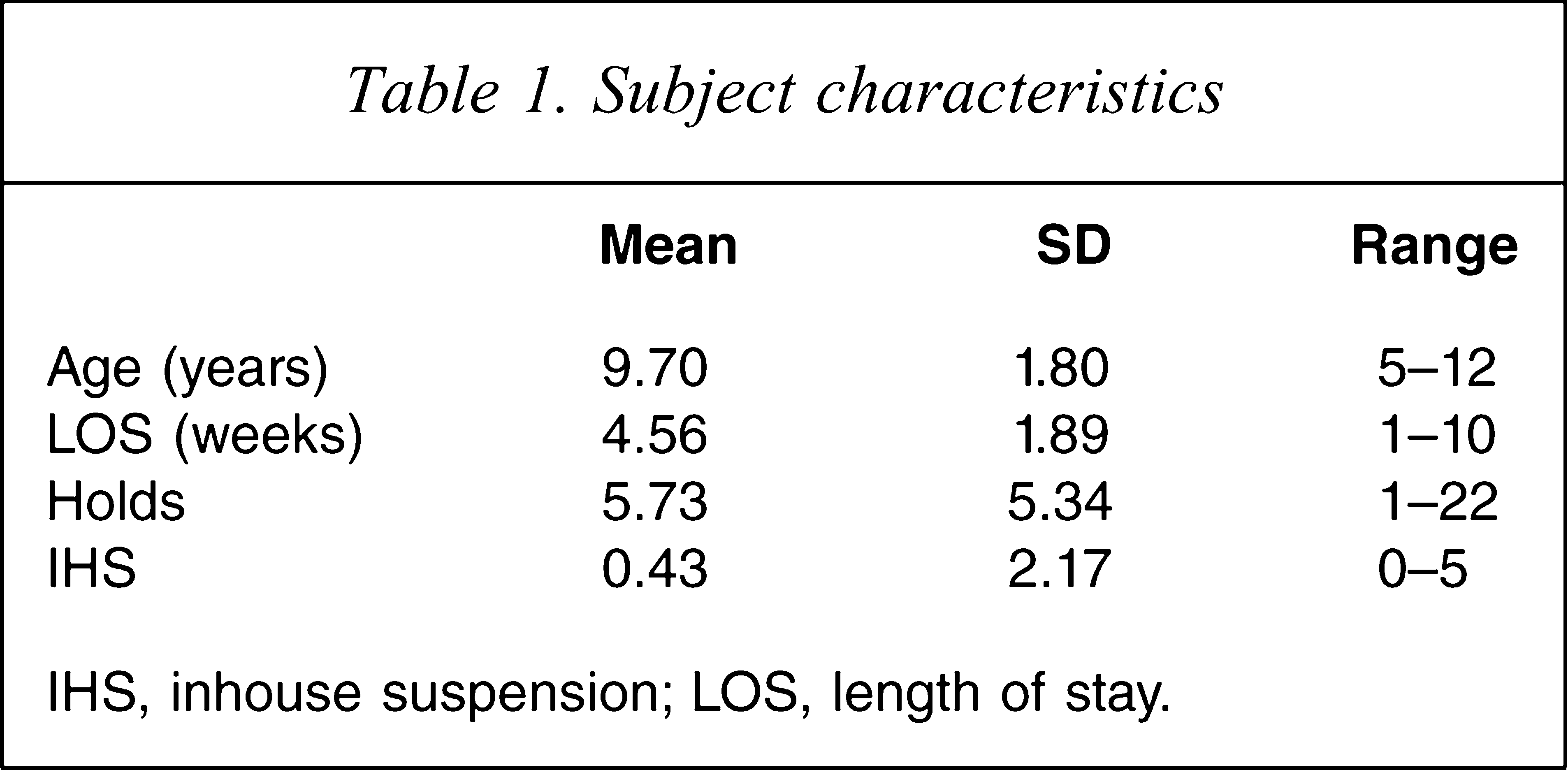
IHS, inhouse suspension; LOS, length of stay.
The most common hold, used in half (51%) of all cases, required three staff members. Three types of holds requiring two staff members were used the remainder of the time (49%). Table 2 lists the hold durations. Twenty minute intervals were arbitrarily used to divide the duration of holds. Holds lasting up to 20 min were common. The majority of holds lasted longer than 20 min, with 11% lasting between 41 and 60 min. Few holds exceeded the hour. The average amount of staff time for each hold was 72.62 min (range = 0–320 min), with a total time in which staff were involved in holds of 16 920 min or 282 h.
Duration of holds
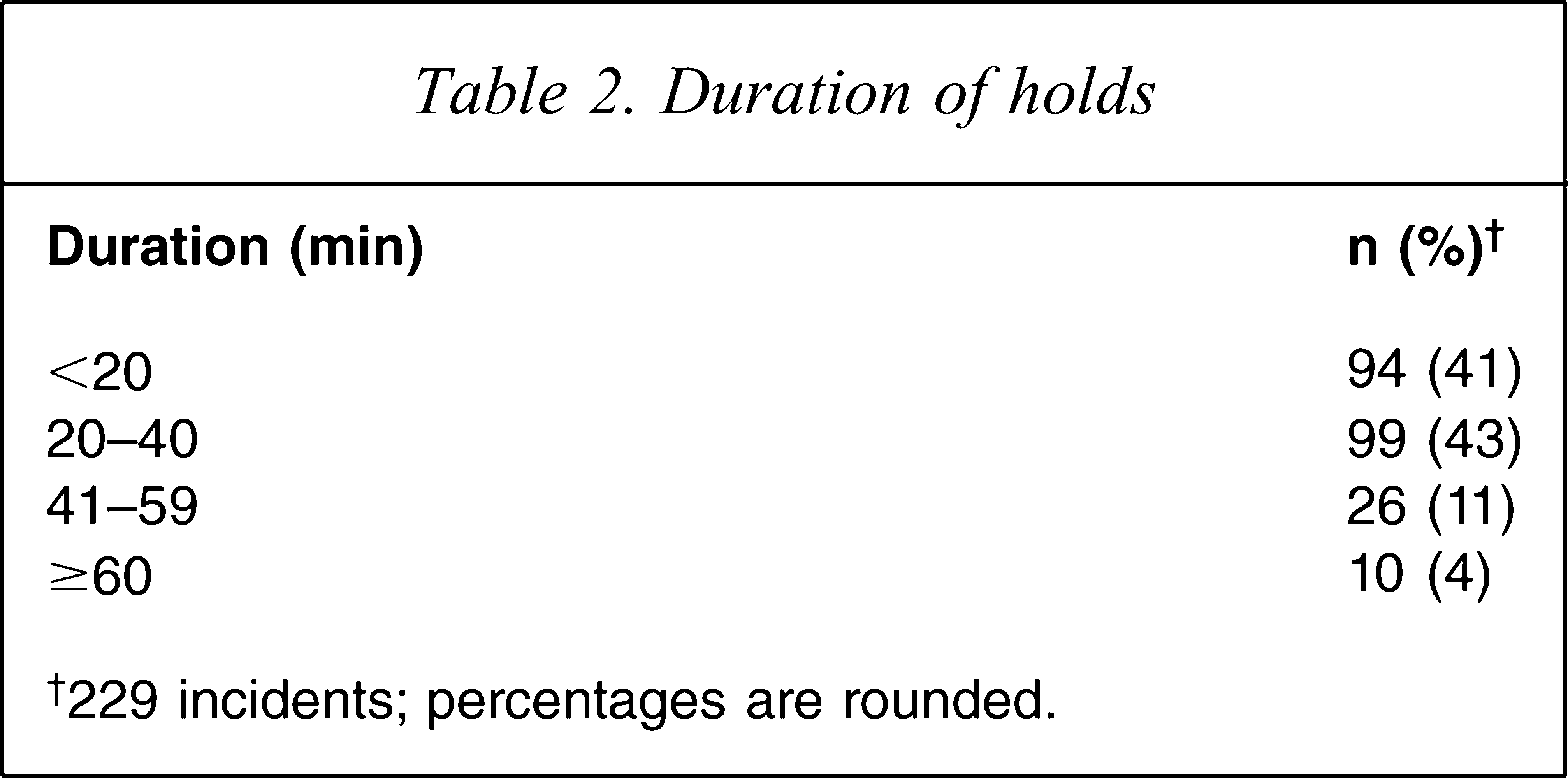
†229 incidents; percentages are rounded.
In order to maintain adequate expected cell frequencies for χ2 analysis, Fisher's exact test and binomial logistic regression, most variables were recoded and dichotomized. Children were divided into two age groups: younger age (5–9 years) and older age (10–12 years). The number of holds for each child was ranked into four categories. Low holds (<3 holds throughout admission), moderate holds (3–6 holds), high holds (7–10 holds) and very high holds (>10 holds). IHS was coded yes and no if an incident led to an IHS or not. Only three incidents led to medication. These were excluded from further analysis.
The majority of children (61%) were listed as having a level 1 risk (low risk). A dichotomous variable was created using level 1 as the low-risk group and levels 2–4 as the high-risk group. The severity of any one incident was determined as low if SWCIU staff were able to manage the child, and high if SWCIU staff required the assistance of staff external to the unit on more than two occassions. Length of stay was recoded into short stay (≤5 weeks) and long stay (>5 weeks).
To determine whether aggressive incidents declined over admission, the frequency of holds were compared over the first and second half of admission for each child. This was then condensed into a nominal category that indicated either that aggression decreased or remained the same, or increased over admission.
Table 3 lists the frequencies and percentages of clinical factors (type of admission, length of stay, and risk assessment category) and factors pertaining to interventions (holds, IHSs) and severity of aggression.
Clinical factors relating to evidence of aggression (n = 41)
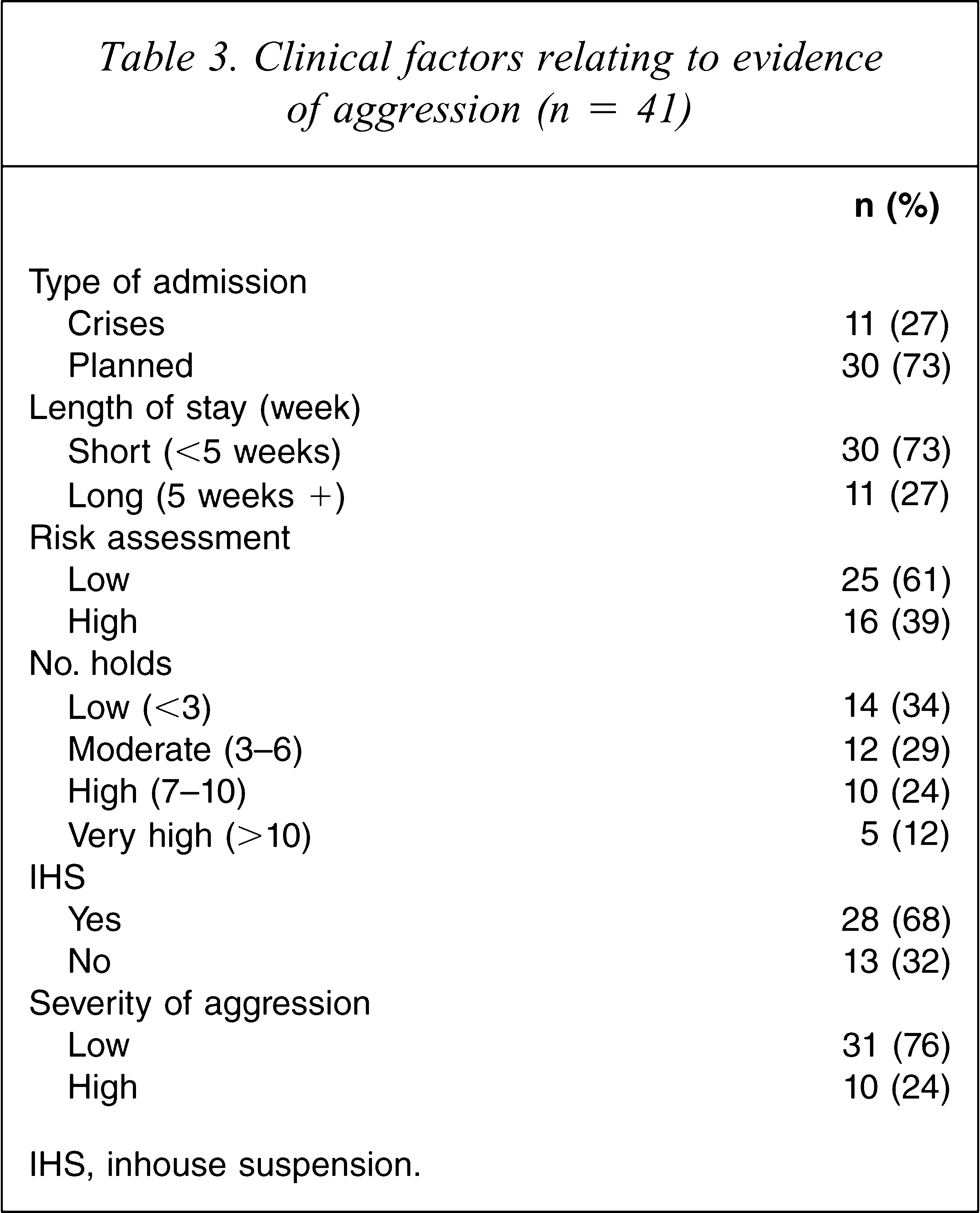
IHS, inhouse suspension.
The majority of children had planned admissions. Almost three-quarters of children were in the short stay category of ≤5 weeks. Most children were designated as low risk. The majority of children (63%) had a low–moderate number of holds during their admission and three-quarters of children (76%) were ranked as having low levels of severity of aggression.
The diagnoses used were those made by the referring agencies (metropolitan and regional Child and Adolescent Mental Health Services). Most children had more than one diagnosis. Only the first diagnosis was used. A total of 16 DSM-IV diagnoses were represented. These were condensed into seven diagnostic categories: developmental disorders (attention-deficit–hyperactivity disorder and autism; 22%), disruptive behaviour disorders (conduct disorder and oppositional defiant disorder; 25%), anxiety-related disorders (separation anxiety, generalized anxiety or obsessive–compulsive disorder; 22%), attachment disorders (11%), psychotic disorders (schizophrenia and psychosis; 4%) eating disorders (anorexia and bulimia; 4%) and parent–child relationship disorders (7%).
There was no significant correlation between age or gender and the number of interventions (holds or IHS). There was no relationship between the severity of aggression and age or gender.
A moderate correlation was found between disruptive behaviour disorders and the number of holds (r = 0.50, p ≤ 0.01) and a low but significant correlation between disruptive behaviour disorders and IHS (r = 0.34, p= 0.05). Fifty-six per cent of children with disruptive behaviour disorders were ranked in the high and very high number of holds categories, compared with 22% of children with other disorders (χ2 (1, n = 41) = 4.97, p = 0.02). This indicated that children with a disruptive behaviour disorder were more aggressive than children with other disorders.
A moderate positive correlation between disruptive behaviour disorders and a high level of severity of aggression was found (r = 0.45, p ≤ 0.01). Forty-four per cent of children with disruptive behaviour were ranked in the high level of severe aggression category, compared to 9% of children who did not have disruptive behaviour disorders (χ2 (1, n = 41) = 7.00, p = 0.01), indicating that children with disruptive behavioural disorders were more likely to engage in severe aggression compared to children with other disorders.
A low but significant positive correlation existed between high levels of severe aggression and attachment disorders (r = 0.32, p < 0.05), but this difference was not confirmed on further analysis (Fisher's exact test = 0.24). A low but significant negative correlation was evident between high levels of severe aggression and anxiety disorders (r = 0.32, p < 0.05), but also could not be established with further analysis (Fisher's exact test = 0.14).
There was a low but significant positive correlation between risk assessment and number of holds (r = 0.33, p < 0.05). Fifty-six per cent of children assigned a high risk assessment required a high number of holds compared with 24% of children with a low risk assessment. This difference was significant (χ2 (1, n = 41) = 4.4, p = 0.04). Risk assessment was not correlated with IHS (χ2 (1, n = 41) = 0.4, p = 0.52) or with the high levels of severe aggression (Fisher's exact test, p = 0.11).
Length of stay was not significantly associated with the number of episodes of aggression requiring holds (Fisher's exact test, p = 0.64) or IHS (Fisher's exact test, p = 0.06).
Day of the week frequencies indicated that Monday had the highest frequency of incidents (28%). Tuesday (24%), Wednesday (21% and Thursday (18%) showed decreasing rates over the week. Fewer incidents occurred on Friday (2%), and Saturday (0.5%), when most children go home for weekend leave, and Sunday(7%), when few children are present or return from weekend leave.
A similar number of children displayed a decrease in aggression over time as those who did not change or displayed an increase. There was no significant relationship between any particular diagnosis and a decline in holds over the admission period. A moderate positive correlation was apparent, however, between crisis admissions and a decrease in holds over admission (r = 0.40, p < 0.01). Eighty-two per cent of crisis admission children displayed a decrease in holds over the course of admission, compared with 37% of planned admission children (χ2 (1, n = 41) = 6.57, p = 0.01).
Crisis admission children did not differ on overall frequency of holds (Fisher's exact test = 0.49) or severity of aggression (Fisher's exact test = 0.70). Thus, crisis admission children were equally likely to be aggressive and display serious aggression as compared with planned admission children, but were more likely to decrease in holds and IHSs over admission. It is worth noting that the crisis admissions were mostly made up of girls (Fisher's exact test, p = 0.04), and tended to be shorter.
Predictors of aggression
Binomial logistic regression was conducted to determine the extent to which the factors of risk assessment and disruptive behaviour disorder were able to predict aggression. The logistic regression examined both frequency of holds and severity of aggression (Table 4). There was no multicollinearity (no two variables had a correlation of r ≥ 0.80).
Logistic regression of frequency of holds and severity of aggression
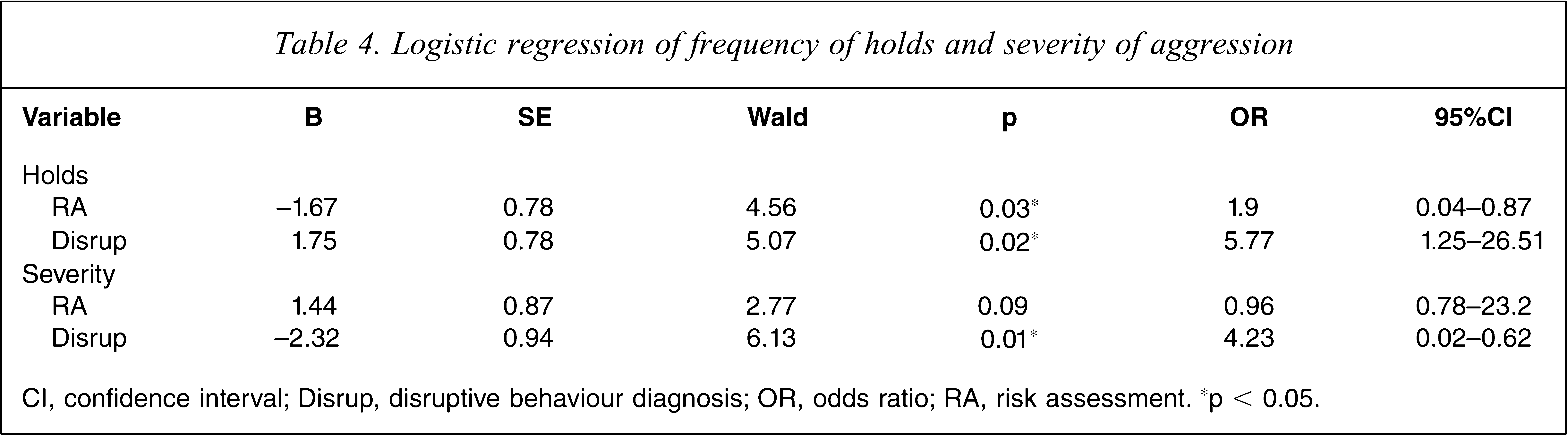
CI, confidence interval; Disrup, disruptive behaviour diagnosis; OR, odds ratio; RA, risk assessment. ∗p < 0.05.
Risk assessment and disruptive behaviour disorder predicted frequency of holds. A higher ranking on risk assessment meant that children were nearly twice as likely to require holds. A disruptive behaviour disorder meant that children were nearly sixfold more likely to require holds. Risk assessment and disruptive behaviour disorder account for between 25% and 34% of the variation in frequency of holds.
A diagnosis of disruptive behaviour disorder predicted the severity of aggression but a high-risk assessment did not. Children with a disruptive behavioural disorder were approximately fourfold more likely to engage in more severe aggression. This diagnosis accounted for between 22% and 32% of the variation in severity of aggression.
Discussion
Aggression is a common event in the SWCIU and the present study found that holds are commonly used to manage aggression. As a group the children who displayed aggression required a mean of five to six holds during their admission period. This is slightly higher than the rate reported in other studies [18]. A small number of children accounted for a high percentage of holds. The overall duration of holds in the present study was of shorter duration than some studies [18,25], but longer than another [26]. The use of IHS was not prevalent. The low number of IHS compared with holds raises some questions about how these two interventions were implemented. The SWCIU policy is to use IHS when the child initially becomes agitated or aggressive. The policy states that holds are to be used as a last resort or when the child is placing themselves or others at risk of harm. This data could suggest that children are rapidly escalating into situations that place themselves or others at risk; giving staff limited opportunity to manage behaviour with IHS. Alternatively staff resort to holds without trying the IHS first. In contrast, this could be a product of poor recording of IHS in the audit forms. Personal communication with staff suggests that both of these could be true. In particular, although staff were vigilant about recording the incident of holds, they may have been less concerned about recording the IHSs. Staff also reported that there was probably little use of de-escalation methods or distraction.
There was some evidence that children with a crisis admission displayed a decline in holds over time. Crisis admission was not associated with more aggression or interventions. The crisis admissions included several children diagnosed with anxiety and eating disorders and they were more likely to be female. These diagnoses were not associated with aggression.
A higher proportion of aggressive incidents requiring interventions occurred in the first 3 days of the working week, corresponding to the days on which children were newly admitted or had just returned from weekend leave. Aggression levels in children with planned admissions did not decline over the period of admission. Just as many children displayed a decrease in aggression over the admission period as displayed an increase or stayed the same. One of the underlying assumptions of the efficacy of intervention is that the child's aggression decreases over time. Early in the admission there may be an increase in aggression as the child enters a new environment with structures, routines, limits and boundaries that are unfamiliar. Aggression is often thought to be a response to limit setting. If this is true then as the child becomes accustomed to the environment and the requirements of the unit, aggression should decrease over time. The result of these analyses raises a number of questions and possibilities. It may be that some important information about decrease and increase in aggression is obscured by the analyses of the group as a whole. It may be of benefit to look more closely at some of the individuals who displayed high levels of aggression. Furthermore, the results raise the question of what is done to diminish agitation and aggression in the period prior to a hold and what is done with the child following the hold. Both time periods offer options to use interventions that could decrease the possibility of subsequent aggression.
Several factors were associated with or predicted aggressive episodes. Age and gender were not associated with aggression in the present study. Frequency of aggression was not necessarily associated with severity of aggression. Although some children engaged in episodes of severe aggression, others were aggressive more frequently, but not to the same degree. A diagnosis of a disruptive behaviour disorder was associated with more severe levels of aggression and a higher number of episodes requiring holds. This is consistent with previous studies. A high-risk assessment was associated with more frequent episodes of aggression requiring holds, but not with severity. Diagnosis and risk assessment predicted approximately one-quarter of all variation in the aggression and frequency of holds. This suggests that there are other factors that could be identified that contribute to the prediction of aggression in these children.
A number of issues around prediction, prevention and management of aggression in the SWCIU were identified and suggested by the present study. The ability of the risk assessment to predict aggression is an important finding, but some improvement may be possible. The risk assessment utilized at the SWCIU was adapted from an adult risk assessment tool and was not specifically designed for children. It also was not confined to the sole prediction of aggression and included a number of psychiatric risk factors upon which a child is ranked, such as sexualized behaviour, suicide, substance abuse and deliberate self-harm. Some of these factors are not relevant to children or are unrelated to aggression. The utility of risk assessment in the prediction of aggression could be enhanced through the design of a more specific, child-focused risk assessment form. Given that aggression is such a frequent event and intervention is resource intensive, it would be of benefit to assist the unit to be better able to predict which children are specifically at risk of aggression. It may be more useful to focus specifically on risk factors associated with aggression. Identifying patients who are at high risk of aggression can assist in preparing for individuals’ needs, treatment plans and overall welfare.
Physical holding is a resource-intense intervention requiring a high number of staff hours. It also carries a risk of injury to staff [6]. No clear decline in episodes of aggression was found during admission. This suggests that although physical holding may limit a specific aggressive event, it is not effective in reducing aggression over time. In addition, given that it is SWCIU policy to use IHS if a child becomes settled or agitated, and that physical holds are used as a last resort, it was surprising that so few IHSs were utilized or, at least, recorded. These data raise the question about whether or not IHS suspensions were being used prior to holds, as the policy dictates, and whether or not staff were implementing de-escalation strategies or other techniques to attempt to avert an aggressive episode.
Future research into aggression and interventions on this unit needs to include more detail about the patient population, particularly with respect to dual diagnosis and history of abuse and the use or development of a risk assessment tool that focuses on aggression. Further research would include careful scrutiny of the events that lead to aggression and factors that lead to decreased or increased episodes of aggression and its subsequent management. Examination of the antecedents to aggression has been found to decrease aggression in other clinical populations [27,28]. There is also a need to consider the consequences of the restraint. There is some suggestion that children perceive time-out and seclusion as a superior method of intervention compared with holds and restraint. While there are some reports of positive feedback regarding seclusion [29], many children view holds as traumatic and unpleasant [30]. When asked how the experience of seclusion could be improved, children suggested: calm and soothing music, a punching bag and play-dough. Sensory interventions may also decrease the need for holds [27]. Alternative methods for managing aggression need to be evaluated.
The present results should be considered in light of the methodological limitations. This was a single-site, retrospective audit of hospital records with a relatively small sample size and low statistical power. There is an increased risk of a Type I error because an alpha value of 0.05 was used throughout the analysis. All staff may not have completed the incident report forms uniformly. Diagnostic categories were derived from the referring information and were not confirmed for the purposes of this analysis. Data had to be categorized and the chosen cut-off may have influenced the findings. Greater insights into aggression and the use and impact of holds would be gained from using larger samples, collecting data from multiple informants, and improving the reliability of the diagnosis.
Conclusion
There is a high level of aggression in the child psychiatric inpatient setting. It is also possible to predict aggression and restraint by using readily accessible demographic and clinical information that is collected as part of daily practice. A diagnosis of disruptive behaviour disorder and a high ranking risk assessment were the two best determinants of aggression, and the subsequent need for restraint. The development of an improved risk assessment could improve this prediction. The present audit did not find evidence that restraint decreased aggression rates over the period of admission. The use of holds was found to be staff and time intensive, and previous research on this unit has found a high risk of injury to staff [6]. The SWCIU may be able to decrease its rates of restraint, while still maintaining a safe and secure milieu. At present there is emerging research showing that challenging behaviours can be minimized through a greater understanding of the antecedents of aggression and that aggression can be managed through means other than seclusion and restraint [27,31].
Footnotes
Acknowledgements