



Abstract
This systematic mapping review explores the landscape of process-oriented research on student project collaboration in higher education. The map is unique in its kind as it applies a wide search to include the diversity of terms, methods, and approaches used across higher education. Based on an analysis of 475 peer-reviewed articles published between 2000 and early 2023, the review maps trends in research context, design, and focus areas. While the field shows methodological and topical diversity, the review identifies three overarching patterns: (1) dominance of exploratory, single-case studies with broad or multiple foci and with limited theoretical anchoring, (2) contextual and conceptual fragmentation, and (3) dominance of learner-centered studies with limited integration of teacher, institutional, or policy perspectives. These findings suggest that although the research base is expanding, it remains diffuse and unevenly developed. The review contributes a structured overview of the field’s current state and highlights critical gaps. Notably, there is a need for research that attends to the diverse and social dimensions of student learning, while also accounting for the complex ecosystem in which project-based approaches are embedded. There is a need for research that takes a holistic approach that includes structural factors, such as institutional traditions and overall program design. This, in turn, requires the collection of data beyond the student voice, which is almost absent in extant research.
Keywords
Project-based approaches to learning are becoming increasingly common in higher education (Nerland & Prøitz, 2018). The assumption is that student-centric, collaborative learning activities provide students with academic, professional, and teamwork skills. It is argued that pedagogical approaches whereby students work on projects provide authentic educational experiences that can bridge the gap between education and work life. The interest in project-based approaches has also gained impetus from the strong and increasing push for interdisciplinarity and interdisciplinary learning in higher education, enabling students from different education areas to work together on projects (Braßler & Dettmers, 2017). Empirical research has shown that project-based learning (PjBL) enables transformative learning experiences (Guo et al., 2020; Lattuca, 2002) and has positive effects on students’ development of collaborative skills (Johnsen et al., 2024), motivation, experience of relevance, and creativity (Damşa, 2018). A large part of this research, including systematic reviews and meta-analyses, has been conducted in K–12 education (C.-H. Chen & Yang, 2019), but in recent years it has also been increasing within higher education.
However, the positive effects of project-based approaches should not be taken for granted. Research on student learning shows various results and highlights that there are many barriers to utilizing the potential benefits of project-based approaches on student, teacher, and institutional levels. To understand this variability in research findings, we need process-oriented studies that investigate what fosters the learning process when students work together on projects, why some student teams function well and others do not, and how various factors influence the process, project outcome, and student learning.
It is often claimed that there is a lack of such studies in the literature to date and that research is dominated by “effect-oriented” research (Janssen et al., 2010; Sjølie et al., 2021)—referring to research that focuses on the benefits of pedagogical approaches on a range of variables, such as academic achievement or student satisfaction. This claim is, however, not sufficiently substantiated. The higher education literature comprises a diverse, complex body of research that is inherently heterogenic and multidisciplinary. Research is often contained within specific educational programs (e.g., teacher education, engineering, or health education), with limited references across the educational settings and with discipline-specific terms. Furthermore, different academic fields tend to draw on different frameworks and paradigms. Much of the research on student collaboration is within the theoretical context of collaborative learning and educational theories, while other studies draw on organizational theory and consider student teams to share characteristics with work-life teams (Sjølie et al., 2022). In the latter, it is assumed that student teams share characteristics with ad hoc project teams in organizations and encounter similar challenges and constraints in developing effective collaboration (Fransen et al., 2013).
Thus far, there have been no reviews of student project collaboration that take into account the diversity in research in higher education. Reviews have either been conducted within a specific discipline (e.g., Matturro et al., 2019; Pow-Sang et al., 2017) or on a specific pedagogical approach for student collaboration (e.g., J. Chen et al., 2018; Guo et al., 2020; Knutas et al., 2015; Sung et al., 2017).
This systematic mapping study on student project collaboration in higher education applied a wide search to include the diversity of terms, methods, and approaches used across higher education, resulting in an initial result of 30,902, of which 475 were included. The research question of this mapping study is as follows: What characterizes the empirical process-oriented research that has been undertaken on student project collaboration in higher education? The map can be used as a baseline against which research trends can be tracked over time to identify research gaps and suggest a research agenda for project-based approaches to learning in higher education. The map also provides an opportunity to identify patterns and thus investigate how different educational contexts might influence the way we research and conceptualize project collaboration in different disciplines.
Student Project Collaboration
Student project collaboration belongs under the large umbrella of collaborative learning activities, meaning educational approaches that involve two or more learners working together to learn something, solve a problem, complete tasks or create a product (Laal & Laal, 2012). The terminology used to describe and address student collaboration varies from generic terms to terms describing particular pedagogical approaches. The key generic concepts are collaborative learning (e.g., Dillenbourg, 1999), cooperative learning (e.g., D. W. Johnson & Johnson, 2009), and group work (e.g., Kutnick & Blatchford, 2014). Some common terms used for particular approaches are problem-based learning (PBL) (e.g., J. Jin & Bridges, 2016), PjBL (e.g., Krajcik & Blumenfeld, 2006), team-based learning (TBL) (e.g., Reimschisel et al., 2017), and collaborative problem-solving (e.g., Oliveri et al., 2017).
The focus of this paper is on educational approaches in which students work together on projects. Such approaches are often called PjBL. Having its roots in experiential learning (Dewey, 1986), PjBL is described as a form of student-centered, situated collaborative learning whereby students work on projects with real-world problems, often together with external stakeholders (Krajcik & Blumenfeld, 2006). Driven by a problem, students’ activities are expected to result in a product or innovative ideas. The teachers’ role is to guide the students through these complex learning processes, which often involve a number of challenging choices.
However, the term “project-based” is not used consistently across fields of disciplines or even within disciplines. Research on student collaboration lacks clarity on elements of educational design that might distinguish them from each other (Braßler & Dettmers, 2017), which means that students can be working on projects without it being named “project-based.” For example, PBL and PjBL are often used interchangeably (e.g., Dole et al., 2016) and even sometimes equalized (e.g., English & Kitsantas, 2013). Although a commonly accepted differentiation between the two is that PBL focuses on learning itself while PjBL involves creating a product, there is no agreed-upon definition of the distinctions between the two approaches in the literature (Braßler & Dettmers, 2017). Hence, the use of the terms does not immediately reveal whether the educational approach involves students collaborating on a project.
What Is a Student Project?
Drawing on terminology from the organizational literature, a project is a temporary endeavor that is carefully planned to achieve a particular goal or objective. It is a “unique set of co-ordinated activities, with definite starting and finishing points, undertaken by an individual or organization to meet specific objectives within defined schedule, cost and performance parameters” (British Standard Institution [BSI], 2019). Projects can be individual or collaborative, and their lifecycle consists of three phases: initiation, planning, and execution. The outcome can be products, services, or processes. As all educational activities in higher education are temporary in nature, most often limited to a maximum of one semester, this part of the definition of a project is not sufficient for the purposes of this literature review.
Various attempts have been made to define the characteristics of PjBL activities. Krajcik and Blumenfeld (2006), for example, defined five key features of PjBL environments: 1) they start with a driving question or problem to be solved; 2) students explore the question in authentic, situated inquiry; 3) students, teachers, and community engage in collaborative activities to find solutions to the question; 4) students are scaffolded with learning technologies; and 5) students create a set of tangible products that address the driving question. Braßler and Dettmers (2017) added some further characteristics of PjBL to these features. First, the duration of one project is mostly a whole course or semester, meaning that students go into depth on one topic rather than exploring a variety of themes. Second, the real-world problem or task can be open-ended or narrow and is rather practical, and the task follows the broad steps of project management (task analysis, identification of solutions, and implementation of solutions). Lastly, they define the teacher’s role as largely product-oriented, as opposed to a more process-oriented role in PBL, and assessment is also mostly based on the product (Braßler & Dettmers, 2017).
In this paper, a student project means that the groups perform a defined, specialized task within a definite period and with some kind of product as an outcome. In the methods section, we detail how this definition was operationalized in the inclusion criteria of the review.
The Need for Process-Oriented Research on Student Project Collaboration
Project-based approaches are increasingly being applied in higher education throughout the world and are often shared as examples of best practice (Elken et al., 2020; Nerland & Prøitz, 2018). The assumption in the literature is that such approaches provide students with transferable skills and, if done across disciplinary borders, key competences for dealing with complex societal challenges. As already stated in the introduction, many studies support these assumptions (e.g., Guo et al., 2020; Johnsen et al., 2024; Lattuca, 2002). However, research also shows significant variability, for example, in student learning outcomes and team performance. In addition, there are many barriers to utilizing these positive effects.
These barriers can be related to some core characteristics of project-based approaches. Collaborating with others is not always easy, and students face many challenges when working in groups. These are often related to team dynamics, such as difficulties in communication, disagreements, unbalanced workload, or issues regarding ownership of the project idea (Brandshaug & Sjølie, 2020). Without appropriate guidance, these challenges often have negative effects on students’ learning and the project outcome (Häkkinen et al., 2017). Researchers have therefore emphasized the essential role of teachers in facilitating students’ collaboration (e.g., Lee, 2014; Sjølie et al., 2021). At the same time, research has reported that university teachers’ limited coaching skills and lack of competence in facilitating collaborative work are the main barriers to the successful implementation of collaborative learning activities in higher education (De Hei et al., 2015). Furthermore, project-based approaches alter the traditional roles of students and teachers, as they are student-led and involve open-ended problems. This requires a shift in students’ and teachers’ understandings of learning and teaching. Finally, the barriers can be related to interdisciplinary contexts, which are often associated with project-based approaches. Interdisciplinary learning has been shown to be more prone to failure than conventional teaching methods (e.g., Braßler & Dettmers, 2017; Lee, 2014). On an institutional level, monodisciplinary structures hinder interdisciplinary collaboration—and thus implementation of project-based approaches—across faculties (Braßler & Sprenger, 2021). Examples of such structures are academic silos, a lack of monetary incentives, and incompatible time schedules.
For policymakers to make informed decisions and for educators to provide appropriate guidance on student learning in project-based approaches, we need process-oriented research that investigates what happens when students gather to work on problems. This research can help us understand what enables students to work and learn successfully in teams and how factors such as institutional traditions, program design, team diversity, or task complexity influence the process, learning, and project result. The so-called “course description studies” or effect-oriented “black box” approaches fail to address these heterogeneous and social aspects of student learning.
Why Is a Descriptive Investigation of Research on Student Project Collaboration Necessary?
A descriptive investigation of process-oriented research on student project collaboration is necessary as a first step to explore questions related to the impact of and variability in research findings on project-based approaches in higher education. As stated in the introduction, extant research is diverse, fragmented, and inherently heterogenic and multidisciplinary. The different strands of research seem to exist almost in isolation from each other—a claim that is substantiated through our search for reviews of project-based approaches in higher education.
First, the majority of empirical research on student project collaboration has been conducted in a K–12 setting. In H.-L.Chen and Yang’s (2019) meta-analysis of the effects of PjBL on students’ academic achievement, only 6 of 30 studies were from the context of colleges or universities. Second, existing reviews are either focused within a particular educational area, such as Pow-Sang et al.’s (2017) review of cooperative and collaborative learning in engineering and computing or on a particular pedagogical method. Examples of the latter are Knutas’s et al.’s (2015) review on computer-supported collaborative learning (CSCL) in software engineering education; J. Chen et al.’s (2018) review on the role of collaboration, computer use, learning environments, and supporting strategies in CSCL; Sung et al.’s (2017) review on mobile-computer-supported collaborative learning; and Reimschisel’s et al.’s (2017) review on TBL in health professions education. Some reviews claim to be wider, such as Guo et al. (2020), when they reviewed PjBL, and Acton’s (2019) review on problem-oriented pedagogies, both in higher education. However, these reviews included only 76 and 48 studies, respectively, which contained specific pedagogical terms in their titles. Considering the ambiguous use of pedagogical terms across higher education and lack of clarity as to what PjBL and problem-oriented approaches entail (Braßler & Dettmers, 2017), this delimitation of the review excludes many studies that use other terms for project-based approaches or those in which the term is not used in the title. Acton (2019) also excluded studies from the engineering and health sciences to limit the scope of the review. In other words, there is no overview of the extant literature on student project collaboration.
Purpose
With the increased popularity of project-based approaches in higher education as a backdrop, we argue that many of the benefits of project-based approaches are taken for granted. Political and institutional decisions that are currently changing practices in higher education do not seem to be based on empirical studies that connect research across higher education. Therefore, the mapping of extant research is merited. We need to know more about the contexts in which research has been conducted, as well as in what countries, student populations, and educational disciplines, and to what extent research has been conducted across educational disciplines. We also need to identify what research methods have been used and, perhaps most importantly, what aspects of collaboration have been examined. Such a map can work as a baseline against which research trends can be tracked over time, identify relevant literature for other primary studies, and help us identify gaps and guide future research (Kitchenham et al., 2011). The research question that guides this review is as follows: What characterizes the empirical process-oriented research that has been undertaken on student project collaboration in higher education?
Method
In this study, four researchers in education and three research librarians planned and conducted the mapping review, following a modified version of the guidelines outlined by Petersen et al. (2008). Systematic mapping studies are designed to provide an overview of a research area (Petersen et al., 2008). Compared to a systematic literature review, a systematic mapping study focuses on the characteristics of the research rather than the results or the quality of the research. The steps included in the process are presented in Figure 1. A review protocol was created to support the collaborative process in the research team (see Appendix S1, online only). The protocol included the scope of the review, inclusion and exclusion criteria, and a discussion of different concepts related to the research question. The different steps will be described in more detail later.
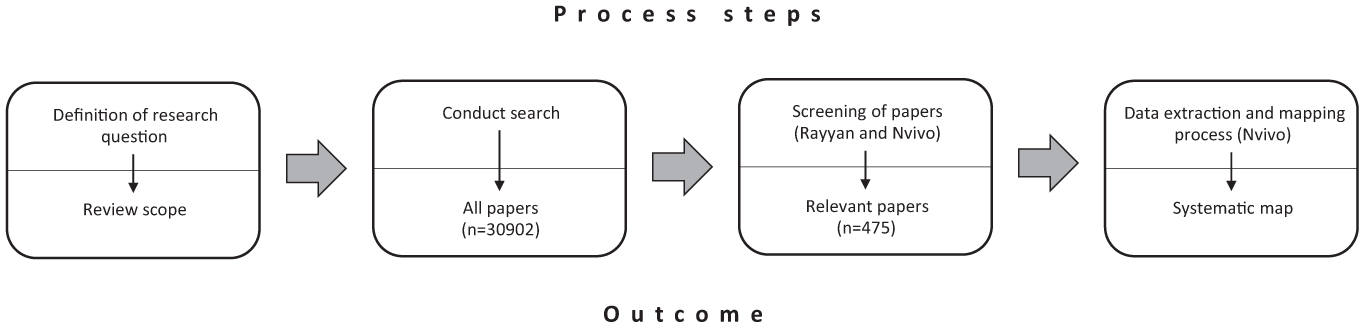
The systematic mapping process, modified from Petersen et al. (2008).
Definition of the Research Question (Review Scope)
The main goal of this review was to provide an overview of the empirical research conducted on student project collaboration in higher education. Therefore, we asked the following question: What characterizes the empirical process-oriented research that has been undertaken on student project collaboration in higher education? To answer this question, we asked several subquestions, structured into three categories:
Research context: In what countries, student populations, and educational contexts has the process of student project collaboration been investigated? To what extent has research been conducted across educational disciplines?
Research design: What research methods have been used?
Research topics: What aspects of collaboration have been examined?
A modified version of
PICo Keywords and Words Used in the Search String
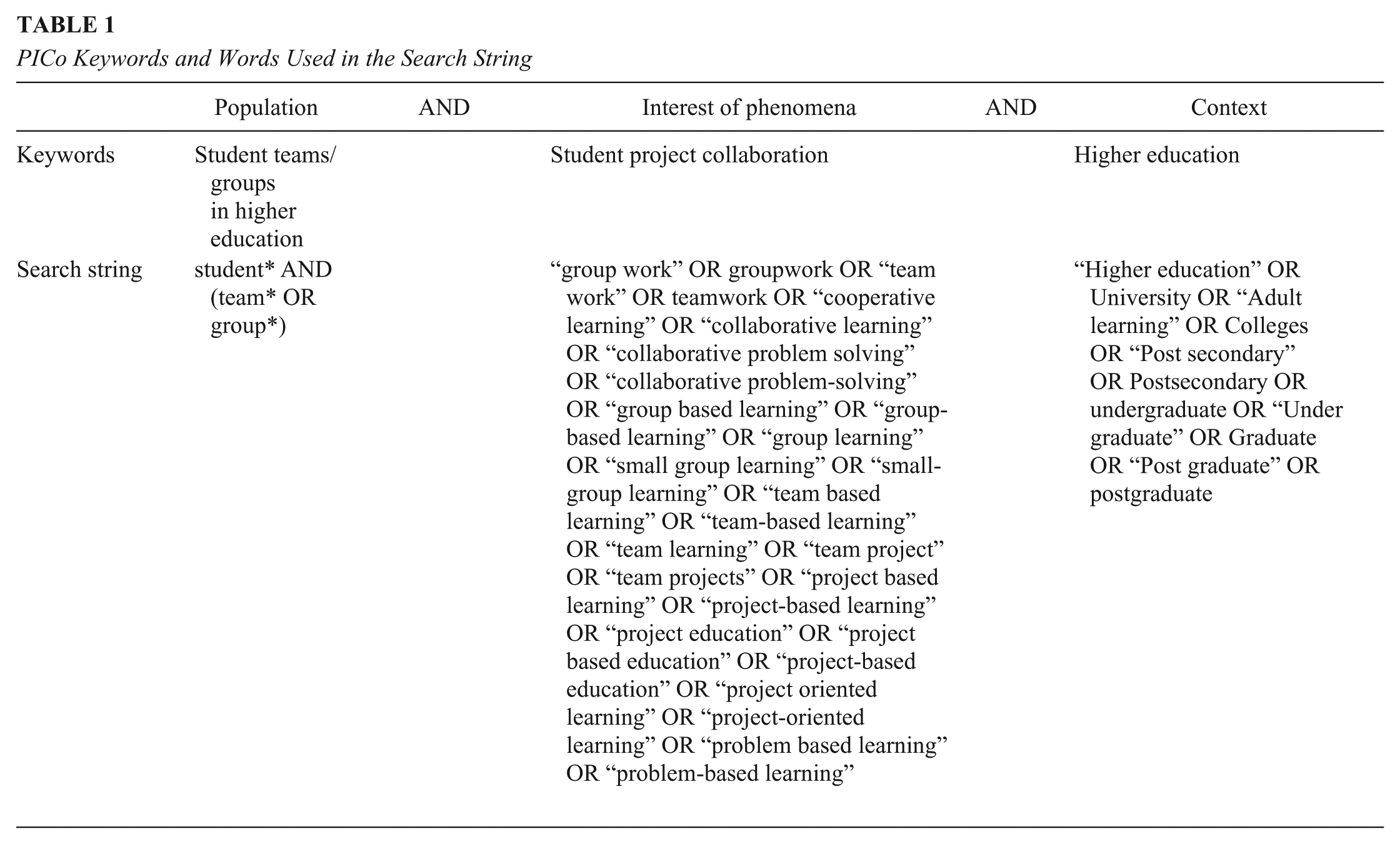
The testing of the string revealed a vast number of hits (between 40,000–50,000), which resulted in the decision to limit the search to journal articles published from 2000 onwards.
Conduct Search (All Papers)
The search string was executed with a search in keywords, title, and abstract by two of the researchers on January 16, 2021, in four databases: ERIC, Education Source, Web of Science, and Scopus. The same search was executed again in the same databases on January 20, 2023, which captured the most recent publications (published after January 2021). The results from the searches were exported to EndNote for the removal of duplicates before all papers were uploaded to Rayyan (Ouzzani et al., 2016) for abstract screening. The total number of references was counted to be 30,902 (24,055 for the original search and 6,847 for the supplementary search).
Screening of Papers (Relevant Papers)
Large literature reviews require an organized abstract screening process to identify eligible studies efficiently while minimizing potential bias (Polanin et al., 2019). Following the best-practice guidelines for abstract screening from Polanin et al. (2019), we created a screening guide that contained concise questions with inclusion and exclusion examples (see Appendix S3, online only). We conducted an introductory “screening calibration” with the team, where all researchers screened the same 50 abstracts and discussed the results. During the screening process, the team met fortnightly to recalibrate and reconcile disagreements. Disagreements were resolved through discussion.
Many abstracts did not include sufficient information to decide on inclusion. Therefore, the screening was done in two phases: first based on abstracts using the web app Rayyan, and then on full text using NVivo for those that did not provide sufficient information. After screening in Rayyan, the 964 included references (887 from the original search and 77 from the supplementary search) were exported to EndNote for extraction of the full text. The references with full text were then exported to NVivo for further inclusion/exclusion screening, resulting in 475 included papers. Figure 2 depicts the PRISMA diagram of the included studies. The number of potentially relevant studies and duplicates is provided in the initial search and the updated search, respectively.
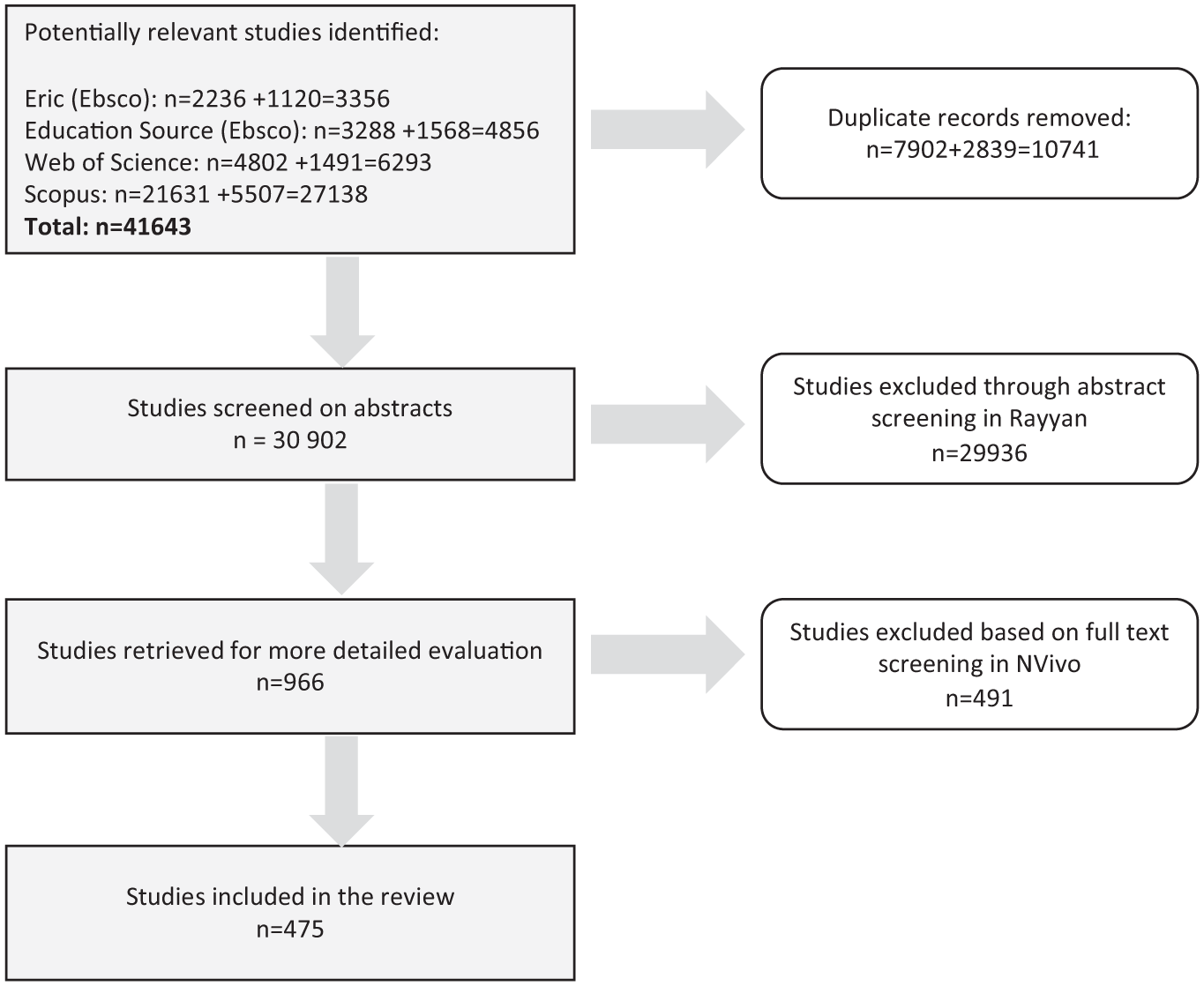
PRISMA diagram of the included studies
Applying and Calibrating Inclusion Criteria
Following the review scope, only peer-reviewed empirical studies involving students in higher education written in English were included. This means that all reviews, conceptual articles, and editorial or other articles without primary empirical data or with empirical data from other education levels were excluded. As for the phenomena of interest, process-oriented research on student project collaboration, the decision on inclusion was based on two criteria.
The first criterion was to identify whether the studies stated a learning setting where students work in groups on a specific project, following our definition of a student project, which means that the student groups work on a defined, specialized task within a definite time period and with some kind of product as an outcome. The criterion to focus on project work excluded, for example, traditional laboratory work, peer review, students with professional practice in pairs or groups, and several studies on collaborative learning outside project settings. The criterion also excluded general surveys of attitudes about teamwork and experimental studies comparing individual and team performance. To secure interrater agreement, the research team met regularly to compare and discuss cases and whether or not the tasks students were doing in a study qualified as project work. Disagreements were resolved through discussion.
The second criterion focused on identifying process-oriented studies. To be included, a study had to either collect data during the collaboration process or explicitly aim to investigate aspects of the collaborative process. This also encompassed quantitative studies that sought to measure elements such as group dynamics, communication, or work methods. Studies were excluded if they lacked a process focus—for instance, “pure effects studies” that examined a teaching method solely on outcomes like grades or skill acquisition or “pure evaluation studies” that assessed the overall effectiveness of a course without exploring what occurred during collaboration.
In total, 475 studies were included for data extraction in the systematic mapping review. As shown in Figure 3, there has been a general increase in interest in the topic of student project collaboration over the last two decades.
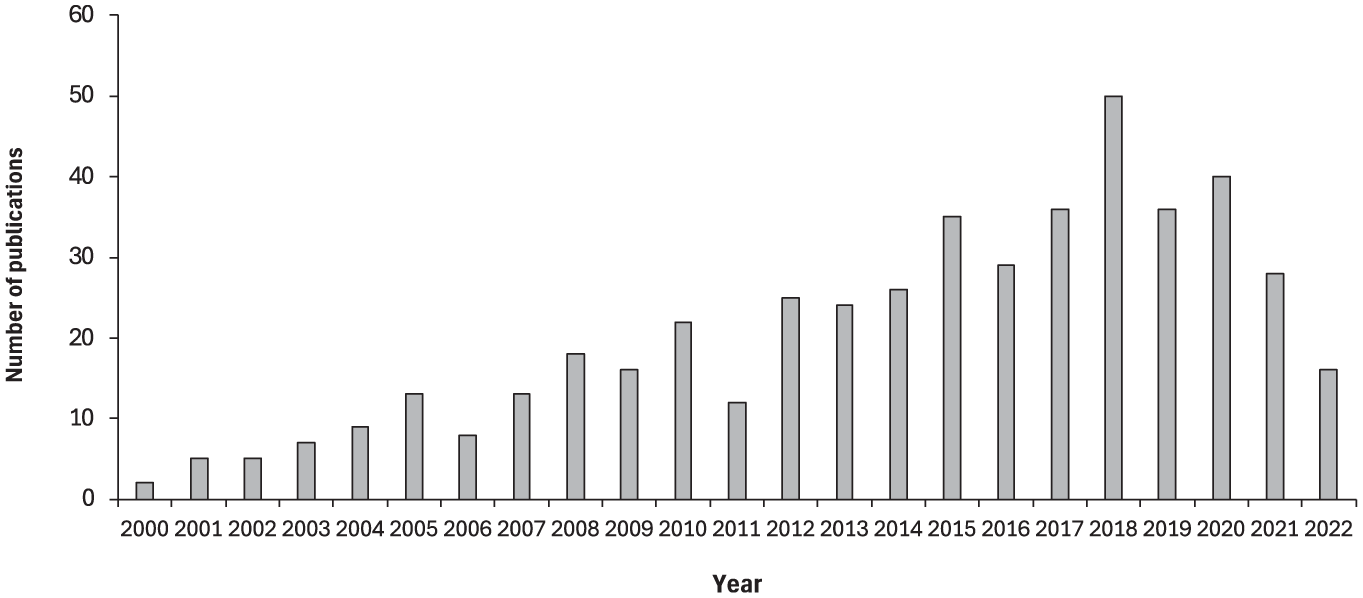
Studies on student project collaboration in higher education by publication date (2000–2022; n = 475).
Data Extraction (Systematic Map)
Data extraction was done on full texts using NVivo, following a coding manual with a classification scheme (excerpt available in Appendix S4, online only). The coding manual contained detailed instructions, including when to use the functionality of Attributes with predefined values, and when to use inductive coding with the functionality of Codes.
Data extraction was conducted by the first four authors of this paper. The team met regularly to discuss coding questions and to prevent drifts in coding between the different researchers. During “high-intensity” periods, the team met weekly or fortnightly. Disagreements were resolved through discussion. In addition, the team had several all-day workshops to refine the coding structure. This was particularly important for the coding of the research topics. In the following text, we describe the details of the data extraction process for each of the three categories of the overall research question.
Research Context
The classification scheme contained seven categories describing the research context of each study: 1) country of publication (affiliation of the authors and “multiple countries” if they come from different countries), 2) country of study (the country where the study has been conducted or “multiple countries”), 3) continent of study, 4) student population (graduate, undergraduate or mixed), 5) pedagogical mode (online, face-to-face, and blended/hybrid), 6) education area, and 7) pedagogy (the pedagogical method or term). Points 1–5 were coded using attributes in NVivo, while we used codes for 6 and 7 because there were too many possibilities and combinations to create predefined values. Under the education area, we mapped some main areas of study, for example, architecture and design, humanities, business and economics, and interdisciplinary if the study was conducted across different areas of study. For pedagogy, the descriptive codes of the pedagogical method or approach used in the respective study were created and then categorized into some main categories.
Research Design—What Research Methods Have Been Used?
Research methods were coded using three categories in the classification scheme: 1) overall design (quantitative, qualitative, and mixed), 2) viewpoint (student, teacher, or multiperspective), and 3) data collection methods. While the first two were coded using attributes, the third point was coded using codes, building up a tree of categories throughout the process. In this process, all data sources were coded separately. In other words, if one study had collected several types of data, for example, surveys, diaries, and interviews, the study was classified into all three codes rather than creating a “multi-data code.” This was chosen because most studies use more than one source of data.
Research Topics—What Aspects of Collaboration Have Been Studied?
To extract data on the research topics, we searched the articles to determine how the authors described the focus or aim of the respective studies. This information could, for some articles, already be found in the title and the abstract; for many articles, it could be found in the research question(s) and the beginning of the methods section, while in some cases, we needed to search more thoroughly to find a focus. In all cases, we read more than the title and abstract to ensure that we capture the details of the research topic.
We used open coding with long descriptive codes that captured the essence of the focus of the study. We used regular team meetings and workshops to create the main categories and subcategories used for sorting new inductive codes. The coding structure was thus created through a cyclical process of defining and refining—in the end, resulting in two main categories with four and six subcategories, respectively.
Cross-Category Synthesis and Development of Higher-Level Patterns
After data extraction was completed for the three main dimensions—research context, research design, and research topics—we undertook an additional step of cross-category synthesis. During team analysis workshops, we reviewed all codes and attribute distributions to identify overarching patterns, convergences, and tensions across the categories. This process was both deductive and inductive: We used the existing mapping framework as a scaffold, but also allowed synthesis to emerge through iterative discussion. Three core patterns were formulated: (1) the exploratory nature of the research field, (2) the fragmentation across disciplines and conceptual frameworks, and (3) the limited integration across levels of analysis. This analytic step moved beyond answering each subquestion in isolation and enabled us to speak more broadly about the state and future direction of the field.
Results
As shown in Figure 3, there has been a general increase in interest in the topic of student project collaboration over the last two decades, with a modest peak in 2018. Although there was a slight decrease in the years immediately following, the overall trend increases—indicating a sustained and expanding research interest in the topic. In this chapter, we present the results using tables and charts as appropriate for addressing the research question and describing the empirical base for student project collaboration in higher education. Each category of subquestion is presented separately. To enhance the interpretive depth of the findings, we introduce an integrative layer of analysis within each of the three mapped domains: research context, research design, and research topics. These synthesized reflections highlight overarching patterns, tensions, and emergent themes across subcategories. Appendix S5 (online only) provides descriptive information for all included studies.
Research Context
To map the different aspects of the research context, we asked: In what countries, student population, and educational contexts has the process of student project collaboration been investigated? To what extent has research been conducted across educational disciplines?
Countries of Study
Looking first at the continent level, 36% (n = 169) of the included publications report on studies conducted in the Americas, followed by 32% from Europe (n = 152) and 16% from Asia (n = 77). Eight percent (n = 39) of the studies stem from Oceania and 2% (n = 10) from Africa. Six percent (n = 28) of the studies were conducted in collaboration with researchers from different continents. The articles in the latter category were counted separately, which means that the articles were not included in the numbers per continent. See Figure 4 for an overview.
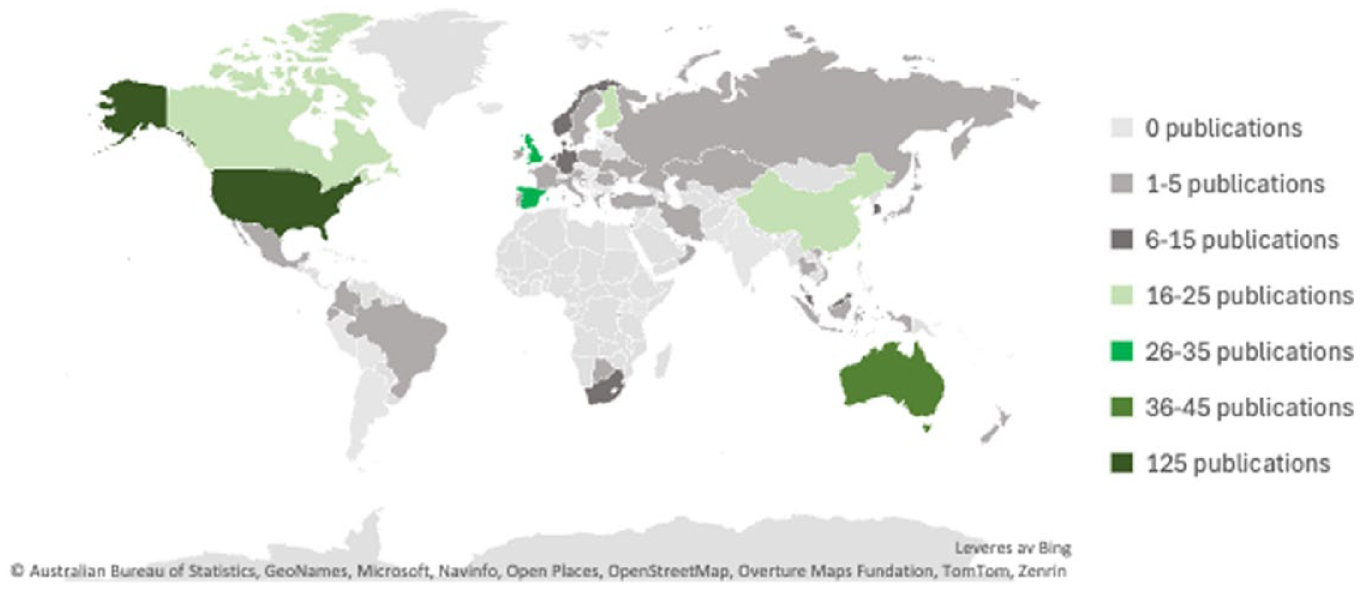
Geographical distribution of included studies (2000–2022; n = 475).
Taking a closer look at the different continents (Figure 4), the contributions from America mainly come from the United States (n = 135), with a few studies from Canada (n = 14), Chile (n = 4), Brazil (n = 4), and Mexico (n = 3). Nine studies included multiple countries in America. The distribution within the European continent is more evenly spread out, with Spain (n = 29) and the United Kingdom (n = 27) as the countries with the most publications, followed by Finland (n = 16), the Netherlands (n = 9), Denmark (n = 9), Norway (n = 8) and Germany (n = 7). Thirteen other European countries have 1–5 publications. The distribution of included articles from the Asian countries is also fairly evenly distributed, with Taiwan (n = 22), China (n = 16), Israel (n = 10), South Korea (n = 7), and Malaysia (n = 6) having more than six publications each. Asian countries with one to four publications include Japan, Singapore, Vietnam, Thailand, the Philippines, Iran, and Indonesia. From Oceania, 37 of the publications stem from Australia and two from New Zealand. Publications from three African countries were included: eight were conducted in South Africa and one in both Botswana and Rwanda. Forty-five studies were conducted in collaboration with researchers from different countries.
Student Population
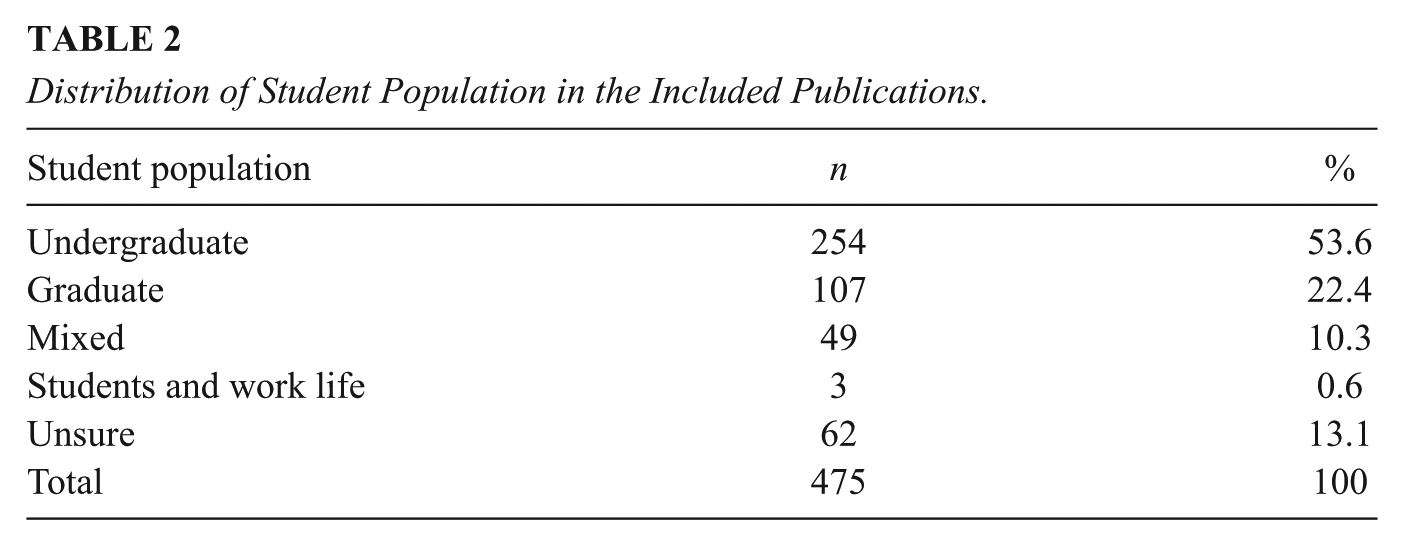
The majority of the articles involve research on undergraduate students (n = 254, 53.5%), while 107 (22.5%) studies include students at the graduate level (see Table 2). Forty-nine (10.3%) studies include a mix of undergraduate and graduate students, and three studies include samples of both students and work life teams (0.6%). Sixty-two (13.1%) articles did not provide information about the level of higher education.
Distribution of Student Population in the Included Publications.
Educational Context
Educational context included three characteristics in the classification scheme: education area, pedagogical mode, and pedagogical methods.
Education area
Eight categories were used to extract the educational discipline areas (see Figure 5). The largest number of studies was found for engineering and technology (n = 137, 28.8%), followed by business and economics (n = 93, 19.6%), cross-disciplinary (n = 85, 17.9%), social sciences (n = 74, 15.6%), health sciences (n = 25, 5.2%), architecture and design (n = 18, 3.8%), natural sciences (n = 18, 3.8%) and humanities (n = 18, 3.8%). A few articles (n = 7, 1.5%) did not specify any educational area. Although we did not record the discipline area of the excluded articles, we noted that a considerable number of publications were excluded from the health sciences. Most of these were process-oriented in that they were conducted within the context of PBL but were excluded because the students did not work on a project. The same applies to professional education, with studies on students’ collaboration during practicums (e.g., medicine and teacher education).
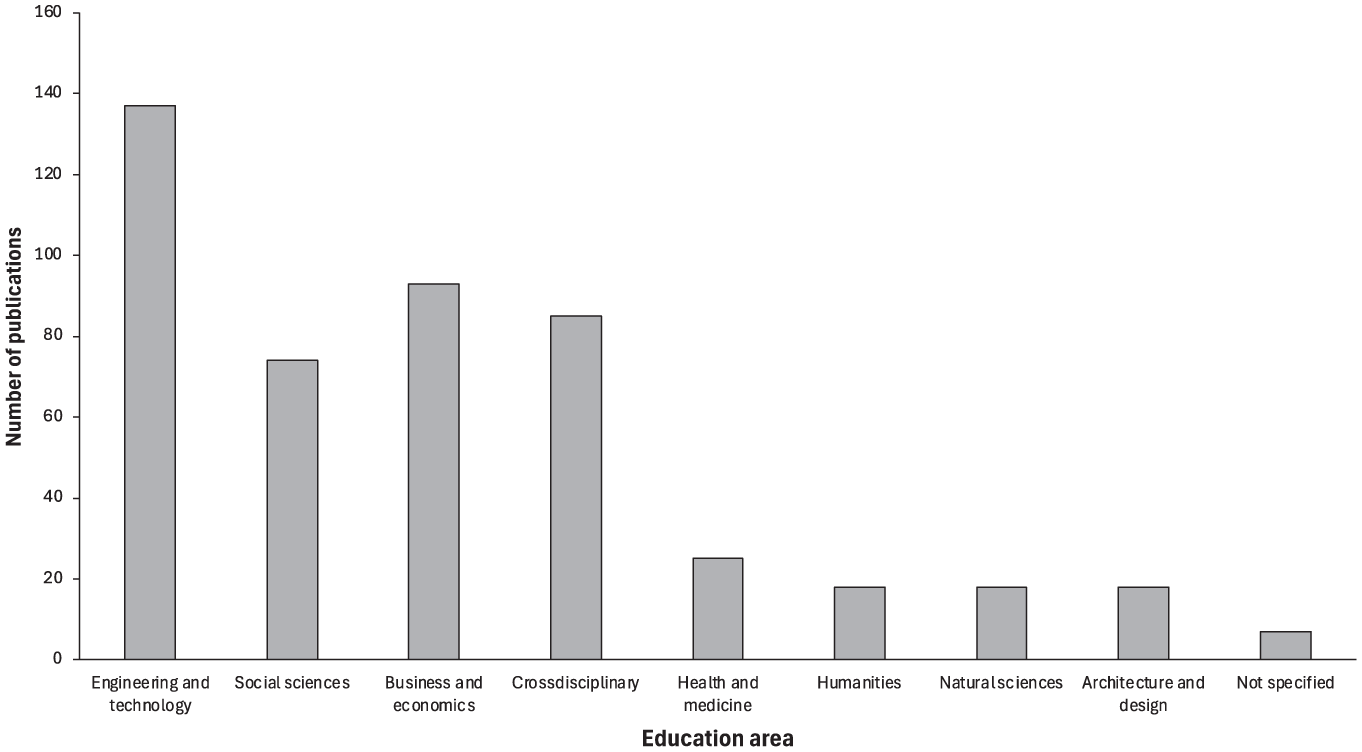
Distribution of included articles to educational area.
The category cross-disciplinary contains publications that involve research done on students from multiple disciplines, either looking at two separate courses, on interdisciplinary courses, or multicase studies with cases from different disciplines. In the latter, the student groups themselves are not interdisciplinary. We investigated this category in more depth to look for the “broadness” of the studies. By broadness, we mean how many education areas were involved, measured with the eight categories described previously. Of the 85 studies within the category cross-disciplinary, seven studies are multicase studies, 15 studies were conducted with students within one discipline area, 22 across two discipline areas, and 29 across three or more discipline areas. Twelve studies did not specify the numbers but had more vague formulations—for example, “a wide range of disciplines.” Judging from the descriptions in these articles, we might assume that the number of disciplines is more than two, which results in 41 (8.6%) studies across three or more disciplines.
Pedagogical mode
The included publications were classified according to the pedagogical mode of the context of the studies—whether the student population met face-to-face, online, or a mix between the two. Hence, three main categories were used to classify the studies: face-to-face, online-virtual, and blended-hybrid. Figure 6 shows the different developments for each of the modes in the 2000–2022 timespan.
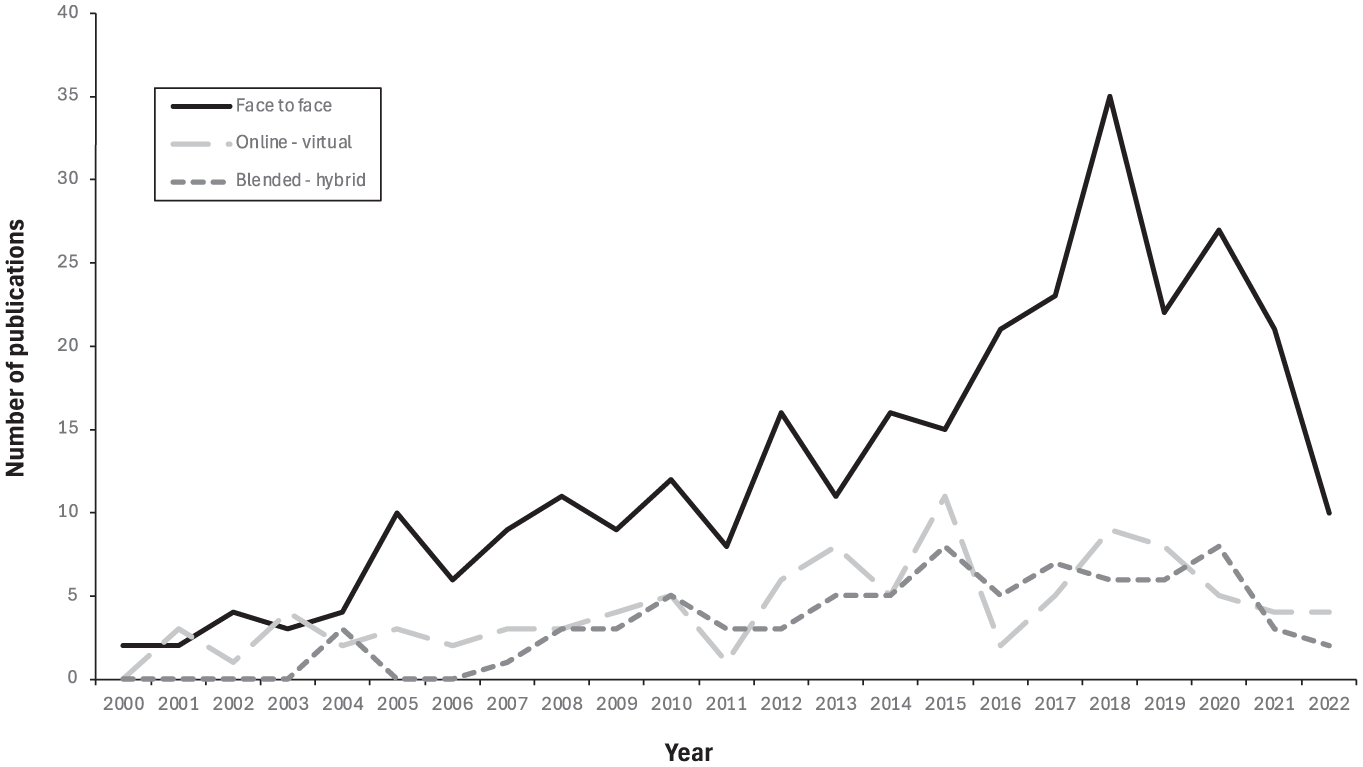
Development of pedagogical mode in the time span 2000–2022.
Most of the research studies (n = 297, 62.5%) were conducted in a face-to-face setting, and the development in the number of these studies mainly followed the development in the total number of articles per year (Figure 6). Studies with an online-virtual (n = 98, 20.7%) and blended-hybrid (n = 76, 16%) pedagogical mode have had steady, continuous development. Four articles (0.8%) did not provide sufficient information to be categorized.
Pedagogical method
The articles were also coded in terms of how the authors labeled the pedagogical context or method used in the course or learning activities of the respective study. This coding was motivated by a curiosity about the terms used across different educational contexts. In the coding process, we used the same words as the authors used to describe the pedagogy. Sometimes, the term was included in the title, but in most cases, it was not. While some articles were very specific about which pedagogy was used, others did not seem to locate their methods in relation to commonly used terms.
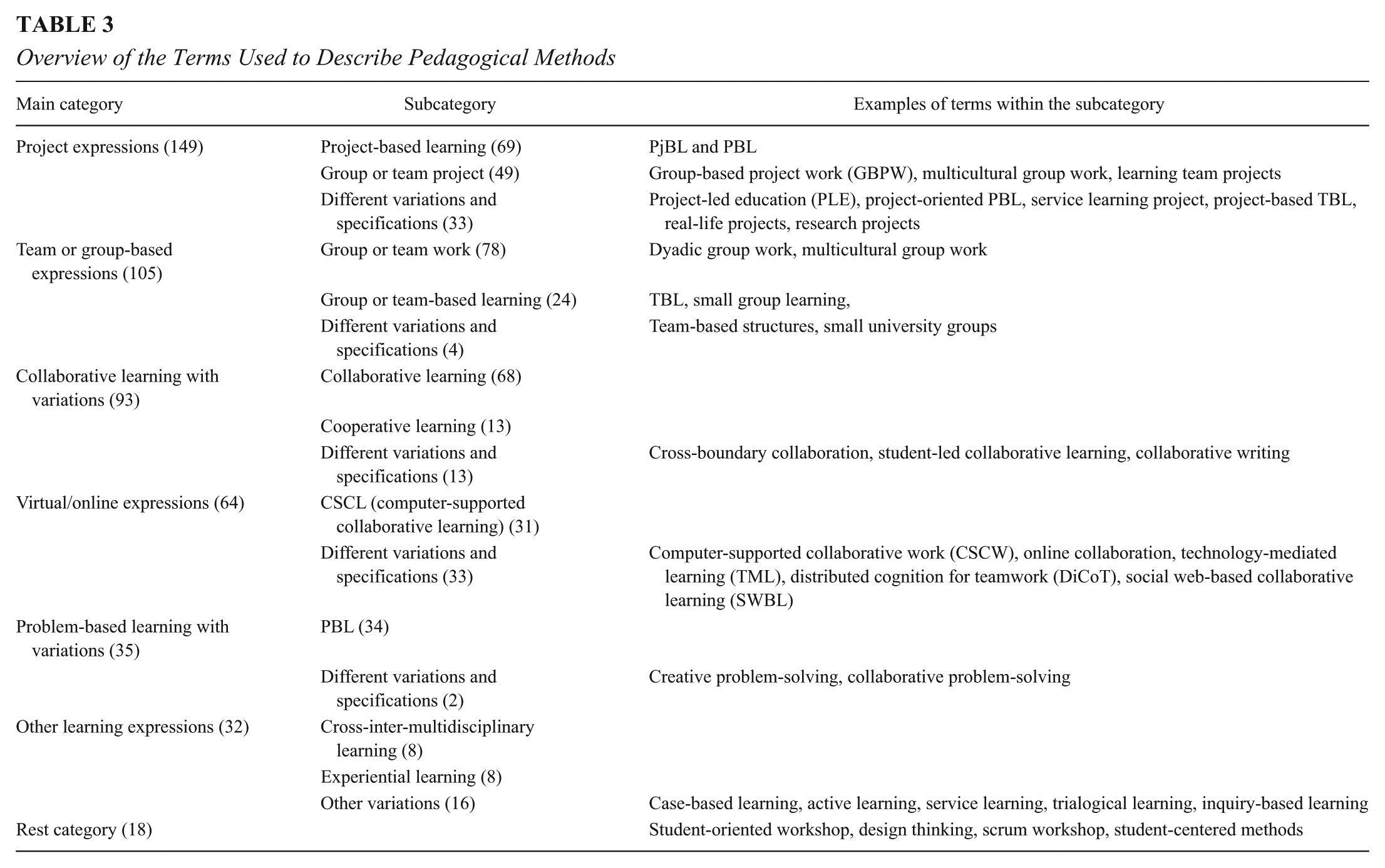
The main conclusion from this coding is that there are large variations in the use of terms to describe student project work in higher education and that the same terms can have different content and meanings. PBL, for example, can mean both PjBL and PBL. Even in cases where the P stands for “problem,” the students are working on a project. In the “traditional” PBL, however, the focus is on students exploring a problem without necessarily ending with a product (Braßler & Dettmers, 2017). In the case of the latter, due to the lack of a project, the article was excluded. Another similar case is the term TBL, which is mostly used for a particular method where the students do not work on projects (see, e.g., Reimschisel et al., 2017), but in a few cases, the expression was used to describe teams working on a project. Table 3 shows the categories and subcategories that emerged from the open coding, with some examples of variations in the right column. Note that the total number of codes exceeded the total of 475 included studies. Some articles were coded into more than one code.
Overview of the Terms Used to Describe Pedagogical Methods
Synthesis of Research Context
Across geographic regions and educational domains, all continents are represented in the dataset, with relatively even distribution among many countries. However, there are notable imbalances: Africa is significantly underrepresented, with only 10 studies (2%), while the United States alone accounts for 28.4% of the included studies. The overrepresentation of the United States may partly be attributed to the inclusion criteria requiring that studies be published in English.
Furthermore, student project collaboration has been studied across the whole range of education disciplines. However, there is a dominance of studies from engineering and business education (48.4% in total) and an underrepresentation of the health sciences (5.2%), humanities (3.8%), and natural sciences (3.8%). Architecture and design also account for only 3.8% of the studies, but this is likely due to the smaller number of students in this discipline area compared to others.
This distribution of included articles for the different disciplines might mirror the pedagogical approaches to teaching in higher education and work life, with project work having longer traditions within engineering and business education. Within both health education and teacher education, we screened many studies with process-oriented research on student collaboration in the context of PBL and students’ practicums, where teams or groups are quite common. However, many of these studies were excluded because there were no projects involved. Although we did not keep exact counts of the education areas in the screening process for the articles that were excluded, we did not identify similar patterns for studies conducted within the humanities and natural sciences.
Pedagogical mode and method show a similarly uneven distribution. Face-to-face modes remain dominant, with slower uptake of online or blended approaches, despite their growing relevance in post-pandemic higher education. The limited research on hybrid or online settings signals a lag between pedagogical practice and empirical inquiry.
Regarding pedagogical methods, the inconsistency in how terms like PjBL, PBL, and TBL are used—sometimes interchangeably, sometimes ambiguously—reflects conceptual fragmentation. Terms vary from generic expressions, such as team or group project, group/teamwork and collaborative learning to very specific labels, such as “distributed cognition for teamwork” and “social web-based collaborative learning.” In the beginning phase of the data extraction process, we expected that these terms would be discipline-specific and that “project-based learning” would be the most used expression. However, only 69 studies used this term, and the variety in terms revealed no systematic differences between education areas. This finding shows that student project collaboration is not an established term for the pedagogical approach.
Research Design—What Methods Have Been Used?
The studies were coded according to three characteristics of the research design: overall design, data collection methods, and viewpoint.
Overall Design
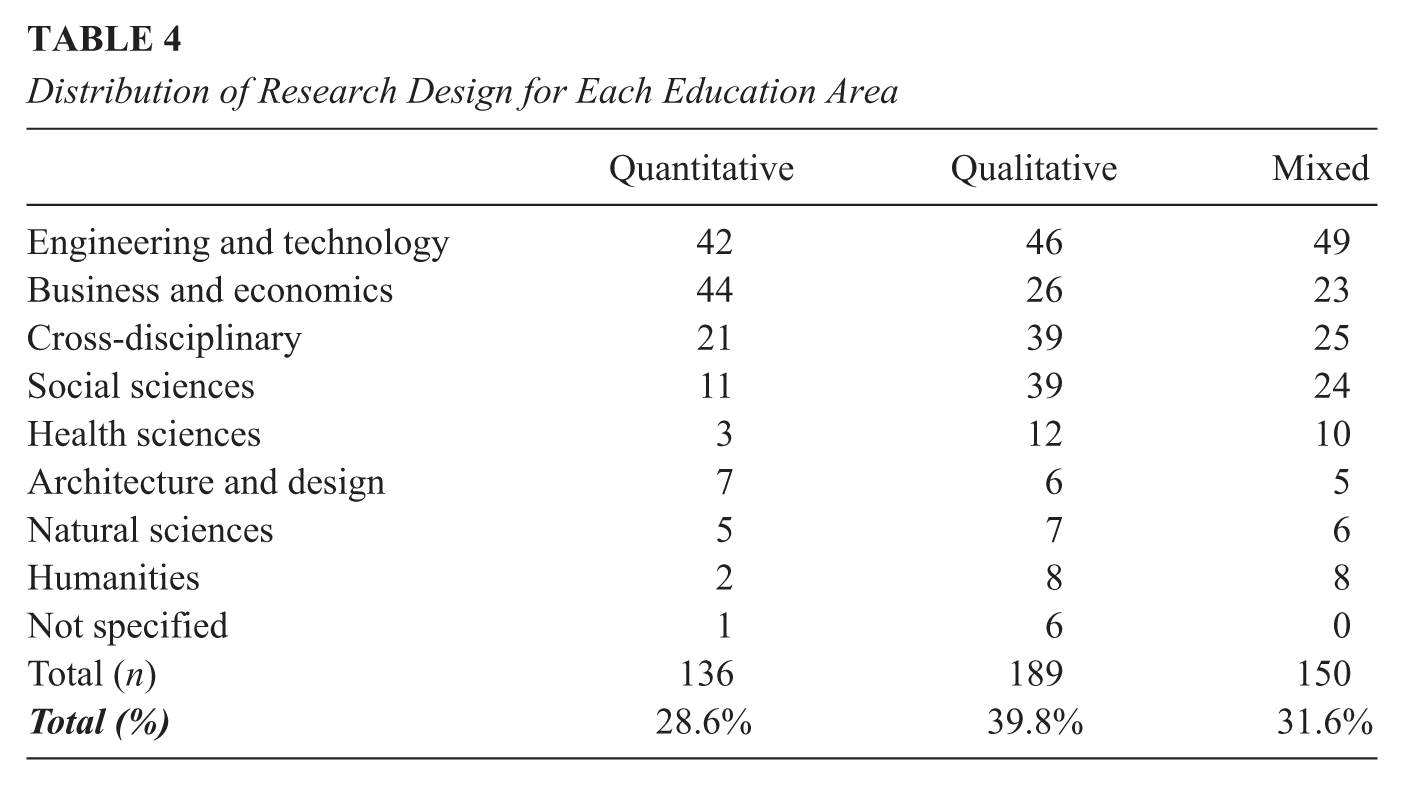
The included publications were classified into three main categories according to the overall research designs: qualitative (39.8%), quantitative (28.6%), and mixed-methods (31.6%). As depicted in Table 4, the research designs of the included studies are approximately evenly divided into three main categories, with a slight overrepresentation of qualitative studies. Looking at the distributions within each education area, there is an even distribution between the three categories for engineering and technology, architecture and design, and natural sciences. There is an overweight of quantitative studies in business and economics, while there is an overweight of qualitative and mixed designs in studies from the social sciences and humanities.
Distribution of Research Design for Each Education Area
Data Collection Methods
The data extraction related to the data collection methods resulted in six main categories, as shown in Figure 7. For the qualitative part of the studies, observation and registration (n = 181) are the most used data collection methods, followed by written material (n = 146) and interviews and focus groups (n = 145). Examples of written material are diaries, course deliverables, or qualitative responses as part of course evaluations. Twenty-eight studies use peer or self-assessment as part of the empirical base.
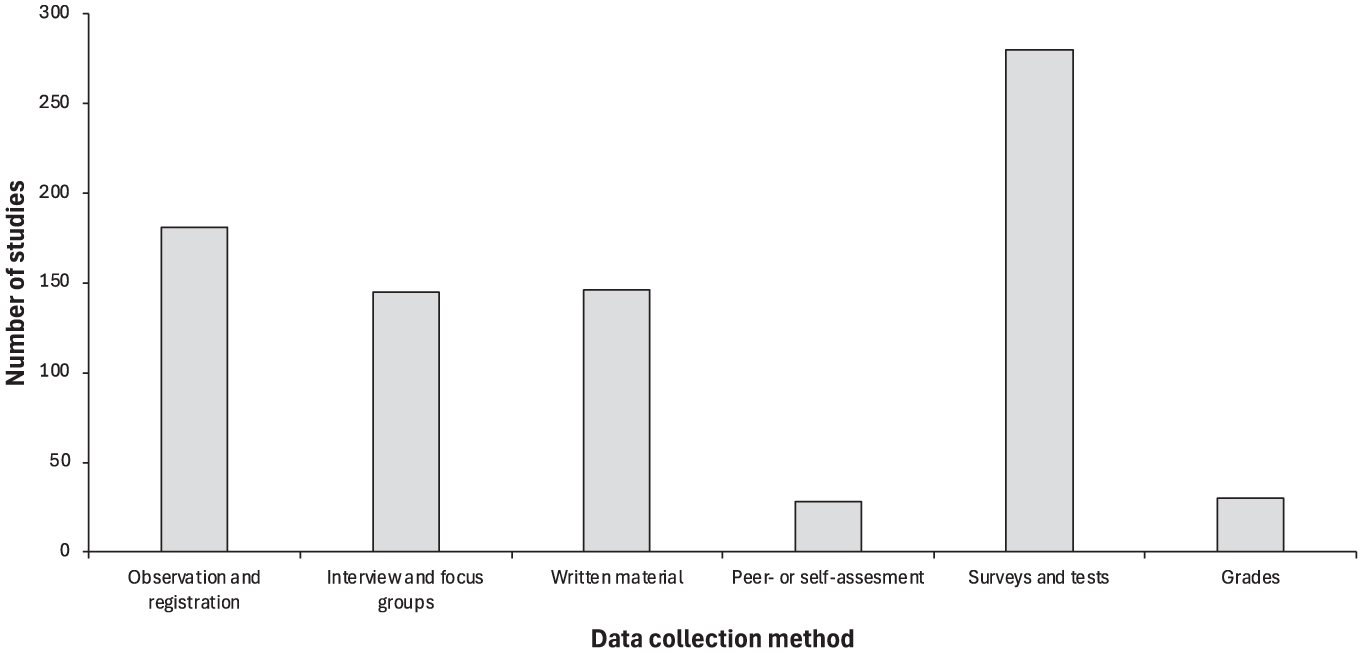
Distribution of data collection methods.
Surveys and tests (n = 280) are not surprisingly the main method in the quantitative category, while 30 studies also collected student grades. The majority of the studies combine several sources of data.
Viewpoint
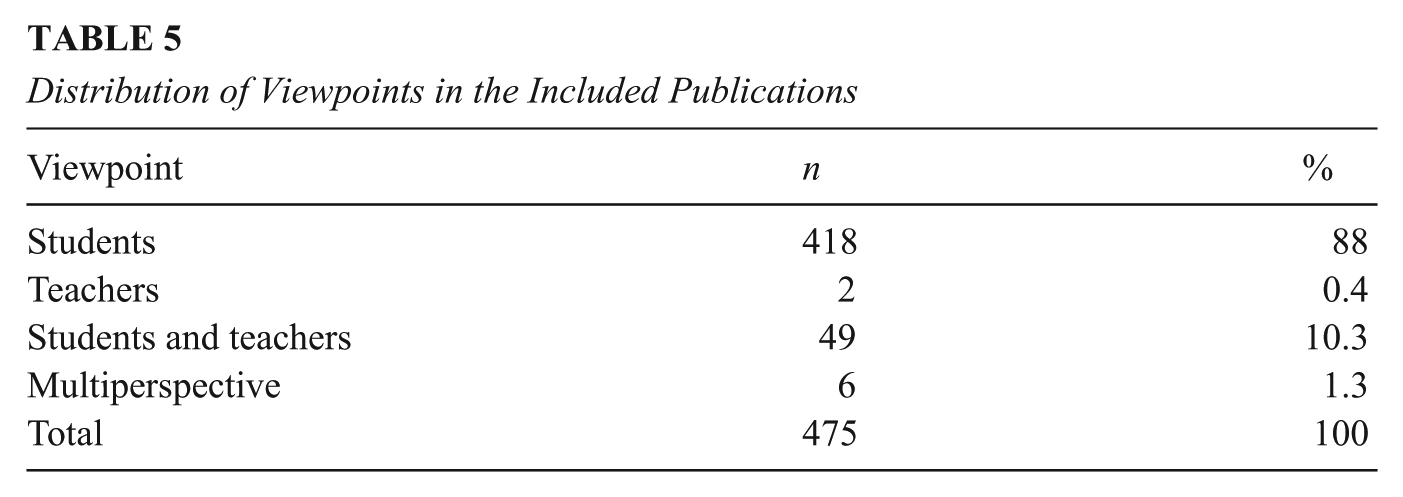
One part of mapping the empirical base of student project collaboration in higher education is to describe whose voices are included. The classification scheme, therefore, included the viewpoint of the collected data for each study (see Table 5). With the exception of two studies that included only teacher perspectives, all articles included empirical data from students. A total of 417 (88%) studies included data from students only, 49 (10.3%) collected data from students and teachers, and six (1.3%) were placed in the category multiperspective. The latter includes another perspective (such as external partner) in addition to students and teachers.
Distribution of Viewpoints in the Included Publications
Synthesis of Research Design
The overall research design is evenly distributed across qualitative, quantitative, and mixed-methods approaches, and incorporates a wide variety of data sources. Most studies draw on multiple types of data—including grades, surveys, tests, interviews, written materials, and observations. While this methodological diversity is encouraging, the vast majority of research is anchored solely in the student perspective. Only 52 articles (11%) include teachers as part of the data collection, although in many cases the teachers were also the researchers, which may have brought their perspectives into the analysis indirectly. Studies incorporating other sources, such as institutional documents or data from additional stakeholders, are exceedingly rare (1.3%).
Research Topics—What Aspects of Collaboration Have Been Examined?
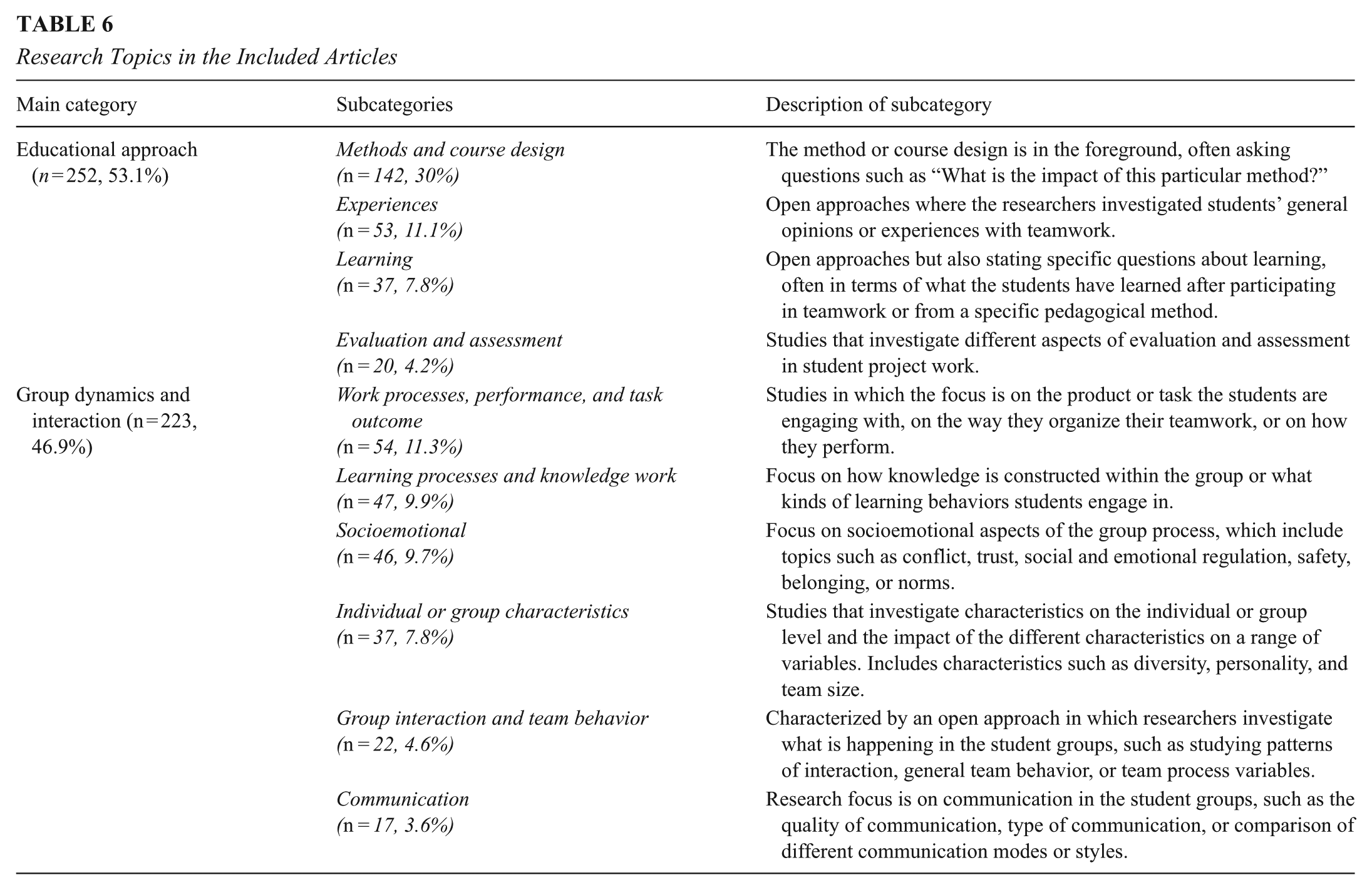
This subquestion was explored through a process of open coding of the focus of each article, followed by a cyclical abstraction and categorization process, as described in the methods section. The result is that the research topics found in the included studies can be mapped into two main categories with relatively equal distribution between the two categories: educational approach (n = 252, 53.1%) and group dynamics and interaction (n = 223, 46.9%). The main difference between the two is that the first category has the educational approach in the foreground, while the second category has the group dynamic or group process in the foreground. The educational approach contains four subcategories, while group dynamics and interaction include six. Table 6 shows an overview of the categories, with a short description. A more detailed description of each category with the subcategories is provided, including examples of studies that have been categorized into the respective categories. Examples of exact code names from the different categories are presented using quotation marks.
Research Topics in the Included Articles
Educational Approach
In this main category, the educational approach to student project work is in the foreground of the research paper. It contains four subcategories, presented in descending order based on the number of articles coded to the categories (see Table 6): methods and course design, experiences, learning, and evaluation and assessment.
Methods and course design
This is by far the largest subcategory, comprising 142 articles (30%). These studies focused on specific teaching methods or course design, often asking questions about their impact on students’ collaborative or learning processes. A key distinction was made between studies where the method or course design was the central focus of the research and those where it was simply part of the context description. In the latter cases, the methods or course design might still be described, but the study was coded under a different topical category if the research aim centered elsewhere (e.g., on group interaction, student learning, or student experience). As outlined in the methods section, studies were only included if they collected data aimed at understanding some aspect of the process. Therefore, studies that merely described the course design without investigating its connection to collaborative or learning processes were excluded. This distinction was regularly discussed in team meetings to ensure consistency and avoid drift in coding decisions.
The research topics of the studies included in this subcategory were diverse, often combining several different topics within one and the same study, which made division into further subcategories difficult. The research studies can rather be placed along a continuous scale, from an open approach at one end to a narrow approach at the other. Examples of open approaches are studies with the primary aim to describe or evaluate a course or method, such as “evaluating an interdisciplinary project course,” “description of a course using a semester-long PBL project,” (Cresswell-Yeager, 2021) and “reporting on a European Engineering Team (EET) course” (Gladysz et al., 2020). Further down on the “open-narrow” scale are studies that look at the impact of the method or course design on a broad set of goals, such as “improving teamwork skills via boardgame-project” (Azizan et al., 2018); describing “a method to improve students’ organization, teamwork and conflict management skills” (Pertegal-Felices et al., 2019); “analyzing the effect of small group activity on improvement of professional skills” (Casquero-Modrego et al., 2022); or “demonstrating how reflective dialogue can facilitate development of competencies in understanding group dynamics, communication, organization and project management” (Hansen, 2004). Examples of narrower approaches include studies that either compared two different methods or measured the effect or impact of a method on specific skills. Examples include measuring the impact of the pedagogical approach and team cohesion on creative thinking (H.-L. Chen & Chen, 2019), assessing the effect of real-time feedback through a mobile app on team conflict outcomes (Blau et al., 2019), and comparing the impact of different forms of group assignments on academic success (Gunderson & Moore, 2008).
Experiences
A significant proportion of studies (53 articles, 11.1%) adopt an open-ended approach, exploring how students perceive and experience various approaches to project work. These investigations focus on students’ reflections, attitudes, and interpretations of teamwork, typically without framing the study around a specific pedagogical intervention. Examples include studies examining students’ general experiences of collaborative project work (Knox et al., 2019), perceived impact and value of group projects (Davenport et al., 2016), and perceptions of teamwork in group writing (E. D. Johnson et al., 2012). Some studies concentrate on students’ experiences and opinions of more specific settings of teamwork, such as reflective writing (Mayne, 2012) or virtual collaboration (Grinnell et al., 2012). Others highlight perceived challenges and benefits of teamwork, including interdisciplinary group work (Crichton et al., 2022) or global virtual team collaboration (Cleary et al., 2019). These studies contribute nuanced insights into how students make sense of their collaborative learning experiences across diverse educational contexts.
Learning
This subcategory includes 37 articles (7.8%) and is distinct in its explicit focus on what students report learning from engaging in project-based collaboration. While the studies often employ open-ended data collection methods—similar to those in the Experiences subcategory—they are classified here because their stated research aim centers on learning outcomes or processes. This includes how students acquire knowledge, develop skills, or change attitudes through collaboration. Examples of broadly framed learning studies include investigations into “learning from each other during case-based learning project” (Thurman et al., 2009), “student perspectives on learning in groups” (Almajed et al., 2016), and “evaluating student learning in an interdisciplinary sustainable design project” (Schäfer & Richards, 2007). Other studies adopt a more focused lens, such as “examining changes in students’ self-efficacy in a PBL environment” (Dunlap, 2005) or exploring the emotional dimensions of learning in entrepreneurship education” (Arpiainen et al., 2013). In contrast to the Methods and course design category, where the course design or teaching method is the object of study, research in this subcategory emphasizes what students learn through collaboration, without investigating the pedagogical design itself as a central variable.
Evaluation and Assessment
The fourth and smallest subcategory comprises 20 articles (4.2%). Thirteen of these studies investigate various aspects of peer evaluation or peer assessment—for example, using peer evaluation as a formative learning tool (e.g., Mentzer et al., 2017), incorporating it into grading practices (e.g., Usher & Barak, 2018), or applying it to mitigate free-riding in group work (e.g., Biesma et al., 2019). The remaining seven studies also focus on evaluation or assessment as part of the educational approach, but outside of peer assessment settings. These include investigations into how students and teachers evaluate group assignments (e.g., Hannaford, 2017), how teamwork skills are assessed (Guaman-Quintanilla et al., 2022), and how specific practices aimed at enhancing creativity are evaluated (West et al., 2013). While some of these studies may superficially resemble others categorized under experiences or learning, they were placed in this subcategory because their central research aim is to examine evaluation or assessment practices within project-based collaboration. In other words, the defining criterion for inclusion in this category was not the methodological approach but the analytical focus on evaluation or assessment itself.
Group Dynamics and Interaction
The second of the two main categories includes studies in which the focus on group dynamics or group interaction is in the foreground. We found six subcategories concerning different aspects of team interactions and factors that can influence dynamics or interactions.
Work Processes, Performance, and Task Outcome
The first and largest subcategory is labeled work processes, performance, and task outcome; it has 54 articles (11.3%) and encompasses studies in which the focus is on the product or task the students are engaging with or on the way they organize and coordinate their teamwork. Similar to the categories with an educational approach, there is a large variation of topics, and many studies combine different topics or foci within the same article. Some studies take an explorative approach and look at the coordination or division of labor in teams (e.g., Mayordomo & Onrubia, 2015; Wolfe & Alex, 2005) or explore the team’s success and failures (Jones & Mendez, 2021) or decision-making (Toh & Miller, 2015). Other studies take a causal approach, such as investigating the influence of team charter and performance strategy on team performance (Mathieu & Rapp, 2009). Many of the studies in this category focus on the impact of a range of variables on team performance and task outcome. The type and number of variables included vary greatly, as does the way in which team performance and task outcome are measured. Examples include looking at the impact of coordination; ingroup attraction and individualism on performance (Kamau, 2010); the influence of the type of task (Acuña et al., 2018) or team reflection (Shin et al., 2017) on team performance; or examining the relationships between team goal orientation, team self-regulation, tactic of team planning, and team performance (Mehta et al., 2009).
Learning processes and knowledge work
The second subcategory is learning processes and knowledge work, with 47 (9.9%) articles. This subcategory includes a variety of topics, but all studies are, in some way, related to how knowledge is constructed within the group and what kinds of learning behaviors the students engage in. Some studies take an explorative approach, such as analyzing knowledge dimensions and cognitive processes (Lin et al., 2013), divergent thinking (Hirshfield & Koretsky, 2021), focusing on students’ reflective dialogue and collaborative development (Jimoyiannis & Roussinos, 2017), or examining learning dynamics (McConnell, 2005), epistemic cognition (Bernhard et al., 2019), and practices of distributed hybrid knowledge work (Muukkonen et al., 2010). Other studies explore relations between different variables, such as the interrelationships between leadership, task conflict, team cohesion and knowledge sharing (M. H. Chen & Agrawal, 2018), or causal relationships. Examples of the latter are studies that investigate the influence of conflict, safety, social interaction and attitudes on knowledge development (Broussard et al., 2007), influence of project complexity on reciprocal interdependence and integration learning (Skilton et al., 2008), or the effect of individual and group ownership of learning on the groups’ proceeding of the task (Enghag & Niedderer, 2008). The label knowledge work includes studies that have research topics using expressions, such as knowledge sharing, social construction or co-construction of knowledge (e.g., Heo et al., 2010), knowledge objects (Damşa & Ludvigsen, 2016), and knowledge creation, as well as studies with an interest in its ties with team creativity (M.-H. Chen & Agrawal, 2017).
Socioemotional
The 46 (9.7%) studies in the third subcategory focus on socioemotional aspects of the group process. This includes topics such as conflict, trust, social and emotional regulation, safety, belonging, and norms. Studies investigating social or self-regulation (n = 14) (e.g., De Lourdes Rico Cruz & Ávila Pardo, 2014) and conflicts or socially destructive behavior (n = 6) are particularly present in this category. Examples of the latter include identifying ways in which students manage conflicts (Winter et al., 2005) and examining differences in intragroup conflicts between virtual and face-to-face interactions (Martínez-Moreno et al., 2009). Other topics are dynamics of trust (e.g., Jaakson et al., 2019), the role of constructive disagreements (Komori-Glatz, 2018), and power asymmetries (Vickers, 2010). Most of the studies in this category take an open, explorative approach, aiming to understand team processes and identify factors of importance. A few studies had a narrower approach with predefined factors of importance—for example, a study investigating the influence of interaction, intragroup emotional support, and online collaborative tools on learning (Hernandez-Selles et al., 2019); one that investigated the relationship among cognitive presence, social presence, and teaching presence (Hsu & Shiue, 2018); and studies comparing establishment of trust and conflicts between face-to-face and virtual teamwork, as exemplified previously.
Individual or group characteristics
The fourth subcategory is made up of 37 (7.8%) articles that investigate individual or group characteristics and the impact of the different characteristics on a range of variables. These variables can also be found in other categories, such as team performance, learning, and team behaviors. The common denominator for articles within this category is, however, that researchers are interested in the influence of and relationships between different individual or group characteristics, often in the meaning of antecedents. It includes both rather stable characteristics, such as personality, team size, or diversity, and more dynamic characteristics, such as self-efficacy and team autonomy.
Diversity is the most present topic in this category, with 10 articles—either team diversity in general or cultural, ethnic, gender, cognitive, or disciplinary diversity in particular. These studies investigate the influence of diversity on different variables, such as group reflection (Adelopo et al., 2017), learning, team performance (van Veelen & Ufkes, 2019), or innovation (Usher & Barak, 2020). Two studies have an explorative approach, investigating attitudes toward culturally mixed groups (Summers & Volet, 2008) and obstacles during group work in homogeneous and heterogeneous groups (Soetanto & MacDonald, 2017).
Other topics in the subcategory of individual or group characteristics include the impact of emotional intelligence on learning (Clarke, 2010) and effectiveness (Dunaway, 2013) and the influence of personality (e.g., Hyldegård, 2009), team size (Maier et al., 2019), and cultural intelligence (Dibble et al., 2019) on a variety of group variables. There are also examples of more dynamic characteristics, such as team task autonomy (Molleman et al., 2004), personal and collective self-efficacy (e.g., Alavi & McCormick, 2018), and personal motivation (e.g., Krishen, 2022). A minority of the studies within this category take an explorative approach, as one study that investigated differences in project experiences for male and female students (Hirshfield, 2018), another that investigated determinants of collective efficacy, and a third attempting to develop empirical models to predict groupwork motivation management (Xu & Du, 2013).
Group interaction and team behavior
The articles in the fifth subcategory share a research interest in group interaction and team behavior (n = 22, 4.6%). The majority of these articles take an open approach in which the research focus is on group interaction without predefining a particular focus topic. Examples include articles that analyze groups’ collaborative behavior (Vasiliou et al., 2020), student, group, or team interaction (e.g., Spikol et al., 2018) and analyze behavioral patterns (Hou, 2010) and behavioral variables implied in the working dynamics of student groups (Fernández et al., 2009). Some studies look at predefined variables in relation to group dynamics, such as interaction patterns for inclusivity (Waldron, 2017), the influence of mobile phones on group interaction (Hendry et al., 2016), or the impact of a face-to-face encounter on group dynamics during online collaboration (Michinov & Michinov, 2008).
Communication
The focus in the sixth and last subcategory is communication, with 17 articles (3.6%). All studies in this subcategory have some aspect of communication in the foreground of their research interests, such as communication behaviors and patterns (e.g., Swigger et al., 2012); the quality of communication or dialogue (e.g., Innes, 2007); or dialogue, investigation, and comparison of different communication modes or styles (e.g., Kiernan et al., 2020). All but three articles present explorative approaches—two that investigate the relationship between team communication and team performance (Poysa-Tarhonen et al., 2016; Schneider et al., 2015) and one that studies the impact of synchronous or asynchronous communication mode on the collaboration process (Gül et al., 2012).
Synthesis of Research Topics
The categorization of research topics into two main groups—educational approach and group dynamics and interaction—reveals both the breadth and focus of existing studies. The educational approach category includes studies centered on instructional methods, course design, assessment practices, and student experiences of learning environments. In contrast, the group dynamics and interaction category includes studies focused on how students collaborate, communicate, and manage interpersonal and cognitive aspects of teamwork. A key insight from this distribution is the relatively balanced attention to both pedagogical design and collaborative processes, indicating a dual interest in what enables and what characterizes student collaboration in project settings.
However, the findings also show that many studies take an open-ended approach with broad or multiple foci. In the data extraction phase, we expected to be able to categorize the studies by research focus into distinct topical areas—similar to Borrego et al.’s (2013) review on student project teams in engineering education, which reviewed team effectiveness across five dimensions: social loafing, interdependence, conflict, trust, and shared mental models. However, finding a clear pattern of topics turned out to be difficult, if not impossible. This was due to the vast number of different combinations of topics among the included studies, combined with a large variation in approaches on the scale from open to narrow. At the open end of the scale are exploratory studies without predefined variables or factors of importance; at the other end are causal studies or studies investigating interrelationships between predefined variables.
The balance between open and narrow approaches is different within the two main categories related to the research topics. In the educational approach category, explorative studies dominate. In these studies, researchers explore students’ experiences with different learning activities, with the overall aim of identifying practices and learning designs, including methods for assessments, that support student learning of different competencies and skills. Although the other main category, group dynamics and interaction, also includes many explorative studies with an open approach, it includes more studies that are descriptive but still narrow the research focus. These studies address a wide range of teamwork-related topics, spanning from the organization of work with an emphasis on performance and task outcomes to socioemotional aspects such as conflicts, trust-building, and power dynamics. In both main categories, there are also causal studies with the aim of measuring the impact of and relationships between a range of variables on other variables. In the educational approach category, these variables are typically different skills or academic achievements. In the group dynamics and interaction category, the dependent variables are also related to other aspects of student teamwork—for example, team performance, team creativity, or innovation.
Further fragmentation is shown in the dominance of single-case studies that report on particular courses without deeply investigating specific topics or connecting them to previous research. “Methods and course design,” with studies focusing on a particular teaching method or course design, is the largest subcategory; it includes 30% of the studies. A large part of the studies in this category focus on reporting on experiences with a course (e.g., Ahmad & Liukkunen, 2019; R. Y. Jin et al., 2018; Messersmith, 2015), while others aim to measure the impact of a particular design on variables such as learning outcome (e.g., Dossick et al., 2015), student satisfaction (e.g., Dufner et al., 2001), teamwork skills (e.g., Azizan et al., 2018), and team effectiveness (e.g., Kelley, 2015). In addition, in other categories, particularly in “experiences” and “learning,” there is a dominance of open-approach studies that report on a variety of findings.
Additionally, many studies that merely reported on courses were excluded due to the inclusion criteria of having a process focus. To investigate whether there have been changes in the distribution between the categories over the last two decades, we performed an inquiry in NVivo that mapped the number of included studies over time for each of the two main categories and the subcategory methods and course design from 2000–2022. All three showed the same development as the general development in the number of publications (Figure 3), which shows a continuous increase from 2000 onwards.
Discussion
This mapping review provides a comprehensive map of the empirical literature on student project collaboration in higher education, offering an overview of where the research field currently stands with regard to research context, research design, and focus areas of the extant research. While mapping reviews are primarily descriptive, their value also lies in revealing deeper patterns that speak to the state of a research field—identifying trends, gaps, strengths, and weaknesses in the existing literature (Grant & Booth, 2009). In this paper, we set out to investigate the claim that there is a lack of process-oriented research on student project collaboration. Our findings confirm that the research base is not insignificant, spanning 475 studies from 2000 to early 2023.
Student project collaboration has been studied using process-oriented approaches across a wide range of contexts and research topics. Two main thematic orientations emerge: studies emphasizing educational design and those focusing on team dynamics. This bifurcation reflects the dual influence of educational research and organizational studies on the field. It also supports earlier claims about the relevance of team research from industrial and organizational psychology to educational contexts (e.g., Borrego et al., 2013; Fransen et al., 2013).
However, beyond this quantitative scope, our review exposes three major patterns that offer insight into the field’s maturity and trajectory. In this discussion, we describe these three patterns before we outline some challenges of conducting the review. Finally, we present some implications for researchers, policymakers, and educators.
Three Patterns of Importance for Future Research
First, the field appears to be in a predominantly exploratory phase. Many studies adopt open-ended approaches with broad or multiple foci, aiming to investigate student experiences, teaching methods, or team processes—often without strong theoretical grounding. This became evident in the difficulties we faced when attempting to categorize the articles into distinct topical areas. The vast number of different combinations of research topics made such categorization difficult, prompting us to take a different analytical approach. Two overarching categories eventually emerged, distinguishing studies that foreground educational approaches from those focused on group dynamics and interaction.
Within each of these categories, studies varied in scope and specificity, ranging along a continuum from open-ended, exploratory investigations to more narrowly defined inquiries. However, the majority leaned toward open, exploratory designs. This openness reflects a research base that is rich in descriptive insight, but diffuse and fragmented, with limited theoretical integration across studies. The prevailing focus on describing “what happens” rather than probing “why” or “under what conditions” reveals the early developmental stage of the field. Future research would benefit from theoretically grounded designs that promote conceptual coherence and cumulative knowledge building.
Second, the diversity across disciplines, research methods, and terminology points to a field that is active and evolving, yet also theoretically fragmented and contextually bounded. This contextual specificity is reflected in the dominance of studies from engineering and business education in our review and in the fact that existing literature reviews have focused almost exclusively on engineering education (e.g., Borrego et al., 2013; Knutas et al., 2015; Pow-Sang et al., 2017).
Moreover, methodological choices appear closely tied to disciplinary norms. Studies from business and economics education typically adopt quantitative designs, frequently employing surveys and performance metrics to evaluate learning outcomes or teamwork efficiency. In contrast, research within the social sciences and humanities tends to employ qualitative or mixed-methods designs, using interviews, reflective writing, and observational data to investigate collaborative learning as a situated and subjective experience. Research from engineering and technology contexts occupies an intermediate position, showing a more balanced use of qualitative, quantitative, and mixed-methods. These disciplinary tendencies reflect different epistemological assumptions—about what constitutes valid knowledge and how it should be produced—which shape research questions, analytical strategies, and interpretation of findings. As a result, the field as a whole lacks methodological integration and conceptual cohesion, limiting the potential for cross-contextual synthesis.
Finally, although topics such as teamwork, learning outcomes, and interdisciplinary collaboration recur across the literature, there is little consistency in the use of conceptual frameworks and terminology—particularly evident in the varied application of pedagogical terms (cf. Table 3). This conceptual ambiguity hinders the accumulation of coherent insights and highlights the need for more precise and theoretically anchored terminology in future research. Greater definitional clarity would not only improve the comparability of studies but also provide a foundation for the development of fidelity measures—tools used to assess how closely interventions align with their intended design—which are critical for both evaluating and refining project-based learning practices.
The third pattern concerns the limited integration across levels of analysis in existing research. Most studies focus on single courses or isolated implementations, often without systematic links to broader institutional or policy contexts. As a result, while the literature is rich in localized insights, it lacks studies that connect microlevel processes—such as team dynamics and individual learning experiences—with macrolevel structures, including curricular design, institutional norms, and educational policy.
One notable example of this disconnect is the limited focus on interdisciplinarity. Although project-based learning is frequently associated with the development of interdisciplinary competence (Braßler & Dettmers, 2017), only 16.4% of the studies in our review involve interdisciplinary student groups. This underrepresentation contrasts sharply with policy ambitions advocating for interdisciplinary collaboration in higher education and may reflect structural or curricular constraints that hinder integrative designs. The lack of attention to interdisciplinary contexts underscores the need for research that bridges disciplinary, pedagogical, and institutional dimensions.
The near absence of teacher perspectives and institutional data further reinforces this gap, reflecting a broader trend toward learner-centered research. While this focus offers valuable insights, it becomes limiting when structural, relational, and organizational aspects of project-based education are neglected. To advance the field, future studies should strive for multilevel research designs that incorporate perspectives from multiple stakeholder groups and account for the complexity of educational systems.
Challenges in Conducting Mapping Reviews of Higher Education Literature
Mapping reviews inevitably involve various challenges (Alexander, 2020). The challenges in conducting this mapping review are largely related to the nature of the field of higher education, which is inherently heterogenic and multidisciplinary. To include the variation of terms used across the fields, the search string needed to be broad, which resulted in a very high number of potentially relevant studies. With a number of hits exceeding 50,000 articles in the initial testing of the search string, the scope was delimited to journal articles and empirical papers to keep the review manageable with the available resources. Consequently, other contributions, such as book chapters and theoretical or conceptual papers, were omitted. For the same reason, we also left out gray literature and additional search strategies outside the databases, such as referential backtracking, researcher checking, and hand searching (Alexander, 2020). Although we primarily see the size of the review as a strength, it required a team of six in the screening process, which can increase the risk of interrater drifts. Regular team meetings were held to prevent this. Additionally, by restricting the search to English-language publications, a body of research published in other languages has been left out. However, we believe that these delimitations do not substantially change the patterns in the resulting map or the utility of the findings.
Another challenge was to apply what our team ended up referring to as “fuzzy” or immature inclusion criteria. As has been confirmed through this review, there is no agreed-upon definition of the concept of “student project collaboration”; it encompasses a variety of pedagogical approaches and terms used to describe these approaches. Consequently, the research team had to agree on our own definition of what a project is, informed by both the project management and education literature.
Finally, it is important to note that this review presents one map of the empirical base of student project collaboration. This is a result of an interest in providing an overview and description of a research area that, to date, lacks structuring. Other interests, such as exploring particular theoretical concepts within the same research area, would have resulted in a different map. On the one hand, the diversity in the included studies made it difficult to categorize according to specific topics. On the other hand, these difficulties called for what Alexander (2020) described as the creative hand in systematic reviews—in our case, to instigate a critical dialogue and see the patterns of diversity and fragmentation.
Conclusion and Implications
This mapping review provides a comprehensive overview of empirical research on student project collaboration in higher education, demonstrating that extant research covers a wide range of contexts, methodological approaches, and research topics. However, it also identifies some critical limitations, suggesting a need for more cumulative, theoretically informed, and multilevel research to guide both scholarly and pedagogical practice.
For researchers, this map calls for greater definitional clarity around core terms, such as PjBL, PBL, and TBL, which would support the development of fidelity measures and facilitate synthesis across contexts. Future research should also move beyond isolated implementations by incorporating longitudinal, comparative, and contextually embedded designs. More in-depth investigations into specific topics and stronger connections to previous research are needed. Over time, this might also foster more consistent terminology and greater clarity in distinguishing among different educational designs.
For educators and policymakers, research appears to lag behind institutional and political decisions currently shaping practice in higher education. While existing studies point to several benefits of project-based approaches for student learning (e.g., H. L. Chen & Yang, 2019; Guo et al., 2020; Johnsen et al., 2024), they also highlight substantial barriers at student, teacher, and institutional levels. Addressing these challenges requires more process-oriented research that investigates how project-based approaches unfold in real-world settings. Yet, the map presented in this review reveals a fragmented research field dominated by exploratory, single-case studies with broad or multiple foci and limited theoretical anchoring. This disconnect suggests that current implementations may be outpacing the evidence base, making it difficult to ensure quality in practice. To close this gap, educators and policymakers should engage more proactively with the research community to help shape agendas that reflect “on-the-ground challenges” and support evidence-informed decisions.
The findings identify several critical gaps. Most studies report only student data. Given the crucial role of teachers in facilitating collaboration (Sjølie et al., 2021) and the shifting dynamics of student–teacher roles in learner-centered environments, there is a pressing need for research that incorporates both perspectives. This includes research on the student–teacher relationship within project-based settings. Furthermore, in light of the growing emphasis on interdisciplinary learning, more research on collaboration in interdisciplinary contexts is warranted. Likewise, despite an increasing prevalence of hybrid and online formats in higher education, empirical research on project collaboration in virtual and blended environments remains limited.
More broadly, there is a need for research that explores the heterogeneous and socially embedded nature of student learning within the broader institutional and pedagogical ecosystems of project-based education. To understand what supports student collaboration and learning in these settings, future studies must also consider structural factors such as institutional traditions and program-level design. This, in turn, will require data collection that extends beyond the student experience—an approach that remains largely absent in the existing literature.
Supplemental Material
sj-docx-1-rer-10.3102_00346543261435632 – Supplemental material for The Empirical Base of Student Project Collaboration in Higher Education: A Mapping Review
Supplemental material, sj-docx-1-rer-10.3102_00346543261435632 for The Empirical Base of Student Project Collaboration in Higher Education: A Mapping Review by Ela Sjølie, Eline Rødsjø, Lars Skancke, Paulina Carvajal, Solvor Solhaug, Magnus Rom Jensen and Hilde Kaalvik in Review of Educational Research
Supplemental Material
sj-docx-2-rer-10.3102_00346543261435632 – Supplemental material for The Empirical Base of Student Project Collaboration in Higher Education: A Mapping Review
Supplemental material, sj-docx-2-rer-10.3102_00346543261435632 for The Empirical Base of Student Project Collaboration in Higher Education: A Mapping Review by Ela Sjølie, Eline Rødsjø, Lars Skancke, Paulina Carvajal, Solvor Solhaug, Magnus Rom Jensen and Hilde Kaalvik in Review of Educational Research
Supplemental Material
sj-docx-3-rer-10.3102_00346543261435632 – Supplemental material for The Empirical Base of Student Project Collaboration in Higher Education: A Mapping Review
Supplemental material, sj-docx-3-rer-10.3102_00346543261435632 for The Empirical Base of Student Project Collaboration in Higher Education: A Mapping Review by Ela Sjølie, Eline Rødsjø, Lars Skancke, Paulina Carvajal, Solvor Solhaug, Magnus Rom Jensen and Hilde Kaalvik in Review of Educational Research
Supplemental Material
sj-docx-4-rer-10.3102_00346543261435632 – Supplemental material for The Empirical Base of Student Project Collaboration in Higher Education: A Mapping Review
Supplemental material, sj-docx-4-rer-10.3102_00346543261435632 for The Empirical Base of Student Project Collaboration in Higher Education: A Mapping Review by Ela Sjølie, Eline Rødsjø, Lars Skancke, Paulina Carvajal, Solvor Solhaug, Magnus Rom Jensen and Hilde Kaalvik in Review of Educational Research
Supplemental Material
sj-docx-6-rer-10.3102_00346543261435632 – Supplemental material for The Empirical Base of Student Project Collaboration in Higher Education: A Mapping Review
Supplemental material, sj-docx-6-rer-10.3102_00346543261435632 for The Empirical Base of Student Project Collaboration in Higher Education: A Mapping Review by Ela Sjølie, Eline Rødsjø, Lars Skancke, Paulina Carvajal, Solvor Solhaug, Magnus Rom Jensen and Hilde Kaalvik in Review of Educational Research
Supplemental Material
sj-pdf-5-rer-10.3102_00346543261435632 – Supplemental material for The Empirical Base of Student Project Collaboration in Higher Education: A Mapping Review
Supplemental material, sj-pdf-5-rer-10.3102_00346543261435632 for The Empirical Base of Student Project Collaboration in Higher Education: A Mapping Review by Ela Sjølie, Eline Rødsjø, Lars Skancke, Paulina Carvajal, Solvor Solhaug, Magnus Rom Jensen and Hilde Kaalvik in Review of Educational Research
Footnotes

Authors
ELA SJØLIE is professor of education at NTNU, working in the area of teaching and learning in higher education; email:
ELINE RØDSJØ is an assistant professor at NTNU, working in the area of teaching and learning in higher education; email:
LARS SKANCKE is an assistant professor at NTNU, working in the area of teaching and learning in higher education; email:
PAULINA CARVAJAL is a PhD candidate at NTNU, working in the area of teaching and learning in higher education; email:
SOLVOR SOLHAUG is a research librarian in the Library Section for Research Support, Data and Analysis at the University Library at NTNU; email:
MAGNUS ROM JENSEN is a senior research librarian in the Library Section for Research Support, Data and Analysis at the University Library at NTNU; email:
HILDE KAALVIK is a senior adviser at Statped, the National Service for Special Needs Education; email:
References
Supplementary Material
Please find the following supplemental material available below.
For Open Access articles published under a Creative Commons License, all supplemental material carries the same license as the article it is associated with.
For non-Open Access articles published, all supplemental material carries a non-exclusive license, and permission requests for re-use of supplemental material or any part of supplemental material shall be sent directly to the copyright owner as specified in the copyright notice associated with the article.
