




Abstract
This study explores the internationalization of higher education (IHE) using science mapping techniques. We analyzed 5,253 articles and reviews published from 1929 to 2022, selected through a rigorous procedure. Findings indicate a rapid and significant increase in publications over the years, with more than tripling in the last decade only. Several patterns were revealed. Findings uncover that previously English-speaking nations are no longer the sole contributors to the internationalization research, as China-based researchers also increasingly contribute to the field's research output. The topical analysis revealed research clusters, highlighting the intellectual and conceptual structures of IHE. The resulting conceptual map revealed seven research clusters, (1) teaching and learning practices, (2) mobility and migration, (3) language policy, (4) study abroad, (5) transnational higher education, (6) international students and their experiences, and (7) macro-level policies and practices. Findings also demonstrate a diversification of and an increase in journals covering the IHE knowledge base.
Introduction
Internationalization of higher education (IHE) has emerged as a critical component shaping higher education (Knight, 2021) and has evolved from a marginal activity to a key reform agenda (de Wit & Altbach, 2021). From a historical perspective, internationalization is not a new phenomenon (Marginson, 2000). Internationalization is argued to be as old as the university itself (Enders, 2004), considering the intellectual dialogue between old civilizations through the transnational mobility of people from religious higher education institutions of medieval times (Kim, 2009) and translation of ancient texts to Arabic and later to Latin (Alfonso, 2008).
However, in the last three decades, IHE has become a national policy and a strategic agenda for universities (Li & Eryong, 2022). Knight (2016) pointed out a transformation process over the years, noting that internationalization has been traditionally known as a process built upon cooperation, partnership, exchange, mutual benefits, and capacity building. Thus, currently, internationalization is increasingly described with competition in multifaceted aspects involving commercialization, self-interest, and status building (Krücken, 2021). In addition to these, to point out the multifaceted and developing nature of IHE, de Wit (2023, 2024) notes that the current form of internationalization will evolve with emerging directions and themes in a form of transition from short-term neoliberal strategies to long-term societal goals, from international education serving a privileged few to global learning accessible to all, and from a Western-centric model to a more inclusive and equitable global process.
In that sense, internationalization is gaining increasing attention globally (Yudkevich et al., 2023). Given the importance of internationalization, understanding the concept, and reviewing its position in the relevant literature is important.
The Concept of Internationalization
“Internationalization” as a concept has been used in political science and government for years, but the popularity of the term in education has soared since the 1980s (Knight, 2016). IHE is a relatively new, comprehensive, and diverse phenomenon, which is driven by academic, political, sociocultural, and economic stakeholders and rationales (de Wit & Altbach, 2021). The most popular definition of IHE has been by Knight (2004) as “the process of integrating an international, intercultural, and global dimension into the purpose, functions (teaching, research, and service), and delivery of higher education” (p.26). Expanding Knight's (2004) definition, de Wit et al. (2015) emphasize that internationalization is a deliberate, strategic process aimed at enhancing the quality of education and research, rather than an automatic or standalone goal.
Furthermore, scholars have discussed new definitions and conceptualizations over time, highlighting the ongoing relevance and significance of IHE in academic discussions such as virtual internationalization (Bruhn-Zass, 2022), forced internationalization (Ergin et al., 2019), and regional internationalization (Kondakçı et al., 2016). Regarding the suggested terminologies and definitions, de Wit (2024) reviews the evolution of the debate on IHE, highlighting that while the term has become widely used, its meaning often remains unclear and fragmented, and therefore he emphasizes the need to move away from short-term, neoliberal, and Western-dominated approaches toward a more global, inclusive, and socially just vision. Along with the discussions on the definition of IHE, Jones et al. (2021) discussed the mission of internationalization, stressing the urgent need to align universities’ internationalization strategies with their social responsibility, particularly through the framework of Internationalisation of Higher Education for Society. Stein and McCartney (2021) emphasize the need for critical approaches to internationalization, drawing heavily from decolonial critiques. They point out the dangers of sustaining unequal global power structures, colonial narratives, and exploitative resource flows in traditional internationalization practices.
As part of IHE research, the literature has discussed several other topics, such as cultural diversity (Moon, 2016), intercultural competence (Deardorff, 2006), English medium instruction (Bowles & Murphy, 2020), university rankings (Hauptman Komotar, 2019), and transnational education (Kosmützky & Putty, 2016). The exponential accumulation of publications and the diversification of topics in the IHE field suggest that the landscape of the research is evolving and thereby creating various clusters. Therefore, a science mapping of the field would be timely and important to unpack the development of the field.
Scope of the Review
As discussed in the previous section, scholarly discussions and policy implementations regarding IHE are quite dynamic and evolving. As the discussions of IHE diversify, systematic review studies on the field have become highly apparent and important to provide an overview of the developments in the field (e.g., Bedenlier et al., 2017; Ghani et al., 2022; Yemini & Sagie, 2016). However, we observed that most of the reviews focused on a narrow body of research or did not report an in-depth overview of the research field. Three features distinguish the present study from previous review studies. First, our study covers the IHE literature from the first published articles (i.e., 1929) to the latest fully available year (2022). Further, this review not only had an earlier starting point for data retrieval but also includes a database of journals and articles more recent than the previous studies. The studies on IHE has been developing rapidly and the inclusion and examination of the latest decades is vital to see the development of the field. Thus, our analysis includes the bibliometric analysis of the publications on the IHE field with a large set of documents published between 1929 and 2022. Lastly, this review employed “science mapping” (Zupic & Čater, 2015) to portray a systematic analysis of the knowledge base in the field. Science mapping is useful for going beyond descriptive listing of articles and provides the capability to capture the landscape of the field through visual clusters. Against this backdrop, this examination was conducted to address the following research questions:
What are the volume, growth trajectory, and geographic distribution of publications on IHE? What documents on the IHE literature have evidenced the greatest impact on scholarly discourse? What is the intellectual structure of the IHE knowledge base? What is the conceptual structure of the IHE knowledge base?
Method
In this review, we employed the science mapping method to explore the extant knowledge base on IHE by conducting a bibliometric analysis. Science mapping is an innovative method used to examine the connections between disciplines, fields, subjects, and individual papers through visualization techniques (Zupic & Čater, 2015). Bibliometric analysis refers to the use of quantitative methods for the systematic exploration of scientific publications (Pritchard, 1969).
In the execution of the research process, we followed the guidelines of Preferred Reporting Items for Systematic Reviews and Meta-Analyses (PRISMA), as depicted in Figure 1 (Moher et al., 2009). We selected articles and reviews from the Scopus database, as it offers a broad, comprehensive source for bibliometric analysis (van Eck & Waltman, 2014). Keyword searching was used instead of core journals to capture as many relevant documents as possible. After determining the keyword combination, our search yielded 12,803 documents without a date limit. To exclude unrelated early articles, upon checking the relevancy of early documents, we agreed to set the publication range from 1929 to December 31, 2022. We then limited the search to articles and reviews, excluding book chapters, conference proceedings, editorials, and non-English publications, reducing the documents to 5,253. In the analysis of data, we used VOSviewer software to perform bibliometric analysis and explore visualization of the results.
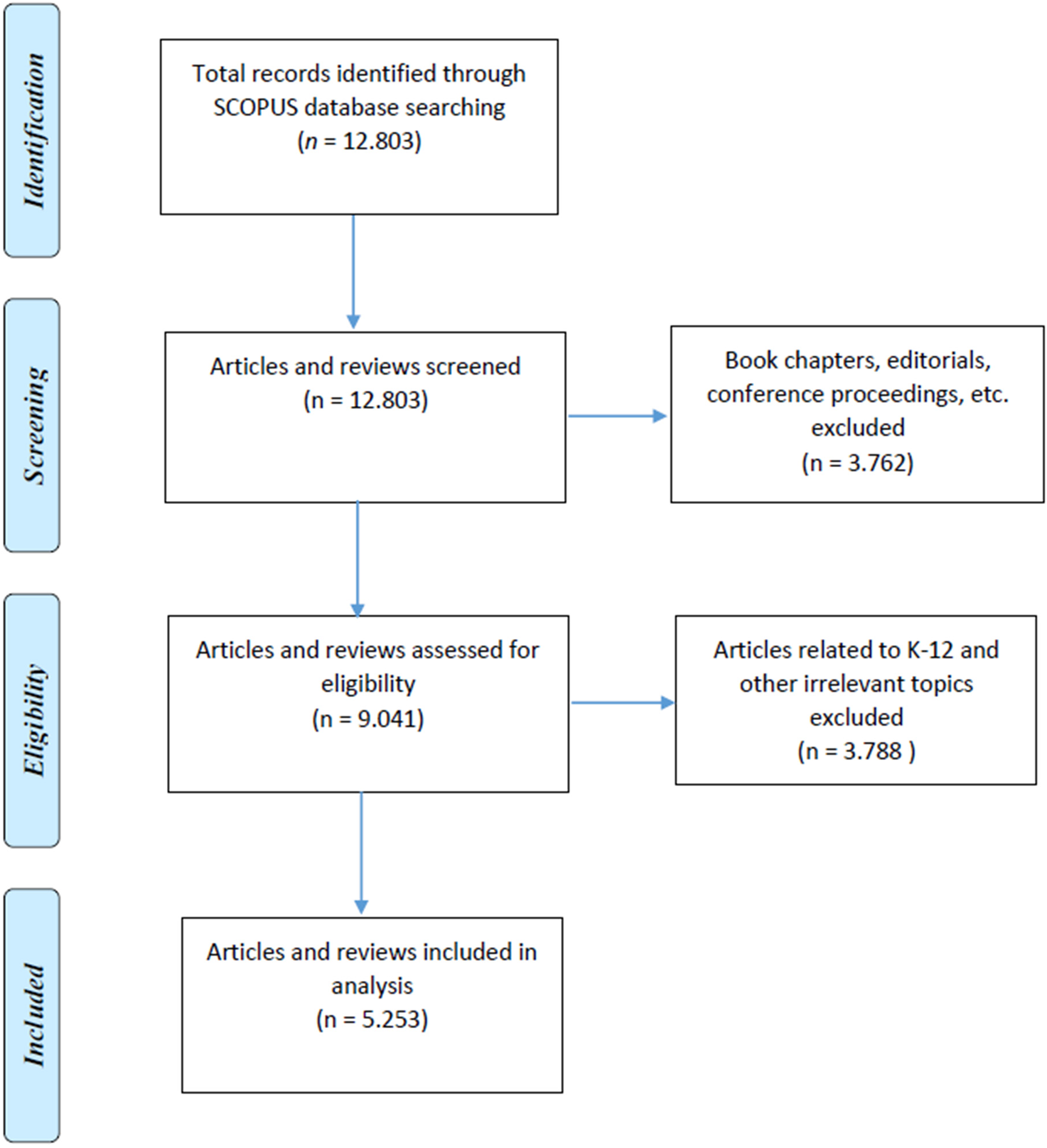
PRISMA flow diagram displaying the screening and the identification of documents. Source. Moher et al. (2009). Note. PRISMA = Preferred Reporting Items for Systematic Reviews and Meta-Analyses.
Findings
Landscape of the Literature on IHE
In the first research question, we explored the growth trajectory, volume, and geographical distribution of the IHE literature. The obtained data set of 5.253 documents revealed a moderate but growing body of research in the field, particularly after 2010. As shown in Figure 2, the historical growth of the IHE literature was very low and did not show any significant growth until the 2000s. However, in the last two decades and particularly after 2010, an exponentially increasing scholarly interest in IHE research has been observed. Evidently, the time interval between 2020 and 2021 indicates an even sharper increase in the number of publications compared with the publication numbers from the previous years. Notably, the publication output for 2022 is likely higher than it looks because the entry of articles to the Scopus may have continued after February 2023 when we completed downloading the latest entries of the year 2022 because of delayed indexing (Moed et al., 2016).
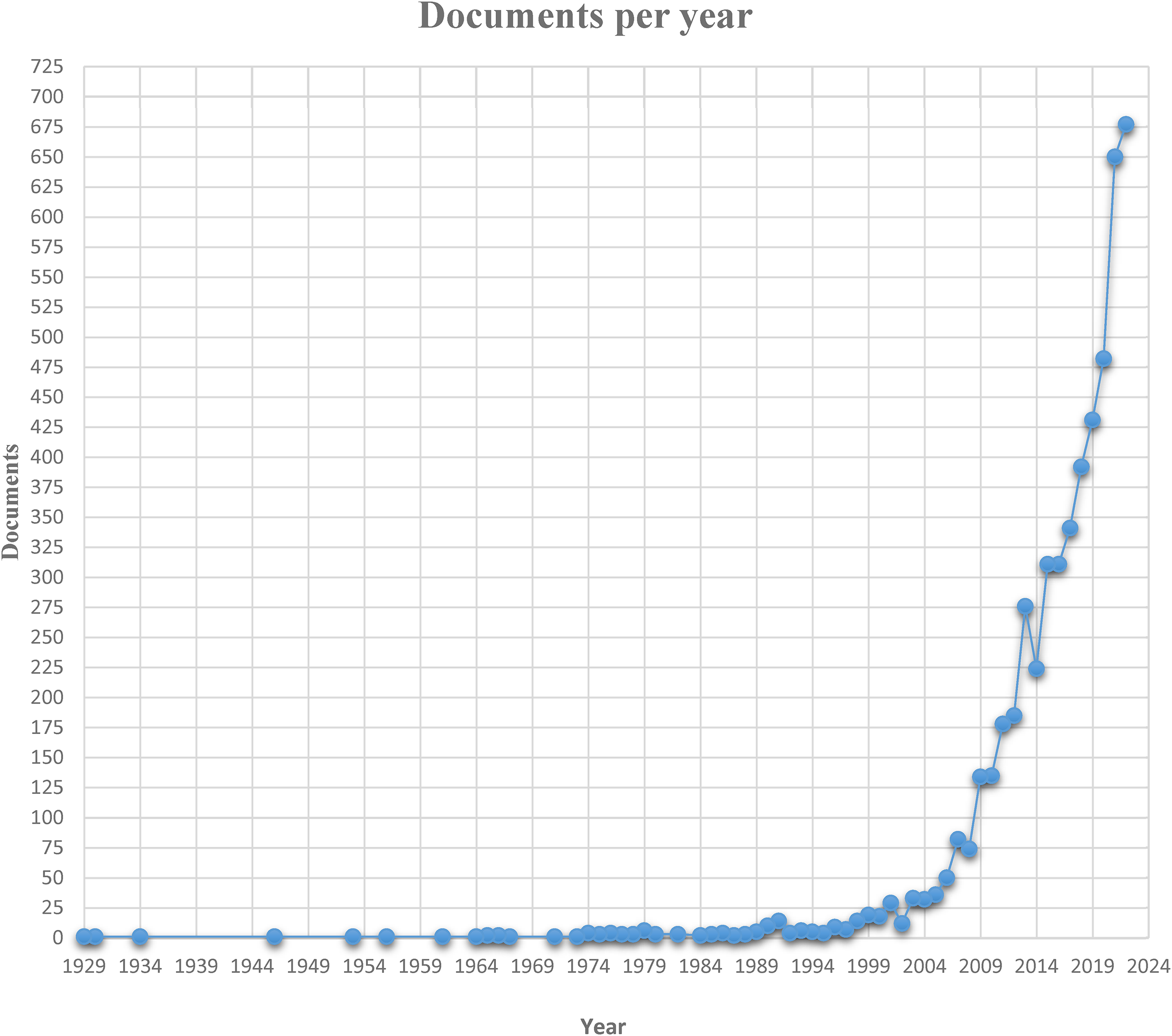
Growth trajectory of IHE literature published 1929–1922 (n = 5253).
Furthermore, as the number of studies focusing on IHE research increases, the number of journals from different fields also increases, depicted in Table 1. These diverse journals have the potential to improve our understanding of IHE and enrich the discussions with different perspectives. Our analysis indicates that the studies graphed above were published in 1431 journals. The journals are from different fields, such as higher education, international education, language education, medicine, and psychology. In each field, different aspects of IHE are discussed.
Number of Publications by Journals (First 20 Journals).
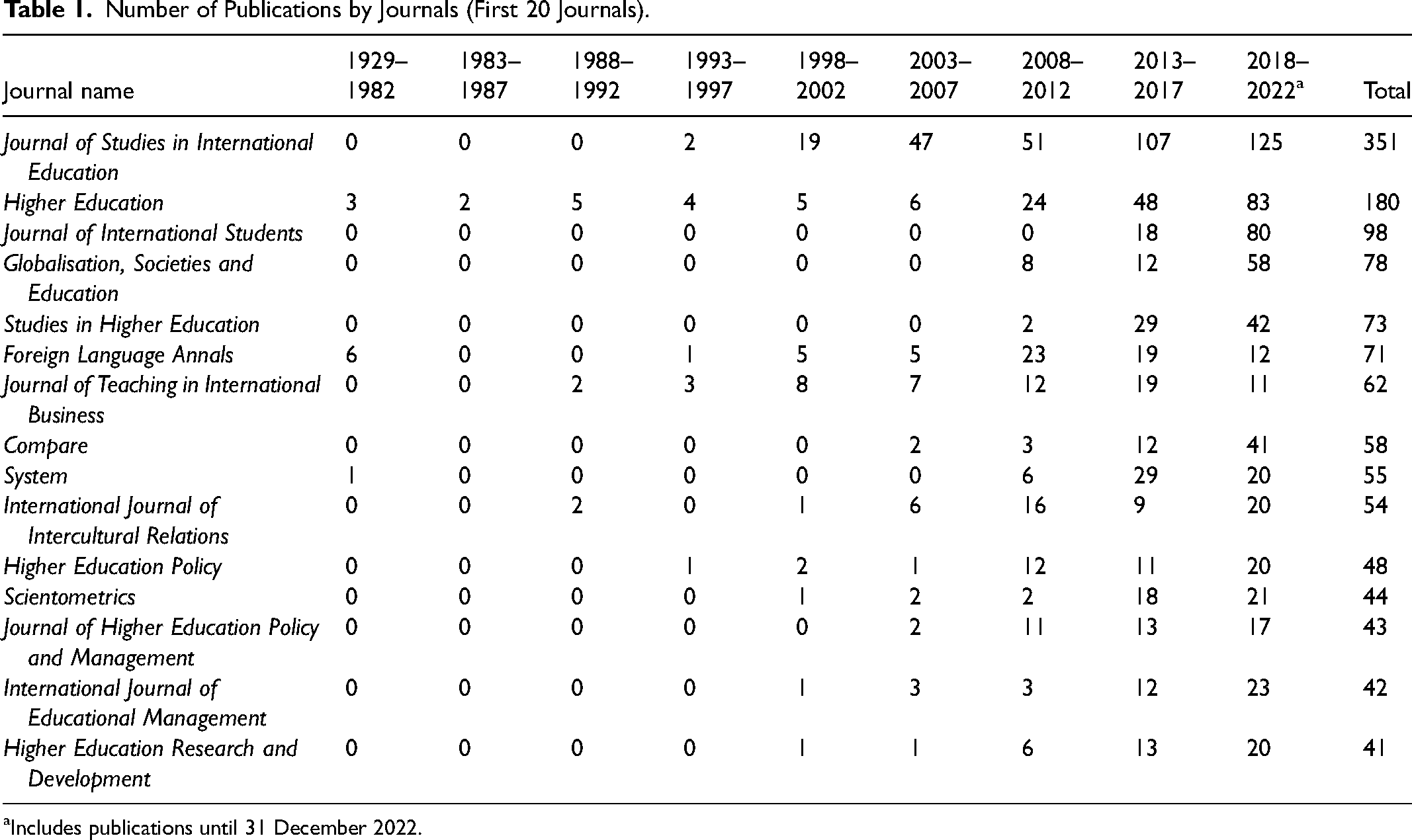
Includes publications until 31 December 2022.
In relation to the visualization of countries, we visualized the first 15 countries by the number of authorships in Figure 3 by considering the first authorship for country selection to explore the publication outputs of countries. The selected countries’ number of publications is equal to 92.15% of all the publications (n = 5253). Regarding the country distribution, the United States has by far the largest number of publications. Almost one of every three publications from our data set comes from author/s affiliated with the United States. In terms of publication output, the role of Western countries (particularly English-speaking) is significant, but China-based authors have a distinctive contribution to the domain of IHE research, thereby ranking China within the first three countries. In addition, countries from Europe, such as Germany, Spain, the Netherlands, Italy, Finland, and Sweden, contribute to the research area.
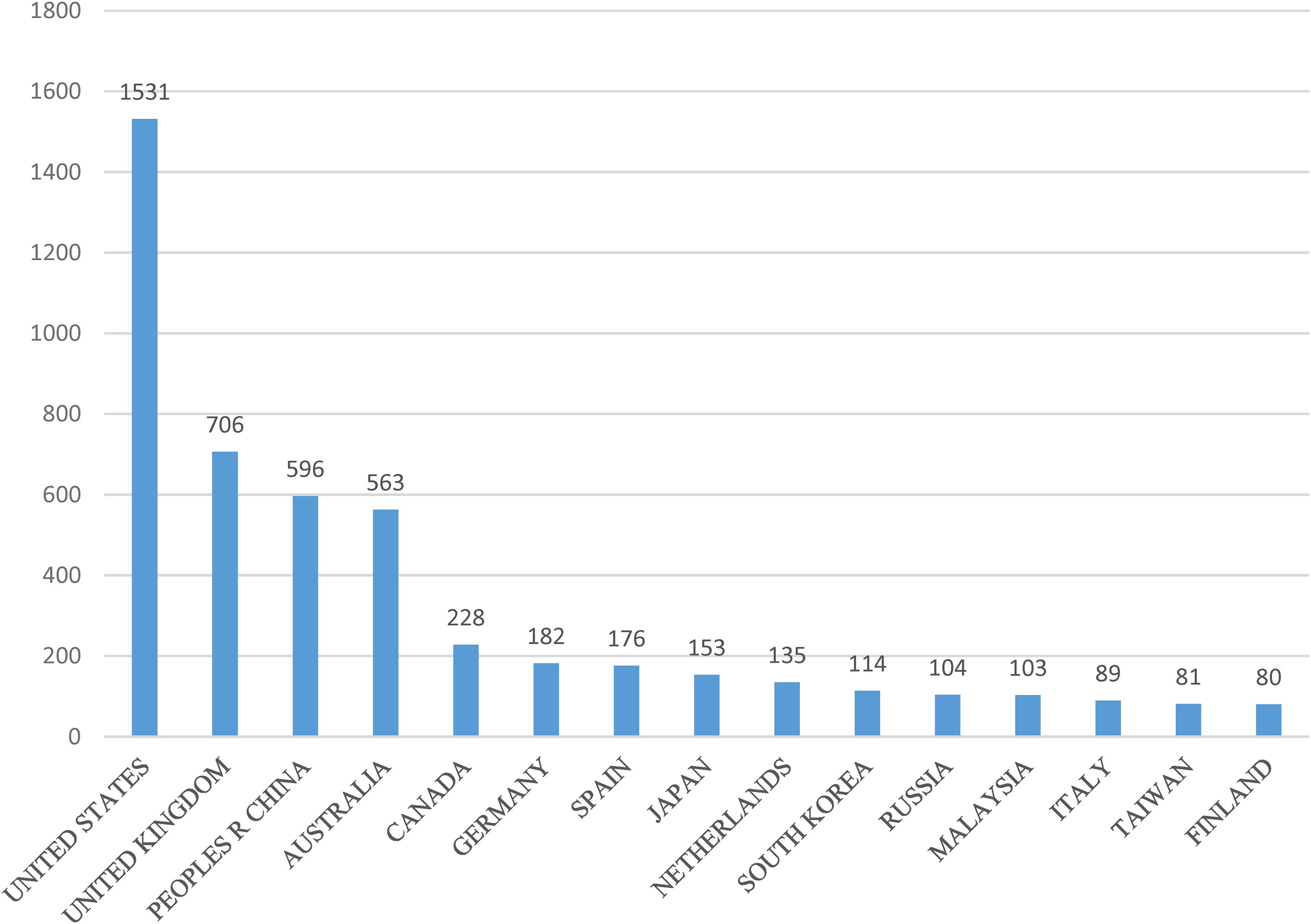
Number of publications by country (first 15 countries).
Regarding country collaborations in IHE, the co-authorship map shows five main clusters (Figure 4). Publication patterns are partly influenced by geography. The US and UK hold central positions on the map, reflecting their leading role in IHE research collaborations. The central positions of the US and UK indicate that they have almost equal proximity to the surrounding clusters and that they connect the nearby clusters, indicating their leading role in the unequal collaborations for IHE research. Their centrality is likely due to factors such as their strong research systems and their ability to attract international graduate students, who contribute to collaborative publications upon returning to their home countries (see Caliskan & Holley, 2023). Additionally, the use of English as a lingua franca gives these countries a significant networking advantage (Paasi, 2005).
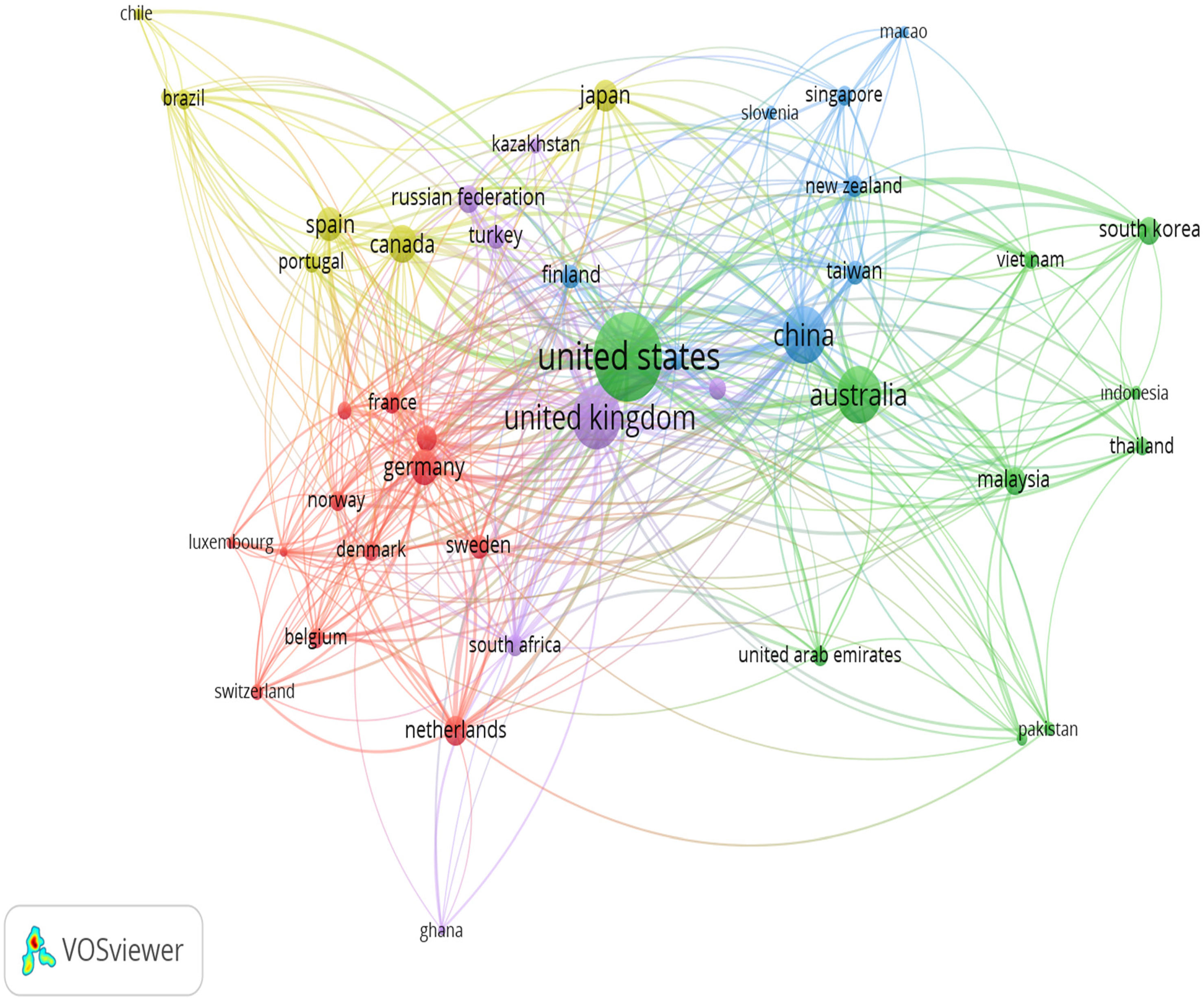
Co-authorship map of countries (88 countries; threshold at least three articles).
The red cluster includes European countries like Germany, the Netherlands, Sweden, France, Denmark, Belgium, and Switzerland, with Germany at its center and the largest circle, connecting to nearby nations. Some publication collaborations extend to African countries, such as Ghana and South Africa, mainly through the Netherlands. The purple cluster centers around the UK, Russia, and Turkey. The green cluster encompasses East Asian countries, including Malaysia, Vietnam, South Korea, Thailand, and Indonesia, with Australia as a key connector. In the nearby blue cluster, China is significant alongside Australia, interweaving with the green cluster. This blue cluster also includes Taiwan, Singapore, New Zealand, Macao, and interestingly, Slovenia. Finally, the yellow cluster comprises Canada, Spain, Portugal, Brazil, and Chile.
This collaboration map supports the idea that countries close to each other, either geographically or culturally (for the case of Spain and Latin America countries), have strong collaborations with each other. Parallel to this argument, Wagner and Leydesdorff (2005) stated that historical relationships, geographic proximity, and colonial ties traditionally remain important factors in collaboration. In addition, information and communication technologies (ICT) have become modern facilitators in research collaboration. Therefore, networks built through individual efforts in international mobility or after international education may generate differing geographical connections in research collaboration.
Influential Documents in IHE Literature
Many authors have contributed to the broad research domain of IHE. In our data set, we listed 4.734 different authors. However, some authors’ publications have taken considerable citations from the scholarly community. Table 2 lists the top 15 cited documents. The top 15 cited studies are related to higher education, international education, student mobility, second language education and study abroad, global rankings, and intercultural issues as part of studying abroad.
Most Cited Authors (First 15 Authors).
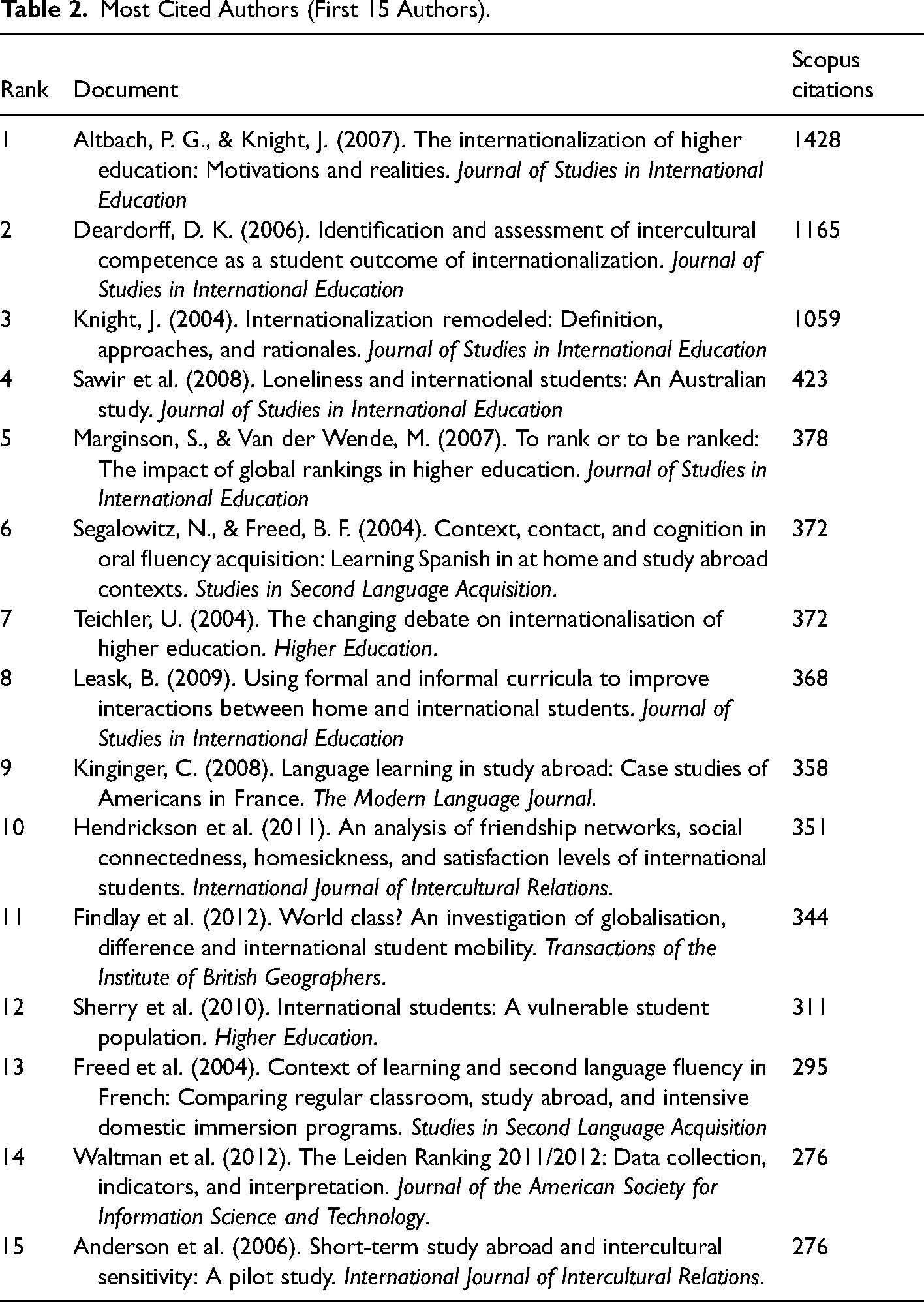
The highest impact document is Altbach and Knight's (2007) conceptual paper in which multiple sides of IHE and the motivations behind IHE efforts are discussed. Then, Deardorff's (2006) empirical study seems to attract much scholarly attention. In this study, Deardorff (2006) attempted to identify and assess intercultural competence as an outcome of internationalization. Knight's (2004) earlier conceptual study on IHE is also a highly cited one. Reviewing the articles in the table, most of them are related to international students and their various experiences. In addition, language learning and studying abroad are another research area. Finally, there are two studies on rankings published relatively recently (Marginson & Van der Wende, 2007; Waltman et al., 2012), which indicated that this topic has gained importance in recent years.
Intellectual Structure of IHE Literature
We conducted co-citation analyses of sources (journals and authors) to further understand the intellectual structure of the research area. Co-citation analysis calculates the frequency to what extent two units are cited together (Small, 1973). According to Figure 5, four main clusters exist. As the main connector, the Journal of Studies in International Education (JSIE) stands at the center of the map. Therefore, JSIE articles have been cited together with the articles from neighboring clusters. In that sense, JSIE operates as one of the core journals, in terms of content and corresponds to varying dimensions of IHE.
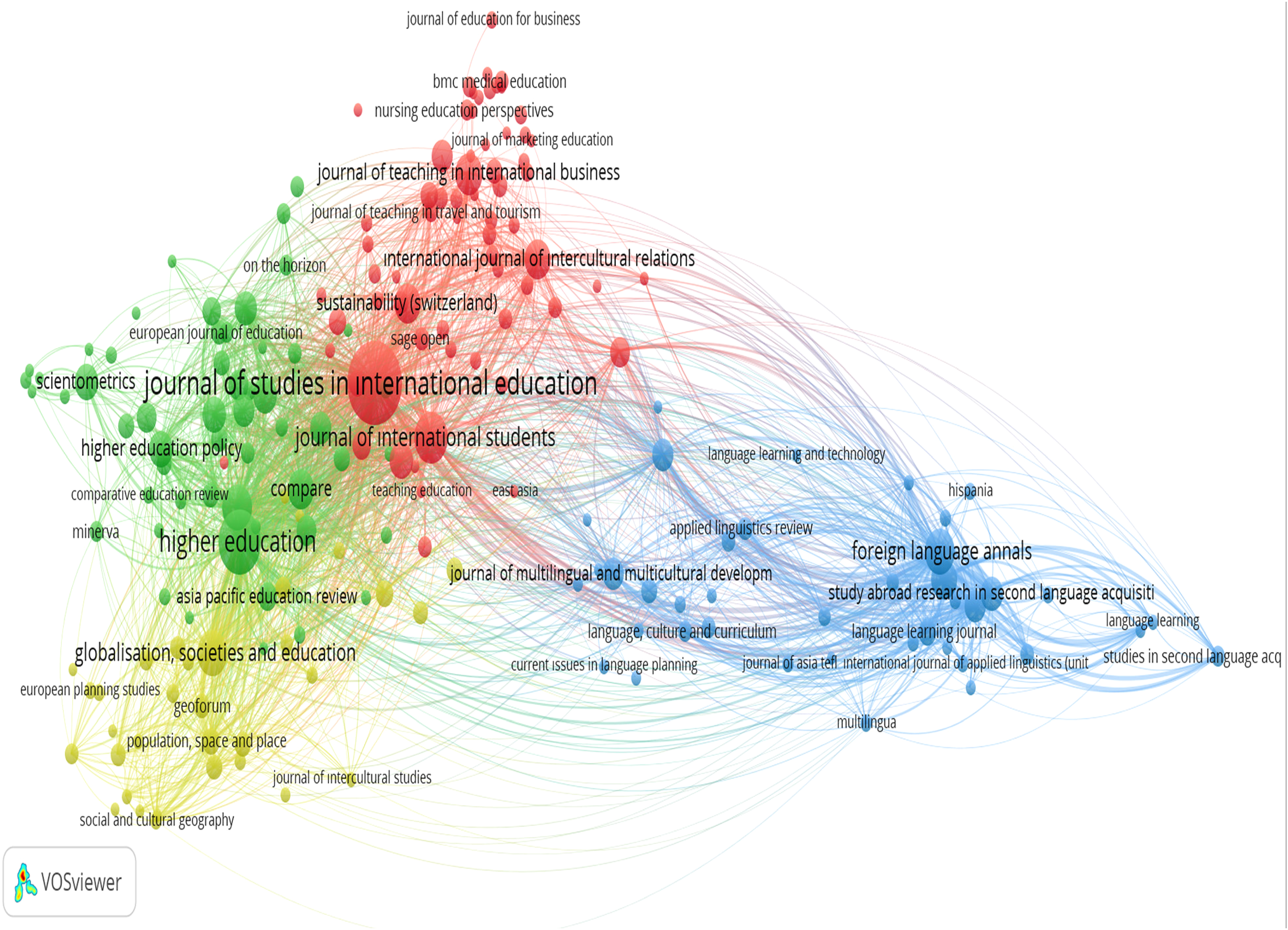
Bibliographic coupling map of the frequently cited sources in the IHE literature (1431 sources; threshold 50 citations).
With regard to the clusters, the blue cluster represents the themes focusing on foreign language learning/acquisition and study abroad in several journals, such as Foreign Language Annals, Language Learning Journal, and Journal of Multilingual and Multicultural Development. Green cluster is established around higher education journals, such as Higher Education, Compare, Higher Education Policy, European Journal of Education, and Minerva. The red cluster has journals from the fields of medical studies, nursing education, and business, such as the Journal of Teaching in International Business, Journal of Marketing, and Nursing Education Perspectives. In these journals, the internationalization of some professions, particularly in medical and business fields, is discussed. Last, the yellow cluster represents issues focusing on globalization, geography and space, and intercultural issues from the perspectives of internationalization; some of the journals are Globalisation, Societies and Education, Geoforum, and Journal of Intercultural Studies.
In addition, we performed a co-cation analysis of the authors to identify the knowledge base of the research area and its intellectual structure (Figure 6). This analysis enabled us to reflect on the composition of influential authors and thus the pattern of their interrelationships (Shafique, 2013; Zupic & Čater, 2015). In the authors’ co-citation map, the size of circles (nodes) indicates the relative frequency of co-citation within the references coming from the selected data set. The proximity of circles and the links connecting authors refer to the intellectual relationships among the researchers. The co-citation analysis generated 49.713 authors from the reference list of the documents in our data set. Before the visualization of the map through VOSviewer, we set the threshold of minimum citation for an author as 30 citations, indicating that only the authors having at least 30 co-citations were included in the analysis.
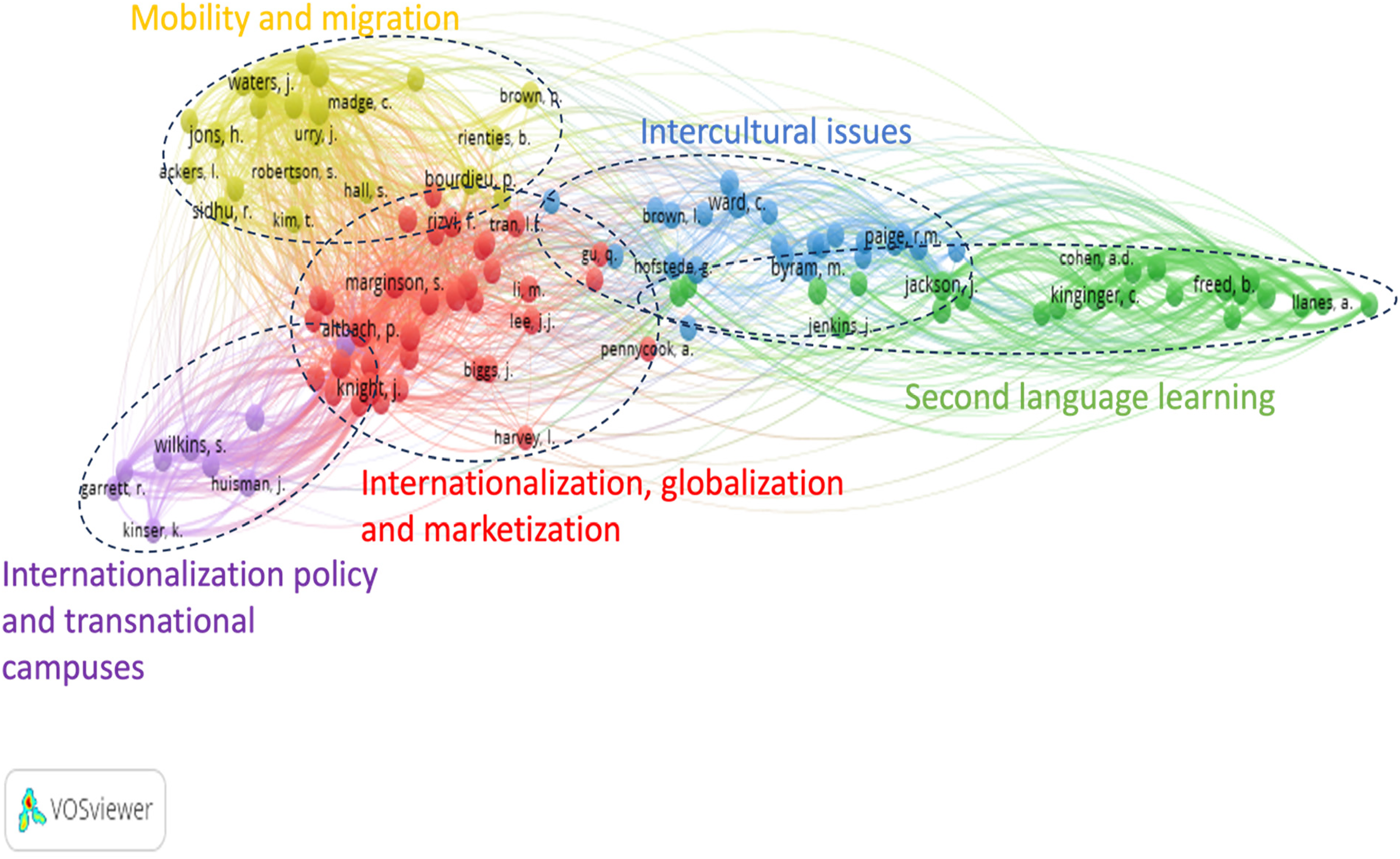
Co-citation map of the most frequently cited researchers in IHE literature (49.713 authors; threshold 30 citations, display 113 authors).
As shown in Figure 6, five main clusters exist. The red cluster, being at the center of the surrounding clusters and having most of the highly co-cited authors, corresponds to the authors having published on the general topic of IHE. In the red cluster and among all the clusters, Jane Knight has the most co-citations (470). This cluster has some other leading authors, such as Philip Altbach (403), Simon Marginson (338), Ka Ho Mok (173), Hans de Wit (164), and Ulrich Teichler (161). This group of scholars focuses on IHE and various issues (e.g., globalization, marketization) associated with IHE. The yellow cluster consists of authors such as Johanna L. Waters (181), Pierre Bourdieu (145), Russel King (138), and Allan M. Findlay (134). This cluster of authors focused on sub-topics of IHE such as international mobility, student mobility, and migration. The purple cluster, led by Stephen Wilkins (138) and Jeroen Huisman (53), consists of authors studying higher education policy, transnational education, and international branch campuses. The green cluster is led by authors such as Celeste Kinginger (122) and Barbara F. Freed (113), who focused on studying abroad as part of language learning and second language acquisition. The blue cluster, led by Collen Ward (168) and R. Michael Paige (75), represents the fields of study focusing on intercultural relations, acculturation, and intercultural education.
Conceptual Structure of HEI Literature
Finally, we explored the thematic research clusters of IHE by conducting a co-occurrence analysis of keywords, also known as co-word analysis. This analysis can help uncover the conceptual patterns in a targeted literature by reviewing the co-occurrence of keywords in the title, keywords, and abstracts of large sums of publications (Hallinger et al., 2020). Our co-word analysis reviewed the IHE literature between 1929 and 2022, as explained earlier, and covered a total of 9.236 keywords. However, not all these keywords appeared repeatedly to signal patterns in the IHE literature. In such situations, researchers set minimum thresholds so that only consistently used keywords can appear clearly in the produced science map (Hallinger et al., 2020). After several iterations of reconducting the co-word analysis, we found that setting the minimum threshold to 10 co-occurrences of keywords provides optimum results. Figure 7 shows the produced co-occurrence map, which highlights seven research clusters.
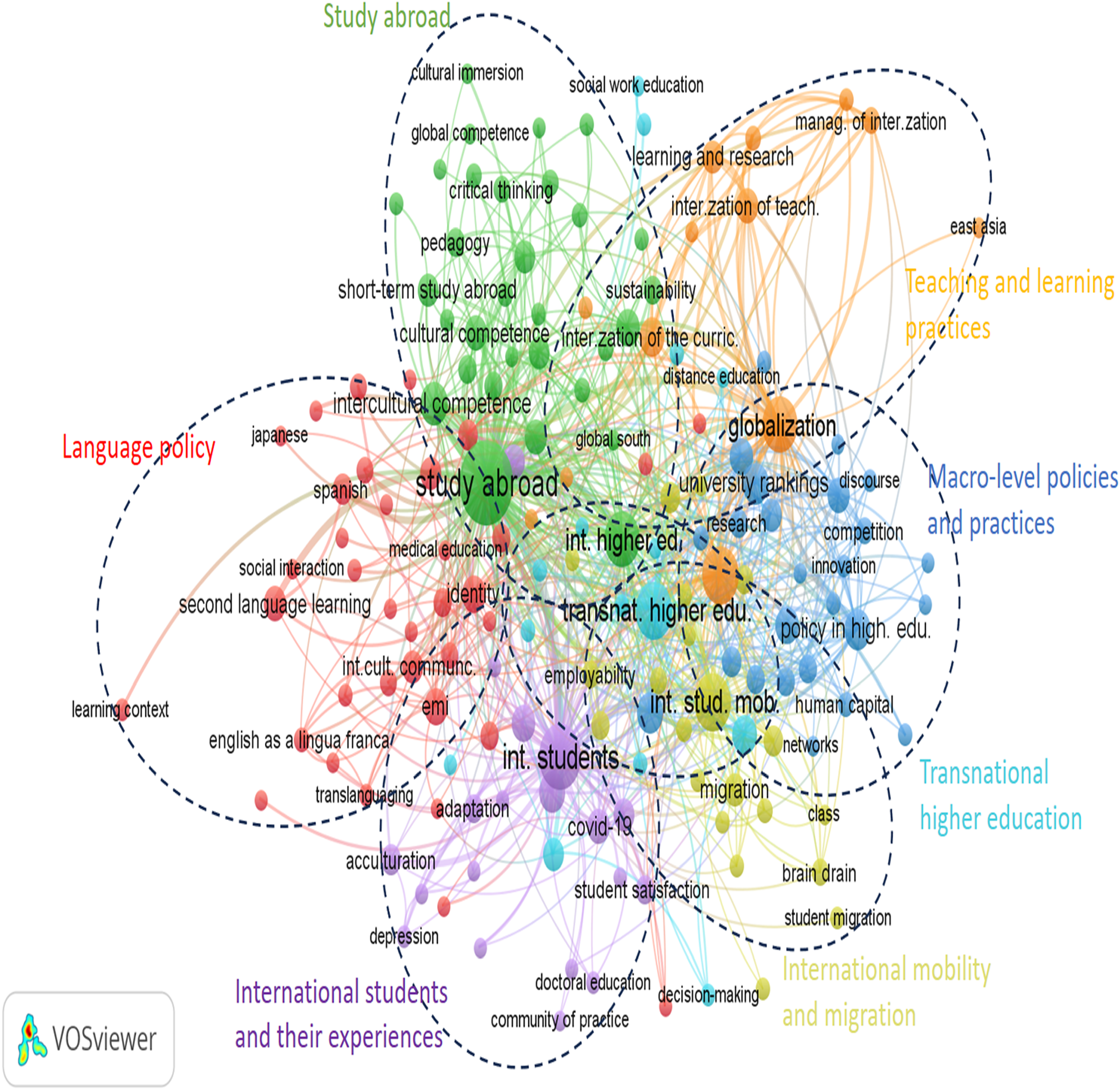
Co-occurrence map of most frequently used keywords in the IHE literature (9.236 keywords; threshold 10 co-occurrences, display 160 keywords).
The green cluster reflects the body of research on study abroad and the associated sub-topics, such as short-term study visits abroad, experiential learning, transformative learning, acculturation experiences (e.g., culture shock, intercultural competence) during study-abroad time, professional development, and getting professional degrees (e.g., business education, teacher education). The other frequent words are assessment, pedagogy, intercultural issues, and student development. In short, the analysis indicates that topics related to studying abroad make a pattern of their own, and they constitute a significant chunk of IHE literature.
Next to the green cluster (study abroad), the red cluster mainly represents language policy in internationalization and related topics, such as second language learning, English Medium of Instruction (EMI), intercultural communication, and identity. This cluster indicates the role of language as an instrument in the internationalization process. One set of themes related to this cluster are multilingualism, translanguaging, agency, and learning context. The closer proximity of study abroad and language policy through the respective clusters suggests that they are, to some extent, overlapping each other because some topics are mutually shared, such as culture-related issues (e.g., intercultural education) and professional degrees (e.g., nursing education, medical education).
The purple cluster portrays international students and their experiences. In particular, health-related problems emerged in the cluster such as COVID-19, depression, stress, and mental health of students. In addition, international students’ experiences abroad also emerge like satisfaction, social integration, social support, discrimination, and adaptation. Constituting as one of the largest international student bodies globally, Chinese students distinctively appear as a keyword in this cluster. Notably, the global pandemic and subsequent challenges for international students are quite apparent in this cluster.
The yellow cluster, overlapping with the nearby purple cluster, surfaces the themes related to international mobility and migration. Of these, one set of themes is related to the migration of international students, brain drain, social capital, class, cosmopolitanism, and cultural capital. This cluster can be associated with the discussion about the outcomes of student mobility because the flow of students from less developed countries to highly developed countries is argued as a loss of human capital or brain drain. From another aspect, this migration can be thought of as an advantage for the chosen country considering that this migration flow means additional cosmopolitan cities and human capital, making the countries highly diverse and attractive for development. Bourdieu is also highlighted in this cluster, indicating his key position in this topical pattern in the exploration of internationalization.
The blue cluster surfaces the macro-level policies and practices of internationalization. We observe that a group of keywords under this cluster specifically highlights institutional macro policies in internationalization processes. Examples include the policy in higher education, quality assurance, accreditation, and Bologna Process. Keywords under this cluster also signify the prominence of internationalization as a means and strategic practice rather than a goal and automatic process, which is discussed concerning different definitions of the term by de Wit et al. (2015) and Knight (2016). The keywords such as education hub, networks, international collaboration, competition, innovation, university rankings, marketing, knowledge economy, and cross-border higher education support the interpretation in the preceding sentence. The orange cluster represents the research area of IHE in terms of teaching and learning practices. Under this cluster, some of the frequently used keywords are internationalization of teaching, internationalization of curriculum, and international exchange programs. In addition, some other keywords are international cooperation in higher education, management of internationalization, globalization, and East Asia. The emergence of East Asia in this cluster signifies the important role of the region. The proportion of international students originating from this region is high, and these students may potentially require adjusting of curriculum and teaching practices as part of internationalization at home practices (Knight, 2005).
Last, the light blue cluster appeared as a small but visible one in the conceptual structure map. The main topical element of this cluster is transnational education. This cluster has less distinctive grouping and formed to spread over the existing three other themes, including international students and their experiences (purple), international mobility and migration (yellow) and study abroad (green). This reflects the nature of transnational education topic in actuality because it is relevant to these multiple research clusters. To illustrate, transnational education is related to mobility and study abroad because it has the possibility of keeping domestic students inside the country (Sanderson, 2023).
Furthermore, our analyses go beyond mapping the conceptual structure in the IHE literature and investigate the overlay of “temporal visualization” of keyword clusters (Figure 8). Temporal analysis is a technique employed in the field of science mapping to identify the “research forefront” within a knowledge domain. Klavans and Boyack (2017) described the “research forefront” as the latest documents that naturally arise within the literature owing to author contributions. Detecting the research forefront serves as a valuable signal to scholars, highlighting the most up-to-date thematic developments in a given body of literature. VOSviewer provides a feature that allows users to overlay a “temporal visualization” through a co-word map, thereby emphasizing the evolving significance of topics over the preceding 5 years (Figure 8).
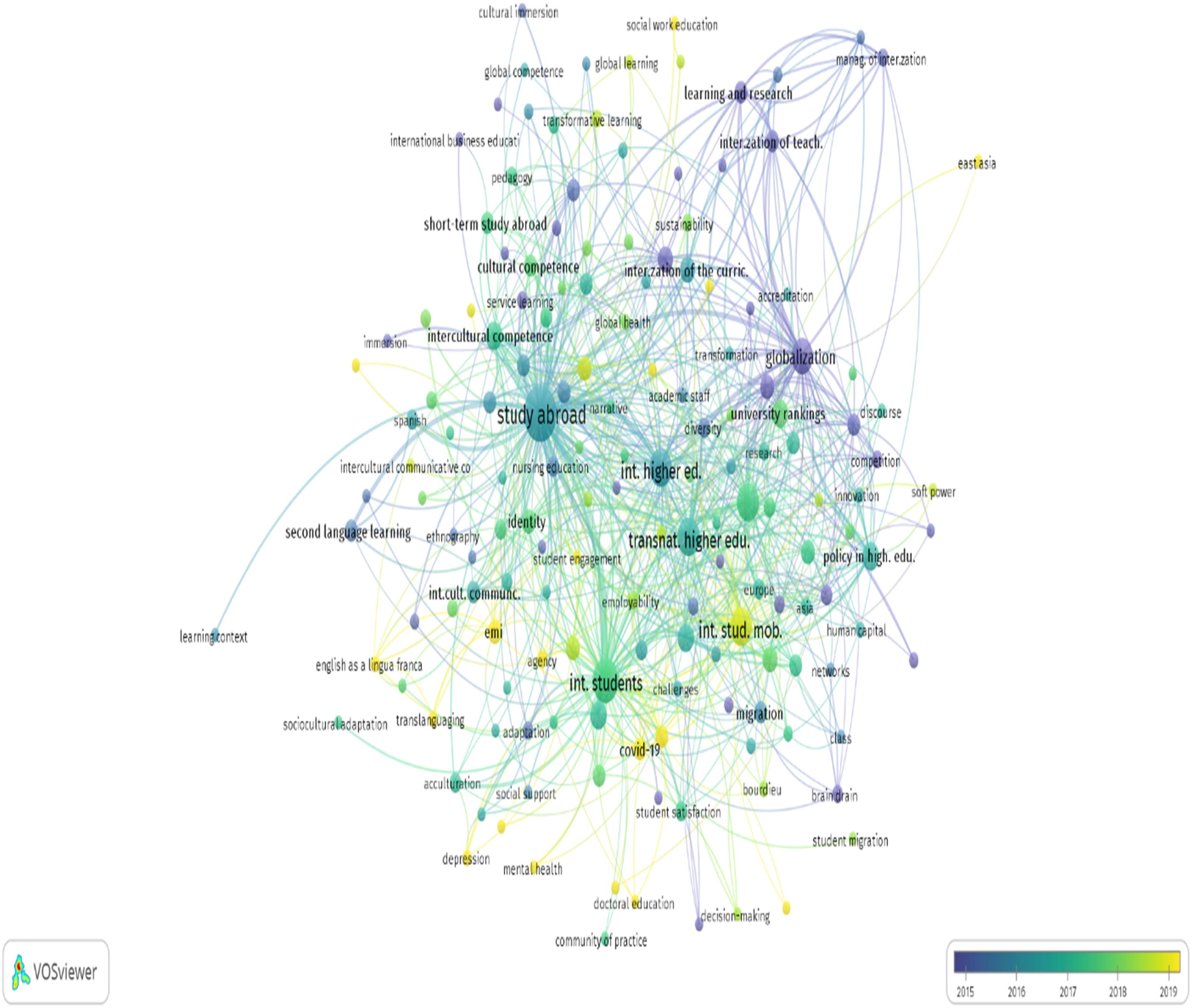
Temporal overlay for the keyword co-occurrence map (9.236 keywords; threshold 10 co-occurrences, display 160 keywords).
This temporal analysis reveals that the research front in IHE research is concentrated on mainly two areas: (1) Established Topics such as international student mobility, international students, EMI, English as a lingua franca, and Intercultural Communication; (2) Emerging Topics such as COVID-19, student agency, translanguaging, university rankings, soft power, and global south. Some of the emerging terms offer proof of growing interest in popular research areas such as Internationalization at Home, Global South, East Asia, University Rankings, and Soft Power. Last, the global pandemic seems to emerge as an important topic in the field through the following words; COVID-19, Health Problems, Depression, and Mental Health.
Discussion and Conclusion
This study has investigated the development of IHE studies from the first available article in Scopus, 1929, to the latest fully available data year, 2022. It has included four research questions, which focused on the growth and geographic distribution of internationalization studies, the most impactful papers, and the intellectual and conceptual structure of the IHE knowledge base. The analyses have demonstrated several important points.
The analysis of the findings supported recent studies (i.e., de Wit & Altbach, 2021; Knight, 2021) that internationalization has indeed moved away from being a marginal activity and become highly prominent, as the reviewed studies on the topic demonstrate a striking increase since the 1990s (cf. Figure 2). Further insights exist when looking at the geographical location of these studies. For example, a striking increase in internationalization studies coincides with the launch of Erasmus in 1987 and the Bologna process in 1999, in Europe, which may partly explain the increase in internationalization studies, specifically those conducted in the European Union (EU). Erasmus and Bologna processes are landmark policy directions that played a role in the EU and the countries surrounding it. Research studies take time to conduct and publish, so the year 1987 (Erasmus) could be an igniting factor that led to the exponential increase in this line of research in the 1990s onwards, which was then further bolstered by Bologna processes. Indeed, many countries in the top 15 list are from the EU or its surrounding countries (e.g., the UK and Russia).
In addition, the literature indicated that those who study internationalization are the ones who benefit the most from it (Wadhwa & Jha, 2014). The US, the UK, and Australia as simultaneously being some of the top destination countries, and, according to our findings, the countries where the topic of internationalization is most studied support this argument. However, our findings add nuance to this argument that countries that send the most international students may also be highly interested in internationalization studies. China is a good example for these countries, as it is the top sending country globally and an increasingly becoming a receiver country (UNESCO Institute of Statistics, 2023).
Nevertheless, the geographical distribution of internationalization studies is skewed, and the majority is coming from Europe and North America. Asian countries such as China, Japan, and South Korea follow the highlighted Western contexts. The internationalization subfield would benefit from more equal voices coming from diverse regions of the plural world to enrich the discussion. For example, no country from Africa, South America, or the Middle East is visible as a top contributor to the knowledge base (although we were able to capture a few of them in the following co-authorship maps).
Furthermore, the findings demonstrate a diversification and increase of journals covering the IHE knowledge base (cf. Table 1). As part of this trend, we observe three groups. First, we observe newly emerging journals covering IHE. For example, the Journal of International Students, having published its first volume in 2011, has recently published a significant number of papers covering the IHE knowledge base (although a very recent editorial conflict may create uncertainties for the journal's future). Second, we observe journals that were established much earlier but started publishing on the IHE knowledge base, as operationalized in this study, relatively recently. An example of this is the Studies in Higher Education journal, which is a highly established journal, but it started publishing on the IHE topic in 2008. A third group of journals are those that are established and have been publishing on the IHE knowledge base for a long time. Examples of the latter group include the Higher Education and Foreign Language Annals journals. They seem aware and interested in this knowledge base much earlier.
Regardless of when these journals started their interest, the pattern of diversification of journals contributing to the IHE knowledge base is valuable because it has the potential to bring out different aspects of IHE, with journals likely having different perspectives on the matter. This diversification is parallel to our argument earlier that IHE is multifaceted and developing. We echo recent publications on this matter (e.g., Inouye et al., 2023; de Wit, 2023, 2024) that internationalization is in constant evolution with emerging directions and themes.
Moreover, the document citation analyses not only highlighted the influential papers of the field but also revealed the relatively emerging nature of the field. All the top cited publications were published after the 2000s, and the majority among them after the late 2000s and 2010s (e.g., Altbach & Knight, 2007; Findlay et al., 2012). The knowledge base is still developing and evolving significantly. For example, while the earlier top-cited papers on internationalization primarily focused on students and mobility aspects (e.g., Knight, 2004; Sawir et al., 2008), newer influential papers introduce additional topics, such as the research aspect of internationalization (e.g., Waltman et al., 2012) and new methodological perspectives (e.g., Hendrickson et al., 2011). However, although relatively recent papers did not appear in our influential document analysis, we acknowledge that citation accumulation takes time. Thus, newer publications, particularly those published from 2019 onwards, will require time to gather citations, which may limit their visibility in influential document analyses at this early stage.
Another contribution of this study lies in the empirical identification of intellectual and conceptual structures of the IHE knowledge base. The co-citation analysis of authors highlighted five schools of thought (cf. Figure 6), which are “Internationalization, globalization and marketization,” “mobility and migration,” “Internationalization policy and transnational campuses,” “Second language learning,” and “Intercultural issues.” Moreover, the co-word analysis provided the conceptual structure of the field by investigating the co-occurrence of keywords in the knowledge base from 1929 to 2022. The topics are highlighted by analysis support and complement each other.
These developments, taken together with the exponential growth of publications highlighted earlier, indicate that there is an increasing substantial scholarly attention towards IHE research. The knowledge base of IHE, in its early periods, merely focused on study abroad and language learning. However, recent studies, specifically those conducted in the last two decades, indicated analytical nuances and distinctive issues. Internationalization research is developing, and our understanding of it is becoming further nuanced.
We observe new conceptual suggestions in the field. Specifically, our analysis of the conceptual structure temporal overlay of the IHE knowledge base (cf. Figure 8) indicates several concepts increasingly being used. These concepts include student agency, Global South, university rankings, soft power, COVID-19, and health problems. These topics are emerging and increasingly used in the studies of IHE. They have increasing relevance for future investigations. In addition, the analysis indicated language-related topical patterns. For example, although EMI, English as a Lingua Franca, and intercultural communication continue to be frequently used in the recent literature of the IHE knowledge base, the relatively new concept of translanguaging seems to be rising.
Reflecting on the findings of previous reviews of the literature, we observed not only similarities but also differences. Yemini and Sagie (2016) descriptively identified the quantity of studies by year, country, and subjects of study, based on the 1503 documents published between 1980 and 2014. By contrast, we employed bibliometric research techniques (Zupic & Čater, 2015) to record the trends and reveal the conceptual and intellectual structure of the knowledge base. In addition, Bedenlier et al. (2017) analyzed the content of 406 articles from the Journal of Studies in International Education between 1997 and 2016 to uncover the developments by years in the field; however, our review incorporated a much more comprehensive dataset going beyond the analysis of one journal and highlighted several research clusters associated with internationalization. Last, Ghani et al.'s review (2022) focused on a similar topic, but it had methodological limitations that led to limited coverage of the field because of inadequate identification of search terms. These findings suggest the strength of our study and the further nuances it adds to the existing knowledge base on IHE research. In closing, we would like to acknowledge the limitations of our analysis. The study only focused on peer-reviewed articles and reviews, which means that books, book chapters, theses, and conference papers were not included. Further rationale is explained in the methodology section.
Footnotes
Acknowledgments
This research was funded by Alexander von Humboldt-Stiftung (Alexander von Humboldt Foundation), Germany. Omer Caliskan is Alexander von Humboldt Foundation research fellow at University of Kassel. Dr. Oldac has recently transitioned from Lingnan University to the Education University of Hong Kong.
Declaration of Conflicting Interests
The authors declared no potential conflicts of interest with respect to the research, authorship, and/or publication of this article.
Ethical Approval
Ethics approval was not required for this study because the authors conducted a review study through the published articles and reviews. However, the authors confirmed that this study was conducted in accordance with Systematic Reviews and Meta-Analyses [PRISMA] (Moher et al., 2009). In the method section, we provided detailed information about how we reached the analyzed data.
Funding
The authors disclosed receipt of the following financial support for the research, authorship, and/or publication of this article: This work was supported by the Alexander von Humboldt-Stiftung.
