




Abstract
Book giveaway programs provide free books to families with infants to encourage caregivers to begin reading to their children during infancy. This meta-analysis of 44 studies retrieved from 43 articles tests the effects of three major book giveaway programs: Bookstart (n = 11), Reach Out and Read (n = 18), and Imagination Library (n = 15). Effect sizes were aggregated within two domains—home literacy environment and literacy-related behavior and skills—before being averaged across studies. The findings corroborate the assumption that book giveaway programs promote children’s home literacy environment (d = 0.31, 95% CI [0.23, 0.38], k = 30), which subsequently results in more interest in reading and children scoring higher on measures of literacy-related skills prior to and during the early years of school (d = 0.29, 95% CI [0.23, 0.35], k = 23).
Book giveaway programs aim at enhancing the home literacy environments that caregivers provide in support of their young children’s literacy development. By supplying free books to families with infants, these programs try to encourage caregivers to begin reading to their children as soon as possible after birth (High et al., 2014). A nurturing home literacy environment involving early book sharing stimulates brain development supporting language and literacy skills (Hutton et al., 2019) and has been identified as a key research focus for understanding individual differences in children’s reading proficiency in primary education (e.g., Bus et al., 1995; Niklas et al., 2016; Niklas & Schneider, 2013; Sénéchal & LeFevre, 2002, 2014).
Book giveaway programs have become an increasingly popular intervention strategy for enhancing the home literacy environment since they are relatively low cost and there is research evidence supporting their effectiveness (e.g., High et al., 2000; O’Hare & Connolly, 2014). A well-known book giveaway program, Bookstart, originating in the United Kingdom in 1992, distributes Bookstart Baby Packs that typically include one or more baby books and an information flyer about shared book reading with infants. In 2017–2018, for instance, more than 3.6 million book packs were distributed in England (BookTrust, n.d.), and in 2018–2019, more than 980,000 books in Scotland (Scottish Book Trust, n.d.). The Bookstart intervention model is now widely implemented in the European Union, Asia, Australia, and New Zealand.
In addition to Bookstart, this meta-analysis targets two other book giveaway programs with extensive coverage, widespread application, and research evidence. This enables us to compare programs and establish which particular program characteristics work more successfully and for whom. Reach Out and Read, first implemented in the United States in 1989, distributes books to families at well-child visits to pediatric clinics and targets mainly low-income families but not exclusively. To date, there are more than 6,200 sites serving 4.7 million children, and the program distributes more than 7 million books per year (Reach Out and Read, n.d.). The third program, Imagination Library, has been implemented in the United States since 1995 and also operates in Canada, the United Kingdom, and Australia. This program provides one free book per month to children from birth until they start school, regardless of the family’s socioeconomic status (SES). Currently, the program has approximately 1.4 million children registered and has distributed in excess of 122 million books since its inception (Imagination Library, n.d.).
Why Promote Early Book Reading?
A wealth of studies (e.g., Hart & Risley, 2003; Sénéchal & LeFevre, 2002) have revealed the importance of verbal interaction between caregivers and their infants for stimulating language development. A key reason for the power of book reading in the first 3 years of life may be that book reading has been identified as the adult-child activity that generates more language input to the child than interactions during play or daily care-taking activities, such as feeding, bathing, and dressing (Dickinson & Morse, 2019; Hoff, 2003; Sosa, 2016). In addition, parents provide more sophisticated language models during story time than during other activities that include linguistic interaction: naturally occurring parent-child book interactions with 14- to 30-month-olds include greater parent vocabulary diversity and syntactic complexity than parent-child interactions that do not involve books (e.g., DeBaryshe, 1993; Demir-Lira et al., 2019; Montag, 2019). Book reading may therefore be an important language learning setting for preschool-aged children (e.g., Niklas et al., 2016).
DeBaryshe (1993), one of the first researchers to focus on the effects of early onset of book reading, found that 2-year-olds whose mothers had begun reading to them at an earlier age had stronger receptive language skills. It should be noted that the book sharing reported by the families in DeBaryshe’s research involved mothers reading on average 18 stories per week and in some families as many as 100 stories. Thus, the effects observed for early shared book reading were generated by concerted parental efforts rather than incidental and occasional engagement. Compelling evidence for the importance of an early start with book reading is also provided by Raikes et al.’s (2006) longitudinal study following a large group of low-income mothers of whom approximately half started early with daily reading to their children. A noteworthy finding was that the frequency of reading to children at 24 months appeared to be a better predictor of receptive vocabulary at 36 months than reading frequency at 36 months, thus highlighting the vital effects of early book reading (Raikes et al., 2016). Parents who commence regular book reading early in their child’s life may be better equipped to adjust their guidance more specifically to their child’s language comprehension skills, which in turn may enhance the quality of book reading over time. Furthermore, as their toddler’s language competence increases due to an early start with book reading, parents may also become more likely to initiate more frequent book sharing (National Institute of Child Health and Human Development, 2005).
Since later initiation of shared book reading has generally been reported in less advantaged families (e.g., Snow et al., 1998), book giveaway programs may be particularly effective for children from these families. Moreover, book sharing from an early age may be more important in low-SES families as these families have been found to provide less linguistic interaction during daily care-taking activities than higher SES families (e.g., Dickinson & Morse, 2019).
How Book Giveaways May Support Book Reading
It seems a plausible assumption that an early onset of book reading is facilitated by access to children’s books. Neuman (1999) observed that giving children close access to books generated increased exploration of and engagement with the books. Research dating back to the 1980s identified wide variability in access to children’s books, particularly within low-income samples (Feitelson & Goldstein, 1986; Teale, 1986). A recent study suggests that not only the sheer number of books but also the type of books available to children shapes children’s early literacy experiences and development; most of the 4-year-olds in a low-income sample have a variety of concept books about letters, numbers, and shapes but relatively limited access to narrative books (Luo et al., 2020). A question worth pursuing more deeply is whether the often-mentioned exhortation of book giveaway programs to “build your child’s library,” can explain any beneficial effects of book giveaway programs. The increase in number of books is mostly small—Bookstart and Reach Out and Read result in minimal additions to children’s personal libraries since they provide between 2 and 10 books; however, by contrast, Imagination Library supplies up to 60 books.
To explain how the presence of a few age-appropriate books for young children could be an incentive for an early start with book sharing, we hypothesize that books “nudge” parents to initiate and maintain book reading routines. Even when parents are aware of the importance of book sharing with preverbal children, they may still require an incentive to take practical action and start early with daily reading. It seems plausible to assume that book reading competes with other activities and that the preference for one activity over another is mostly not a conscious, controlled, and rational choice but, as is typical of fast automatic decisions, rather unconscious, uncontrolled, and associative (Kahneman, 1973). Since family environments are complex and often overwhelming, and parents are faced with time-constraints and other pressures, their behavior may become highly susceptible to environmental influences. We speculate that the presence of age-appropriate books can influence fast and automatic decisions to read or not to read, and thus the home literacy environment. Easy access to one or more age-appropriate children’s books may play an important role in promoting book reading routines by “nudging” parents toward daily book sharing despite the bustle of family life (Thaler & Sunstein, 2008).
Features of Book Giveaway Programs
Whereas the characteristic common to book giveaway programs is the provision of free books to children under 2 years, there are differences in their implementation that presumably may result in differences in child and/or parent outcomes. The first area of difference between programs lies in the number of books provided and the frequency of provision, which, due to the program designs, cannot be disentangled. We hypothesized that receiving more books at more frequent intervals would “nudge” parents toward book reading over a longer period and have a greater effect on parental literacy-promoting attitudes and behaviors than fewer books provided less frequently. Bookstart-affiliated families receive one or two free books on one or two occasions, with some variation across international sites. By contrast, Imagination Library supplies a new book every month from birth until children turn five. A child enrolled at birth will therefore have received a total of 60 books. Reach Out and Read parents receive a book at each well-child visit to a pediatric clinic, which is expected to occur at 6-monthly intervals. A child who attends well-child clinics regularly will have acquired a total of 10 books by age 5. Thus, if the hypothesis targeting the frequency of book giveaways makes sense, we anticipate the greatest effects for Imagination Library, followed by Reach Out and Read.
The second area of program differences lies in the personal contacts between program staff and parents and the credentials of the program staff. In this respect, Reach Out and Read differs significantly from Imagination Library and Bookstart. With Reach Out and Read, caregivers consult with a pediatrician or nurse practitioner, who gives them a book and explains the importance of book reading for their child’s cognitive development. Along with a focus on child health issues, the pediatrician or nurse practitioner emphasizes the importance of an early onset with book reading to promote children’s cognitive development. It is speculated that the health care context may lend greater weight to the advice to start early with book reading. In addition, at some Reach Out and Read sites, volunteers are available to model effective book reading strategies for parents. By contrast, Imagination Library does not include any personal contact with families and the books are distributed via mail. Bookstart includes personal contact, but the professional background of contact persons varies; there are a small number of contact occasions; and the context in which these contacts occur is not carefully defined. For example, packs are distributed by community health visitors or early childhood practitioners in the United Kingdom, whereas in the Netherlands caregivers receive books from librarians. In addition to information flyers and videos, the Bookstart program may provide voluntary sessions in which parents receive information about book reading. Assuming that repeated personal contacts and information about the importance of book reading are indispensable ingredients of an effective intervention, we hypothesized that Reach Out and Read, followed by Bookstart, might be more effective than Imagination Library.
This Study
This meta-analysis, synthesizing all available research on the efficacy of three major book giveaway programs, tested the following hypotheses concerning their effects on the home literacy environment and children’s literacy-related behavior and skills:
1. Book giveaway programs are positively associated with frequency of shared book reading and other literacy-promoting aspects of the home environment.
2. Participation in book giveaway programs is positively associated with children’s scores on literacy-related behavior and skills in preschool and the early years of school.
In addition to the overall effects of book giveaway programs, differences between program features were also tested. Specifically, we hypothesized that
3. Personal contacts in a health care setting, as implemented by Reach Out and Read, increases the effects of book giveaway programs on the home literacy environment and on children’s literacy-related behavior and skills.
4. Book giveaways provided at more frequent intervals, as is the case with Reach Out and Read and particularly Imagination Library, have a greater effect on parental literacy-promoting attitudes and behaviors and therefore on children’s literacy-related behavior and skills than those provided once or a few times as is the case with Bookstart.
Method
Search Strategy and Inclusion Criteria
Initially we identified a systematic review of early years’ book giveaway programs (Burnett et al., 2014) that included 59 studies. Based on the inclusion criteria, see below, 26 sources met all the inclusion criteria for the present meta-analysis. As a follow-up, we searched several bibliographic databases (Academic Search Complete, Web of Science including PsychINFO, Pubmed, Google Scholar, Libsearch including Education Resources Information Center) using various combinations of the following search terms: early literacy program, literacy promotion, infants, books, reading, preschool children, language development, kindergarten, book sharing, literacy program, book distribution, book giveaway program, anticipatory guidance, early childhood intervention, reading promotion, Reach Out and Read, Imagination Library, and Bookstart. We explored new search terms and/or combinations until more than 80% of the relevant papers from the Burnett et al.’s (2014) review had recurred. Of the 26 relevant sources, five sources, including two unpublished reports, were not found in the systematic searches. Sixteen additional studies were identified either via systematic or manual searches of the reference lists of primary studies and journals in which relevant articles appeared (e.g., Pediatrics, Reading Psychology). To identify relevant unpublished reports, we also searched the websites of the three book giveaway programs. Apart from 7,342 publications found via searches in bibliographic databases, we identified 150 additional publications via manual searches. As the PRISMA (Preferred Reporting Items for Systematic Reviews and Meta-Analyses) flow diagram (Figure 1) reports, after the initial screening based on title and abstract, 190 references were retrieved for full text screening. In this set, 31 published articles and 12 unpublished reports met the inclusion criteria and were included in the meta-analysis. All searches and screenings were performed independently by the first and last authors.
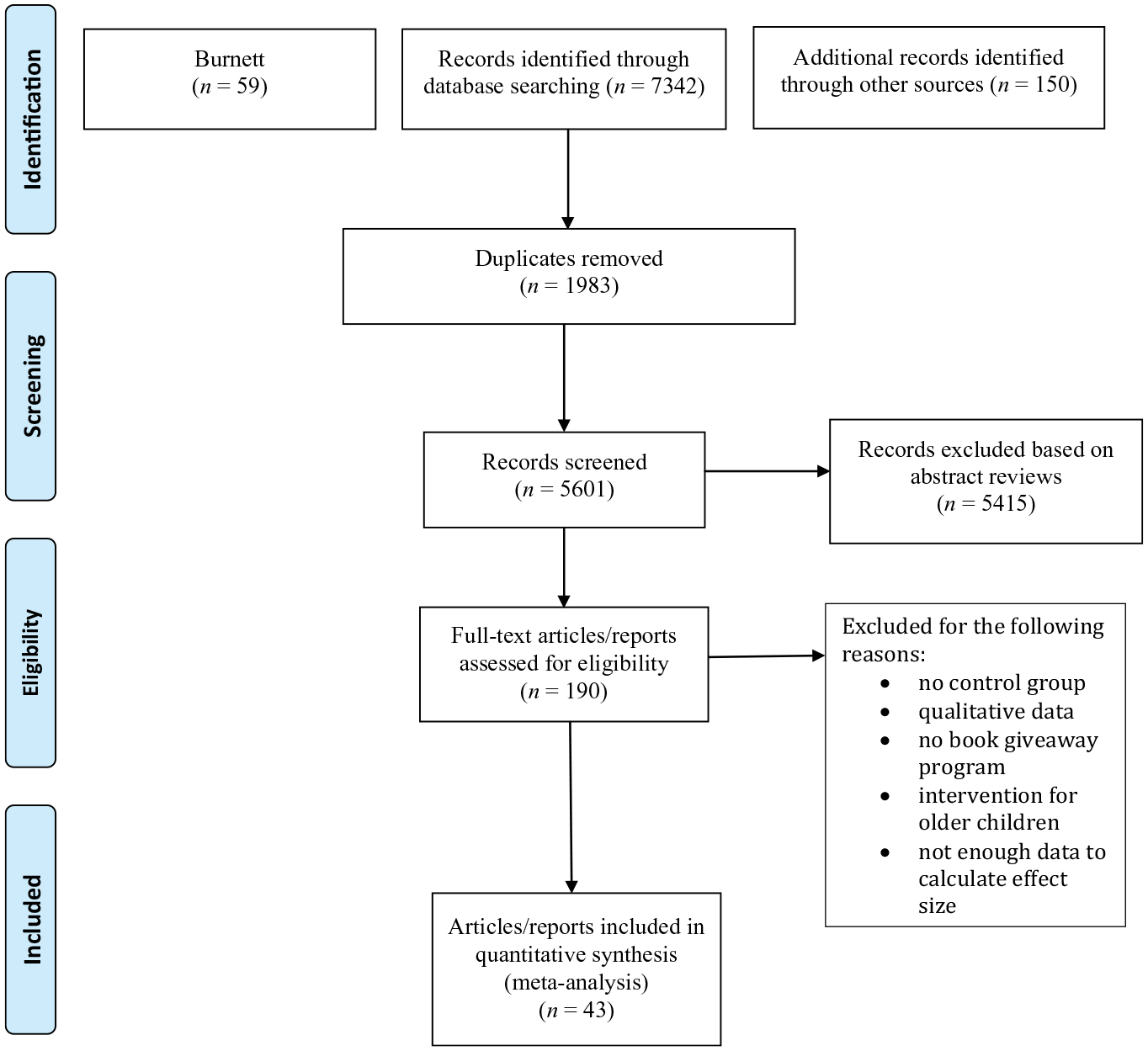
Preferred Reporting Items for Systematic Reviews and Meta-Analyses (PRISMA) flow diagram of study selection.
To be included in our meta-analysis, studies had to focus on effects of book giveaway programs and meet the following criteria: (a) comparing families that participated in a book giveaway program with a control group that either did not receive the program or received a lower treatment dosage; (b) measuring aspects of the home literacy environment and/or children’s literacy-related behavior and/or skills; (c) reported in English, Dutch, German, or Italian; and (d) providing Cohen’s d effect sizes or sufficient information (means, standard deviations, and sample sizes or frequency distributions for treatment and control groups at posttest) to enable calculation of effect sizes.
We excluded studies without a control group where only pre- and posttest scores of the intervention group were reported (e.g., Barratt-Pugh & Allen, 2011; Hall & Jones, 2014); studies that only reported qualitative descriptions of changes in parental literacy-promoting attitudes and behaviors (e.g., O’Hare & Connolly, 2015; Pahl, Lewis, & Ritchie, 2010); studies in which caregivers were asked to indicate changes in their own literacy-promoting attitudes (e.g., parents were asked whether they read to their child more often due to the intervention; Wichita County Imagination Library, 2008); and studies that did not provide sufficient information to calculate effect sizes (Gordon, 2010).
Data Coding and Reliability
Each study was coded by program, namely Bookstart, Imagination Library, or Reach Out and Read. Allowing for the possibility that each of the programs may not be implemented identically across different sites, we also coded the programs according to the following characteristics: how often book giveaways occurred; whether personal contacts with caregivers were part of the program; the job title of the program contact person (medical or other professional); how frequently parents had contact with program staff; whether there were information sessions, an information brochure, or demonstration videos. To some extent, these program features were confounded with programs. Families participating in Bookstart and Reach Out and Read had personal contact with program staff but not those participating in Imagination Library. Families participating in Reach Out and Read had multiple contacts with program staff, whereas Bookstart families had one or two contacts at most. In addition, the Reach Out and Read program involved contact with a pediatrician or nurse practitioner, whereas the Bookstart contact person was usually a community health worker or librarian.
We coded postintervention outcome measures, including indicators of the home literacy environment and indicators of children’s literacy-related behavior and skills (mean and standard deviation, t test, F test, r, p value, frequency distributions, and sample size per test). Indicators of the home literacy environment were the number of children’s books in the home, frequency of shared book reading, parental interest in shared book reading, and library use. Indicators of children’s literacy-related behavior and skills were the child’s interest in book reading, expressive and receptive vocabulary, literacy skills (concepts about print, letter knowledge, phonemic awareness, story comprehension, kindergarten readiness), and school results (involving math scores).
Furthermore, we coded sample characteristics (country, language[s] used in the intervention, SES [overall low SES or mixed SES samples], and children’s age at posttest), publication year and status (journal article, dissertation, unpublished report), and indicators of research quality (monitoring of treatment integrity, randomization, blinding, and attrition; Downs & Black, 1998).
All studies were coded by two independent coders. Cohen’s kappa was computed for 45 variables, of which 11 yielded coefficients between .43 and .78, which lies within the moderate to substantial range, and 31 yielded coefficients of between .80 and 1.00, which is considered perfect agreement. Disagreements were resolved by consulting the original reports and discussing the issues until consensus was reached.
Meta-Analytic Procedures
The standardized differences between the mean of a book giveaway intervention group and the mean of a control group at posttests were computed to quantify the additional value of book giveaway programs on indicators of home literacy environment and/or children’s literacy-related behavior and skills. We calculated Cohen’s d as the effect size. The Comprehensive Meta-Analysis computer software (Version 3.3; Borenstein et al., 2009) was used for analyzing the data. The standardized mean difference (d) was calculated using posttest scores (means and standard deviations) of the intervention and control groups, or by transforming reported test statistics (e.g., t, F, r) into the standardized mean difference. A positive effect size indicates a favorable outcome for a book giveaway intervention. A p value of .50 was entered to estimate a conservative d for studies that only reported nonsignificant differences. Because studies with an increased sample size provide more reliable estimates of the population mean due to a smaller standard error, effect sizes were determined by weighting each outcome by the inverse of its variance (Cooper & Hedges, 1994; Lipsey & Wilson, 2001). Most studies contained more than one outcome measure or effect size. Effect sizes were aggregated within the two domains—home literacy environment and children’s literacy-related behavior and skills—before being averaged across studies. Studies were defined as an outlier if the study’s confidence interval did not overlap with the confidence interval of the pooled effect (Cuijpers, 2016; Viechtbauer & Cheung, 2010).
Bias due to the reduced likelihood of publication of studies with nonsignificant findings was examined graphically by funnel plot analysis. To detect bias due to underrepresentation of studies with small sample sizes that are less likely to be published, the effect sizes of the outcome measures for each study were plotted against the inversed standard error. The “trim and fill” method was used to calculate the effect of potential publication bias (Duval & Tweedie, 2000a, 2000b). We also computed the fail-safe number; that is, the number of studies with null results that would have to exist to overturn the association between book giveaway interventions and outcome measures to a level of no significance (Lipsey & Wilson, 2001).
Homogeneity of effect sizes across studies was assessed using the Q statistic to determine whether variability among individual effect sizes was larger than expected based on subject-level sampling error. Significant Qs indicate that the separate effect sizes are heterogeneous; that is, they do not all estimate the same population mean effect size (Lipsey & Wilson, 2001). Additionally, I2 expresses heterogeneity in percentages: I2 tells what proportion of the variance is due to variation in real effects rather than sampling error. A random effects model was used (Rosenthal, 1995) and moderator-analysis was carried out to explain heterogeneity. Effects of moderator variables, including program features, sample characteristics (SES, age at posttest, number of subjects), research quality (random assignment), and publication characteristics (publication outlet, publication year), were tested by applying a meta-regression model or by contrasting subsamples. To avoid lack of power in the search for differences between subgroups, we only contrasted subsamples when subgroups contained a minimum of four studies.
Results
Characteristics of Studies
Of the 190 full-text papers initially selected, 146 were excluded because they did not meet all inclusion criteria (see the PRISMA flow diagram in Figure 1). The final sample included 44 studies retrieved from 43 articles/reports: 15 concerning Imagination Library, 18 Reach Out and Read, and 11 Bookstart (see Table 1 for a complete list of studies). Across the 44 studies, there were more measures of home literacy environment than of children’s literacy-related behavior and skills. The home literacy environment measures were based predominantly on parental reports rather than on direct observation, and the most common variable was frequency of shared book reading (n = 24), followed by parental interest in reading (n = 13). Measures of literacy-related behavior and skills included caregivers’ reports of children’s interest in book reading, standardized measures of vocabulary such as the Receptive or Expressive One Word Picture Vocabulary Test (n = 2) and the MacArthur-Bates Communication Development Index (n = 4), and standardized tests targeting school achievement administered by school districts (n = 13). Studies were mostly conducted in the United States (n = 29) and predominantly in English (n = 40). Although the majority of studies included mixed SES samples (n = 26), the sample descriptions indicated that most families were at the lower end of the socioeconomic spectrum. Eighteen studies included low-SES families only. There were 32 published studies, which included all the Reach Out and Read studies (n = 18).
Selected characteristics of studies included in the meta-analysis
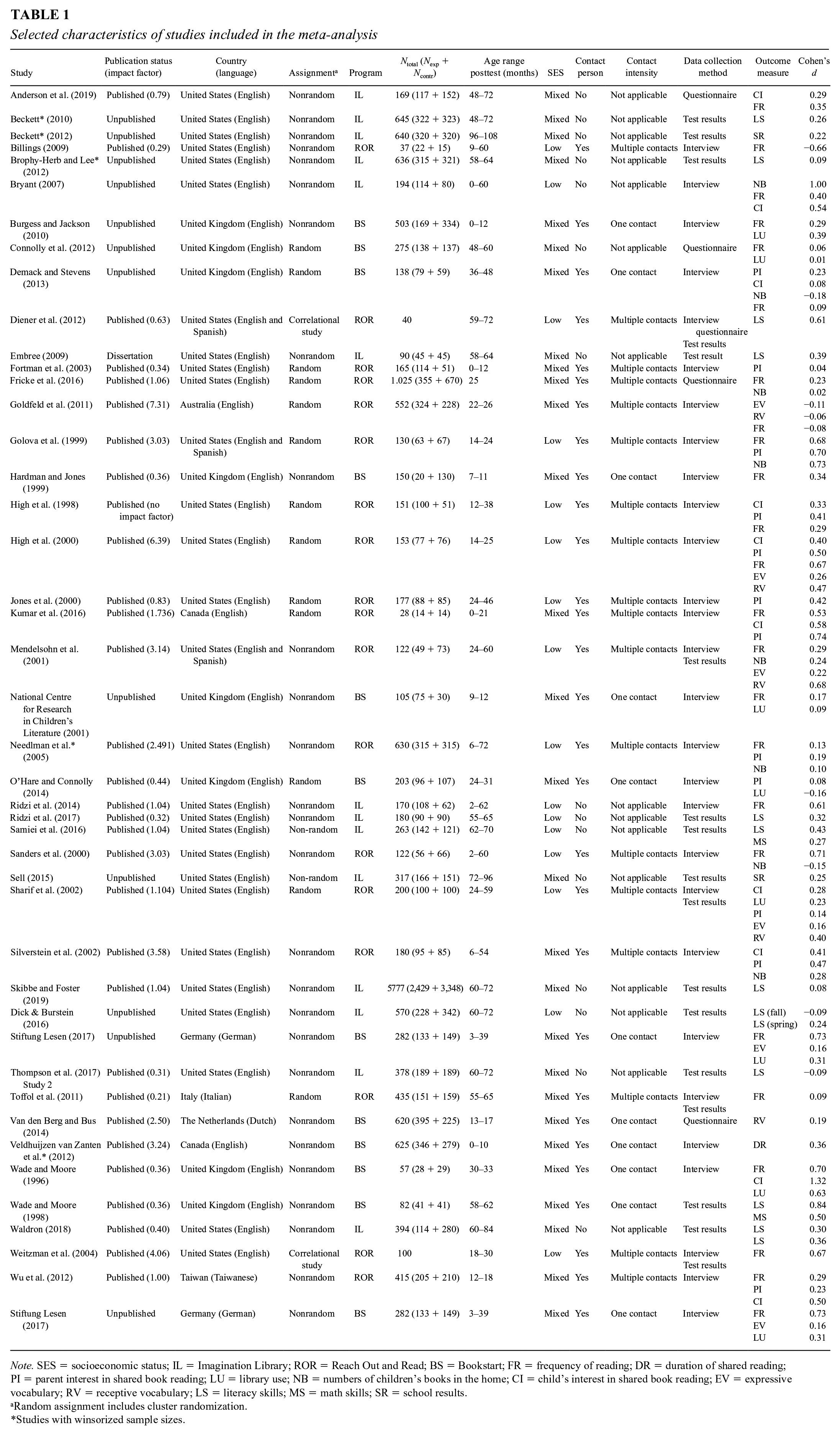
Note. SES = socioeconomic status; IL = Imagination Library; ROR = Reach Out and Read; BS = Bookstart; FR = frequency of reading; DR = duration of shared reading; PI = parent interest in shared book reading; LU = library use; NB = numbers of children’s books in the home; CI = child’s interest in shared book reading; EV = expressive vocabulary; RV = receptive vocabulary; LS = literacy skills; MS = math skills; SR = school results.
Random assignment includes cluster randomization.
Studies with winsorized sample sizes.
The methodological quality of the studies varied and generally study quality was the highest for Reach Out and Read. Considering the nature of the interventions, random assignment at the level of the individual was mostly not achievable. However, several studies reported clustered random assignment of control and experimental conditions: 4 Bookstart, 10 Reach Out and Read, and 0 Imagination Library studies. Information on the implementation of the intervention was either very general or limited. For instance, it was mostly unknown how many books families participating in Imagination Library had indeed received. Blinding of assessors was irrelevant in many cases because data were exclusively collected via a self-administered questionnaire (n = 24). Only 20 studies included observation or testing by an assessor, either in addition to or instead of a questionnaire, but it was rarely reported whether or not assessors were blinded. In a few instances, there was evidence of selection bias due to experimental and control group differences in SES or other relevant variables at pretest (e.g., Hardman & Jones, 1999). Of the 21 longitudinal studies included, 13 studies were at risk of bias either due to failure to test for systematic differences between dropouts and those who remained in the study or due to reported differences (e.g., Hardman & Jones, 1999; O’Hare & Connolly, 2014).
Home Literacy Environment
A total of 32 studies included one or more indicators of the home literacy environment, including frequency of shared book reading, parent interest in shared book reading, number of children’s books available at home, and library visits (see Table 2). These studies included 7,988 children (nexperimental = 3,892, ncontrol = 4,096). Overall, book giveaway programs had a significant effect of .31 on a composite measure of all indicators of the home literacy environment. The studies by Billings (2009) and Goldfeld et al. (2011) were considered outliers (Cuijpers, 2016) and therefore excluded from this analysis. Q indicated that samples were rather heterogeneous (Qoverall = 58.13, p < .001, I2 = 53.55). Evidence of publication bias was indicated by the funnel plot showing asymmetry around the point estimate. After imputing five studies with small sample sizes, the effect size reduced from 0.31 to 0.25 but the confidence interval did not include zero (95% CI = [0.17, 0.34]), indicating that this more conservative estimate remained statistically significant.
Number of studies per outcome measure by program
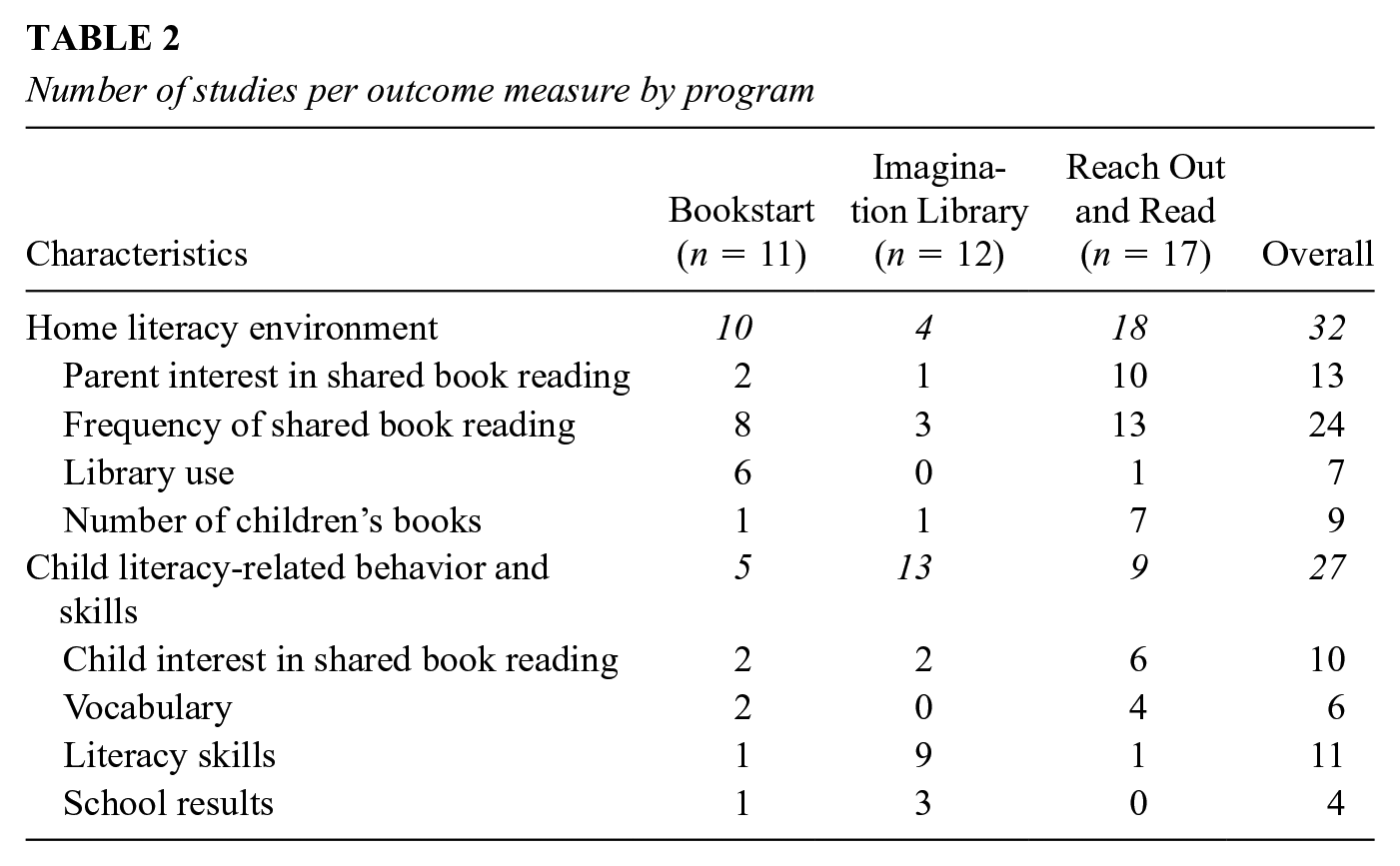
To determine which aspect of the home literacy environment was most influenced, we tested effects of book giveaways separately on each of the four indicators of home literacy environment. However, when interpreting these outcomes, we should consider that these indicators were confounded with program (see Table 2). The most proximal indicator of home literacy environment, book reading frequency, was included in all programs although not to the same extent: It was included in more than 70% of Bookstart and Reach Out and Read studies but only in 25% of Imagination Library studies. Parent interest in book reading, number of books at home, and library use were not measured across all three programs. Parent interest in reading and number of children’s books were commonly reported for Reach Out and Read studies but rarely for other programs. Library use, on the other hand, was an outcome measure in Bookstart (n = 6) but only once in other programs.
The pooled effect size for frequency of shared book reading was 0.36; 95% CI [0.27, 0.45]. Billings (2009) and Goldfeld et al. (2011) Q and I2 indicated that the samples were heterogeneous (Q = 51.65, p < .001, I2 = 59.34). To correct publication bias, six studies with small sample sizes were imputed, which reduced the pooled effect size from 0.36 to 0.24, while still remaining significant; 95% CI [0.14, 0.34]. The pooled effect size of book giveaways on parent interest in shared book reading equaled 0.30; 95% CI [0.20, 0.40] (3 studies imputed). The effect of programs on library use was lower but significantly different from zero; d = 0.19, 95% CI [0.02, 0.37]. The number of children’s books in the home did not reveal a significant effect of book giveaway programs; d = 0.16, 95% CI [−0.00, 0.32]. After correcting for publication bias, one study was imputed, which reduced the pooled effect size; d = 0.09, 95% CI [−0.10, 0.27]. Standardized differences in means, 95% CIs per study, and outcome measures are presented in Table 3.
Home literacy environment outcome measures overall and per program
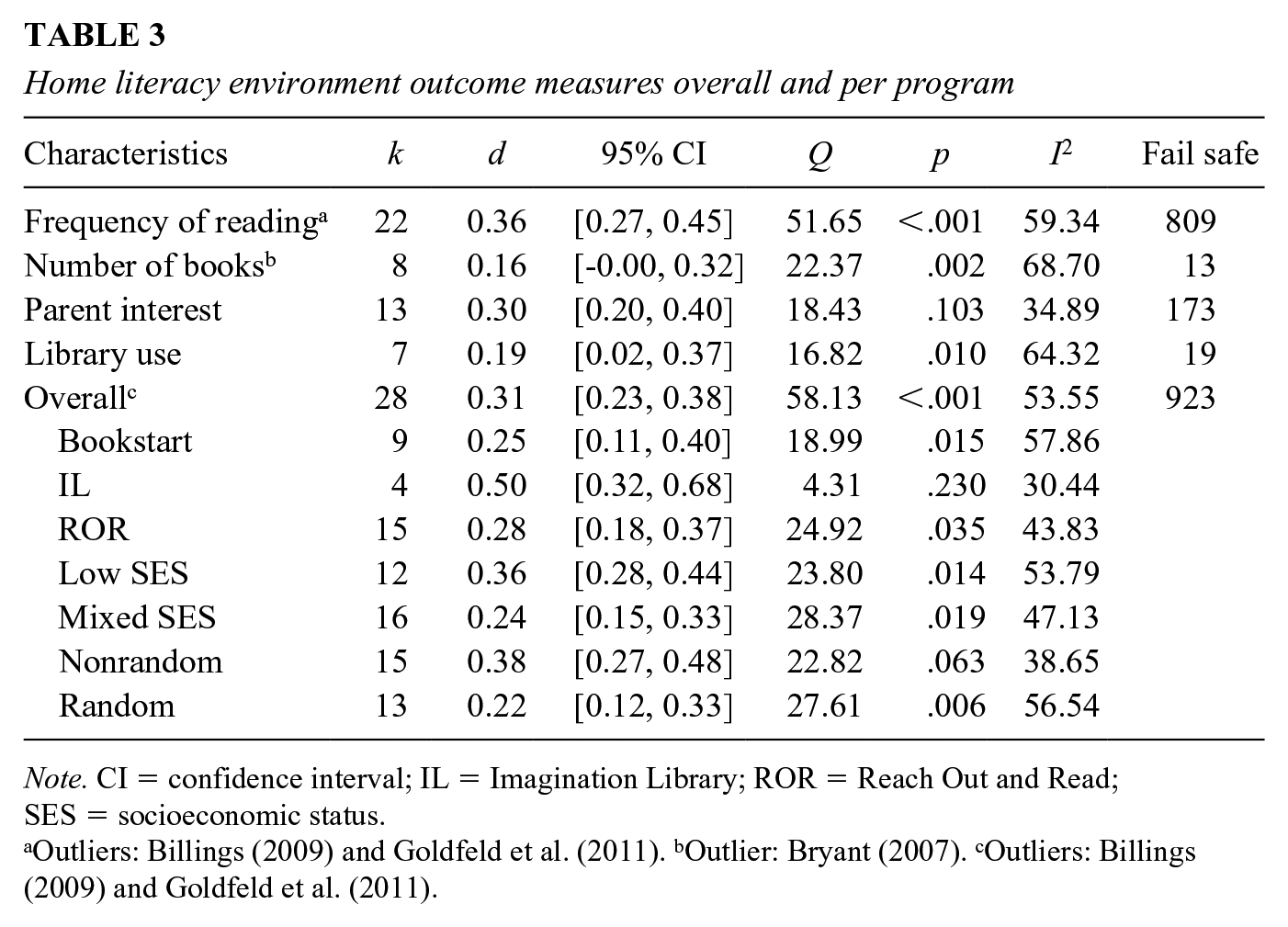
Note. CI = confidence interval; IL = Imagination Library; ROR = Reach Out and Read; SES = socioeconomic status.
Outliers: Billings (2009) and Goldfeld et al. (2011). bOutlier: Bryant (2007). cOutliers: Billings (2009) and Goldfeld et al. (2011).
In moderator analyses, all three programs had a significant effect on the overall measure of home literacy environment but the average effect size for Imagination Library (d = 0.50, 95% CI [0.32, 0.68]) exceeded that of Bookstart (d = 0.25, 95% CI [0.11, 0.40]) and Reach Out and Read (d = 0.28, 95% CI [0.18, 0.37]). Even though Imagination Library had a higher point estimate, the difference across programs only approached significance, Qbetween(2) = 4.491, p = .106. There were also no effects based on who provided the parental contact (p = .396), how frequently contacts occurred (p = .617), whether parents were guided with a demonstration of book reading (p = .111), and whether there was an information session (p = .494) or an information brochure (p = .535). Effect of a demonstration video could not be tested as only one study included a demonstration video. Furthermore, a meta-regression of effect sizes on children’s age in months at the posttest revealed a nonsignificant effect (p = .209), implying that effects on home literacy environment did not differ between younger and older children. Testing the effect of book giveaways on the home literacy environment suggested an interaction with SES: Studies with low-SES samples (k = 12 studies, d = 0.41) revealed stronger effects than mixed-SES samples (k = 16 studies, d = 0.24), Q = 4.742 (1), p = .029). Further moderator analyses on the composite measure of home literacy environment revealed no effects of whether the study was a journal publication rather than an unpublished report (p = .940). The effect of random assignment was significant (Q = 4.130 (1), p = .042), nonrandom assignment (k = 15, d = .38, 95% CI [0.27, 0.48]) outperforming random assignment (k = 13, d = .22, 95% CI [0.12, 0.33]. Meta-regression did not reveal a significant effect of sample size (p = .454), nor did it confirm an effect of publication year (p = .274). Standardized differences in means, 95% CIs per study, and home literacy environment measures are presented in Table 3.
Children’s Literacy-Related Behavior and Skills
A total of 27 studies, including 12,767 children (nexperimental = 5,857, ncontrol = 6,910), obtained indicators of children’s literacy-related behavior and skills: child’s interest in shared book reading, literacy skills, school results, and expressive and receptive vocabulary. Book giveaway programs had a statistically significant effect on children’s literacy-related behavior and skills; d = .29, 95% CI [0.23, 0.35]. According to the criteria (Cuijpers, 2016), four studies were considered outliers: Goldfeld et al. (2011), Skibbe and Foster (2019), Thompson et al. (2017), and Wade and Moore (1996). The funnel plot showed asymmetry around the point estimate. After imputing eight studies with small sample sizes, the effect size dropped from 0.29 to 0.24 but remained statistically significant; 95% CI [0.17, 0.30].
Since the child outcome measures included both literacy-related skills and interest in reading, we also calculated a skill-only effect size that excluded interest in reading. Taking only skills into consideration, book giveaway programs had a smaller effect size, but the effect remained statistically significant; d = .25, 95% CI [0.19, 0.31]. Three studies were considered outliers, namely, Goldfeld et al. (2011), Skibbe and Foster (2019), and Thompson et al. (2017). The funnel plot showed asymmetry around the point estimate. After imputing five studies, the effect size for skills dropped from 0.25 to 0.22, but the average effect size remained significant; 95% CI [0.17, 0.28]. The average effect for skills was much lower than for children’s interest in reading; d = .38, 95% CI [0.28, 0.48]. Wade and Moore (1996) was the only outlier in the studies testing the effects on interest in reading. The funnel plot showed no asymmetry. Focusing on the imputed confidence intervals for skills, skills and reading interest did not overlap indicating that the difference between the two outcome measures was significant and favored the interest in reading.
A moderator analysis revealed a significant effect of program on children’s literacy-related behavior and skills (Q = 7.762 (2), p = .021). The effect of Reach Out and Read (d = 0.42, 95% CI [0.31, 0.53]) was substantially higher than that of Imagination Library (d = 0.25, 95% CI [0.18, 0.31]) and Bookstart (d = 0.23, 95% CI [0.02, 0.44]). In particular, the following program characteristics explained the differences between the programs: demonstrating shared book reading (Qbetween = 8.818 (1), p = .003); providing an information session (Qbetween = 5.557 (1), p = .018); and multiple personal contacts (Qbetween = 7.762 (2), p = .021). Each of these program characteristics were more typical of Reach Out and Read than of Imagination Library or Bookstart. Providing an information brochure had no effect (p = .526), and the effects of a demonstration video could not be tested because none of the studies included a video demonstration. We could not test the difference between the medical professionals (k = 9, d = .39) and other professionals, as the latter (k = 3, d = .25) did not meet the minimum number of studies. Testing effects of sample size (p = .152) and age at posttest (p = .100) showed no effect on the children’s literacy-related behavior and skills. Studies with mainly low-SES samples (k = 9 studies, d = 0.32) revealed stronger effects than those with mixed-SES samples (k = 14 studies, d = 0.27), but not significantly so (Q = .688 (1), p = .407). There was no significant effect of random assignment (p = .936) or publication year (p = .068) but average effects were higher for studies published in journals (Qbetween = 9.459 (1), p = .002). Standardized differences in means, 95% CIs per study, and outcome measures are presented in Table 4.
Child literacy-related behavior and skills outcome measures overall and per program
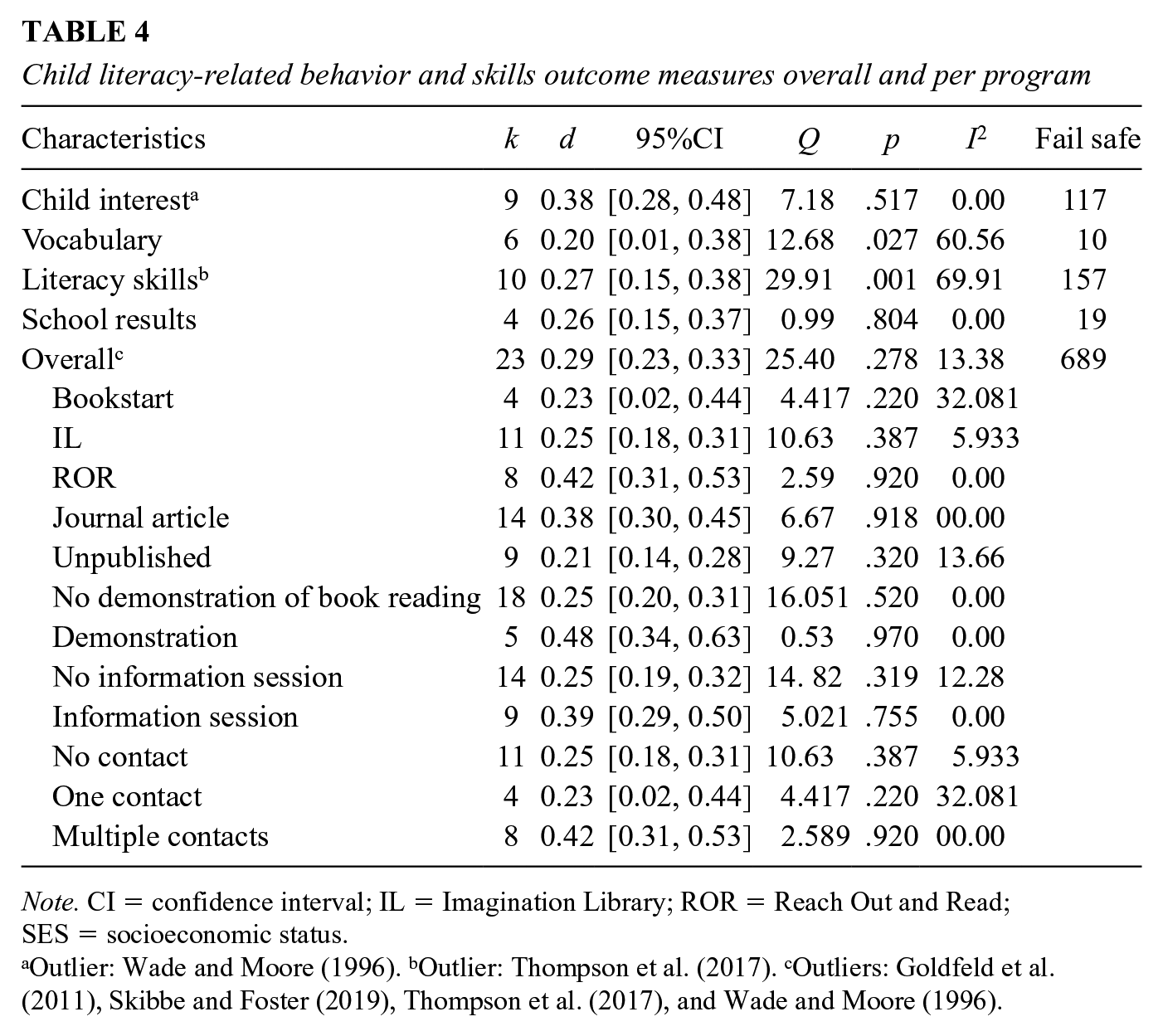
Note. CI = confidence interval; IL = Imagination Library; ROR = Reach Out and Read; SES = socioeconomic status.
Outlier: Wade and Moore (1996). bOutlier: Thompson et al. (2017). cOutliers: Goldfeld et al. (2011), Skibbe and Foster (2019), Thompson et al. (2017), and Wade and Moore (1996).
Testing of program effects on children’s literacy-related skills excluding interest in reading was problematic because there were only three Bookstart studies eligible for inclusion. The average effect size of Reach Out and Read (k = 4, d = 0.37) outperformed the average effect of a pooled set of the other programs (k = 12, d = 0.23), and the test approached significance (Qbetween = 2.147 (1), p = .142). In the skills-only analysis, most differences between programs were similar to those found for the combined set of literacy-related behavior and skills but statistical power was reduced due to the small numbers: demonstrating shared reading (yes: k = 2, d = 0.49; no: k = 15, d = 0.24); information session (yes: k = 5, d = 0.32; no: k = 11, d = 0.24; Qbetween = 1.003 (1), p = .317); multiple personal contacts (no: k = 9, d = 0.23; once: k = 3, d = 0.27; multiple: k = 4, d = 0.37); information brochure (no: k = 11, d = 0.24; yes: k = 5, d = 0.28); video demonstration (no studies with video); profession (medical: k = 5, d = 0.32; other: k = 2, d = 0.35); SES (mixed-SES samples: k = 9, d = 0.23; low-SES samples: k = 7, d = 0.28; Qbetween = 0.752 (1), p = .386); published in journals (unpublished report: k = 7, d = 0.20; journal publication: k = 9, d = 0.35; Qbetween = 5.686 (1), p = .017; random assignment (no: k = 14, d = 0.24; yes: k = 2, d = 0.32); year of publication (p = .138); sample size (p = .424); age at posttest (p = .831).
Discussion
Empirical Contributions
The following findings emerged from this meta-analysis of book giveaway programs: Using Cohen’s criteria, there was a statistically significant effect of book giveaway programs on children’s home literacy environment; d = 0.31, 95% CI [0.23, 0.38]. The effect on reading to children was the strongest; d = 0.36, 95% CI [0.27, 0.45]; whereas the effects on number of books was the lowest and not significant. All three programs had an effect on the home literacy environment, but especially Imagination Library, which provided families with the most books; d = 0.50, 95% CI [0.32, 0.68]. However, the difference in effect across programs was not statistically significant.
Family participation in a book giveaway program had a significant effect on children’s literacy-related behavior and skills; d = 0.29, 95% CI [0.23, 0.35]. Congruent with the view of reading interest as a stepping-stone to literacy skills, it makes sense that the effects of book giveaways are stronger for children’s interest in reading than for literacy-related skills. All three programs had an effect on literacy-related interest and skills, with Reach Out and Read having significantly stronger effects than Bookstart and Imagination Library. Book giveaway programs were particularly effective when they included multiple personal contacts with caregivers, information sessions, and demonstration of book reading. Overall effects were similar when the behavioral measure, child interest in reading, was omitted and analyses examined skills exclusively. However, the between program differences could not be tested due to the reduced numbers of studies per subsample.
Book giveaway interventions showed higher effects on home literacy environment when studies included mainly low-SES families. Because low-SES families may have fewer age-appropriate books and ordinarily tend to start later with book reading, they are more likely to show a greater impact of the intervention. We may expect even stronger impacts from expanding book giveaway programs to more diverse and generally less well-resourced social/cultural contexts, such as sub-Saharan Africa or Middle Eastern refugee camps. Likewise, we may expect that caregivers who voluntarily participate in a program are more inclined to share books with their child from an early age than caregivers who are assigned to a program. Along this line of thinking, we indeed found that the effect size was lower but still significant with random assignment in the set of studies testing the home literacy environment.
For literacy-related behavior and skills, published studies had higher effect sizes than unpublished reports, which is regarded as an indicator of underrepresentation of nonsignificant findings in the set of published studies. Another indicator for publication bias, a significant association between sample size and effect size, was not significant.
Theoretical Implications
The findings corroborate the assumption that book giveaways promote family book reading routines, which consequently results in children scoring higher on measures of children’s literacy-related behavior and skills. The findings thus support the theory that the early initiation of book reading promoted by book giveaway programs generates a “snowball effect” (Raikes et al., 2006), resulting in more advanced early language and literacy skills that presumably further increase children’s interest in book reading, which may in turn encourage parents to continue with book reading routines.
The positive effect identified for all three programs affirms the value of their common feature, namely, providing one or more book gifts in the first two years of life. Since two of the three programs only provide a few books and yet are still effective, these findings do not support the hypothesis identifying number of books as a predictor of children’s language and literacy development. Thus, in this instance, the drive to build children’s libraries does not appear to be the mechanism explaining the success of book giveaway programs. Instead, the current findings align with the theory that the presence of an age-appropriate book may serve as a “nudge” for developing book reading routines (Thaler & Sunstein, 2008). Book gifts constitute environmental cues that by themselves may direct the caregiver’s choices unconsciously. The book gift may entice caregivers to try shared book reading, which may then lead to the development of a regular book reading routine, especially when these incidental attempts are positive experiences for both the caregiver and the child.
Based on the finding that children participating in Reach Out and Read outperform those participating in Imagination Library and Bookstart, we hypothesize that the efficacy of programs increases when parents receive input on the importance of shared book reading as a vital component of effective caretaking of young children. It seems that the success of the Reach Out and Read intervention is not due only to personal contacts between program staff and caregivers and caregivers receiving information about and demonstration of shared book reading as components of the program, but a vital element of Reach Out and Read may be that parents receive advice on shared book reading in the context of a health care consultation, which may give special significance and weight to caregiving advice. We believe that in such a context parents may be more receptive to receiving the advice to read to the child. We could not test whether the quality of the interaction between caregivers and program staff makes a difference as the current set of studies did not provide either systematic or descriptive information to explore such effects.
Practical Implications
In comparison with other family literacy programs, the effects of book giveaway programs on literacy skills reported here are impressive. For instance, a meta-analysis (van Steensel et al., 2011) investigating the effects of more expensive family literacy programs involving parent guidance and training reports an effect size of d = 0.18 for comprehension-related skills and code-related skills—a much lower effect size than our reported effect on literacy skills; d = 0.27; 95% CI [0.15, 0.38]. Therefore, from a cost-utility perspective, book giveaway programs seem to be a valuable investment.
Book giveaway programs, a popular strategy for promoting an early start with book reading in families, currently serve millions of families worldwide. Our findings support the basic premise of these programs, namely, that book giveaways have an important function in encouraging caregivers to make an early start with shared book reading by providing free books as an incentive. This meta-analysis provides no decisive evidence for the assumption that receiving multiple books is essential as a reminder to caregivers of the importance of book reading.
However, the findings do indicate the benefits of parents having multiple contacts with a health care professional and receiving information about the importance of book reading for the cognitive development of their child during these periodic visits. The effect size of book giveaway programs on children’s literacy-related behavior and skills increases from 0.23 to 0.42 when the program includes multiple personal contacts with the caregivers. This meta-analysis supports the practice of combining book giveaways in infancy with personal contacts about health issues: The Reach Out and Read model whereby book gifts are presented by a pediatrician or nurse practitioner in a health care context is by far the most effective (Dowdall et al., 2020). We hypothesize that the health care context in which caregivers receive the advice to read to their young child is more influential than any other form of parent training or guidance could be.
It should be noted, however, that adding personal contacts to the interventions may substantially increase the cost of program implementation. The higher staffing needs in Reach Out and Read make the program more expensive than Imagination Library, which only provides book gifts and is highly cost-effective: Once monthly book gifts provided by Imagination Library over a 5-year period cost approximately $126 per child (Skibbe & Foster, 2019). It may even be possible to further reduce the cost of book giveaways by distributing digital rather than hard copy picture books (e.g., Bus et al., 2020).
Limitations and Future Directions
When interpreting the current findings, it bears consideration that most studies do not meet the gold standard of experimental research (Yeager Pelatti et al., 2014). However, via application of stringent selection criteria, we ensured that all 44 target studies included in our analysis were reasonably well-designed. We excluded studies with poor outcome measures (e.g., studies that simply asked parents to indicate whether or not they benefited from the book giveaway program) or studies with deficient designs (e.g., studies that only obtained pre- and posttest measures but did not include a control condition).
A puzzling finding is that Reach Out and Read, the program with the strongest effect on children’s literacy-related behavior and skills, did not show the strongest effect on the home literacy environment as well. Although a theoretically plausible expectation would be that effects on achievement are mediated by the home literacy environment, this was not borne out by the data. One possible explanation is that the variables contributing to the home literacy environment composite were mainly self-reported by parents and, therefore, susceptible to social desirability bias and inaccuracy. By contrast, the assessments of children’s skills, commonly obtained via standardized testing, was probably more valid. Alternative measures for assessing the home literacy environment, such as print exposure lists (Cunningham & Stanovich, 1991) or young children reflecting on literacy practices in their homes (Evans & Hulak, 2019), were unfortunately not used in the current set of studies.
Studies in this meta-analysis did not provide specific information about the book gifts and we were therefore unable to test the role of book quality and content on program efficacy. In light of the association between the complexity of the book and the level of the language input provided by caregivers during shared reading (Hoff, 2003), it becomes extremely important to supply families with age-appropriate books containing rich and varied vocabulary (Dickinson & Morse, 2019). A recent study showed that young children often have relatively limited access to narrative books, even though stories present children with rich opportunities to construct narratives and draw inferences—all skills that are vital to school success (Luo et al., 2020). An important area for further research is therefore the impact of the type and quality of the books provided to families. Given the advantage of the linguistic (Dickinson & Morse, 2019) as well as other book qualities (Luo et al., 2020), we expect that it is important for book giveaway interventions to include the literary expertise of librarians.
Finally, we were unable to discuss the specific needs of families with a non–majority language spoken at home and whether they profit from “majority language books” to the same extent as other families do. The studies included were largely conducted in English-speaking contexts, and few studies differentiated between speakers of the majority language and speakers of languages other than the majority language. This remains a gap in the extant research.
Footnotes
Notes
Authors Merel de Bondt and Ingrid A. Willenberg contributed equally to this work.
This research was supported by a Spinoza award from The Netherlands Organisation for Scientific Research (NWO) to Marinus H. van IJzendoorn and a grant to investigate effects of Bookstart from the Dutch Reading Foundation (Stichting Lezen) to Adriana G. Bus.
Authors
MEREL DE BONDT is PhD student at the Department of Language, Literature and Communication, Vrije Universiteit Amsterdam, De Boelelaan 1105, Amsterdam 1081 HV, The Netherlands; email:
INGRID A. WILLENBERG is a senior lecturer in literacy education at the Australian Catholic University, 25A Barker Road, Strathfield, New South Wales 2135, Australia; email:
ADRIANA G. BUS is a professor emeritus of Leiden University and now connected to the University of Stavanger in Norway and the Institute of Education, ELTE Eötvös Loránd University in Budapest, Hungary; email: