



Abstract
The primary objective of this study was to explore clinic group culture surrounding Reach Out and Read (ROaR) at a pediatric clinic recognized as successful in ROaR implementation. In ROaR-participating clinics, pediatricians give books and information to families at well child visits to promote daily read aloud practices deemed necessary by many experts to build early literacy skills. The program is known to be most effective when implementing clinics demonstrate positive group culture, yet additional understanding of cultural elements is needed. To explore clinic group culture, we collaborated with a ROaR regional representative and a pediatrician leading high-quality ROaR implementation to create a semi-structured interview protocol regarding staff perceptions and feelings surrounding ROaR. Then we conducted the semi-structured interview with twelve non-physician staff members in the pediatrician’s clinic. A two-phase grounded theory analysis revealed an ingroup/outgroup relationship that created two distinct cultural groups related to ROaR. Participants described themselves as ingroup members and the patients receiving ROaR as outgroup members. The ingroup included community organizations, doctors, and study participants, working together to give books and information to parents and medical students, who made up the outgroup. Ingroup members assumed that outgroup members needed their services. Participants’ descriptions of literacy resources in their own family cultures were different from their descriptions of the needs they perceived of members of the outgroup. Descriptions of outgroup members’ literacy needs included multiple stereotypes that could serve to perpetuate, rather than ameliorate, existing literacy inequities. Empathy promotion within ROaR-implementing clinics is discussed as a potential strategy to increase equity.
Keywords
Powerful experts across various fields (e.g., pediatricians, educators, policymakers, neurologists, economists) advise parents to read to their children every day beginning at birth (Cates et al., 2012; Global Challenge Insight, 2016; Hutton et al., 2015; Kuhl, 2011; List et al., 2018; NCSU and Institute for Emerging Issues, 2018). For decades, advocates have insisted that, “The single most important activity for building the knowledge required for eventual success in reading is reading aloud to children (Anderson, et al., 1985: 23),” and a growing body of evidence demonstrates a connection between children’s early language exposure and later language and literacy achievement (e.g., Morgan et al., 2015). Early language and literacy skills are correlated with numerous socially-desirable outcomes including improved kindergarten preparedness, improved third grade reading scores, increased high school graduation and college attendance rates, and decreased incarceration rates (Council on Early Childhood et al., 2014; Duursma et al., 2008; Knudsen et al., 2006). Despite compelling data and generations of advocacy work to empower parents to read aloud early and often, fewer than 50% of parents report reading aloud to their young children daily (Child and Adolescent Health Measurement Initiative, 2019), and child reading outcomes have not improved (National Assessment of Education Progress, 2022). As a result, some scholars assert that accepted early literacy practices could be contributing inadvertently to literacy inequities more than ameliorating them (Compton-Lilly et al., 2012; Lee et al., 2022; Neuman and Gambrell, 2015).
These assertions are made during a time of rapid expansion and public funding of many early literacy programs. For example, book-gifting is enjoying nearly universal acclaim (e.g., Imagination Library, 2022). Book-gifting organizations donate books and provide information to increase families’ awareness of recommended read aloud practices. Book-gifting ideology is supported by research citing positive correlations among the number of books in a child’s home, parents’ positive orientation toward reading, frequency of read aloud behaviors, and higher scores on formal measures of child language and literacy skills (McNally et al., 2023; Sénéchal et al., 1996). Additionally, parents who have not adopted daily read aloud habits have reported lacking books and awareness of read aloud recommendations as primary barriers (Dickinson et al., 2003; Strickland, 2002). It is important to note that much of the data inspiring book-gifting originates from an interventionist perspective, intent on preventing perceived risks of literacy deficits. However, many scholars critique the concept of pathologizing children’s language skills (Dudley-Marling and Lucas, 2009) and intervening in families’ primary literacies (Johnson et al., 2017; Rizk, 2020; Rogers, 2017). Regardless of these critiques, book-gifting organizations aim to remedy the deficits they perceive by providing free books and information to encourage families to develop early, frequent read aloud habits (De Bondt, Willenberg and Bus, 2020).
Book-gifting interventions demonstrate positive effects on book ownership (Sinclair et al., 2018); parent beliefs and attitudes about reading aloud (High et al., 1998; Levesque et al., 2018); read aloud frequency (Levesque et al., 2018; Ridzi et al., 2014); and children’s skills (Daniels et al., 2021; De Bondt, Willenberg and Bus, 2020; Needlman et al., 2018; Skibbe and Foster, 2019). These results are compelling to policymakers interested in educational outcomes and workforce development, and many states are directing taxpayer dollars to fund book-gifting programs to help parents prepare children for kindergarten and beyond (Dunlap et al., 2021; Early Literacy Initiatives/Funds, 2017). Nonetheless, critiques of book-gifting programs warn that they “generally targeted culturally and linguistically diverse families, females, and/or people of low socioeconomic status and thus have been inextricably intertwined with issues related to diversity and social justice (Compton-Lilly et al., 2012: 35).” Many book-gifting programs were originally designed to ameliorate literacy deficits characterized as unique to people of low socioeconomic status, then expanded in response to data suggesting that they benefit families of all socioeconomic levels (Klass et al., 2009). As book-gifting organizations work to reach broader populations, it is important to understand the potentially biased assumptions on which the programs are built.
Reach Out and Read
Reach Out and Read (ROaR), founded in 1989 by pediatricians seeking to help patients who did not own books and were unfamiliar with read aloud practices, is one of many book-gifting programs expanding their reach. ROaR gives over seven million books per year to patients (ROaR, 2022). Early research correlating income with read aloud practices (High et al., 1998) inspired book drives and fundraisers that equipped doctors with books to give to families using Medicaid insurance. As data supported it, ROaR expanded beyond historic income-related eligibility to include all children under age five (Council on Early Childhood et al., 2014). ROaR supports clinics through direct training for physicians, literacy promotion resources for clinic staff (e.g., book lists, information for supporting diverse families, and Spanish-language materials), technical support, and implementation evaluation (ROaR, 2023).
ROaR’s approach to book-gifting is unique in that pediatricians give books to children as part of each well-child visit from birth to age five. When practiced with fidelity, physicians read a picture book aloud, model reading strategies for caregivers (e.g., talking about illustrations and novel vocabulary, relating books to the children’s personal experiences), offer anticipatory guidance regarding possible parenting challenges, and give the book to the family as a prescription to read aloud at home. Pediatricians also observe children’s emergent literacy development and make referrals as needed. In successful clinics, every family leaves each well-child visit with a new book, tips for reading aloud, and encouragement to read. ROaR capitalizes on trusting physician-patient relationships to promote regular family read aloud habits (Council on Early Childhood et al., 2014).
Evidence supporting Reach Out and Read
Caregivers participating in ROaR report reading more frequently (Needlman et al., 2005) and feeling more comfortable about reading (Crosh et al., 2022) than non-participants (Connor Garbe et al., 2023). Participating children score higher on language tests than non-participating children (High et al., 1998; Mendelsohn et al., 2001; Needlman et al., 1991). However, reported design and implementation challenges (Yeager Pelatti et al., 2014) combined with critiques of early literacy practices (Compton-Lilly et al., 2012; Lee et al., 2022; Neuman and Gambrell, 2015), point to the need for careful consideration of many complex factors related to ROaR and other book-gifting models.
The importance of the pediatric clinic culture and Reach Out and Read
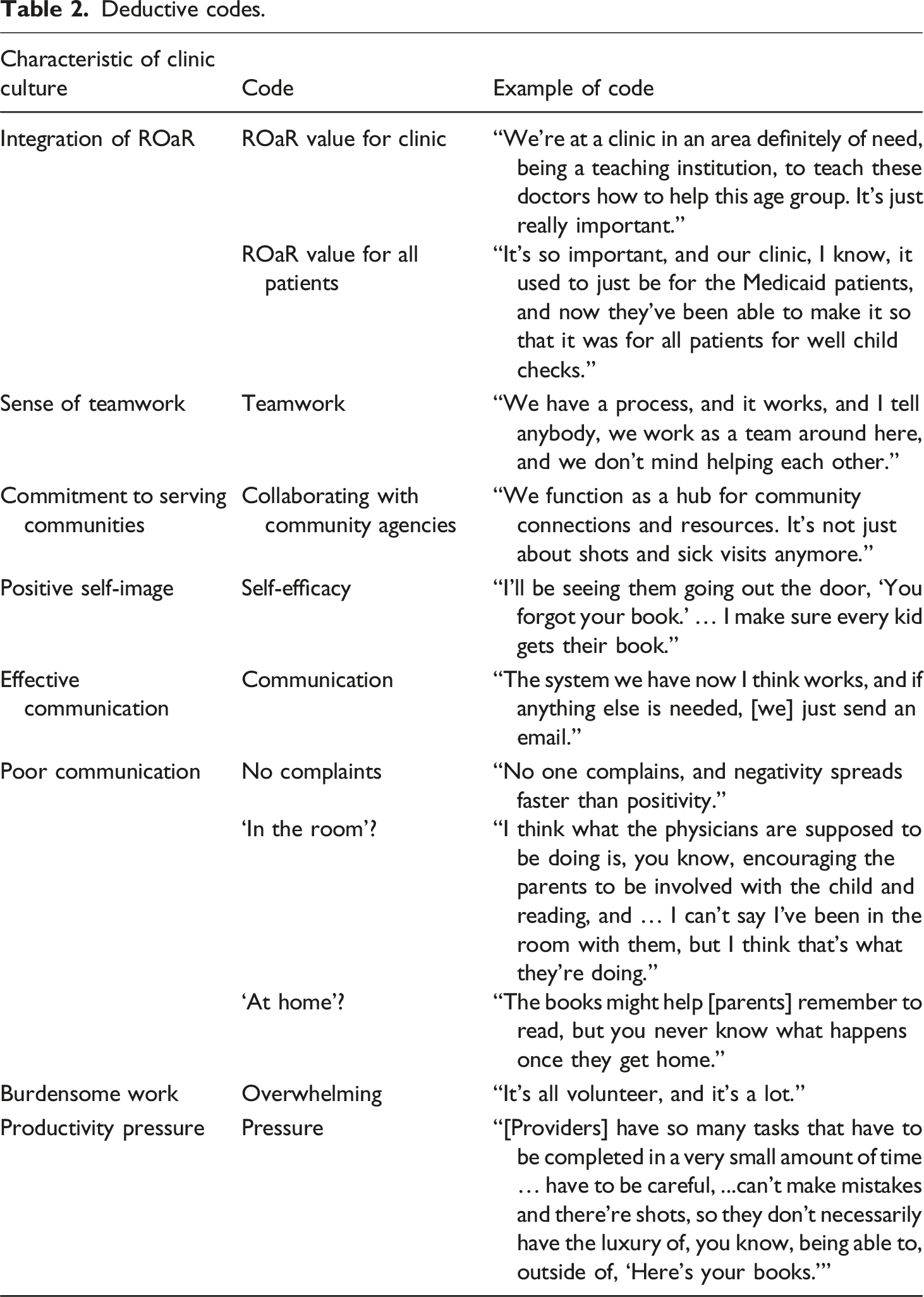
The clinic group culture among clinic teams implementing ROaR is often examined via individual and team-wide perceptions and attitudes related to ROaR. Physicians report improved morale, patient relations, and clinic communications (Burton and Navsaria, 2019; Erickson et al., 2021), and successful ROaR implementation teams demonstrate positive attitudes about patients and ROaR (King et al., 2009). King et al. (2009) explored clinic group culture among clinic teams experiencing different levels of perceived success with ROaR implementation. Factors associated with success included clinic-wide integration of ROaR, a strong sense of teamwork, a group-wide commitment to serving others, a clinic-based ROaR advocate, a majority of physicians completing ROaR training, and a majority of families receiving ROaR books and guidance at well-child visits. In contrast, struggling ROaR clinics had group cultures characterized by poor communication, complaints of burdensome work, and overt disrespect for patients. Across clinics, productivity pressure was reported as an impediment to ROaR implementation. Building on King and colleagues, the current study focused on a single clinic recognized as successful in ROaR implementation. Specifically, we investigated non-physician staff members’ perceptions and attitudes regarding ROaR implementation. Our initial intention was to support the clinic in identifying group cultural factors that leaders could address to facilitate program expansion.
Methods
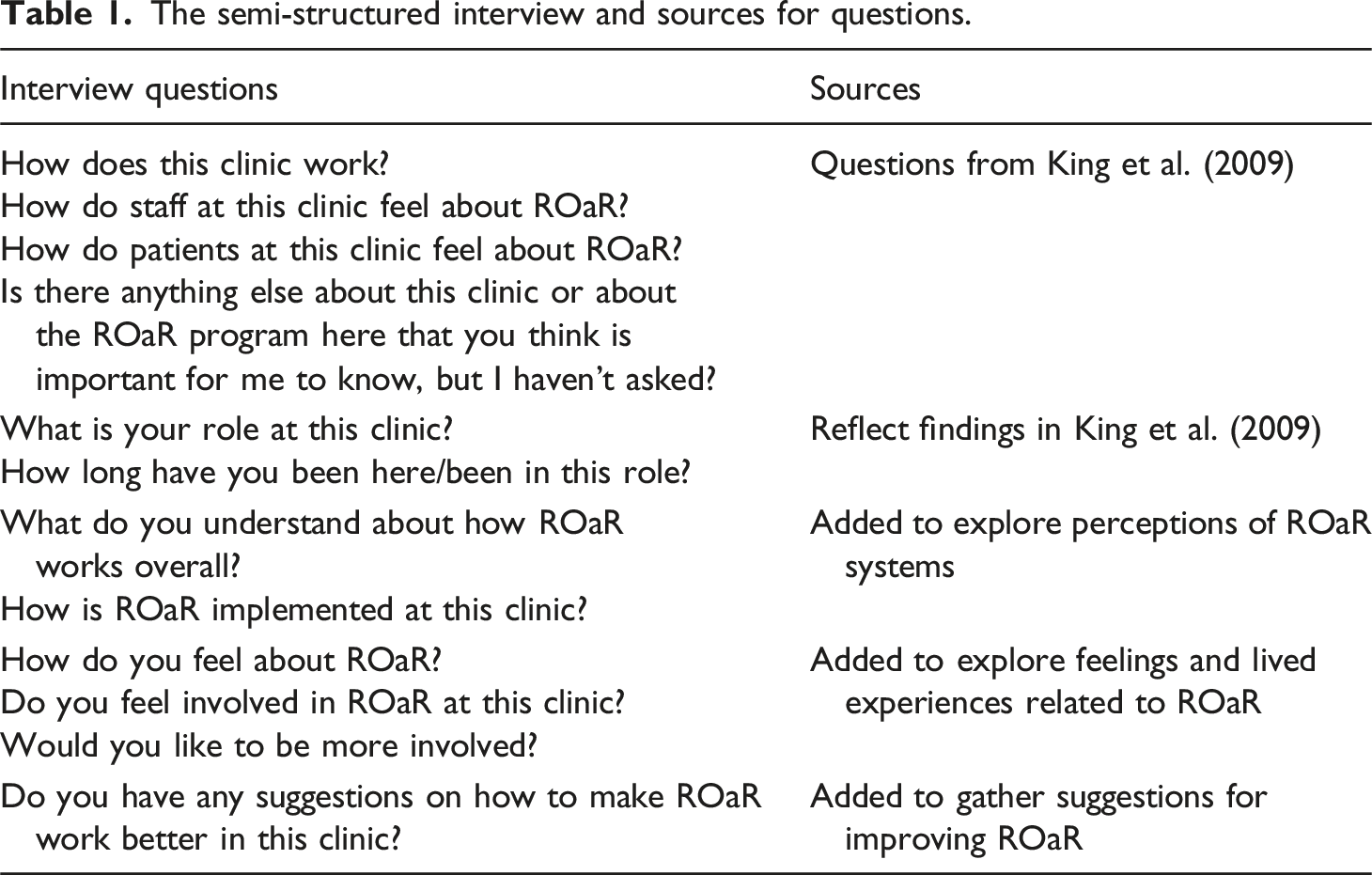
This qualitative study was completed in collaboration with a regional ROaR representative and a pediatrician leading a pediatric clinic in successful implementation of ROaR. Researchers collaborated with these community partners to identify interests, resources, and roles, then to identify interview questions, secure approval from human subjects' review boards at two universities, and recruit participants. Then, the first author conducted semi-structured individual interviews that were transcribed, coded, and analyzed as reported herein.
Community partners
The community partners were central to this study. The regional ROaR representative was interested in iterative program improvement. She provided key information related to clinic effectiveness measures. The pediatrician was interested in understanding the culture in the clinic she led in preparation for ROaR expansion. Researchers were interested in exploring cultural complexities surrounding educational equity and furthering understandings of emergent literacy practices. The first author was influenced by her own involvement in creating a community-based book-gifting program, work as a speech-language pathologist, social constructivist epistemology, and interest in critical theories and collective impact. The second author was influenced by her history of community engagement around literacy implementation with various stakeholder groups. All partners sought to contribute to the body of evidence regarding ROaR.
Reading and discussing King et al. (2009) focused our collaboration. We appreciated the authors’ call for further study regarding the elements of clinic group culture related to ROaR, attention to community factors in studying implementation efficacy, and use of interview as a method for exploring participants’ first-hand reports of lived experiences.
The semi-structured interview
The semi-structured interview and sources for questions.
Setting
The urban clinic, staffed by 65 – 70 employees, serves a diverse patient population. Implementing ROaR since the early 1990s, the clinic now provides books to more than 7500 children annually. Physicians provide books during well-visits and promote reading through posters, read alouds, and celebrations. The clinic maintains a stock of books with diverse characters and Spanish translations and is recognized as successfully implementing ROaR based upon three metrics: (a) 90%+ of participating physicians trained in ROaR; (b) a passionate clinic-based medical champion for ROaR; and (c) participating physicians report offering parents anticipatory guidance when giving books (ROaR regional representative, Nov. 15, 2021).
Participants
Fourteen clinic employees volunteered in response to a staff-wide email. All were adult, non-provider staff who communicated fluently in English and had been employed at least 6 months. Two canceled due to illness. The 12 clinic staff members who completed the interviews were primarily women (n = 11) and varied in length of employment (M = 8.14 years, SD = 7.32 years), degree of patient contact (0 contact n = 2; <50% of work hours, n = 2; >50% of work hours, n = 8), and clinic ROaR committee membership (3 members). Participants varied in race (White, Black, and other races), age, and job description (clinical, non-clinical, and related service). These 12 participants (approximately 18% of the staff) represent a range of non-physician staff experience. These general descriptions of the participants are provided to maintain confidentiality as required by the two approving institutional review boards. All participants provided written consent to participate, acknowledging their expectation for confidentiality, anonymity, and their understanding that there was no personal benefit.
Procedures
The office manager sent recruitment materials via email to all non-physician staff members. As participants volunteered, a clinic staff member helped schedule interviews that were conducted in person, during working hours, at the clinic. Each interview lasted approximately 30 minutes and was audio recorded while the researcher wrote field notes. Audio recordings were transcribed verbatim. Field notes were cleaned and expanded at the end of each day of data collection.
Analysis
Deductive analysis of written transcripts and field notes was completed using Watkins’ (2017) procedures developed to support qualitative data use in applied research.
Coding
Deductive codes.
Pairs of focused codes resulting from inductive coding with grounded theory analysis.
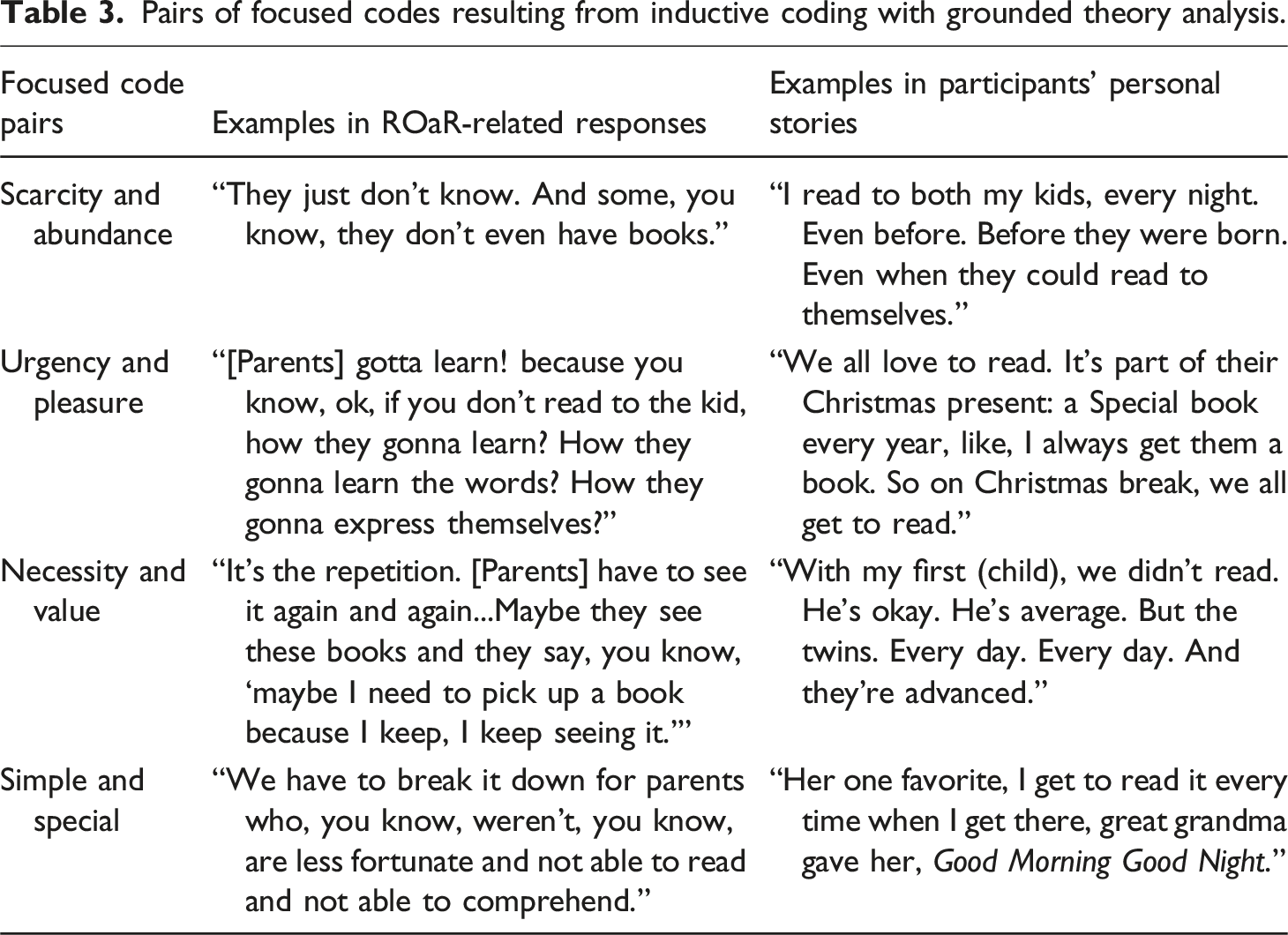
The focused code pairs and the literature were integrated through reflexive memos (i.e., memos grounded in prior understandings, addressing how and why those understandings changed during analysis, with reference to relevant theoretical readings). These memos intentionally challenged and troubled existing assumptions about book-gifting as revealed in the emerging codes, and as reflected in much of the literature and in the researchers’ personal histories, assumptions, and beliefs.
Transcripts, codes, and reflexive memos were subjected to repeated review and constant comparison to generate themes. These themes focused on the patient families and medical residents as members of an outgroup and clinic employees, their families, and community collaborators as members of the ingroup. Across these groups, themes revealed different views of books and reading practices for members of the ingroup and the outgroup.
Achieving saturation
For the deductive analysis, saturation was achieved through repeated rounds of reading and coding transcripts and field notes to identify a comprehensive set of confirming and disconfirming examples of the initial codes and eventual focused code pairs. Inductive thematic saturation was achieved through repeated readings and constant comparison of the data (i.e., transcripts and field notes), repeated consultation of the literature, and researchers’ reflexive memos and consultations until no new codes, patterns, or insights developed (Charmaz, 2014; Saunders et al., 2018).
Member checking
Member checking, in this case, the act of reviewing themes and related codes with the regional ROaR representative and the pediatrician, was completed in two meetings. In the first meeting, the ROaR regional representative confirmed and extended the codes and themes presented and offered possible local and region-wide applications for the findings. Next, the pediatrician confirmed the codes and themes and considered how findings might influence their clinic.
Trustworthiness
In qualitative research, issues of reliability and validity are replaced by trustworthiness and efforts to establish credibility, dependability, transferability, and confirmability of findings (Lincoln and Guba, 1985). In this study, trustworthiness was achieved by maintaining an audit trail, ensuring data visibility, and conducting member checks. The audit trail documented each step of the research process including records of all communication with the research partners, the clinic contact person, and participants. It also included a record of the audio recordings, transcribed interviews, field notes, reflective memos, details regarding the iterative approach to analysis, and the development of codes and themes. Data visibility was supported through direct quotes from participants throughout the findings (Lundy, 2008). As described, member checks were completed with the research partners and their feedback resulted in important new understandings of the emerging themes and results.
Results
Defining cultural groups in Reach Out and Read implementation
All participants expressed understanding and support of ROaR’s stated goal of ensuring that patients’ parents have books and information necessary to read aloud on a daily basis. Participants identified an ingroup that constructs and participates in a system of nested groups that collaborate toward this shared goal of serving an outgroup of ‘needy’ others (Cohen et al., 1996). These nested groups (Figure 1) are the: (1) clinic-wide book-gifting group; (2) physician-serving group; (3) ROaR implementation group; (4) ROaR book-delivery group; and (5) ROaR volunteers. Defining cultural groups in Reach Out and Read implementation.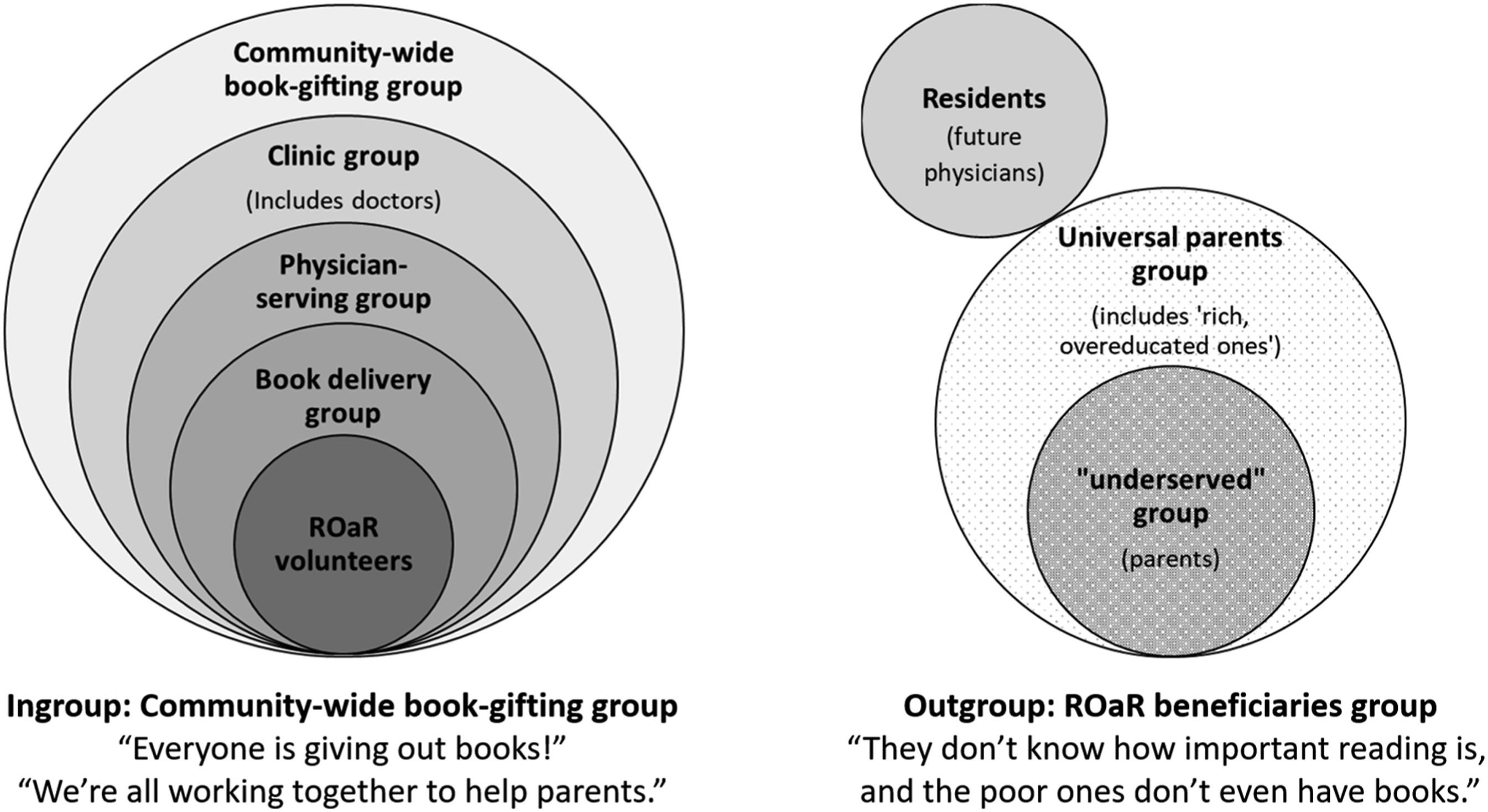
Nested cultural groups
Community-wide book-gifting group
Participants acknowledged multiple agencies working to provide books to families of young children. As part of this group, participants positioned themselves as possessors and distributors of socially desirable literacy resources forming what Stürmer and Siem (2017) describe as a philanthropic ingroup collaborating to help others seen as lacking resources. This deficit-based helping can contribute to cultural stereotyping, because the ingroup is constructed based upon the perceived scarcities of the outgroup members relative to the ingroup members’ possession of the offered resources (Nadler, 2018; Yosso, 2005). Helpers, therefore, hold a place of relative power. As part of the community-wide book-gifting group, participants referenced their shared abundance of books and literacy knowledge relative to the outgroup of ROaR beneficiaries. One participant stated, “We’re all about books, so for my daughter-in-love, for her shower, we all brought books. Now my little grandson, he has three bookshelves, slap full. When they move, we’ll go through all those little books. The ones that don’t have inscriptions, we’ll give them away, donate them.”
Participants also defined themselves as collaborators with physicians, a state children’s advocacy group, a local book-gifting organization, public libraries, public schools, other medical organizations, Dolly Parton’s Imagination Library, and other powerful book-gifting leaders. One participant shared, “Dr. [anonymous] takes the lead, then we all do whatever needs to be done. We meet now once a month and plan any grants that need to be written and things like that. A lot of residents here, who sometimes use [ROaR] as projects that they need to do, help us with those ... We have [sports] players come out and dress up and read to the kids in the waiting room. Then, we’re encouraging outreach of the county and state and they’re doing things like, you know, writing to your congressmen.”
One participant exclaimed, “books, books, everywhere books.” Another shared, “it’s pretty amazing that all these other places are also keeping books and giving books out to children.” A third suggested, “We’re all working together to help parents who might not even have books.” These enthusiastic statements of shared bounty and generosity towards needy others further illustrate the participants’ perceived roles as members of the ingroup.
Clinic group
Participants described a clinic-wide group that included physician and non-physician staff members working together to manage clinic business and to connect patients with resources outside the clinic as a “hub of information.” One participant stated, “We function as a hub for community connections and resources. It’s not just about shots and sick visits anymore.”
Physician-serving group
Participants described a physician-serving group that specialized in ROaR book delivery. During member checking, the ROaR representative and the partner pediatrician independently suggested that non-provider pediatric clinic staff commonly collaborated to support physicians’ direct care of patients. The partners stated that physician-serving groups were not unique to ROaR implementation. The ROaR book delivery group nests within the broader physician-serving group and is described later in this section.
Reach Out and Read group
With participating physicians, the ROaR committee, and volunteers, the ROaR group “make[s] sure every kid gets their book.” Participants stated that “everyone here knows” about ROaR and the importance of reading aloud, but they recognized a need to continually educate new clinic staff and suggested “the committee should do those lunches again.” Participants described the physicians as passionate group leaders who “started ROaR here” and “really take hold of [ROaR]”.
Reach Out and Read book delivery group
Nested within the physician-serving group, the ROaR book delivery group functioned as a self-directed work group (Cohen and Bailey, 1997), which is an autonomous group formed to execute supplementary projects within organizations. This group focused on delivering books to physicians, to ensure they reach patients. Participants provided detailed descriptions of the coordinated teamwork required to fund, order, record, shelve, choose, transport, give, and celebrate ROaR books. Several participants described personally individualizing clinic systems to support physicians’ approaches to ROaR implementation. For example, book delivery group members “bring down several books beforehand” for the physician who starts visits with books, and “keep the shelves well-stocked with a varied selection” to support another physician’s mid-visit book choices. Participants detailed constructing and maintaining physician-personalized book delivery systems to “make sure every kid gets their book.” One participant stated, I make sure the book is there. So, if the book is there and available for the doctor then it will get to the patient. If they get behind, and there’s a delay [in book delivery], they might just move on. If they’re (books) there, they’re available to the patient.
Participants repeatedly defined their roles as active book-gifters in close collaboration with doctors to promote literacy to ROaR beneficiaries. Despite their commitment, participants expressed uncertainty about the impact of their book delivery efforts. They questioned what happens “in the room” and “at home,” which illustrates the book delivery group members’ distance from the physicians and beneficiaries. While they managed delivering the material capital of books, they expressed a lack of certainty about how the cultural capital of literacy knowledge was transmitted through ROaR implementation.
Reach Out and Read volunteers
At the core of the nested ingroup were the non-physician volunteers who gave their personal resources as service to others. Participants described their commitment to ROaR as being partially motivated by an awareness of the “overwhelming” number of “tasks” required of doctors during well visits. Participants demonstrated an awareness that physicians implemented ROaR as part of their jobs while they served as volunteers. Though they did not suggest changing that dynamic, participants said, “It’s overwhelming, and nobody’s getting paid. We just have to find spare moments.” This self-sacrificing helping can be motivated by increases in positive self-regard, increased connectedness to community leaders, and the potential for garnering positive regard from other group members (Nadler, 2018). Participants cited their motivators as personal alignment with ROaR’s literacy values and a desire to share literacy with patients. As one participant said, “It means so much to be able to say, ‘Here’s a book,’ and see their smiles.”
Reach Out and Read beneficiaries
The community-wide book-gifting group depended on the ROaR beneficiaries group (Kogut and Ritov, 2017; Nadler, 2018). Without the families and residents, the book-gifting ingroup would not exist, because it would lack others who needed its services. Participants described providing information about the importance of book reading to “private pay” and “rich, overeducated” parents and to residents. They described providing books, information, and education to families who were “low income,” “Spanish-speaking,” “less fortunate,” and “the Medicaid ones.”
Scarcity
Scarcity of the “tools and information” necessary to enact ROaR, either as a parent or provider, is the defining feature of the ROaR beneficiaries group. Many participants described subtleties within the scarcities perceived among ROaR beneficiaries. They suggested that medical residents benefitted from “learning about the importance of books and reading aloud” and “how to interact” with patients using ROaR. Residents, unlike parents, were described as learning so that they could join the community-wide book-gifting group. As such, residents’ scarcity of knowledge was seen as time limited. For the universal parents nested group, participants demonstrated awareness of ROaR’s expansion to address literacy scarcities for all families, “not just the Medicaid ones.” However, they made sense of the inclusion of all families in ROaR’s philanthropy by disaggregating ROaR’s universal offerings along income lines. One participant said, “The poor ones don’t have books or time, and the rich ones are like…angst!” Another said, “Even a lot of the most educated [parents], unless it’s really childhood education, you know, will have a big press toward everything technology oriented, not books.”
These statements demonstrate the ubiquitous, income-based labels associated with perceived differences in scarcities. Such income-related labeling was present in all interviews, reflecting participants’ awareness of ROaR’s past income focus and equating financial poverty-oriented labels with literacy poverty. “Low income,” “less fortunate,” “underserved,” “disadvantaged,” and “Medicaid ones” were terms used when identifying families perceived as experiencing combined scarcities. One participant said: We have a lot of patients here that are low income and need help. Hopefully to encourage them to, you know, and sometimes you wonder how well they read, but if they can just look at the book with the child, just sit with the child and look at the book.
This participant’s suggestion that patients who are “low income and need help” may be unable to read aloud reveals income-related attitudes that could reproduce antiquated, yet persistent, dominant ideologies that equate income and literacy levels in discriminatory stereotypes (Willis, 2015).
Summary of defining cultural groups in Reach Out and Read implementation
Participants’ descriptions of the various cultural groups that facilitate ROaR implementation and the various program beneficiaries provided a nuanced and multi-layered view of the clinic group culture and the larger context within which this specific clinic operated. Though participants reported that each staff member and volunteer had a role in ROaR’s success, they also reported that they operated within a system of nested cultural groups that influenced their work. These descriptions illustrate the complexity of cultural groups constructed in helping relationships (Nadler, 2018; Wortham and Gergen, 2001).
Describing books and reading for cultural groups
Books and read aloud practices are central to ROaR, which exists to ameliorate perceived deficits experienced by some families. Participants reported their own access to literacy resources and their awareness of the social desirability of many forms of literacy capital. Through personal stories, they described literacy abundance in their own families while simultaneously positioning themselves within the socially desirable community-wide book-gifting group and distancing themselves from the ROaR beneficiaries. Their stories demonstrated literacy prosperity through book ownership, meaningful relationships with and through books, and read aloud practices that exceeded ROaR’s recommendations. Their words demonstrated that they perceived ROaR beneficiaries to have different relationships with books than their own. During member checking, our community partners were intrigued by these language discrepancies and imagined integrating personal literacy descriptions with professional work supporting ROaR.
Books and reading for Reach Out and Read beneficiaries
Participants described the needs of ROaR beneficiaries in ways that consistently reflected the ingroup and outgroup structure in an us-them dichotomy. These differences were most distinct when comparing participants’ descriptions of ROaR with personal literacy stories.
They need to understand the urgency
The participants described an urgent need to provide and simplify books and read aloud information for beneficiaries. One participant explained, We’re really, you know, trying to push reading as much as we can to our families … and the expectation is that the mom knows once they come to our clinic that reading is an important part of the child’s development. It’s an expectation here.
Another explained, We’re giving out books and the physicians are using that as an introduction to talking with the parent about how important reading is to their children and about having books. They’re explaining what they should do and why they should do it.
Participants described all clinic employees, with their shared knowledge about books and reading, as “pushing reading” as an “important” activity that all parents “should do.” Participants described a need to “empower parents” with an understanding of the importance of reading aloud to build vocabulary and prevent their children from “falling behind.” Their words implied urgency, obligation, responsibility, and burden (Searle, 1969) that can misconstrue the importance of some cultural practices over others and disregard individual differences (Okun, 2020).
They need to understand the simplicity
As participants described the importance and urgency of books and reading for ROaR beneficiaries, they also simplified the act of reading aloud through comments like, “They don’t understand that it’s just a few minutes a day.” They even removed the need for reading itself saying, “They don’t even have to read; they can just talk about the pictures.” The frequent use of “just” in association with “simple,” and “few,” and “talk about the pictures” reflects systemic assumptions that beneficiaries require an oversimplification of complex literacy practices (Freire, 2000). This exists in stark contrast to the complexity participants described in their own family literacy cultures.
The emphasis on simplicity was also reflected in participants’ descriptions of the books themselves. One said, “It’s just a simple little book,” and many expressed beliefs that the “simple” act of book-gifting can make a difference. One participant offered, Parents are pounded with information, just inundated. The literature just isn’t enough, though, even for the staff. Having a little black and white and red book, that goes home, even for newborns, and it could have a big impact, I think.
Participants pointed to the “gently-used” books ROaR beneficiaries receive as “reminders” of read aloud prescriptions. Other words participants used suggest that they believe any book would do. For example, they said, “a book is a book is a book,” and it is “easy” to “just turn the pages” of ROaR books. Language devaluing books reflects the income-related history of ROaR philanthropy that potentially perpetuates stereotypes conflating literacy and socioeconomic disparities (Bourdieu, 1986).
Books and reading for participants
Participants described different values and intentionality regarding reading and books in their personal family cultures. Words indicating urgency, deficit, obligation, and simplification were nearly absent in participants’ personal literacy stories. In describing their own practices, participants described nurturing complex relationships with and through numerous books. This contrast in literacy descriptions is important because disparate word choice regarding a subject can reflect subtle inequitable cultural assumptions (Gee, 1999). Participants’ words served to create an affiliation for themselves and their loved ones with the desirable community-wide book-gifting ingroup and, simultaneously, an inequitable othering of beneficiaries.
Ours are special
Participants referenced specific titles and described rituals that highlighted books and reading as meaningful and integral components of their personal cultural frameworks. One participant said, “Hop on Pop has, ‘Constantinople and Timbuktu,’ and [my kids] loved us to say that over and over every time we got to it. And then, you know, they’d be reading along with you. We loved it!” In addition to joyful, frequent read aloud connections, participants described welcoming new family members with specific books and reading rituals. For example, one participant shared, “I read The Scarlet Letter [aloud] to [my son] when I was pregnant with him.” Another shared, We have this dictionary we call ‘the red book,’ and everyone [in our family] knows it. My son was dating a girl, and when she mentioned something she didn’t know, my youngest goes, “Here we go,” and she said, “What?” and my husband said, “Go get the red book!” It was a thing, and now everyone knows. Still to this day, “Go get the red book!”
Naming things demonstrates value (hooks, 1994). Using book titles, quoting cherished lines, and describing rituals related to special books, demonstrated that books held value in building participants’ family connections. This contrasts with the attitude that any book will do for ROaR beneficiaries.
We enjoy abundance
Stories of reading during pregnancy were prevalent across participants’ personal stories, although no questions in the interview guide targeted pre-natal reading. In fact, the frequency of these comments led to a careful search of the data for interviewer biasing remarks or questions; none were identified. Reading aloud during pregnancy served as an indicator of the value of books and reading in participants’ personal lives. One participant shared, I think that if you do it in the womb it’s something that they pick up. They pick up your voice and so then when you have them, and that, you still read to them they’re still enjoying your voice. It still soothes them.
Another shared, “I have five grandchildren, and they’ve all been read to since they were born, and they have books and books and books! And when I go there, I get to read with them, too!” The practice of reading aloud earlier than ROaR prescribes, the repetition of “books and books and books,” and the repeated celebration of books served to position the participants as people who were abundantly knowledgeable in the tools and information ROaR provides.
Our results are valuable
In addition to describing abundance in book ownership and reading rituals, participants shared stories of the success that resulted from their reading activities. For example, one participant said, “…as a person who has children that are older, I know that [reading aloud] helped them with school because, like, because of the amount that we read … Now my daughter is at [college].” Another reported, One of my daughter-in-laws works as a teacher in education, and she now keeps my two grandchildren, their two children, she takes care of them every day, and their playroom looks like a school room, and they’re so advanced as far as, you know, I mean they’re four and almost two, but they’re really advanced as reading, and the other two, oh, well, there’s, one of them is just a baby so that, but there are two other older ones, a seven-year-old and a four-year-old, and they’re read to all the time every night.
Participants described reading as a strategy to meet personal goals while maintaining connection with family members. Advancing education, soothing newborns, settling children, and completing household tasks were all personal goals participants described accomplishing by sharing books with children. One participant shared, When I was in … school, my baby boy, he was nine then. I didn’t have a lot of time because it was fast pace, so that was how we had our time together, because I was studying, and he would want me to read to him what I was reading even though he didn’t understand. As long as I was reading or talking to him, he felt like I was with him, and he was okay.
Participants also described reading aloud as a strategy to overcome struggles that exist in modern life. One participant said, “babies on phones, getting kids away from devices so there’s time for reading is so huge, so I just started reading to [my children], and they love it!” Another described reading with high schoolers: I love Jane Austen, so when my son had to read it in high school, I was like, “I love Jane Austen!” Well, his football team, they were struggling, really struggling, so I read it with them. They loved it so much that one day, though I had the flu, and I was just in my robe covered up, and they were surrounding me at a safe distance, while I read. They got through it. They never warmed up to it, but it did stimulate some conversations.
Participants’ words illustrated personal family literacy cultures abundant in books and literacy practices that exceeded ROaR’s prescriptions, leaving them plenty to share. They described complex relationships with books and reading, their literacy-related obstacles, their ingenious navigation of those obstacles, and the valuable results. This appreciation of literacy-related complexities contrasts with the simplicity they prescribed for ROaR beneficiaries. Additionally, they described motivators and outcomes that were layered and nuanced, especially in contrast to the goals of “just turn the pages” to “improve their vocabulary.” Joy, connection, and achievement resulted from their sophisticated, multigenerational relationships with books that they loved and got to read, but without the onus, urgency, or oversimplification they used in their descriptions for ROaR beneficiaries. These disparate words painted pictures of disparate literacy cultures. The culture of the book-gifting group appeared pleasant, interactive, multifaceted, and effort-worthy relative to beneficiaries’ perceived literacy deficits that necessitated prescription and simplification of parental labor to prepare children for schooling. Participants’ intentions to serve those “less fortunate” than themselves who “don’t realize” the value of reading may be undermined by the words they used to describe the “tools and information” they sought to share.
Discussion
The major objective of this study was to examine the group culture within a single pediatric clinic successfully implementing ROaR by exploring the unique perspectives of non-provider staff regarding their roles, experiences, beliefs, and contributions to clinic group culture and ROaR implementation. These non-providers participated in one-on-one interviews with results indicating nested cultural groups that impacted ROaR implementation within and beyond the clinic and differences in participants’ perceptions of their own family literacy cultures relative to those of ROaR beneficiaries. ROaR is a unique book-gifting intervention that intersects and is shaped by the complex beliefs and values of medical, political, philanthropic, literacy, and cultural communities. The goal to expand ROaR’s model necessitates continuous exploration of cultural factors related to its implementation. Book-gifting is largely accepted as benign and beneficial; however, even seemingly benign interventions are shaped by and reflect beliefs, values, and systems that merit careful attention (Burnett, 2017). ROaR’s history of deficit-oriented, income-based intervention places it at risk for inadvertently perpetuating discredited biases.
Cultural groups within and outside the clinic
Participants situated the ROaR implementation group we sought to explore within a system of nested cultural groups engaged in book-gifting. These groups all collaborated to “get books in the hands of children” and get “parents to understand that reading aloud is the most important” thing they can do for their children. We expected to learn about the within-clinic culture related to ROaR implementation and identified a book-delivery group that functions as a physician-serving group, specialized in providing individualized book deliveries to physicians to support the book-gifting effort. We were surprised by participants’ identification of several groups external to the clinic that impacted their implementation. These findings provide valuable information regarding the relationship of ROaR relative to the broader communities in which it is implemented. Clinics seeking to begin or expand ROaR may be best served by attention to and work across multiple groups within and beyond their individual clinics. For example, clinics should be aware of other book-gifting efforts in their larger book-gifting communities, the history of book-gifting efforts in their communities, the language used to identify book-gifting group membership, and the attitudes and potential biases related to literacy practices within their communities or clinics.
The participants in this study also helped identify a system of ROaR beneficiary groups including the universal parents group (i.e., the “rich, overeducated” patient families), and the “underserved” parents group (i.e., the “Medicaid” and “low income” and “Spanish-speaking” families) that nests within the universal parents group. The third ROaR beneficiary group, the medical residents, were perceived as needing to “learn about what we do here.” These groupings reflect and challenge the ROaR organizational definitions of the target audience, which currently includes all patient families, regardless of income (Council on Early Childhood et al., 2014). Participants’ identification of income-related subgroups reveals a persistent awareness of ROaR’s history of defining beneficiaries by income and participants’ conflation of literacy and income disparities. This finding provides ROaR advocates with a valuable opportunity to address their history of deficit-oriented philanthropy. Additionally, ROaR does not formally recognize medical residents as beneficiaries. Conceptualizing medical residents as beneficiaries is a potential strategy for deconstructing the inequitable ingroup and outgroup relationship that appears to exist between the book-gifting group and the beneficiaries group.
The ingroup and the outgroup
Helping groups commonly organize to aid others who are seen as lacking in some resource (Nadler, 2017; Stürmer and Siem, 2017). ROaR’s mission statement clearly references a focus on ALL families and describes the potential deficits the intervention is designed to address. The mission statement is: At Reach Out and Read, we believe all families should have the tools and information they need to make reading aloud a daily routine. We help integrate reading into pediatric practices, advise families about the importance of reading with their children, and share books that serve as a catalyst for healthy childhood development. (ROaR, 2022, para. 1)
Despite this reference to “all families,” the initial goal of addressing scarcity for families in need relative to prescribers’ resources continues to permeate ROaR, and the community groups surrounding it, even in a clinic perceived as successful in the implementation of ROaR. This was evident in participants’ descriptions of their own bounty in comparison to ROaR beneficiaries’ perceived needs. Participants communicated urgency around educating and equipping ROaR beneficiaries as members of the outgroup. This urgency contrasts sharply with the ingroup’s culture of pleasure and value surrounding books and reading. Books act as the tangible vehicle of the read aloud message, and they also function to define perceived needs of the outgroup. While the participants, as self-described ingroup members, lovingly describe specific books and titles, they offer descriptions of books for the beneficiaries in the outgroup as simplistic and generically accessible, with the assertation that any book will do.
The book affinity that unites the book-gifting group can also serve to distance them from those they intend to serve. Teamwork is a valuable cultural element that can improve collaborators’ work toward outcomes, however, when the ingroup’s abundance is contrasted with beneficiaries perceived deficits, the result is discrimination (Bourdieu, 1986; Stürmer et al., 2006). Discriminatory language undermines the efficacy of helping ingroups by perpetuating persistent inequities in literacy access (Compton-Lilly et al., 2012; Stürmer et al., 2006). Clinics seeking to use ROaR and other book-gifting approaches will be well-served to unpack and address deficit-oriented language and perceptions. Intentional highlighting of intergroup similarities and intragroup dissimilarities can combat discrimination in altruistic efforts (Stürmer et al., 2006). Collecting and sharing of inter- and intragroup members’ diverse literacy practices, successes, and challenges would support this intentional highlighting and build empathy to prevent discrimination while amplifying altruistic impact (Stürmer and Siem, 2017).
Future directions
Identifying empathy building strategies, expanding on ingroup/outgroup understandings, and documenting the complexities related to ROaR implementation are necessary next steps for book-gifting advocates. Participants’ suggestions and stories point to potential explorations. One participant suggested giving “more diverse books” to ensure patients are exposed to accurate representations of community membership. This participant described seeking diverse books for their own family. Perhaps this insight functions as a response to our collaborators’ questions regarding how to integrate personal love with professional work: read “more diverse books” together.
Participants also suggested doctors work to be “on the same level” with patients, which highlights the need for understanding ingroups, outgroups, and their related hierarchies. By further exploring cultural group construction surrounding ROaR implementation, a more nuanced understanding of related stereotypes and biases might be developed and then deconstructed. Specifically, exploring the language used to define membership in philanthropic groups could inform ROaR’s practices and practitioners.
Participants suggested doctors “ask families” what “they already know,” then “listen more.” These suggestions point toward attuning to and appreciating families’ unique and multiple literacy practices. Gathering and disseminating such information could be another step toward increasing empathy and mitigating biases.
ROaR consistently seeks and responds to evidence to inform its growth. Participants’ questions regarding outcomes and rationales for universal inclusion point to a need for clear explanations regarding ROaR’s past expansions and planned next steps. Promotion of research documenting ROaR’s iterative, evidence-based changes and its multiple and varied impacts on perceptions and attitudes surrounding family literacy practices is necessary. By highlighting systemic motivators and complexities related to the intersections that surround book-gifting programs, communities can begin to understand, respond to, and deconstruct potential systemic biases and inequities that might otherwise go undetected.
Limitations
This study has several limitations. First, data were collected from a single site. Second, data were gathered exclusively from single interviews with 12 volunteer participants, who likely volunteered due to their interest in ROaR. Third, member checks were completed with research partners, rather than individual participants. Fourth, recruitment materials celebrated ROaR, potentially influencing participants’ desire to affiliate with ROaR and discouraging participation of staff who did not participate in ROaR. Additionally, the characteristics of ROaR were foregrounded in each interview. The combination of celebratory language and constructed saliency of ROaR factors could have created a desirability bias that influenced participants’ interview responses (Brewer and Gardner, 1996). Limitations potentially impacted results and merit consideration by each reader.
Conclusion
The current study sheds new light on how book-gifting efforts might generate and sustain deficit views of certain families leading to damaging ‘us and them’ group cultural dynamics. By exploring the perceptions and feelings of non-physician staff related to ROaR in a single pediatric clinic, we corroborate previous findings identifying cultural elements correlated with implementation efficacy and identify nuances potentially useful for clinics implementing ROaR. As communities expand their book-gifting efforts, recognizing the complexities of group construction and the language used to define roles as elements of culture that advocates can actively address could amplify impact while preventing discrimination.
ROaR advocates, like this projects’ partners, are committed to constructing and responding to evidence regarding their work. Most efforts to date have been quantitative in nature, and systematic reviews raise questions regarding these studies (Yeager Pelatti et al., 2014). As ROaR works toward its intention of employing an “equity lens” in its “next chapter” (ROaR, 2022), embracing and illustrating the complexities related to literacy advocacy is key. ROaR advocates can heed scholars’ calls (Burnett, 2017; Compton-Lilly, Rogers, and Lewis Ellison, 2019) to expand their paradigm to interrogate the complexities of structural inequities within and surrounding the system through multiple lenses and multiple research methods.
Footnotes
Declaration of conflicting interests
The author(s) declared no potential conflicts of interest with respect to the research, authorship, and/or publication of this article.
Funding
The author(s) received no financial support for the research, authorship, and/or publication of this article.
