



Abstract
Using linked data from the Millennium Cohort Study and National Pupil Database (N = 8,139), this study examined how the timing of school absences (years 1 to 11 between 2006 and 2017) affects achievement at the end of compulsory schooling in England. Absences during any school year are harmful to student achievement. However, absences in years 1 and 6 (the final year of primary school), and between years 6 to 10 (the penultimate year of compulsory secondary schooling) are more detrimental to academic performance than in other years. Authorized absences hurt academic performance as much as unauthorized absences. To test the external validity of our findings, we used comparable data and analytic methods for Wales and reached the same conclusions.
Introduction
Evidence from numerous studies supports the notion that school absences have negative consequences for children's academic achievement (e.g., Aucejo & Romano, 2016; Gottfried, 2010, 2011; Gottfried & Kirksey, 2017; Kirksey, 2019; Klein et al., 2022). The impact of school absences is particularly significant because it extends beyond academic performance, influencing broader outcomes such as educational attainment and labor market success in adulthood (Cattan et al., 2023; Dräger et al., 2024; Liu et al., 2021). Given these wide-ranging implications, understanding the mechanisms by which absences affect achievement and identifying critical periods when absences are most detrimental is essential for developing effective interventions.
A typical explanation for why school absences are detrimental is that students improve their skills through regular school attendance and miss educational gains when schooling is interrupted (Entwisle et al., 2001). This disruption limits students’ ability to engage with the curriculum and maintain consistent progress, leaving them at a disadvantage relative to their peers. Moreover, cumulative absences exacerbate these learning gaps, leading to long-term consequences for academic achievement and engagement with schooling (Gershenson et al., 2017; Klein et al., 2022). As a result, students who receive fewer instructional hours during the school year are disadvantaged in their learning, receive lower grades, and perform worse on exams (Morrissey et al., 2014).
In addition, students who frequently miss school may experience reduced integration within their classroom environment, leading to difficulties in engaging in classroom activities and interacting with peers and teachers. This lack of integration can lead to weaker relationships with teachers and classmates, further diminishing students’ sense of belonging and academic motivation (Korpershoek et al., 2020; Singer et al., 2021). This cycle of disengagement can result in a negative feedback loop, where absences lead to poorer outcomes, which in turn lead to further disengagement and absenteeism. Although an alternative perspective suggests that the association between absences and achievement is due to multiple out-of-school challenges that cause students to be absent from school (Pyne et al., 2021; Singer et al., 2021), the robustness of the negative association between absences and achievement persists even after accounting for student and family characteristics (Klein et al., 2022). This highlights the need to address absences directly, as their effects cannot be fully explained by external factors alone.
The negative impact of student absences on achievement may depend on the timing of absences within and across school years. Several studies have found that absences during different periods of the school year have varying impacts on children's achievement in end-of-year exams (Ansari et al., 2021; Chen et al., 2016; Gottfried & Kirksey, 2017; Keppens, 2022). For instance, Gottfried and Kirksey (2017) found that spring absences, as opposed to autumn absences, were associated with lower spring exam scores, with the 30-day window preceding the test being the most crucial. This finding highlights the potential for absences during critical periods of instruction to disproportionately disrupt student learning and achievement.
Absences may also have a differential effect on achievement depending on whether they occur during elementary, middle, or high school stages. Differences in instructional approaches, curriculum demands, and student development across these stages may account for the differential impact of absences (Ansari et al., 2020; Jindal-Snape et al., 2023). Studies have found that the effect of 8th-grade absences on various outcomes in adolescence and early adulthood is significantly greater than the effect of absences in kindergarten through second grade and third through sixth grade (Ansari & Pianta, 2019; Ansari et al., 2020). While these studies provide insights on the importance of the timing of absences, none have compared the impact of absences across the entire schooling career and specifically compared earlier years of schooling with absences during the latter years of compulsory secondary schooling, even though absences are typically the highest during latter secondary school years (e.g., Roberts et al., 2024). Furthermore, existing research often examines the timing of absences in broad epochs, such as combining early and middle-grade absences, rather than conducting year-by-year analyses, which may obscure important nuances in their impact.
Examining timing effects cannot be conducted in isolation from the underlying reasons for student absences—that is, whether they are authorized or unauthorized. Teachers or other authorized school representatives record absences as authorized if a valid reason for the absence, such as illness, is provided. By contrast, absences for which the school has not granted permission are recorded as unauthorized. Understanding these distinctions is vital, as prior research suggests that unauthorized absences may signal disengagement and behavioral challenges, while authorized absences often reflect health-related barriers (Gershenson et al., 2017; Gottfried, 2009; Pyne et al., 2021). While some studies suggest that unauthorized absences are more harmful to academic performance than authorized ones (Aucejo & Romano, 2016; Gershenson et al., 2017; Gottfried, 2009; Hancock et al., 2013), others found comparable effects of both types of absences on learning outcomes (Klein et al., 2022).
Differentiating between these types of absences at various stages of schooling is crucial because unauthorized absences tend to increase in frequency as students progress through school (UK Department for Education, 2023). However, none of the existing studies on the relationship between the timing of absences and academic performance have differentiated their analyses by the reason for absence. Understanding how the effect of school absence depends on the timing and nature of absences can enhance our ability to implement interventions more effectively by directing which policies and practices should be prioritized at each stage of education.
Our study aims to address these gaps by providing a comprehensive analysis of the relationship between the timing and nature of absences and academic achievement across the entire compulsory schooling period. Specifically, we investigate how absences in each school year, from year 1 to year 11, impact students’ final exam performance in England. Additionally, we differentiate the effects of authorized and unauthorized absences at each stage, contributing new insights to the literature. Finally, we assess the replicability of our findings in the Welsh educational context, ensuring robustness across similar but distinct systems.
By using unique data from the Millennium Cohort Study (MCS) and linked school administrative data for England and Wales, our analysis provides a nuanced understanding of how absences at various stages of schooling and for different reasons influence academic outcomes. Our findings aim to inform targeted interventions that address absenteeism, ensuring all students can achieve their full academic potential.
Background
Timing of Absence and Achievement
The holistic assessment of school absences throughout a student's school career is essential for determining whether the timing of school absences affects academic performance at the end of compulsory schooling. Theoretically, there are arguments that early or late absences are more detrimental to educational achievement (Ansari & Pianta, 2019). Moreover, school absences may be particularly relevant during transitional school stages.
On the one hand, the critical period hypothesis (Lenneberg, 1967) suggests that the abilities children acquire during the early years are a foundation for future learning. School absenteeism during the early years of primary school may thus present greater challenges, as children miss critical learning opportunities each day they are absent. Due to the path dependency of skill formation, children lacking basic skills will struggle to acquire more advanced skills (Cunha & Heckman, 2007). Consequently, if children develop fewer fundamental skills during these formative years due to school absences, they will also learn less in subsequent years, even if they attend school regularly. On the other hand, theories of a recency effect (Cowan, 2014) suggest that attendance during later years is more developmentally significant due to more recent exposure to the content assessed in final examinations. This is because schooling missed during the later years is significantly more aligned with the knowledge and skills children are expected to acquire and demonstrate, as well as the criteria used to assess their academic performance. Therefore, due to more recent exposure to tested material, attendance in later years may be more significant for achievement (Ansari & Pianta, 2019). In addition, as exams approach, teachers may devote more time to teaching test-taking strategies (Gottfried & Kirksey, 2017). Lastly, parents are less able to assist their children in making up missed schoolwork for more advanced coursework (Gershenson et al., 2017). Several studies on the consequences of absence timing within the school year provide support for a recency effect, finding that absences in the period immediately preceding assessment have the most detrimental effect on children's academic achievement (Ansari & Pianta, 2019; Ansari et al., 2020; Gottfried & Kirksey, 2017).
Finally, transitional theories (e.g., Jindal-Snape et al., 2021, 2023) suggest that absences during the transition phase from elementary to secondary school may particularly influence students’ academic achievement. For instance, the multiple and multidimensional transition theory (Jindal-Snape et al., 2023) posits that moving from one educational stage to another entails multiple transitional experiences due to changes in friendships, teachers, pedagogical approaches, curriculum, and school environment. The transition, therefore, requires students to adapt to several new educational experiences. Schools typically structure educational experiences during these stages to enable students to cope with anticipated and new experiences (Beatson et al., 2023). Absences during these crucial stages may, therefore, be more detrimental to educational achievement than at any other period, as those who miss school during this stage might struggle to cope with challenges in secondary education. To the best of our knowlege, no studies have examined whether school absences during these transitional phases are more or less detrimental to academic achievement, a situation we aim to address in the current study.
Reason for Absence and Achievement
School absences may yield varying effects on academic performance depending on the reason for the absence (Klein et al., 2022). The impact of school absences on students’ academic achievement may be more detrimental for unauthorized than authorized absences, due to mechanisms other than learning loss. Unauthorized absences among students can be viewed unfavorably by teachers, who may link such absences to problematic behavior (Roorda & Koomen, 2021). Consequently, this perception can lead to increased conflict between students and teachers, a diminished sense of closeness between them, and heightened frustration among teachers toward their students (Wilson et al., 2008).
Students frequently absent from school for unauthorized reasons may also experience a lack of academic engagement (Balfanz et al., 2007; Southworth, 1992). They may feel less motivated to make up for the missed lessons and fall further behind in their academic progress than children who miss school for authorized reasons. They may be less engaged in class when present and underestimate the importance of paying attention to new material while at school. Lastly, unauthorized absences are associated with high-risk behaviors, such as drug abuse or juvenile delinquency (Eaton et al., 2008; Rocque et al., 2017). These behaviors are, in turn, negatively linked to pupils’ exam performance and can exacerbate the detrimental impact of being absent from school on academic achievement (Fergusson & Horwood, 1995; Jeynes, 2002).
Several empirical studies have found that unauthorized absences are more detrimental to academic achievement than authorized absences (Aucejo & Romano, 2016; Gottfried, 2009; Hancock et al., 2013). Gershenson et al. (2017), using North Carolina school administrative data, also found that unauthorized absences had a greater negative impact on achievement than authorized absences—although they were unable to replicate this finding using national survey data from the Early Childhood Longitudinal Study, Kindergarten Class of 1998–99 (ECLS-K). Klein et al. (2022) used detailed administrative and census data for Scotland and found that sickness absences and absences resulting from exceptional domestic circumstances are comparable to truancy in terms of their detrimental effect on academic performance.
The differential impact of reasons for absence may vary depending on when they occur. For example, unauthorized absences are uncommon during the early years because decisions on attending school are more under parents’ control. However, they become more common in later years as adolescents are more likely to decide to attend school themselves (Hancock et al., 2018). As a result, it is crucial to investigate whether the reason for a student's absence,that is, authorized or unauthorized, has varying effects on academic performance depending on the timing of the absence within the student's academic career.
The Current Study
Despite advances in research on the relationship between the timing of absences and academic achievement, it remains unclear whether early, intermediate, or later absences are more detrimental to students’ academic performance. This is because research has yet to compare the impact of high school absences on academic achievement to the impact of absences in middle and elementary school. In addition, previous scholarly work did not disentangle the impact of timing from the effects associated with the reason for absence. According to prior research, academic performance is more adversely affected by late middle school absences than earlier ones (Ansari et al., 2020; Ansari & Pianta, 2019). However, these findings may be influenced by the higher incidence of unauthorized absences observed in later stages of schooling (Gershenson et al., 2017), as unauthorized absences have a greater negative impact on academic achievement than authorized ones (Gottfried, 2009).
Our study contributes to the absenteeism literature by answering the following research questions:
In what school year are absences most detrimental to achievement at the end of compulsory schooling?
Does the impact of absence timing depend on the reason for the absence (unauthorized versus authorized)?
We use unique data from the Millennium Cohort Study and linked school administrative data for England, providing detailed information on yearly absences in compulsory schooling (years 1 to 11), achievement information at several school stages, and a rich set of confounders from the survey data. A more holistic perspective on absences necessitates an analysis of school performance at the end of compulsory schooling.
The state-funded education system in England is divided into key stages: Key Stage 1 (KS1) is for children aged 5 to 7 (years 1 and 2), while Key Stage 2 (KS2) is for children aged 7 to 11 (years 3 to 6). Key Stage 3 (KS3) is for students aged 11 to 14 (years 7 to 9), and Key Stage 4 (KS4) is for students aged 14 to 16 (years 10 and 11). KS1 and KS2 cover the primary school stage, while secondary education consists of KS3 and KS4. Students take national English, mathematics, and science exams at the end of KS1 and KS2. At the end of KS4, students typically take the General Certificate of Secondary Education (GCSE) national examinations. While schooling is required until age 16 (KS4), education is compulsory until age 18 and can occur outside the formal school setting—for example, an apprenticeship.
To test the robustness of our findings, we conducted the same analysis with the Welsh MCS sample linked to Welsh administrative education data. The structure of the Welsh education system closely resembles that of the English education system.
Data & Methods
Data
For our analysis, we used data from the UK Millennium Cohort Study (MCS, Joshi & Fitzsimons, 2016) linked with register data of all students in state schools in England, the National Pupil Database (NPD; Jay et al., 2019). The initial survey of 19,244 families was conducted when children were nine months old. The MCS oversampled children from areas with a high proportion of ethnic minorities and children from economically disadvantaged areas. Follow-up surveys were conducted at the ages of 3 (sweep 2), 5 (sweep 3), 7 (sweep 4), 11 (sweep 5), 14 (sweep 6), and 17 (sweep 7). Data from sweeps 1 to 6 were used for the analysis.
The MCS data are linked to the NPD, which contains information on absences from year 1 (age 5–6) to year 11 (age 15–16) and achievement data at the end of Key Stage 1 (KS1, years 1–2), Key Stage 2 (KS2, years 3–6), and Key Stage 4 (KS4, years 10–11). All participants residing in England during sweeps 3 through 5 (N = 9,047) were asked for consent to link their data to the NPD. Because there are no survey weights for joint participation in sweeps 3 through 5, we restrict our analysis to participants who were asked for consent in sweep 4 (N = 8,986). N = 620 participants did not provide consent or could not be matched with the NPD database. Furthermore, we excluded N = 240 students who lacked achievement measures on their Key Stage 4 exams from our analysis. This resulted in an analytic sample of N = 8,139 students.
Weighting and Multiple Imputation
We used MCS weights for families residing in England and participating in sweep 4. These weights are recommended because they correct for the oversampling of children from areas with a high proportion of ethnic minorities and economically disadvantaged areas in the MCS, as well as nonrandom attrition until sweep 4 (Centre for Longitudinal Studies, 2020).
However, the MCS weights do not account for the selective consent to link NPD data and to have complete data on KS4 achievement. Students from disadvantaged backgrounds with low achievement in KS1 and KS2 and high absence rates are less likely to have complete KS4 achievement data (see Online Appendix D). As a result, we used a logistic regression with sociodemographic, family, and child characteristics as predictors to estimate the probability that families would consent to data linkage with the NPD and that children would have complete information on KS4 achievement (see Online Appendix E).
To address multiple sources of bias simultaneously, we multiplied the inverse probability of being part of our analytic sample by the MCS weights (Chesnaye et al., 2022). Weighting the analysis with these weights creates a pseudo-population with the same characteristics as the target population of the MCS (Hernan & Robins, 2020). To investigate the impact of these weighting procedures on our results, we estimated alternative models using only the MCS weights or no weights. We obtained similar results when not considering weights or using MCS weights only (see Online Appendix J).
On average, the variables used in our analyses had 8% missing values. The highest percentage of missing values was found in covariates measured in later MCS sweeps (see Online Appendix B). To address item nonresponse, we imputed missing values on covariates using multiple imputations based on categorization and regression trees (Burgette & Reiter, 2010). We created 20 imputed datasets and calculated standard errors using Rubin's rules.
Measures
School Absences
The exposure in our study is school absences across different school years during compulsory schooling. The NPD contains information regarding absences during the autumn term, spring term, and first half-term of the summer for years 1 to 11 in English state schools. We measured absences as the proportion of absent days in each school year, accounting for differences in the number of possible school days across schools and pupils.
We differentiated between total, authorized, and unauthorized absences in each school year. In the UK context, authorized absences are defined as those with permission from a teacher or other authorized school representatives, which is only granted if the parent or guardian has provided a satisfactory explanation (e.g., illness) for the absence. Unauthorized absences are those where a student misses school without the school's permission or a valid reason. This includes absences for which a parent or guardian does not provide a reason for the child's absence within a reasonable time. While the terms ‘excused’ vs. ‘unexcused’ work similarly in the US context, the specific policies or procedures for handling these types of absences can differ between the UK and the US, as well as within US states themselves (Burr et al., 2023).
Figure 1 shows the trends of average absences throughout the compulsory school years. The black line represents all absences, the blue line represents authorized absences, and the red line represents unauthorized absences. The overall absence rate decreases slightly from 5.5% in Year 1 to 4.0% in Year 6 and then increases to 6.7% inYear 11.
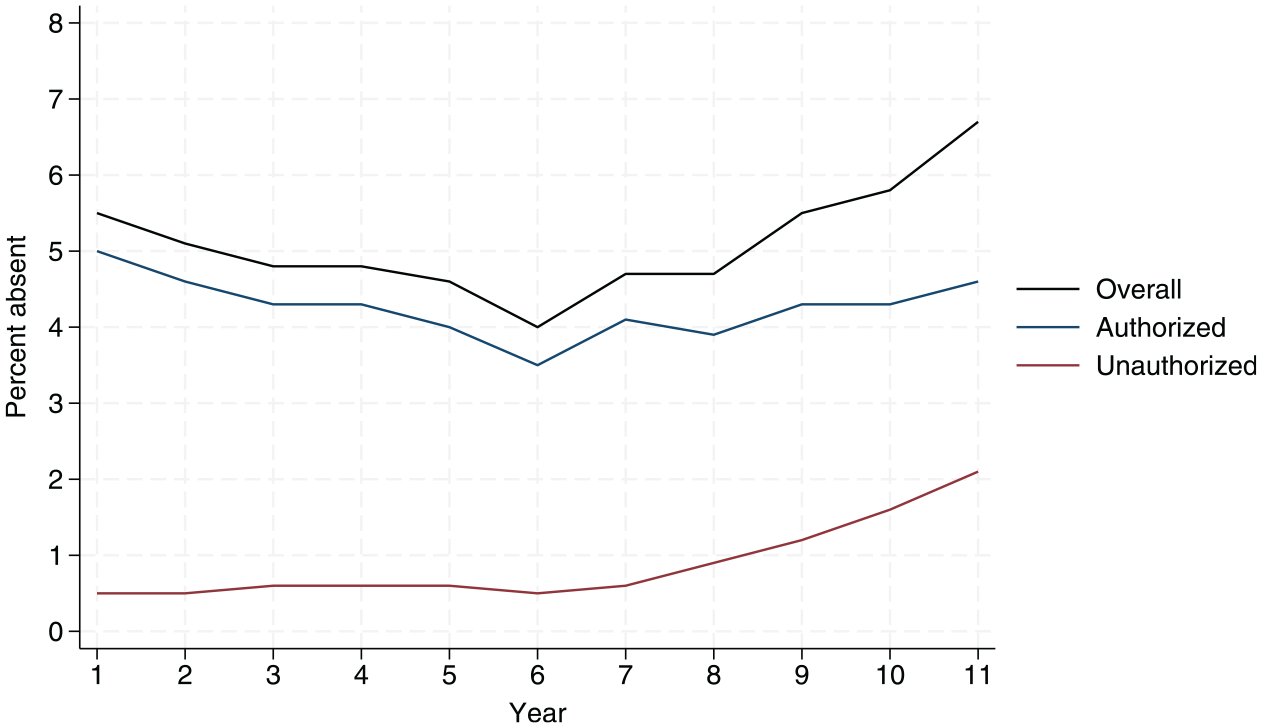
Average absences over pupils’ school careers.
Higher overall absence rates from Year 7 are mainly attributable to a rise in unauthorized absences, which remain stable at approximately 0.6% until Year 7 but then increasee to 2.1% in Year 11. In years one through six, authorized absences follow a similar downward trend as overall absences (from 5% to 3.5%) but then increase to almost the same level as in the first years (4.6%).
In addition, the plot illustrates the interplay between absence duration and type: While unauthorized absences account for less than one-tenth of total absences in the first years, they account for nearly one-third of absences in Year 11. Students who are frequently absent during a given school year have, on average, a much higher absence rate the following year. The correlation between overall absences in consecutive years ranges from 0.51 to 0.66. The correlation between absences in consecutive years is smaller for unauthorized absences than for authorized absences. For exact values of year-specific absence rates, correlations between absences in consecutive years, and correlations between authorized and unauthorized absences in the same year, see Online Appendix A.
Academic Achievement
Our dependent variable is academic achievement at the end of compulsory schooling (KS4). After two years of instruction in KS4 (Years 10 and 11), students take their General Certificate of Secondary Education (GCSE) exams. GCSE exams are mandatory for all students at the end of year 11, and qualifications are awarded in specific subject areas. English and mathematics are compulsory “core subjects,” while students typically take a minimum of five GCSEs, although the exact number may vary. Each grade a student achieves is assigned a point score, ranging from 9 (the highest) to 1 (the lowest).
The content of the GCSE exams is determined by subject-specific syllabi, which are standardized across England by the UK Department for Education and designed to assess a student's understanding of key concepts, problem-solving skills, and application of knowledge.
GCSEs are administered by several exam boards, which are responsible for designing and grading exams in accordance with national standards set by the government's examinations regulatory body Ofqual (Office of Qualifications and Examinations Regulation). The overall quality, reliability, validity, and fairness of GCSE results are overseen by Ofqual (Ofqual, 2024), ensuring consistent standards across exam boards and schools. Ofqual also monitors grading boundaries to maintain fairness across different cohorts of students.
GCSE assessments are rubric-scored, meaning they use detailed marking schemes to ensure consistent and fair grading. Exams include a mix of question types:
Short-answer questions, which test factual knowledge and understanding
Essay-style responses, which assess analytical and evaluative skills
Practical assessments and coursework are used in subjects like science, art, and physical education.
Scoring is criterion-referenced, meaning students are graded according to how well they meet the set criteria rather than their performance relative to others. Grades 9 to 1 represent different levels of achievement. For example, a score of 9 is reserved for exceptional performance, while a score of 4 represents a “Standard Pass.”
GCSE grades are generally reliable, with most candidates receiving a grade that closely reflects their true performance or one adjacent to it. While not perfectly precise, the system is robust enough to support high-stakes decisions, striking a balance between fairness and practical limitations (Ofqual, 2013). GCSE achievement is a strong predictor of higher earnings in later life (Hodge et al., 2021).
For our analysis, we focus on four key outcome measures for the MCS cohort:
Five or more GCSE passes (including English and mathematics): This is a long-standing UK government school accountability measure, reflecting whether a student passed five or more GCSEs, including math and English. A standard pass in a subject is awarded when a student reaches a score of 4 or higher (on a scale of 0–9). In our sample, 54% of pupils passed five or more GCSEs.
Attainment 8 score: The Attainment 8 score is a key performance metric used in UK schools. It is calculated by summing the point scores for a student's best eight GCSE subjects. This measure places special emphasis on core subjects, with English and math scores being double-weighted. Additionally, and three GCSE subjects must come from the English Baccalaureate (EBacc) qualifications, which include subjects such as sciences, languages, or history. The remaining three subjects can be chosen from any other approved qualifications. The Attainment 8 score ranges from 0 to 90, with higher scores indicating better performance. The mean Attainment 8 score in our sample was 45.1 (SD = 20.0).
GCSE Mathematics attainment: This is a specific measure of students’ performance in the compulsory GCSE mathematics exam. A student's maximum score is 18, reflecting the double weighting of this core subject in the Attainment 8 metric. The mean score for GCSE math in our sample was 9.4 (SD = 4.7).
GCSE English attainment: Like mathematics, English is a compulsory core subject with a maximum score of 18 (double-weighted in Attainment 8). The mean score for GCSE English in our sample was 8.5 (SD = 4.7).
For our analysis, we standardized the Attainment 8 scores, GCSE English, and GCSE math attainment to have a mean of zero and a standard deviation of one in the weighted sample. Full details on the distribution of these outcomes can be found in Online Appendix B.
Covariates
The MCS allows us to account for risk factors of school absenteeism identified in the literature (Gubbels et al., 2019; Mireles-Rios et al., 2020; Pyne et al., 2021; Singer et al., 2021) that may also influence children's academic achievement. We differentiate between time-constant baseline covariates measured before or at the beginning of children's schooling (sweeps 1–3, ages 1–5) and dynamic covariates measured at baseline but also measured at different time points throughout children's schooling (sweeps 4–6, ages 7–14).
Our baseline covariates include multiple dimensions of socioeconomic status (parental education, parental class, household income, housing tenure, neighborhood deprivation), child and family demographics (ethnicity, child's date of birth, child's gender, family structure, household size, number of children in household, residential move, region), birth and prenatal factors (birthweight, complications at birth, mother smoked during pregnancy, mother's alcohol consumption during pregnancy), child and parental health (child has a longstanding illness, child general health, parental depression), and parenting values (parental value of child independence, parental value of child obedience).
Our dynamic covariates include attitudes toward school (parental or child attitudes toward school), educational aspirations (parental or child educational aspirations), parental involvement (parents met teacher), child behavioral and school factors (internalizing behavior, externalizing behavior, school change) as well as cognitive abilities (verbal and nonverbal abilities). All dynamic covariates are measured at ages 5, 7, 11, and 14, except for educational aspirations (only measured at ages 7, 11, and 14) and nonverbal ability (only measured at ages 5, 7, and 11).
The MCS's age-appropriate methodological approach to measurement means that aspirations towards education transitioned from parent-reported measures at ages 7 and 11 to child-reported measures at age 14, while attitudes toward education shifted from parent-reported at age 5 to child-reported at later ages.
Cognitive ability was assessed using age-specific, validated measures to capture verbal and nonverbal abilities at different developmental stages (Connelly, 2013). Verbal ability was evaluated through British Ability Scales, Second Edition (BAS II) tests, Key Stage (KS) scores, and the APU Vocabulary test, spanning expressive verbal skills, reading, and vocabulary comprehension from ages 5 to 14. Nonverbal ability was assessed using BAS II tests for problem-solving and spatial skills, alongside KS mathematics scores at ages 5, 7, and 11, ensuring developmentally appropriate and construct-consistent measurements.
The measurement times of all baseline and dynamic covariates included in the analysis are displayed in Table 1. Summary statistics for all covariates can be found in Online Appendix B. A description of covariates measured as latent constructs can be found in Online Appendix C.
Measurement timing of covariates
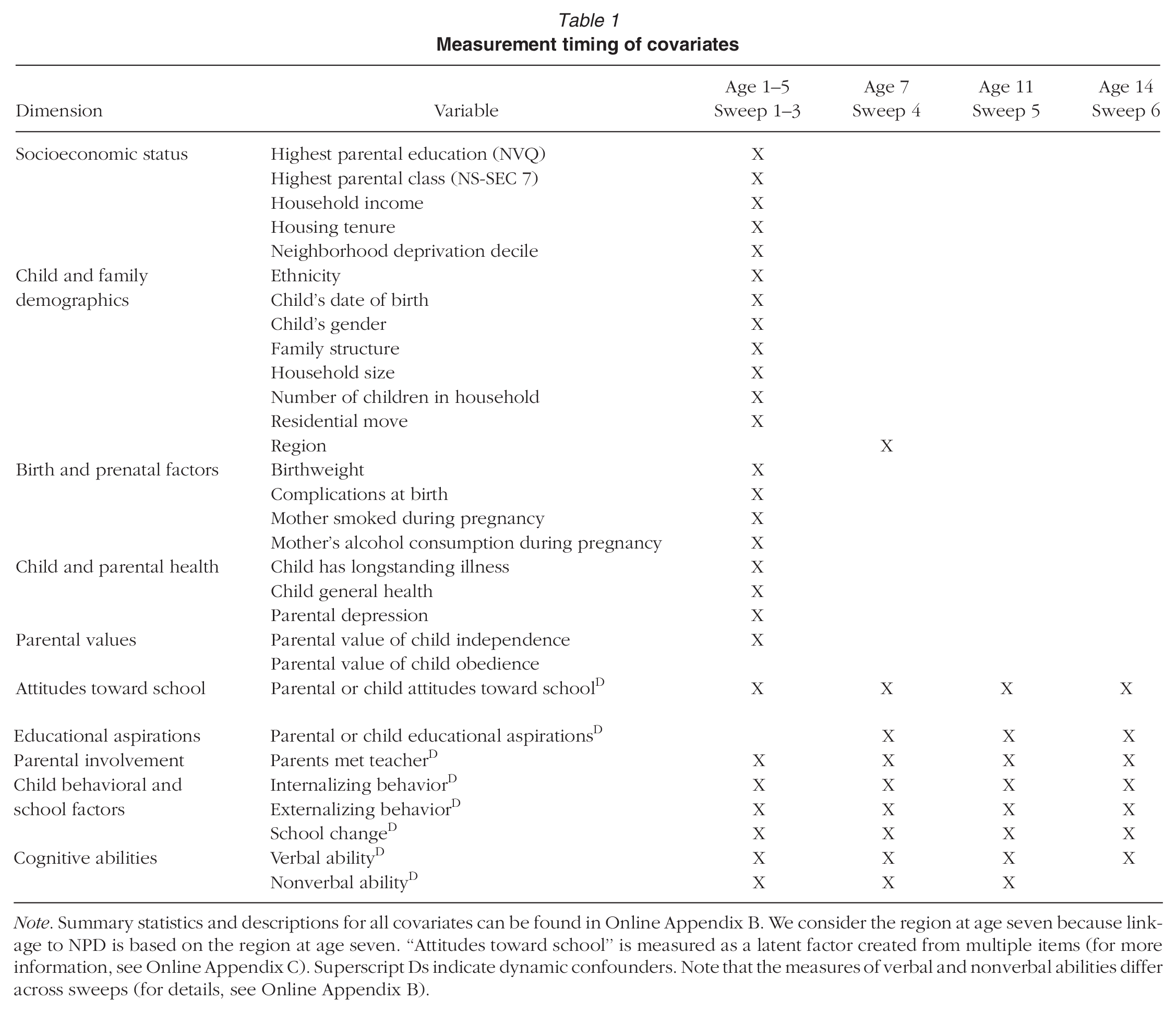
Note. Summary statistics and descriptions for all covariates can be found in Online Appendix B. We consider the region at age seven because linkage to NPD is based on the region at age seven. “Attitudes toward school” is measured as a latent factor created from multiple items (for more information, see Online Appendix C). Superscript Ds indicate dynamic confounders. Note that the measures of verbal and nonverbal abilities differ across sweeps (for details, see Online Appendix B).
Analytic Strategy
To assess the relationship between school absences from Year 1 to Year 11 and GCSE performance at the end of KS4 (Year 11), we conducted separate regressions for absences in each year. This resulted in 11 regressions for each considered achievement outcome. We used linear regression models to examine the outcomes for Attainment 8, GCSE Math, and English grades. We used linear probability models for the binary outcome of passing five or more GCSEs. Since we found no evidence that a nonlinear model provided a better fit (see Online Appendix I), we assume a linear relationship between school absences and student achievement, consistent with prior research (e.g., Gershenson et al., 2017; Kirksey, 2019). We estimated regressions for year-specific overall absences and regressions jointly for year-specific measures of authorized and unauthorized absences.
Our year-specific regression models account for all baseline confounders measured before school entry and dynamic confounders, including prior absences, measured before the year of school absences being analyzed. While the same types of confounders (e.g., verbal abilities, nonverbal abilities, externalizing and internalizing behavior, parent or child attitudes toward school) are adjusted for in each model, additional measures are progressively included in analyses of later years to capture cumulative information without replacing earlier measures. For example, to estimate the association between absences in year 1 and GCSE achievement, we adjust for baseline confounders and dynamic confounders measured before year 1 (MCS sweep 3, age 5). For absences in later years, we include all baseline confounders, previous absences, and dynamic confounders measured before the year of measured absences, resulting in a progressively larger set of covariates, as detailed in Online Appendix F. For absences in Year 11, we adjust for the most comprehensive set of confounders: baseline confounders and dynamic confounders measured in MCS sweeps 3–6 (ages 5, 7, 11, and 14), and absences in Years 1–10.
This approach ensures that the models account for both baseline and cumulative effects while reflecting the evolving nature of child development. Dynamic confounders must be controlled for when estimating absences in later years as changes in these confounders (e.g., cognitive abilities or externalizing behavior) may affect these later absences and achievement on top of their baseline measurement (Panayiotou et al., 2023). Similarly, absences in previous years must be controlled for because they may affect later absences and achievement (Ansari & Gottfried, 2021). These adjustments enable the comprehensive and accurate modeling of the effects of absences at different stages of development. Nonetheless, we obtain similar results when we use only confounders measured at baseline (before or at age 5) to estimate absence effects in different years (see Online Appendix K, specification “Age 5 variables”).
We examine the year-specific effects of absences on achievement using point estimates, 95% confidence intervals (CIs), and 84% confidence intervals (CIs). The 95% CIs assess whether point estimates are statistically significantly different from zero. In contrast, 84% CIs allow for a visual approximation of statistical significance when comparing effects between years. Specifically, nonoverlapping 84% CIs suggest statistically significant differences between years at the conventional .05 significance level, consistent with guidance from MacGregor-Fors and Payton (2013).
The use of 84% CIs is particularly valuable for visual comparison in our study, as overlapping 95% CIs do not provide a definitive indication of whether effects differ between years. This visual approach facilitates interpretation and prevents potential misinterpretations that may arise when comparing absence effects against each other rather than against zero.
To formally test differences in absence effects across years, we employed Wald tests on regression coefficients from dependent samples (Clogg et al., 1995). These formal tests provide robust statistical evidence and are consistent with and complement the visual insights from 84% CIs. The conclusions based on Wald tests and the 84% CIs do not differ, but readers should consider the Wald test when in doubt (see Online Appendix H).
Findings
Timing of Absences and GCSE Achievement
Figure 2 depicts the effects of absences in Years 1 to 11 on the likelihood of obtaining five or more GCSEs. Figures 3–5 illustrate the effects of absences in these years on the Attainment 8 score, English grades, and math grades. For ease of interpretation, we present effect sizes as a 10-percentage-point change in absences, corresponding to a difference between never absent and what is typically defined as persistently absent (absence rate of 10% or above). All Figures depict the year-specific effects of overall absences (black dots on the left-hand side), authorized absences (blue dots in the center), and unauthorized absences (red dots on the right-hand side). The exact effect sizes of year-specific school absences on each outcome can be found in Online Appendix G. The p-values indicating whether the differential impact of absences between school years is statistically significant can be found in Online Appendix H.
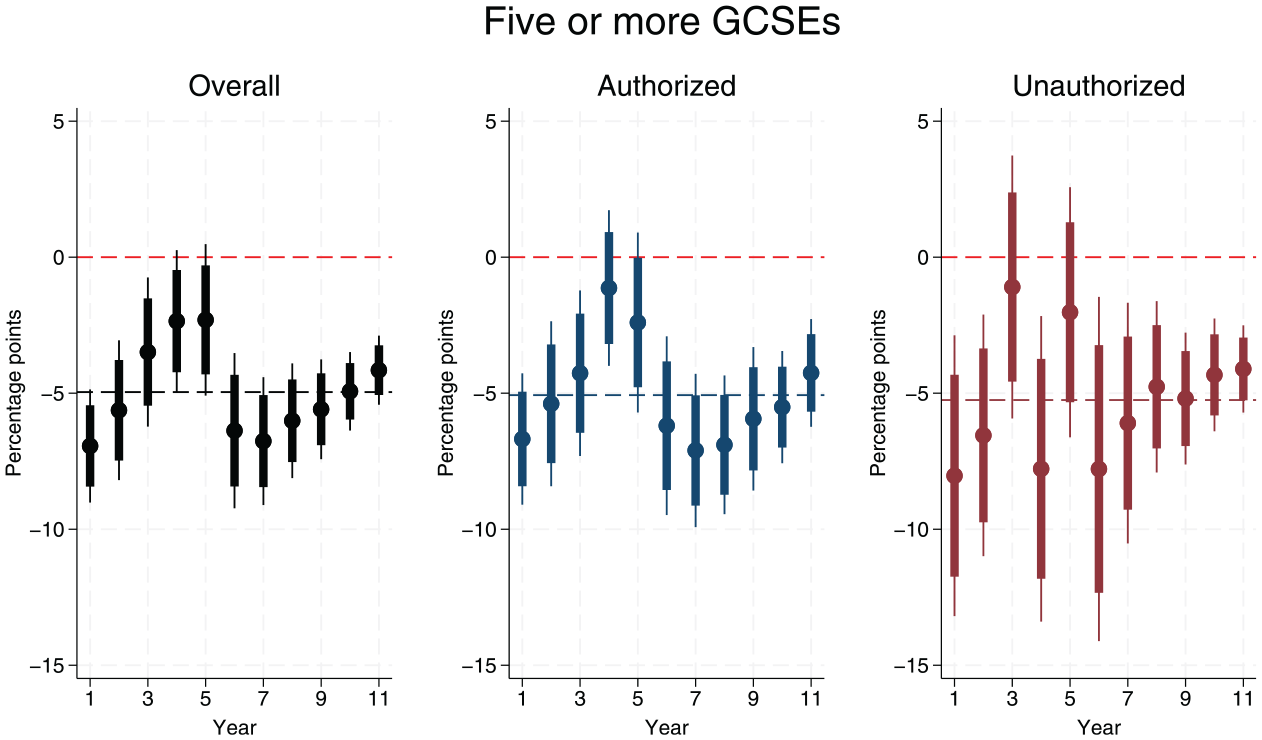
Year-specific pupil absence effects on the likelihood of obtaining 5 or more GCSEs by reason for absence in England.
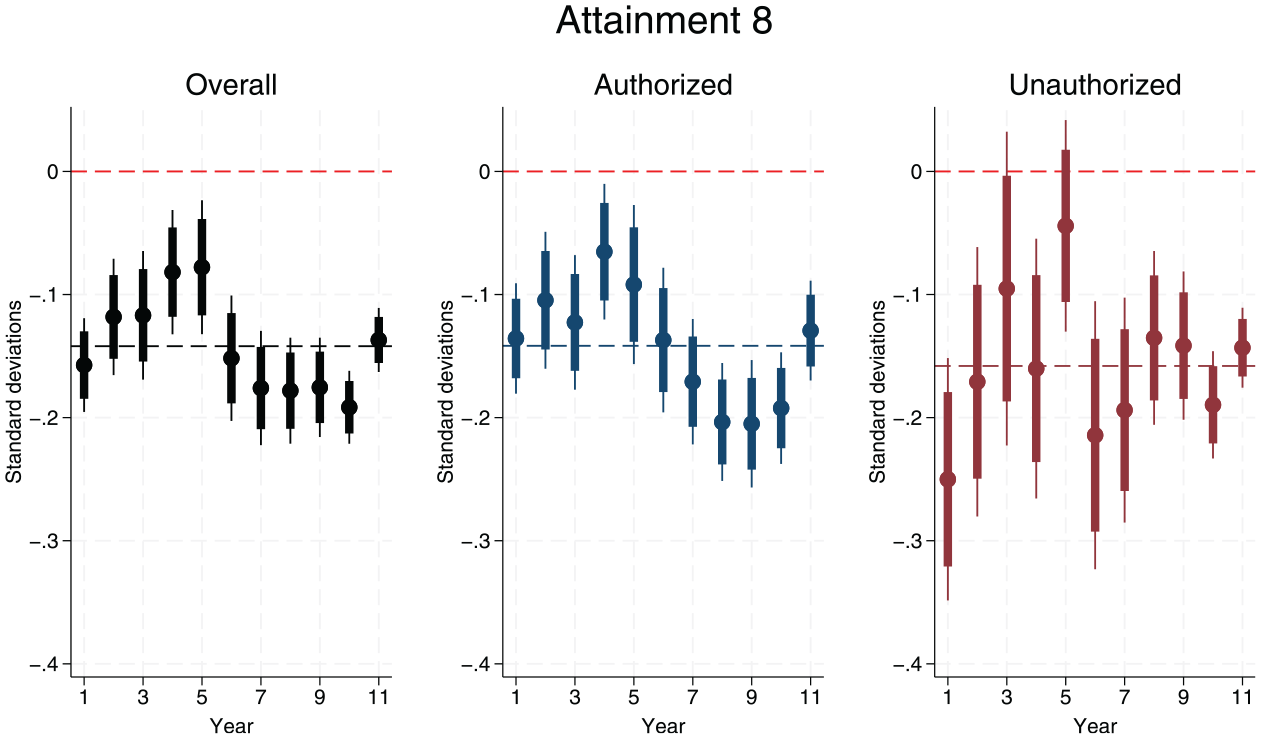
Year-specific pupil absence effects on the Attainment 8 score by reason for absence in England.
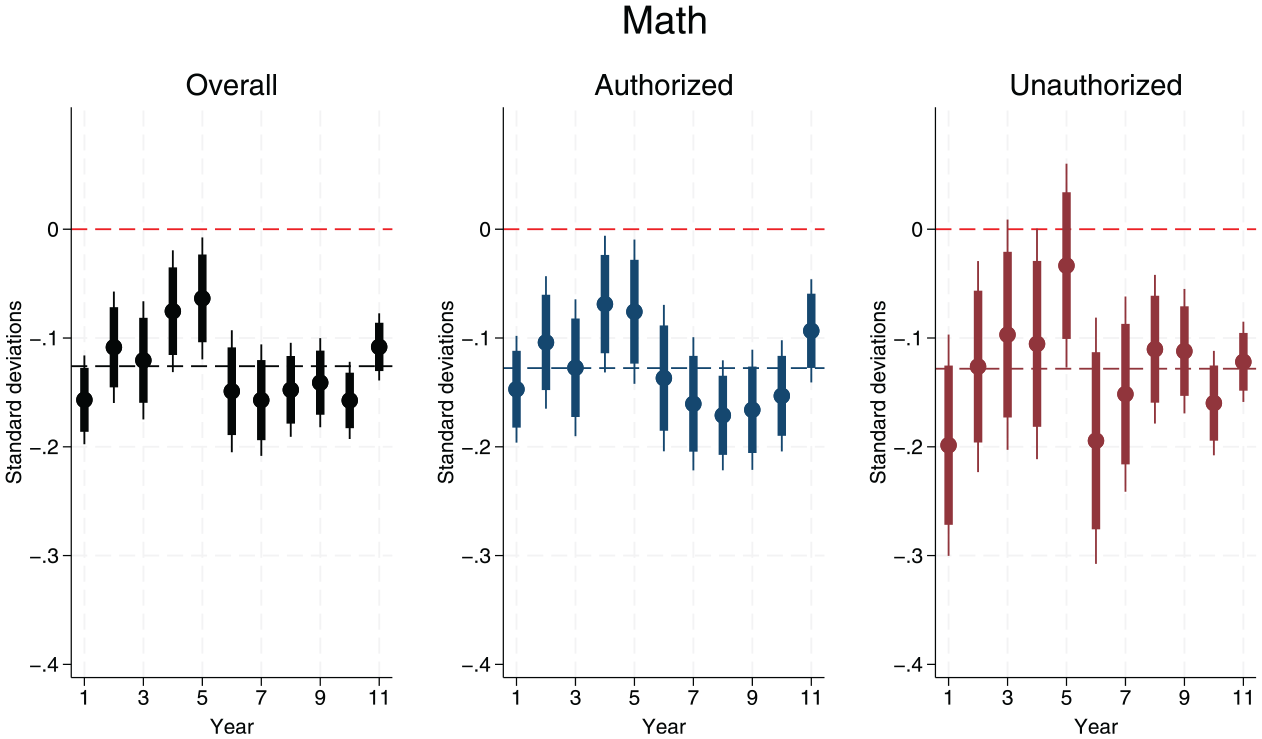
Year-specific pupil absence effects on the GCSE Math grade by reason for absence in England.
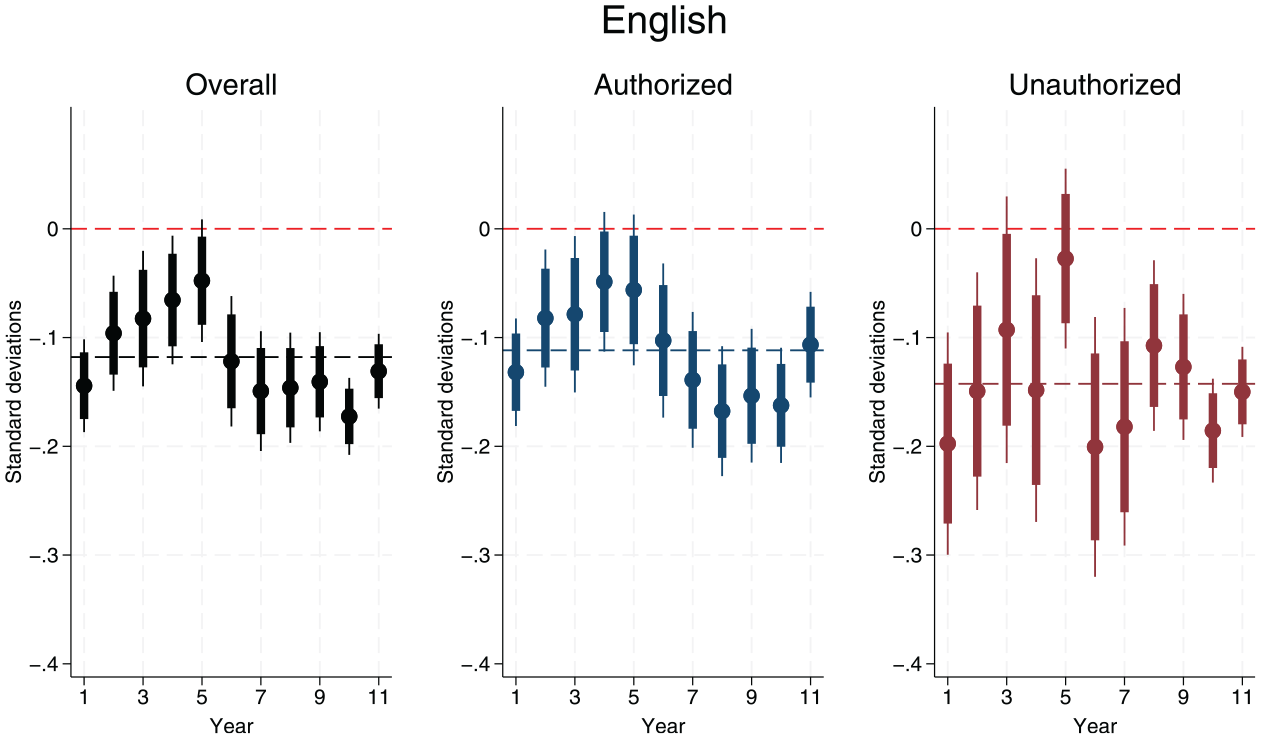
Year-specific pupil absence effects on the GCSE English grade by reason for absence in England.
Total absences in all years are negatively associated with children’s GCSE achievement. A 10-percentage-point increase in absences is associated with a 2.3 to 6.9 percentage- point reduction in the likelihood that pupils obtain five or more GCSEs. The average effect across all years is a 5.0 percentage point reduction in the likelihood of achieving five or more GCSEs. Except for absences in Years 4 and 5, all effects are statistically significant at the .05 level.
For our continuous measures, a 10-percentage-point increase in absences is associated with a .08 to .19 SD reduction in the Attainment 8 score (average across all years: .14 SD), a .06 to .16 SD reduction in math attainment (average across all years: .13 SD), and a .06 to .17 SD reduction in English attainment (average across all years: .12 SD). All effects are statistically significant at the .05 level, except for the effect of absences in year 5 on English attainment.
Although absences in any year are detrimental to achievement, they have a greater impact on academic performance in Year 1 (the first year of primary school), and this effect decreased steadily from Years 2 to 5. Absences have a stronger effect on performance from Year 6 (the final year of primary school) to year 10 (the penultimate year of compulsory secondary schooling), with a slight weakening in Year 11. Absences in Years 4 and 5 had the smallest effect on achievement. In Years 6 to 10, the reduced likelihood of achieving five or more GCSEs ranges from 4.9 to 6.8 percentage points. By contrast, in Years 4 and 5, a 10-percentage-point increase in absences is associated with a 2.3 to 2.4 percentage-point reduction in the likelihood that pupils obtain five or more GCSEs. We see similar patterns for the Attainment 8 score, Math GCSE, and English GCSE. In relative terms (average effect in Years 6–10 divided by average effect in Years 4–5), absences in Years 6 to 10 are about 2.2 to 2.6 times more harmful to achievement than absences in Years 4 to 5 across all outcomes. Online Appendix H shows that the difference between absence effects in Years 6–10 and Years 4 and 5 is statistically significant for most contrasts across all outcomes. For instance, for Attainment 8, the contrasts between Years 7–10 and Years 4 and 5 are all statistically significant, while the comparison between Years 6 and Years 4 and 5 is statistically nonsignificant.
Furthermore, absences in Years 1 through 3, particularly in Year 1, are more detrimental to achievement than absences in Years 4 and 5. Absences in Year 1 have a statistically significant greater negative effect on achievement than absences in Years 4 and 5. The effect of absences in Year 1 is comparable to the effect of absences in Years 6–10. Finally, absences in Year 11 have a smaller impact on achievement than in Year 10. However, the difference is statistically significant only for the Attainment 8 score.
Across all outcomes, the associations between year-specific authorized absences and achievement mirror those found for total absences (see blue dots in the middle column of Figures 2–5). As with total absences, the negative association between 6th through 11th-Year absences and achievement is stronger than for absences in Years one through five. By contrast, the association between unauthorized absences and achievement (see red dots in the right column of Figures 2–5) is less clear-cut and does not follow this temporal pattern. Generally, unauthorized absences are equally harmful to achievement across all outcomes, regardless of timing.
Figure 6 shows the difference in the effect between authorized and unauthorized absences for each school year. No discernible differences exist in the impact of authorized and unauthorized absences across all years and outcomes. For 42 of 44 combinations of years and outcomes, the effect of authorized versus unauthorized absences is statistically nonsignificant.
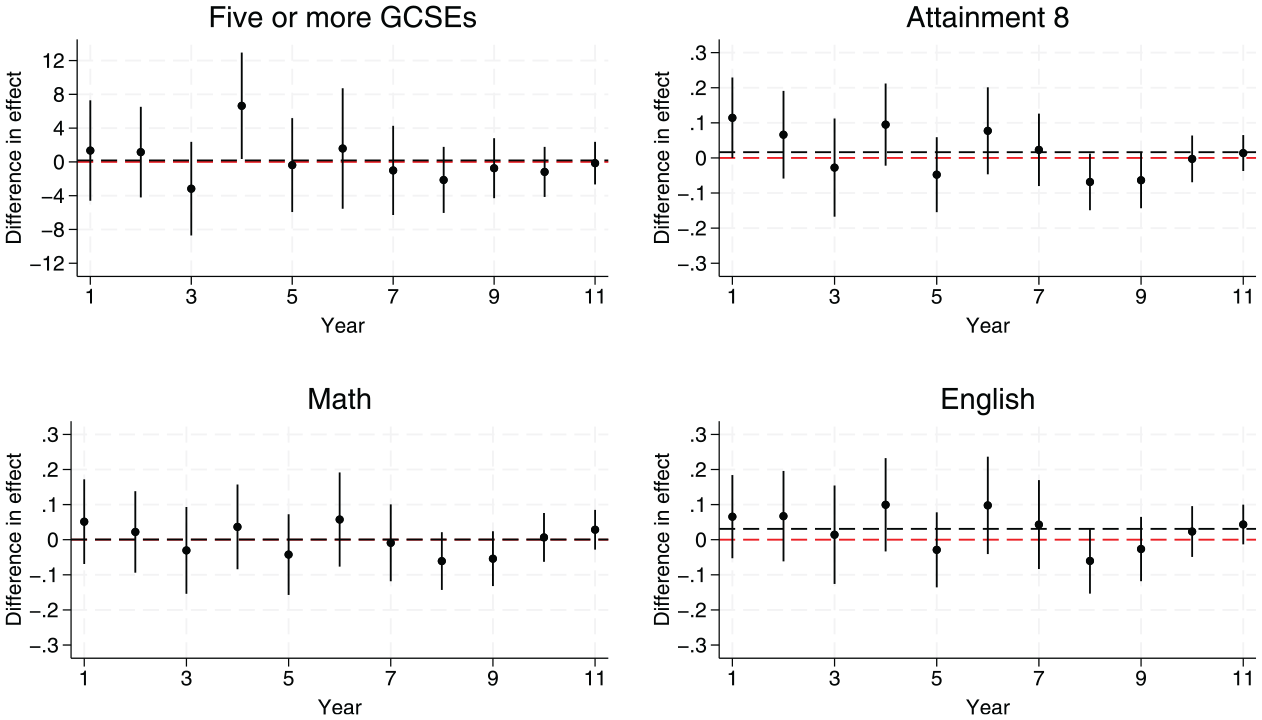
Year-specific differences in the effect on attainment between authorized and unauthorized absences in England.
Sensitivity Analyses
Selection of Observed Confounders
The selection of our control variables is informed by prior research; however, there is no theoretical framework dictating which control variables should be incorporated (Young & Holsteen, 2017). Consequently, we assessed the sensitivity of our findings to the selected confounders by comparing regression results using five distinct sets of confounders. (1) no confounders (bivariate); (2) confounders measured at age five or earlier (baseline confounders and dynamic confounders measured for the first time); (3) baseline confounders and the latest measures of dynamic confounders prior to the year of absence; (4) baseline confounders and all time-specific measures of each dynamic confounder measured prior to the year of absence (primary analysis, as shown in 5.1); (5) as in previous set number (4), with additional covariates assessed at different points in time (stream and set in English and Math, joint activities of parents and child). Our finding that absences during Years 6–10 are more detrimental to achievement, while absences in Years 4–5 are less harmful, remains consistent regardless of the selection of confounders, with the most consistent patterns observed in models incorporating dynamic confounders (see Online Appendix K).
Unobserved Confounders
Despite the rich set of confounders measured in the MCS, our results may be prone to bias by unobserved confounders. We apply Oster’s (2019) method to estimate how our results could change due to unobserved confounders. Oster’s method assumes that the degree of selection on unobservables can be inferred from the selection on observables. It also cannot tell us which confounders are missing from the analysis.
The upper bound (

Where
We report bounds for two different scenarios. First, we use the recommended values by Oster:
Notably, 41 out of the 44 overall absence effects (across four outcomes and 11 school years) were statistically significant at the 95% level in our original analysis in section 5.1. Assuming δ = 0.5, Table 2 shows that the upper bound of 38 (out of the statistically significant 41) coefficients remain negative, suggesting robust evidence that absences in these years have indeed negative effects on GCSE achievement. For three estimates that were statistically significant in the main analysis, the upper bounds are positive but small. More specifically, the negative effects of absences in Years 4 and 5 on Attainment 8 and absences in Year 5 on Math achievement may not be robust to unobserved confounders.
Oster bounds of time-specific absence effects
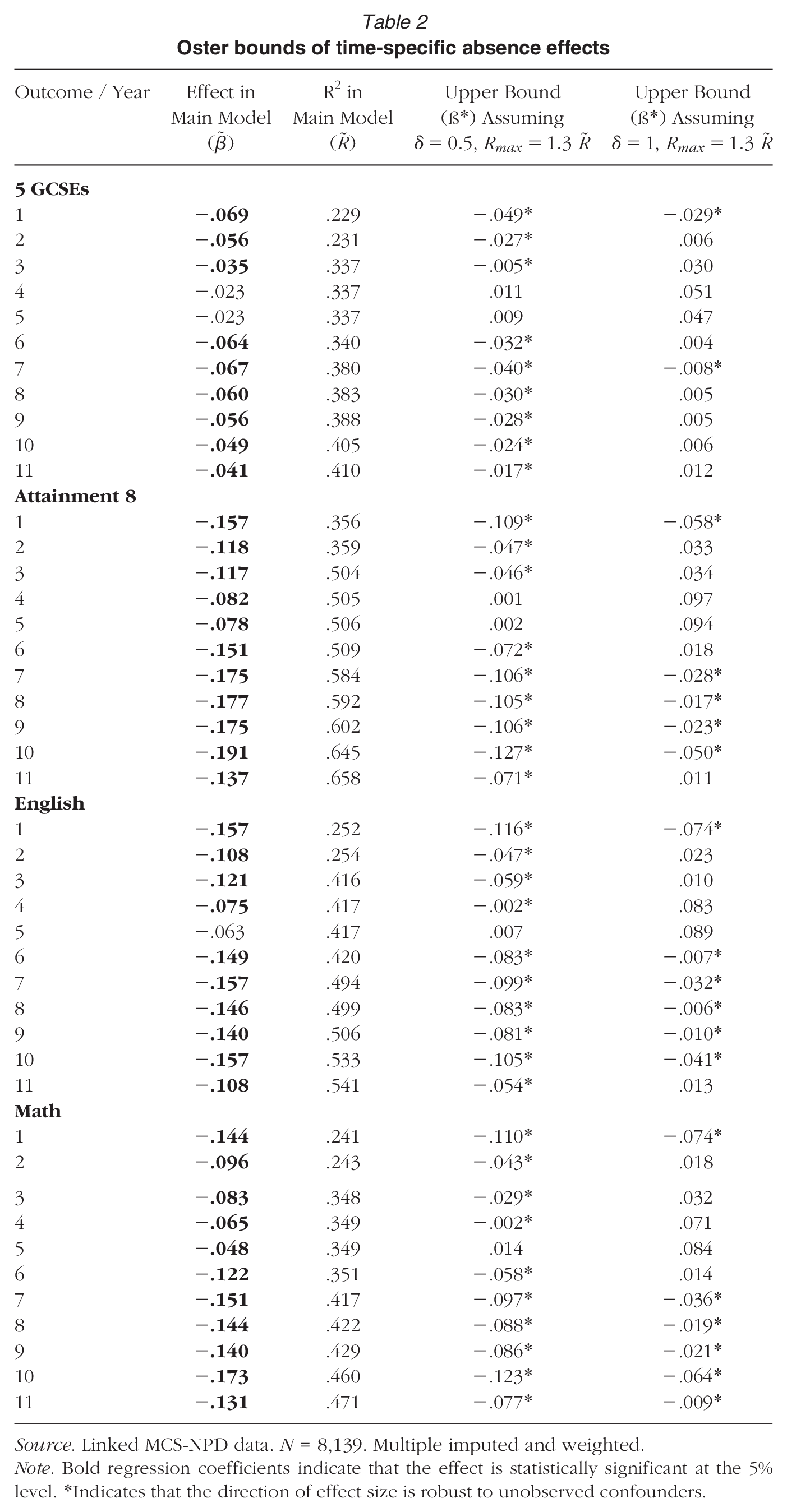
Source. Linked MCS-NPD data. N = 8,139. Multiple imputed and weighted.
Note. Bold regression coefficients indicate that the effect is statistically significant at the 5% level. *Indicates that the direction of effect size is robust to unobserved confounders.
Under the strong assumption of δ = 1, Table 2 shows that the upper bound of 19 coefficients remains negative. The upper bounds of most absence effects in years 1 and 6–10 remain negative, whereas the upper bounds of absences in other years are positive. In other words, even the strong unobserved confounding under δ = 1 does not alter the conclusion that absences in year 1 and later years (6–10) are more detrimental than in other years. Particularly, the upper bounds of absence effects in years 2–5 are positive in this scenario, and in some cases, they have a rather large effect size (up to .10 SD). In light of previous studies, large positive effects of absences on achievement are not plausible (Aucejo & Romano, 2016; Gottfried, 2010, 2011; Gottfried & Kirksey, 2017; Kirksey, 2019; Klein et al., 2022), suggesting that unobserved confounders as strong as our rich observed confounders are an unrealistic assumption. Put differently, unobserved confounders would need to be as strong as our observed confounders to fully explain away the observed relationship between some of the year-specific absences and achievement.
Effect Heterogeneity
Next, we assessed whether there is heterogeneity in the effect of absences across various sociodemographic groups. We tested whether the pattern of absence effects differed by gender (boys vs. girls), ethnicity (White-British vs. other), parental education (at least a bachelor's degree vs. below a bachelor's degree), and parental income (above vs. below the sample median) by estimating separate regressions for each group. We found no significant differences in absence effects by gender, ethnicity, or parental education. Furthermore, absences are equally detrimental to students from high- and low-income households, if not slightly more harmful for students from high-income households. The finding that absences in Years 1 and 6 to 10 are most harmful is evident among all groups (see Online Appendix L).
Replication Analyses: Timing of School Absences and GCSE Achievement in Wales
We further examined the replicability of our findings using the Welsh sample of the MCS linked to administrative attendance and achievement data through the Secure Anonymized Information Linkage Databank (Lyons et al., 2009; Tingay et al., 2019). Our analytic strategy and data visualization are the same as for the English data (for more information on the Welsh data and variables, see Online Appendix M). However, absence data for Wales is only available for Years 2 to 11. The Welsh case provides a strong basis for replicating the analysis conducted on the English data due to its distinct yet highly comparable educational context. While the two systems have some differences, they share many structural and policy similarities, making the Welsh data an ideal case for testing the replicability of our findings.
In Wales, the average number of absences is slightly higher than in England, but their trend across school years is similar (see Figure M1 and Table M1 in Online Appendix M). The negative association between school absences and academic performance in Wales is somewhat greater than in England. On average, across school years, a 10-percentage-point increase in total absences is associated with a 5.9-percentage-point reduction in the likelihood of obtaining five or more GCSEs (in England, this reduction was 5.0 percentage points). For our outcomes of Capped 9 (equivalent to Attainment 8 in England), math, and English, we also found stronger average associations between school absences and achievement in Wales than in England.
As in England, absences in most years have a negative impact on GCSE performance in Wales (see Figures 7–10). However, effect sizes for absences vary more significantly across school years than in England—for instance, the association between absences and obtaining five or more GCSEs ranges from 1.7 to 8.6 percentage points (for exact effect sizes on each outcome, see Online Appendix Table M2).
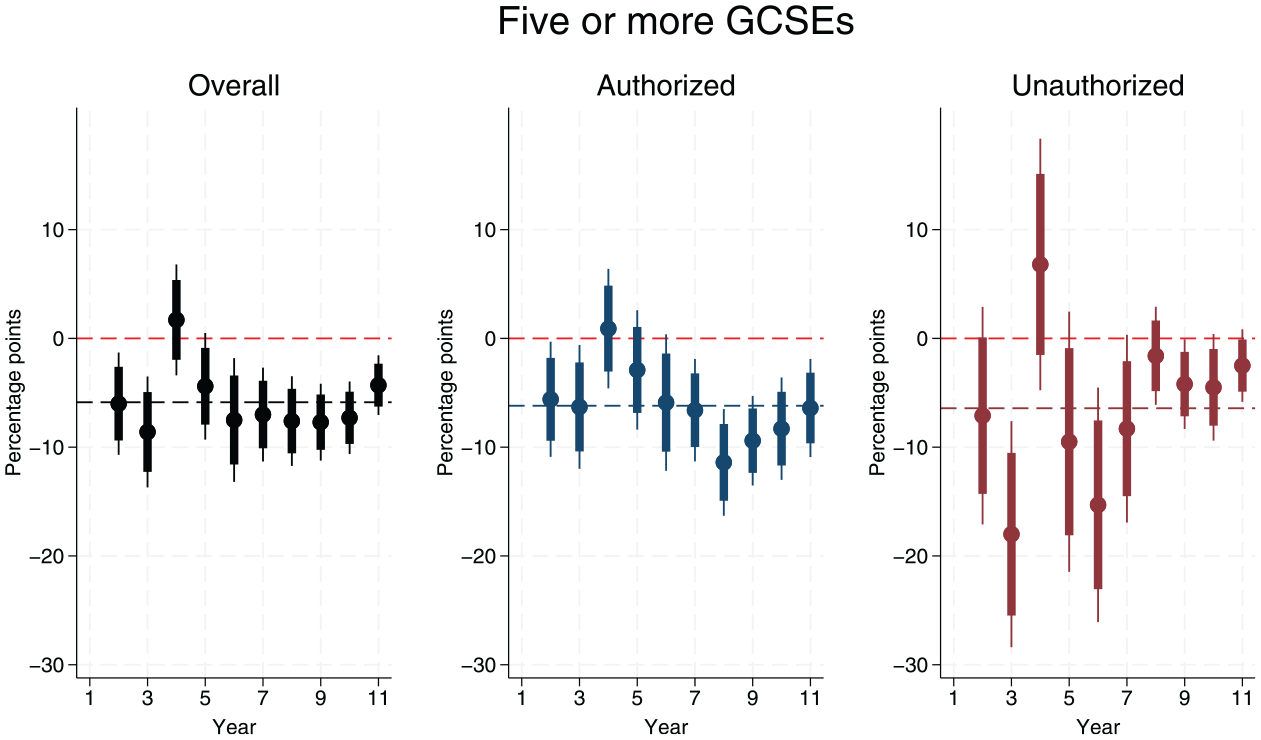
Year-specific pupil absence effects on the likelihood of obtaining five or more GCSEs by reason for absence in Wales.
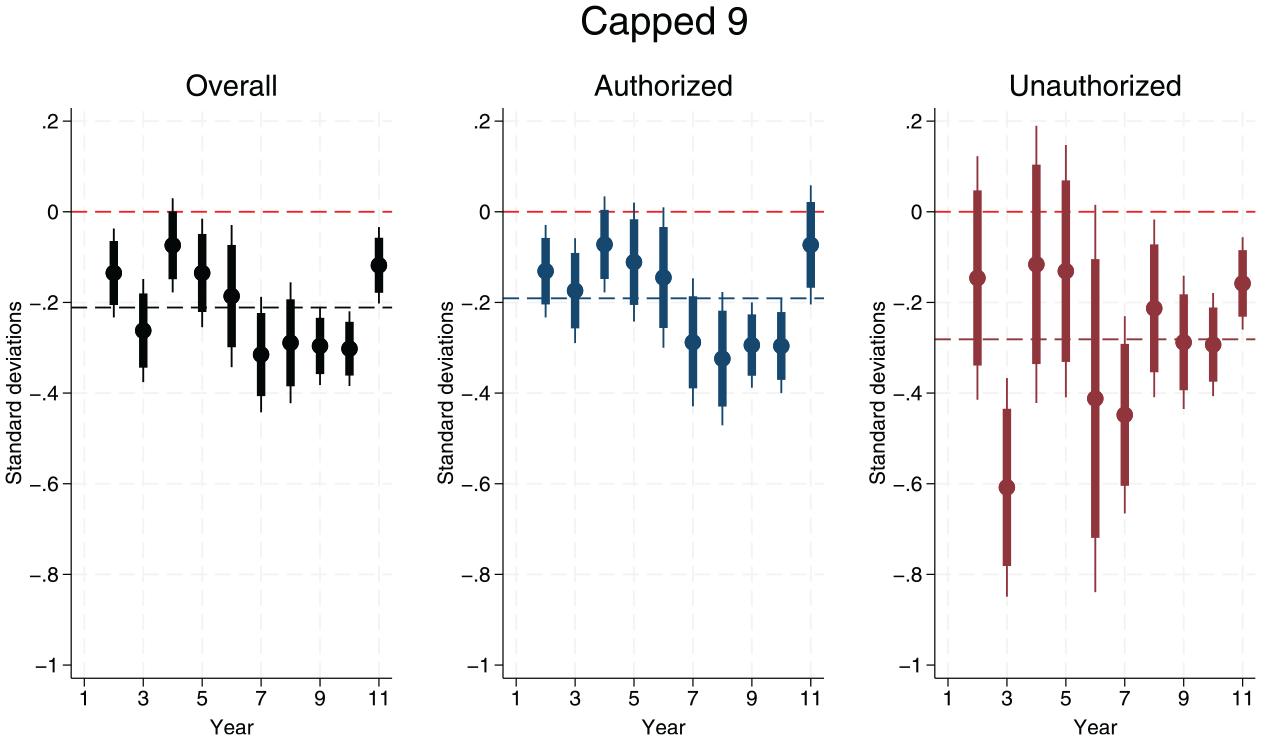
Year-specific pupil absence effects on the Capped 9 score by reason for absence in Wales.
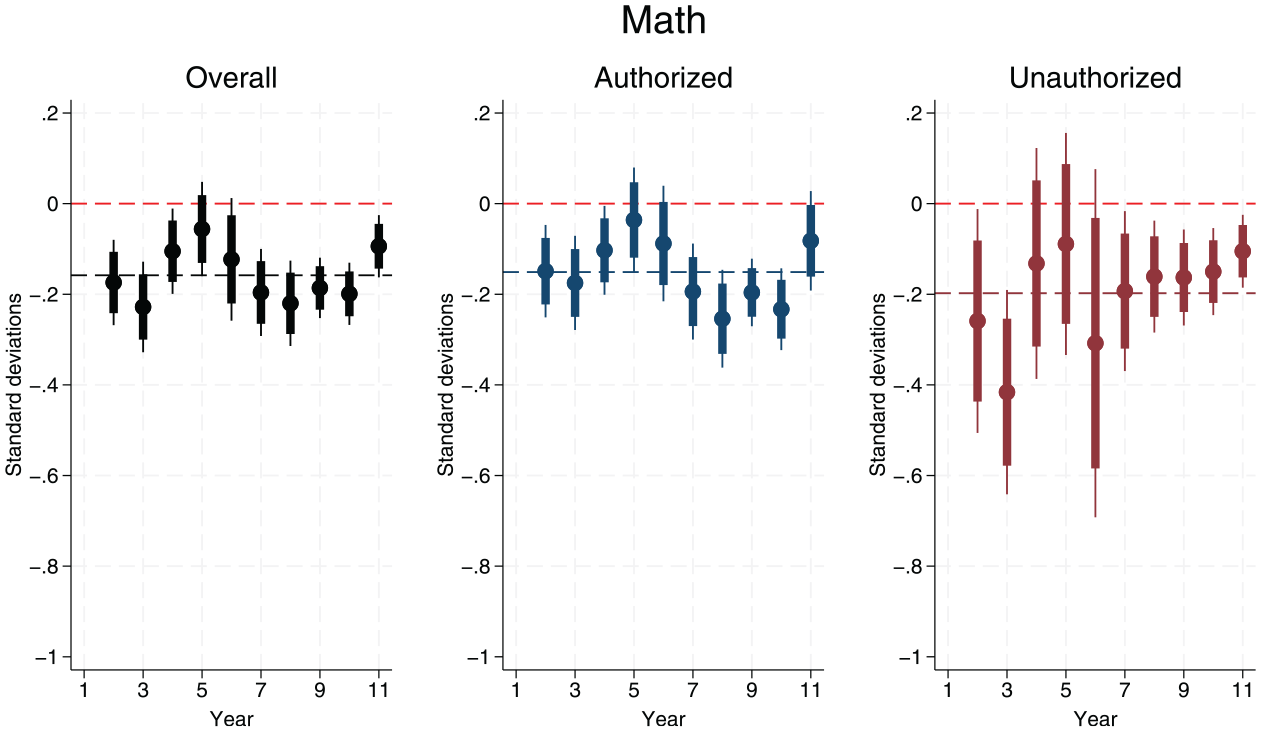
Year-specific pupil absence effects on the GCSE Math grade by reason for absence in Wales.
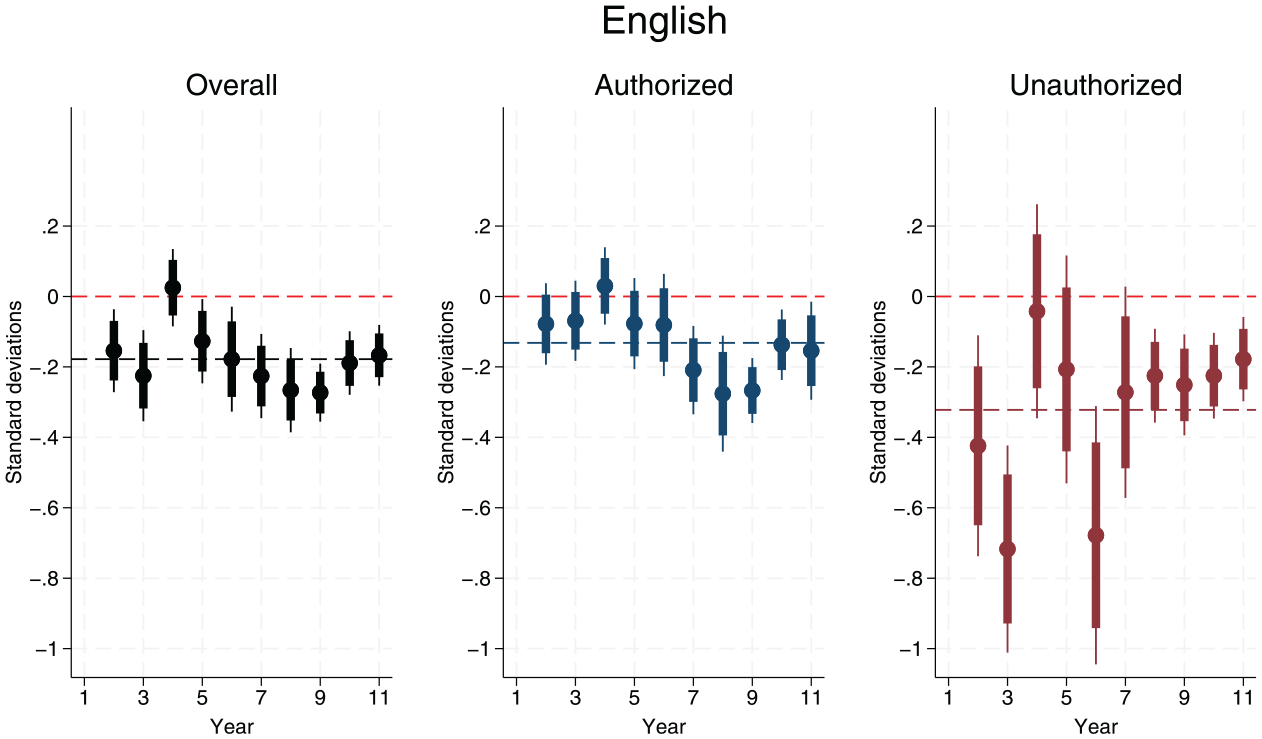
Year-specific pupil absence effects on the GCSE English grade by reason for absence in Wales.
Regarding temporal patterns (see Figures 7–10), the findings for Wales are consistent with those for England, indicating that absences are more harmful after the transition from primary to secondary school (Years 7–10) and less harmful in Years 4 and 5. Again, we found no systematic differences in the effect of authorized versus unauthorized absences for the probability of obtaining at least five GCSEs and math scores (see Online Appendix Figure M2). Regarding the Capped 9 and English scores, unauthorized absences have similar effects as authorized absences in most years. There are a few outlier years in which unauthorized absences have a greater impact than authorized absences. However, this is typically the case during primary school when unauthorized absences are less common.
Discussion
This study investigated the impact of the timing and nature of school absences on students’ final exam performance in England and Wales. Using linked school administrative data from the NPD and rich survey data from the MCS, we accounted for important baseline and dynamic covariates, which typically confound the association between school absences and achievement. To test the sensitivity of our findings, we considered different sets of observable confounders; Oster bounds (Oster, 2019) to evaluate the role of unobserved confounders; and effect heterogeneity by gender, ethnicity, and socioeconomic status. Additionally, we conducted similar analyses with data from the Welsh school context to test the replicability and robustness of our findings. These sensitivity and replication analyses indicate that our findings are robust across different model specifications, sociodemographic groups, and educational contexts.
Our findings show that school absences in any school year throughout compulsory schooling are detrimental to student achievement in final exams. This finding aligns with research from the United States showing that teacher-reported absences from kindergarten through to fifth grade negatively impact achievement in math, language, and literacy (Ansari & Gottfried, 2021). This study and our findings challenge existing evidence and beliefs that absences in early childhood are less problematic than later ones (e.g., Ehrlich et al., 2013). Absences should be avoided at any stage of a student's academic career, and interventions to improve school attendance at any stage, if effective, can positively impact students’ educational achievement. As early absences are risk factors for later absences, reducing early absences through interventions will positively affect school attendance and achievement in the future.
Although absences hurt achievement in all Years, we found that the magnitude of this effect varies depending on the timing of the absence. Two clear patterns emerged from our study. First, absences from the end of primary school (Year 6) to the penultimate Year of compulsory schooling (Year 10) are more detrimental to achievement than absences in earlier Years, particularly Years 4 and 5. Second, there are slightly different patterns of associations between absence and achievement within the primary and secondary school stages. Early (particularly Year 1) and late absences (Year 6) were most strongly associated with achievement in primary school. By contrast, in secondary school, associations between absences and achievement are stronger at earlier (Years 7–10) than later stages of schooling (Year 11).
Our findings that absences in years 6 through 10 are consistently most harmful to achievement support neither the critical period hypothesis (Lenneberg, 1967) nor the recency effect (Cowan, 2014). School absences in early schooling are not more harmful than absences in later schooling. At the same time, our findings do not suggest that absences become more harmful as the students approach the exam period. Absences in Year 11, the last year before the exam, have a slightly weaker association with achievement than in previous years, for which absences show a consistently harmful effect. Our findings instead align with the transition theory (Jindal-Snape et al., 2023), indicating that absences matter more when students transition to primary school (Year 1) and from primary (Year 6) to secondary school (years 7–10). In addition to the secondary school years, the last year of primary schooling may be equally crucial, given that primary schools prepare students for secondary school in terms of curriculum, academic expectations, and study habits (Beatson et al., 2023). Being more frequently absent during this school transition and the subsequent secondary school years may pose academic challenges for students, as the secondary school experience departs significantly from the structured environment and broad primary school curriculum, where a single teacher typically oversees most subjects.
Given that we found that absences in the first year of primary schooling are particularly important for achievement and that absences in the last year of compulsory secondary schooling (year 11) are less detrimental than in previous years, our findings contradict the conclusion of research from the United States showing that later absences are always more harmful than earlier absences (Ansari & Pianta, 2019; Ansari et al., 2020). Specifically, Ansari and Pianta (2019) found a statistically significant direct effect of absences in the eighth grade on GPA at age 15 (−.26 SD) but nonsignificant direct effects of absences in primary grades (i.e., kindergarten through second grade, .02 SD) and middle grades (third grade through sixth grade, .06 SD) on GPA at age 15. However, directly comparing these findings across contexts is challenging and likely due to differences in analytic approach and stages examined. First, Ansari and colleagues did not study the timing of absences beyond the eighth grade, making it difficult to determine whether absences in later high school are also more detrimental than earlier absences. Second, they investigated epochs that combined absences across stages, whereas we examined the impact of absences in each individual school year on achievement. In other words, our conclusions for England and Wales are based on a more detailed comparison of absence effects across school stages.
Previous research in the United States has consistently found that unexcused absences are more detrimental to academic performance than excused absences (Gershenson et al., 2017; Gottfried, 2009). In contrast, findings from Scotland suggest that both types of absences harm educational achievement equally (Klein et al., 2022). Our findings show that both authorized and unauthorized absences have a similar impact on student achievement in England and Wales. The differences in year-specific effects of authorized and unauthorized absences on achievement are small and, in most years, statistically nonsignificant. It thus challenges the assumption that unauthorized or unexcused absences are universally more harmful than authorized or excused absences.
The findings on the negative consequences of authorized and unauthorized absences are consistent with an emerging literature that the distinction between excused and unexcused absences may oversimplify the issue. For instance, McNeely et al. (2021) argue that policies around unexcused absenteeism disproportionately affect students of color in the United States, potentially exacerbating racial disparities in juvenile court involvement. Similarly, Pyne et al. (2021) highlight that unexcused absences can serve as a “signal” of disengagement, often prompting punitive measures and further complicating the relationship between absenteeism and educational outcomes. Moreover, Mireles-Rios et al. (2020) point out that social disparities and school truancy policies can lead to students being pushed out of school, increasing their risk of dropping out entirely. As a result, it may be more meaningful to adopt a holistic approach that considers factors driving all forms of absences (Singer et al., 2021) in efforts to improve school attendance for all learners.
Several important caveats must be considered when interpreting our findings. First, while we tested different sets of confounders and used Oster bounds to assess the robustness of our findings, any causal interpretation of our estimates relies on the strong assumption that no significant unmeasured confounders exist. Second, caution is warranted when generalizing our results to the broader pupil population in England, as our sample does not encompass students attending private schools. Third, our analysis is limited to GCSE achievement. Future research should explore the longer-term effects of absences on other outcomes such as continued schooling, performance in upper secondary education, or entry into higher education. Fourth, inconsistencies in how absences and their reasons are recorded in schools can introduce measurement errors and raise concerns about the validity of the documented reasons for absences (Birioukov, 2016; McNeely et al., 2021). Fifth, our study is restricted to the context of England and Wales, necessitating caution when generalizing these findings to other educational systems with different structures, policies, and attendance dynamics.
Despite these limitations, the study's findings have clear policy implications. First, our finding that absences at every year of schooling independently affect academic achievement emphasizes the need for targeted interventions to improve attendance at all stages of schooling. These interventions should aim to identify and address the root causes of absences, such as poverty and physical and mental health issues. They should prioritize the early identification of at-risk students and provide resources, such as health screenings and mental health support, to help students overcome attendance barriers. Tailored approaches that address the specific causes of absenteeism, including authorized absences due to illness, will be essential for breaking the cycle of disadvantage. Furthermore, interventions should be implemented in collaboration with parents, using supportive rather than punitive approaches.
Second, policy and practice interventions to improve school attendance should be implemented at the beginning of formal schooling. We discovered that absences in the first year of primary school are one of the strongest predictors of later achievement. Early intervention is also important because evidence shows that early absences at the beginning of schooling are a key predictor of later absenteeism (Ansari & Pianta, 2019).
Third, our study found that transitioning from primary to secondary school is a critical period for attendance and achievement. We recommend sharing data between primary and secondary schools so that the latter can provide support to students who were already at a higher risk of school attendance in primary school. Schools should implement targeted programs during this phase to help students navigate this potentially difficult transition. Transition support programs, for example, could include mentorship schemes, orientation activities, and increased parental involvement to help students adjust to their new academic and social environments.
Fourth, at the policy level, equal emphasis should be placed on reducing both authorized and unauthorized absences, as both were equally detrimental to academic outcomes in our study. Current policies place a disproportionate emphasis on unauthorized absences, but efforts should also be made to manage authorized absences, particularly those caused by illness. The UK House of Commons Education Committee (2023) recommends public information campaigns to help parents determine when their children should stay home or attend school when they are ill. Furthermore, schools should provide clear pathways for students to catch up on missed content through after-school tuition, additional tutoring, or homework interventions, thereby reducing learning loss caused by absences (Education Endowment Foundation, 2024).
Finally, policymakers and schools should create comprehensive attendance policies that prioritize prevention and early intervention. Attendance monitoring systems should be implemented in schools to detect absenteeism patterns early on and provide timely interventions that address the unique factors contributing to absenteeism at various stages of education. By implementing tailored, year-specific strategies, schools can better address the multifaceted causes of absenteeism, ensuring that interventions are proactive and targeted.
In conclusion, our research indicates that absences at all stages of schooling are detrimental to students’ academic achievement. We demonstrated that absences at transition points are particularly harmful, regardless of whether they are authorized or unauthorized. Our study is the first to use attendance data across the entire stage of compulsory schooling, providing new insights into what policy and practice interventions can help students improve their school attendance and educational achievement.
Supplemental Material
sj-pdf-1-aer-10.3102_00028312251347666 – Supplemental material for Absence Timing and Achievement on Achievement Depend on Their Timing?
Supplemental material, sj-pdf-1-aer-10.3102_00028312251347666 for Absence Timing and Achievement on Achievement Depend on Their Timing? by Jascha Dräger, Markus Klein and Edward M. Sosu in American Educational Research Journal
Footnotes
Note
The project has been funded by the Nuffield Foundation [grant number FR-000023241], but the views expressed are those of the authors and not necessarily the Foundation. Visit  .
.
We are grateful to the Centre for Longitudinal Studies (CLS), UCL Social Research Institute, for the use of these data and to the UK Data Service for making them available. However, neither CLS nor the UK Data Service bear any responsibility for the analysis or interpretation of these data.
We are grateful to the advisory group of the Nuffield project and the SOEP writing group for their comments on an earlier version of this manuscript.
J
M
E