




Abstract
How can the international community limit access to the full nuclear fuel cycle, while protecting nations' rights to develop it? The Antarctic Treaty's framework may be a guide.
Deep in the competition of the Cold War, 12 nations with scientific research programs in Antarctica negotiated the Antarctic Treaty, the first multilateral, verifiable arms control agreement. The treaty celebrates the 50th anniversary of its signing in 2009, counting as its most enduring accomplishment that the ice continent has remained open to scientific endeavor by all interested countries–no matter what their political system, economic level, or scientific capability.
The Antarctic Treaty has also assured a demilitarized and denuclearized continent, regulated activities to protect its environment, and avoided major disputes over its territory. It has accomplished these goals with a very broad community of countries–47 in total, including all the major powers and representing more than two-thirds of the world's population–some of whom don't always get along. Serious disagreements among some signatories range from broad geopolitical problems to specific disputes over Antarctic territorial claims.
Given its record of success, the Antarctic Treaty richly deserves to be celebrated, but more substantively, the treaty's lessons could be applied to the benefit of other treaties, in particular the Nuclear Non-Proliferation Treaty (NPT). The future of the nonproliferation regime is a topic of concern and, sometimes, sharp dispute among experts and government officials. The public has also woken up to the crisis, thanks to the attention given to the Iranian and North Korean nuclear programs. In both contexts, it is fashionable to say that the NPT is in crisis and has a fatal “loophole” that has allowed peaceful nuclear energy programs to serve as cover for the acquisition of nuclear weapons–as North Korea's program clearly attests. Whether or not one buys the notion of a loophole, the NPT and its accompanying regime face serious challenges.1
Several Antarctic Treaty characteristics stand out as potentially applicable to the NPT. First, the Antarctic Treaty enjoys wide international membership and participation, even among countries that sharply disagree on important issues. Second, the treaty created a unique anytime, anywhere no-warning inspection regime–predating by nearly 30 years the first extensive on-site inspection regime under a U.S.-Soviet bilateral agreement, the Intermediate-Range Nuclear Forces Treaty. Third, the treaty allows states to decide when they become active participants. This aspect of the treaty, known as the “activities criterion,” permits countries that accede to the treaty to become active in its governance only when they launch a program of scientific research in Antarctica. Finally, and perhaps most importantly, the treaty allows past territorial claims, including overlapping ones, to exist without controversy. The treaty addresses the issue of territorial sovereignty by freezing the claims. Parties that have claims can maintain them, and others are under no obligation to recognize them. Seven parties claim territory, two reserve the right to assert a claim, but all parties operate cooperatively on the continent as if there were no claims.2
This analysis focuses on the applicability of the Antarctic Treaty to the severe problems of the nonproliferation regime, though its successes could apply in other areas as well. In fact, the treaty could yield further lessons in the future. As humankind grapples with the political, economic, and environmental effects of global warming in the world's polar regions, the Antarctic Treaty will likely serve as a stabilizing factor in the international system. Antarctic experts frequently comment that if the northern limit of the treaty's jurisdiction–60 degrees south latitude–could be steadily raised, then a more peaceful world would soon be the result.
The Antarctic Treaty was negotiated at the conclusion of the International Geophysical Year of 1957-58, which brought scientists to Antarctica as a demonstration of international scientific cooperation. The idea for the Geophysical Year first surfaced at a dinner party held by astrophysicist James Van Allen. The international initiative would honor previous attempts at international polar scientific exploration, the first in 1882 and the second 50 years later in the middle of the Great Depression. Van Allen and his colleagues agreed not to wait until the 1980s for the third event in the series and declared 1957-58 the third celebration of global scientific cooperation.3
The Antarctic Treaty has proven to be a remarkably flexible yet durable agreement. While the inspections that have taken place since 1963 have never uncovered any military activities, the treaty has evolved into a vehicle for improving environmental and scientific cooperation and trust building.
At the time, Antarctica, a continent with no indigenous population, had been claimed by seven countries–Australia, Argentina, Chile, France, New Zealand, Norway, and Britain–with the earliest claim dating to 1908. The United States, with a long history of exploration and scientific research on the continent, had considered but never made a territorial claim. However, the United States maintains the right to do so. The Soviet Union maintained a similar position, as does its successor state, the Russian Federation.
Because of this patchwork of interests, an informal agreement was reached during the Geophysical Year that allowed access to and construction of scientific sites without reference to territorial claims. At the time, research programs organized by non-claimant countries–Belgium, Japan, South Africa, the United States, and the Soviet Union–were being conducted in parts of Antarctica claimed by the seven claimant states. American Richard Byrd set the precedent for this practice in 1928 when he established the “Little America” base on territory claimed by New Zealand.4
As the International Geophysical Year wound down, the immediate question was how to continue the excellent cooperation in Antarctica, since the research spawned during the year had led to 12 countries establishing or maintaining more than 60 stations in the Antarctic regions. The expanding presence of the Soviet Union, which previously had not been a player in the region, raised the specter of military and nuclear confrontation. A treaty addressing both scientific and military factors would therefore contribute to further stability.
While interested parties agreed on the need to preserve the continent for peaceful purposes, freedom of scientific access, and the free sharing of information and data, they faced several tough problems. These revolved around existing territorial claims; treaty decision-making and implementation; addressing military activities, including nuclear weapon deployments; and defining inspection provisions. The degree to which the United Nations should be involved was also a critical question.
The parties solved the fundamental problem of territorial claims by freezing claims, and, in essence, allowing parties to agree to disagree. Article IV of the treaty asserts, “Nothing contained in the present Treaty shall be interpreted as a renunciation … of previously asserted rights of or claims to territorial sovereignty. … No new claim, or enlargement of an existing claim, to territorial sovereignty in Antarctica shall be asserted while the present treaty is in force.” The solution was beautifully simple: to move beyond the irresolvable dispute by accepting the status quo, and allowing claimants and non-claimants to maintain their positions.
The second major problem was participation in treaty decision making. Here the solution was also relatively simple. The negotiators considered and rejected setting up the treaty under the umbrella of the United Nations. Instead, they decided to establish an independent regime. The Antarctic Treaty provides for the broadest possible membership, that is, “any state which is a member of the United Nations” may accede to the treaty, and states that are not U.N. members may also accede, if all the states that are party to the treaty agree. However, decision making is restricted to those who actively participate in Antarctic research activities. All are welcome, but only those maintaining a scientific presence may participate in the governing of the continent. Such countries achieve “consultative party” status, or the right to vote on treaty implementation. Twenty-eight of the forty-seven states that have acceded to the treaty are presently consultative parties.
Years later, a group of U.N. members led by Malaysia attempted to impose their authority on the Antarctic Treaty system through the U.N. General Assembly. However, after several years of annual debate, the “question of Antarctica” was dropped from the General Assembly's annual agenda. Significantly, Malaysia is now conducting research in Antarctica and has expressed an interest in acceding to the treaty.
The treaty's prohibition against military activities, nuclear explosions, and the dumping or storage of waste ended up being straightforward to negotiate. The ban reflected serious concerns at the time that countries would use Antarctic ports for military operations and the expanses of ice for weapon deployment or testing, or nuclear waste storage areas. Indeed, the Latin claimants–Chile and Argentina–insisted on banning nuclear weapons from Antarctica throughout the negotiations because of their proximity to the region. Both the Soviets and Americans, presumably due to mutual mistrust, readily agreed to the ban. None of the activities that were seen as threats to the region are permitted under the treaty, and the inspection regime allows total access to verify the ban. Under Article VII, the inspection provision allows parties to designate observers, who “shall have complete freedom of access at any time to any or all areas of Antarctica.”
In the 50 years since the treaty was signed, inspections have never encountered weapons or military activities on the continent. Furthermore, from the time of the first inspections in 1963, there has never been a violation of the treaty's prohibition on the testing of weapons, although to this day U.S. inspection teams always include an arms control or weapons expert.
The treaty has proven to be a remarkably flexible yet durable agreement. While the more than 100 inspections that have taken place since 1963 have never uncovered any military activities, the treaty has evolved into a vehicle for improving environmental and scientific cooperation and trust building.5 For example, during recent inspections, the focus has been on environmental monitoring and conservation of animal species. Its focus has now shifted fully to cooperation, information-sharing, and environmental protection amid questions of national sovereignty and territorial integrity.
It has succeeded in part because it was written as a framework agreement designed to evolve over time. In other words, it is a work in progress. The negotiators planned for it to be modified appropriately as it grew. This approach has allowed treaty members the scope to develop creative solutions to problems not envisioned by the treaty's drafters. These include a new convention on living marine resources for the surrounding oceans, a new protocol on environmental protection, and a 50-year ban on mineral exploitation. Flexibility, in other words, is a key aspect of the “source code” of the Antarctic Treaty.
Let us turn to the parallel universe of the NPT, which will always be the basic foundation of the nonproliferation regime. In the wake of revelations about the nuclear programs of Iran and North Korea, some states have called for limiting the distribution of nuclear enrichment and reprocessing facilities to those countries that already have such facilities on their territories.6 These calls have troubled a number of NPT states parties, who are concerned that they will be discriminated against in their desire to pursue peaceful nuclear energy programs, a right granted by Article IV of the NPT.7
Worried that such policies would constrain their access to nuclear energy technology in the future, eight Mideast states, including Bahrain, Jordan, Kuwait, Oman, Qatar, Saudi Arabia, the United Arab Emirates, and Yemen have announced their intention to develop nuclear power plants and, in some instances, enrichment or reprocessing facilities.8 Other countries have announced their own new nuclear aspirations, including countries that previously had nuclear power plants but not fuel cycle facilities and have had to buy their nuclear reactors and fuel services on the international market.
The potential for a major global expansion in states building and operating nuclear fuel cycle facilities arouses concern about the nonproliferation regime, because it would simultaneously expand the number of countries with a latent nuclear weapons capacity. If more states are capable of producing fissile materials, then more states could produce nuclear weapons. In addition, the wider dispersion of fissile material production capacity around the world creates more opportunities for materials to be lost or stolen, increasing the chance that they will fall into the hands of terrorists who could use them to make nuclear weapons.
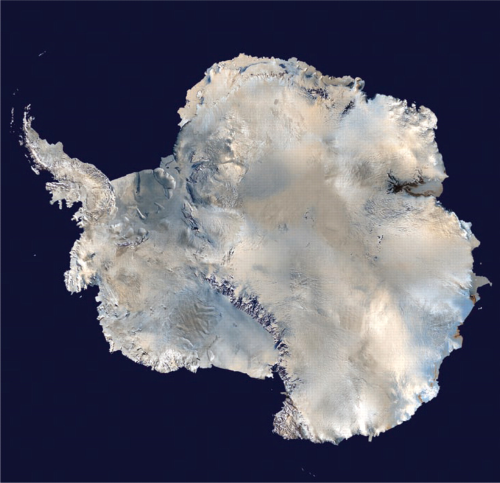
International cooperation on the ice continent is assured through the Antarctic Treaty.
Historically, economic reasons have limited the number of states possessing the full range of fuel cycle activities. According to traditional calculations, acquiring the full fuel cycle–the indigenous capability to enrich fissile material, to produce nuclear fuel, to generate electricity using that fuel in reactors, and to reprocess or store the spent fuel–only made sense with a large nuclear energy program. A country would have to be generating more than 25,000 megawatts of electricity in nuclear reactors–equivalent to about 15 current-generation, light water reactors–before it made economic sense to acquire the full fuel cycle. The costs of the back end of the fuel cycle–dealing with spent fuel and nuclear waste–as well as the environmental costs and risks of a nuclear power program, further deterred states.9
In the Antarctic Treaty system, countries only participate in the system's governance when they launch an active program of scientific research in Antarctica. If a similar provision were part of a supplementary fuel cycle agreement, signatories would become active in its implementation and governance only once they embark on fuel cycle activities.
Because of such costs, states with smaller nuclear energy programs have generally opted to contract for fuel services in the international market. Relatively few states–the United States, Russia, Japan, France, Canada, China, India, and Britain–possess the full fuel cycle today, in accordance with the size of their nuclear energy programs. Since the five NPT nuclear weapons states (the same countries that constitute the five permanent members of the U.N. Security Council) make up the core of this group, officials and observers, particularly in the developing world, suspect that the current effort to constrain new countries from acquiring fuel cycle facilities is meant, first of all, to sustain the status quo among those who dictate world order.
Some of these same parties also suspect that the states currently possessing fuel cycle capabilities want to retain their dominance of the market in nuclear fuel services. For this reason, some of those rushing to acquire new capabilities have down played the question of the costs and risks of the full nuclear fuel cycle. But because these countries do not appear to be making rational economic choices, other countries, such as the United States, are concerned that their behavior represents at the minimum a veiled threat to the nonproliferation regime.
To calm the many concerns brewing around the regime, and to simultaneously strengthen the system, we need to find a way to allow states to reiterate their rights with regard to the full fuel cycle, without encouraging them to launch an active research program or begin construction of nuclear enrichment or other fuel cycle facilities.
One way to accomplish this would be to create a companion agreement to the NPT that is specifically designed to reinforce states' rights to acquire peaceful nuclear energy technologies, including the full nuclear fuel cycle. The key point of such an agreement would be to restate these rights in international law, while reassuring states that they do not have to exercise them immediately. It is worth examining the Antarctic Treaty, which has accomplished similar objectives, as a possible model for this supplementary agreement.
Just as NPT Article IV is critical to the nonproliferation regime, Article IV of the Antarctic Treaty is a core factor in the preservation of Antarctica as a continent open to all for scientific cooperation. This provision of the Antarctic Treaty allows parties to disagree over territorial claims while sustaining them; simultaneously, it allows other parties to refuse to acknowledge the claims.
The Antarctic Treaty is open to all countries for signature, whether they are U.N. members or gain the support of the consultative parties to the treaty. For example, both the Republic of Korea and the Democratic People's Republic of Korea acceded to the treaty in the mid-1980s, despite neither being a member of the United Nations at the time. The system has also maintained its neutrality, as even parties in a state of conflict have met to discuss matters of concern to the treaty. For example, representatives from both Argentina and Britain attended the treaty meeting in 1983, in spite of the Falklands/Malvinas strife. In short, the Antarctic Treaty system experiences remarkably little division along the fault lines that trouble other bodies.
If a provision similar to Article IV of the Antarctic Treaty were applied in a new supplementary agreement on the nuclear fuel cycle, it would allow a wide range of countries to participate in reiterating their rights to peaceful nuclear technologies. This process may include countries that have not been members of the NPT system, such as India, Pakistan, and Israel, and countries such as Iran and North Korea, which have fallen out of favor with the regime. Existing claims and disagreements regarding fuel cycle programs, including experimental ones, would continue to be addressed in their present settings–the Six-Party Talks in the case of North Korea; and the efforts of the International Atomic Energy Agency (IAEA) to clarify past fuel cycle activities in the case of Iran. Likewise, new arrangements, such as the creation of a special exception within the Nuclear Suppliers Group for India, could also continue to develop in separate venues. These processes would remain in place in the context of the new fuel cycle agreement, not impeding the agreement's implementation but rather reinforcing it.
The other major characteristic of the Antarctic Treaty that may apply to the nonproliferation regime is the so-called activities criterion, which allows countries to self-select for active participation in the treaty. In the Antarctic Treaty system, countries only participate in the system's governance when they launch an active program of scientific research in Antarctica. If a similar provision were part of a supplementary fuel cycle agreement, signatories would become active in its implementation and governance only once they decided to embark on fuel cycle activities.
This provision would be crucial to the goal of the agreement, allowing countries to reiterate their right to certain capabilities without impelling them to embark immediately on a concrete program of research or construction. Until they began certain fuel cycle activities, signatories would not be involved in the agreement's decision making, but they would also avoid certain obligations, including a more stringent monitoring regime. In essence, if a state pursues fuel cycle activities, then it should be willing to bear some burden of additional responsibilities in the international system; if it eschews fuel cycle capabilities, then it should escape them.10
As in the Antarctic Treaty, the inspections provision in the new fuel cycle agreement would be simple: on-site access to verify the ban on military activities in facilities designed and built to produce fuel for nuclear power programs. Experts recognize that it is impossible to fully guarantee that materials and equipment have not been diverted to military programs. Over time, however, routine inspections contribute to confidence in the provenance and purpose of a nuclear program.
It is important to stress that the new agreement would not contain its own complicated verification regime. Instead, it would depend on existing IAEA safeguards arrangements. The Additional Protocol would be a necessary additional layer. In this regard, proposals to make the Additional Protocol a precondition of supply for nuclear fuel cycle equipment are relevant and extremely important.11 Combined with on-site inspections called for in the new agreement, these measures should provide the international community with a clear view over time of the status of nuclear energy programs in states acquiring fuel cycle facilities.
Again, this inspection obligation would only be assumed once a state actively began to research or acquire fuel cycle technologies. Signatories with specific fuel cycle programs, even experimental ones, would automatically become active in the agreement's implementation and governance–and subject to its on-site inspections. For example, Iran and North Korea, two of the nonproliferation regime's problem countries, would be active in implementation of the new agreement, providing a new venue for them to discuss what they believe are their rights under the NPT. These countries would simultaneously continue to address current disputes about their nuclear activities in other venues. At the same time, pursuant to the new agreement, Iran and North Korea would become subject to new on-site inspections. Although all signatories to the agreement with active fuel cycle programs would be subject to inspections, military nuclear programs would remain outside the monitoring regime.
Indeed, a point of controversy could be the participation of existing nuclear weapon states in a new on-site inspection regime. Nuclear weapon states have traditionally declined to participate in IAEA safeguards, arguing that their special status requires them to take extraordinary national measures in any event to safeguard their nuclear arsenals and related fuel cycle facilities. During the past 15 years, however, this position has begun to alter. In the 1990s, for example, the United States, Russia, and the IAEA launched the Trilateral Initiative to explore how nuclear weapons states might cooperate with the IAEA in safeguarding nuclear facilities. This initiative helped to develop technologies and procedures that would allow nuclear weapon states to participate in safeguard activities while protecting their military nuclear secrets. More recently, the Russian Federation has been working with the IAEA to develop safeguard measures that would apply to its international fuel services center at Angarsk.
In short, a basis exists for including nuclear weapon states in a monitoring regime that would be developed and implemented in cooperation with the IAEA. Deciding on the form and nature of this cooperation would require further thought and discussion, yet the ongoing involvement of the United States and Russia with the IAEA is a good place to begin.12
Paraphrasing the preamble to the Antarctic Treaty drives home its potential utility for the nonproliferation regime. All that is needed is to substitute “the nuclear fuel cycle” for “Antarctica”: “It is in the interest of all mankind that the nuclear fuel cycle shall continue forever to be used exclusively for peaceful purposes, and shall not become the object of international discord.” If a new arrangement that allows states to reiterate their right to the fuel cycle is not forthcoming, then we may experience a rush to acquire such capabilities in countries where previously there was neither a policy desire, nor an economic need, nor the technical capacity to do so. This trend in turn would open the door to significant new nuclear weapon potential in countries around the world.
This idea for a supplemental agreement to the nonproliferation regime is in its early stages of development. Quite clearly, it does not cure the latency problem, that is, the fact that once states acquire certain fuel cycle facilities, they have a latent capability to produce fissile materials for nuclear weapons. But stemming a rush to acquire new fuel cycle capabilities, which could add greatly to the latency problem in the future, is the objective of this proposal.
The unique Antarctic Treaty system is a promising model to examine for this purpose. This is particularly the case during the treaty's 50th anniversary year, when the implementation of the treaty will be the subject of analysis and debate. One point should be eminently clear: While some treaties hit walls that seem insurmountable, the Antarctic Treaty has produced a system where countries do not remain deeply at odds for long, but find ways to solve their problems and advance the international agenda.
Footnotes
1.
President George W. Bush has commented on the existence of a “loophole” in the NPT, but nonproliferation experts point to the fact that Article IV of the treaty, which provides for the acquisition of peaceful nuclear power programs by all treaty parties, was a central element of the strategic bargain that allowed the NPT to be concluded. This point will be discussed further below. For more on President Bush's comments, see Wade Boese, “Bush Outlines Proposals to Stem Proliferation,” Arms Control Today, March 2004.
2.
This list is derived from a paper by Raymond Arnaudo, “The Unique Nature of the Antarctic Treaty System: Problem or Advantage?” Wilton Park Proceedings, Britain, November 14, 2001.
3.
The fourth such celebration of peaceful scientific exchange in the polar regions
has been taking place since 2007. For more on the current initiative, see U.S.
National Committee for the International Polar Year 2007-2008, “A
Vision for the International Polar Year 2007-2008,” National Research
Council, 2004, available at  .
.
4.
Richard E. Byrd, Alone (New York: G. P. Putnam Sons, 1938).
5.
6.
7.
Article IV of the NPT states, “Nothing in this Treaty shall be interpreted as affecting the inalienable right of all the Parties to the Treaty to develop research, production and use of nuclear energy for peaceful purposes without discrimination and in conformity with Articles I and II of this Treaty.”
8.
Peter Crail and Jessica Lasky-Fink, “Middle Eastern States Seeking Nuclear Power,” Arms Control Today, May 2008. It must be noted that the United Arab Emirates (UAE) announced a new nuclear energy program, but explicitly eschewed the development of indigenous enrichment capabilities as a matter of national policy. Other Mideast countries may follow suit. See Lin Noueihed, “UAE Says to Explore Nuclear Energy for Electricity,” Reuters, March 24, 2008. We are grateful to Amb. Thomas Graham for emphasizing this point.
9.
John Deutch, Arnold Kanter, Ernest Moniz, and Daniel Poneman, “Making the World Safe for Nuclear Energy,” Survival, vol. 46, no. 4, Winter 2004-05, p. 69.
10.
We are grateful to Amb. Norman Wulf for pointing out the importance of clear incentives for participation in the new arrangement.
11.
See, for example, George Perkovich et al., Universal Compliance: A Strategy for Nuclear Security (Washington, D.C.: Carnegie Endowment for International Peace, 2005) pp. 66, 116.
12.
For more on the Trilateral Initiative, see the National Threat Reduction summary
“IAEA Monitoring of Excess Nuclear Materials,” which can
be found at .
Another precedent to consider is the transparency program associated with the
U.S.-Russian highly enriched uranium (HEU) deal, under which HEU from Russian
weapons is blended into low-enriched uranium for use as power plant fuel.