




Abstract
“The Iranian Petroleum Crisis and United States National Security,” by Roger Stern, Proceedings of the National Academy of Sciences, vol. 104, no. 1, January 2, 2007.
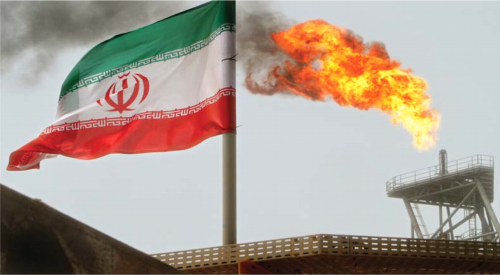
At first glance, worrying about peak oil production in Iran might seem like something that only truly dedicated pessimists would bother with. After all, the U.S. Geological Survey's World Petroleum Assessment–the best guide to the world's conventional oil and natural gas endowment–listed Iran's proven oil reserves as 71 billion barrels and undiscovered reserves as 53 billion barrels, as of January 1, 1996. Deducting the 15 billion barrels produced since 1996, these remaining reserves of more than 100 billion barrels should easily support the current extraction rate of about 1.5 billion barrels per year.
However, oil extraction rates can peak for many reasons besides exhaustion of the resource base. For example, between 1990 and 1995, petroleum production in the former Soviet Union decreased from 11.5 to 7 million barrels per day, owing to underinvestment, antiquated technology, and mismanagement of the industry. With the application of modern technologies and management methods, production has recovered to its late-1980s level, and may even increase further.
Recently, Roger Stern, a graduate student in the Geography and Environmental Engineering Department at Johns Hopkins University, predicted a similar Iranian petroleum crisis due to underinvestment and mismanagement: He foresees an end to all of Iran's oil exports (currently 2.5 million barrels per day) by about 2015. His research paper, “The Iranian Petroleum Crisis and United States National Security,” published in the Proceedings of the National Academy of Sciences, argues further that Tehran's determined pursuit of nuclear power is “an indicator of distress from anticipated export revenue shortfalls” and a sign that the regime “may be more vulnerable than is presently understood.” In light of “Iran's self-imposed petroleum sector implosion,” he suggests that sanctions or military conflict would be not only counterproductive, but also unnecessary. Stern's research received widespread coverage in the media. The Washington Post opined, “We don't know whether Mr. Stern is right…. But Mr. Stern's paper represents a refreshing examination of the suppositions that lie beneath current discussions of the Islamic republic.”
Even if the Iranian petroleum sector figuratively imploded, it would be dangerously na'ive to assume that other countries would remain unscathed.
It is certainly alluring to think that the Iranian nuclear crisis could be solved simply by biding our time. But this line of reasoning has many flaws. First of all, there is no indication that an Iranian petroleum crisis currently exists. Iran's crude oil production has been greater than 3.5 million barrels per day since 1993 and has been about 3.8 million barrels per day for the past two years. While this is below its Organization of the Petroleum Exporting Countries (OPEC) quota of 4.11 million barrels per day, there is no sign of any imminent decay. Moreover, Iran's drill rig activity has been increasing slowly over the past few years, from about 30 rigs in 2000 to more than 50 in 2006, which is a sign of reasonable and growing investment in at least one aspect of Iran's oil industry. Unlike the current unforeseen production drop in Mexico, Iranian oil production is not dominated by one supergiant field, so any problems that develop with individual fields should not have an overwhelming impact.
That's not to say that Iran does not face challenges. The National Iranian Oil Company seems incapable of completing major projects on its own, and the arbitrary and capricious actions of some government officials are frightening away the foreign investment needed to maintain production. However, in the past the Iranian government has been extremely resourceful in ensuring its survival. It is unrealistic to assume that the regime will not take corrective action to counteract any drop in output, or more importantly, in revenue. With oil prices now well above $50 per barrel, Iran's oil revenues have increased from $32 billion in 2004 to an estimated $46 billion in 2006, so financial resources will be available to correct problems in the oil industry as they arise.
Even if the Iranian petroleum sector figuratively imploded, it would be dangerously naive to assume that other countries would remain unscathed. It is now widely accepted within the petroleum industry that non-OPEC production will peak by 2010. An unanticipated drop in Iran's exports of between 0.8 and 1.1 million barrels per day by 2011 would need to be made up by increased production from OPEC (that is, Saudi Arabia), in addition to supplying projected worldwide annual demand increases of 1.2 million barrels per day. It is unlikely that OPEC can increase production to meet anticipated demand, much less an unanticipated reduction in output of a major producer like Iran. In other words, a production shortfall of this magnitude would have a major effect on world markets and would likely impact the United States much sooner than it would Iran.
Furthermore, the assertion that Iran's nuclear program is a response to anticipated declines in oil production does not stand up to closer scrutiny. Iran's installed electrical generating capacity in 2004 was 34,400 megawatts, with 7 percent from hydroelectric capacity, about 75 percent from natural gas-fired generators, and the remaining 18 percent from oil-fired plants. With proven natural gas reserves of more than 970 trillion cubic feet (second only to those of Russia), nuclear power is hardly the best or most urgent option. Indeed, Iran is taking the conventionally correct decision and installing new gas-fired combined-cycle plants. The advantages of this type of generator are well known: low-installed capital cost, high-quality factory assembled machinery, excellent reliability, and rapid construction time. With low-cost fuel, gas turbines produce inexpensive electricity with minimum pollution.
Iran also has abundant renewable wind and solar thermal resources. Based on a survey conducted by the government, the wind electric potential is estimated to be 15,000 megawatts–clearly a significant resource. Wind-generated electricity costs are around $0.05 per kilowatt-hour or less with a good wind regime. Wind turbine arrays with a total capacity of 41 megawatts already exist, and Iran has plans to install hundreds of megawatts of additional capacity in the near future. Solar thermal electricity is significantly more expensive ($0.10-$0.12 per kilowatt-hour) than wind-generated electricity, but solar thermal plants produce power at times of peak demand, when it is much more valuable. In any case, both solar thermal and wind-generated power–coupled with more efficient use of electricity–are less expensive, less dangerous, and use technologies that, while far from trivial, are more easily mastered and capable of being more rapidly deployed than any kind of nuclear technology.
The Iranian nuclear power program has a long and tangled history. It began in the early 1970s during the reign of Shah Mohammad Reza Pahlavi, justified as a way to save oil and natural gas resources for export. In 1974, Iran signed a $2.6-billion contract with West German firms to build two pressurized water reactors (PWR) at Bushehr. One reactor was about 80 percent complete and the other about 50 percent complete when the Iranian revolution forced a suspension of the entire project in 1979. In 1995, Russia signed an $800-million contract to build a 1,000-megawatt PWR on the site; the reactor is finally expected to be brought on line later this year. No other commercial nuclear plants are now under construction in Iran.
Given the time and money (33 years and at least $11 billion) needed for the first plant–and a probable long delay for any subsequent plants–nuclear power cannot be seen as a part of any reasonable Iranian energy program. The program's rationale–saving oil and gas for export–was as transparently implausible in 1974 as it is today. The shah's real aims were almost certainly identical to those of the current regime: to increase Iran's prestige and technological capability with a showcase venture and to provide the Iranian people with highly visible proof of Iran's progress in the creation of a modern industrial state.
The idea that an incipient oil crisis is driving Iran's bid for nuclear power–and that this crisis will make the regime in Tehran more pliable–remains at best wishful thinking. In light of Washington's ongoing failure to adequately encourage energy efficiency and renewable alternatives to oil, it is the United States, not Iran, that should be urgently concerned with declining petroleum production and demand exceeding supplies in the next few years.