




Abstract
“Arms Without Borders: Why a Globalised Trade Needs Global Controls,” Control Arms Coalition, October 2006.
While the apparent North Korean nuclear test and fears of an Iranian nuclear weapons program have captured the attention of the public and media, conventional weapons are being used to kill hundreds of thousands of people each year around the world. The Small Arms Survey at the Geneva based Graduate Institute of International Studies estimates that small arms and light weapons alone, such as handguns and assault rifles, kill about 1,000 people each day.
Weapons suppliers frequently argue that their sales are consistent with international human rights standards and humanitarian law. Yet, in practice, national laws and regulations to uphold those standards are often written unclearly and implemented unevenly. Moreover, the weapons industry has used tools of globalization such as offshore production facilities, foreign subsidiaries, and regulatory loopholes to avoid controls on its trade. And host countries have looked the other way as weapons manufactured inside their borders have been transferred to countries that commit human rights abuses.

In a recent report, “Arms Without Borders,” the Control Arms Coalition argues convincingly that it's time to set a significantly higher standard. The coalition, a partnership among Amnesty International, the International Action Network on Small Arms, and Oxfam International, presents a compelling case for negotiation and implementation of a legally binding global arms trade treaty.
Such a treaty would create universal standards based on international humanitarian law and respect for human rights. A considerable strength of the report is the clear assumption that these weapons are not “normal” commodities–that it is appropriate to have higher standards for arms sales than for consumer goods. Unfortunately, in most major arms-supplying countries today, the burden of proof seems to be on those who seek to stop sales. Absent strong opposition, sales tend to be approved. A global arms trade treaty would shift this burden to those who promote transfers.
In “Arms Without Borders,” Control Arms uses a rich series of case studies to highlight the risks of indiscriminate sales of small arms, light weapons, and major conventional weapons. For example, it documents Israeli use of U.S.-supplied Apache helicopters against civilians in the occupied territories. Having identified numerous problems with current policies and laws, the report then offers proposals to make the trade more transparent, to provide effective oversight, and to actually control the trade.
It's an ambitious, substantive agenda that reflects the progress over the last decade of literally hundreds of groups working to limit the trade in small arms and light weapons. Fifteen years ago, this community consisted primarily of a small group of activists concerned with international development and aid issues. Then, in 1995, Costa Rican President Óscar Arias heightened public awareness when he brought together a group of Nobel laureates to discuss the possibility of an International Code of Conduct on Arms Transfers. This draft code was made public in 1997 and has many elements in common with the current proposals for an Arms Trade Treaty, including its global focus, emphasis on human rights and humanitarian concerns, and support for transparency in the international arms trade. Today, a vibrant global community of analysts and academics is working to control the spread of small arms and light weapons. The coalition's report demonstrates common principles that have been consistent throughout this time, as well as intelligent consideration of future strategy and tactics.
The argument in favor of global standards appears to have convinced many countries. In October 2006, the U.N. committee dealing with disarmament and international security (the “First Committee”) considered a resolution focused on “establishing common international standards for the import, export, and transfer of conventional arms.” The First Committee vote was 139-1 in favor of the resolution, with 24 abstentions. In early December, the General Assembly voted 153-1 in favor of the resolution, also with 24 abstentions. The United States was the lone opposition vote in both the First Committee and the General Assembly.
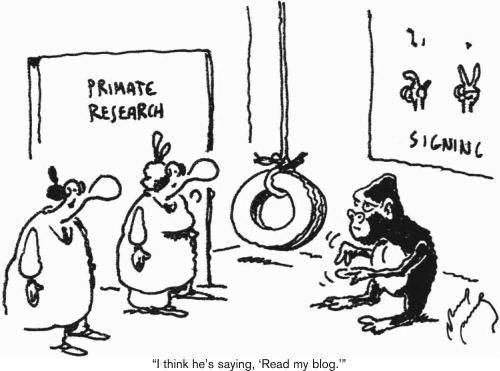
“I think he's saying, ‘Read my blog.’”
The greatest strengths and weaknesses of policy proposals tend to mirror one another. This report is no exception. By establishing an overall framework for negotiation rather than a detailed draft treaty, Control Arms has avoided the traps associated with suggesting specific treaty language. However, it's relatively easy for governments to support general principles. For now, the involved governments aren't being asked to give up anything. While the ultimate treaty is intended to be binding, even a speedy development process is likely to take years.
The United States is a huge part of the problem, and it's anything but on board with the coalition's proposal. Since the breakup of the Soviet Union, the U.S. government and weapons manufacturers have dominated the global arms trade, and they persist in arming unstable regimes and human rights violators such as Saudi Arabia and Egypt with extraordinarily capable weapons. They then argue that the proliferation of these weapons makes it necessary to develop and produce a new generation of even more expensive, more capable weapons. This establishes a self-perpetuating and vicious, yet highly profitable, cycle. The prospects for a global treaty are poor unless this cycle can be broken.
Although securing a global Arms Trade Treaty is likely to be difficult, Control Arms makes an excellent case for the attempt. This report lays out what should happen to the global conventional weapons trade in clear and convincing fashion.
The authors' recommendations are ambitious in other ways as well. They assume that all countries will voluntarily participate in a global register of weapons transfers. Yet they do not indicate how they plan to generate the necessary levels of support for such a register. In its 13-year history, approximately 170 countries have participated in the current U.N. Register of Conventional Arms at least once. But only 50 countries have done so each year.
Other questions remain unanswered: In an international diplomatic arena in which one person's terrorist is another person's freedom fighter, who will determine the nature of a violation and the appropriate punishment? Who will make–and enforce–the rules?
Although securing a global Arms Trade Treaty is likely to be difficult, Control Arms makes an excellent case for the attempt. This report lays out what should happen to the global conventional weapons trade in clear and convincing fashion.
The late Frank Blackaby, wise soul and former director of the Stockholm International Peace Research Institute, often said that the key test of a policy proposal was whether it would stop the killing. If fully implemented, the policy proposals in this report would probably come closer to passing that test than most other materials published in this field in recent years.
Mind reader: A doctor views head scans.

JOURNAL ROUND-UP
Changing your mind
Understanding the human nervous system makes good security sense, but it could be dangerous business. Well-trained neurologists play a pivotal role in distinguishing between a deliberate bioweapons attack and a common disease outbreak. They can also spot clusters of neurological symptoms, such as paralysis and encephalopathy, enabling the quick treatment of infected populations, writes Oxford University neurologist Michael Donaghy in the November 2006
Yet, as scientists correlate neural activity and specific tasks or experiences, ethical questions arise about the responsible use of this knowledge. If neuroscientists develop a drug that inhibits posttraumatic stress disorder, should such drugs be used preventively, asks bioethicist Jonathan D. Moreno in the November 11, 2006
The potential “defense implications” of modern neuroscience–from affecting soldier performance to improving interrogation methods–increasingly demand that neuroscientists get involved in the application of their research, Moreno argues, much like atomic scientists advocated for the safe use of atomic energy after World War II.
One positive step would be if neurologists were to be involved in configuring health care systems to best cope with the “huge logistic demands” potentially imposed by a bioweapons attack, according to Donaghy. After all, it will be the neurologists stuck separating the sick from the panic-stricken.
Funding economic development, dispersing medical supplies, managing cultural diversity–what functions will nongovernmental organizations (NGOs) perform 200 years from now in a world marked by unknown civil and military crises? Sue Kenney, a researcher at Deakin University in Australia, analyzed the Australian civil society sector and predicts that Australian NGOs will likely be ensuring cultural diversity and developing civil labor in 200 years time, according to “Non-Government Organisations and the Dialectics of State and Civil Society,” in the March 2007
Ethnic conflict in southeastern Turkey facilitates continued violence and instability–and the largest output of pen guns in the country, according to a team of Turkish researchers led by Riza Yilmaz of the Council of Forensic Medicine. The researchers track the dispersal of the small but lethal dual-use instruments throughout Turkey, the crossroads of Europe and Asia, in the January 2007
To protect animal and plant species at risk of extinction, it helps to know where they are and in what numbers. The WILDSPACE Decision Support System (DSS) does just this for Canadian officials attempting to enforce their country's environmental protection laws. In the April 2007
To some, President Jimmy Carter symbolizes all that is wrong with the Democratic Party. To others he encompasses all that is right. The same could be said about President George W. Bush and the Republican Party. These disparate, polarizing figures nonetheless share an “evangelical ‘family resemblance,’” according to Florida International University researchers Jason Berggren and Nicol C. Rae, who wrote “Jimmy Carter and George W. Bush: Faith, Foreign Policy, and an Evangelical Presidential Style” in the December 2006
