




Abstract
The spread of gas centrifuge technology continues to undermine faith in nonproliferation's future. Is it time to throw in the towel?
In preparation for the ultimately failed 2005 Nuclear Non-Proliferation Treaty (NPT) Review Conference, the State Department released several fact sheets warning that nuclear weapons programs in Iran and North Korea constituted “a crisis of compliance” for the nonpro-liferation regime. Nevertheless, claims that Tehran is actively pursuing a nuclear weapons capability deserve careful scrutiny. The Iranian regime is divided over this issue, and its failure to cooperate with the International Atomic Energy Agency (IAEA) might, at least in part, be the result of bureaucratic and ideological infighting. If suspicions over Iran's intentions become articles of faith, attempts by the United States, China, Russia, France, Germany, and Britain to negotiate a solution with Tehran could falter.
The core of State's argument was that a failure to secure compliance from “cheaters” might make the nonproliferation regime worse than no regime at all. “The pretense of arms control,” the State Department intoned, “is even more dangerous, for it can provide a false sense of security that constrains only the honest.”
A world populated by cheaters whom we may not be able to detect, let alone stop, is a very frightening image.
But, really, isn't this all a little overwrought?
The same fact sheets also listed Libya and Iraq as nations that were able to pursue nuclear weapons programs under the NPT. Holding aside Iraq for the moment, what jumps out is something the other three states have in common: Each was a customer of A. Q. Khan, the disgraced Pakistani nuclear scientist who set up a black-market operation to sell centrifuge technology for uranium enrichment.
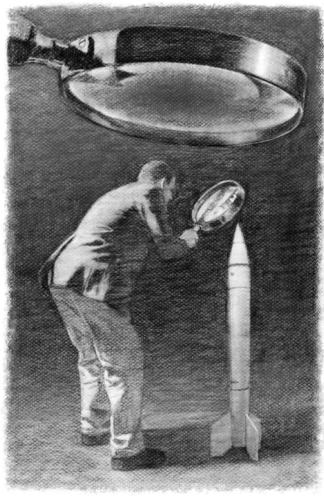
Indeed, much of the new pessimism surrounding efforts to stop the spread of nuclear weapons stems from the shock produced by the revelation of the Khan network. Longtime arms control skeptics employ this pessimism, with varying success, to promote an array of policies that undermine the non-proliferation regime.
The crisis confronting the NPT, therefore, is not so much one of compliance but of confidence–confidence on the part of the United States and other countries that non-proliferation has a future.
Despite the pessimists' arguments, we do have a choice in how to respond to the underlying technological changes that contribute to this crisis of confidence.
In the 1970s, a comfortable consensus held that would-be nuclear states would build their bombs with plutonium produced in nuclear reactors and extracted at reprocessing facilities. These reactors and facilities are large and produce distinct signatures, so declared facilities are relatively easy to safeguard, and clandestine facilities are difficult to hide.
The idea that a developing country like Pakistan could enrich uranium with gas centrifuges–a relatively sophisticated technology–once seemed farfetched. In 1977, analysts at the U.S. Office of Technology Assessment (OTA) concluded, “It is improbable that centrifuge enrichment would be the route taken by a country with a limited industrial and scientific base.”
Boy, were they wrong.
Khan's success reflected the global spread of advances in computing technology that allowed designers to model the high-speed rotation of centrifuges. In the late 1980s, Iraqi designers, inspired by Pakistan's example, also began a clandestine gas centrifuge program.
In many ways, gas centrifuge technology represents a revolutionary challenge to the nonproliferation regime. Unlike facilities for reprocessing plutonium or enriching uranium with gaseous diffusion, gas centrifuge facilities have virtually no signature: The buildings are small and unobtrusive; they use a modest amount of electricity; and they emit virtually no pollutants that could be detected by environmental monitoring.
DULY noted
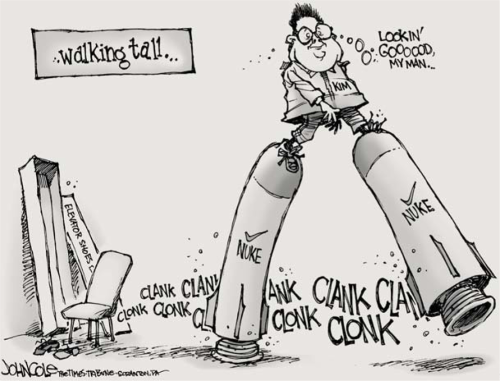
After the extent of Iraq's efforts came to light in 1991, the international community began to pay more attention to gas centrifuge and other fuel-cycle technologies. In 1994, OTA observed, perhaps too tentatively, “gas centrifuge technology may become increasingly attractive to potential proliferants.” Member nations of the IAEA negotiated the 1997 Additional Protocol to the model IAEA Safeguards Agreement, providing for more expansive declarations relating to fuel-cycle activities, greater access for IAEA inspectors, and the ability to collect environmental samples.
Yet perhaps because Iraq also had pursued other enrichment methods and was still some years away from successfully enriching uranium, the idea that the gas centrifuges might require big changes in the nonproliferation regime didn't take hold.
Only in 2002 did that consensus begin to fall apart. In August, an Iranian dissident group revealed that Iran had secret nuclear facilities located near the cities of Arak and Natanz. In October, Assistant Secretary of State James Kelly confronted a North Korean delegation about revelations of a clandestine enrichment program, resulting in a collapse of multilateral negotiations. One year later, the German cargo ship BBC China was intercepted en route to Libya with components for 1,000 centrifuges. The scope of Khan's activities became public in 2004 when the Pakistani scientist confessed his activities on television.
Pessimism has its price. In the midst of these revelations, the New York Times reported that Iraq had imported aluminum tubes, said to be components for a clandestine gas centrifuge program. The specter of an Iraqi gas centrifuge effort emerged as the perfect casus belli for the Bush administration; the very difficulty of detecting such a program lent credence to the heroic assumptions holding together scanty evidence.
More broadly, pessimism about the future of the nonproliferation regime places any and all options on the table–from preemptive war to the development of new nuclear weapons. And how about if the United States makes a special exception for India in order to strengthen bilateral relations? Why not? Why worry about weakening the NPT if it is already on its last legs? The belief that the nonproliferation regime is falling apart thus becomes a self-fulfilling prophecy, fostering the very policies that contribute to its unraveling.
But just as we shouldn't have underestimated the challenges to the nonproliferation regime, we needn't overreact at this stage.
The intelligence community did monitor and disrupt the Khan network. Former U.S. officials have stated that the Clinton and Bush administrations were aware of enrichment-related activities in Iran and North Korea before those revelations became public. The decision not to break up the network was designed to allow the conspiracy to unfold while identifying the members of Khan's network and his customers.
Moreover, the Additional Protocol is the most significant elaboration of safeguards since the inception of the IAEA. Had the Additional Protocol been in place in Iran, Tehran's clandestine activities would likely have been made public much earlier. The international community also has an opportunity to develop standards to implement U.N. Security Council Resolution 1540, which calls on states to act to shut down clandestine procurement networks operating within their borders.
More broadly, pessimism about the future of the nonproliferation regime places any and all options on the table–from preemptive war to the development of new nuclear weapons.
Safeguards, export controls, and intelligence are not perfect. But proliferators face a significant risk of detection, a risk that should deter all but the most determined states.
For the more complicated cases, our tools will still be diplomatic ones. Yet the United States will remain at odds with North Korea and Iran until it is able to address its self-fulfilling pessimism. This is not to say that answering the centrifuge question will sufficiently resolve either crisis. North Korea's nuclear program is still based on plutonium, while Iran has plans for indigenous heavy water reactors. But the U.S. political system is unlikely to sustain any agreement with either country so long as opponents of compromise can assert the existence of a clandestine centrifuge program tucked in some remote mountain range. The existing safeguards regime is inherently vulnerable to the insistence that the “absence of evidence is not evidence of absence.”
How can we address this uncertainty? There are effective ways to link procedural compliance with a high level of confidence that a state is in compliance with its obligations. One solution is a so-called multilateral nuclear arrangement (MNA), under which a consortium conducts enrichment activities and controls centrifuge technology. Interest in MNAs dates to the inception of the nuclear age and has revived in recent years. Many of the proposals to resolve the standoff over Iran's nuclear program envision multinational consortia. These arrangements offer a particularly effective way to track perhaps the most elusive potential contribution to clandestine programs or procurement networks: the scientists and engineers who work there.
The nonproliferation regime faces a serious challenge from the spread of gas centrifuge technology. We do, however, have a choice: We can devise novel forms of cooperation to address that challenge, or we can simply throw up our hands in despair.