



Abstract
Infected suicide bombers have put a new spin on biological warfare. But public health experts caution against panic.
TERRORISM: Blood feuds
Of all her wounds, the bone fragments lodged in the body of a 31-year-old woman hurt in a May 2001 suicide attack at an Israeli mall seemed the least serious. While treating the severe blast injuries to her legs, doctors at the Hil-lel Yaffe Medical Center in Hadera, Israel, removed the chips and sent them to the Israel Institute of Forensic Medicine for testing–protocol for all material gathered from a suicide bombing. The results surprised even the hardened physicians on the front line of terror medicine: The bone fragments tested positive for the hepatitis B virus.
Israel, all too familiar with gruesome suicide terror tactics, confronted yet another ordeal–the possible transmission of a blood-borne pathogen via an infected suicide bomber. The Hillel Yaffe doctors surmised that the force of the explosion was so fierce that the Hamas bomber's bone fragments became ersatz shrapnel, unintentionally transforming him into a human bioweapon. (Hepatitis rates are high in the Palestinian territories owing to poor health and sanitary conditions.) If the contamination had been intentional, it would have constituted a flawed attempt at bioterrorism because exposure to hepatitis B is easily treatable.
But terrorism is about fear, and the notion that a suicide bomber might infect victims with hepatitis or even HIV could scare an already jittery public. “Suicide bombers may not just cause carnage when they blow themselves up–they may also spread diseases from beyond the grave,” a BBC report cautioned a year after the mall attack. More recently, a retired FBI bomb expert told a homeland security publication that infected suicide bombers are a new “spin on a biological weapon of mass destruction.” And even the National Enquirer is spreading rumors of AIDS sufferers offering their lives to AI Qaeda in Iraq “so they can die as martyrs.”
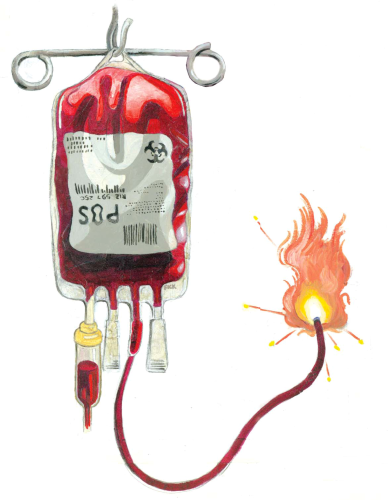
Yet, as with many terrorism scenarios and public health scares, the grounds for worry have been exaggerated. “It's a hazmat issue,” says Robert Bunker, a member of the Los Angeles Terrorism Early Warning Group. “You consider it a potential, take a few precautions, and move on.”
Only two incidents of infected suicide bombers have been documented; the second attack–a bomber with hepatitis B (again, likely an unplanned factor) blew himself up at a Tel Aviv nightclub–happened just weeks after the first. Despite press reports about thwarted Palestinian suicide bombers testing positive for HIV, no such attack has ever been publicly substantiated. Furthermore, medical experts believe it's likely impossible to transmit HIV in this manner. “The heat of the blast would probably destroy [the virus],” says Peter Katona, an infectious disease specialist at the University of California-Los Angeles.
Still, U.S. first responders are beginning to include the infected suicide bomber potentiality in their literature–mostly as a precautionary measure. If anything, terrorism experts like RAND's Bruce Hoffman see it as an opportunity to highlight hepatitis as a legitimate public health concern and push for a more zealous national vaccination program. “It's just like security,” Hoffman says. “Security against terrorism helps damp down crime because people are watching out. The same bonus comes with being concerned about this but looking at it judiciously and using it as an opportunity to get more of the population inoculated.”
Israel has done just that. The Ministry of Health now mandates that all victims of suicide attacks receive hepatitis B immunization, and physicians at Hillel Yaffe treat the risk as merely another public health precaution. “I'm not scared of this,” says the hospital's General-Director Meir Oren. “This is not what I'm losing sleep over.”
Q+A Charles M. Vest
The former president of the Massachusetts Institute of Technology and a member of the WMD Commission chats about U.S. policies toward visiting scientists and researchers.
IN BRIEF Hush, hush–in September, Argentina became the latest in a list of countries from which the United States quietly helped remove highly enriched uranium from research reactors. Other nations in the club: Georgia, Bulgaria, and Yugoslavia,
RE: EMERGENCY RESPONSE: Asteroids are disasters, too
A fiery asteroid smashes into your town. Who you gonna call? Currently, no one.
The chances of a massive meteor impact may be slim, yet British micro-biologist Charles S. Cockell believes it's best to be prepared. Stray space rocks can do great damage, he argues, citing a 1908 incident in which an asteroid exploded above Siberia, crushing 2,000 square kilometers of trees. A similar event in a large urban area would be catastrophic.
Cockell's solution: Assemble a Scientific Impact Response Team (SIRT)–an international collection of top scientists and disaster relief personnel–that could react immediately to any impact event. “You would have a SIRT team with a number of impact scientists localized in one place,” says Cockell, who first articulated the idea at a 2003 European Science Foundation workshop. “They can come to a consensus on the impact's effect, and then they can coordinate a consistent set of information to send to various humanitarian organizations.”
The team could also serve a public relations function, calming a global population unfamiliar with such an event and addressing such likely questions as whether the impact could cause earthquakes and whether asteroids are radioactive.
True, large asteroids hit Earth only once every 500 years. But Cockell maintains that the potential repercussions warrant such forward-thinking. Even the indirect ramifications of an impact could be deadly, such as setting off a tsunami. “It's not necessarily correct to look just at the impact frequency and say, ‘This is rare,’ because when it happens, its effects can be quite widespread.”
BIG PICTURE: Life imitates ant

Insects rarely serve as muses. But for Princeton University entomologist Stephen Pratt, the ant species Temnothorax curvispinosus inspired both scientific research and award-winning photography. Pratt snapped this photo to illustrate how researchers are able to track and distinguish between such small subjects. Not long after, he spotted signs promoting Princeton's inaugural Art of Science Competition. He entered his photo, dubbed “Individually Marked Ants,” and won third place. “[Non-entomologists] are always very interested in the way the ants look, how tiny they are, and how it's possible to individually identify them,” Pratt says.
CHEMICAL SAFETY: Hazard a guess

Remember Mr. Yuk? The grimacing, green cartoon-face sticker was meant to scare kids away from poison. A similar idea is going global: The United Nations wants a universal warning system for chemicals. Countries around the world, including the United States, are planning to improve safety and trade by voluntarily adopting the Globally Harmonized System (GHS), a uniform way to classify and label chemicals. But besides the bureaucratic acrobatics it will take to implement the system worldwide, there might be another snag–the symbols. Although some of the pic-tograms are classic warning signs, the message conveyed by others could be confounding. Guess what these GHS symbols are meant to suggest. (Answers below.)
ANSWERS: 1. C; 2. B; 3. B; 4. A; 5. C; 6. B
POINTS
and
and
TECHNOLOGY: Phone-y threats
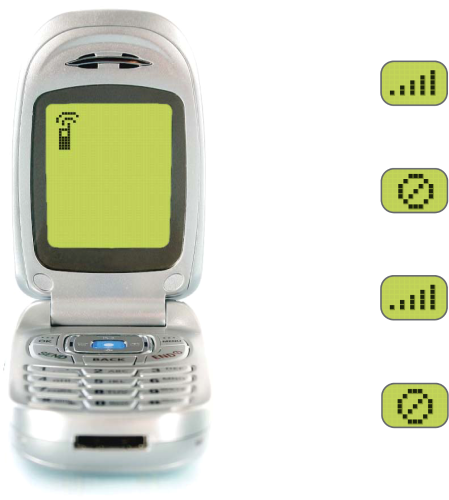
Man's newest best friends have a few potential hang-ups. Cell phones, BlackBerries, and other portable electronic communication devices certainly have their benefits–both in terms of convenience and safety. But the same technology could also be used toward destructive ends.
Emergency preparedness consultant Michael Hopmeier details a few of the security perks and pitfalls of the cellular age.
WEBWATCH: Noisemaker
www-pw.physics.uiowa.edu/space-audio
Outer space is loud-if you're listening.

Pioneering physicist Donald Gurnett has been gathering cosmic soundtracks since the early 1960s. His specially designed equipment has accompanied 35 NASA missions into space, recording radio waves that were later processed and translated to a frequency audible to human ears, revealing surreal squeals, shrieks, and whistles. “Space generates all these weird sounds,” says Gurnett, who, when asked, can mimic many of them. “It's fascinating.” Until five years ago, he stored the tapes in a cardboard box in his University of Iowa office. Then, in an attempt to dispel the myth that space is silent, Gurnett began posting the tracks online. Now he uploads sounds from recent space missions such as Cassini whenever one piques his refined ear. “It's got to be interesting,” he says. “I'm a connoisseur of these things.”
ALTERNATIVE ENERGY: The mighty wind

Today, wind power generates less than 1 percent of electricity worldwide. Before windmill farms can meet significantly more of the world's energy needs–and help decrease greenhouse gas emissions–developers need to find the optimal places to put turbines. Using an innovative analysis technique (see right), Stanford University researchers Cristina Archer and Mark Jacobson compiled data on the worldwide locations where wind speeds are strong enough to make wind power economical.
To their delight, they found that wind has the potential to generate more than eight to ten times the electricity currently used worldwide. Locales where gigantic gusts could bolster wind energy production include the U.S. and Canadian coasts, South America's southern tip, and along the North Sea.
Of course, it would be too difficult or expensive to transmit electricity from some of the sites identified. But Jacobson believes the greatest barriers to getting a country like the United States to more effectively corral its wind power are political. “The type of [government] subsidy for transmission of wind is just not there,” he says.
To calculate wind speeds at 80 meters (the height of a typical turbine), Archer and Jacobson analyzed data from weather stations around the globe, extrapolating the wind speeds above the ground-level stations. Their calculations confirmed that previous research both severely underestimated and overestimated wind speed at some locations.