




Abstract


When the filmmakers of Thirteen Days told Graham Allison that they intended to transform President John F. Kennedy's appointments secretary, Kenny O'Donnell, into a major player during the Cuban Missile Crisis, he objected. Immediately.
“That's stupid,” Allison, author of Essence of Decision: Explaining the Cuban Missile Crisis, remembers telling them. “I don't relate to it.”
“But how many people read your book?” they responded. So begins the quandary: Experts get it right; Hollywood delivers the crowds. A happy marriage of the two qualifies as an exception. For every Thirteen Days–a film hailed by historians and critics alike–there are countless potboiler thrillers that twist and distort reality, all in the name of popcorn purchases and ticket sales.
When Hollywood speaks, the public listens. But what happens when filmmakers fudge the facts in favor of special effects and cheap thrills?
Experts like Allison can see past the showbiz gloss–the omissions, distortions, and casual disregard for even the most basic laws of physics. On planet Hollywood, nuclear power plants melt down with the push of a button, and nuclear warheads can be disarmed with the snip of a wire. But what goes through the minds of moviegoers when Ben Affleck struts unharmed along the fringes of a nuclear explosion in The Sum of All Fears? Such scenarios linger in the public's collective consciousness. Popular culture resonates. Allison recognizes it at Harvard University, where he teaches.
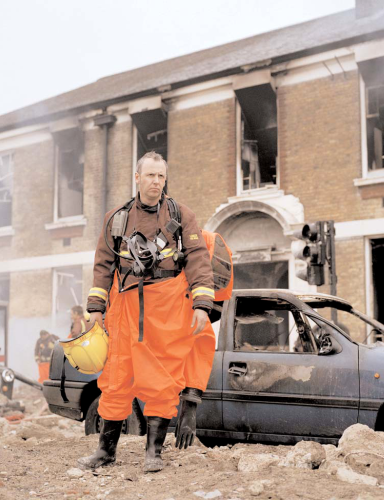
The right stuff: The BBC telefilm Dirty War accurately portrayed a dirty bomb attack on London.
“Why did the CIA murder Kennedy?” students often ask him.
“Where did you get this idea?” a befuddled Allison responds.
“I saw it in JFK,” they inform him.
Superficially, many policy wonks and activists dismiss films like The Sum of All Fears as vapid Hollywood entertainment, claiming their influence lands at the margins. But they intuitively understand popular culture's pull; that the size of The Peacemaker's audience is of a significantly higher order of magnitude than that of C-Span. They see in the entertainment industry an opportunity to inform the public and to advance their agendas. Yet, as they inevitably learn, Hollywood has an agenda all its own.
A pox upon TV viewers
British director Daniel Percival wanted Smallpox to be educational. He researched the virus extensively before writing and filming the BBC2 faux-documentary about a major bioterror attack on a Western city. (The film was released in Britain in 2002, but due to post-9/11 sensitivities it did not air in the United States until January 2, 2005.)
His mission was twofold: He wanted to alert the public to the consequences of a bioterror event and to create an engaging film that would be “an emotional as well as intellectual journey.”
Unfortunately, Smallpox was neither. The film played more like a training video for the World Health Organization (WHO) and for emergency responders–Percival alleges that the film is used for this exact purpose–than a riveting docudrama. And despite Percival's prolific research, Smallpox contained inaccuracies. In the film, a lone terrorist of unknown origin and affiliation infects himself with smallpox and then saunters around the city streets spreading the virus.
“I got a copy of it not long before it was going to air [in Britain], and I exploded,” says D. A. Henderson, who led the WHO's global smallpox eradication campaign. “I said, ‘No, this is wrong!’”
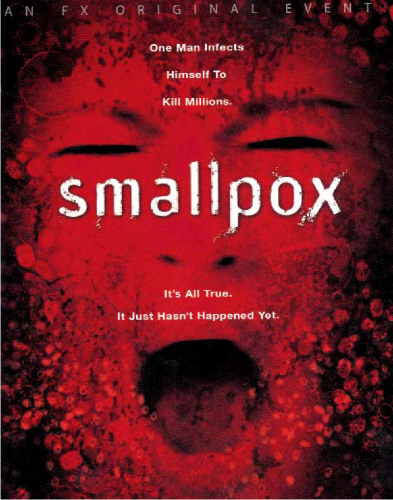
Fear factor: The telefilm Smallpox promised reality but sometimes fell short.
During pre-production, Henderson had spoken with one of the film's producers. After viewing the finished product, he called the producer, detailing his concerns. “We'll see what we can do,” the producer told him. The next version of the film Henderson saw contained some changes, but errors remained. Most notably, the terrorist appears to be in peak physical health as he trolls the streets, supposedly infecting 10 out of the 150 people he comes into contact with.
Henderson was most angered by a scene contending that a light tap on the head would be enough to transfer the virus. “It's just not all that good of a spreader,” he says. “They're infected, but they're not contagious until they actually develop symptoms–headaches, abdominal pain, high fever. The infectious-ness you have is directly correlated to how sick you are. The really sick ones don't move.”
The Centers for Disease Control and Prevention sent out physicians to debunk the film's premise, but as it turns out, they and Henderson needn't have worried. Smallpox failed to register among U.S. audiences, in part because it couldn't compete on TV with college football. Plus, Smallpox (which offered the ominous, ratings-driven tagline, “It's All True. It Just Hasn't Happened Yet”) had already become dated. Emergency response to bioterrorism in the United States substantially improved after 9/11 and the anthrax attacks. Smallpox vaccines were now readily accessible, with the United States stockpiling enough for everyone in the country.
Despite the criticism, Percival remained undeterred. Greatly influenced by Peter Watkins's 1965 post-nuclear war opus The War Game–a graphic docudrama that revealed the inadequacies of Britain's civil defense programs–he was determined to make an evocative film with a strong public service message behind it.
Percival turned his attention to what he saw as an equally pressing threat–dirty bombs. This time, in making his film Dirty War, he vetted the research more closely. He attacked it like a journalist, verifying every line of dialogue with BBC News. Unofficially, he consulted all the relevant British government agencies. For every fact, he required three independent sources. “If you're going to tackle these issues and try to have a genuine impact, you've got to be unimpeachable,” Percival says. “Otherwise the film fails to serve a purpose.”
“I got a copy of it not long before it was going to air, and I exploded. I said, ‘No, this is wrong.’”
–smallpox expert D. A. Henderson, commenting on the BBC2 docudrama Smallpox
His goal was nothing less than to change public policy. “It became clear in my mind after making Smallpox and before I made Dirty War that we concentrated all our energies, resources, and planning on delivering a counterpunch for 9/11 rather than thinking about how the hell we are going to absorb the punch when it comes back,” he says.
Dirty War definitely unsettles. Islamic extremists smuggle radioactive material into Britain and begin assembling explosive delivery devices, which they intend to detonate in London. By happenstance, London police and British intelligence discover the cells planning the attack, but not before the terrorists detonate one of the dirty bombs.
Chaos and panic prevail. Emergency responders are overwhelmed. Firemen attempt to douse the fires at ground zero despite cumbersome protective suits and high levels of radiation. Nearby, 300,000 Londoners are cordoned off in decontamination zones. Police attempt to secure these zones, imploring those inside not to leave until they've been sufficiently decontaminated. Not many stay.
As Percival hoped, Dirty War got people talking, first in Britain, where it aired on the BBC, and then in the United States, where it aired originally on HBO and later on PBS. A panel discussion convened by PBS featured an impressive dais: New York City Police Commissioner Ray Kelly; former New Hampshire Republican Sen. Warren Rudman; former Deputy Homeland Security Adviser Richard Falkenrath; and the Nuclear Threat Initiative's Vice President for Biological Programs Margaret Hamburg.
On the program, Kelly admitted he screened Dirty War for his department's top brass: “It was sobering. It was realistic. It was well done, and obviously food for thought.”
Unlike Smallpox, Dirty War impressed those in the field. “I came down with the same opinion as many other people,” says Joel Lubenau, an expert on radiological dispersion devices at the Center for Nonproliferation Studies at the Monterey Institute of International Studies. “In terms of technical aspects, I saw very little to criticize.”
If anything, Dirty War was faulted with understating the threat. Percival wove an intricate terrorist conspiracy to tell his tale. In truth, a much less elaborate scenario with fewer terrorists could unfurl an equally devastating attack. “The terrorists in the movie used a more difficult means of bringing the bomb to bear on the target,” Falkenrath remarked during the panel discussion. “They brought in the material from [abroad]. There's no reason to do that. There's ample quantities of radioactive material in the United Kingdom and in the United States that they could acquire here and use.”
Dirty War became Percival's War Game. “There's no reason why you can't handle important and strong messages in a dramatic form,” the filmmaker explains. “We're not used to getting information in that way, but judging by the response to Dirty War it's clear that it worked. It opens a new way of using the dramatic narrative to deal with real issues.”
Wish upon a movie star
Jessica Stern viewed The Peacemaker–a 1997 movie about nuclear terrorism very loosely based on her involvement with securing Russian nuclear weapons and material after the fall of the Soviet Union–as a sort of cinematic op-ed piece. “I thought it was a really useful service,” Stern says, “which was getting people to pay attention to a problem that was, at that point, quite underfunded.”
Stern unwittingly became the basis for Nicole Kidman's character in The Peacemaker during an interview with Leslie Cockburn, an investigative reporter intending to write an article for Vanity Fair about the Clinton administration's inaction regarding loose nukes and nuclear smuggling.
“I don't expect it to be a textbook. I'm sorry for anybody who thinks they're going to teach themselves how to disable or detect nuclear devices by watching a Hollywood film.”
–terrorism expert Jessica Stern
Some time later, Stern received a call from the film studio DreamWorks, asking her to meet with a screenwriter. When she did, she was startled to learn that Cockburn's article had morphed into a film treatment and featured a lead character named Jessica Stern. The screenwriter asked Stern to sign a release. She refused, concerned that it might harm her career.
Ultimately, DreamWorks changed the character's name to Dr. Julia Kelly and altered her background enough that Stern felt comfortable serving as a consultant. On the set, the producers asked her to teach Kidman how to disable a nuclear weapon for the film's penultimate scene. This Hollywood fantasy Stern would not indulge. “I have no idea how to disable a nuclear device, and I'm not going to pretend I know,” she told them, leaving the fate of the world to Kidman.
A lot was riding on The Peacemaker. As the first film from Dream-Works–an upstart studio formed by entertainment industry heavyweights Steven Spielberg, Jeffrey Katzenberg, and David Geffen–a gigantic box office gross was expected. Because of this, accuracy became a tertiary impulse.
Stern understood: “I don't expect it to be a textbook. I'm sorry for anybody who thinks they're going to teach themselves how to disable or detect nuclear devices by watching a Hollywood film. At the same time, the overall message is very important for people to hear.”
To provide context for this message, Stern attended the film's press junket and weathered questions such as “Is George Clooney cute?” She took her message to the tabloid celebrity news program Entertainment Tonight–a rare, if not unique, opportunity for a National Security Council staffer to directly engage a mainstream audience.
While Stern stumped for the issues, Kidman and Clooney–The Peacemaker's other star–stumped for the film. Scrounging for every budget dollar, Laura Holgate, former manager of the State Department's U.S. Russia Cooperative Threat Reduction program–who DreamWorks also consulted during pre-production of The Peacemaker–hoped that Kidman or Clooney would grow concerned about loose nukes during their research for the film and latch onto the issue as their pet political cause. She imagined that with someone famous campaigning for the issue, a privatized effort might develop.
Kidman and Clooney passed. Loose nukes were a cause before their time, and no celebrity came forward until 2000, when CNN founder and rabblerousing philanthropist Ted Turner created the Nuclear Threat Initiative–Holgate's current employer–to address worldwide concerns about the security of weapons of mass destruction. “I won't call it an accountability gap,” Holgate says, “but there's a missed opportunity here for Hollywood as a structure and for stars as individuals to learn for themselves from what they've been doing and make that a basis of some advocacy.”
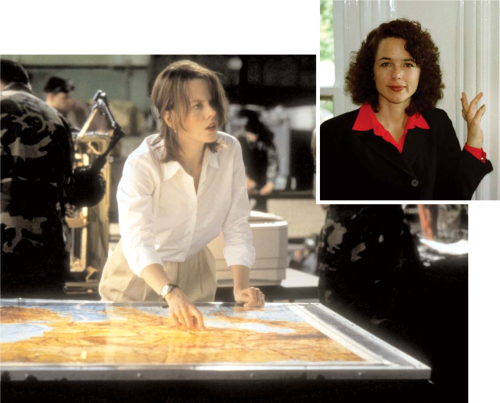
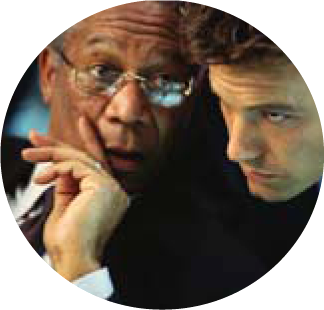
Role playing: Terrorism expert Jessica Stern (right) provided the inspiration for the Nicole Kidman character in The Peacemaker.
Waste not, want not
Martin Sheen almost qualifies more as an activist than an actor. So, the nuclear industry was understandably anxious when it discovered the NBC drama The West Wing, which stars Sheen as a powerful Democratic president, was planning an April 2002 plotline detailing an accident in Idaho involving a truck carrying spent uranium fuel rods.
The West Wing carries a gravitas not many network dramas possess. Then at the critical and commercial peak of its run, the series reached millions of homes each week. This particular episode especially blurred personal politics with art. Former Clinton White House Press Secretary Dee Dee Myers helped craft the nuclear waste story arc, and Sheen has long been a vocal opponent of Yucca Mountain, the proposed nuclear waste depository in Nevada, and has protested at the site many times.
With much political and PR capital at stake, the spin-masters pounced immediately. Those in Nevada opposed to Yucca Mountain saw the episode as free national advertising. “The episode was extremely helpful in raising awareness about waste shipping issues,” Nevada Republican Sen. John Ensign told the Bulletin. “The free media coverage was a great addition to paid advertising and showed that Yucca Mountain has been and will always be a dangerous policy for the United States.”
That's entertainment!
When facts drag down the dramatic arc, audiences should be ready to suspend disbelief. Our experts provide a dose of reality.
24
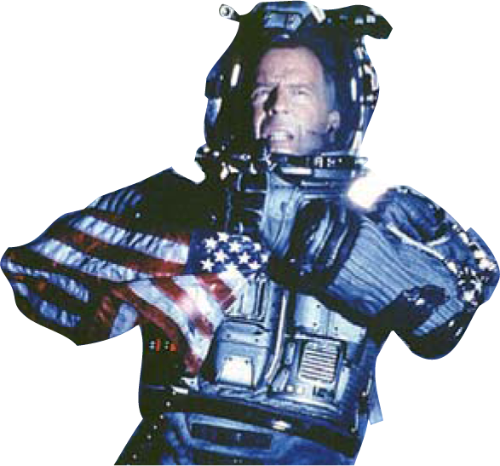
Armageddon
The Peacemaker

The Sum of All Fears
Angry that biased voices framed the waste debate, the nuclear industry attacked the episode's accuracy. The day after it aired, Jack Edlow and David Blee, executives from two nuclear transportation firms, staged a news conference in Washington, D.C., to refute the episode point by point. During the news conference, they played a tape of the show's nuclear-waste segment, analyzing it for what they maintained were gross inaccuracies. “This [episode] might as well have been produced in Las Vegas,” Blee said. “It is part of a calculated campaign being waged by opponents of Yucca Mountain.”
“We want policy makers and the public to have an opportunity to hear from people who really know what they're talking about, rather than guys like Martin Sheen who pretend to be things,” Edlow added.
In Nevada, the industry's reaction fed into the anti-Yucca Mountain movement's spin. Without the industry's ire, the episode might have had less impact nationally–the nuclear waste story line was buried beneath a soapy alcoholism subplot and a parable about taxes. But those in the industry sparked controversy and, in doing so, intensified media coverage. “You can do the least little thing, and they just knee-jerk to it,” says Bob Loux, the director of the Nevada Agency for Nuclear Projects. “[T]hey overreact to the point that it really helps you out.”
In the decades following the nuclear accidents at Three Mile Island and Chernobyl, the nuclear industry has tried to become more savvy about promoting itself. They understand the public is leery about all things nuclear, and have tried to assail these fears with multimillion dollar advertising campaigns, lobbying efforts, and attempts at courting the media. They devised “truth squads” comprised of scientists and engineers to present the industry's position on nuclear matters and a “nuclear energy branding campaign” to better express their viewpoint.
In Washington and in the news media, these strategies have helped make some inroads. But those in the entertainment industry remain unconvinced. What the nuclear industry fails to grasp is that television programs and movies deal in worst-case scenarios. To a screenwriter, fiery nuclear waste and potentially catastrophic explosions provide an exciting dramatic structure–unlike the safe passage of nuclear waste from a U.S. nuclear plant to Yucca Mountain.
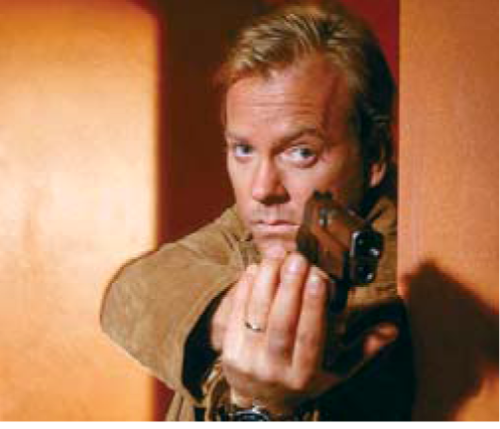
And if those catastrophic scenarios push the envelope of believability, so much the better. A story arc in the latest season of the Fox Network's hit series 24 features our hero, government agent Jack Bauer, in a race against time to thwart Islamic terrorists who have stolen a remote “override device” capable of triggering meltdowns at all of the nation's nuclear power plants.
The Nuclear Energy Institute (NEI), the nuclear industry's lobbying arm, launched a PR counterattack. “I've come to the conclusion that if nuclear plants didn't exist, Hollywood would have to invent them,” Steve Kerekes, a spokesman for NEI, publicly complained. Skip Bowman, the president and CEO of NEI, urged Fox Entertainment Group to issue a disclaimer, since the plotline was “unrealistic and holds the potential to needlessly frighten viewers who are unaware that no such remote override device exists.” (Fox had previously televised a disclaimer on the program, reminding viewers that the “American Muslim community stands firmly beside their fellow Americans in denouncing and resisting all forms of terrorism.”) The NEI's web log reports that, while Fox appreciated the nuclear industry's concerns, it would not issue a disclaimer because 24 is a purely fictional program.
“The very fact that the nuclear industry finds it very difficult to promote and find positive images of itself speaks to an innate suspicion, if not hostility, toward the genie being out of the bottle,” says Mick Broderick, the author of Nuclear Movies and the forthcoming Entertaining Armageddon: Representing the Unthinkable. “And we don't like the look of it.”
Box office bomb
Cold War films such as Fail-Safe, On the Beach, and Dr. Strangelove are cultural time capsules–remnants of a duck-and-cover era when the threat of nuclear apocalypse permeated public discourse. Even the radiation-spawned mutants that populated the B-movies of the period spoke of the public's anxiety over the destructive potential unleashed by the atomic age.
“Nuclear weapons were redundant in the post-Cold War period, but now they have capital because they help us liberate society from asteroids, comets, and alien invasions.”
–author Mick Broderick
Today, we've entered the era of the friendly, functional cinematic nukes. These nuclear weapons aren't the proverbial “destroyer of worlds,” but saviors of humanity. They possess utility and a higher purpose. Twice they've thwarted a giant asteroid from slamming into the Earth (Deep Impact and Armageddon); and once they helped reset the rotation of its core (The Core).
Amazingly, these films reflect the zeitgeist. Polls indicate that nuclear weapons are no longer the number one public fear. (U.S. mayors listed traditional crime and fires as a greater concern to their cities and constituents than a nuclear threat in a survey eight months after 9/11.) “Nuclear weapons have been recuperated during the 1990s,” Broderick says. “These weapons were redundant in the post-Cold War period, but now they have capital because they help us liberate society from asteroids, comets, alien invasion, what have you. Previously, they were only there to destroy society.”
Indeed, the public now cites biological terrorism as its number one fear. Jessica Stern, writing in the Winter 2002/2003 issue of the journal International Security, wryly noted that, although malaria kills one million people per year and Ebola and Marburg have collectively killed fewer than a thousand, “it is Ebola and Marburg that have inspired terrifying books and movies. We respond to the likelihood of death in the event the disease is contracted, rather than the compound probability of contracting the disease and succumbing to its effects.” It is the exotic nature of such diseases, she argues, particularly in industrialized societies, that increases “their hold on our imagination” and increases the “dread factor.”
Hello, reality? In the 2002 terrorism thriller The Sum of All Fears, Ben Affleck yells into a functioning cell phone in the immediate aftermath of a nuclear attack.
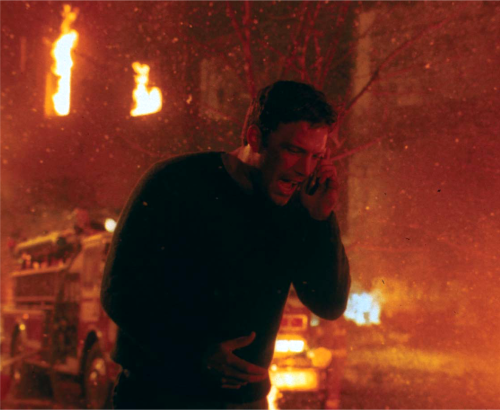
Bioterrorism engenders fear also because it is ubiquitous (a contagion knows no geographic borders) and arbitrary (an anthrax-filled letter can arrive in any mailbox). By contrast, to the extent that nukes remain a source of concern, they have perversely morphed into a “localized threat”–not something that can lay waste to a continent, but to a single city unlucky enough to be targeted by terrorists. In The Sum of All Fears, a nuclear detonation is reduced to a plot point. Little attention is paid to the thousands of people who would have been incinerated. While Cold War-era films like Testament and The Day After depicted, in sometimes agonizing detail, the slow deaths resulting from radioactive fallout, Sum of All Fears superagent Jack Ryan stands on the outskirts of ground zero shouting into his (miraculously working) cell phone.
“I remember walking out of there saying, ‘Oh jeez,’” recalls Holgate about seeing the film. However, her professional distaste notwithstanding, she is skeptical that such depictions are taken seriously. “James Bond is not where you go for the user's manual for a car,” Holgate notes. “These films are part of a genre that people understand is a thriller. It's a story.”
Jim Walsh, executive director of Harvard University's Managing the Atom Project, agrees. “At the end of the day, movies and TV programs really aren't going to be the defining elements of the public's perceptions,” he says. “The public perception of radiation and radiation-related events has been decades in the making.” Broderick is not so sure: “These issues do have a resonance that operates not necessarily overtly or consciously.”
If it's difficult to gauge the impact that films are having on the public psyche, it may be partly because the very concept of plausibility is now stretched to its limits. In the aftermath of 9/11, the satirical newspaper The Onion ran the darkly comical headline: “American Life Turns into Bad Jerry Bruckheimer Movie.” It is an apt description. We now live in an era in which we are loathe to dismiss any potential terrorist plot, no matter how elaborate, as impossible. The media bombard us with speculative doomsday scenarios that lack analysis and context. At the policy-making level, the public is confronted with a color-coded terrorist alert system that nobody entirely understands, and a government that includes water parks and a miniature golf course among its list of potential terrorist targets.
Against such a backdrop, credible films such as Dirty War may struggle to stand out, let alone galvanize the public. Plausible terrorist scenarios that merit increased scrutiny–like a commercial airliner crashing into a power plant–are eclipsed by fantastical plotlines, as in 24. And those who see Hollywood as a medium for political change will learn that popular culture can only do so much–especially when government still hasn't quite worked out the story line.