




Abstract
The United States is considering relaxing export controls so it can share missile defense technology with its friends–a move that could help its enemies.
“The gravest danger our Nation faces lies at the crossroads of radicalism and technology,” declares the White House in its National Security Strategy. “We will build defenses against ballistic missiles and other means of delivery. We will cooperate with other nations to deny, contain, and curtail our enemies' efforts to acquire dangerous technologies.”
In principle, defending the homeland from missile attack and denying adversaries offensive missile technology should be complementary goals. Yet a growing chorus of missile defense proponents both within and outside the Bush administration now argues that current efforts to limit the exports of ballistic missile technology are stifling international efforts to cooperate on building an effective missile defense system. In December 2002, just six months after the United States withdrew from the Anti-Ballistic Missile Treaty–an agreement that President George W. Bush called a “Cold War relic”–the White House issued a document, National Security Presidential Directive (NSPD)-23, that appeared to place the Missile Technology Control Regime (MTCR) in its crosshairs. 1
A voluntary, nonbinding arrangement that currently includes 34 countries, the MTCR was formed in 1987 and relies on strong export controls to limit transfers of equipment and technology to retard missile proliferation. A list of controlled items appears in the MTCR Annex and is divided into two categories. Category I items, which face the strictest export controls, are complete missile systems capable of carrying a 500-kilogram pay-load at least 300 kilometers (parameters that reflect the weight of a primitive nuclear weapon and a strategically important range). Category II items, which are considered for export on a case-by-case basis, are missile-related components including propellants, structural materials, specific types of computers, launch support equipment, and flight control and navigation equipment.
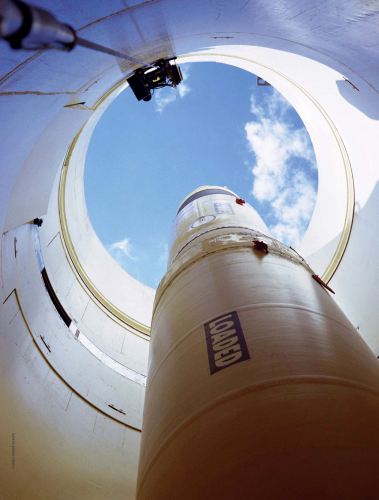
The problem, as the Bush administration sees it, is that many of those Category II items are essential components of a ballistic missile defense system. And working with foreign countries to develop and deploy that technology has emerged as a key element of the White House's strategy. In part, the administration is motivated by a belief that missile defenses are of such benefit that it has a moral requirement to share them. And, in part, it is motivated by the desire to demonstrate that missile defense is not a self-serving plan meant to increase U.S. military dominance. Of course, missile defense cooperation also brings with it the advantage of gleaning expertise from partners' technological capabilities.
Thus, NSPD-23 suggests that the time has come to reconsider the onerous export controls imposed by the MTCR. “As part of our efforts to deepen missile defense cooperation with friends and allies, the United States shall seek to eliminate unnecessary impediments to such cooperation,” the security directive notes. “The secretaries of Defense and State shall review existing policies and practices governing technology sharing and cooperation on missile defense, including U.S. export control regulations and statutes, with this aim in mind.”
Although originally scheduled to be completed within six months, these export control reviews are still a work in progress. The administration has offered no explanation for the delay. If that review process culminates in a decision to dilute MTCR export controls, it is a decision that the United States will come to regret. The technology that the White House labels as purely “defensive” has many applications that could aid would-be adversaries in the development of offensive ballistic missiles. Worse still, that technology could provide other countries with the means to design countermeasures that would thwart the very missile defense program the Bush administration seeks to deploy.
Slow but steady
Proponents of the MTCR are the first to admit that it has several shortcomings. As a voluntary arrangement that relies on the “good faith” of its members, it contains no prescribed sanctions against countries or companies that violate its guidelines. The dual-use nature of missile technology, which is also used for space launch vehicles, makes regulation inherently difficult. Perhaps the MTCR's biggest problem is one of perception: Like all arms control regimes, its failures are obvious, while its accomplishments–the absence of proliferation–are harder to recognize and get credit for.
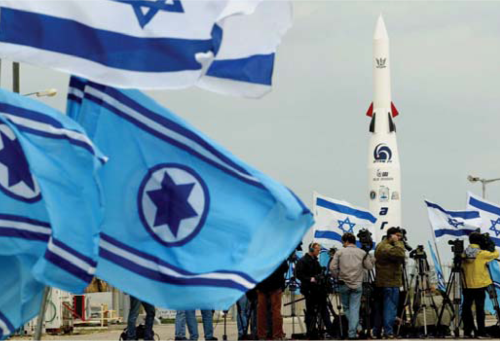
Team effort: Israel's Arrow missile defense system.
Yet, the MTCR is not without success stories, like that of Argentina's Condor ballistic missile development program, which the regime brought to a halt. And some missile nonproliferation failures can even be seen as successes for the MTCR. North Korea's trade in its grossly outdated Scud missiles is possible only because interested buyers cannot get access to more modern alternatives, even illicitly.
Moreover, the United States has worked successfully to strengthen the regime's export controls. In 2002, members expanded the MTCR's mandate, pledging to prevent proscribed technologies from falling into the hands of terrorist organizations. And, one year later, regime members added “catchall” provisions to the export controls, enabling states to control items destined for missile programs, even if they are not specifically regulated by the regime. Also, in recognition of the growing threat of biological and chemical weapons, new controls were adopted regulating the export of unmanned aerial vehicles (UAVs) “designed or modified” for aerosol delivery.
Yet, since NSPD-23 became public, debate among analysts and experts about the role of the MTCR has intensified, and calls to eliminate regime controls that might impede missile defense cooperation are gaining wider currency. In October 2003, the Washington Post's Bradley Graham described the MTCR as a “stumbling block” to missile defense cooperation. 2 Last year, Steven Lambakis, a senior analyst at the Virginia-based National Institute for Public Policy, opined in Defense News that “while big steps have been taken to internationalize the U.S. missile defense program, we are about to stub our toe on a bureaucratic stone called the Missile Technology Control Regime. This stone needs to be removed because the risks of remaining defenseless against a missile attack far outweigh the risks of discarding the MTCR's outmoded guidelines.” For Lambakis and like-minded people in and outside of the administration, it is “ironic” that the MTCR “now targets all missile types, even defensive missiles.” 3
Critics of the MTCR often cite the Arrow–Israel's missile defense system that was developed with U.S. funds and assistance–as “Exhibit A” to illustrate the supposed absurdity of the regime. Due to MTCR restrictions, the United States could not build and ship complete Arrow interceptor missiles to Israel because they are Category I missiles. The solution: Boeing produced 51 percent of the components stateside, then shipped them to Israel for assembly. Israel Aircraft Industries produced the other 49 percent. In 2003, when the United States and Israel (a non-MTCR country) were ready to test the Arrow system, they hit another bump in the road. U.S. export control officials worried that after Israel shipped Arrow missiles to the United States for testing, a return shipment to Israel of any untested missiles would be prohibited by the MTCR. The problem was a legal technicality, and was resolved through a legal technicality–Israel retained legal possession of the missiles throughout the testing process.
Echoing the sentiment of MTCR critics, journalists Amy Svitak and Gopal Ratnam wrote in Defense News: “The problem faced by the Arrow testers highlights the friction between two goals in U.S. policy: curbing the spread of ballistic missile technology and cooperating with allies to develop an international missile defense system.” Yet the Arrow argument is fundamentally irrelevant. Looking beyond the controversy, it is clear that the MTCR worked exactly as it should: The restrictions prompted the careful examination of a missile technology transfer, and they did not prevent cooperation on missile defense. The aerospace industry may complain that these regulations are a burden, but that is the price of a consistent and strong export policy on sensitive missile technology.
With friends like these: Pakistan's A. Q. Khan (top, on poster) stole, then sold, nuclear technology; U.S. Stinger missiles, first sold to anti-Soviet mujahideen, are now in the hands of Afghan militias (far right); old pals Richard Nixon and Iran's Shah Reza Pahlevi in 1969.

The buddy list
With the exception of Russia, an MTCR member, the Bush administration has not yet identified potential missile defense partners. The founding members of the MTCR–Canada, France, Germany, Italy, Japan, and Britain–are probable contenders, as is Australia. (Although Canada has recently declined to participate in the North American missile defense system.) But, beyond these countries, the White House's concept of “friends and allies” is vague. A second tier of countries is likely to include Israel, Taiwan, and South Korea–perhaps even Pakistan and Egypt. 4
Yet when it comes to sharing missile defense technology, especially with non-NATO countries, there may be such a thing as too many friends. As Henry Sokolski, the executive director of the Washington-based Nonproliferation Policy Education Center, has pointed out, it is difficult for the United States to hold others accountable for their missile exports, when they can argue that the United States transfers missile defense and UAV technologies to a number of “non-security treaty” countries, including the United Arab Emirates, Saudi Arabia, India, Pakistan, Taiwan, Israel, and Egypt.
Another concern is that weapons can outlast alliances. When the French sold Exocet missiles to Argentina in the late 1970s, they did not foresee that their British allies would face those very missiles in the Falkland Islands war in 1982. And the United States has had reason to regret its sale of F-14 fighter planes to the shah of Iran. Similarly, some of the estimated 2,000 Stinger surface-to-air missiles transferred to mujahideen in Afghanistan in the 1980s to fight the Soviets might now be in the hands of Taliban and Al Qaeda fighters.
The gravest danger in sharing missile technology is that of secondary or tertiary proliferation–equipment and technology may end up where it's not supposed to. Even the closest and most reliable U.S. allies, Britain and Australia, have exhibited shortcomings in their efforts to stop the pass-through of sensitive equipment. Britain, for example, has an arms embargo proscribing weapons sales to Iran, but no trade embargo. In 2002, the BBC exposed the British Department of Trade and Industry's approval of the sale of beryllium, a material used in nuclear weapons, to Iran, because the transfer was not considered an arms sale. 5 The more countries the United States shares technology with, the more the proliferation risk grows. And the less advanced a nation's missile program, the bigger the boon U.S. missile defense technology would be. This concern is not merely theoretical. In Pakistan–a country that is one of the most recent additions to the U.S. “friends” list–A. Q. Khan's recently exposed illegal nuclear underground network depended on knowledge stolen from countries such as Germany and the Netherlands.
As for Russia, the arsenal it inherited from the Soviet Union is in itself reason enough to court Moscow's cooperation on security issues. But this effort is not without serious risks. In its June 2002 Unclassified Report to Congress on the Acquisition of Technology Relating to Weapons of Mass Destruction and Advanced Conventional Munitions, the CIA identified Russia, North Korea, and China as “key suppliers” in the global proliferation chain. It is not unthinkable that Russia might share U.S. missile defense technology with China. Moscow has already directly assisted Beijing's weapons program, which has also benefited from technology and know-how gleaned from its dealings with the West. Often these sales begin legally, but are diverted for military purposes. In 1994, for example, McDonnell Douglas sold machine tools to the China National Aero-Technology Import and Export Corporation for use in the Trunkliner commercial aircraft program, but a number of these tools were diverted to the Nanchang Aircraft Manufacturing Company–a producer of cruise missiles. 6 China, in turn, has shared critical military technology with Pakistan, Iran, Libya, and North Korea. The technology that the United States shares with its small circle of friends could over time become the possession of a wide array of adversaries.
Making missiles easy
Is it possible to export technology that is useful only for missile defense, but would not aid development of a missile offense? Wishful thinking. Strip away the semantics surrounding this debate, and you are left with the bare reality that a missile is a rocket equipped with a guidance system that can be pointed in any direction.
Rockets use either liquid- or solid-propellant; the technologies for each are very different. A major danger of looser export controls on missile defense-related technology is that it would allow a proliferator to move from liquid- to solid-fuel rockets. In general, liquid propellants are more efficient at lifting payloads because they contain more energy for a given weight than do solids. But volatile liquid fuel is difficult to store long-term. Solid fuel can stay stable for years and be used on a moment's notice. Because of these differences, space launch vehicles tend to use liquid propellants, while solid rockets are strongly preferred by the military.
In principle, a defensive ballistic missile interceptor could use either solid or liquid propellants. In practice, solid propellants are required. An interceptor needs to do more than get a certain payload to a certain place–it needs to get the payload there fast if it is to meet the oncoming missile halfway through its flight. While a liquid propellant rocket could be designed for rapid acceleration, the technical obstacles are formidable. Solid fuel rockets have a higher acceleration rate and allow for a more efficient interceptor design.
In their efforts to develop ballistic missiles, nascent proliferators will almost certainly start out with the militarily less desirable (but technologically less sophisticated) liquid-propellant rockets. However, if those countries gained access to missile defense technology, they could gain the know-how to speed the shift from liquid- to solid-propellant offensive missiles. That's bad news from the perspective of missile defense proponents. For starters, solid-fuel rockets are more mobile, making them harder to locate and destroy on the ground. Secondly, launch preparation is simpler and faster, reducing the window for intelligence to provide advance warning. And, finally, since solid-fuel missiles possess faster acceleration, they are much harder to hit.
Indeed, defensive rocket technology would even improve the offensive capabilities of nations that already possess long-range, solid-fuel rockets. The performance demands of a defensive missile exceed those of an offensive missile by almost any measure. Technologies essential to missile defense, such as high-temperature nozzles, filament-wound rocket motor casings, and high-energy propellants, can all be applied to offensive missiles to give them longer range, greater speed, and larger payloads.
Similarly, the performance demands for guidance and control in defensive missiles are greater than those of offensive missiles. An offensive missile targets an entire city; a defensive interceptor targets a solitary reentry vehicle, perhaps only a meter wide. Moreover, while the target of an offensive missile is typically a fixed point, the interceptor must strike a moving target–hitting a bullet with a bullet, as the saying goes. Loosening the MTCR restrictions on exports of guidance and control systems would likely allow potential adversaries to enhance their targeting systems.
Sixth sense: Exporting infrared sensor technology could give adversaries the know-how to evade missile defenses.
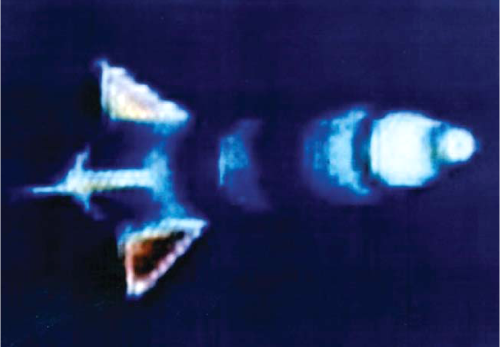
Even components of missile defense that have no apparent offensive capabilities could pose a long-term threat. The current U.S. defensive missile design provides an example. Radar detects and tracks the attacking missile. The interceptor is launched and, with information from the radar, is guided to a target “box.” Once inside this space, the interceptor's homing vehicle will pick up the enemy warhead on its infrared sensor, and, based on those sensor readings, the homing vehicle will guide itself to a collision with the warhead. (It remains to be seen whether this system will actually work as planned, but it is described here as it is meant to function.) This infrared homing sensor has no lethal applications. The United States could export that technology with complete confidence it would not show up in the next generation of offensive missiles. But, exporting the guidance technology or homing vehicle would allow another nation to determine exactly how sensitive the sensor is, what wavelengths of light it detects, its field of view, and its agility. In effect, the United States would deliver to its potential adversaries the precise technical specs required to build decoys or countermeasures to outwit U.S. interceptors. Missile defense already pushes the boundaries of what is physically possible and technically feasible, and anything that helps the attacker build countermeasures will make ballistic missile interception impossible.
The best defense
Those who portray the MTCR as an impediment to homeland security would do well to remember the underlying nature of the threat: If the crux of national defense is an evolving missile defense system, then the key to success is to evolve that defense faster than enemies make technological advances. The MTCR has done that by slowing the proliferation of ballistic missile technology, thus delaying advances in enemy technology while the United States continues to improve its defense capabilities.
What are the best options for sharing ballistic missile defenses? If exporting defensive missile technology, components, and complete systems will aid the attackers at least as much as the defenders, there is no gain in weakening the MTCR's controls, and much to be lost. If sharing missile defense with the world is important, then the United States should, along with other MTCR nations, form a consortium to share not technology or missiles, but the service. 7 By installing and maintaining complete missiles, the United States could extend the umbrella of missile defense over its allies–without the risks associated with technology transfers. The defended nation would operate the launchers, even conduct live firings and test intercepts, but would not be allowed to disassemble the missile, which would remain under the formal ownership of the consortium. To remove any hint that the United States is motivated by profits, this service should be highly subsidized by the missile supplier. To allay fears that the missile supplier could apply political pressure by threatening withdrawal of the missiles, no member could veto the consortium's services.
The best defenses are multilayered; for ballistic missile defenses, one would ideally have boost-phase, mid-course, and terminal defenses for maximum protection. But the real first layer of defense is export controls. If the United States weakens those controls for the sake of an un-proven missile defense, it risks a regime that, though flawed, does work.
Footnotes

2.
Bradley Graham, “U.S. Controls Hamper Foreign Role in Missile Defense; Bush-Ordered Review of Restrictions Is Running Late and Into Disagreements on Exceptions,” Washington Post, October 19, 2003, p. A27.
3.
Steven Lambakis, “MTCR Could Cripple Missile Defense,” Defense News, vol. 19, no. 7, February 16, 2004, p. 37.
4.
Henry Sokolski, “Missile Nonproliferation and Missile Defense,” Heritage Lectures, no. 761, July 12, 2002.
5.
“UK ‘Sells’ Bomb Material to Iran,” BBC Radio, September 23, 2002.
6.
“China's Missile Imports and Assistance,” chart prepared by the Center for Non-proliferation Studies, Monterey Institute of International Studies, for the Nuclear Threat Initiative.
7.
There are several proposals for internationalizing the nuclear fuel cycle so that only a handful of nations will have the ability to enrich uranium or reprocess plutonium. These suppliers would provide uranium, probably at or below market rates, to the world's reactors, but the uranium would remain under the ownership and control of the international suppliers' consortium. Similarly, MTCR nations could provide ballistic missile defense services.