




Abstract
Fears about nuclear terrorism have been part of the atomic age since its birth. Even before the first nuclear detonation lit up the New Mexico sky, the early atomic architects speculated–and anguished–over the possibilities. Writing to President Franklin Roosevelt in 1939, Albert Einstein conjectured, “A single bomb … carried by boat and exploded in a port, might well destroy the whole port together with some of the surrounding territory.”
After the war, the nightmare scenarios persisted. Writing in the New Republic in 1945, nuclear scientist Harold Urey reflected, “An enemy who puts 20 bombs, each with a time fuse, into 20 trunks, and checked one in the baggage room of the main railroad station in each of 20 leading American cities, could wipe this country off the map.”
Other prognosticators were more sanguine. In one of the first think pieces by a social scientist, Bernard Brodie reasoned, “The new potentialities which the atomic bomb gives to sabotage must not be overrated.” Brodie, who became a leading nuclear weapons strategist, argued that the novelty of atomic engineering, the massive size of the weapon, and the difficulty of smuggling such a device into the United States reduced the risk “at least for the present.”
Fortunately, the world has yet to witness any act of nuclear terrorism. Still, students of terrorism have continued to ponder the prospects. In the 1970s, the Rand Corporation's premier terrorism expert, Brian Jenkins, wrote: “Whether any of the current potential nuclear terrorists will decide to actually go nuclear remains an unanswerable question. We can identify potential adversaries and describe their objectives, their capabilities, and the likely modes of operations if they decide to go nuclear, but we cannot predict with any confidence whether any will ever make the decision.”
Today, insights have hardly improved. This was evident in the December 2002 Gilmore Commission report on weapons of mass destruction (WMD) terrorism: “It continues to be surprising that the potential power of unconventional weapons remains untapped by terrorists. As the panel concluded in 1999, ‘The hurdles faced by terrorists seeking to develop true [WMD] are more formidable than is often imagined.’ That conclusion is equally valid in 2002.”
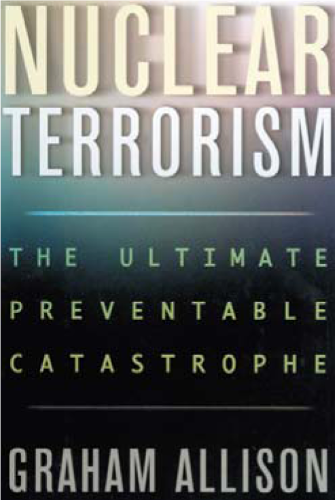
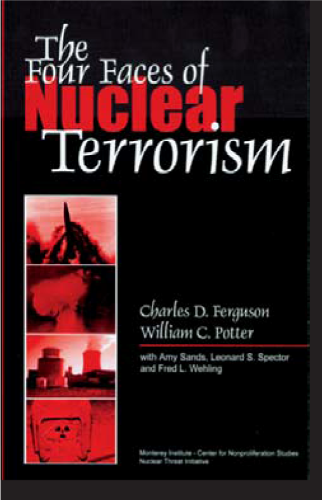
Whether that conclusion is still valid is addressed in two important and timely books, Nuclear Terrorism and The Four Faces of Nuclear Terrorism. (Publication of Four Faces will be assumed by Routledge this spring.) Both books seek to shed new light on a range of terrorist threats–nuclear weapons, reactor sabotage, and dirty (radiological) bombs–and both present possible solutions for the post-9/11 world. Four Faces, by Charles D. Ferguson and William C. Potter, et al., is more academic, detailed, and comprehensive; Graham Allison's Nuclear Terrorism is more passionate and focused on fixes.
Allison plunges the reader into the “terrifying prospect” by recounting an October 11, 2001 briefing to President George W. Bush, in which then-CIA Director George Tenet reported that Al Qaeda had placed a 10-kiloton nuclear bomb in New York City. It turned out to be bad intelligence, but this and other frightening vignettes about terrorist ambitions and attempts to acquire nuclear weapons and materials make for riveting reading. They also raise questions: Who are the would-be nuclear terrorists, and what motivates them? Do they have the capacity to initiate nuclear violence? How might such risks be reduced?
Ferguson, now with the Council on Foreign Relations, and Potter, director of the Center for Nonproliferation Studies at the Monterey Institute, answer the first question by ranking possible culprits. “Apocalyptic” groups–those that imagine the end of the world order would be beneficial–top the list. The authors hesitate to make a blanket generalization that all politico-religious groups, including Osama bin Laden's terrorist progeny, aim for nuclear malevolence (with the exception of Al Qaeda). Because such nuclear terrorism would undermine political objectives and invite retribution, the authors have confidence that nationalists and separatists will shun the atom. Likewise, killing thousands of people would be outside the boundaries of single-issue activists like animal liberation, anti-abortion, or environmental groups.
Allison, a Harvard professor, insists that nuclear terror has a broader constituency. Beyond the doomsday cults and Al Qaeda, he writes, there exists “a rogues' gallery of other terrorist groups that may find nuclear acts attractive in the years to come.” As evidence, Allison says that Hezbollah is the “A-Team of terrorists” that could gravitate to the bomb; the Chechens “have a long-standing interest [in] acquiring nuclear weapons”; and a 2004 CIA estimate states that more than 20 terrorist groups are pursuing WMD.
Such conclusions beg the question: With vulnerable reactors and weapons-usable material scattered about (Nuclear Terrorism talks about “tens of thousands of softball-size lumps of highly enriched uranium and plutonium” at poorly secured Russian sites, and Four Faces mentions thousands of sources for dirty bombs worldwide), why has there been no nuclear terrorism? Neither book provides a definitive answer, but both contend that it is only a matter of time–unless safeguards are dramatically improved.
Ferguson and Potter forecast that, given its relative ease, “a radiological attack appears to be all but certain within the coming years.” They may be right, but nuclear terrorism prognostication has not been reliable. Experts have done a far better job identifying how to reduce nuclear risks. According to Four Faces, the greatest nuclear threat is the use of an intact Soviet-era nuclear weapon–detonation would destroy the heart of any city. Of course, the authors acknowledge, it wouldn't be easy for terrorists to obtain–much less transport and detonate–such a weapon.
Despite concern about this, Allison takes solace in the fact that “not a single former Soviet nuclear weapon has been found in another country or in an international arms bazaar.” Nuclear material is another matter, as Allison reports that there have been hundreds of incidents of theft. Although he implies that most were insignificant, that they took place at all indicates a security failure. The Four Faces authors are somewhat less concerned about this, noting that even if terrorists did get a hold of nuclear weapons material, few would have the capacity and motivation to unleash a nuclear attack. Still, they grant the peril remains significant.
Allison is optimistic that the problem can be solved and says that to do so the United States must overcome both the Bush administration's “lethargic” funding of the Nunn-Lugar Cooperative Threat Reduction initiative and the reemergence of Cold War suspicions. Focusing on eliminating physical nuclear dangers rather than terrorists' motivations, Allison writes, “All the United States and its allies have to do to prevent nuclear terrorism is to prevent terrorists from acquiring highly enriched uranium or weapons-grade plutonium.” To this end, he recommends enforcing the “doctrine of three nos”–no poorly safeguarded nuclear weapons material, no new national capabilities to enrich uranium or reprocess plutonium, no new nuclear weapon states.
Unfortunately, these objectives and similar proposals advanced by Ferguson and Potter butt up against politics in the United States and elsewhere. Psychologists might call it “nuclear denial.” How else does one explain the U.S. reticence to better defending its own nuclear power plants against air assault after 9/11?
The authors of both books agree that some headway in reducing risks is being made–but not fast enough. While each book furnishes a set of general principles for moving forward, neither provides a detailed template for action. A valuable follow-up to either book might be an itemized list of dangerous or deficient sites in Russia and elsewhere. Such a checklist would provide sympathetic government officials and nongovernmental organizations (NGOs) with the data to promote responsible public policy.
Recently, the watchdog group Committee to Bridge the Gap put a petition before the Nuclear Regulatory Commission to revise the design basis threat (the security standard for nuclear power plants). The action, which coincides with a call in Four Faces to enhance the standard, illustrates what NGOs can attempt with sufficient data. Unfortunately, the petition marks the continuation of a long, frustrating battle to overcome government and industry resistance to better safeguards. As the coauthor of a Bulletin article that identified problems with the design basis threat nearly two decades ago (“Protecting Reactors From Terrorism,” March 1986), I find it astonishing that we are still debating the deficiencies.
Let's hope it will not take another 20 years–or some terrible incident–to force the United States and other countries to reduce the risks of nuclear terrorism. It will not be easy, but with enough political savvy, resources, and luck we can end the 60-year-old nuclear nightmare.