




Abstract
As the costs of the Iraq War–in lives and money–continue to rise, public and political support continue to drop. Now is the time to find a way out.
In the early 1970s, two U.S. senators harnessed anti-Vietnam War sentiment when they introduced legislation to end U.S. involvement in that misbegotten war. Oregon Republican Mark Hatfield and South Dakota Democrat George McGovern tried in 1970 to force the withdrawal of U.S. troops by a certain date. While the legislation lost twice in successive years, it moved the debate from demonstrations in the streets into the halls of political power and helped spark a national debate on finding a way out of Southeast Asia. The discussion generated a national push to remove U.S. troops from Vietnam that kept the heat on President Richard Nixon and Secretary of State Henry Kissinger. The Nixon administration was forced to follow through with an exit strategy that was euphemistically called “Vietnamization.”
The opportunity for a McGovern-Hatfield moment may be at hand once again when Congress considers the next installment of the bill–$80 billion–to pay for the wars in Iraq and Afghanistan.
At the time of this writing, Iraqi elections were approaching and the situation on the ground in Iraq continuing to deteriorate. The Bush administration proclaims continued progress toward a democratic, free Iraq, but its claims are undercut by mounting insurgent attacks on U.S. soldiers, on Iraqis cooperating with the U.S.-backed government, and on ordinary Iraqis.
In an echo from Vietnam, last November American combat forces launched a major operation in Falluja that destroyed the city, ostensibly to save it from insurgents.
U.S. intelligence assessments paint a grim picture of Iraq that is completely at odds with the ever-optimistic views of Bush officials. The intelligence community estimates that the January 30 elections, rather than producing a turn toward democracy, could lead to civil war between Shiite and Sunni Muslims, according to the January 18 Miami Herald. Further, according to the Herald, Iraq appears to be replacing Afghanistan as the principal breeding ground for international terrorists.
The neoconservatives who initiated the Iraq War and lust after further adventures in Iran and Syria argue for staying the course in Iraq. For them, victory is the only option. And many on the left feel that, despite their opposition to the war, the United States “broke” Iraq and is obligated to stay and “fix” it. (The reality on the ground, however, is that after almost two years of conflict, American forces have been so discredited by their actions that “fixing” Iraq is no longer a possibility for the United States.)
Many in the foreign policy establishment, as well as conservative thinkers, believe the opposite–that it is time to find an exit strategy. The Bush administration suffered a major political embarrassment when Brent Scowcroft, George H. W. Bush's national security adviser, told a January 6 Washington, D.C., convocation: “With Iraq, we clearly have a tiger by the tail. And the elections are turning out to be less about a promising transformation, and it has great potential for deepening the conflict. Indeed we may be seeing an incipient civil war at the present time.” George W. Bush was forced to contradict Scowcroft the next day.
Zbigniew Brzezinski, Jimmy Carter's national security adviser, agreed at the convocation that the U.S. policy was going nowhere: “While our ultimate objectives are very ambitious, we will never achieve democracy and stability without being willing to commit 500,000 troops, spend $200 billion a year, probably have a draft, and have some form of war compensation.” This kind of escalation is clearly not in the works.
Conservative leaders such as National Review editor William F. Buckley and Free Congress Foundation chairman Paul Weyrich have called for withdrawal of U.S. troops from Iraq. Conservative Edward Luttwak, senior fellow at the Center for Strategic and International Studies in Washington, D.C., even outlined in Foreign Affairs how the United States might negotiate its way out.
Few members of Congress were willing to go so far out on a limb. Debate on Iraq was muted during the 2004 election campaign, partly because Massachusetts Sen. John Kerry and Bush both called for staying in Iraq. Kerry criticized Bush's handling of the war, but he had voted in 2002 to authorize the use of force in Iraq.
A few Republican senators, such as Arizona's John McCain, Nebraska's Chuck Hagel, and Indiana's Richard Lugar, also criticized how the administration was handling the war, but they advocated a smarter war instead of no war at all. Only a few of the most liberal Democratic House members were willing to advocate outright withdrawal.
Yet public support for the war is eroding. According to a January 19 Los Angeles Times poll, the number of Americans who believe that Iraq was “worth going to war over” had sunk to a new low of 39 percent. A January 18 Washington Post poll indicates that 58 percent of Americans disapprove of Bush's handling of Iraq; only 40 percent approve. Still, about 55 percent of Americans oppose withdrawing troops from Iraq; fewer than 40 percent support withdrawal. As a result, politicians feel comfortable simply objecting to the war, rather than demanding an American exit.
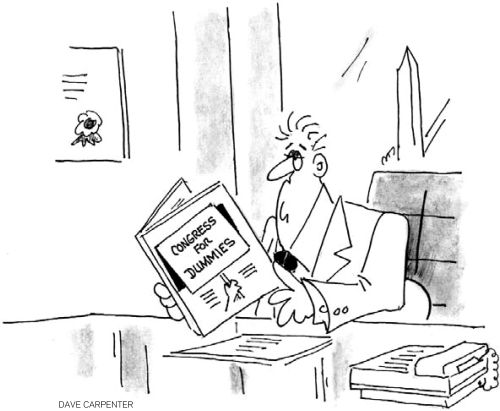
But politicians' attitudes toward the Iraq War are changing. This is due partly to the November presidential election. Traditional Republicans, who despised President Bill Clinton's “nation building,” were freed by Bush's reelection to revert to their skepticism about overseas U.S. military adventures.
Two other milestones will free politicians to back withdrawal from Iraq. The first is the Iraqi elections. With Saddam Hussein ousted and fledgling democratic procedures launched, it can be argued that the United States succeeded in two important objectives. It brings to mind the adage famously expressed by Sen. George Aiken of Vermont during the Vietnam War: The United States could escape the quagmire by declaring victory and going home.
The second milestone will come in February, when the president presents Congress with the next installment of the growing bill for the Iraq War. By the end of 2004, Congress had appropriated $187.5 billion for the wars in Iraq and Afghanistan. A November 2003 request for war funds–$87.5 billion–had already sent a stark message to the American people: Despite the president's claim that major combat operations were over, the costs in dollars and lives continue to rise. Assurances from the neocons that Iraqi oil would pay for the war proved false.
Anti-war activists look to the Senate as the focal point for action. Permissive Senate rules allow a floor vote on troop withdrawal; more restrictive House rules would probably prevent debate. By the end of January, no senator had offered a new amendment in the vein of McGovern-Hatfield. But in a January 27 speech at the Johns Hopkins School of Advanced International Studies, Sen. Edward Kennedy of Massachusetts made comparisons to Vietnam and urged Bush “to extricate” America from Iraq as early as possible in 2006.
The Senate is expected to vote on February's Supplemental Appropriations request–and any anti-war amendment that may come up–sometime in March or April, permitting ample time to rally a national campaign in support of withdrawing from Iraq.
It is unlikely that the Senate will pass a troop withdrawal amendment. Republicans picked up seats in both the House and the Senate and may remain reluctant to oppose Bush. But such an amendment would stimulate debate in political and governmental circles on finding a way out of Iraq. Senators McGovern and Hat-field lost their amendment battles, but eventually won when all American troops were withdrawn from Vietnam in 1973.