




Abstract
A quarter century after the accident at Three Mile Island, remarkably few questions about the health effects of that near-catastrophe have been asked–let alone answered.
Three Mile Island, March 28, 1979.
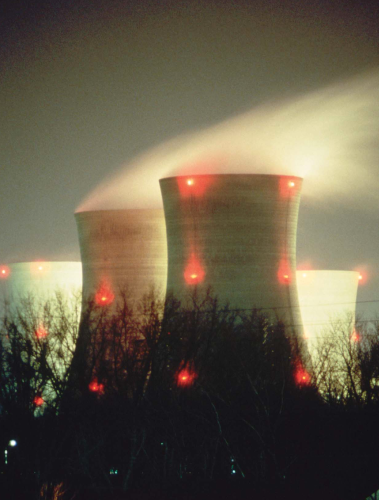
March 28 marked the twenty-fifth anniversary of the partial core meltdown at the Three Mile Island nuclear power plant in Pennsylvania. A series of events near the plant commemorated the worst nuclear power plant accident in U.S. history, but drew only passing reference in the national media and modest coverage by local reporters.
A press conference featuring the University of North Carolina's Stephen Wing and the Union of Concerned Scientists' David Lochbaum merited only a small story in the following day's Harrisburg Patriot-News, and the article failed to acknowledge Wing, who discussed his published findings on cancer rates near the stricken plant. An article and editorial in the March 28 Philadelphia Inquirer completely omitted the topic of health effects.
So, 25 years after the accident, the question, “Did anyone die because of Three Mile Island?” remains largely unanswered.
Soon after the meltdown, a number of anecdotes about symptoms, disease, and death among local humans, animals, and plants began circulating. And some local citizens conducted door-to-door surveys documenting potential disease clusters, collecting the type of information that may be useful to professional researchers when they structure their study methodology. But the “gold standard” of health research is the publication of articles in professional, peer-reviewed journals.
A visit to the National Library of Medicine's Web site shows 121 journal articles in response to the key words “Three Mile Island.” The site documents that the initial reaction from the scientific community was swift; just over two years after the accident, 31 articles had already been published. Some discussed attempts to measure the radiation doses to which the local population had been exposed. Others examined emergency preparedness in the area.
A few research heavyweights contributed estimates of potential health risks to local residents. These estimates were uniformly low. Arthur Upton, former head of the National Cancer Institute, projected that there might be a single additional cancer death among persons living within 50 miles of the plant as a result of radiation absorbed from Three Mile Island. Shields Warren, a longtime member of the U.S. Atomic Energy Commission, estimated two additional cancer deaths.
The early literature included no articles with data on actual changes in local disease and death rates after the accident. Moreover, six of the 31 articles focused on the topics of stress-related illness and psychological suffering as a result of the accident. The U.S. Public Health Service began a mental health survey of the area. These efforts were bolstered by the conclusion of the Kemeny Commission, which had been established by President Jimmy Carter, that the only health threat Three Mile Island posed to the local population was mental distress.
The Kemeny Commission concluded that mental distress was the only health threat the accident posed to local residents.
After the meltdown one would have expected to see some articles featuring local health statistics–especially statistics relating to the very young. The developing fetus and infant are much more susceptible than adults to the effects of ionizing radiation. In addition, reports of elevated disease rates in the youngest residents near the plant quickly surfaced.
Pennsylvania Health Commissioner Gordon MacLeod publicly stated that downwind from the plant the number of babies born with hypothyroidism jumped from nine in the nine months before the accident to 20 in the nine months after. MacLeod reasoned that the thyroid gland was affected by the large amount of thyroid-seeking iodine 131 released from the plant. He also emphasized the increase in deaths of infants within a 10-mile radius, as did Ernest Sternglass, a University of Pittsburgh physicist. In the six months after the accident, 31 infants living within 10 miles of the plant died, more than double the 14 deaths during the same six-month period the previous year.
Vital Statistics of the United States, an annual volume issued by the National Center for Health Statistics, showed that the 1978-1979 rate increase in Pennsylvania exceeded the national increase in three crucial categories: infant deaths, births under 3.3 pounds, and percent of newborns with low Apgar scores. In Dauphin County, where the Three Mile Island plant is located, the 1979 death rate among infants under one year represented a 28 percent increase over that of 1978; and among infants under one month, the death rate increased by 54 percent.
But no articles were published. MacLeod was fired by Gov. Richard Thornburgh just six months after taking office; Sternglass was described by health officials as an alarmist.
The main debate over health effects focused on persons living close to the plant, but evidence surfaced that releases from the accident traveled long distances. In 1980, Science magazine published an article by New York state health officials who had measured levels of airborne xenon 133 in Albany that were three times above normal for five days after the meltdown (xenon 133 has a half-life of 5.3 days). A University of Southern Maine professor, Charles Armentrout, also documented elevated airborne beta radioactivity in Portland for several days following the accident. Both Albany and Portland lie north/northeast of the plant, about 230 and 430 miles distant. These findings were also largely ignored by health officials, and disease rates in downwind areas farther than 10 miles from the plant were never examined.
Much ado about mental health
Journals continued publishing research about the Three Mile Island accident through the 1980s. The dominant topic was the impact of stress and other psychological problems suffered by local residents. Publications like the Journal of Trauma and Stress, Psychosomatic Medicine, and Health Psychology pumped out articles, which numbered 31 by late 1990 (the current number is 38). Andrew Baum, a psychologist then working for the Defense Information Systems Agency in Arlington, Virginia, wrote frequently on Three Mile Island's effects on mental health; Baum was the sole author or coauthor of eight articles.
By contrast, in late 1990, there had been no peer-reviewed articles that presented any data on rates of cancer or other diseases, save for one short piece on spontaneous abortion. Cancer journals published no studies; epidemiology journals remained silent; and major publications like Pediatrics, the New England Journal of Medicine, and the Journal of the American Medical Association had produced just one short piece (about emergency preparedness) among them.
The fight over the radiation-cancer link
A settlement of a lawsuit over economic losses from the accident created the Three Mile Island Public Health Fund to commission and underwrite research exploring radiation-cancer links near the plant. In 1990-1991, a team of researchers from Columbia University, supported by the fund, published two articles on cancer rates before and after the accident in the population living within 10 miles of the plant. Using hospital records, the group found that newly diagnosed cancer cases rose 64 percent, from 1,722 in the period 1975-1979, to 2,831 in 1981-1985. Substantial increases occurred in the number of cases of leukemia, lung cancer, non-Hodgkin's lymphoma, and in all cancers in persons under age 25. 1
Deaths among those born near TMI in the late 1970s∗
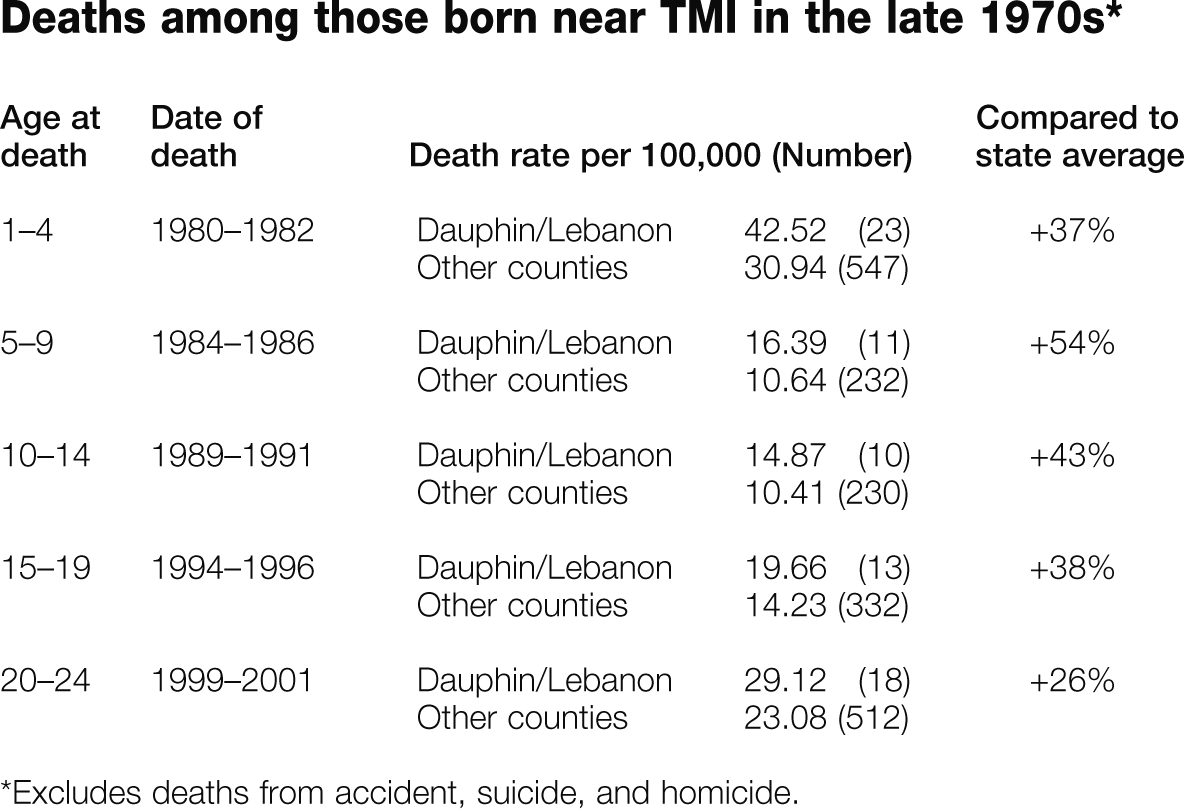
Excludes deaths from accident, suicide, and homicide.
However, the group concluded there was no association between radiation dose levels and cancer risk. The researchers, led by epidemiologist Maureen Hatch, assigned an estimated dose to each of 69 portions of the 10-mile radius around the plant. The highest assigned levels were north/northwest of the plant, where the plume initially drifted on the morning of March 28, 1979. No consideration was given to wind direction thereafter. The north/northeast areas were generally assigned the lowest dose. The articles declared that increases in local cancer rates were unlikely to be explained by radiation, and that “such a pattern might reflect the impact of accident stress on cancer progression,” although no reliable measure of stress was included in the article.
From mid-1993 to the end of 1996, it appeared that research on Three Mile Island had essentially ended, as only two new papers were published. But in early 1997, the topic reappeared with a flourish. Attorneys representing more than 2,000 area residents with health problems in another lawsuit asked epidemiologist Stephen Wing to examine the work of Hatch and her colleagues. In 1997, Wing (who refused any financial support from the Three Mile Island Public Health Fund) published a paper that used the same data but arrived at different conclusions–namely that there was an association between radiation from the accident and cancer risk. Wing's paper listed some weaknesses in Hatch's work and pointed out that she may have demonstrated bias in stating her assumption that no association could exist at low doses of exposure. To this day, Wing's article remains the only one to present original health data supporting a link between Three Mile Island radiation exposure and cancer. 2
The Columbia researchers did not take Wing's article lightly, responding with two published critiques. Writing in Environmental Health Perspectives, the same journal that carried Wing's study, Hatch's colleague Mervyn Susser accused Wing of a “desire to air controversy.” Susser called Wing's article “poor science … advocacy parading as science.” 3 The article was full of “misconceptions, misinterpretations, mistaken logic, and simple error,” declared Susser, and the work had done nothing to further understanding of the Three Mile Island health issue other than to “muddy the waters.” Wing defended his work in the same issue and in a subsequent one.
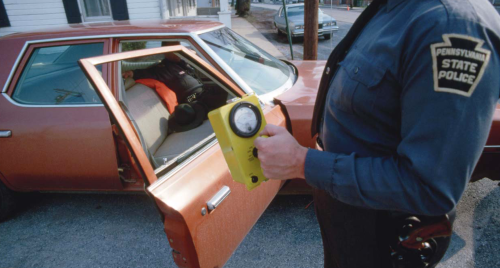
A Pennsylvania state trooper monitors radiation levels after the 1979 accident.
The only other reports offering new data on disease rates near Three Mile Island were the work of a team from the University of Pittsburgh, published in 2000 and 2003. 4 This group, also aided by the Three Mile Island Public Health Fund, looked at death rates after the accident, abandoning the “before v. after” approach used by Hatch and Wing. The researchers found no link between radiation and death rates (all causes, heart disease, and various cancers) among 32,000 persons living within five miles of the plant in 1979. As Hatch had done, they assigned the area north/northeast of the plant as the lowest dose area, but for most disease categories, this area had the highest mortality rate.
Gaps in the research
Twenty-five years after the largest accident in the history of the U.S. nuclear power industry, the research to date is limited. Only the Hatch, Wing, and Pittsburgh studies on patterns of several types of cancer have been published. Nothing exists in the literature on infant mortality, hypothyroidism in newborns, cancer in young children, or thyroid cancer, even though data for all of these were routinely collected in 1979. All of these conditions are especially sensitive to ionizing radiation. Many prominent journals have remained silent. Why?
One body of thought is that lack of adequate dose measurements limits research on health effects of the accident. When the core melted, there were only a limited number of radiation monitors near the plant, and virtually none farther from the immediate area. McLeod and others maintained that environmental radiation levels exceeded the capacity of the existing monitors after the accident. There were no attempts to measure in-body radiation levels of persons living near (or far) from the plant; if such levels had been taken, longitudinal studies tracking the future health of high-dose and low-dose residents would have been possible.
Another reason is that while much has been made over the large amount of iodine, krypton, and xenon that escaped from the plant, virtually no attention has been paid to other radioisotopes. The reactor core produced dozens of radioisotopes, including strontium and cesium, in addition to iodine, and others. Each affects the body in a different way; for example, strontium is a boneseeker, iodine attacks the thyroid gland, and cesium distributes throughout the soft tissues. So while the data used by Hatch and Wing on overall body dose is a start, it lacks specificity. Had greater efforts been made to determine more specific radioactivity levels in the environment and in the body, much more productive research would have been possible.
But another, perhaps more significant reason may be reluctance to tackle a controversial subject. A similar reluctance, in which researchers shunned evaluation of health consequences of nuclear weapons fallout, was evident during the 1950s and 1960s.
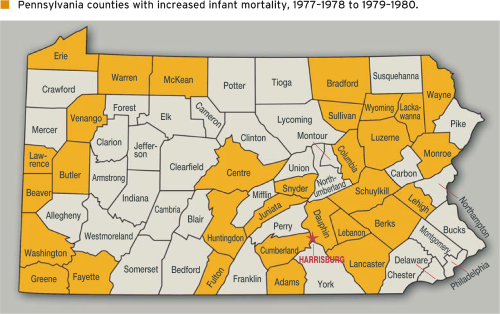
This reticence may have limited studies not only of Three Mile Island area residents, but of populations living more than 10 miles from the plant. Post-accident detection of elevated radioactivity in the air to the north/northeast as far away as Albany and Portland should have spurred studies of a broader area. Even if reliable dose data are limited, examining any upwind/downwind differences might be revealing. As an example, the map of Pennsylvania counties (page 32) shows that from 1977-1978 to 1979-1980 the infant death rate rose in 13 of 19 Pennsylvania counties north/northeast of Three Mile Island, but the rate rose in only 18 of the state's other 48 counties. 5 In New York, only 2 of 27 counties in the New York City area and westernmost part of the state–not downwind of Three Mile Island–experienced increases, compared to nearly half (17 of 35) of the counties located to the north/northeast. Since the fetus and young infant are at greatest risk to the toxic effects of ionizing radiation, health researchers should have analyzed this information as soon as it became available.
In theory, the group most affected by Three Mile Island included local downwind residents born in the late 1970s, namely those who were infants or fetuses at the time of the accident. The table on page 33 shows that in Dauphin and Lebanon counties, the closest area to the north/northeast, all-cause (excluding accidents, suicide, and homicide) death rates for this birth cohort were 26-54 percent higher than statewide rates through childhood, adolescence, and young adulthood. The childhood cancer death rate in Dauphin and Lebanon counties has been elevated since the accident. From 1979 to 2001, 120 residents of these counties had died of cancer by age 19, a rate 46 percent above that for the rest of Pennsylvania. The degree to which this reflects the latent effects of Three Mile Island should be explored, especially since no other risk factors in these two counties are obvious.
The health lessons of Three Mile Island
Research conducted on the health effects of the Three Mile Island accident has been rather minimal, even though more than 25 years have passed since the accident. Meanwhile, official bodies like the Nuclear Regulatory Commission (NRC) still assert that radiation from the accident had “negligible effects on the physical health” of local residents. It is likely that a full accounting of health effects will never be made.
Nonetheless, it is critical that efforts to explore any consequences to the public's health continue. Effects of ionizing radiation may take decades to manifest as the onset of a disease like cancer, so monitoring of disease patterns and dose-response comparisons should not cease at the 25-year mark.
But understanding the effects of the Three Mile Island disaster carries a much greater value than studying a single historical event. The country's current group of 103 nuclear reactors is aging (more than one-third have operated for 30 years or longer), and the NRC is in the process of extending many licenses for an additional 20 years beyond the current 40. Not only do these reactors have aging parts, they have been operating at greater than 90 percent capacity in recent years, far exceeding earlier rates. While older parts and higher capacity factors do not guarantee another accident, they do raise concern, as evidenced by the near-disaster at the Davis-Besse plant in Ohio two years ago.
Expanded research may expand findings. Knowledge about the health effects of low-dose exposure can be increased. For decades, many scientists insisted that fallout from nuclear weapons production and atmospheric nuclear testing did not harm Americans. But in 1997, the National Cancer Institute calculated that radioactive iodine caused or would cause thyroid cancer in as many as 212,000 Americans. In 2000, the Energy Department acknowledged for the first time that research showed a link between radiation exposure and cancer risk among nuclear weapons workers, and instituted a compensation package. Perhaps the same sustained examination of the effects of the country's most serious nuclear power plant accident could alter current thinking.
The fact that Three Mile Island health research has proved controversial should not dissuade health and scientific professionals from pursuing answers. Avoiding controversial health topics accomplishes nothing. If the public's health is to be protected to the greatest degree possible from environmental radiation, it is imperative to learn the full lessons of an event like Three Mile Island.
Footnotes
1.
Maureen C. Hatch et al., “Cancer Near the Three Mile Island Nuclear Plant,” American Journal of Epidemiology, vol. 132, no. 3, pp. 397-412 (1990); Maureen C. Hatch et al., “Cancer Rates After the Three Mile Island Nuclear Accident and Proximity of Residence to the Plant,” American Journal of Public Health, vol. 81, no. 6, pp. 719-24 (1991).
2.
Stephen Wing et al., “A Re-Evaluation of Cancer Incidence Near the Three Mile Island Nuclear Plant,” Environmental Health Perspectives, vol. 105, no. 1, pp. 52-57 (1997).
3.
Mervyn Susser, “Consequences of the 1979 Three Mile Island Accident Continued: Further Comment,” Environmental Health Perspectives, vol. 105, no. 6, pp. 566-67 (1997).
4.
Evelyn O. Talbott et al., “Mortality Among the Residents of the Three Mile Accident Area: 1979-1992,” Environmental Health Perspectives, vol. 108, no. 6, pp. 545-52 (2000); Evelyn O. Talbott et al., “Long-Term Follow-up of the Residents of the Three Mile Island Accident,” Environmental Health Perspectives, vol. 111, no. 3, pp. 341-48 (2003).
5.
Pennsylvania counties north/northeast of Three Mile Island include Berks, Bradford, Carbon, Columbia, Dauphin, Lackawanna, Lebanon, Lehigh, Luzerne, Monroe, Montour, Northampton, Northumberland, Pike, Schuylkill, Sullivan, Susquehanna, Wayne, and Wyoming.