




Abstract
By James M. Maroncelli and Timothy L. Karpin
Historical Odysseys Publishers, 2002 499 pages, 182 photo pages, and 199 maps and diagrams, in PDF format on CD-ROM; $29.95
In the summer of 2000, I embarked on a rambling, unofficial survey of the Cold War landscape in America for a book that would be called Survival City. On one of the first nights, I sat in a motel in South Dakota, a few miles away from a Minuteman missile installation, poring over a road atlas, refining my itinerary.
As I scanned the maps, identifying the sites I wanted to visit and calculating the distances between them, I gained a new and sudden appreciation for the vastness of my enterprise. I found myself faced with any number of quandaries–visiting the ruins of the Safeguard missile defense site in Ledger, Montana (one of only two such sites) would take at least three days of extra driving, meaning I would miss my appointment at NORAD. Sites in Idaho, too, would throw off my schedule. Alaska–forget it. The DEW line would have to wait.
It was then that the vast physical legacy of the Cold War heaved jarringly into focus. Short of taking a lifelong journey, I would be a day-tripper.
I had a preexisting image in my head that the Cold War meant remote, Rhode Island-sized patches of weapons-testing centers, far-flung networks of missiles scattered across the plains, secret command posts sunk deep into geologic time. That picture is true, of course, but it is only a scattering of pixels in a much larger image. Building the bomb and arming the succeeding peace was an endeavor that occupied every last page in Rand McNally. “I told you it couldn't be done without turning the whole country into a factory,” wrote physicist Niels Bohr to Edward Teller. “You have done just that.”
I did not have the luxury of carrying The Traveler's Guide to Nuclear Weapons, a new CD-ROM from James M. Maroncelli and Timothy L. Karpin, as I plied the nuclear terrain. I wish I had. Armed with the exhaustive database of atomic geography collected here, I now realize that for me, as for every American, the Cold War essentially begins at home. “U.S. citizens need not travel to obscure geographic locations to visit the places where they have invested their hard-earned dollars to design and manufacture nuclear weapons,” observe the authors. “These remarkable places are all around.”
Indeed, I do not have to stray far at all from my Brooklyn home to find any number of sites associated with the bomb. “Manhattan Project” was no accidental code name; in 1942, New York was not only a leading academic and intellectual center, it was the country's major port. As the physicists theorized the bomb uptown, the speculative raw materials were shipped in downtown. As Leslie Groves began looking for a supply of uranium, he found that “tons of high-grade pitchblende ore, code-named M-31, were already waiting for him at an Archer Daniels Midland (ADM) Dean Mill plant in New York City.” At another stage in the process, after the pitchblende had been refined in Canada into high-grade ore, it was shipped back to Manhattan, where it was stored in the Baker and Williams Warehouse on West 20th (now an office building).

It was also in 1942 that Edward Adler and his colleagues at Columbia University, as they searched for a workable “gaseous diffusion barrier,” something that could withstand the “punishing corrosive properties of uranium hexafluoride gas,” were led to the offices of the American Chicle Company in Long Island City, Queens. Readers may recognize this company as the maker of Chiclets. A little bit of chewing gum to hold Fat Man together? Not quite. American Chicle owned a high-quality Cham-bord press, used to illustrate its Chiclets packaging. Adler and his colleagues wanted to use the press to make high-quality patterns of dots, which could in turn be used as templates for the diffusion barrier.
American Chicle was not the only company to be pressed into service in a novel way. There was Chicago's International Register, maker of cash registers, whose machinists helped to craft uranium metal rods; and Revere Copper and Brass Company (a de-scendent of Paul Revere's firm, whose pots and pans are commonly found in kitchens), on the banks of the Detroit River, which secretly extruded some 1,200 tons of uranium rods for the Manhattan Engineer District.
This was typical of the project: Diverse companies each worked on one segment without knowing the overall scheme. As the authors say of Inter national Register, “Only after the war did the laborers begin to understand the full significance of their government work.”
The private-contracting model would later be refined. “After the initial rush to make the atomic bomb and the hydrogen bomb,” they write, “the Atomic Energy Commission reduced its reliance on its many compartmentalized production contractors and concentrated its secret operations into more secure and self-contained facilities.”
Nine chapters range from “Fabricating Reactor Fuel Targets and Control Elements,” to “Designing, Manufacturing, and Refurbishing the Weapons.” In hundreds of pages, and in many photos and maps, the authors detail the staggering range of sites involved in what was perhaps the greatest industrial and scientific enterprise of all time–at least in terms of sheer man-hours and dollars.
The authors, who have worked as consultants on issues of industrial contamination, write in a straightforward manner that will be familiar to anyone who has pored over U.S. Army Corps of Engineers reports. They are not, however, without an eye for the poignant or surreal moment. Writing about Idaho's National Engineering Laboratory, where more than 50 test reactors were built amidst the rolling grasslands, the authors note that in 1961, when three workers were killed when a steam explosion ripped through a reactor core, “the government provided lead coffins for their burial.” Discussing the Savannah River Plant complex, they point out that its 310 square miles have become a “hot spot” for biological research. “One of the creeks on-site boasts the largest number of different aquatic insect species of any river in North America.” With the site sealed off for security reasons, wildlife has flourished, unimpeded by human development–except, of course, for nuclear weapons research. “Despite the presence of radionuclides, [Savannah River Complex's] Par Pond is a world-class largemouth bass fishery, and about 200 alligators, some 12 feet in length, thrive along its shores.” (Come to think of it, those ants in the desert in the movie Them were pretty big, too.)
At many of the sites documented by the authors, the atomic history has long been obscured. Workers in new enterprises go about their business with scant knowledge of the past. Other sites, sitting unobtrusively in the middle of residential landscapes, still speak of their nuclear past. At the Argonne National Laboratory in south suburban Chicago, the Energy Department has only recently finished removing contaminated wastes, and “dark green-painted shell casings rise out of the weeds” to protect the monitoring wells that are used to determine uranium and tritium concentrations in the ground water.
The authors are careful to note that the atomic traveler is not always looking back in time. At the Watts Bar nuclear power plant in eastern Tennessee, for example, the Tennessee Valley Authority has been commissioned by the Energy Department to manufacture, beginning next year, the short-lived tritium isotope for use in current and future nuclear weapons programs.
The Traveler's Guide to Nuclear Weapons is an invaluable mapping of the secret, forgotten, and hidden-in-plain-sight infrastructure of the national defense landscape. Its purpose would have been better served in book form, but one can, of course, print out the information.
The guide may have been intended as an objective, matter-of-fact compendium of information, but the authors, having visited the bulk of the sites they chronicle, render their judgment, concluding that American leaders' “overt actions often appeared to conflict with their stated intentions. They protected the nation while turning parts of it into contaminated wastelands and sprinkling almost all of it with radioactive fallout.”
And they add: “A final lesson that we learned was to distinguish carefully emergency situations from times of normality, as unsettling as they may be, and to be wary of embracing wartime ethics for extended periods–the unfortunate model of the Cold War.”
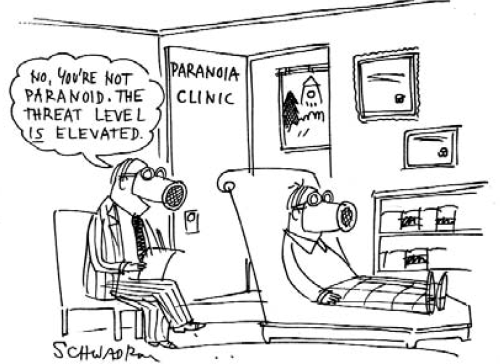
The mute memorials of the Cold War that can be found down every road serve as a testament, even as the nation seems on the verge of erecting another costly, and ultimately damaging, national security apparatus.