




Abstract
Some of Pakistans nuclear scientists believe that the bomb should be shared with all of the Muslim community, even–or especially–with Al Qaeda.
In June 2000, two Pakistani nuclear scientists, Sultan Bashir-ud-Din Mahmood and Chaudiri Abdul Majeed, founded Ummah Tameer-e-Nau, Reconstruction of the Muslim Ummah, or UTN, an organization whose purported purpose was to conduct relief and development work in Afghanistan.
A few weeks after September 11, however, Pakistani authorities detained Mahmood, Ma-jeed, and other UTN board members amid charges that their activities in Afghanistan had involved helping Al Qaeda in its quest to acquire nuclear and biological weapons as well. The U.S. government, which pressed for Mahmoods and Majeeds arrest, later placed them and their organization on its list of individuals and organizations supporting terrorism.
Although Mahmood and Majeed had met several times with Al Qaeda, Pakistani officials insisted that they lacked the specific scientific know-how to help Al Qaeda build nuclear weapons. For that kind of operation you need dozens and dozens of people and millions of dollars, a senior member of Pakistans Atomic Energy Commission (PAEC) told the October 28, 2001 Mercury News. That sort of technology transfer takes 5060 years. The chance that [the two scientists] gave the Taliban nuclear arms is zero–less than zero.
However, the November 1, 2001 New York Times quoted other Pakistani officials who said that such denials should not be taken at face value. According to the Times, one Pakistani official recalled the instructions he received in the mid-1990s about contacts with American officials. He was told to deny that Pakistan was developing nuclear weapons, even though the country had fully assembled nuclear bombs at the time. Its just one of those things you cant be absolutely straightforward about, he told Times reporter John Burns.
The Pakistani government held Mahmood and Majeed for several months, demonstrating its determination to uncover the extent of their cooperation with the Taliban and Al Qaeda. Their detention also sent a signal to Pakistans nuclear establishment that the government intended to protect sensitive information and stop illicit exports that might advance other nuclear weapon programs.
A colorful character
Mahmood is reported to have resigned from Pakistans nuclear agency in the spring of 1999 to protest his governments willingness to sign the Comprehensive Test Ban Treaty, which Pakistan expressed soon after it conducted a series of underground nuclear tests in May 1998. Mahmood spoke and wrote widely against joining the treaty, arguing that it would impose huge political and military costs, but provide few rewards. In his view, If we keep developing nuclear technology on the path of self-reliance, and also extend cooperation to other countries in this field, shall we not be the gainers ultimately? 1
For sale: Pakistani centrifuge technology
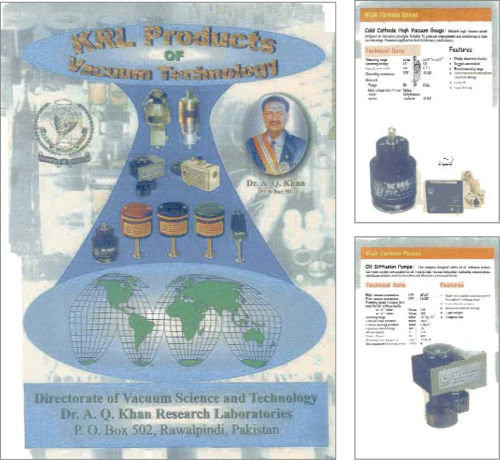
Recently, author David Albright obtained a copy of what is apparently a sales brochure from the A. Q. Khan Research Laboratories in Rawalpindi, offering both equipment and assistance spun off from the Pakistani gas centrifuge program–the program that made possible Pakistans enrichment of uranium for nuclear weapons. Many of the items shown in the brochure are generally viewed as sensitive and in many countries would be subject to stringent export controls.
It is not known what customers the brochure may have been designed to attract, but it has not been displayed at the customary trade fairs–raising questions about whether the items it offers may have been clandestinely sold to countries like North Korea.
Mahmood was pressured to resign, in part because the U.S. government wanted him removed after learning of his sympathies for militant Islamic groups. Mahmood publicly supported the Taliban, and in speeches at Pakistani universities he suggested that Taliban rule should serve as a model for Pakistan. 2 Even after September 11, he continued to support the regime.
Senior Pakistani officials are reported to have been concerned about Mahmoods promotion of the idea of producing weapon-grade plutonium and uranium to help equip other Islamic nations. He described Pakistans nuclear capability as the property of a whole Ummah [Muslim community]. 3
A report in the Times of India said that Mahmood came to prominence in the 1970s after developing a technique to detect heavy water leaks in steam pipes at the Canadian-supplied Knapp nuclear power reactor near Karachi, using a device patented in his name in Canada and known worldwide under his initials as the SBM Probe. 4 He also published articles on electric motors used in radiation environments, quality assurance, technology transfer, and project management.
His son told the November 8, 2001 Guardian that his father had wept after India conducted its first underground nuclear test in 1974, and that he vowed then to make Pakistan an atomic power. A few months after the Indian test, President Zulfikar Ali Bhutto called a meeting of his best nuclear scientists to discuss Pakistans reaction. Although Mahmood was a junior scientist at the time, he argued strenuously in favor of building nuclear weapons and recommended buying necessary items through a secret program.
Sultan Bashir-ud-Din Mahmood.
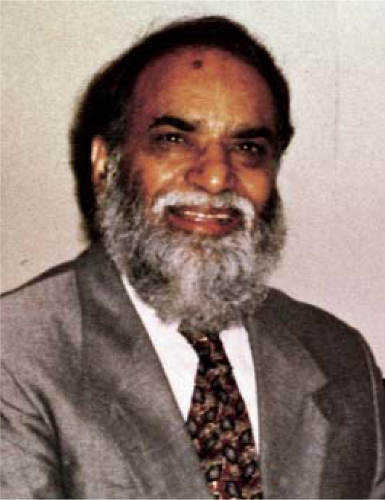
Mahmood worked on Pakistans secret gas centrifuge program, which ultimately produced the highly enriched uranium used in its nuclear weapons, and he is credited with playing a pioneering role in establishing Pakistans uranium enrichment project. Abdul Qadeer (A. Q.) Khan, known as the father of Pakistans uranium enrichment program, took over the project some time later.
Mahmoods most prestigious assignment was designing the Khushab reactor, an unsafeguarded reactor project that depended extensively on illicit procurement from abroad. After the reactor went critical in April 1998, Mahmood identified himself as its chief designer and director and said that with this reactor (which can produce enough plutonium for two to three nuclear weapons per year) Pakistan had acquired the capability to produce … boosted thermonuclear weapons and hydrogen bombs.
In Cosmology and Human Destiny, published in 1998, Mahmood argued that sunspots have influenced major human events, including the French Revolution, the Russian Revolution, and World War II. He concluded that governments across the world are already being subjected to great emotional aggression under the catalytic effect of the abnormally high sunspot activity under which they are most likely to adapt aggression as the natural solution for their problems.
A friend, Farhatullah Babar, a media adviser to the Pakistan Peoples Party, said that Mahmood predicted in Cosmology and Human Destiny that the year 2002 was likely to be a year of maximum sun-spot activity. It means upheaval, particularly on the Indian subcontinent, with the possibility of nuclear ex-changes. 5 One passage of the book reportedly states: At the international level, terrorism will rule; and in this scenario use of mass destruction weapons cannot be ruled out. Millions, by 2002, may die through mass destruction weapons, hunger, disease, street violence, terrorist attacks, and suicide.
The others
Less is known about Majeed, who retired in 2000 after a long and successful career in the Nuclear Materials Division of the Pakistan Institute of Nuclear Science and Technology (Pinstech) at Rawalpindi. In the 1960s, Majeed trained at a plutonium facility in Belgium, and he spent some time in the 1970s or early 1980s at the International Center for Theoretical Physics in Trieste, Italy. CNN and NBC reported that he was associated with New Labs at Rawalpindi, where plutonium was separated for nuclear weapons. He is an expert in nuclear fuels, according to the U.S. government, and published extensively in the 1980s and 1990s on nuclear detectors and the use of X-ray diffraction, fluorescence, and crystallography.
According to the November 1, 2001 New York Times, all seven members of UTNs board of directors were detained, among them Mirza Yusef Baig, an industrialist who owns the largest foundry in Pakistan. Baig had extensive ties with the Taliban regime, and had several contracts to build schools, hospitals, government buildings, and a flour mill in Afghanistan.
Others may also have been detained. USA Today reported on November 15, 2001, that at least 10 Pakistani nuclear scientists had been contacted by representatives of the Taliban government and Al Qaeda during the previous two years. U.S. officials believe several scientists told Al Qaeda they would help with a nuclear project, provided they got approval from the Pakistani government. It is not known whether that approval was granted.
In December 2001, the media reported that two other Pakistani nuclear scientists, Suleiman Asad and Mohammed Ali Mukhtar, were wanted for questioning about their possible links to Osama bin Laden. U.S. officials suspected that the two had also been involved with UTN. Pakistani officials said they were unavailable–that they had been sent soon after September 11 to an undisclosed research project in Myanmar, a country run by a military dictator with strained relations with the United States and most of the rest of the world. 6 Pakistani officials said they did not want to interrupt the scientists work by having them return to Pakistan for questioning.
Concern about other Pakistani nuclear scientists continued into the summer of 2002. The Wall Street Journal reported on June 14 that U.S. officials were worried about two others. Officials said that these other two unnamed scientists were veterans of Pakistans nuclear weapons complex and associates of Mahmood and Ma-jeed, and that one was already suspected of trying to sell weapon designs to unsavory customers.
Although the United States did not know whether these two scientists had ever traveled to Afghanistan, U.S. analysts were concerned that they might somehow have passed information on building nuclear weapons to Al Qaeda.
What was found in Kabul
Suspicion about Mahmood and others at UTN increased in November 2001. After the fall of the Taliban, coalition forces and the media began to search UTN facilities in Kabul. Some of the records found there revealed that the charity did indeed help Afghanistan with educational material, road building, and flour mills. But other records demonstrated that UTN was very interested in weapons of mass destruction.
The first revelations followed visits to UTN headquarters (which also served as Mahmoods residence while he was in Kabul) and to subsidiary offices. Documents and drawings found at a UTN house suggest that someone had a particular interest in biological weapons, and was even designing a crude system for delivering anthrax by balloon.
Among the documents found in Kabul was an unclassified 1997 U.S. draft environmental assessment titled Renovation of Facilities and Increased Anthrax Vaccine Production and Testing at the Michigan Biologic Products Institute. A reader had printed several stars in the top left corner of the cover page, probably implying that he thought the report was significant. The report contains sections on the disease, its threat, the vaccine, production issues, and immunization.
Hundreds of copies of another document, The Biologic Warfare: An Imminent Danger, were found in the same house. This four-page diatribe accused the United States of planning to conduct biological warfare against the international Muslim community, using anthrax. The document cites as evidence the vaccination of U.S. troops and the expansion of U.S. vaccine production, purportedly in advance of attacking the Ummah.
Other anthrax-related documents included a copy of the home page of a Web site that contained information about the use of anthrax as a weapon.
Mahmood concluded in the fall of 2001 that Taliban soldiers fighting against the Northern Alliance had been exposed to chemical and biological weapons supplied by the United States, basing his claim on statements made by doctors at a Kandahar hospital. 7 According to Mahmood, U.S. and British experts were training the Northern Alliance in the use of chemical and biological weapons. He denied that Afghanistan had an anthrax factory, charging that military sources had fabricated the story so that any anthrax attack in Afghanistan could be blamed on emissions from the factory. He called for non-governmental organizations to come and help the Afghan nation against such an attack.
Also found were a series of illustrations running the length of one room in UTNs headquarters in Kabul that showed how high-altitude balloons could be used to spread anthrax spores or cyanide. 8 There were boxes of gas masks and many containers of chemicals. A second-floor workshop, where many of the documents were located, contained a disassembled rocket with solid propellant and a cylinder labeled helium.
CNN personnel searched the offices of the Barakat Islami Investment General Trading and Contracting Co. Ltd. (BTC), located just off the dreary lobby of Kabuls Intercontinental Hotel. This office, which had been locked and abandoned before the fall of the Taliban, contained a number of documents describing UTN activities. Intelligence sources told CNN that the office was a branch of the Barakat network, which, according to the U.S. government, laundered money for Al Qaeda.
CNN found several drafts of a memorandum of understanding between UTN and Barakat, establishing a close working relationship to promote relief, rehabilitation, and reconstruction of Afghanistan. The agreement was signed in Kabul on May 15, 2001, by Mahmood and Ghali Atia Alshamri, BTCs president. They agreed to establish joint projects and share office space both in Afghanistan and in Pakistan. They also agreed to share financial, technical, and human resources in all disciplines–commerce and industry, agriculture, banking and finance, health education, social welfare, communications, energy, minerals and mining, and research and development. According to these documents, BTC was working with Afghanistans minister of water and power, and UTN expected cooperation with BTC to accelerate the completion of its goals.
UTNs public face
UTNs stated mission was to focus on development, educational reform, and ways to feed the impoverished Afghan population. UTN officials also said they were guiding the Taliban in science-related matters.
According to Mahmood, he and his colleagues developed a large-scale investment plan aimed at establishing industrial networks. 9 He said the Taliban had already agreed to many of their plans, including raising $100 million to build a dam and an oil refinery. They envisioned huge projects to develop Afghanistans energy, communication, and transportation infrastructure and to process Afghanistans abundant natural resources for use in Pakistan. To further their aims, they were creating a bank. UTNs plan also called for developing final products in Pakistan, which would have been to Pakistans economic benefit. One day before his arrest, Mahmood bragged to the weekly Nida-i-Millat that if the United States had not attacked, Afghanistan would have developed into a strong industrial country during the next 10 years.
UTN was one of the few NGOs that had the approval of Mullah Omar, the head of Taliban Afghanistan. When UTN officials traveled to Afghanistan, their visas were sponsored by the Talibans ministry for mines and industry, whose head had a long association with bin Laden.
Nuclear dealings
According to Eurasianet.org, during his initial interrogations by U.S. and Pakistani officials, Mahmood denied having discussed nuclear matters with bin Laden or the Taliban. He made his interrogators believe that that there was nothing wrong in his cooperation with Osamas men and Taliban officials. But after he and Majeed were told that the documents had been found in Kabul, they modified their statements.
According to the December 12, 2001 Washington Post, Mahmood and Majeed admitted that they had had long discussions with Al Qaeda officials in August 2001 about nuclear, chemical, and biological weapons. Pakistani intelligence officials told the Post that they believe the scientists had used UTN as a cover for secret talks.
The Associated Press, quoting Mahmoods son, reported in late November 2002 that bin Laden approached Mahmood several months before September 11, 2001, about making nuclear weapons. The son said his father had met bin Laden several times while visiting Afghanistan.
On December 20, 2001, based in part on the growing evidence of UTNs assistance to Al Qaedas nuclear weapons effort, the Bush administration announced that it was adding the organization to the list of entities supporting terrorism. The president ordered the organizations assets be frozen under Executive Order 13224, and also froze the assets of three key directors–Mahmood, Majeed, and Sheikh Mohammed Tufail, a board member who owns one of Pakistans leading engineering companies.
A Fact Sheet distributed by the White House at the time of the announcement alleged that:
The nuclear scientists had close ties to bin Laden and the Taliban;
During repeated visits to Afghanistan, they met with bin Laden, Al Qaeda leaders, and Mullah Omar, and discussed the development of chemical, biological, and nuclear weapons;
In one meeting, a bin Laden associate indicated he had nuclear material and wanted to know how to use it to make a weapon. Mahmood provided information about the infrastructure needed for a nuclear weapon program and the effects of nuclear weapons;
After the fall of the Taliban regime, searches of UTN locations in Kabul yielded documents outlining basic physics related to nuclear weapons (as well as a plan to kidnap a U.S. attach); and
UTN had links to the WAFA Humanitarian Organization and Al Rashid Trust, two other NGOs with ties to Al Qaeda that had been designated as supporters of terrorism under Executive Order 13224.
Media reports shed further light on the meetings between UTN and Al Qaeda. According to the December 12, 2001 Washington Post, Pakistani officials said the scientists admitted meeting with bin Laden, Ayman Za-wahiri, and two others over two to three days in August 2001 at a compound in Kabul. The scientists described bin Laden as intensely interested in nuclear, chemical, and biological weapons.
Bin Laden indicated to them that he had obtained, or had access to, some type of radiological material that he said had been acquired by the radical Islamic Movement of Uzbekistan. Mahmood and Majeed reportedly told bin Laden that it would not be possible to manufacture a nuclear weapon from that material. They claimed they provided no material or specific plans to bin Laden, but rather engaged in wide-ranging academic discussions.
Another Pakistani official told the Post, however, that the scientists had spoken extensively about weapons of mass destruction with bin Laden. This official described the scientists as very motivated and extremist in their views, but added that they were discussing things that didnt materialize, but fall under the breaking secrets act. A December 16, 2001 Post report indicated that Pakistani officials familiar with the interrogations said the scientists had provided detailed responses to bin Ladens technical questions about the manufacture of nuclear, biological, and chemical weapons.
Al Qaeda reportedly wanted the Pakistani scientists help in making radiological dispersal devices. The March 3, 2002 Sunday Times (of London) reported that Farhatullah Babar, who has known Mahmood for many years, said U.S. interrogators were unable to prove that work on a dispersal device had progressed beyond an agreement in principle. Babar added that he thought Mahmood would have been willing to make such a device, but that the September attacks had ended the plan.
British officials, quoted in the December 13, 2001 Guardian, said they believed that other Pakistani nuclear experts had offered their expertise. These officials said that former Pakistani technicians from the weapons program also visited Al Qaeda officials to advise them on how to build nuclear weapons.
In late January 2002, Pakistani officials said they had decided not to press criminal charges against Mah-mood or Majeed, despite concluding that the scientists had violated their secrecy oath during trips to Afghanistan. Pakistans government was reportedly concerned that a trial would cause further international embarrassment and risk disclosure of nuclear secrets.
The scientists were released from detention but agreed to remain under government control (essentially under house arrest), submit to travel restrictions, and limit their communications. 10
Pakistani officials claimed that because the scientists were not involved in the actual production of nuclear weapons, they were not capable of providing sensitive or important information to Al Qaeda or the Taliban.
Taking stock
On March 3, 2002, the Washington Post revealed that Mahmood had failed a half dozen lie detector tests. His reaction has been to profess poor health and portray himself as a misunderstood victim.
In an interview with the Post, published on the same day, Mahmood said he underwent lie detector tests several times, but: I could never stay before the machine beyond a few minutes because of my age and health, as it was very strenuous exercise that made my blood pressure go erratic and rendered my heart unstable. He added that during one test, he collapsed and was rushed to the hospital.
In the August 2001 meetings, Mahmood and his colleagues appear to have provided Al Qaeda a road map to building nuclear weapons. This information is typically very helpful in understanding the steps that must be accomplished in making a nuclear weapon, identifying the necessary equipment and technology, and locating suppliers of key equipment. In addition, Mahmood and his colleagues appear to have recruited other scientists with more direct knowledge of making nuclear weapons.
Evidence is also strong that these scientists provided significant assistance to Al Qaedas efforts to make radiation dispersal devices. However, the exact level of assistance remains uncertain.
It is unknown if they provided enough information to allow Al Qaeda to design a nuclear weapon. They do not appear to have fully cooperated with the Pakistani authorities, and establishing evidence of the transfer of a design would be difficult in the best of circumstances.
Transfer of sensitive nuclear weapons information could have happened in many ways. The scientists could have provided direct assistance to Al Qaedas nuclear weapons program, or they may have obtained secret documents during the course of their careers, which they passed to the Taliban or Al Qaeda. Or they could have served as a funnel for assistance from other nuclear weapons experts.
The transfer of sensitive information by UTN officials or their colleagues could have taken place in Pakistan or in Afghanistan. UTN could have arranged the transfer of nuclear, or nuclear-related, hardware as well, but there is no evidence of such transfers.
The evidence to date supports the conclusion that UTNs founders and their colleagues had not provided Al Qaeda with the necessary resources to make nuclear weapons by October 2001, even if Al Qaeda had somehow acquired enough separated plutonium or weapon-grade uranium to make a nuclear explosive. Al Qaedas nuclear program appears to have been relatively primitive, in spite of the groups long-standing interest in acquiring nuclear weapons.
Given the immense effort required, it is highly unlikely that UTN could have enabled Al Qaeda or the Taliban to build facilities to make plutonium or highly enriched uranium; the plutonium or uranium for a bomb would have had to come from a foreign source. But if the attacks on September 11 had not occurred, UTN officials would probably have provided extensive and ongoing assistance to Al Qaeda–a conclusion supported by the records found in UTNs office in Kabul.
The Pakistani scientists who were involved in Afghanistan had long experience in supervising large, complicated projects. And they had multiple contacts within the Pakistani nuclear community, from which they could tap a reservoir of nuclear scientists and expertise. As a result, they were well positioned to make significant contributions to an Al Qaeda nuclear weapons program.
And Al Qaeda was well positioned to make use of their contributions. It was closely integrated into the Taliban regime, perhaps dominating it in military matters. An Al Qaeda nuclear weapons program could have had many of the characteristics of a national program, which would have made it easier to conduct the research and development necessary to build a crude nuclear explosive.
In addition, a quasi-national program would have been more likely to be successful in obtaining sensitive items than a terrorist group operating in a hostile country. UTNs civilian projects could have served as a front for illicit procurement. If the Taliban government identified the end user of equipment as civilian, many sensitive items could have been easily imported.
Then, too, UTN officials would have had a unique advantage: Pakistans nuclear weapons program involved extensive illicit foreign procurement, and Mahmood himself had headed a large reactor project that imported quantities of sensitive technology, materials, components, and manufacturing equipment. He and his colleagues would have had extensive information about illicit procurement.
Several of UTNs projects were designed to rebuild Afghanistans manufacturing, scientific, and engineering capabilities in universities and industries. Projects focused on reconstruction would have served as a convenient cover for importing sensitive items. And because many UTN projects were believed to be medical or humanitarian in nature, imports to these projects would probably have been exempt from the U.N. embargo on Afghanistan.
A surprising piece of information was UTNs interest in uranium mining. It has been known for a long time that Afghanistan has uranium resources. But that Pakistani nuclear scientists and BTC were planning to extract uranium increases suspicions about their intentions. A nuclear weapon program would need uranium for components, or as a surrogate material for testing nuclear weapon designs or learning to make highly enriched uranium metal. Such a capability would also make any weapons program more indigenous.
Fortunately, the fall of the Taliban regime ended the threat that a quasi-national nuclear weapons program could have emerged in Afghanistan. But reconstructing what Al Qaeda learned or accomplished in its quest for nuclear weapons or radiation dispersal devices is difficult and time-consuming. Al Qaeda may know more about such weapons or may have made more progress in building them than Mahmood and Majeed have admitted. And because Al Qaeda is still believed to be actively seeking nuclear weapons, whatever the scientists provided may return to haunt us.
Footnotes

2.
Chidanand Rahghatta, U.S. Spooked by Spirited Pak Nuclear Scientist, Times of India, Nov. 2, 2002.
4.
Rahghatta, U.S. Spooked by Spirited Pak Nuclear Scientist.
5.
Quoted in Bin Laden Almost Had Uranium Bomb, Sunday Times (London), March 3, 2002.
6.
David Sanger, Douglas Frantz, and James Risen, Nuclear Experts in Pakistan May Have Links to Al Qaeda, New York Times, Dec. 9, 2001.
7.
Pakistani Scientist Says No Anthrax Plant in Afghanistan, Discusses Prevention: U.S. Provides Chemical Weapons to Northern AllianceDr. Sultan, Islamabad Khabrain, October 6, 2001, in Urdu (available in English from Foreign Broadcast Information Service, document number FBIS-NES-2001-1006).
8.
For more detailed information about these drawings, see Chris Stephen, Kabul House of Anthrax Secrets, Evening Standard, Nov. 22, 2001; Douglas Frantz and David Rohde, 2 Pakistanis Linked to Papers on Anthrax Weapons, New York Times, Nov. 28, 2001; and David Rohde, Germ Weapon Plans Found at a Scientists House in Kabul, New York Times, Dec. 1, 2001.
9.
Pro-Taliban Nuclear Scientist Planned Large-Scale Investment in Afghanistan, Nawa-i-Waqt, October 31, 2001, in Urdu (in English, FBIS-NES-2001-1031).
10.
Peter Baker and Kamran Khan, Pakistan to Forgo Charges Against 2 Nuclear Scientists, Washington Post, Jan. 30, 2002.