




Abstract

On May 12, the New York Times reported that the Bush administration had been secretly briefing members of Congress, alleging that Russia was preparing to resume underground nuclear tests on the Arctic Circle island of Novaya Zemlya. Congressional reaction to this “disturbing intelligence” was described by Times reporter Thom Shanker as ranging from alarm to skepticism. It was certainly not the first time that anonymous U.S. government officials were claiming that Russia was planning to resume nuclear testing.
An examination of Russian sources, however, provides no evidence to suggest that Russia is likely to resume nuclear tests. To be sure, there are a number of ongoing activities on Novaya Zemlya, including preparations for “subcritical tests,” which are not included in the U.S. Russian moratorium, and which both Russia and the United States continue to perform. Other activities— some supported by the international community—relate to the disposal of radioactive waste and possibly of spent nuclear fuel as well.
It is true that elements of the Russian military support renewed testing and have laid down the rhetorical groundwork for a resumption, but all indications are that Russia would begin physical preparations for testing only in response to renewed U.S. tests.
Subcritical tests
According to the 12th Main Directorate of Russia's Defense Ministry, the only activity planned at the test site is a series of subcritical experiments (tests that do not result in a self-sustaining nuclear chain reaction). These tests, which have been conducted since 1998, are usually held in late fall, due to the heavy snow cover prevailing on the island during the rest of the year.
The Russian government has made no secret of these subcritical nuclear experiments. Five such tests were conducted in 2000 alone. 1 According to the Ministry of Atomic Energy (Minatom), about 100 grams of plu-tonium were used in each of the tests, which were conducted to verify the safety and reliability of Russian nuclear warheads. Similar experiments are performed by the Energy Department at the Nevada Test Site, most recently on June 7, 2002, and are not banned by any existing nuclear testing treaty. 2 The most recent preparations on Novaya Zemlya began before the U.S. Nuclear Posture Review (NPR) was made public. And in contrast to the Bush administration's steps to accelerate readiness at the Nevada Nuclear Test Site, there is no evidence that the timetable for these tests has been sped up or altered as a result of the NPR's apparent endorsement of renewed U.S. testing.
Other activities
Like its U.S. counterpart in Nevada, the Novaya Zemlya test site has been evaluated for a range of uses other than nuclear tests. In June 2002, plans for the storage of low-, medium-, and high-level radioactive waste appeared to be nearing final-ization, while consideration of storage options for spent nuclear fuel and nuclear reactors continued. On July 12, however, after a visit to Novaya Zemlya, Russian Minister of Atomic Energy Alexander Rumyan-tsev suggested that he may decide not to build a radioactive and nuclear waste repository on the island after all, noting that three sites on the mainland may prove safer and more cost effective.
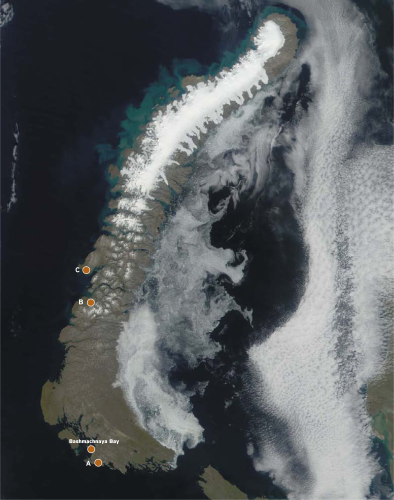
The first proposals for the storage of low- and medium-level radioactive waste (including cesium and cobalt) were developed in 1991 by the All-Russian Scientific Research and Design Institute of Industrial Technology (VNIPI Promtekhnologi) and the All-Russian Scientific Research and Design Institute of Energy Technology (Vnipiet). A site on the south of the island, north of Bashmachnaya Bay, has been selected, and its construction is included in a special federal program “On the Treatment of Radioactive Waste and Spent Nuclear Materials, Their Recycling, and Their Disposal from 1996-2005.” 3
A 2001 report by nuclear experts from Norway, the United States, Germany, Russia, Sweden, and Britain declared the project sound, despite continuing subcritical testing. The facility, which is basically a steel-walled mine shaft, is designed to house 50,000 cubic meters of low- and medium-level radioactive waste contained in reinforced ceramic barrels.
According to current plans, the facility will house waste from the Northern Fleet's nuclear-powered submarines as well as waste that is being stored temporarily at the Mir-onova Gora site near Severodvinsk.
Public hearings on the construction of this facility were carried out in 2001, and a positive environmental impact assessment was completed in March 2002. The latest Minatom estimates put the cost of the project at $300 million; construction will take three to four years. According to Min-atom's Rumyantsev, the facility is likely to be financed in part by Norway, Sweden, and Finland, as part of their environmental assistance to Russia. 4 Anatoli Yefremov, governor of the Arkhangelsk region, which includes Novaya Zemlya, is pushing for additional hearings on the project, to be held in Arkhangelsk and neighboring Murmansk. 5 He has insisted that only waste from northwest Russia be transported to the new site.
Russian environmentalists object to the facility, arguing that the site was chosen simply to make protest difficult, that spending levels are too low to implement adequate safety measures, and that Novaya Zemlya lacks the infrastructure for constant radiation monitoring.
Environmentalists also worry about the lack of public oversight and say that it would be easy to extend the facility's mandate to include spent fuel storage, and even the storage of imported spent nuclear fuel. 6 Min-atom's Nikolai Shingarev says the facility will not be used to store spent fuel. 7 However, the Russian environmental group Ecodefense pointed out that a decade ago Minatom asked for Nordic Council funding to build a geologic repository for spent fuel on Novaya Zemlya, and work on solid radioactive waste storage and a large spent nuclear fuel storage facility appears to be continuing, though in fits and starts. 8 By May 2001, five 300-meter test shafts had been drilled to test radioactive waste and spent nuclear fuel burying technologies. 9
Just a coincidence?
Before the latest allegations that Russia was preparing to conduct nuclear tests on Novaya Zemlya this April, Bill Gertz, a national security correspondent for the Washington Times, appeared to have a lock on leaks concerning U.S. government concerns about Russian testing. Time after time, Gertz had the scoop.
But since the Senate voted against ratifying the Comprehensive Test Ban Treaty (CTBT), Gertz has been unusually silent on the subject (or perhaps his sources have been). He confirmed to me by e-mail that he has not written anything about activities on Novaya Zemlya since October 1999.
A look at Gertz's earlier reports reveals an interesting pattern, though. From early 1996 to late 1999, each of his reports on suspect Russian testing activities coincided with a CTBT-related political event.
In March 1996, for instance, the Conference on Disarmament was under intense pressure to reach agreement on the treaty, and negotiations were contentious. On March 7, Gertz quoted anonymous U.S. government officials to the effect that testing activities had occurred on Novaya Zemlya that January. The story primed the pump for coverage of Defense Secretary William Perry's next-day testimony before the House Appropriations subcommittee on national security. (Perry's testimony was ambiguous mush: “There is some evidence on the subject [of Russian nuclear testing], but there's also some ambiguity in the evidence.”)
Less than a month before President Bill Clinton transmitted the test ban treaty to the Senate for ratification, an August 28,1997 Gertz article reported that U.S. intelligence believed that Russia had conducted a nuclear test just 12 days earlier. This report provoked a massive, ripple-effect of reporting and hearings on Capitol Hill. A follow-up series of Washington Times articles kept a spotlight on the alleged test, which independent seismic experts subsequently determined had been an earthquake.
From September 14 to December 13,1998, Russia conducted five subcritical tests at Novaya Zemlya. In theory, each test might have presented an opportunity for a reporter to get more mileage from a favorite topic. But Gertz wrote only one nuclear testing article during this period. On September 24,1998, the second anniversary of the signing of the test ban treaty, he reported that a National Reconnaissance Office satellite had detected possible test preparations on the island.
The next Gertz article on alleged Russian nuclear testing appeared on September 15,1999, just days before the Senate debate on the CTBT. (The report quoted treaty opponents only.)
In call and response fashion, analysts at conservative think tanks echoed Gertz's reporting. Frank Gaffney, head of the Center for Security Studies and a former Reagan administration defense official, cranked out op-eds lambasting the CTBT, relying on Gertz's reports. Politicians referred to Gertz's articles in their speeches. On the day before the Senate's CTBT vote, Arizona Republican Sen. Jon Kyi inserted an October 12,1999 Gertz article into the Congressional Record. By quoting anonymous U.S. government officials who stated that Russia rejected placing seismic monitoring stations on Novaya Zemlya, the article raised unconfirmed claims that Russia was trying to undermine the treaty. The CTBT was voted down by the Senate on October 13,1999.
His October 1999 article marked the last time Gertz published on testing activities at Novaya Zemlya. More recently, he has concentrated on reporting alleged Chinese nuclear activities.
Since late 1999, some mainstream media coverage has filled the Gertz gap on Novaya Zemlya reporting. But why hasn't Gertz kept it up?
Henry Sokolski, executive director of the Nonproliferation Policy Education Center and an official in the first Bush administration, cautioned me against conspiracy theories. I agree that reporting decisions are not made by secret cabals, but it is at least possible that Gertz lost interest because the real target had been shot down. With the CTBT essentially dead in the Senate, treaty opponents had accomplished their agenda.
Baker Spring of the Heritage Foundation helped to confirm that view. When asked why conservative reporters and analysts who favor renewed U.S. nuclear testing have not seized on the recent allegations of Russian testing, he replied that they have made a “tactical decision.” He believes there need to be “clear-cut Russian violations” to make a strong case for U.S. testing.
Then, too, it is possible that Gertz's primary role was to embarrass the Clinton administration. Now, with a conservative administration in office, there are many other ways to fight—whether against the test ban, or in favor of renewed U.S. testing, or in promotion of a national missile shield. Officials no longer need to “leak”; they are free to distribute whatever “information” they like to the mainstream press—and then argue that their policies, or policy proposals, are simply responses to provocative developments in Russia.
Novaya Zemlya is considered suitable for storage facilities because of its permafrost conditions: Ground-water cannot be found above a depth of 600 meters. According to Nikolai Lobanov, scientific head of the project, the shafts could withstand a 150-megaton nuclear explosion or a 7.0 earthquake. 10
The International Atomic Energy Agency's Contact Expert Group, an organization established in 1995 to coordinate international efforts to assist the Russian Federation in the handling of radioactive waste and spent fuel, endorsed the project at their November 2001 meeting. According to plans developed by VNIPI Promtekhnologi, a pilot repository will be built in the permafrost 15 kilometers inland from Bashmach-naya Bay. The design of the pilot repository was made public in 2000, and in January through March 2001 public hearings were conducted in Arkhangelsk, after which Governor Yefremov endorsed the project. Construction is likely to begin soon after the government completes an environmental impact statement. Vnipiet will handle the on-shore transport of submarine reactor waste, while Institute No. 23 of the Russian Ministry of Defense will be responsible for transport by sea and the construction of a pier.
Other construction includes a fuel storage site, housing, production facilities, and an access road, in addition to the repository. The waste will be stored in 90-meter shafts, with a total capacity of 50,000 cubic meters. The first stage of construction will cost an estimated $70 million and take three years. Minatom expects construction to involve a consortium of British, German, Finnish, Norwegian, and Swedish companies.
Funded by the European Commission, Norway, and Sweden, this consortium conducted a peer review of design documentation in 2000 and 2001, concluding that the repository would be reliable even under scenarios of global warming, and that engineering solutions used in the design were comparable to those in Western Europe. 11
A more radical proposal to provide a long-term solution to the problem of storing spent fuel, nuclear reactors, and radioactive waste from nuclear powered submarines involves the use of underground nuclear explosions to vitrify the spent fuel and radioactive waste in tunnels at the test site. This proposal, first introduced in 1994, was quickly opposed because it could violate the Comprehensive Test Ban Treaty (CTBT). Nevertheless, at the request of Boris Yeltsin, the Central Physical-Technical Institute in Sergiev Posad proposed techniques for implementing the project, although it never came to fruition. 12
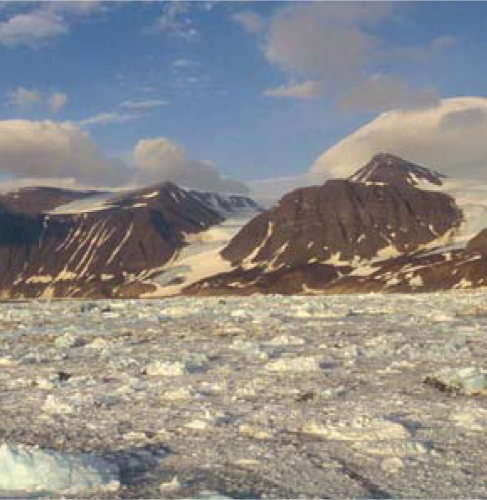
Maxa Bay, Novaya Zemlya.
In June 1999, the institute's Leonid Yevterev and others published an article in Nezavisimoe voyennoe obozrenie, again making an argument for the implementation of their plan. 13 Although this scheme has not been mentioned more recently, if nuclear testing were to resume in Russia, the idea of disposing of nuclear waste by vitrifying it in nuclear explosions would likely resurface.
Russian arguments for resuming testing
On a number of occasions the Russian government has been accused by anonymous U.S. officials of conducting nuclear tests in violation of both the 1992 nuclear testing moratorium and the CTBT (which Russia signed on September 24, 1996, and ratified on June 30, 2000). But none of these allegations have been supported by evidence, either of actual tests or preparations for tests. Instead, claims related to Russian nuclear testing seem to have been made to buttress efforts by the U.S. administration to condemn the CTBT and as an argument for renewed U.S. testing (see “Just a Coincidence?” page 62).
Certainly, some of the factions in the Russian nuclear/military establishment advocate the resumption of nuclear tests. The most significant argument the military makes for testing focuses on the need to guarantee the reliability and safety of Russia's nuclear weapons. Since the testing moratorium began in 1992, senior leaders in the 12th Main Directorate of the Ministry of Defense, which is entrusted with maintaining the security and safety of Russia's nuclear warheads, have periodically issued statements that testing is needed to ensure warhead safety. 14
In a 1995 interview, Gen. Yevgeni Maslin, who was then chief of the directorate, worried that computer modeling and subcritical tests were less reliable methods of ensuring reliability and safety than actual nuclear tests. Maslin's concerns are shared by a number of specialists involved in preserving the safety of Russia's nuclear weapons. 15
In March 2001, former Minatom head Yevgeni Adamov pointed out that although Russia is currently able to carry out its nuclear weapons program without conducting nuclear explosions, the CTBT provides for withdrawal from the treaty if the president deems its observance to be contrary to Russia's national security interests. 16 At an April 11, 2002 press conference, two former ministers of atomic energy—Viktor Mikhailov, who occupied the post from 1992 to 1998, and Adamov, who served from 1998 to 2001—both expressed the view that Russia will eventually face the choice of resuming tests or forgoing nuclear weapons altogether. In their view, simulations and analysis of components of disassembled nuclear warheads only partially compensate for the absence of nuclear tests. They also expressed concern that Russia was losing the expertise needed to conduct effective nuclear tests. 17
The director of the Federal Nuclear Center in Sarov, Radi Ilkaev, believes that Russia is falling behind other nuclear powers because its financial difficulties prevent it from developing state-of-the-art computer modeling capabilities. Subcritical tests are insufficient to guarantee the reliability and safety of nuclear weapons, in Ilkayev's view, and although he believes Russian scientists will do their utmost to develop viable substitutes for nuclear tests, if they fail to develop them there will be no choice but to resume testing. 18
Other concerns arise because Russian nuclear warheads do not employ “insensitive” conventional explosives (known as insensitive high explosives, or IHEs), which are far less likely to detonate due to fire, shock, or gunfire damage than ordinary explosives. Although Russia had developed IHEs, the 1992 nuclear testing moratorium prevented it from fully testing their use in nuclear warheads. 19
Finally, Russia may be developing its own low-yield penetrating nuclear warheads. The development of these “non-strategic” nuclear weapons was reportedly authorized at the April 26, 1999 session of the Russian Federation Security Council, when Vladimir Putin was the council's secretary. A decision was reportedly reached that if the United States began preparations to resume nuclear tests, Russia would withdraw from the CTBT and begin preparations for the resumption of its own nuclear tests on Novaya Zemlya. 20
In spite of these motivations, Russia continues to limit itself to conducting one series of subcritical tests per year on Novaya Zemlya. On the other hand, some U.S. experts have charged that Russia has also been conducting so-called hy-dronuclear tests, which release small amounts of nuclear energy that could be used in the design of new types of nuclear warheads. While some U.S. intelligence officials believe that Russia is conducting hy-dronuclear tests in a bid to develop new types of nuclear warheads, other U.S. experts are skeptical, pointing out that similar claims have been disproved in the past. (For example, in 1997 alleged nuclear tests at Novaya Zemlya turned out to be seismic shocks). 21
U.S. tests are key
Many Russian statements favoring the resumption of testing and increased public discussion of testing options are less an indication of the desire to resume tests than a political statement aimed at the United States. Public discussion of testing options tends to reappear whenever the U.S. government undertakes any initiatives hinting at a resumption of U.S. tests, much in the same manner as potential Russian responses were actively discussed in reply to U.S. plans to pursue a stepped-up national missile defense program and withdraw from the Anti-Ballistic Missile (ABM) Treaty.
That is why the issue of resuming nuclear tests made it onto Russia's political agenda following the U.S. Senate's failure to ratify the CTBT. In April 2001 the Russian State Duma formally requested that President Putin require his government to guarantee priority financing of nuclear weapons programs, including developing a government program to maintain and modernize the Novaya Zemlya test site. The Duma viewed the U.S. failure to ratify the treaty as a step in the direction of renewed U.S. testing, aimed at modernizing the U.S. nuclear arsenal and creating nuclear components for the U.S. missile defense program. 22
A similar reaction followed the release of details of the U.S. Nuclear Posture Review, which contained suggestions that the United States might break the nuclear testing moratorium. In response, State Duma Defense Committee Chairman Andrei Nikolaev called for increased activity at the Novaya Zemlya test site. 23 Other Russian observers, however, believe Russia must reject the challenge and refrain from nuclear tests. 24
The political discourse regarding nuclear testing has followed the same pattern as Russian discussions of “appropriate responses” to the U.S. pursuit of national missile defense and the U.S. withdrawal from the ABM Treaty. In both cases, the rationale for bringing up these questions was to dissuade the United States from pursuing its proposed course of action.
In view of the undoubted deterioration of the Russian testing infrastructure, there may well be activities designed to maintain some level of readiness to resume tests within a specified time frame. But a decision to actually resume testing would not only require Russia to allocate significant funds to rebuilding its testing capability, it would also require Russia to withdraw from the test ban treaty. In view of the cost in political capital that move would entail, a unilateral Russian resumption of testing is an unlikely scenario.
Russia would be most likely to resume nuclear tests in response to a U.S. decision to do the same. Russian testing policy is likely to follow the precedent set with the START II Treaty which, although not widely popular among Russian military leaders, was nevertheless ratified. Only after the United States withdrew from the ABM Treaty (continued adherence to which was a condition specified in the Russian START II ratification law) did Russia announce that it considered itself no longer bound by the provisions of START II.
And it is not clear whether Russia would conduct nuclear tests even if the United States resumed testing. The costs of bringing the Novaya Zemlya test site to a state of readiness might compel it to limit its activities to subcritical tests and the potentially more controversial hydro-nuclear tests. But Russia's financial problems are not sufficiently severe to prevent it from testing altogether, and political considerations might compel Russia to conduct a limited number of tests to demonstrate its continued membership in the nuclear club. •
Footnotes
1.
Interfax, November 3, 2000.
3.
4.
Nuclear.ru, May 23, 2002;  , June 4, 2002.
6.
Vladimir Slivyak, Ecodefense press release, May 25, 2002; Interfax, May 27, 2002.
7.
Rosbalt Information Agency, May 24, 2002.
8.
Vladimir Slivyak, Ecodefense; the early study by VNIPI Promtekhnologi included
consideration of solid radioactive waste and spent fuel storage possibilities on
Novaya Zemlya. A separate study on storage of radioactive waste from nuclear
submarines was carried out later. See “Underground Isolation of
Radioactive Wastes and Spent Nuclear Fuel in Permafrost,”
International Science and Technology Center ().
9.
Delovoy Peterburg, May 22,2001, p.7.
10.
Pravda Severa, February 20, 2001.
11.
Vladimir Shishkin, “Russian Plans on Construction of Repository for Solid Radioactive Waste at Novaya Zemlya,” presented at the meeting of the Contact Expert Group, Os-karshamn, Sweden, November 6-8, 2001.
12.
Izvestia, May 6,1997, p. 5.
13.
Nezavisimoe voyennoe obozrenie, No. 23, June 18-24, 1999, p. 5.
14.
Novyye izvestia, January 11, 2002.
15.
Vladimir Orlov, “Ugroza yadernogo terrorizma v Rossii sushchestvuet,” Moskov-skie novosti, June 28, 1995.
16.
Nezavisimaya gazeta, March 20, 2001, pp. 1, 8.
17.
Agentstvo informatsionnogo vzaimod-eystvia, April 11, 2002.
18.
Nezavisimaya gazeta, October 15, 1999, pp. 1, 6.
19.
Yadernyy kontrol, No. 34/1997.
20.
Pavel Felgenhauer, “Clear Nuclear Bomblet: Russia Has No Intention of Trailing the United States and Is Also Preparing To Resume Nuclear Testing,” Moskovskie novosti, March 26, 2002.
21.
New York Times, March 4, 2001.
22.
Interfax, April 21, 2000.
23.
Interfax, July 9, 2001.