




Abstract
Did USEC ever stand a chance?
Before 1980, the Energy Department and its predecessor agencies supplied U.S. commercial reactors with the enriched uranium they needed for nuclear fuel. The power companies were tied to government supply by decades-long contracts, but in the 1980s, as the contracts began to run out, the utilities became eager to purchase cheaper uranium fuel from abroad. Europe's Urenco and Mikhail Gorbachev's Soviet Union were highly competitive suppliers, and the operators of U.S. commercial reactors began buying from both. But in 1992, the U.S. government accused the countries of the newly dissolved Soviet Union of “dumping” uranium fuel on the American market. Officials also grumbled that the prospect of relying on supplies of nuclear fuel from abroad raised critical national security issues.
Soon after the Soviet Union folded, notions of national security began to shift. More attention was focused on the mountain of surplus highly enriched uranium contained in Russia's inherited stock of nuclear weapons. As conditions in Russia deteriorated, there was increasing concern over keeping the Russian material safe from would-be terrorists, keeping workers employed, and propping up Russia's failing economy.
The result was the “Megatons to Megawatts” program, the brainchild of Thomas Neff, a researcher at the Massachusetts Institute of Technology's Center for International Studies, who saw a program in which the United States bought uranium from Russia as a way to reduce Russia's surplus highly enriched uranium, keep it out of the hands of would-be nuclear terrorists, and inject badly needed cash into the Russian economy. The uranium would be downblended from “weapon grade”–which consists of about 95 percent uranium 235–to 3-5 percent 235, by mixing it with natural uranium. The downblending would be done in Russia by Russian workers, and the end product would be purchased by the United States and sold to U.S. utility companies to use as fuel.
“USEC is going to go bankrupt if the administration doesn't give them a sweetheart deal or subsidy.”
The U.S. Enrichment Corporation (USEC) had been spun off from the Energy Department as a separate, government-owned company in 1992. The new entity inherited Energy's long-term contracts to provide enrichment services to private power companies. To perform this mission, it leased and operated Energy's two gaseous diffusion plants at Paducah, Kentucky, and Piketon, Ohio (known as the Portsmouth plant), where it received uranium, enriched it, and then shipped it, per customer instructions, to fabrication plants operated by other companies such as Global Nuclear Fuel, Framatome, or Westinghouse. The fabrication plants converted the low-enriched uranium into uranium-oxide pellets and fabricated them into fuel assemblies ready for use. Meanwhile, Energy retained ownership of the gaseous diffusion plants as well as the responsibility for environmental liabilities stemming from its earlier activities on the sites.
To government officials, the new corporation seemed like the natural agent to purchase fuel from Russia and resell it to U.S. utility companies. And USEC, which became a publicly traded company in 1998, likes to say that no taxpayer money has ever been spent on the program.
The idea seemed like a winning proposition all around. But from the first it has been entangled in high-stakes political battles, with some observers saying that a critical nonproliferation program should never have been handed to what they believe is a poorly managed company, or placed in jeopardy by the vagaries of an uncertain marketplace.
Even before it went public, USEC was dogged by controversy and accused by critics of everything from incompetence to nefarious conspiracies. Most recently USEC was accused of bribing the Russians. The Chicago Tribune and the Los Angeles Times reported in March that two years ago the company hired a Pennsylvania consulting firm partly owned by Russian atomic energy minister Yevgeny Adamov, who resigned his post amid allegations of corruption in March 2001. Yet since its inception the Russian deal has remained in the hands of the company, which continues to act as the U.S. government's “executive agent” for the program.
According to company critics, USEC is now in dire financial straits and the future of the critical uranium disposition program is in question. USEC has conceded that its long-term financial viability might depend on getting the Russians to offer substantially lower prices for the weapons-derived uranium than the company is currently paying. Due to its high overhead and outmoded 1950s gaseous diffusion technology–which is far less efficient than the more modern centrifuge technology used by European competitors–USEC's domestic enrichment business has become unprofitable, requiring profits from the Russian deal to subsidize the domestic operation. Long-term contracts negotiated with customers when prices on the spot market were higher have helped USEC stay afloat, but many of those contracts are nearing expiration.
“USEC cannot cover its high fixed costs without a Russian subsidy,” Neff concluded in a presentation last September at the International Nuclear Materials Policy Forum.
Last October, after the State Department shot down what the company considered a key provision in its proposed new contract with the Russians, some observers predicted the company would soon file for Chapter 11.
Thomas Neff, the MIT researcher who first suggested the “Megatons to Megawatts” program.
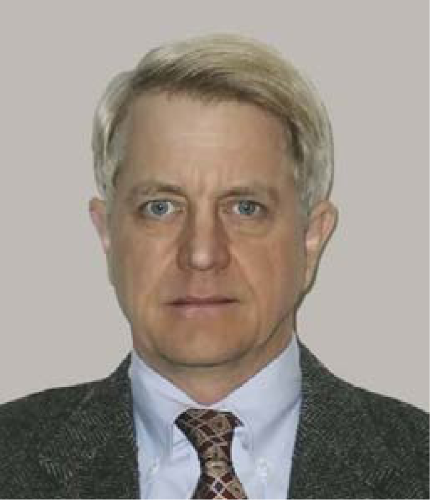
“Bottom line is, USEC is going to go bankrupt if the administration doesn't give them a sweetheart deal or subsidy,” said Neff, who has been critical of how his idea has been implemented. A report by the Nuclear Regulatory Commission, cited by the Washington Times in February, concluded that USEC could go under within six years.
Late in February, USEC appeared to get a boost when it was announced the company had reached a new pricing agreement with Tenex, a joint stock company that is 51-percent owned by the Russian government and acts as Russia's executive agent for the deal. Critics said that while the Russians seemed to be agreeing to lower prices, the deal was still not good enough to save USEC. Moreover, the deal still needed to be approved by the U.S. and Russian governments.
The agreement is still based on “substantially higher prices than what USEC has included in its financial projections,” said John Long-necker, a nuclear industry analyst who was in charge of enrichment as a deputy assistant secretary at Energy in the 1980s. USEC's outlook, he added, was “still grim.”
The company, meanwhile, called speculation about its imminent demise “preposterous.” Critics have made dire predictions about both USEC and the Russian nonproliferation deal for years and been proven wrong repeatedly, the company said. Charles Yulish, vice president for corporate communications, said the claims have come from the “same old cast of characters” who have waged a campaign against USEC to serve their own interests. (That “cast of characters” is wide-ranging–from potential competitors to national security experts to government oversight specialists.)
Washington, D.C., September 26, 2001: Philip Sewell of USEC, Valentin Ivanov of Russia's Ministry of Atomic Energy, and Alexey Lebedev of Tenex celebrate the conversion of uranium from the 5,000th Russian nuclear warhead.
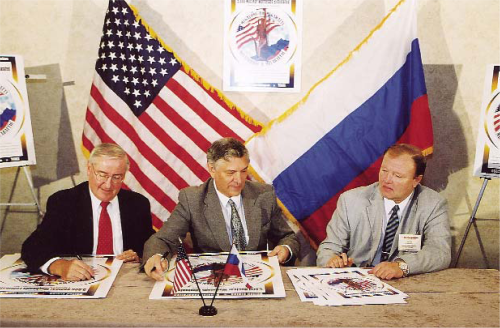
Yulish expressed confidence that the new price agreement would receive government approval, saying it was negotiated in accordance with guidance from the U.S. government. He also pointed out that Minatom officials had made positive comments about the deal.
The real bottom line, USEC maintains, is that the company is 40 percent ahead of schedule in fulfilling the contract with Russia, which calls for the United States to buy 500 metric tons of Russia's weapons-grade uranium over 20 years.
“This achievement marks a substantial reduction in the global threat of nuclear weapons proliferation,” William “Nick” Timbers, USEC's chairman and chief executive officer, said when the company announced the conversion of uranium from the 5,000th Russian warhead last September. Timbers characterizes the program as “an unqualified success.”
The government began operating gaseous diffusion facilities to enrich uranium for nuclear weapons, power plants, and naval propulsion reactors in the 1950s. For decades, the government supplied all the enriched uranium in the United States from three contractor-operated plants in Paducah, Piketon, and Oak Ridge.
In the early 1990s, with competition from European firms like Uren-co and Eurodif eating away at the government's market share, USEC was created as a government-owned corporation to take over the Energy Department's uranium enrichment activities.
“The government corporation really made a lot of sense,” said Long-necker, who served as USEC's transition manager when the government corporation was first created. The spin-off created an entity with a single focus on uranium enrichment.
In 1993, the United States and Russia signed a $12 billion agreement to convert 500 metric tons of highly enriched uranium from dismantled Russian warheads–the equivalent of more than 20,000 nuclear warheads–into low-enriched uranium for U.S. nuclear power plants. But rather than purchasing the Russian material outright, the United States reached an agreement in 1994 to implement the program on “commercial terms,” with USEC acting as the U.S. government's agent and Tenex acting on behalf of the Russians.
Uranium from nuclear warheads once carried on Russian submarines is being converted to fuel. Above, a shipyard worker dismantles an Oscar-class sub. Left: the Portsmouth gaseous diffusion plant in Piketon, Ohio, as it looked in 1982.
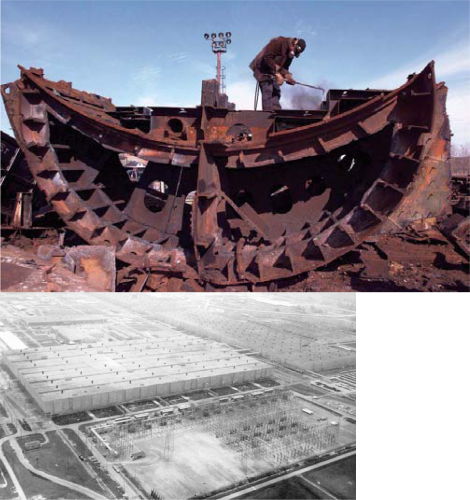
The deal's 20-year delivery schedule disappointed some of its proponents. One source who worked in the administration at the time said that the plan he supported called for buying all of the Russian uranium at once. It “would have been a relatively modest outlay to buy it all, but we would control it. We could move it to this country; we could put it under U.S. safeguards.”
Meanwhile, the government was moving to privatize USEC, claiming that as a private entity it could better compete against growing imports of enriched uranium from Europe. In 1996, Congress passed the USEC Privatization Act, authorizing the sale of the corporation. Like the sale of other government assets at the time, the privatization of USEC also seemed attractive as a small way to nibble away at the then-considerable budget deficit.
Nonproliferation advocates warned that privatization could jeopardize the Russian uranium deal. At home, the new company's outdated gaseous diffusion technology would be competing in a saturated uranium market. And at the same time, it would be trying to administer a disarmament program whose long-term profitability was uncertain.
In a controversial move, the Treasury Department decided to sell the company by floating stock in a public offering rather than putting it up for bid from established companies that might have some interest in acquiring an enrichment business. The public offering was heavily promoted by USEC's board and by its chief executive officer, Timbers, who went on to head the company after it went public. Critics said that Timbers and other officials–who stood to gain more from a public sale than they would have if the company were acquired–should not have been allowed to argue for a public offering, and that the decision to take the company public should not have been made in secret meetings. The deal was also criticized because the law firms who did the paperwork and the Wall Street firms who acted as underwriters were considered closely tied to the Clinton administration.
But the severest criticism centered around the idea of floating a company whose survival depended solely on the market for uranium fuel. Had USEC been sold to a larger, diversified company with deep pockets, it might have been better able to weather the difficulties of an already glutted nuclear fuel market.
One industry analyst said he warned government officials and investment bankers that the company's long-term viability was questionable. “A lot of people made a lot of money [on the public offering],” he told me. “Everybody just turned a blind eye to what the ramifications would be.”
The sale was something of a disappointment. Unable to meet a projected target price of nearly $2 billion, in the end 100 million shares were placed at $14.25, generating $1.4 billion. USEC was forced to borrow $500 million to pay the Treasury for the shortfall in anticipated receipts, establishing a debt that has since eaten away at its financial prospects. With the sale revenue going to the Treasury–leaving USEC with about $200 million in working capital–the new company's wealth consisted largely of other assets transferred from the government, such as its uranium stockpiles, long-term enrichment contracts, and contracts to purchase cheap electricity for its enrichment plants. The company has realized much of its subsequent revenues by liquidating those assets, according to Neff. Now, “they're coming, pretty much, to the end of that rope,” he said.
After the public offering, a series of surprises followed.
As part of the sale of USEC, Energy had transferred to the new company $746 million worth of stockpiled natural uranium from domestic sources. Sen. Pete Domenici, New Mexico Republican and leading proponent of privatization, described the transfer as much larger than lawmakers had envisioned. To the consternation of Domenici and others, USEC began to sell the material immediately on the spot market at low prices, which enabled it to compete with European suppliers but also contributed to falling prices, under-mining the profitability of the deal with Russia.
Meanwhile, under renegotiated terms between Russia and USEC, the newly privatized company would pay the Russians only for the enrichment component of the weapons-derived material, and not the natural uranium component, known as “feed.” (While the two components cannot be physically separated, they are traded separately.) As a result, Russia would retain title to inventories of natural uranium in the United States. But because of USEC's rapid sell-off of its own vast inventories transferred from Energy, the Russians had trouble selling their feed. The Russian government threatened to walk away from the entire deal until Congress, as part of the 1999 omnibus appropriations bill passed in late 1998, ponied up $325 million to buy the Russian feed delivered to USEC over the previous two years.
Less than a year after the public offering, USEC was forced to scrap plans to develop a new enrichment technology, the Atomic Vapor Laser Isotope Separation, or “AVLIS” system–something it had touted during the public offering as the technology of the future. The company admitted that it seemed unlikely to work.
In its first few years as a private corporation, USEC also engaged in a price war with its European competitors, Urenco and Eurodif, both of which use gas centrifuges. USEC was trying to retain market share, but the result was a dramatic drop in spot-market prices. As prices fell, so did USEC's stock price–bottoming out in the spring of 2000 at just over $3 per share. And, as critics had predicted, USEC was paying more for Russian uranium than it could be sold for on the spot market. In the fall of 1999, USEC told the U.S. government it might walk away from the deal unless the government forked over $200 million in subsidies. Although the government declined to provide a subsidy, USEC ultimately decided to stick with the deal.
Neff says USEC was actually making money on the Russian deal all along, because it was still selling its enrichment services under long-term contracts inherited from the government, which had been negotiated when prices were higher.
USEC's Yulish, on the other hand, argued that having to buy uranium at above-market prices would amount to losses in the long run.
In early 2000, USEC began cost-cutting efforts, laying off hundreds of workers at its plants. Alarmed by what was happening, in April 2000 Congress held hearings on USEC's performance. Some members argued for re-nationalizing the company.
In June 2000, USEC announced it would close the Portsmouth plant, resulting in hundreds of additional layoffs. The closing also left Paducah as the last domestic enrichment plant in the country.
Late in 2000, USEC filed a “trade action” with the Commerce Department, accusing its European competitors, Eurodif and Urenco, of “dumping” enriched uranium on the U.S. market. Commerce last year sided with USEC and moved to impose punitive duties on European imports, which had the effect of reversing the decline in prices on the spot market. The U.S. International Trade Commission upheld Commerce's findings on January 23, although the European Union has threatened to take the dispute to the “World Trade Organization.
The existing contract covering uranium deliveries from Russia was set to expire at the end of 2001. In May 2000, USEC negotiated a tentative agreement with Tenex on new terms. Under the new deal, USEC would pay lower prices for the weapons-derived uranium. But to sweeten the agreement for the Russians, USEC agreed to purchase from them a small amount of commercially produced low-enriched uranium.
As a result of cost-cutting, the successful trade action, and the tentative deal with Tenex, USEC's stock price began rising again. (USEC stock began 2001 selling at about $4 and ended at a little above $7.)
“Taking the actions that we've taken in terms of restructuring the work force, closing the plant, getting some contract work from the government and the trade action and other things that we're doing, has allowed us to begin to regain our footing in terms of business and create shareholder value,” Yulish said.
But USEC wasn't out of the woods yet, and when the Bush administration came into office, it inherited a situation in which the nation's sole domestic nuclear fuel producer and the agent for the disarmament deal was still struggling.
The administration was calling for a new energy policy that included the building of the first new nuclear power plants since 1979, and administration officials believed it would be essential to bolster the domestic enrichment industry to avoid reliance on foreign sources of nuclear fuel. The utility industry–closely connected to the new administration–lobbied for a solution that was not in USEC's interest: A consortium including Urenco, Duke Energy Corporation, and Exelon was interested in building a new enrichment facility in the United States, using Urenco technology. (Exelon was created last year with the merger of Commonwealth Edison and Philadelphia Electric.) Some of the utilities also expressed interest in competing for a portion of the Russian uranium deal. As the administration studied national energy policy, both USEC and the utilities responded by sending legions of lobbyists to Capitol Hill and the White House.
USEC argued that it should remain the exclusive executive agent for the Russian disarmament deal: “An additional executive agent will actually destabilize the seven-year working arrangement with Russia,” Philip Sewell, company vice president, warned in a September 2001 speech. “An additional executive agent will undermine the economics that support the [Russian] deal and the domestic uranium enrichment business.” The agreement, he said, “isn't broken, so don't try to fix it.”
Yulish said that there was no viable competitor, because no other company had enough orders to sell the Russian material, nor a large enough inventory to ensure uninterrupted deliveries in the event that Russian shipments were halted for some reason.
USEC argued that the terms of its May 2000 agreement with Tenex would make the deal more profitable. But this new agreement was subject to approval by the U.S. and Russian governments. And to purchase Russian commercial uranium, USEC needed an exemption from a trade agreement restricting the sale in the United States of commercially enriched Russian uranium. As parties to the trade agreement, the utilities and the Paper, Allied-Industrial and Chemical Workers union (PACE), which represents workers at USEC plants, would also have to approve the exemption. The union, in particular, was concerned that commercial imports would threaten domestic production and jobs at Paducah.
As part of contract negotiations in 2001, USEC and PACE considered an agreement in which the union would endorse the new terms in return for a guarantee that USEC would maintain a certain level of operations at Paducah. But the two sides failed to reach an agreement when USEC insisted on “escape clauses” that would allow it to cease operations at Paducah in the event of unforeseen financial adversity. Critics said it was evidence that USEC ultimately wants to close the Paducah plant and focus exclusively on brokering Russian material. The Nuclear Regulatory Commission, in a study of USEC's financial status, concluded in 2000 that such a move was one of the few ways the company might eventually become profitable.
“With enrichment costs at Paducah remaining higher than spot prices, “USEC knows perfectly well it has to shut Paducah down,” Neff said.
Yulish vigorously disputed this assertion: “The company has done everything that it can in order to demonstrate that we have put our roots deep down in Paducah, and we intend to stay there.” The company has spent hundreds of millions of dollars on upgrades at the plant, he says. “We've put our money where our mouth is on this.”
Meanwhile, the Exelon-led utility consortium announced in December that it might soon apply for a license to build a new, $1 billion enrichment plant in the United States, which would compete with USEC's Paducah plant. Some of the players were involved in a previous, failed attempt to build a new enrichment facility in Louisiana. Peter Lenny, president of Urenco Inc., the company's U.S. subsidiary, said the partnership behind the Louisiana venture “is still in existence, and clearly, there would be an opportunity, maybe at some future date, to reactivate [it].”
Jim Malone, vice president for nuclear fuels at Exelon, said he believes a new enrichment facility could be built at relatively low cost, using much of the groundwork already put in place by the Louisiana initiative.
Neff, however, doubts the economic viability of the scheme, because it would take substantial time and money to get a new facility up and running. “I just don't think it's going to happen,” he says.
In October, the State Department told USEC that it would not be allowed to purchase commercial uranium from Russia. An administration official who spoke on condition of anonymity said the decision to deny the purchase was an easy one. “This is a nonproliferation initiative, and we think it's important that [uranium] imported into the United States under its auspices be derived exclusively from … dismantled Soviet warheads.”
Observers quickly predicted USEC's demise, saying the company had lost the chance to become profitable. Not only would the May 2000 deal be less enticing to the Russians without commercial sales, they were also less likely to go for the prices agreed to earlier because spot-market prices had increased–as a result, in part, of USEC's trade action against Urenco and Eurodif.
“USEC, in a lot of ways, cooked its own goose here, because it filed the dumping case before it had the Russian deal nailed down,” said Richard Miller, a former PACE analyst. “The Russians took a look and said, ‘Wait a minute; the price of [enriched uranium] is up.’”
USEC had forecast a modest profit for fiscal year 2002–of $35 million to $40 million–a projection that was based in part on the acceptance of the terms of the May 2000 agreement. With that agreement in danger of collapse, “they will have negative earnings,” Neff said. He predicted that the losses would leave USEC with almost no cash on hand by the end of the 2002 fiscal year, which runs through June. Miller also said approval of the May 2000 deal had been material to USEC's survival. “They are right on the knife's edge as a result,” Miller said. “They ain't gonna make anything now. Zero.”
Gaseous diffusion “tails” (the depleted uranium hexafluoride left over from the enrichment process), stored in cylinders on the grounds of the Paducah, Kentucky, plant (1985).
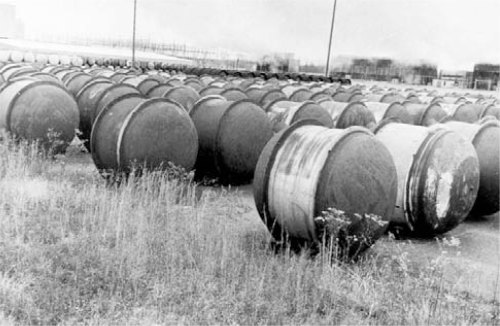
The deal appeared stalled for a while. But then in February reports from Washington began to indicate that the administration would allow USEC to remain as the exclusive executive agent in return for an arrangement through which the company would promise to keep Paducah open while continuing efforts to either develop its own centrifuge technology or acquire such technology from Europe.
Later that month, USEC announced it had reached a new agreement with Tenex. According to Neff, the administration's decision had pushed Tenex to accept the agreement, since it was now clear the Russians wouldn't be able to sell the material to anyone other than USEC.
“Essentially, the government helped USEC dictate terms to the Russians,” he said.
Yulish, meanwhile, said the agreement was proof that speculation about USEC's demise had been premature. Reports that negotiations with Russia had stalled came from company critics who were “shopping” news articles “aimed at discrediting USEC and this process for their own venal interests,” Yulish maintained. He accused Neff, in particular, of having played “a very formidable role in trying to sabotage the negotiations” because Neff had always opposed USEC's role in the disarmament program.
The deal is a significant source of revenue for the Russian government, which has come to trust USEC, Yulish said. The Russians will “balance that against making some adjustment on prices,” he predicted. “In the end, if you know you're going to make a certain amount of money … and you've got a trustworthy partner, you can sleep better at night.”
The utilities, Yulish said, want an additional executive agent or subsidized enrichment competition because they want cheap fuel. The union, meanwhile, has “waged a tireless campaign against us from the Start of the consideration of privatization,” Yulish said. “The purpose was to wreck the privatization, or to wreck the company as a private enterprise, so the government would have to take it back, so they would have the government operating both plants full tilt, regardless of what it costs.”
Despite Yulish's professed optimism, Neff still expressed doubt that both the U.S. and Russian governments would ratify the new pricing deal. A report in the Chicago Tribune quoted Energy Secretary Spencer Abraham as saying the debacle over USEC's business connections to Adamov could affect the company's negotiations with the administration.
USEC maintained its dealings with Adamov were perfectly legal, and Yulish dismissed the matter as more disinformation spread by the press. “We would naturally hope that substance would be more important than the piling on of ill-informed and ill-motivated news articles,” he said. “This is just part of the campaign, the latest kind of vicious thing … to try and undermine [the agreement].”
Even if the deal were to go through, the only way USEC can stay afloat is if it manages to land some sort of government subsidy, Neff said. Such a subsidy, he said, could come in the form of the U.S. government agreeing to replace an estimated $230 million worth of USEC's uranium feed stockpile that has been found to be contaminated with tech-netium. The uranium is part of the stockpile that was transferred from Energy in connection with the company's privatization. It was produced through government reprocessing of nuclear fuel in the 1970s, but wasn't sufficiently cleaned to eliminate contamination, Yulish said. USEC is now in negotiations with Energy, asking that the government replace the material.
“The [USEC] shareholders paid the U.S. government for those assets,” Yulish said. “It seems to me that the government shouldn't be selling tainted goods. … If the government transferred contaminated goods to the public that paid for it, the shareholders that paid for it, then something must be done to right that.”
What gives the company some leverage in negotiating this and other issues is that if USEC sinks, both the Russian uranium deal and the domestic enrichment industry could be in trouble. To Neff, that underscores the fundamental problem with leaving a matter of national security in the hands of a single, private entity. Essentially, he said, the initiative is hostage to USEC's primary interest in profit.
Neff has advocated the creation of a second U.S. executive agent, saying competition between two agents would lead to fairer prices for both the Russians and the utilities–and possibly faster conversion of Russian weapon uranium.
Neff is less worried about the impact on USEC or on the domestic enrichment industry. The argument that the United States needs to have a domestic enrichment industry to ensure its energy security is overblown, he said. What the unions and politicians want is to preserve jobs, and the utilities want to maximize supply and minimize prices, he maintained.
“I think the national security interest [in disposing of] fissile materials outweighs any tiny benefit that you might conceive of having from domestic enrichment,” Neff said.
In the end, critics argue, the privatization of USEC, and with it, the privatization of an important non-proliferation initiative, has brought few benefits to the American people. If USEC were to go under, it would put everything back in the government's hands. In the meantime, jobs have been lost and resources have been diverted to shareholder dividends, interest on the $500 million loan, lobbyists, and increased executive salaries.
Dan Minter, president of the PACE local at Piketon, called privatization “flawed from the beginning.” USEC argued it could make a profit and fulfill national policy objectives at the same time, but the two don't mix, Minter said. “Profits are profits, and national security [and] domestic energy security don't necessarily align to profit.”
Yulish, meanwhile, said USEC was given an extremely difficult task that the government didn't want to handle: “USEC was privatized, I believe, because the government wanted to pass the hot potatoes on to the private sector.” But when USEC tried to act as a private business, critics inside and outside of the government attacked it for doing so.
“Many of our critics–including Neff and others–said that we didn't have to make a profit,” Yulish said. “Profit is a very dirty word to many of the policy people. And yet we were tasked with paying [for] the Russian deal, even though we lost money.” Yulish also claimed that USEC's shareholders “have been subsidizing the U.S. government for those losses. That's the absolute fact.”
On the other hand, the company has fought to keep the Megatons to Megawatts project: “It is the single activity that we are most proud of in this company,” Yulish said.