



Abstract
The government wants to save money by loosening radiation exposure standards–how low will it go?
Efforts are under way to relax radiation exposure standards. Under attack is the “linear no-threshold” model and its assumption that radiation at any dose is harmful, an approach generally used by the various bodies that recommend or set standards for exposure to ionizing radiation. Those who oppose the model want to replace it with the concept of a “threshold” of exposure below which harm in their view is either nonexistent or of no conseguence. This is today's version of an old debate about the effects of low-dose radiation exposure, but with the new twist that today's threshold advocates are driven largely by economic considerations.
April 23, 1951: After the Charlie nuclear test in Nevada, Lt. Col. Robert Cassidy demonstrates an accepted decontamination procedure—using a broom to brush particles off a fellow officer.

How it all started
In 1943, as part of the Manhattan Project, Karl Z. Morgan, the “father of health physics,” accepted the task of determining how much ionizing radiation nuclear weapons workers could be exposed to without danger to their health. At the outset, he said, “We all had, all of us, a serious misconception, in that we adhered universally at that time to the so-called ‘threshold hypothesis,’ meaning that if a dose were low enough, cell repair would take place … and there would be no resultant damage. In other words, we believed there was a safe level of radiation.” By 1949, however, “The majority of us realized that there really wasn't a so-called safe level of exposure.” 1 Convinced that risk increased in exact proportion to dose, those responsible for radiation safety rejected the threshold model in favor of the “linear no-threshold” or “LNT” hypothesis.
Morgan headed the newly conceived Health Physics Division at Oak Ridge National Laboratory from its creation in 1943 until his retirement in 1972. He became very influential in both the International Commission on Radiological Protection (ICRP) and the U.S. National Council on Radiation Protection and Measurements (NCRP), the principal bodies that recommend standards for permissible exposure to radiation. Both bodies adopted the LNT approach for calculating risk, making it the orthodoxy of the nuclear establishment. It is a heuristic device that simplifies the range of exceedingly diverse and complex data regarding radiation effects–long-term malignancy, in utero processes, effects among different sub-populations, genetic change, repair actions, and so on.
Herman Muller received the Nobel for showing mutations in fruitflies exposed to radiation.
The no-threshold approach was first applied to radiation exposure standards as a result of Hermann Muller's discovery in the 1920s of genetic mutations in fruit flies exposed to radiation, work for which he received the 1946 Nobel Prize in medicine. “By the time World War II began,” observes one historian, “most scientists had rejected the earlier consensus that exposure to radiation was biologically innocuous below a certain threshold.” 2
Morgan, however, eventually rejected the LNT in favor of the more stringent “supralinear” approach because he had become convinced that it “fits the data more appropriately.” “Down at the very low doses,” he explained, “you actually get more cancers per person-rem than you do at the high doses…. High levels will more often kill cells outright, whereas low levels of exposure tend to injure cells rather than kill them, and it is the surviving, injured cells that are the cause for concern.” Over time, a damaged cell may become cancerous: “It divides, it divides again and again, and, on the average, if it's leading to a solid tumor, after 30 years it will be large enough that it will be recognized as a malignancy.” 3
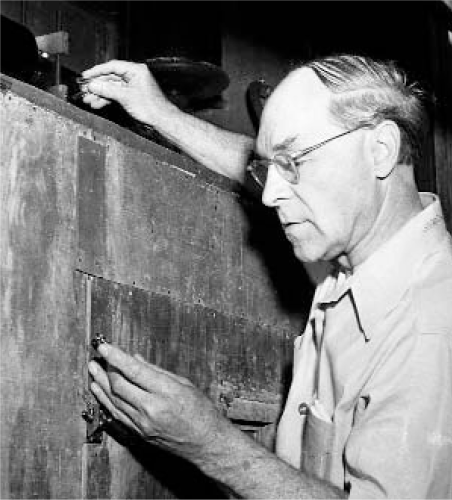
Karl Z. Morgan, the “father of health physics.”

Morgan understood that if low-dose exposure was more dangerous than previously realized, more stringent protective measures were needed. But once he rejected the LNT in favor of the supra-linear approach, he had moved beyond the establishment paradigm, and the industry ostracized him for it.
Morgan went on to lead an active, lifelong campaign against exposure to low-dose radiation, testifying in numerous lawsuits as an expert witness, helping to win key cases. The two cases he deemed most significant, Silkwood v. Kerr-McGee Corporation in 1979 and Allen v. United States in 1984, showed, respectively, that “there is no such thing as a ‘safe dose’ of radiation,” and that the U.S. government knew about the hazards of fallout from bomb tests at the Nevada Test Site but failed to inform or to protect exposed populations. 4 Morgan died in 1999.
“Within the limits of the LNT orthodoxy, the history of establishing standards for permissible radiation exposure has followed a trajectory similar to Morgan's, most notably in response to evidence of harm at levels of exposure below those previously regarded as “safe.” (See figure below.) In truth, the LNT orthodoxy is a politically expedient middle ground between the extremes of those who insist there is a threshold and those who find supralinear effects. 5 Researchers who have found supralinear effects have at times challenged the LNT hypothesis as not sufficiently stringent. 6 Today, standards based on LNT methodology are under attack for being too conservative.
In the new push to relax radiation exposure standards, influential voices in science and government assert that exposure to radiation at very low doses causes no detectable harm; a few even claim it is beneficial–a concept known as “hormesis.” Relaxing standards, these critics point out, will reduce the costs of disposing of nuclear waste, cleaning up contaminated sites, building more bombs, and reviving nuclear power–all, they say, without hurting anyone's health.
Leading the charge in the political realm is New Mexico Republican Sen. Pete Domenici. “We regulate exposure to low levels of radiation using a so-called ‘linear no-threshold’ model, the premise of which is that there is no ‘safe’ level of exposure,” and “we spend over $5 billion each year to clean contaminated [Energy Department] sites to levels below 5 percent of background,” he complained. Accordingly, he asked the General Accounting Office (GAO) to prepare a report on the scientific basis of existing radiation standards. And he authored legislation to create within the Energy Department the 10-year Low Dose Radiation Research Program–“to understand how radiation affects genomes and cells,” so that for the first time we can “develop radiation protection standards that are based on actual risk.” 7 This program, he told the National Academy of Engineering in February 2001, “offers our best hope for increased scientific understanding on which better standards eventually can be based.” 8
Both of these Domenici-inspired efforts–the GAO report and the Energy Department study–seem aimed at relaxing radiation standards. Another effort is the National Academy of Science's BEIR VII (Biological Effects of Ionizing Radiation) study. Professional societies, especially the Health Physics Society, also play a role.
Current U.S. efforts to relax radiation exposure standards have their roots in the culture of professional nuclear societies, which consist primarily of people who have a stake in perpetuating the nuclear enterprise.
Of these professional groups, the Health Physics Society has most actively questioned the LNT approach. In 1996, it took the official position that there is “substantial scientific evidence that [the LNT] model is an oversimplification of the dose-response relationship and results in an overestimation of health risks in the low dose range.” The first half of this statement, that LNT oversimplifies the dose-response relationship, is certainly true. But to assert that it results in the overestimation of low-dose health risks does not follow. Nevertheless, the statement goes on to specify that risks at exposures below 5 rem a year or 10 rem in a lifetime “are either too small to be observed or are non-existent.” 9
Comparing standards

When the society met in Denver in July 2000, Roger Clarke, president of the International Commission on Radiological Protection, an invited speaker, was given a hostile reception. He told a journalist that the society insists that “low doses of radiation have no effect and might even have beneficial effect. I was being castigated for not making a statement that I agreed.” 10 He was “repeatedly called upon to recognize the scientific ‘proof of a threshold. I do not mean to be flippant, but I found the majority of the [members] to have a closed mind.” 11
The International Commission recommends that nuclear workers be exposed to no more than 2 rem a year–a dose the society's 1996 statement treats as probably inconsequential. The Commission, says Clarke, assumes “that there is some risk, and that you have to find acceptable levels of risk…. We look at the mechanisms by which radiation can cause changes in a cell which may lead to cancer. At that level (2 rem), you can measure damage to DNA.” 12
Assertions that the LNT overestimates harm from low-dose exposure were countered recently by scientists from the Radiation Effects Research Foundation (RERF), the body responsible for research on the Japanese A-bomb survivors. In analyzing 7,000 cancer cases among 50,000 bomb survivors whose estimated dose was less than 5 rem, RERF found “considerable evidence that the linear risk estimates are appropriate.” 13
This is a challenge from a formidable source, because current radiation exposure standards are based primarily on the A-bomb survivor data. Critics say basing standards on survivor data may seriously underestimate risks to exposed populations because survivors typically sustained a one-time high-dose exposure, were the healthiest members of the population, and had their doses estimated (and re-estimated) only years later. 14
Karl Morgan, who helped found the Health Physics Society in 1955, lived to regret that the society he had envisioned as “a professional and scientific organization to protect people from exposure to ionizing radiation,” had become “a labor union for the nuclear industry.” He dates the change from around 1972 when D. W. Moeller, then the society's president, told his fellow health physicists, “Let's put our mouth where our money is.” 15
What's what and who's who
The GAO issued its report, Radiation Protection Standards: Scientific Basis Inconclusive, in a June 2000 letter to Domenici. The report examined the scientific basis of current U.S. radiation exposure standards as well as how implementing those standards may affect the costs of nuclear waste cleanup and disposal. 16
The report indicates that very low-dose exposure may result in “DNA misrepair” that could induce cancer. And it seems eminently objective in what it says regarding the LNT approach: “Some say the model is overly conservative and that below certain exposure levels, there is no risk of cancer from radiation. Others say that the model may underestimate the risk.” In sum: Specialists do not agree; there is a spectrum of scientific opinion.
Given these findings, the report's conclusion seems inexplicable: “U.S. regulatory standards to protect the public from the potential health risks of nuclear radiation lack a conclusively verified scientific basis…. Conclusive evidence of radiation effects is lacking below a total of about 5,000 to 10,000 millirem [5 to 10 rem], according to the scientific literature we examined and a consensus of scientists whose views we obtained.”
Because the report nowhere specifies what studies its authors examined or the persons whose concepts were considered, identifying its sources required me to file the equivalent of a Freedom of Information Act request. In response to my effort, I finally received copies of cover pages of more than 300 “source documents used,” as well as a list of 84 “people with pertinent technical knowledge whose views were obtained.” 17
Sen. Pete Domenici requested a review of radiation standards.

I contacted some of the people on the GAO's list of those “whose views were obtained” to see if they agreed with the GAO's consensus conclusion. Here are their responses:
• Roger Clarke and Roger Cox of Britain's National Radiological Protection Board (Clarke is also president of the ICRP): “Neither of us has a record of formal consultation with U.S. GAO on radiation cancer risk.” 18 They referred me to NRPB's 1995 report, Risk of Radiation-Induced Cancer at Low Doses and Low Dose Rates, which does not support the GAO consensus (it says that excess childhood cancers will result from in utero exposures as low as 1 to 2 rem). As noted earlier, Clarke maintains that at an exposure level of only 2 rem (well below the GAO number), “you can measure damage to DNA.” 19
• John Till, president of Risk Assessment Corporation, a member of ICRP and NCRP: “I do not concur with the conclusions of the report and do not understand how my views on low dose radiation could be misinterpreted so badly.” 20
• Arthur C. Upton, M.D., BEIR V chair and head of the committee that produced the recent NCRP Report 136 reaffirming the validity of the LNT approach, said he had no recollection of the GAO consulting with him; he believes that the GAO consensus is questionable. 21
• John Boice of the International Epidemiology Institute, a member of NCRP, ICRP, and UNSCEAR (the United Nations Scientific Committee on the Effects of Atomic Radiation), also does not concur with the GAO conclusion: “I believe our standards are based on sound science and reflect a strong scientific basis…. There is enough cellular and animal data to support the use of linearity at the low levels for protection purposes.” 22
• Charles Land of the National Cancer Institute provided several reasons for questioning the GAO consensus, including one about epidemiology: “Lack of statistical significance means that one can't prove that something exists; it in no way implies that the thing doesn't exist. Much of the argument for thresholds is based on this fallacy.” 23
• Charles Meinhold, past president of NCRP: “Extrapolation of the effects seen at ‘high doses’ in the Japanese survivors cannot be used to estimate effects at low doses. Therefore a model must be adopted which reflects information on biophysics, molecular biology, and animal data. Using this information certainly implies a great deal of uncertainty, but at this time no one has been able to demonstrate that a two-strand break in a DNA strand will always result in cell death or be completely repaired.” 24
• Steve Wing of the Department of Epidemiology, University of North Carolina, told me: “There is good evidence for in utero exposures causing childhood cancer at doses below 5-10 rem and for excess cancer deaths among workers with recorded doses of less than 5 rem/year. I am not part of their ‘consensus.’ “ 25
• Alice Stewart of the Oxford Survey of Childhood Cancer told me: “I disagree with the conclusions of GAO.” 26
• Rudi Nussbaum, Portland State University, wrote: “There is a very large body of epidemiological evidence” that shows adverse effects from “exposures at or near those of background radiation.” 27
• John W. Gofman of the Committee for Nuclear Responsibility told me: “My recent work is just the opposite of the consensus you quote.” 28
• Dan Hirsch of the Committee to Bridge the Gap said that from the moment this report was requested, he and his colleagues feared the result “would be an inaccurate, skewed report designed to give its requesters what they wanted–politically driven ammunition to push for relaxing radiation protection standards. When it came out, our worst fears were realized.” 29
The GAO says both the Environmental Protection Agency and the Nuclear Regulatory Commission are “regulating at levels where the harm of radiation and the health benefits of radiation standards may not be clearly demonstrable. Regulating at these levels… is essentially a policy judgment. Such an approach may arguably be prudent, in accordance with regulatory use of the linear model…. However, it will also be expensive.”
For the GAO to say that harm from low-dose radiation “may not be clearly demonstrable” simply disregards the evidence. Nevertheless, applying its fiscal logic across the board, the GAO report becomes an apologia for reducing costs by relaxing standards. With its questionable consensus, this report looks like a political tract written to provide Domenici with the results he wanted.
In October 1997, thanks to legislation authored by Domenici, the Energy Department initiated the Low Dose Radiation Research Program, a 10-year, $200 million project to “help resolve the low-dose problem.” The program is housed in Energy's Office of Biological and Environmental Research (BER). Its managers say that researchers using advances in molecular biology and instrumentation will be “able to evaluate biological changes at levels of radiation exposure and biological organization that previously were not measurable.” They “will be able to determine if low doses of radiation pose a greater or lesser health risk than currently assumed,” and their work may lead to “major paradigm shifts in radiation protection and biology.” 30
The goal of the program, according to its director, “was, and still is, to provide new scientific information that can be used in the development of future radiation risk regulatory policy.” 31 Toward this end, the program sponsors research in the following areas:
• Radiation-induced versus normal oxidative damage.
• Adaptive response. In other words, does low-dose exposure induce a response that enables cells to withstand the effects of additional exposure?
• Thresholds. Are there levels below which adverse effects do not occur or are repairable by normal processes?
• Genetic susceptibility. Are some individuals or groups genetically more sensitive to damage from low-dose exposure?
Impressive as it may appear, this research agenda does not address important issues, including the question of cumulative effects from multiple sources of radiation or synergistic effects from radioactive and non-radioactive toxins. And while the program examines genetic susceptibility, it appears to exclude research on the genetic effects of low-dose exposure, which, as noted earlier, provided the original foundation for the LNT approach.
The bigger problem with the program may be that it is an Energy Department program. Department personnel administer it, identify needed research, award contracts, organize peer reviews, and monitor work in progress–all to ensure “a balanced research portfolio focused on the DOE, BER and Program missions.” 32 Of the 44 grants made so far, nearly half support research being done by Energy personnel at Energy facilities. Some of the other researchers also have ties to the department.
While the project studies the effects of radiation exposure, affected populations are conspicuous by their absence. An advisory committee appointed by Energy provides a façade of public involvement. But actual public participation is limited to visits to the program's Web site. When I asked a prominent scientist who often criticizes Energy Department activities why he wasn't paying more attention to the project, he told me, “Nothing that comes out of a DOE-run study on radiation effects will have credibility.”
Employees at nuclear facilities wear dosimeters with their identification badges to track their radiation exposure.

Because of the inherent conflict of interest, Jim Thomas, former research director for the Hanford Education Action League, maintains that the department “should have nothing to do with this research. The funding should be transferred elsewhere. [Energy], facing an astronomical cleanup mortgage, has everything to gain from lowering standards. It has a direct conflict of interest.” 33
During fiscal years 1999 and 2000, the program was partly funded from the department's “Environmental Management” or cleanup budget. In other words, for roughly a year and a half of the program's expected life of 10 years, Energy was using cleanup funds to explore whether the standards that make cleanup costly should be relaxed.
Nonetheless, based on my own observations during a three-day research report session in Arlington, Virginia, the LNT approach for calculating risk was confirmed by several studies. Some studies showed supralinear effects, and the one explicit attempt to demonstrate hormesis proved a failure. The verdict on adaptive response–that cells irradiated with very low doses resist or can be enabled to resist adverse effects from further exposure–was mixed. Several reports demonstrated the “bystander effect”–the result of a direct radioactive hit on a cell adversely affecting neighboring cells. The results so far suggest that trying to establish a threshold is futile.
Without greater public accountability, the Low Dose Radiation Research Program will lack credibility. It should be separated from the Energy Department and transferred to an independent entity, preferably a nongovernmental one, perhaps a major university, where it would continue to be publicly funded. To help ensure that the program is held accountable to the taxpayers, its ultimate funders, people from affected populations should be involved in designing and overseeing the research agenda.
The BEIR studies administered by the National Academy of Sciences carry enormous influence in the radiation-standards world because they purport to provide comprehensive reviews of the latest findings on their topic. The last such review of low-dose effects, BEIR V, was published in 1990. (BEIR VI dealt with radon.) In 1996, Energy, the Environmental Protection Agency, and the Nuclear Regulatory Commission, the principal federal agencies responsible for setting U.S. radiation exposure standards, asked the academy to consider doing a BEIR VII–an update on low-dose exposure–looking at topics like LNT, thresholds, hormesis, and adaptive response.
In December 1997, when it appeared that the academy would go ahead, Jacqueline Berardini, the deputy director of the Office of Policy & Public-Private Initiatives of the Colorado Department of Public Health and Environment, proposed that it include “a national public participation effort.” She wanted to see input from the full range of affected parties “at key policy decision-making points during the process, including … framing scientific questions in ways that will identify and respond to community concerns and uncertainties about potential exposures to radiation.” 34
Her proposal was rejected in favor of “following established procedures” for academy studies, even though the academy's practice of secrecy, particularly its closed meetings, had led in the past to a series of federal court rulings that it had to abide by the openness requirements of the 1972 Federal Advisory Committee Act (FACA). 35
In November 1997, however, Congress exempted the academy from FACA's open-meeting requirements if it agreed to:
• post the names and brief biographies of appointees to or candidates for its research committees;
• take public comment on candidates before they were appointed;
• avoid appointees with a conflict of interest, unless the academy deemed it impossible; and
• ensure that membership on committees was fairly balanced. 36
These were the rules in place in January 1998, when the academy announced it would proceed with the BEIR VII study.
Public interest groups were concerned. The Alliance for Nuclear Accountability, a network of 34 groups that monitor environmental and health issues at nuclear weapons sites, called for open meetings, robust public participation, and a balanced committee, and it nominated 11 radiation health specialists well-respected among impacted publics.
When the 16-member BEIR VII committee was announced on May 17, 1999, however, none of the groups' nominees had been chosen, and in fact the committee looked decidedly unbalanced. The public had 20 days to comment on nominees, even as the first meeting was scheduled for late June, in conjunction with a meeting of the Health Physics Society.
On June 22, the last day for comment, representatives of 78 groups and 44 individuals sent a letter to the academy accusing it of violating the law in three areas:
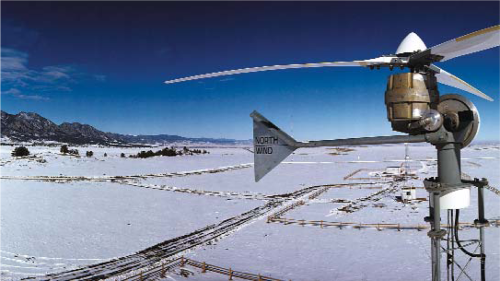
Cleanup at Rocky Flats would cost the government less money if radiation standards were relaxed.
• Committee balance. The committee, the letter said, was “packed with allies of the nuclear industry's campaign to relax radiation standards.” It included no known adherent of the LNT approach and no one who advocated more stringent standards.
• Public comment. The academy had “failed to permit public comment on the prospective appointments prior to their being made,” and it had refused to provide full dossiers of appointees.
• Conflict of interest. The academy had denied requests to make BEIR VII member conflict-of-interest forms available, as well as declined to disclose possible conflicts of interest “promptly and publicly,” as required by law.
The letter pointed out specific conflicts of particular appointees, then concluded by urging the academy “to start over” in the interest of forming a panel that could be “independent, balanced, free of impermissible conflicts, and in compliance with law.” 37
The next day, the academy announced that it was postponing the committee's initial meeting, to allow a review of questions of committee balance and conflict of interest. Actually, only the public meeting was postponed; a closed meeting was held as planned.
Several weeks later, on August 10, the academy revealed that it had dropped one person whose bias had been singled out, and added five new members.
Critics were not assuaged. Many groups complained that the changes were essentially cosmetic and that the academy was continuing to flout legal requirements. On August 30, eight radiation scientists wrote saying that the credibility of the committee's work would be “severely compromised as a consequence of its current composition. Such a result will damage the reputation of science in the public's view and cast doubt on the integrity of public health policy.” 38
The BEIR VII panel held its first public meeting on September 2,1999. In the weeks following, the academy dropped five provisional committee members and added one new person, resulting in a committee of 15 confirmed members, one provisional. An October 24, 1999, letter from 116 public interest groups and 14 individuals declared, “Reducing a committee of 20 that has no one from the other side or the middle of the debate, to a committee of 16 that still has nobody from the other side or middle of the debate cures nothing in terms of the fundamental violation of balance requirements.” 39
In early November 1999, the academy finalized the BEIR VII committee by ending the provisional status of an appointee critics said had only increased committee imbalance.
As for continued violations of law, the academy cannot itself be sued. But if a court deems the process illegal, government agencies can be ordered not to use results from the study.
Meanwhile, a letter from the Institute for Energy and Environmental Research and 70 signatories challenged the BEIR VII committee to enlarge the scope of its research to include a number of neglected topics. Subsequent correspondence leaves unclear whether the committee will explore these topics. 40
Originally expected to be a three-year endeavor completed by late 2001, the study has been extended for two additional years in order to analyze new information being developed on doses received by the Japanese A-bomb survivors. In the end, the controversy about BEIR VII may be as much about the scope of its work as about committee composition or the legality of the process.
The ICRP's Roger Clarke thinks efforts to replace the LNT model with a threshold approach reflect the desire to lower the cost of cleaning up contaminated nuclear sites. “Some people think that too much money is being, and will be, spent to achieve low levels of residual contamination.” They want “a threshold in the dose-response relationship in order to reduce the expenditure.” 41
Assuming current standards don't change, however, what will it cost to clean up Energy Department sites? Estimates made since 1988 have ranged from $65 billion to $400 billion (in 1996 dollars). 42 One Energy Department official, Donald H. Alexander, said in an NPR news broadcast on June 17, 1992, “If our cleanup is required to go to the very significantly low levels that we're currently being driven to, it could cost the United States a trillion dollars or more.”
But this estimate was four times Energy's own best estimate in its 1996 Baseline Environmental Management Report, which said a 75-year program would cost between $189 billion and $265 billion. 43 This estimate assumes compliance with existing standards and use of current technology and land-use plans. While not a small number, the midpoint in that range, $227 billion, represents only 6.7 percent of the $5.5 trillion (in 1996 dollars) the United States spent to construct, deploy, and operate nuclear weapons and their delivery systems from 1940 through 1996. 44 Some critics believe a more realistic estimate would top out at $400 billion, or about 7.3 percent of the $5.5 trillion, but they also say the cleanup program is overly expensive because it is being poorly managed. 45 Some believe that cleaning Energy Department sites to meet current health and safety requirements may still endanger unsuspecting future generations, both because current exposure standards are not protective enough and because Energy generally favors containment rather than removal of contaminants. Regarding the latter, a recent National Research Council report suggested that containment measures are likely to fail. 46 As for standards that may be insufficiently protective, cleanup costs dim by comparison to possible physical costs in the cells and organs of people exposed to contaminants left behind and the eventual costs of their health care.
The current debate about low-dose exposure, sparked by self-interested nuclear professionals, pits advocates of a threshold against adherents of the linear no-threshold orthodoxy. But the evidence for supralinear effects seems to suggest that the debate that needs to occur is between disciples of the linear orthodoxy and advocates of the more cautious supra-linear model. The guiding principle for this debate needs to be that radiation exposure standards exist to protect not the industry but the public.
Decisions should be made in the company of those who have been or will be impacted–miners, production and testing workers, nearby residents, downwinders, people with a stake in their own survival and, finally, those who understand that future generations depend for their security on the decisions made today.
Organizations like the ICRP, NCRP, and UNSCEAR should at an early date bring into their decision-making structure representatives of affected populations. These groups should work together to develop a plan on how to involve the affected publics directly in the task of proposing and adopting standards for permissible exposure. More democracy will mean less damage all across the board.
Footnotes
1.
Karl Z. Morgan, quoted in Robert Del Tredici, At Work in the Fields of the Bomb (New York: Harper & Row, 1987), pp. 132-33; the Swedish radiologist R. M. Sievert told an international group in 1950 that “there is no known tolerance level for radiation. “ Quoted in Rosalie Berteli, No Immediate Danger (London: The Women's Press, 1985), p. 38.
2.
J. Samuel Walker, Permissible Dose: A History of Radiation Protection in the Twentieth Century (Berkeley: University of California Press, 2000), pp. 10-11.
3.
Morgan in Del Tredici, pp. 133-34.
4.
Karl Z. Morgan and Ken M. Peterson, The Angry Genie: One Man's Walk through the Nuclear Age (Norman: University of Oklahoma Press, 1999), pp. 145, 152.
5.
A February 25,1999, letter to the author from Dr. Charles B. Meinhold, then president of NCRP, justifies the LNT approach on the grounds that it represents majority “scientific opinion” and avoids the threshold and supra-linear extremes.
6.
See H. Jack Geiger et al., Dead Reckoning: A Critical Review of the Department of Energy's Epidemiologie Research (Washington, D.C.: Physicians for Social Responsibility, 1992), p. 32.
7.

8.
Sen. Pete V. Domenici, speech to National Academy of Engineering Symposium, “Nuclear Power: The Option for the 21st Century,” Irvine, California, February 9,2001.
9.
10.
Katy Human, “The Radiation Debate,” Boulder Daily Camera, July 2, 2000.
11.
Roger Clarke, personal communication, June 8, 2001.
12.
Human, “The Radiation Debate.”
13.
Donald A. Pierce and Dale L. Preston, “Radiation-Related Cancer Risks at Low Doses among Atomic Bomb Survivors,” Radiation Research, August 2000 (vol. 54, no. 2), pp. 181,186.
14.
Steve Wing et al., “The Relevance of Occupational Epidemiology to Radiation Protection Standards,” New Solutions, 1999 (vol. 9, no. 2), pp. 133-51.
15.
Karl Z. Morgan, “Health Physics: Its Development, Successes, Failures, and Eccentricities,” American Journal of Industrial Medicine, 1992 (vol. 22), pp. 129-30. See Morgan, The Angry Genie, pp. 109-10; Kenneth L. Miller et al., “A Tribute to Karl Z. Morgan,” Health Physics, June 1999 (vol. 76, no. 3), pp. 599-603.
16.
Radiation Protection Standards: Scientific Basis Inconclusive, and EPA and NRC Disagreement Continues (GAO/RCED-00-152, June 30, 2000), p. 4.
17.
Letter (PRI-01-108) dated April 10, 2001, to the author from Richard L. Hembra, GAO chief quality officer.
18.
Roger Cox and Roger Clarke, personal communication, July 6, 2001.
19.
Human, “The Radiation Debate.”
20.
John Till, personal communication, May 25,2001.
21.
Arthur C. Upton, personal communication, December 28, 2001.
22.
John Boice, personal communication, February 6,2002.
23.
Charles Land, personal communication, February 5,2002.
24.
Charles Meinhold, personal communication, December 18, 2001.
25.
Steve Wing, personal communication, July 5, 2001.
26.
Alice Stewart, personal communication, July 7, 2001.
27.
Rudi Nussbaum, personal communication, July 7, 2001.
28.
John W. Gofman, personal communication, July 20,2001.
29.
Dan Hirsch, personal communication, July 8, 2001.
30.
GAO, pp. 28-29.
31.
Low Dose Radiation Research Program, Overview Prepared for the Low Dose Radiation Research Program Advisory Committee, U.S. Energy Department, Office of Biological and Environmental Research, Life Sciences Division, August 2000, p. 1.
32.
Program Coordinator David Thomas-sen, personal communication, June 15, 2001.
33.
Jim Thomas, personal communication, February 26, 2001.
34.
Jacqueline H. Berardini to Jerome Puskin, Environmental Protection Agency, et al., December 17, 1997.
35.
Jerome Puskin to Berardini, January 22, 1998.
36.
“Congress Exempts NAS from Federal Advisory Committee Act,” Nuclear Materials Monitor, November 18, 1997, p. 4. Guidelines for implementing the revisions are spelled out in a NAS internal document, “Interim Policy on Compliance with Section 15 of the Federal Advisory Committee Act.”
37.
Daniel Hirsch et al. to Rick Jostes, Study Director, BEIR VII, National Research Council, June 22, 1999.
38.
Steve Wing et al. to Evan Douple of the National Academy of Sciences (NAS), August 30, 1999.
39.
Daniel Hirsch et al. to Evan Douple of NAS, October 24, 1999.
41.
Roger H. Clarke, “Control of Low-Level Radiation Exposure: What Is the Problem and How Can It Be Solved?,” Health Physics, April 2001 (vol. 80, no. 4), p. 393.
42.
Stephen I. Schwartz (ed.), Atomic Audit: The Costs and Consequences of U.S. Nuclear Weapons since 1940 (Washington, D.C.: Brookings Institution Press, 1998), p. 382.
43.
Energy Department, Office of Environmental Management, The 1996 Baseline Environmental Management Report, June 1996.
44.
Schwartz, Atomic Audit, p. 4.
45.
M. Fioravanti and Arjun Makhijani, Containing the Cold War Mess (Takoma Park, Maryland: Institute for Energy and Environmental Research, 1997), p. 3.
46.
Tom Leschine et al., hong-Term Institutional Management of U.S. Department of Energy Legacy Waste Sites (Washington, D.C.: National Research Council, 2000).