



Abstract
Robert Kaplan writes about places most people would rather not know about: vast swaths of the planet where democracy and global capitalism are fostering not peace and prosperity, but profound human suffering and instability. From West Africa to the Balkans, Kaplan chronicles how these twin forces—seen by most Americans as unquestionably good and universally applicable—have destroyed the lives of untold millions who live in societies that lack the social and institutional frameworks required to harness their power.
Kaplan's books provide a vital counterpoint to the na'ive, triumphal prattle of globalization's many armchair cheerleaders in the foreign policy community. But while Kaplan is willing to get dirty visiting the world's trenches, he speaks almost exclusively to officers and officials, and thus he misses much of the action. The issues Kaplan confronts are incredibly important, which is why his analytical and observational shortcomings are so tragic.
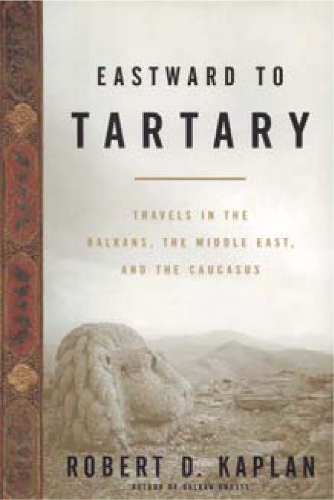
Take his latest book, Eastward to Tartary, which chronicles Kaplan's overland journey from Budapest to Tel Aviv and Turkmenistan. This is a work that competently paints the broad outlines of the region's political and historical landscape, but fails to delve into the details. And in the Near East, as elsewhere, the devil is in the details.
“Tartary,” or the “New Near East,” is a poorly understood region, despite being one of the most fascinating and conflict-prone areas of the world. It is a fractured and fractious backwater littered with the detritus of history: Biblical and classical, colonial and communist. Since the collapse of the Soviet Union—only the latest of a series of empires that once ruled here, including the Ottoman, Byzantine, French, and British—the land has been divided into 20 nations, some of them weak, many of them distrustful of their neighbors and the ethnic minorities within their borders. The United States has several concerns in the area: the Israeli-Palestinian conflict, tensions between Greece and Turkey, and potential pipeline and tanker routes to the energy-rich Caspian, to name a few. All told, the region contains 70 percent of the world's proven oil reserves and more than 40 percent of its natural gas. It is a place our foreign policy experts ought to know more about.
But Kaplan is a surprisingly lackluster guide. In Budapest and Beirut, Istanbul and Ashgabat, and a few dozen places in between, Kaplan arrives in town, takes a decidedly pedestrian stroll through a few neighborhoods, and then engages in a string of interviews with the local elite. He talks to presidents and generals, intellectuals and dissidents. The only ordinary people Kaplan talks to in Eastward to Tartary are his translators, drivers, and a hotel receptionist. The result is a stilted, one-dimensional account.
Kaplan is at his best when he describes the historical landscape, the cultural fissures between “the West” (as represented by the Vatican and the Catholic Austrian Empire) and the Near East (Orthodox Byzantium and the Ottoman Muslims). This fissure runs right through the Balkans, with Bosnia and Transylvania squatting on the line. It is no coincidence that Bosnia and Transylvania descended into ethnic conflict more than once during the twentieth century.
He relates how this division “halted the eastward spread of European culture, marked by the Romanesque and Gothic architecture and by the Renaissance and the Reformation.” The Ottoman lands were left “underdeveloped” and “anarchical.” This, we are told, explains why reform communism took hold in Hungary, while in Romania and Bulgaria it morphed into “Near Eastern despotisms.” According to Kaplan's calculus, the West signifies modernity and development, the East anarchy and despotism.
But this analysis is sophomoric at best. True, the Ottomans weren't very good at building roads, railroads, and state institutions. But then again, the sultans were much more tolerant of minority religions and cultures than the Austrian emperors, whose campaigns to burn, kill, or convert Protestants at home and abroad triggered the Thirty Years' War. Austria's political legacy includes the torture chambers of Spilberk Castle, Hitler and Eich-mann, and the rise of genocidal, fascist regimes. Kaplan correctly states that the Ottoman/Byzantine legacy is a burdensome one—but in terms of fostering slaughter, intolerance, and carnage, the Austrians beat them hands down.
Kaplan's contemporary political observations also leave much to be desired. In Romania, Bulgaria, Syria, and the Caucasus, Kaplan is “optimistic in the capital cities.” But in the “depressed countryside,” he finds himself confronted with “the hardest truths.” He bases his optimism on cell phones and satellite dishes, casinos and private security guards, swank shops and fashionably dressed women—but in places like Bucharest and Sofia, these are the accouter-ments of the criminal elements that are undermining efforts to improve the social and economic fabric of these nations. He mistakes the cancer for the cure.
Kaplan comes from the “realist” school of international relations, which assumes that the world is made up of rational, self-interested organisms called “nation-states.” The pursuit of “national interest,” according to this perspective, should lead to the realization that stability is the best environment for achieving one's desires.
Perhaps this is why Kaplan thinks he can understand a region by speaking exclusively to its elites. He puts this approach to good use in his analyses of the new Turkish-Israeli alliance, the prospects of “state-disintegration” in Syria, and the international struggle over the Caspian petroleum reserves. But the strategy is inadequate when trying to understand the region's present and predict its future.
The world is composed of self-interested, occasionally rational organisms called “people.” These are the messy creatures that make up nation-states, and those in power usually try to harness them to their own agendas. Unbalanced people create unbalanced foreign policy—witness the irrational behavior of Milosevic's Serbia, Hussein's Iraq, or Hitler's Germany—which is part of the reason that “realism” is so unrealistic.
If Kaplan had bothered to talk with ordinary folks he might have gained insight into some of the region's “hardest truths.” What sort of homecoming do the German-born children of Turkish “guest workers” receive? Are they challenging or changing Turkish society? And what about the millions of Anatolian peasants streaming into Istanbul and Ankara? What do they think of secular, Western-inspired Turkish culture? What was it like to grow up in Nicolae Ceausescu's Orwellian dictatorship, and how did it shape people's political beliefs? Why are Turkish-owned small businesses spreading throughout Budapest, Constanta, and other Balkan cities? What is it like to be a Muslim in Georgia, a gypsy in Romania, an Orthodox Christian in Istanbul? What do Bulgarian factory workers think about the “wild privatization” of their industries? Why do so many young, affluent, educated, urban Hungarians vote for the extreme right? These are the sorts of questions that shape the political terrain the elites operate in and that ultimately determine the future of nations.
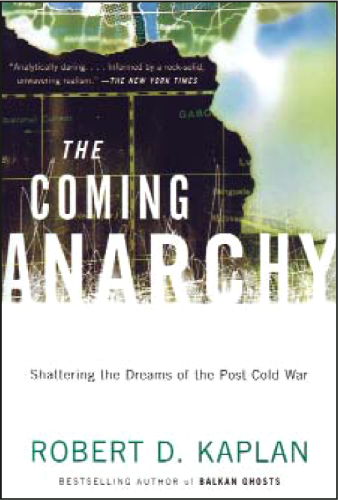
Many readers will be familiar with Kaplan's essay “The Coming Anarchy,” which appeared in the Atlantic Monthly before serving as the central piece for his book by the same title. Kaplan has been roundly criticized for being too pessimistic in his vision of a bifurcated world of wealthy, fortified enclaves surrounded by anarchic, dangerous, environmentally devastated regions. Much of Africa is descending into anarchy, critics say, but on the whole, free trade and global capital are improving the lot of humankind.
As a foreign correspondent for the past decade, I have covered everything from the Balkans to Central America, from peace processes to global warming. It is not difficult for me to envision the emergence of Kaplan's bifurcated world. Population growth, natural resource scarcity, and environmental decay are already undermining the social fabric of vast regions of the planet. Witness the desertification of Africa and Central Asia; the destruction of tropical forests in Indonesia, Brazil, and Guatemala; the depopulated fishing villages of Newfoundland and the sputtering water supply in Istanbul. According to some estimates, the world's population will jump from 6 billion to 10.5 billion over the next 50 years. Most of that increase will be in poor countries. We are already seeing the ecological collapse of entire seas, the exhaustion of farming land, and the depletion of water supplies. If populations double in the coming decades, it is hard to imagine many countries avoiding a collapse into anarchy.
The other essays in The Coming Anarchy have received less attention, and in most cases, rightly so. There is a “realist” defense of Henry Kissinger's foreign policy, excusing his role in Cambodia, Vietnam, and Chile on the grounds that it served the greater good of winning the Cold “War—an argument few knowledgeable readers are going to find convincing. Another essay argues that lasting peace is bad because it deprives us of a proper appreciation of the tragic nature of the human condition—which can only lead us into disastrous conflicts like World War I. Perhaps we should keep a few low-intensity conflicts around as a reminder of how creepy humans really are.
However, the essay titled “Was Democracy Just a Moment?” should join “The Coming Anarchy” as required reading for students of international politics. Here Kaplan argues convincingly that by forcing democracy on many parts of the world the “West is triggering social upheaval, human suffering, and the rise of new sorts of authoritarian regimes. Democracy succeeds “only as a capstone to other social and economic achievements,” like the creation of a literate middle class and a bureaucracy efficient enough to collect taxes and provide services. Foisting elections on countries with neither of these things is often a meaningless and destabilizing enterprise.
Kaplan also warns of the fragile state of democracy in the United States. Drawing largely on Aristotle, he suggests there is a fine line between democracy and oligarchy, between governing for the benefit of ordinary people and governing for the benefit of the rich. “Is it not inconceivable that corporations will, like the rulers of both Sparta and Athens, project power to the advantage of the well-off while satisfying the twenty-first-century servile populace with the equivalent of bread and circuses?” Indeed, when Americans compare their tax cut to the one Dick Cheney will receive, they may begin to wonder if they are already there.