





Abstract
Pregnant women and their newborns are susceptible to infectious diseases. Healthcare providers must have the knowledge to provide advice and to support the use of immunizations for women who wish to ensure a healthy pregnancy. Several vaccines are now available for adolescents and women of childbearing age. Vaccination during pregnancy has the potential to provide protection to both mother and infant. Influenza and tetanus/diphtheria vaccines are routinely recommended for pregnant women. Other vaccines are available for women at risk for infection due to exposure, underlying medical conditions or travel. Live vaccines are contraindicated during pregnancy. Vaccines are underutilized in pregnancy due to safety, practical and liability barriers. To address physicians and patients’ concerns, research is ongoing to further support vaccination during pregnancy as an efficient, safe and effective strategy with significant potential to improve the health of women and their infants worldwide.
Keywords
Vaccination against infectious diseases is the intervention with the most significant impact in public health in the history of medicine [1]. Women who are pregnant and their newborns are particularly vulnerable to infections and should benefit from the protection provided by immunization as everyone else does. The availability and timely use of new and improved vaccines for adolescents and women of reproductive age contribute to a healthy pregnancy (
Vaccines recommended for adolescents and women of reproductive age.
Quadrivalent human papillomavirus vaccine 16, 18, 6 and 11 is licensed in the USA and bivalent human papillomavirus vaccine 16, 18 is in Phase III clinical trials.
A combination hepatitis A/B vaccine administered in a two-dose series is available for persons aged over 18 years in the USA and for adolescents in other parts of the world.
Trivalent inactivated influenza vaccine is indicated for persons with underlying conditions that place them at risk for influenza complications. The live attenuated influenza vaccine can be administered to healthy women up to age 49 years.
Rationale for vaccination during pregnancy
Pregnant women and their newborn infants are susceptible to infectious diseases that can result in serious morbidity and high mortality. Some infections, such as influenza, affect mostly the mother; some, such as tetanus, can affect both mother and baby; and others, such as group B Streptococcus (GBS), Bordetella pertussis and respiratory syncytial virus (RSV), have the greatest impact on the health of the baby. It is well known that in the first months of life, infants rely on the protection naturally provided by maternally derived antibodies to withstand the threat of infection until their immune system is able to efficiently respond to a pathogen or to active immunization. Low levels of maternal antibody are found in infants that are severely affected in utero or early in life with many diseases, including measles, rubella, influenza, pertussis, tetanus and GBS [6–13].
Serum antibodies of the immunoglobulin (Ig)G type, preferentially IgG1, are transported through the placenta via an active receptor-mediated process starting in the second trimester (approximately 17 weeks of gestation) and increasing exponentially in the last few weeks of a term gestation, so that at the time of birth, their concentration in the infant serum is actually higher than that of the mother's (Figure 1) [14,15]. The immunologic history, that is, previous maternal exposure to natural infections and/or vaccines, and the quantity of antibody available to the infant at birth, are the most important determinants of the breadth and duration of protection to the newborn.

Active transplacental transfer of antibodies.
The strategy of vaccinating women during pregnancy takes advantage of this natural process to increase the levels of maternal antibody that can be transmitted to the fetus and provide protection to the newborn against diseases for which other preventive strategies are either unavailable or inefficient. Since pregnant women are capable of responding efficiently to active immunization, they also benefit from vaccination. Preventing maternal illness in the immediate postpartum period and reducing the risk of colonization with certain pathogens in the mother indirectly benefits the infant by reducing the risk of transmission. Breast milk antibodies IgA and IgG have also been found to have a role in protecting young infants against respiratory and gastrointestinal illnesses [16]. Furthermore, vaccination during pregnancy takes advantage of the many opportunities for health intervention provided by the frequent medical visits during routine prenatal care. Ideally, vaccination of pregnant women should take place beyond the first trimester of gestation, to minimize concerns of adverse effects to the developing fetus, and before or early in the third trimester of gestation, to allow an adequate immune response by the mother (usually considered adequate 2 weeks after vaccination) and optimal transplacental transfer of antibody to the fetus during the third trimester of gestation. Although some maternal conditions (e.g., immunosuppresion, malnutrition, HIV infection and malaria infection) and a preterm delivery might interfere with the transplacental transfer of antibodies [17–20], this process is highly efficient in most women.
American College of Obstetrics & Gynecology guidelines for immunization during pregnancy
An acute viral or bacterial infection during pregnancy in a susceptible woman can have serious consequences for the mother and fetus, including miscarriage, fetal death and fetal infection with anatomic anomalies and functional disabilities. Similarly, certain drugs used during pregnancy have resulted in significant untoward effects to the fetus [21]. On the other hand, each pregnancy carries a risk of spontaneous abortion (>15%), severe congenital malformations (3–6%), low birthweight (8.1%) and prematurity (12.5%) [22,103]. Therefore, it is understandable that hesitation exists among healthcare providers and mothers regarding the use of vaccines during pregnancy because of the possibility of unknown vaccine-related adverse events or a coincidental temporal association of vaccination and an unrelated poor pregnancy outcome. Live vaccines are of particular concern because, theoretically, there could be a risk of transmission of the vaccine virus to the developing fetus, and these vaccines are generally contraindicated in pregnant women. However, the inadvertent administration of a live virus vaccine to a pregnant woman is not an indication to terminate the pregnancy [5,101]. Adverse events from a vaccine virus transmitted to a fetus are actually extremely rarely observed, according to observational and prospective studies and pregnancy registries that follow the outcomes of pregnancies of women exposed to live vaccines. A vaccine pregnancy registry was kept for rubella vaccine between 1971 and 1989, and pregnancy registries currently exist for varicella, smallpox, tetanus–diphtheria acellular pertussis (Tdap), meningococcal conjugate and human papillomavirus vaccines administered inadvertently during pregnancy, while adverse events from all vaccines can be reported to the Vaccine Adverse Event Reporting System (
Pregnancy vaccine registries and reporting of adverse events.
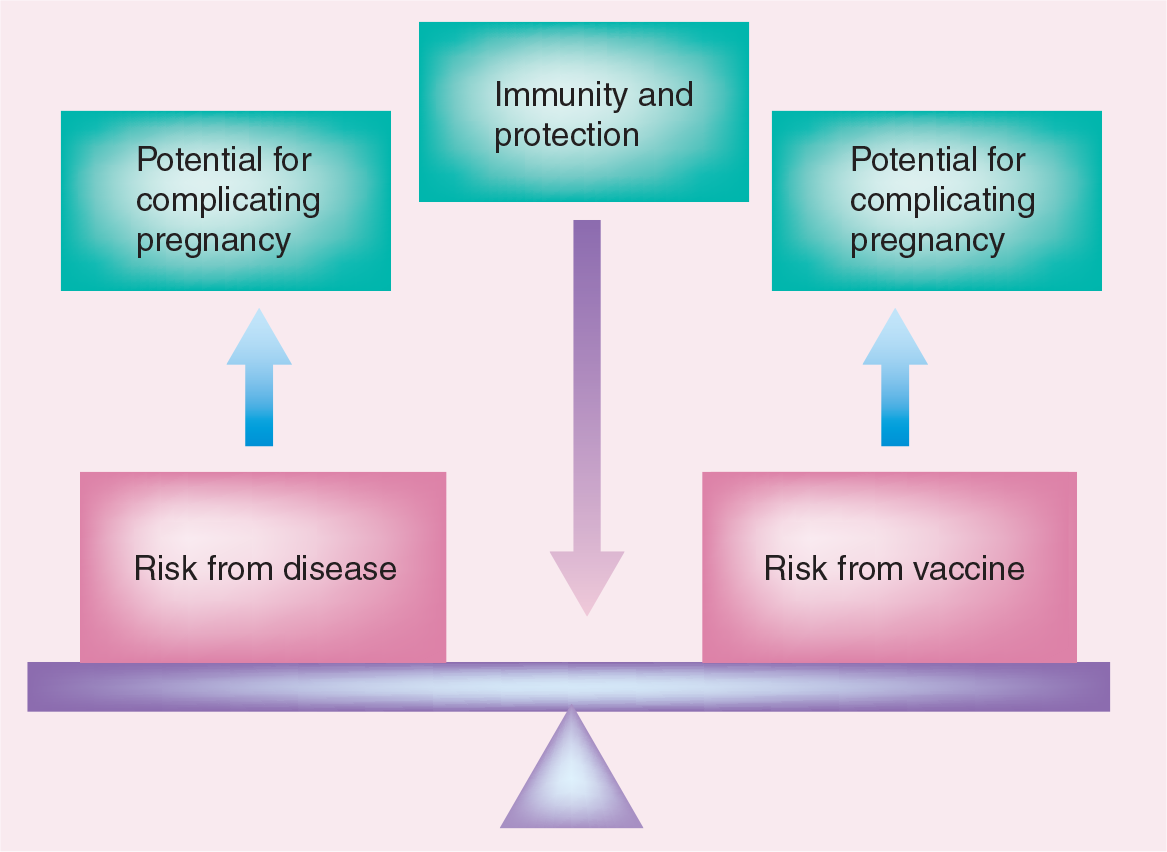
Balancing the risk of maternal immunization.
Vaccines recommended during pregnancy
Tetanus/diphtheria
Tetanus remains a significant cause of morbidity and mortality in the world, with pregnancy-related and neonatal infections accounting for most cases [25,102]. Up to 30,000 maternal tetanus cases are estimated to occur yearly and neonatal tetanus is the second leading cause of death from a vaccine-preventable disease among children worldwide, with a global mortality rate of 2.1/1000 live births and an estimated 200,000 neonatal deaths each year [102]. Incomplete or absent primary immunization of women is an important factor. The WHO recommends that women who did not receive their primary vaccine series should have a minimum of two and up to five doses of tetanus and diphtheria (Td) vaccine during routine prenatal care. Two doses of tetanus toxoid provide a high effectiveness (estimated at >80%) in preventing neonatal tetanus, while five doses ensure protection during the rest of the woman's childbearing years [26]. The WHO's strategy of routine Td immunization of women of childbearing age and pregnant women has resulted in a significant reduction of maternal–neonatal tetanus worldwide and its elimination (defined as <1 case/1000 live births) in 35 countries since its implementation in 1989 [27]. Millions of doses of tetanus toxoid administered to pregnant women worldwide and a few prospective studies evaluating the safety of tetanus vaccine in pregnancy have failed to show any resulting adverse events to the fetus or newborn infant [102].
In the USA, the incidence of tetanus is 0.01–0.04/100,000, with only 34 cases reported in 2004 [28]. While neonatal tetanus is rare, most cases occur in older persons who have waning immunity or are incompletely immunized. It is clear that the proportion of women who are immune to tetanus and diphtheria decreases with age. In a recent epidemiologic study, only 51 and 58% of US women aged 20 years and older who were tested had protective serum antibody levels against diphtheria and tetanus, respectively [29]. Poor adherence with the decennial Td booster recommended in adults by the Advisory Committee on Immunization Practices (ACIP) and incomplete primary immunization in women of certain population groups, such as foreign-born immigrants and families who refuse immunizations, are the most plausible cause. This information is critical to understand the vulnerability to these infections in women of reproductive age in the USA. The obstetrician might be the only primary-care provider for these women, and their only source of information and opportunity for vaccination. The Td vaccine is routinely recommended as a booster dose for pregnant women who have completed their primary series of vaccine in childhood and who have not received a Td or Tdap vaccination within the past 10 years (
Vaccines recommended during pregnancy.
Influenza
Pregnancy increases the risk of complications from influenza [31–35]. Women of childbearing age have many opportunities to be exposed to influenza virus through contact with children, who have the highest influenza attack rates and spread influenza in households and the community. Influenza vaccine has been routinely administered to pregnant women since the 1950s, and pregnancy has been listed by the ACIP as an indication for influenza vaccination since 1997. Since 2004, the ACOG has supported the ACIP recommendation that the inactivated influenza vaccine should be given to all women who are pregnant or expected to deliver during the influenza season, at any time during gestation, including the first trimester, because the vaccine is considered safe [36,37]. Particular attention should be given to pregnant women with underlying medical conditions such as asthma because their risk of hospitalization can be up to ten-times higher and antivirals are generally not recommended during pregnancy [5,32,36]. The intranasal live attenuated influenza vaccine is not indicated during pregnancy, but eligible contacts of pregnant women can receive it [36]. Breastfeeding is not a contraindication for influenza vaccination [36]. Finally, postpartum women who were not vaccinated during pregnancy and deliver during the influenza season should receive influenza vaccine prior to discharge or as soon as possible after delivery to prevent transmission to their infants, who are particularly vulnerable to influenza and for whom no vaccine is currently available. Other family members should also be vaccinated [36].
American College of Obstetrics and Gynecology guidelines for immunization during pregnancy.
Women have a high risk of exposure to the disease.
Infection poses a special risk to the mother.
Infection poses a special risk to the fetus.
A vaccine is available and is unlikely to cause harm.
The impact of influenza in pregnant women has been documented historically during the 1918 and 1957 pandemics, when the mortality rate of influenza in pregnant women reached up to 50%, and in a series of case reports describing serious or fatal respiratory complications from influenza during pregnancy [31,36]. Although case confirmation varies depending on the diagnostic test that is used, the attack rate of influenza in pregnant women is probably similar to that of nonpregnant adults, or approximately 10%, but pregnant women are more likely to have more severe manifestations and complications from influenza due to the physiologic changes of pregnancy, particularly in the third trimester of gestation [31,38–40]. In a population-based study carried out from 1975–1979 in the USA, women had an excess rate of medical visits of 23.7/1000 during pregnancy, compared with 10/1000 if not pregnant, in association with the reappearance of an influenza A/H1N1 in the community [39]. A large retrospective case–control study of women aged 15–44 years enrolled in the Tennessee Medicaid program between 1974 and 1993 demonstrated that the risk of hospitalization during the influenza season increased gradually during pregnancy, with a 1.4-fold increase versus nonpregnant women at 14–20 weeks of gestation, and 4.7-fold increase at 37–42 weeks of gestation [34]. The risk of hospitalization of otherwise healthy pregnant women in the third trimester of gestation was approximately five-times higher than that of comparable nonpregnant women. The investigators also reported on the maternal and perinatal morbidity related to respiratory illness hospitalizations in pregnant women during the 1985–1993 influenza seasons. The rate of hospitalization for respiratory disease was 5.1/1000, but in women with asthma the rate was much higher (59.7/1000) [32]. In this study, 6% of pregnant women with asthma required hospitalization during the influenza season, and they were ten-times more likely to be admitted than women without a medical comorbidity, but there were no differences in the outcome of the pregnancy. A prospective case–control study of almost 4000 women carried out in the UK from 1993–1994 identified influenza infection serologically in 11% of pregnancies, and a higher number of complications of pregnancy in the cases versus the controls, although no single type of complication achieved statistical significance [41]. A recent study suggests that in addition to the last trimester of gestation, the postpartum period is also a time of increased risk for influenza [35]. This study compared the occurrence of influenza-like illness episodes identified from medical encounters by selected diagnostic codes within each pregnancy stage for periods of influenza activity in the community, from 1991–1997. The authors reported an increasing strength of association between influenza exposure and influenza-like illness episodes as the pregnancy stage progressed, so that the odds ratios in the first, second and third trimester and the postpartum period were 1.12, 1.31, 1.84 and 2.28, respectively [35]. These findings support the administration of influenza vaccine during pregnancy and in the immediate postpartum period.
The safety of the inactivated influenza vaccine has been documented in several clinical studies, and in routine clinical practice. A large prospective study of more than 2000 women vaccinated from 1959–1965 [42] and at least four recent studies during which over 100 women received inactivated influenza vaccine from 1979–1993 [43–46], failed to identify adverse reactions to the vaccine, including fever, significant local or systemic reactions, or fetal complications. In a more recent study, in which more than 150 women in Bangladesh received trivalent inactivated influenza vaccine, no adverse events occurred in the mothers or infants, and a substantial effect on laboratory-confirmed influenza and all febrile respiratory illnesses was observed in mothers (28% reduction) and infants (41% reduction) compared with unvaccinated controls [47]. At least two other recent retrospective population-based studies in the USA have provided additional data to support the safety of the trivalent influenza vaccine during pregnancy [48,49], but its effectiveness has been difficult to demonstrate, mostly due to the very low rates of coverage during pregnancy, which have been estimated to be approximately 12.8% on average in the USA [36].
Hopefully, as healthcare providers become more knowledgeable on the safety and benefits of the vaccine there will be more enthusiasm to improve the coverage of pregnant women with influenza vaccine as per current ACIP recommendations. Interventions such as provider and patient education and the use of reminders or standing orders as part of the prenatal charts have been effective [50,51]. In a recent modeling study, vaccination of all pregnant women with trivalent inactivated vaccine as currently recommended in the USA was found to be cost-effective relative to providing supportive care only, saving approximately US$50/woman and resulting in a net gain of approximately 45 quality-adjusted hours [52].
Vaccines that can be used during pregnancy in special situations
Ideally, at the beginning of their pregnancy, women should be protected against the diseases covered by these vaccines if they have received all their routine childhood and adolescent immunizations. There will be situations during which active immunization during pregnancy could prevent significant maternal morbidity and subsequent adverse fetal outcomes. A recent exposure in an unprotected mother, a mother at risk for complications of disease due to underlying medical conditions, or anticipated travel to an endemic region with unavoidable exposures, are some examples. In general, it is best to avoid any exposures or unnecessary travel during pregnancy. However, the vaccines described here are not contraindicated during pregnancy, and can be administered if needed, preferably in the second or third trimester of gestation, or in the immediate postpartum period, including breastfeeding mothers (
Acellular pertussis vaccine
Immunity acquired after completing the full series of pertussis vaccines in childhood, or even after natural pertussis infection, is not lifelong. Despite rates of vaccine coverage in children exceeding 85% in most developed countries, outbreaks of pertussis occur in adolescents in schools and colleges and more cases are being diagnosed in adults [53]. Of greater concern is the increase in the number of pertussis infant deaths, which have steadily increased in the USA in the past 25 years, with more than 90% occurring in infants aged under 4 months who are incompletely vaccinated or too young to be vaccinated [54]. The period of greatest vulnerability is the first month of life, when infants born to mothers with very low-to-absent levels of pertussis antibodies are exposed to ill adolescents and adults in the household. Being born to an adolescent mother is a factor that increases the risk of pertussis infection in newborns [54]. Epidemiologic and seroprevalence studies demonstrate that when women reach reproductive age they are no longer protected against pertussis; even if they were fully vaccinated in childhood, they are at high risk to acquire pertussis themselves, and they are unable to protect their infants because the amount of antibody present for transplacental transfer during pregnancy is too low [12,55].
Therefore, it is very important that young women are vaccinated against pertussis to protect themselves and their babies. This is something that we can do now because in 2005, two adolescent/adult formulation Tdap vaccines were licensed in the USA and recommended as a single dose for all adolescents and adults in place of the routine Td booster [53,56]. The ACIP continues to recommend Td for pregnant women who have not received a Td booster in the previous 10 years because of the need to protect them against tetanus. However, if sufficient tetanus protection is likely to be present, Td vaccination can be deferred and postpartum Tdap should be administered preferentially to provide protection against pertussis. Tetanus protection is likely if the pregnant woman is younger than 30 years of age and has received a complete childhood series of immunization and at least one Td booster, if the pregnant woman is older than 30 years and has received a complete childhood series of immunization and two Td boosters, or if the pregnant woman has a protective level of serum antitoxin (≥0.1 International Unit/ml by enzyme-linked immunosorbent assay), regardless of age (provisional ACIP recommendations). Furthermore, pregnancy is not a contraindication to give Tdap vaccine to a woman who is at high risk of pertussis infection due to exposure, occupational risk, or for ‘catch-up’ vaccination of adolescents, because the incidence of pertussis is high among adolescents. The American Academy of Pediatrics and ACOG support second or third trimester vaccination and suggest that pregnant women are given the same considerations for Tdap immunization as nonpregnant adolescents and adults [57]. Furthermore, the ACIP recognizes the importance of protecting newborns from pertussis morbidity and mortality and recommends that Tdap be administered routinely to all women in the immediate postpartum period prior to hospital discharge if they have not received a Td vaccine in the previous 2 years [105]. The success of this key intervention will depend on its implementation by the physician who writes the orders for postpartum care in the hospital. Studies of Tdap administered during pregnancy are planned to determine the safety of the vaccine in pregnant women and their infants, to determine the potential effect of passively acquired antibodies on the infant's immune response to active immunization with Tdap, and to further evaluate the effectiveness of this strategy to prevent pertussis in newborns.
Pneumococcal vaccine
Unimmunized pregnant women with medical conditions such as aplenia, complement deficiencies, immunosuppression, cardiopulmonary disease, renal and other metabolic diseases should receive the 23-valent pneumococcal purified capsular polysaccharide vaccine [58]. Controlled prospective studies of the pneumococcal polysaccharide vaccine administered as a single dose to pregnant women have been conducted, demonstrating its safety and immunogenicity [59–61]. The immune response and placental transfer of antibodies varies by serotype, providing the potential for early infant protection against invasive pneumococcal disease through passively acquired maternal antibodies. Vaccine-specific antibodies are also present in the breast milk of immunized mothers for several months [59,61,62], potentially enhancing protection of infants against respiratory disease and otitis media [63]. Theoretically, infants born to immunized mothers could be protected early in life, allowing a later administration or a reduced number of doses of pneumococcal conjugate vaccine in the first year of life [64]. A study of a heptavalent conjugate vaccine in pregnant women is in progress in the USA.
Meningococcal vaccine
Routine vaccination with meningococcal vaccine is recommended for all adolescents, particularly college freshmen and women in a high-risk group, including those with functional or anatomic asplenia or complement deficiencies, women in the military, laboratory personnel and travelers to endemic regions [65]. Conjugate meningococcal vaccines are preferred because they confer long-lasting immunity. However, a purified polysaccharide vaccine can also be used, particularly during outbreaks caused by a serotype contained in the vaccine. These recommendations are the same during pregnancy [5,101]. Meningococcal polysaccharide vaccines have been evaluated in pregnant women and found to be safe and immunogenic [60,66]. Similar to pneumococcal vaccines, vaccineinduced maternal meningococcal antibodies are efficiently transferred to the newborn transplacentally and are present in maternal breast milk [66]. Monovalent group C conjugate vaccines currently available in Canada and Europe and the quadrivalent (A, C, Y, W-135) conjugate meningococcal vaccine licensed in the USA have not been studied in pregnant women. Important advantages of the conjugate vaccines include the stimulation of immune memory and longer-lasting protection, in addition to reduction of nasopharyngeal carriage and herd immunity, which would reduce transmission to a vulnerable newborn. Given that up to 50% of cases of meningitis in early infancy are caused by serogroups A and C, it would be important to study these conjugate vaccines in pregnant women. No vaccines are currently available to protect against meningococcal serogroup B.
Hemophilus influenzae type b
Hemophilus influenzae type b (Hib) disease has been significantly reduced in countries that have implemented routine childhood immunization, and it is not a concern for an adult, even during pregnancy. However, polysaccharide and conjugate Hib vaccines have been studied in pregnant women and found to be safe, well tolerated and immunogenic [67–69]. Antibodies transmitted transplacentally to the baby could provide protection in the first few months of life, making maternal immunization a potentially useful intervention in countries where infant immunization is not feasible due to cost and accessibility.
Hepatitis A & B vaccines
Hepatitis A and B viruses can cause acute severe infection in pregnant women and be transmitted to the fetus and newborn. Pregnancy is not a contraindication to administer hepatitis A or hepatitis B vaccine in women at risk of infection due to close contact with an infected individual, high-risk behavior or lifestyle, and occupational or travel exposure [70,71]. Screening for hepatitis B is routinely performed in all pregnant women in the USA. Susceptible women with a risk factor should be immunized [70,101]. As eliciting the presence of risk factors could be inefficient, replacing risk-based vaccination strategies with universal vaccination programs that include pregnant women has been suggested [72]. Universal hepatitis B vaccination of newborns is currently recommended in the USA. Vaccination and administration of immunoglobulin are recommended in pregnant women exposed to hepatitis A [71,101]. Hepatitis A vaccine, an inactivated virus, and hepatitis B vaccine, a recombinant DNA formulation, are incapable of causing infection and have not been associated with adverse events when given to pregnant or breastfeeding women.
Poliovirus, inactivated
Polioviruses have been eliminated from the Americas, but pregnant women exposed to imported polio and those traveling to endemic areas of the world can receive the inactivated polio virus vaccine administered intramuscularly as a single dose, even if they have been vaccinated in childhood, because of the risk of infection due to waning immunity [73,101].
Rabies
Rabies is a fatal disease. The risk of disease largely outweighs the risk of rabies immunization, a potentially life-saving intervention, in an exposed pregnant woman. Pregnant women should follow the same postexposure vaccination guidelines as the general population [74,101].
Anthrax
Different types of anthrax vaccines are now licensed or in development, but none has been studied or licensed in pregnant women. In situations of an exposure to aerosolized anthrax, the theoretical risks of the vaccine would likely be less than the risks associated with the disease, but at this time, anthrax vaccines are not recommended for pregnant women [75,76]. More than 500 women who became pregnant while participating in recent anthrax vaccine studies were evaluated for adverse outcomes, and preliminary data have failed to show adverse pregnancy or birth outcomes [77,78].
Vaccines that are contraindicated during pregnancy
Live viral vaccines are contraindicated during pregnancy due to the theoretical risk of infection and adverse consequences to the fetus (
Measles, mumps & rubella
Measles is more severe in adults, particularly during pregnancy, increasing the risk of spontaneous abortion and premature delivery. Exposed susceptible pregnant women can receive immunoglobulin within 6 days of exposure. Similarly, rubella infection during early pregnancy is associated with congenital rubella syndrome. Ideally, susceptible women of childbearing age should be vaccinated more than 4 weeks before becoming pregnant. Note that the previously recommended period to avoid pregnancy after receipt of rubella vaccine was reduced from 3 months to 28 days on the basis of the absence of cases of congenital rubella reported to the pregnancy registry and the minimal theoretical risk of fetal infection from vaccination within 4–6 weeks of vaccination (1.3%), compared with the greater risk of congenital rubella syndrome from natural infection (>20%) [79]. Women who are found to be susceptible to rubella during routine prenatal screening should receive a single dose of measles, mumps and rubella vaccine in the immediate postpartum period before discharge from the hospital [23,101]. Rubella virus has rarely been detected in breast milk of vaccinated women, and breastfeeding is not contraindicated in women vaccinated postpartum. Inadvertent vaccination of a pregnant woman is not an indication to terminate the pregnancy. A rubella pregnancy registry was established by the US Centers for Disease Control and Prevention from 1971–1989 for women who received the RA 27/3 rubella vaccine within 3 months of conception. No cases of fetal anomalies or congenital rubella syndrome were identified among 683 vaccinated women [79]. Pregnant women who are inadvertently vaccinated and women who become pregnant within 28 days of vaccination should be counseled regarding the theoretical risks to the fetus.
Varicella
Pregnant women who develop varicella can have more severe illness and have a 1–2% risk of transmitting the virus to their fetus, causing congenital varicella syndrome [80,81]. Women exposed to varicella at any stage of pregnancy should receive varicella zoster immunoglobulin for postexposure prophylaxis [82]. Women who are planning a pregnancy should be assessed for evidence of varicella immunity. Women who are susceptible because they have no documentation of previous immunization or a valid history of having the disease in childhood can receive varicella vaccine as long as conception is delayed for at least 1 month (ACIP recommendations) to 3 months (vaccine manufacturer recommendation) after vaccination [82]. Alternatively, they should receive the first dose of varicella vaccine in the immediate postpartum period before discharge from the hospital. A second dose should be administered 4–8 weeks later to complete the series. Breastfeeding is not contraindicated in women vaccinated postpartum. Inadvertent varicella vaccination of pregnant women has not been associated with any adverse outcome to the mother or fetus [80,83], but women who are vaccinated within 3 months before pregnancy or at any time during pregnancy must be reported the pregnancy registry [84]. A new zoster (shingles) vaccine licensed in 2006 in the USA is contraindicated in pregnant women, and the manufacturer recommends that pregnancy should be avoided for 3 months following vaccination.
Live attenuated influenza virus
Until studied in this population, the live attenuated, intranasally administered influenza vaccine should not be given to pregnant women. However, because the theoretical risk of transmission of the vaccine virus from a vaccinated person to another is very small, this vaccine can be given to women after delivery and to close contacts of pregnant and breastfeeding women [36].
Yellow fever
This is a vaccine only recommended when exposure or travel to a yellow fever endemic region occurs. Pregnant women should avoid traveling to such areas until after delivery. If exposure is unavoidable, vaccination could be offered, based on limited information from endemic areas in Africa suggesting that the risks of acquiring natural infection outweigh the theoretical risks associated with vaccination. Data on the safety of the vaccine are also limited. Live attenuated yellow fever vaccine administered to pregnant women living in endemic areas and during outbreaks has not been associated with adverse pregnancy outcomes or congenital anomalies. Only one of 81 infants had serologic evidence of infection with the vaccine virus [85].
Smallpox
Smallpox vaccines are not used routinely, but recent global events resulted in recommendations for vaccination before and during outbreaks. Fetal vaccinia is a rare but fatal complication of smallpox infection or vaccination shortly before or during pregnancy, therefore smallpox vaccine should be avoided during pregnancy, in breastfeeding mothers and in close contacts of women who are pregnant [86]. Inadvertent vaccination is not considered a reason to terminate the pregnancy but should be reported to the pregnancy registry. In the event of a direct exposure to smallpox virus, everyone, including pregnant women, should be vaccinated and/or receive vaccinia immunoglobulin, as the theoretical risks of the vaccine are likely to be less than the risks associated with this disease, know to be particularly severe among pregnant women and their offspring.
Typhoid vaccine
The live attenuated Ty21a vaccine has not been studied in pregnant or breastfeeding women and should be avoided [101]. There is a parenteral polysaccharide typhoid fever vaccine that could be considered for women who are not able to avoid exposure during pregnancy, but no safety data are available. The efficacy of these vaccines is variable. Travel to Salmonella typhi endemic regions should be avoided during pregnancy.
Tuberculosis
Bacille Calmette Guerin (BCG) tuberculosis vaccine is not routinely used in the USA, but it is widely used globally. It is a live vaccine derived from Mycobacterium bovis. BCG has not been studied in pregnant women and it is not recommended during pregnancy [101].
Investigational vaccines that could be beneficial during pregnancy
There are a number of vaccines in research development stages that could be beneficial to pregnant women and their infants. Vaccines against GBS disease and RSV deserve special attention.
Group B Streptococcus vaccine
GBS types Ia, Ib, II, III and V cause most maternal (chorioamnionitis, urinary tract infection and bacteremia) and infant (sepsis and meningitis) disease. Current prenatal GBS screening and chemoprophylaxis strategies have significantly reduced the incidence of early onset (<7 days) neonatal infection in the USA to 0.3/1000 live births, but have had no impact on late-onset (>7 days) GBS disease. Immunization of women against GBS during pregnancy would be superior to current practice and to pre- or postpartum immunization strategies, according to a recent study where a decision analytic model was used, estimating that maternal immunization would prevent 61–67% of early onset and 70–72% of late-onset disease, as well as 4% of all very preterm births [57]. An investigational type III tetanus toxoid conjugate GBS vaccine was found to be well tolerated and highly immunogenic in pregnant women vaccinated in the third trimester of a normal gestation, with substantial transplacental antibody transfer to infants who benefited from high antibody levels in the first 2 months of life [87]. A multivalent (types Ia, Ib, II, III and V) GBS vaccine could protect against 95% of maternal and neonatal disease. Multivalent vaccines using highly immunogenic surface proteins and newly described GBS pili as antigens are currently in preclinical trials, and are promising candidates for future pregnancy studies [88–90].
Executive summary
Pregnant women and their newborns are vulnerable to infectious diseases and their complications.
Women respond to vaccines by developing protective antibodies.
Placental transfer of immunoglobulin G antibodies is active during the second and third trimester of pregnancy.
Term newborns rely on maternally derived antibodies to withstand the threat of infection during the neonatal period and until their immune system is able to respond to natural infections or active immunization.
Many current vaccines are potentially safe and effective during pregnancy.
Routine prenatal care is an ideal opportunity for vaccination.
Vaccines should be given to pregnant women when the benefits of immunization outweigh the potentials risks of the vaccine.
No vaccine (except for smallpox) is contraindicated in the immediate postpartum period or during breastfeeding.
Tetanus/diphtheria can be given at any time during gestation to prevent maternal and neonatal tetanus.
Influenza (trivalent inactivated vaccine) can be given at any time during gestation to protect the pregnant woman against complications from influenza.
These vaccines are not contraindicated and could be beneficial in pregnant women who are at risk for acquiring infection due to recent or ongoing exposure, underlying medical conditions or travel.
Inactivated vaccines theoretically pose little to no risk to the mother or fetus, while benefit could be substantial.
Some have been studied in pregnant women (pneumococcal and meningococcal), some are potentially safe (adult formulation acellular pertussis and hepatitis A and B), and others have been administered inadvertently or during high-risk situations (inactivated poliovirus, rabies and anthrax) and safety data have been reported.
All live vaccines are contraindicated during pregnancy due to the theoretical risk of fetal infection, including: measles, mumps and rubella, varicella, live attenuated influenza virus, yellow fever, smallpox, live typhoid vaccine and tuberculosis.
Experimental vaccines to protect mothers and infants against group B Streptococcus and respiratory syncytial virus have been studied in pregnant women because they have the potential to reduce morbidity and mortality associated with these infections.
Safety – scientific data on the safety and efficacy of maternal immunization.
Implementation by physicians – a busy practice, lack of infrastructure (storage and personnel) and poor reimbursement for vaccination during pregnancy are important barriers to overcome.
Liability – any coincidental adverse event during pregnancy could be attributed to the vaccine.
Respiratory syncytial virus vaccine
The relevance of targeting the use of a RSV vaccine during pregnancy stems from the significant morbidity and mortality associated with RSV in infants younger than 6 months of age. RSV is the most important cause of lower respiratory tract disease in early infancy, with a peak of hospitalizations and mortality in the first 3 months of life, too early for active immunization [91]. Infants with high levels of neutralizing antibodies to RSV are protected against severe disease [7,92]. Administration of human monoclonal antibody to high-risk infants is an effective method to prevent severe RSV disease, which also supports the concept of boosting infant antibody levels through maternal immunization. A proof-of-concept study using a RSV purified fusion subunit vaccine for immunization of women in the third trimester of gestation demonstrated safety and 100% transplacental transfer of antibody, with high antibody levels in infants in the first 6 months of life [93]. Newer and more immunogenic vaccine candidates in development are being considered for maternal immunization [94].
Barriers for vaccinations during pregnancy
Most obstetricians and gynecologists recognize the need to address vaccine-preventable diseases in their practice [95]. Therefore, the ability to successfully incorporate immunizations as part of routine prenatal care must improve as real or perceived barriers are properly addressed. An important factor is the availability of scientific data to support the use of vaccines before, during and immediately after pregnancy, including well-designed, controlled clinical studies on vaccine safety and efficacy, infant protection and the potential effects of maternal antibodies on infant responses to active immunization or natural disease. Practical and logistic aspects include vaccine acquisition, stocking and storing vaccine in the office, keeping records, creating efficient screening procedures to identify those who need the vaccine and to offer it, training and availability of immunization nurses, and the additional visit-time to educate and consent mothers for vaccination. Finally, reimbursement and coverage by insurance companies and concerns of safety and liability are considered as well. All these questions must be answered because, ultimately, the strongest factor for vaccine administration is the recommendation of the healthcare provider.
Conclusion & future perspective
Immunization of women of childbearing age and pregnant women contributes to a healthy pregnancy outcome. Implementation of maternal immunization as a public health strategy could significantly decrease maternal and infant morbidity and mortality worldwide. The future is optimistic, given scientific and technologic advances that allow for the production of safer vaccines, and the increasing numbers of studies that support the use of vaccines during pregnancy, provide reassurance on the safety of this intervention using different vaccines in multiple settings, and contribute robust data on the protection of mothers and infants against infectious diseases.
Information resources
Immunization Action Coalition: Vaccination and Pregnancy.
Centers for Disease Control and Prevention, Advisory Committee on Immunization Practices: Guidelines for Vaccinating Pregnant Women.
ACOG Committee opinion: Immunization During Pregnancy.
Vaccinate Women: Immunization Action Coalition Newsletter.
Footnotes
Acknowledgement
This work was supported by the NIH K12 RR17665 award.