






Abstract
Objective
Few portable point-of-use (POU) devices are available for treatment of water by recreational enthusiasts who may obtain water from untreated sources (rivers, lakes, etc.). This study evaluated a POU device containing a structure matrix capable of removing viruses from water without the use of a disinfectant.
Methods
The unit was evaluated for the removal of poliovirus type 1, rotavirus SA-11, human norovirus, and a wide range of different coliphages exhibiting different isoelectric points, sizes, and shapes.
Results
The removal of all virus types tested exceeded 99.99%.
Conclusion
The tested unit complied with the criteria guidelines for virus removal under the US Environmental Protection Agency's “Guide Standard and Protocol for Testing of Microbiological Water Purifiers.”
Introduction
Disinfection of all surface water and most ground water is required to prevent the transmission of water-borne pathogenic microorganisms.1,2 Enteric viruses are among the agents that can be transmitted by fecally contaminated water. There are more than 140 different viruses excreted in the feces of humans. 3 With the exception of the hepatitis E virus, all are believed to largely only infect humans. Of particular concern are the hepatitis A virus, rotaviruses, and noroviruses. 4 Norovirus has been a concern in recent years and has been associated with various recreational activities (ie, boating, rafting, hiking, camping).5,6,7 Enteric viruses are highly infectious; ingestion of 1 to 10 viral particles is capable of having a significant probability of infection. 4 Sources of enteric viruses in recreational water include sewage discharges, bathers, 8 storm water runoff, leakage from septic tanks, etc. Contamination of water is also possible by vomiting (common during norovirus infections), urination, and defecation.9,10 An enteric virus concentration as low as 1 per 100 liters can pose a significant risk of infection to persons who consume the water. 4
Disinfection is usually relied upon for reducing the risk of waterborne enteric viruses. Both iodine tablets and chlorine are effective in the inactivation of pathogens in water. At low temperatures, high turbidity, and in the presence of organic matter, prolonged contact times and higher levels of the disinfectant are required. 11 In addition, for many individuals these disinfectants impart an undesirable taste and odor. While many filtration devices are available for recreational use, these units are only capable of removing protozoan parasites and bacteria, which is accomplished by size exclusion in the filter matrix.
To ensure performance of point-of-use (POU) water treatment devices, the US Environmental Protection Agency (EPA), Office of Pesticides, Antimicrobial Division developed the “Guide Standard and Protocol for Testing Microbiological Water Purifiers.” 12 This protocol requires that poliovirus type 1 and the rotavirus SA-11 must be removed by at least 99.99% from both water of low turbidity (average case water) and water with high turbidity (high in organic matter and dissolved solids) (Table 1). Because of the cost of working with animal viruses, only 2 test viruses are included in the test protocol. The 2 viruses represent 2 different groups of enteric viruses in terms of size, nucleic acid, isoelectric point, and the presence of lipid in the capsid.
Test waters used in virus challenges*
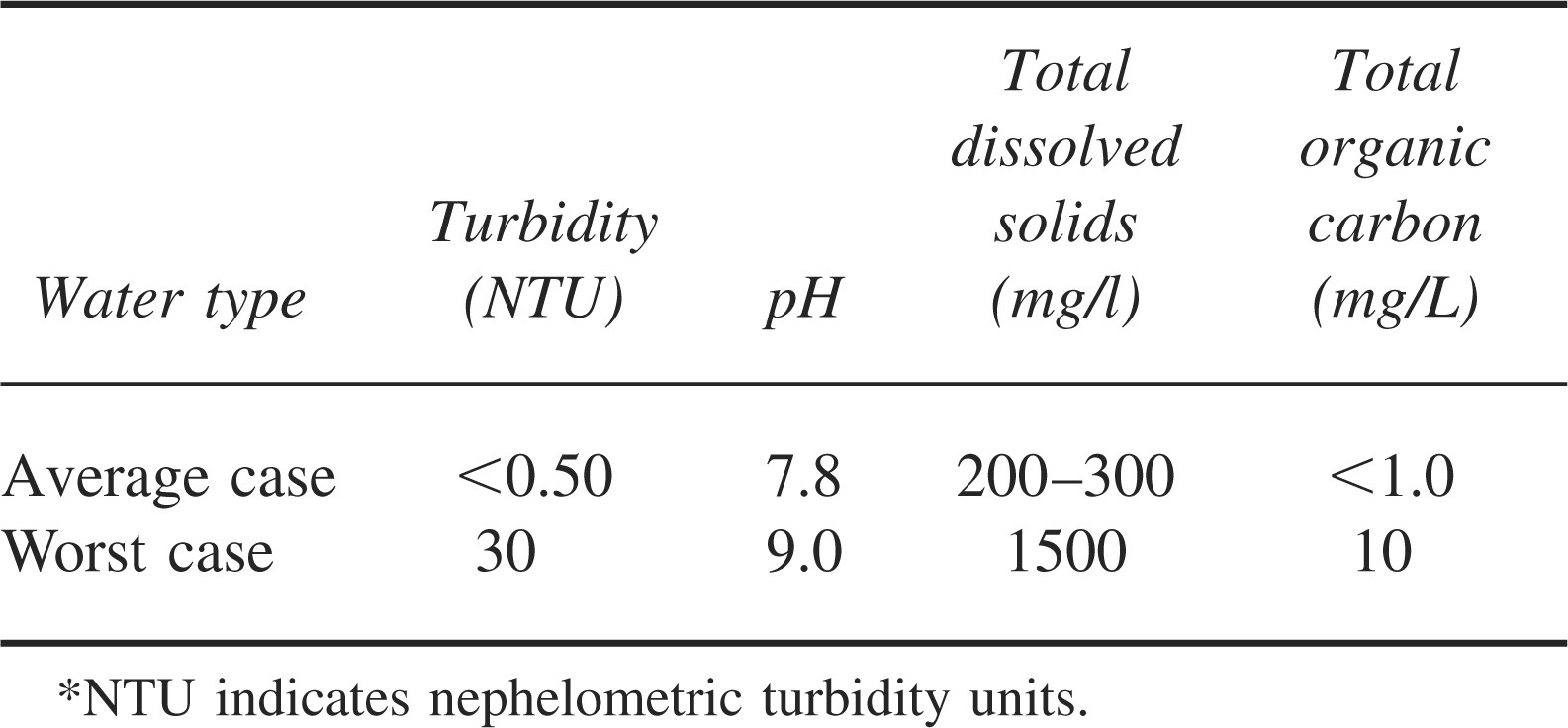
Technology has developed in recent years for the removal of viruses from water by retention onto matrix surfaces whose pore size is much larger than the virus. 13 Retention is dependent on both electrostatic and hydrophobic interactions between the virus and surface. The isoelectric point of the virus and hydrophobic nature of the virus surface largely govern if they will be retained at a given surface. 14 The goal of this study was to assess the ability of a POU device designed to remove viruses from water.
Materials and Methods
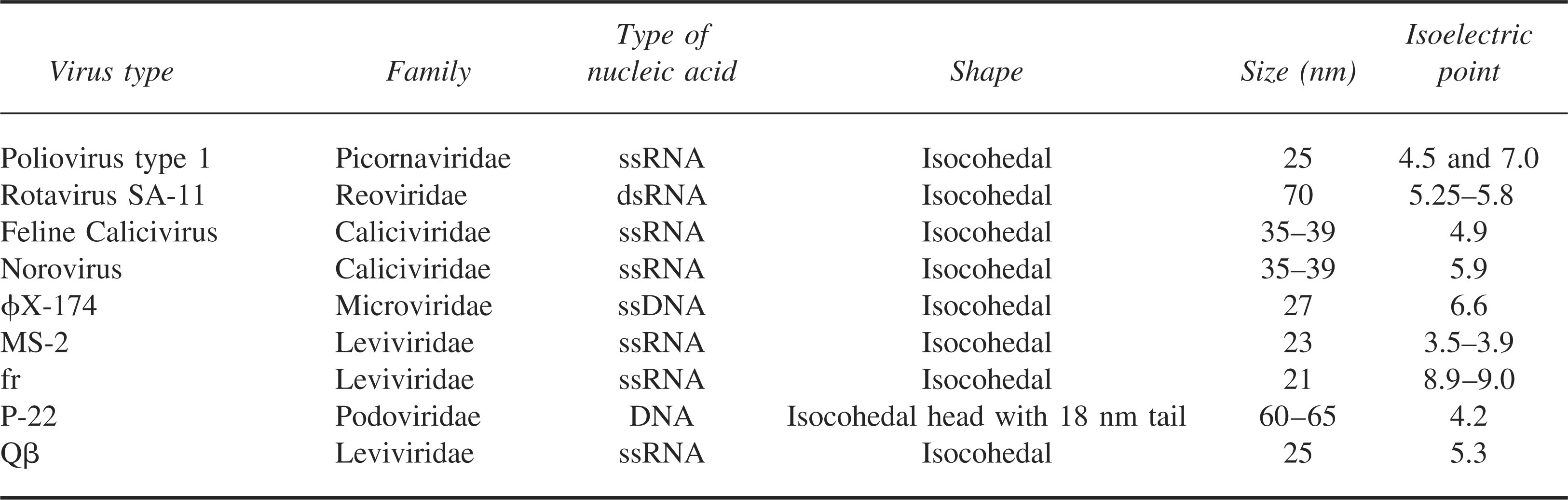
The viruses used in this study and their physical characteristics are shown in Table 2. They were selected to represent a range of isoelectric points and sizes. The source and assay method for each virus is shown in Table 3.
Characteristics of viruses used in this study
Source and assay method for viruses used in this study*
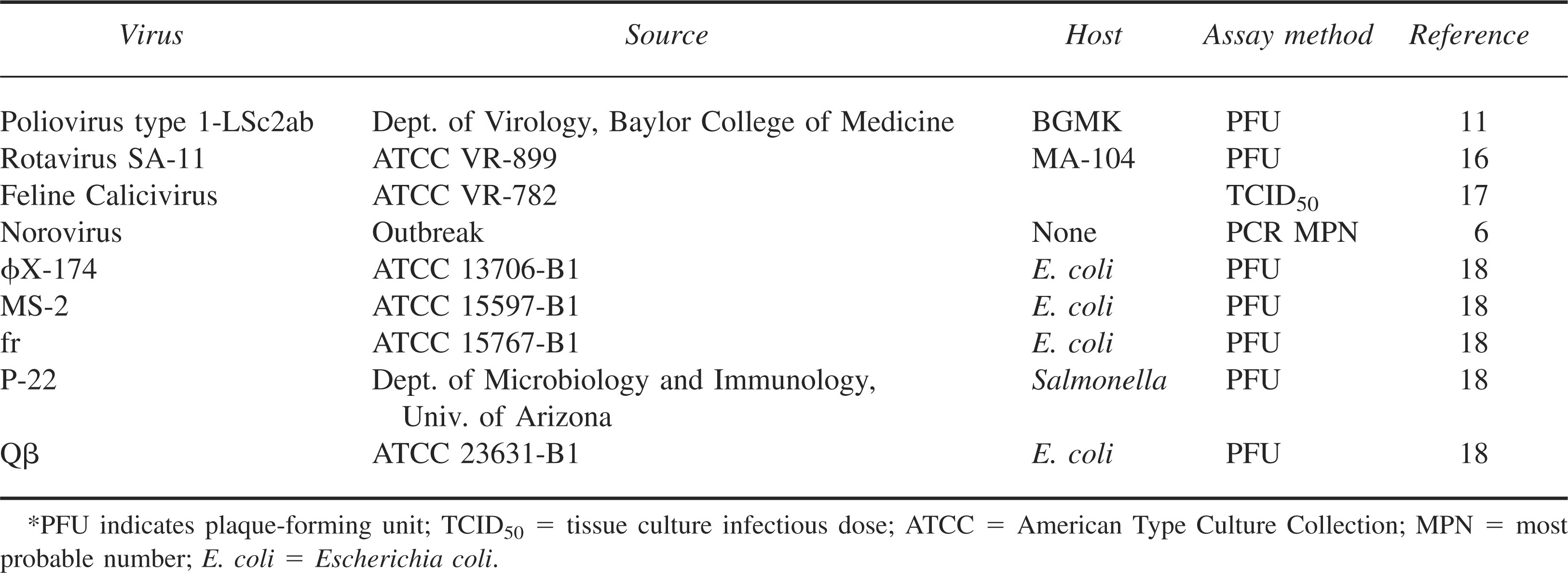
The poliovirus, rotavirus, and feline calicivirus were grown in the appropriate cell lines (Table 3) in serum-free media and purified by freeze-thaw of the cells to release the virus. This was followed by low-speed centrifugation to remove cell debris and treatment with VertrelXF (DuPont, Wilmington, DE) to reduce dissolved organics and mono-disperse the viruses. They were stored at −20°C until needed. Norovirus from stool specimens collected from an outbreak were used. They were pooled and then suspended in the test water before use.
Coliphage stocks were prepared by dilution in 0.85% sodium chloride to approximately 1 × 10⁵ plaque-forming units (PFU) per mL. A one mL suspension of the host bacterium (in the exponential phase of growth) and 0.1 mL of the phage dilution were mixed in a molten top agar overlay (tryptic soy broth [TSB] with 1% Bacto agar [Difco, Detroit, MI]) and poured onto tryptic soy agar (TSA) petri dishes (Difco, Detroit, MI). After 1-through 24-hours incubation at 37°C, 6 to 7 mL of sterile 0.85% sodium chloride solution was added to the petri dishes with the phage plaques and left to sit for 1 hour to allow the diffusion of the phages from the surface of the agar. The liquid was then removed, centrifuged to remove the cell debris, filtered though a 0.22 micron pore size membrane filter to remove any remaining bacteria, and stored at 4°C until used.
Assay methods for the different viruses are listed in Table 3 along with a reference that provides details of the assay methods. All samples were diluted before assay, if needed, in Tris-buffered saline (Sigma Chemical, St. Louis, MO).
The experimental test design was based on the “Guide Standard and Protocol for Testing Microbiological Water Purifiers,” 12 except that the units were only challenged with general and worst-case water. Only pH 9.0 worst-case water was tested, because these conditions are the most likely to interfere with devices that depend upon adsorption for the removal of viruses from water. 14 The unit (General Ecology, First Need System, Exton, PA) was purchased from a local store and operated according to the manufacturer's instructions. Water is purified by passage of the water through a block of activated carbon that has been treated to enhance retention of viruses and other microorganisms by association with surfaces in the structured matrix. The units are furnished with an inlet hose that is placed in the water. Water pumped through the unit exits through another hose and flows into a collection vessel from which it is consumed. The unit processes water at a rate of approximately half a liter per minute, with a total design capacity of 472 L. The unit weighs approximately 425 g, is cylindrical in shape, and is approximately 12 × 12 × 12 cm in size.
In this study, 20 L of average-case water were first passed though the unit to condition it. Since the viruses have different hosts, different groups of viruses could be tested at the same time (ie, coliphages P-22 and MS-2, Qβ and ϕX-174). Each challenge was conducted by adding the virus to 10 L of test water in a bucket and then passage of the water through the unit with a pump, as previously described. 13 A 100 mL sample was collected, as previously described. 13 This procedure was repeated 6 times with each type of test water. In between virus challenges, 10 L of general-case water were passed though the units. Before the worst-case water was tested, an additional 20 L of average-case water were passed through the units (for an approximate total of 100 L of average-case water). The same procedure was repeated with worst-case water. Because norovirus was in limited supply, only 3 L were passed though the unit before a sample was collected.
Results
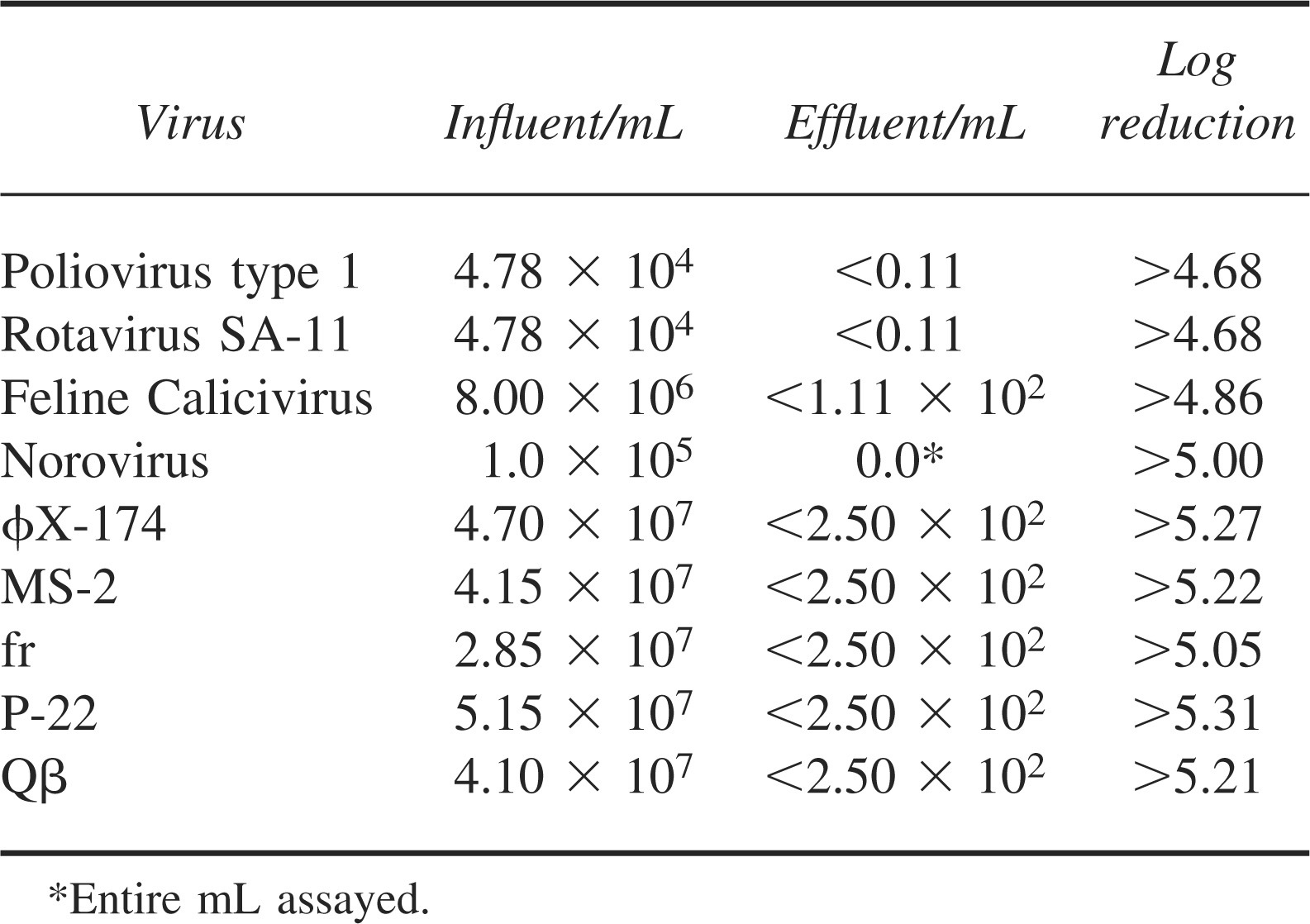
The results demonstrate that all the different challenge viruses were removed by 4 log10 (Tables 4 and 5), as required by the EPA. 12
Virus removal in average case test water
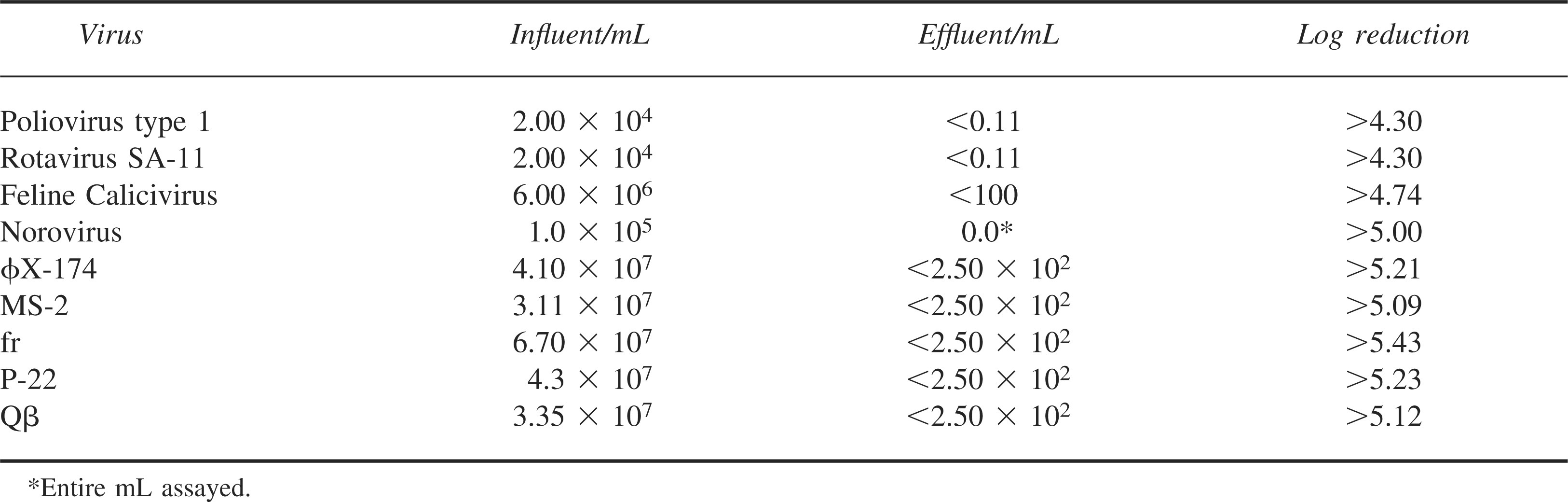
Virus removal in worst case test water
Discussion
To ensure that drinking water is safe from the risk of water-borne disease, it is essential that enteric viruses be removed. Low levels of virus in drinking water can pose a significant risk of infection. Under the Surface Water Treatment Rule, the EPA requires all drinking water treatment plants to treat water to reduce the risk of infection to less than 1:10 000 per year.1,4 Because enteric viruses are so infectious, to achieve this level of risk virus concentration must be reduced to less than 1 virus per 100 000 L or less. To achieve this goal, all water treatment plants and POU devices for surface water treatment must be capable of removing viruses by at least 99.99%. To produce potable water, POU devices must also reach this level of treatment. Chemical disinfection or use of ultrafiltration methods have generally been applied for this purpose. While the removal of poliovirus and rotavirus SA-11 rotavirus has previously been reported by a structured matrix, 13 these systems are dependent on the chemical nature of the protein coat of the virus, and not all types of viruses may be as easily removed. 14 This study demonstrated that a structured matrix unit is available that can be expected to remove a wide range of viruses with different isoelectric points and hydrophobicity, 15 even in water with a quality that would be expected to present conditions far less than ideal for structure matrices (ie, the presence of organic matter in the worst-case water challenges can block adsorption sites to which the virus adheres to on the matrix). This technology offers the advantage of simplicity of use without the need for chemical addition to water and rapid processing of the water.
This study also represents the first report on the effectiveness of a POU for the removal of human norovirus. Human noroviruses are the leading cause of viral gastroenteritis in adults and are transmitted both by drinking water and recreational activities.7,8 Given that the unit in this study was capable of adsorbing a wide variety of types of viruses with a wide range of physical and chemical properties, it should be expected to remove any known viruses capable of transmission by water. However, it is possible that the performance of the units could be affected over long term use because of the buildup of microbial biofilm or coating of the units with organic matter. These units have the advantage of being lightweight, can be carried into the field to remote locations, and are not affected by low temperatures and poor water quality, as is the case with many chemical disinfectants (eg, iodine).
Footnotes
Funding
This research was supported by a grant from the National Science Foundation Center on Water Quality at the University of Arizona and by the University of Arizona Technology and Research Initiative Fund (TRIF), Water Sustainability Program. The authors have no financial interest in the tested units.