




Abstract
State of emergency affects many areas of our life, including education. Due to school closure during COVID-19 pandemic as a case of a long-term emergency, education has been moved into a remote mode. In order to determine the factors driving the acceptance of distance learning technologies and ensuring sustainable education, a model based on the Unified Theory of Acceptance and Use of Technology has been proposed and empirically validated with data collected from 550 in-service primary school teachers in Lithuania. Structural equation modelling technique with multi-group analysis was utilized to analyse the data. The results show that performance expectancy, social influence, technology anxiety, effort expectancy, work engagement, and trust are factors that significantly affect teachers’ behavioural intention to use distance learning technologies. The relationships in the model are moderated by pandemic anxiety and age of teachers. The results of this study provide important implications for education institutions, policy makers and designers: the predictors of intention to use distance learning technologies observed during the emergency period may serve as factors that should be strengthened in teachers’ professional development, and the applicability of the findings is expanded beyond the pandemic isolation period.
Keywords
Introduction
In spring 2020, COVID-19 was declared a pandemic by the World Health Organization. Most schools were closed worldwide, and as a result, teaching and learning was transformed into a distance mode. These closures in spring 2020 affected 82.2% of the world’s student population. There were 1,437,412,547 affected learners from pre-primary, primary, lower-secondary, and upper-secondary levels of education (UNESCO, 2021). The next waves of the pandemic caused many schools to return to distance learning.
The emergent move from face-to-face education to distance education was unexpected and challenging for any educational stage. The situation is especially challenging in younger children’s education, where real communication is extremely important and computer screen time for students is limited. Recent literature introduces the concept of emergency remote teaching to address distance learning during the pandemic, e.g. Bozkurt and Sharma (2020). When distance learning was used on a primary educational level before the pandemic (e.g. Kalamković et al., 2013), this: 1) was not a widespread experience, and 2) student age, embraced by the primary school level, differs among countries. Moreover, as recent research suggests, the higher the education grade, the higher the digital competence of teachers is (Portillo et al., 2020).
The study presented in this article is based on the data collected from Lithuanian in-service primary school teachers. Teachers of Lithuanian primary schools, as well as pupils (grade 1–4), were not used to classes given online remotely. Informatics (including digital literacy) as a compulsory subject in primary education is still under development process (Dagienė et al., 2021, 2019).
The problem that stimulated this research is multifaceted. First, we face a new phenomenon of pandemic as a state of emergency that transfers education into a distance mode. Interaction with distance learning technologies (DLT) became suddenly an important part of the educational process. Second, we face the fact that a pandemic is not a short-term period without possible repetitions in future, therefore, we must be prepared for high quality distance education during extreme situations. Third, the experience gained during the pandemic period is important and can be used upon a need in face-to-face educational settings. Sustainable quality education accessible to all, as one of the priorities declared in General Assembly of the United Nations (2018), is based on many aspects, but one of the most important aspects in such emergent situations is how teachers accept and use DLT to provide quality teaching. Therefore, there is a need for the investigation of factors driving teachers’ acceptance of DLT.
The aim of this study is to identify the key factors affecting primary school teachers’ acceptance of DLT with regard to the pandemic context.
For technology acceptance modelling, the conceptual framework of the Unified Theory of Acceptance and Use of Technology (UTAUT) (Venkatesh et al., 2003) is one of the most suitable frameworks: it synthesizes the constructs of highest influence based on several previously developed models. The UTAUT model involves performance expectancy, effort expectancy, social influence, facilitating conditions and behavioural intention constructs. However, several research studies highlight some limitations. Dwivedi et al. (2019) pointed out that some of the important constructs that are related to individual characteristics that describe the dispositions of the users are missed, such as trust (Arpaci, 2016) or technology anxiety (Meuter et al., 2003; Saade and Kira, 2009).
In order to address the aforementioned problem, we propose the extended UTAUT model, adapted for the aim of this study and pose the following research questions:
The proposed model’s instrument is validated for consistency by applying exploratory and confirmatory factor analysis. We utilize a structural equation modelling technique (SEM) in order to examine an explanatory power of our model.
Background
Distance Learning Technologies
Distance learning means learning at a distance by using computers and telecommunication facilities (Belanger and Jordan, 1999). During the COVID-19 pandemic, usual working space, equipment or support from technologically literate colleagues became difficult enough to access for teachers. Thus, new educational challenges related to tool usage appeared, especially for primary school teachers, due to the lack of understanding of distance learning as consisting of a set of connected components: instruction methods, DLT, digital learning resources, and assessment tools.
Teachers had to use the online tools provided by their schools, or to search for them by themselves among the vast variety of web-based educational tools available, such as tools for communication, content sharing, learning assessment (interactive environments) or even for intelligent tutoring (Crowe et al., 2017).
DLT in our study means a set of typical online learning tools used for primary school distance education and are categorized as follows: Video conferencing and real-time communication software; Digital content sharing tools; Online assessment tools.
Technological development has affected the educational system and success of technology-based learning depends on teachers’ acceptance: teachers’ thinking processes, beliefs, attitudes, confidence level and aim to increase student motivation towards technologies (Wasserman and Migdal, 2019).
Many factors influence teachers’ acceptance of DLT. Thus researchers utilize technology acceptance models such as TRA, TAM, TPB and UTAUT (Almaiah et al., 2019), TAM0, TAM1, TAM2, TAM3 and UTAUT2 in order to identify teachers’ needs and requirements (Rondan-Cataluña et al., 2015; Fessakis and Prantsoudi, 2019). Such models provide theoretical background predicting an individual’s acceptance and use of technology, and offer explanations of technology acceptance and usage based on different factors like technology attributes and contextual factors. Many theories and models have been developed to examine the users’ acceptance (relationships of external variables, beliefs, and attitudinal constructs) of new technologies and their intention to use (or actual usage behaviour) technologies. UTAUT model incorporates eight research frameworks and has been extensively used by researchers in order to explain technology acceptance and use, including the contexts of distance learning, e.g. mobile learning (Almaiah et al., 2019; Chao, 2019) and e-learning technologies (Salloum and Shaalan, 2019; Teo, 2011).
In our study, we base on a conceptual framework of the UTAUT (Venkatesh et al., 2003). However, the objectives and the new pandemic context in our study require modification and adaptation presented in the next sections.
Model Development
Constructs and Hypotheses
In order to study the acceptance of DLT in an emergency pandemic settings, we use all the constructs of the UTAUT model (Table 1, marked with *). Although the original UTAUT model explained a considerable variety of behavioural intentions and behavioural options, the model theorized some relationships that may not be applicable in all situations, omitted some relationships that may be important, and also singled out some constructs that may be essential for explaining the adoption and use of technologies (Dwivedi et al., 2019). Therefore, we add additional constructs (Table 1) corresponding to individual engagement and pandemic context (trust, technological and pandemic anxiety, work engagement) discussed below and reformulate some of the hypotheses.
Main constructs used in the model.
Main constructs used in the model.
*UTAUT model construct.
Dwivedi et al. (2019) also conclude that including a mediating attitude construct leads to better overall results of the model. However, we do not include attitude in our study as DLT adoption during the pandemic by the primary teachers is obligatory. We use an additional variable of distance learning attitude change that happened during the pandemic period.
In this study, performance expectancy (PE) means the belief of the teachers that using DLT during pandemic isolation will contribute to his/her teaching performance. Accordingly, the following hypothesis is proposed:
Effort expectancy (EE) represents the perceived ease of use of DLT by primary teachers. It is predicted to have an influence on BI. Contrary to expectations, there are empirical studies reporting that effort expectancy does not affect the behavioural intention, e.g. in Holzmann et al. (2020). In such cases more investigation is needed, and our study aims to contribute to a better understanding of this determinant in DLT usage among primary school teachers. Therefore, we formulate such a hypothesis:
In our study, social influence (SI) stands for primary school teachers’ perceptions on how other important people believe they should use the DLT. The originally suggested SI construct consists of two sub-constructs, related to 1) the opinion of important people and people that have influence on the user and 2) the opinion and support of organization and colleagues. Due to the pandemic context and teachers as participants, in our study we included only the second part of the construct. The following hypothesis is proposed:
The original UTAUT model study suggests that facilitating conditions (FC) predicting BI should be expected only if effort expectancy was not included in the model. However, recent meta-study (Dwivedi et al., 2019) and prior empirical studies (e.g. Foon and Fah, 2011), including studies of teachers’ BI, e.g. Teo (2011), Holzmann et al. (2020) confirm that FC influence BI to use the technology even in the presence of EE. The latter two studies were conducted with school teachers. In our case of novel experience of distance learning in primary education, FC forms an important factor, showing how the school and colleagues support teachers in the period of change. We keep this construct and form the following hypothesis:
Researchers of mobile learning technologies acceptance (what can be considered as an overlapping part with DLT) include the concept of trust in the model and find a significant influence from it on BI, e.g. Kabra et al. (2017), Sarkar et al. (2020), Doulani (2019). Trust has been a significant factor influencing users’ behaviour in systems with higher levels of uncertainty, e.g. mobile payment. Khalilzadeh et al. (2017) extended the UTAUT model with the construct of trust and found relationships between trust and EE, as well as trust and PE. In our study, we open for the possibility that the sudden change from classroom-based learning to distance learning brought this effect of uncertainty for primary school teachers, most of whom did not use DLT previously, and therefore we include this concept in our study. We also hypothesize that under the conditions of obligatory change to distance learning, teachers as novice users of DLT did not have pre-existing trust in these technologies, but developed it through the influence of EE and PE. Accordingly, the following hypotheses are proposed:
Technology anxiety (TA) construct does not belong to the initial UTAUT model.
Saade and Kira (2009) report a significant influence of computer anxiety on BI in e-learning. Adding TA construct to the extended UTAUT – UTAUT2 model (Venkatesh et al., 2012) reported better goodness-of-fit results for the technology acceptance model (e.g. Maican et al., 2019). In 3D printing technology, teachers’ TA is the second significant predictor that affects BI to use novel technology (Holzmann et al., 2020). Studies report significant negative influence of TA on EE (Talukder et al., 2020; Maican et al., 2019). Our hypotheses:
Work engagement (WE) construct (Schaufeli et al., 2006) in our study is measured by reflecting on common teaching settings, i.e. before the pandemic.
Recent empirical research (Maican et al., 2019) of online technologies acceptance by academic staff (
BI is considered as preceding a specific behaviour, e.g. the usage of technology (Venkatesh et al., 2003). As Wu and Du (2012) suggest in their meta study, the model should include not only BI, but actual use of technology. In the settings of our study, all the participants became actual users of DLT during the pandemic isolation. Therefore, in our study, the construct of BI to use DLT is expanded beyond the pandemic period to an intention to use DLT in future for further teaching and life processes.
The original UTAUT model includes 4 moderator variables: gender, age, experience, and voluntariness of use. We are not able to check the moderating effect of gender in our study as the vast majority of primary school teachers in Lithuania are female teachers. We do not include voluntariness of use since distance learning is obligatory for the teachers in the context of our study.
An experience variable in our study has two dimensions: Pedagogical experience (PEXP). Teaching experience in primary school. Technological experience (TEXP). Previous experience in using DLT (i.e. before the pandemic isolation).
We include a pandemic anxiety (PA) variable reflecting the context of our study. This is a perceived change in anxiety level during the pandemic. Recent research confirms increased levels of anxiety during the COVID-19 pandemic, e.g. a broad-scale research of teachers’ anxiety levels in China reported that about 50% of teachers of all age categories indicated high proportion of minimal anxiety level, mild anxiety was most prevalent (38.73%) in the age group of 30–40 years old, and from 4.07% to 4.91% different age groups of teachers had severe anxiety (Li et al., 2020). Therefore, it is important to see the effect PA makes on the acceptance of DLT.
Pandemic opportunity (PO) is a perceived level of viewing pandemic isolation as an opportunity to learn.
We hypothesize that these variables have a moderating effect on BI to use DLT and other constructs of the model. Corresponding hypotheses: – PA moderates the relationships of the model, – Age moderates the relationships of the model, – PEXP moderates the relationships of the model, – TEXP moderates the relationships of the model,
where i (
In this research, we develop a DLT acceptance model considering the pandemic context. The proposed model (Fig. 1) integrates original UTAUT model constructs and adds additional constructs discussed in the previous section in order to investigate which factors play a role in promoting teachers’ acceptance and usage of DLT.
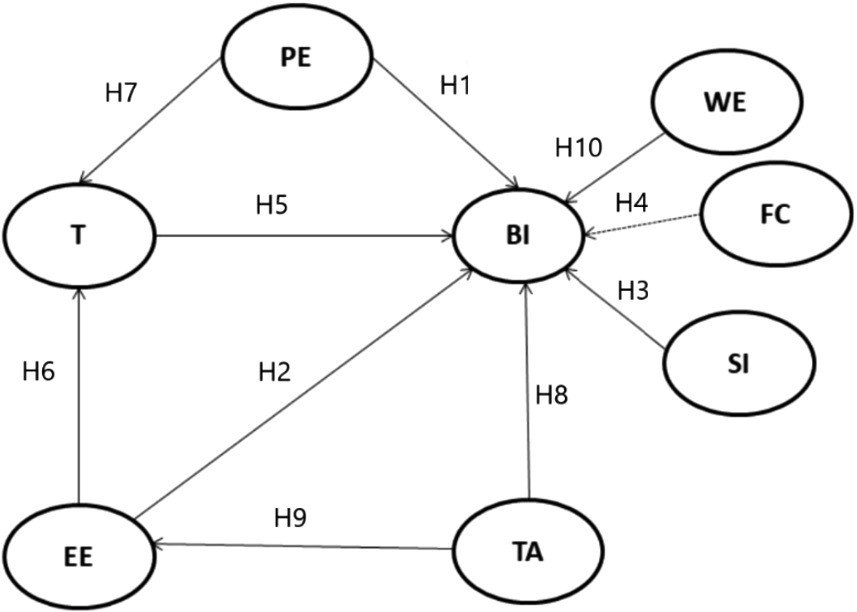
Proposed research model.
We also hypothesize the presence of moderating effects of PA, age, PEXP, and TEXP on the model paths through
Participants
Participants of this study consisted of 550 primary school teachers. There are in total 6209 primary school teachers (National Agency for Education, 2020) and 646 primary schools (European Commission, 2020) in Lithuania. The questionnaire was delivered to participants relevant to the research project, i.e. to in-service primary teachers’ societies, education centres and representatives from different country regions. It led to receiving answers of respondents from cities, towns and villages all over Lithuania. The summary of respondents’ data is presented in Table 2.
Demographic data.
Demographic data.
Although respondents were very experienced (80.2% of the teachers have more than 20 years’ teaching experience), 44.2% of teachers have never used DLT before. However, during quarantine all respondents had to use such technologies. The most popular tools for video conferencing and real-time communication were Zoom and Facebook Messenger (used by 75% and 73% of respondents respectively).
In this study, a quantitative approach was employed using an online questionnaire survey. Data collection was performed during the official quarantine period in May, 2020, i.e. two months after obligatory transfer to the remote teaching mode. Instruments used: The UTAUT Scale* consisting of 16 items (Venkatesh et al., 2003); TA 4-item scale, adapted from (Saade and Kira, 2009); Trust scale*, consisting of 4 items, adapted from (Arpaci, 2016); WE scale, consisting of 9 items (Schaufeli et al., 2006) (seven-level Likert type ranging as “Never = 0; Almost Never = 1; Rarely = 2, Sometimes = 3; Often = 4; Very Often = 5; Always = 6”). Pandemic anxiety* variable (“My general anxiety level has not increased during current pandemic situation”); Pandemic opportunity* variable (“I see this period as an opportunity to learn and rethink”); Attitude change variable “My attitude toward DLT has …” (five-level Likert type ranging as “Strongly deteriorated = 1; Deteriorated = 2; Has not changed = 3; Improved = 4; Strongly improved = 5”);
(*five-level Likert type ranging as “Strongly disagree = 1; Disagree = 2; are Neutral = 3; Agree = 4; Strongly agree = 5”.)
The questionnaire was pre-evaluated by the authors, who have expertise and experience in using DLT, to verify the structure, constructs, and respective measurement items. Questionnaire was translated into native language and evaluated by 2 external experts with psychological and sociological background.
A two-stage analysis was performed. In the first stage, we validated the instrument using IBM SPSS and MPlus 8.2 software (Muthén and Muthén, 2017). In order to do this, we employed principal component analysis with Varimax rotation to explore the natural dimensions among the 32 items. Once the dimensions were clearly identified and characterized, we proceeded to assess their reliability and determine the internal consistency and divergent validity. Once all of the dimensions displayed correct psychometric properties, a confirmatory factor analysis (CFA) was performed obtaining the validated instrument.
In the second stage, we examined the explanatory power of the different dimensions of the instrument to explain teachers’ BI. For this purpose, the proposed model was tested where the dependent variable was the item BI, regressed by the other 7 constructs.
Hypotheses were tested by applying statistical procedures that use quantitative data. Hypothesized relationships were confirmed or denied by applying SEM technique for linear causal modelling with multi-group analysis using the MPlus software.
Model estimate is performed using the Maximum Likelihood (ML) calculus-based asymptotically unbiased method for solving a set of structural equations, by maximizing the joint probability density function for the function or the parameters being estimated (Bollen, 1989; Mulaik, 2009). ML is an iterative process to estimate the extent to which the model predicts the values of the sample covariance matrix. ML minimizes the discrepancy between the equations implied by the model (covariance matrix implied by the hypothesized model
The implied covariance matrix for the measurement model is:
The ML solution is obtained by minimizing the fit function
The final value of the iterations of minimization of the fit function is used in a
In addition to the absolute SEM fit indices (
Root Mean Square Error of Approximation (RMSEA), comparative fit index (CFI) and Tucker Lewis index (TLI) as relative fit index are also used to indicate model fit (Hu and Bentler, 1995):
In order to estimate moderating effect of selected variables as discussed in previous Section, we utilize multi-group analysis by testing slopes
Exploratory Factor Analysis
A principal components analysis of the 28 internal items and 5 external items of perceived quality was performed (Table 3). The internal items were considered dependent on respondents’ personal intention. The external items were considered independent from respondents’ personal intentions. Kaiser–Meier–Olkin statistic (0.91) and the Bartlett test (0.000) for internal items and Kaiser–Meier–Olkin statistic (0.702) and the Bartlett test (0.000) for external items forecasted a good result for this analysis. These results confirmed a linear dependence between the variables and supported our view that the results were sound.
Matrix ofthe components.
Matrix ofthe components.
Extraction method: principal component analysis. Rotation method: varimax with Kaiser normalization.
To examine the unidimensionality of the constructs, we ran eight CFAs – one for each of the constructs. Table 4 shows the statistics for reliability and convergent validity of these eight constructs.
Construct reliability indicates how well a construct is measured by its items, and it can be assessed based on Cronbach’s α and CR (Composite Reliability). Cronbach’s α values ranged from 0.73 for SI to 0.94 for WE, and CR values ranged from 0.74 for FC to 0.89 for WE. For both measures, all constructs exceeded the recommended cut-off of 0.7 (Fornell and Larcker, 1981), thereby suggesting high internal reliability. The average variance extracted (AVE) for each factor was also greater than or equal to 0.5, which is on the edge of, but above, the recommended threshold.
Constructreliability results.
Constructreliability results.
To assess for discriminant validity, the square root of the AVE for each construct was compared with the inter-factor correlations between that construct and all other constructs. If the AVE is higher than the squared inter-scale correlations of the construct, then it shows good discriminant validity (Gefen et al., 2000). As shown in Table 5, for each factor, the square root of AVE is larger than the correlation coefficients with other factors, and that confirms sufficient discriminant validity.
Correlation matrix and square root of the AVE.
The second step of data analysis is to assess the structural model which includes the testing of the theoretical hypothesis and the relationships between latent constructs provided through the employed SEM technique.
Model fit indices report good/acceptable fit results of the model:
Estimated and standardized path coefficients are presented in Fig. 2 (significant paths are indicated with the ∗ symbol).
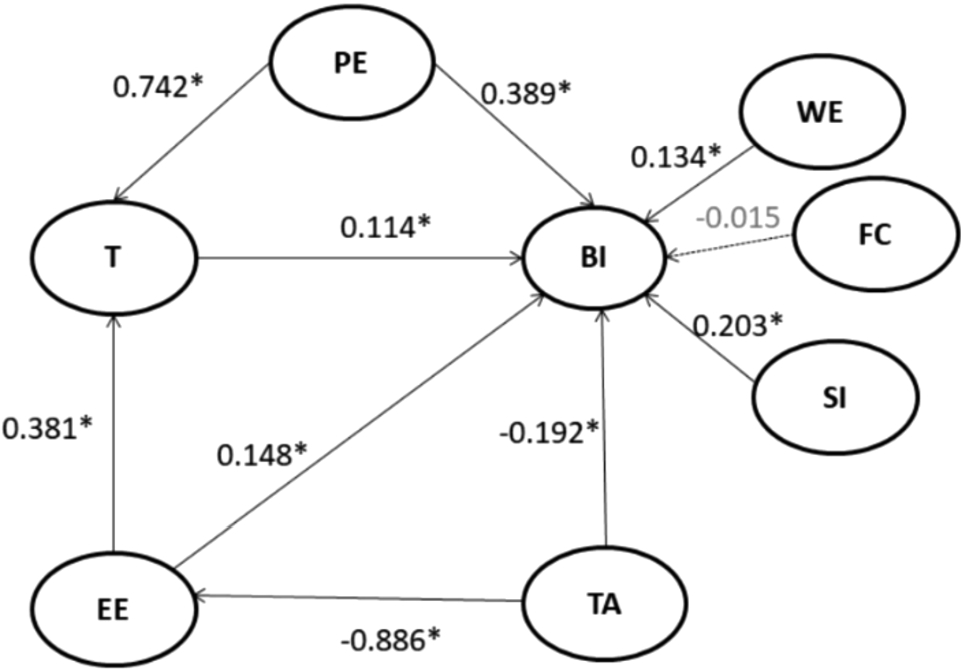
Path coefficients of the structural model analysis, *
Regarding the main constructs of the UTAUT model, PE and EE have significant positive effects on BI to use DLT (
In addition to the main constructs of the UTAUT model, trust (T) was found to have a significant positive effect on BI (
TA is found to be a strong negative predictor for EE (
Finally, WE is a new construct included in the model in line with the UTAUT basic constructs, and the results show that higher WE levels of primary teachers do influence BI to use DLT (
The conducted analysis confirmed all the hypotheses except for
In order to analyse sub-models according to different groups, differences between model groups should be significant. We ran a
The teachers were split into three groups according to the self-evaluated level of anxiety related to the pandemic isolation: 1) experiencing higher levels of anxiety than usual (
According to age, teachers were split into two groups: 1) 50 years and younger (
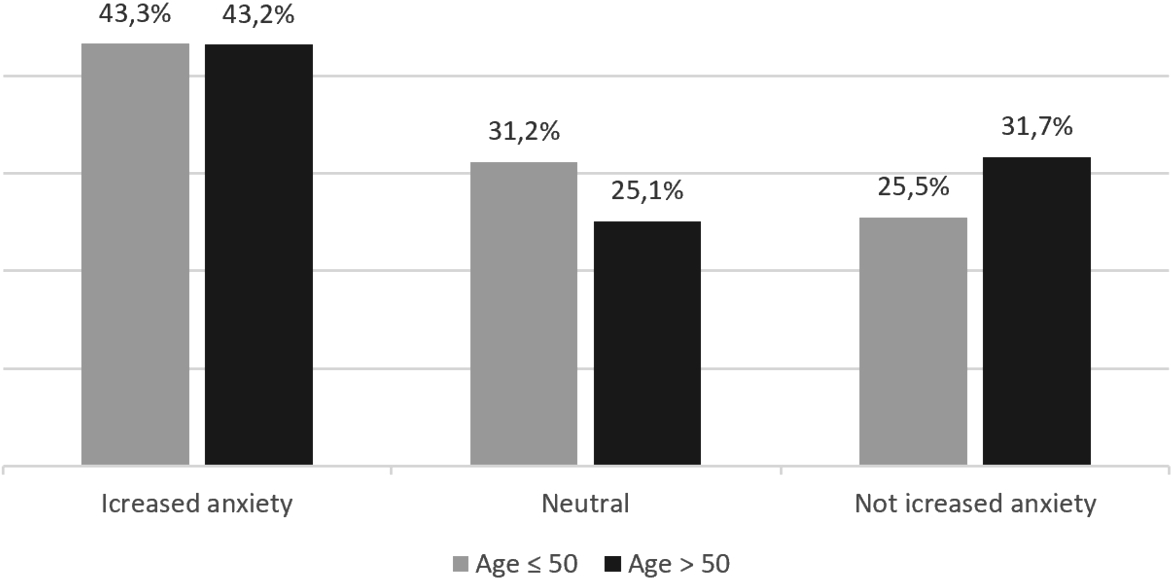
Age/PA cross results presented graphically.
The
As results in Table 6 report, the PA level was found to have a significant impact on (1) trust in DLT and (2) the influence of EE on BI to use such technologies (trust → BI as well as EE → BI relationships are stronger for teachers with “neutral” anxiety level), supporting the hypothesis
Results of the effect of PA on the model.
Results of the effect of PA on the model.
Significant at the: *0.05 level, **0.01 level, ***0.001 level. Hypothesis: + supported; − not supported.
Higher levels of technological anxiety negatively influence intention to use DLT only in groups of teachers with not increased levels of anxiety or those who were neutral in their evaluation of PA level (supported hypothesis
WE influences the intention to use DLT only for those teachers who are not experiencing higher anxiety levels during pandemic than usual (supported hypothesis
The next step of our research is to analyse the sub-models regarding the age groups. The
It is noticed that for younger teachers, higher levels of trust in DLT and WE have a stronger influence on the BI (this is a support for hypotheses
Results of the effect of the age on the model.
Results of the effect of the age on the model.
Significant at the: *0.05 level, **0.01 level, ***0.001 level. Hypothesis: + supported; – not supported.
Older teachers are more affected by the factors of EE and SI in their intention to use DLT (
In order to identify the statistically significant differences of teachers’ attitude towards DLT change and previous experience in using DLT (before the pandemic) grouped by age, the independent t-test was adopted. This study found that the 22–35 years old teachers group had statistically better opinion (
ACH and PO have a statistically significant linear relationship (
Pearson correlation results (
.
Pearson correlation results (
*Significant at the 0.05 level (2-tailed).
**Significant at the 0.01 level (2-tailed).
In order to analyse the different choices of both novice (those who never or rarely used DLT before) and advanced (used DLT often or very often) teachers on how their attitude towards DLT has changed during the pandemic period, the crosstabs statistical procedure and
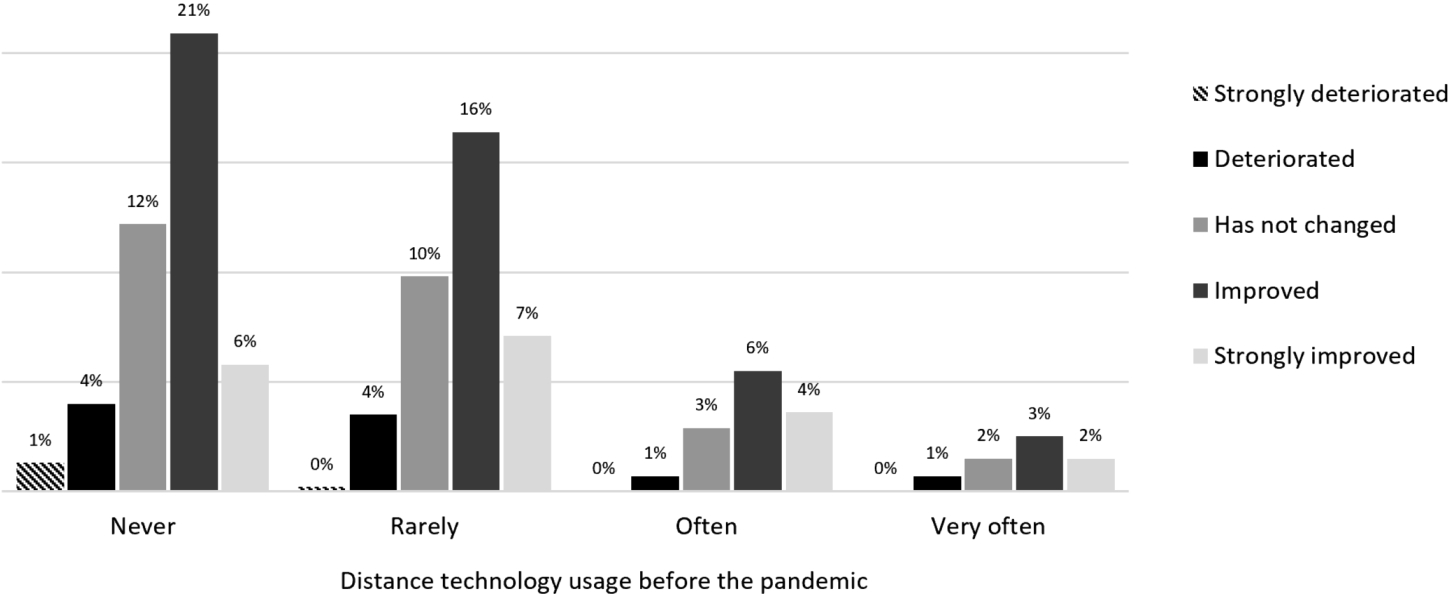
Teachers’ attitude changes according to their experience in using DLT.
The analysis of these groups shows that 47.3% of novice teachers’ attitude towards DLT has improved during the pandemic period, and 41.2% of advanced teachers’ attitudes has changed in the same way. There is no statistically significant association between teachers’ experience and attitude change towards DLT,
In accordance with the purpose of the study, we have reviewed and analysed other studies related to the acceptance of DLT. Accordingly, an extended structural model has been developed complementing the UTAUT model constructs with factors meaningful for this study: WE, TA, and trust in DLT.
Regarding
As for the answer to the
Answering
In addition to the structural model, we studied the relationships between teachers’ technological experience, vision of opportunities during the pandemic period and attitude change towards DLT (
The results of two-step validation show the model’s high internal consistency and reliability, which indicate the substantial explanatory power of the proposed model.
We should notice that using DLT in teaching during the pandemic emergency was a new experience for 81.1% of primary school teachers (44.2% of the teachers had never used DLT in their practice, and 36.9% of the teachers rarely used them before the pandemic). Observations of the lack of teachers’ digital competence are reported also in other studies from the pandemic period, e.g. Palau et al. (2021), Pozo-Rico et al. (2020).
Discussion and Conclusion
This study was aimed to identify the key factors that have an effect on primary school teachers’ acceptance of DLT. The proposed research model extends the UTAUT model with new constructs and moderators, but is novel not only in the sense of new constructs, but in the sense of the context the proposed model has been applied in: the sudden shift to the distance learning mode during isolation period due to the COVID-19 pandemic.
PE was found to be the strongest predictor of BI to use DLT. This can be explained by the pandemic context the study was run in: DLT helped primary school teachers to continue the educational process at a distance. PE is a significant determinant of BI in “usual settings”, as suggested by the original UTAUT model and confirmed by a number of previous studies related to distance learning or novel technology adoption in general, e.g. Almaiah et al. (2019), Dwivedi et al. (2019). According to the UTAUT model, the PE is a stronger predictor of BI for younger users. Group analysis according to the teachers’ age in our study revealed the significance of PE for both age groups, but at a higher significance level for younger teachers (age ⩽ 50 years). An interesting result was that group analysis according to the experienced PA level revealed that PE has significant influence on BI only for those teachers with higher or not increased perceived pandemic anxiety levels, but not for neutral in their anxiety level evaluation.
SI was the second strongest predictor of primary school teachers’ intention to use DLT. In the original UTAUT model, SI is considered a strong direct predictor of intention to use a technology. As our research results reveal, the support from teacher colleagues and support from school is an important determinant of teachers’ intention to use DLT. These results are supported by other recent studies, e.g. Mikuskova and Veresova (2020) found that higher satisfaction with institutional support, with positive feedback was strongly associated with primary school teachers’ positive perception of distance learning (the case of Slovakia). SEM multi-group analysis in our study shows that older teachers (age > 50 years) are more influenced by social conditions than younger teachers. An unexpected result was revealed via sub-model analysis according to groups of different levels of PA. For those teachers having higher or usual levels of anxiety during a pandemic, the SI is not as important as a factor to use DLT as for those who neutrally evaluated their anxiety level.
TA was found to be the next strongest (negative) predictor of teachers’ intention to use DLT. Unless it is not included in the original UTAUT model, many studies report its importance in technology acceptance, e.g. Maican et al. (2019), Holzmann et al. (2020). It should be noticed that primary school teachers usually do not use an approach of distance learning in regular educational settings, therefore, anxiety related to the technology use is an important factor. Our study showed that 44.2% of teachers are novel users and 36.9% of teachers were occasional users of DLT before the pandemic. Higher technology anxiety level negatively influences the BI. Recent COVID-19 related research (Košir et al., 2020) reports that educators who experienced higher levels of stress during the initial period of online teaching perceived themselves as less competent in using technologies in education, had more negative attitudes towards online education, and perceived less support from supervisors.
EE is considered to be a significant factor included into the UTAUT model. However, there are contradictory results reported by empirical studies regarding this construct. For instance, in Holzmann et al. (2020), Maican et al. (2019) it was not a significant predictor of BI. In our study, the significant influence of EE on BI is confirmed, and it is moderated by age: the older teachers are more influenced by EE. However, we did not observe differences in TEXP groups as the UTAUT model proposes that EE is more significant for users with limited exposure to the technology (effect decreasing with experience) (Venkatesh et al., 2003).
The results indicated that there is a significant relationship between teachers’ WE and BI, supporting the results by Maican et al. (2019), but in different contexts. Based on that, it can be inferred that teachers who are more engaged in their work, more positively accept the sudden change in their work routine during the unexpected situation. This finding together with confirmed negative influence of TA on BI is supported by recent studies carried during the pandemic period, e.g. Portillo et al. (2020) states that teachers who perceive themselves as digitally competent present more positive emotions, and some of them feel that they have had a smaller workload; negative emotions are strongly related to high workloads during COVID. Multi-group analysis revealed that WE factor’s influence on BI is moderated by the pandemic anxiety level: the effect is higher for those teachers who are not anxious or are neutral in their anxiety level evaluation due to the pandemic situation, and the effect is not significant for teachers with increased levels of general anxiety during the pandemic isolation. Age is confirmed to have a moderating effect on the relationship of WE on BI: the effect of WE is significant for younger teachers (age ⩽ 50 years). Trust in DLT is one of the drives to continue the practice of using such technologies even after the pandemic period. This concept was confirmed as having a significant influence on teachers’ acceptance of DLT. Moreover, an interesting result was obtained: PE has the strongest positive influence on trust, as well as on EE (more than the direct influence of these constructs on BI). Trust path directions differ from the previous findings, e.g. Kabra et al. (2017), Sarkar et al. (2020); Doulani (2019), and might be an effect of the pandemic context. The influence of trust on BI is moderated by age: for younger teachers (age ⩽ 50) trust was found to be a more important determinant of intention to use DLT than for older teachers.
The results show that FC have no significant influence on teachers’ BI. Quite contradictory results on this construct are present in other empirical and meta-analysis studies. Some show the significant influence of FC on BI, e.g. Foon and Fah (2011), Holzmann et al. (2020), Teo (2011), but our findings are in accordance with the initial statement of the UTAUT model, that is, that FC are largely captured by the EE construct, and thus its predicting role for BI should be expected only if EE was not included in the model (Venkatesh et al., 2003). In the UTAUT model it is stressed that the FC effect is stronger for older workers with increasing experience. Our study does not report moderating effects of age or experience (technological or pedagogical). But the results show that the influence of FC is moderated by PA: the higher the PA level of the teacher, the stronger is the influence of FC. Our study has shown that 43% of teachers have an increased level of perceived anxiety level during pandemic. A large scale study among teachers in China showed that teachers had overall anxiety prevalence of 13.67% and 39% of mild anxiety prevalence. This result shows an increase 2.74 times compared to 2013 (Li et al., 2020).
The significant influence of personal factors, engagement of teachers in their work, the role of environment factors on DLT usage are supported by other studies in the field of primary teacher training implemented during COVID-19 pandemic: training teachers to implement emotional intelligence strategies improves effectiveness in their teaching (Pozo-Rico et al., 2020; Mikuskova and Veresova, 2020). These findings are also supported by recent research on teachers’ professional development frameworks for emergent remote teaching, where authors emphasize the components identified as “being reflective” and “active and experiential learning” for teacher development programmes and encourage course developers to focus on pedagogy and teachers’ personal learning, rather than delivering training on narrow technical topics (Abaci et al., 2020). Wong and Moorhouse (2020) found that teacher motivation has strengthened during the times of uncertainty (in our study teachers also see the pandemic period as an opportunity to learn and rethink), however, extended periods of social isolation can lead to feelings of fear, anxiety, depression, anger, or stigmatization, which should also be considered in teacher training and support.
Implications for Theory and Practice
Our research has proposed and tested a theoretical model for acceptance of distance learning technologies by primary school teachers, extending the UTAUT model with constructs reflecting individual characteristics.
The findings of our study have two-fold implications:
The factors that increase the intention to use DLT, observed during the COVID-19 pandemic period may serve as factors that should be strengthened in case of new waves of the pandemic or similar extreme situations transforming the educational process into the distant mode. (Similarly, the factors that decrease the intention to use DLT should be weakened.)
Even though our study was run when the transfer to distance mode of education was obligatory, our suggested model predicts the behavioural intention to use DLT in future, i.e. beyond the pandemic period.
The findings of this study offer useful suggestions for educational policy-makers, school leaders, teacher trainers, researchers, designers and developers of DLT in order to increase usability (Nacheva and Jansone, 2021) and technical administrators. These findings will enable them to get better acquainted with the key factors of acceptance of DLT by the teachers under the influence of the pandemic. This conclusion is in line with the most recent research, e.g.: the key challenge for decision-makers is their ability to harness the power of technology, to learn the key lessons of the COVID-19 pandemic and ensure that the world is better prepared for future waves of the virus or other states of emergency (Dwivedi et al., 2020; Pozo-Rico et al., 2020).
To sum up, some highlights from this research and recommendations, addressing not only the pandemic period but processes after it, can be extracted.
Preparedness for the emergency states. The ability to apply DLT in the educational process, even on a primary education level, has become an important part of teachers’ competence. The findings of this study reveal the key factors that are crucial during sudden change in lifestyle, as caused by the COVID-19 pandemic.
Environment factors in DLT acceptance. The environment in the form of the support by school and colleagues (social influence) is a factor that should be strengthened. It is important to know that performance expectancy (belief of the teachers that using DLT will contribute to his/her teaching performance) is the strongest factor influencing teachers’ trust in such technologies and intention to use, and this effect increases with teachers’ age.
Technological teacher training. Technological teacher training is important in order to reduce technological anxiety, having a strong negative effect on intention to use digital learning technologies. On the other hand, digital competence in teachers’ work contributes to the better emotional state.
Personal aspects in teacher training. Personal factors such as teachers’ engagement in their work and wellbeing at work are revealed to be important drivers in adopting DLT during unexpected school closure. Therefore, not only technological teacher training is needed, but teachers’ personal development and work environment, which motivate teachers, are important. Teachers, seeing positive opportunities during the emergency period, demonstrate positive change in attitude towards using DLT in their educational practice.
DLT in face-to-face classrooms. Teachers’ competence in DLT usage during pandemic can be transferred into face-to-face classrooms beyond the pandemic period to enrich learning with digital content and tools even on primary school level.
DLT development and choices. The impact of effort expectancy, performance expectancy and trust in DLT on intention to use such technologies by teachers should be taken into account by school leaders and administrators when choosing DLT for usage in educational process, as well as by developers of DLT.
Strengths, Limitations and Directions for Future Research
The study was carried out quantitatively using a large sample, is representative on one country level and probably reflects the cultural aspects of the situation in Lithuania. An extension of the study to other cultural contexts is important. An important direction is to extend the research on a secondary level of education, where teachers are usually more confident in using digital technologies. The next direction of research is a study on how the experience to use DLT in the education process gained by primary school teachers during the pandemic is adopted upon the end of the pandemic period during face-to-face learning.