






Abstract
Textile finishing processes cover a variety of steps in which various chemicals and methods can be used to functionalize the fabrics. The objective of this study is to investigate the usability of tea and tobacco industrial waste as natural dye sources and antibacterial agents for cotton fabrics. These wastes were collected from the related mills and used directly without previous extraction, as well as in extracted form. Dyeings were conducted at two different temperatures and the dyed samples were analyzed in terms of obtained colors, fastness values, and antibacterial efficiencies. Useful coloration of the cotton fabrics with sufficient fastness values was achieved, with bacterial reductions dependent upon treatment conditions. In general, waste from tea processing yielded better results.
Introduction
Textile materials can offer various features to users. The dramatic increase in population and environmental pollution in recent years have forced researchers to find new health- and hygiene-related products. 1 Biomedical-purposed antimicrobial finishing of textiles has become one of the most important areas of research and one of the fastest growing sectors of the textile market. 2 The textile finishing industry is an important contributor to many national economies. 3 Most textile finishing operational units use chemical specialties. 4 In this study, industrial herbal wastes have been used for coloration and gaining antibacterial properties on cotton.
Natural fibers, such as cotton, viscose, and fax, are constantly subjected to microbial attacks 5 because textile goods, especially natural-fiber based ones, present an excellent environment for microorganisms to grow due to their large surface area and ability to retain moisture. 6 Control of microorganisms on textiles extends to various areas. 7 Antimicrobial fabrics have an important market share in daily use and in special areas. 8 The growth of microbes on textiles during use and storage negatively affects the user as well as the textile itself. 9 Microbial infection is one of the most serious complications in many areas. 10
To overcome these drawbacks, various chemical treatments, including nano-structured ones can be used. For example, Hebeish et al. synthesized nano-sized silver particles and applied them to cotton fabrics in the presence/absence of binder. Good antibacterial activities were reported, with the binder being important for durability during washings. 11 In another study, titanium oxide nanoparticles were synthesized in situ on cotton fabrics—excellent bacterial reductions, even after 20 washing, were obtained. 12 In another study, wound dressings were obtained by treating cotton fabrics with various concentrations of powdered silver nanoparticle aqueous suspensions and the antimicrobial and anti-inflammatory efficacy of the fabrics were tested. 13
Use of many antimicrobial agents is avoided because of their possible harmful or toxic effects.
14
Because of this, herbal industrial wastes from tea and tobacco processing were tested in terms of antibacterial activity. Tea (
Experimental
In this study, we investigated the usability of the waste from the tea and tobacco industries. To do so, the wastes from the factories were analyzed. Then, the waste extracts and the wastes without extraction were both used as natural colorants for the cotton fabrics. The antibacterial activities gained from these wastes were also investigated.
Materials
Fabric, Tea, and Tobacco Processing Waste
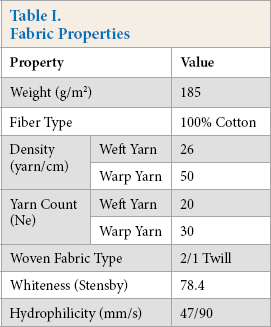
Cotton fabric (100%) was used in the study. It was pretreated and readied for the dyeing and finishing processes. The properties of cotton fabric are presented in Table I.
Fabric Properties
The factory waste from tea processing used in this study, contained crumbled tea leaf, leaf fiber, pick-up mistakes, leaf stem, and waste from the fiber removing system during processing. The factory waste from tobacco processing was obtained from the sieve, which was un-aromated and minced, and included undersized tobacco. Examples of the tea and tobacco wastes used are shown in Fig. 1.
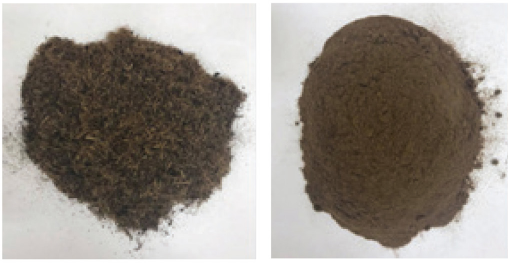
Processing waste of tea and tobacco.
Equipment
For the extraction of the tested herbal waste, the extraction equipment shown in Fig. 2 was used. The extracts were then used as a dye bath in dyeing of the cotton fabrics in a Thermal Marked laboratory type sample dyeing machine.
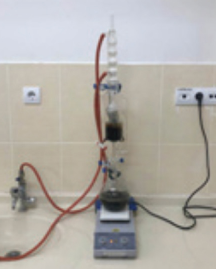
Extraction system used in the study.
Methods
A three-step methodology was used in this study. First, the herbal extract from the herbal waste was prepared and the fabrics were dyed with the extract, as well as with the waste product without previous extraction. Finally, all the samples were evaluated.
Extraction of the Herbal Waste
For the extraction of the herbal waste, the system shown in Fig. 2 was used. A total of 40 g of herbal waste was extracted in 1 L of distilled water for 4 h during the extraction process.
Natural Dyeing of Fabrics
The natural dyeing of the fabrics was performed with the use of the herbal waste extracts and also by using these wastes directly without prior extraction. Fig. 3 shows the dyeing graph used for both dyeing methods. No mordanting agent was added to the dye bath.

Dye graphs of the fabrics at 80 °C and 100 °C.
As mentioned previously, dyeing was performed using the herbal waste extract or by adding the herbal waste directly to dye bath containing only water at a concentration of 1:2 (weight of the fabric: weight of herbal waste). For both methods, dyeing was performed at two different temperatures (80–100 °C).
Evaluation of the Results
After dyeing, the fabrics were analyzed in terms of obtained colors, fastnesses, and antibacterial activity. First, the samples’ color efficiencies/yields (
For testing the durability of the antibacterial features during the washings, the antibacterial activities of the dyed samples were tested after one washing and five washing cycles. The washings were conducted according to ISO 105-C10:2006, Test A (1) in a laboratory type dyeing machine. After each washing cycle, the samples were rinsed at 25 °C for 2 min, 50 °C for 5 min, and 25 °C for 2 min. The samples were then squeezed and dried at room temperature (RT).
Results and Discussion
In the scope of the study, the usability of the tested herbal industrial wastes in natural dyeing of cotton fabrics was analyzed first, and then their antibacterial activities were tested after dyeing.
Natural Dyeing with Tea and Tobacco Industrial Waste
The tested wastes were used in coloration of the cotton fabrics at different temperatures and in different forms as detailed in the experimental section.
Color Measurements
The colors obtained by dyeing with the tested industrial wastes are summarized in Table II. The obtained colors from tea and tobacco industrial waste were brown, but dyeing with tea waste gave darker shades than dyeing with tobacco waste. The same behavior was observed from the CIE
CIE
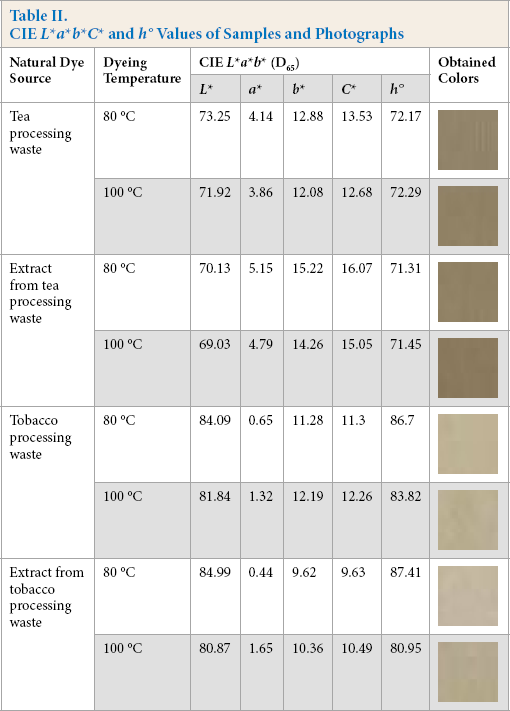
In
The use of tobacco processing waste in dyeings gave
In dyeing with industrial tea waste, the
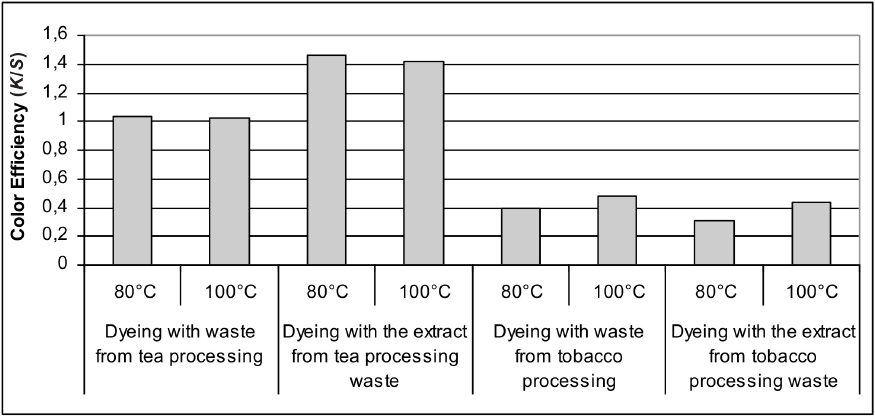
The color efficiency
As shown in Fig. 4, the use of tea processing waste in dyeing the cotton fabrics yielded higher
Fastness of Dyed Samples
Fastness of the dyed samples is another important parameter for the evaluation of dyeing with the tested herbal wastes.
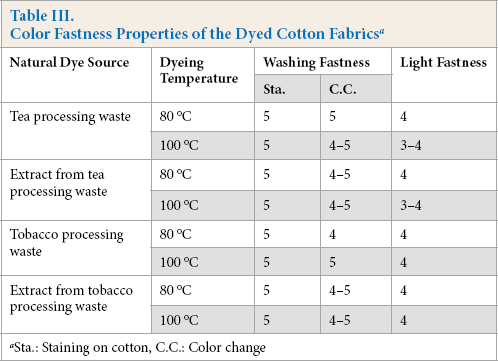
Test results showed that the dyeing procedures and herbal wastes used gave nearly similar fastness values against washing and light. The staining on cotton value was excellent (5) and the color change after washing was good (4–5) in all test cases. The maximum color change after dyeing was observed from the sample dyed with tobacco processing waste from at 80 °C.
Light fastness test results are given in Table III. Sufficient light fastness values were obtained using these dye sources.
Antibacterial Activity
Textile materials can serve a suitable environment for the survival and growth of bacteria. In this part of the study, the antibacterial activity of cotton fabrics dyed with tea and tobacco industrial processing wastes were evaluated. Cotton fabrics processed under the same conditions as the dyeing processes, but without the use of any herbal waste, were also tested as a control. The control did not show any bacterial reduction, and, as shown in Table IV, the dyed samples had different antibacterial activities depending on the application method and the type of the bacteria.
Antibacterial Activity of the Dyed Cotton Fabrics
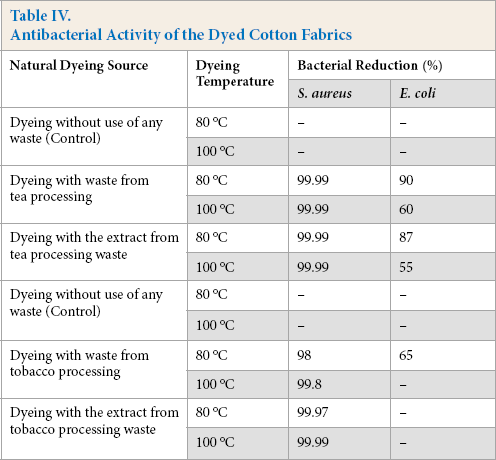
Table IV also shows that the naturally dyed samples gave the best antibacterial activity against
Tea is an important source of dietary polyphenols. Their beneficial properties are thought to include antioxidant, antimutagenic, anticarcinogenic, and antibacterial effects.
26
The main flavonols in tea are conjugates of quercetin and kaempferol, with lower levels of myricetin and triglycosides. Other related compounds found in tea are gallic acid, quinic esters of gallic, coumaric, caffeine, pro-anthocyanidins, and trace levels of flavones.
16
Every part of the tobacco plant, except the seeds, contains nicotine.
27
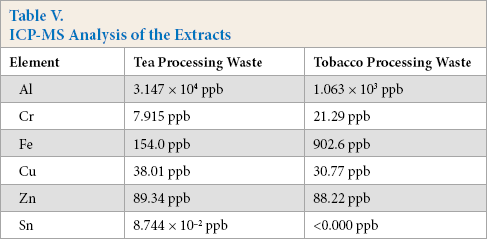
Inductively coupled plasma-mass spectrometry (ICP-MS) analysis of the extracts was performed and results are given in Table V. Various elements were found in the extracts. As a consequence, these minerals and chemicals transferred to the cotton fabrics by dyeing were most likely responsible for the bacterial reduction observed in this study. Scanning electron microscopy (SEM) views showed that the materials in the extracts responsible for the bacterial reduction likely diffused into the fiber, resulting in surface views that were generally clean. On the other hand, some herbal wastes showed in the SEM view if the herbal wastes were used without prior extraction (Fig. 5).
ICP-MS Analysis of the Extracts
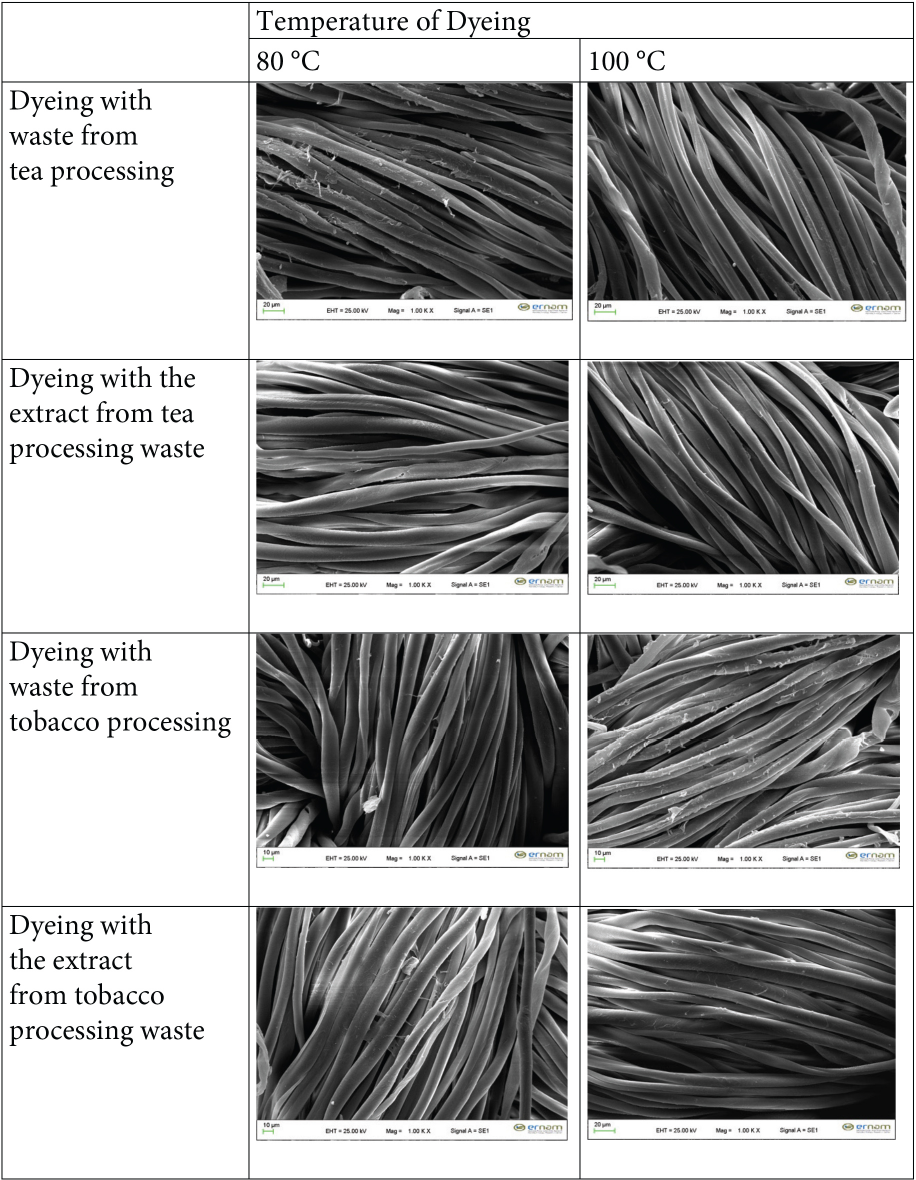
SEM views of the fabrics.
The antibacterial activity against
Bacterial Reduction (%) of the Samples after Washings
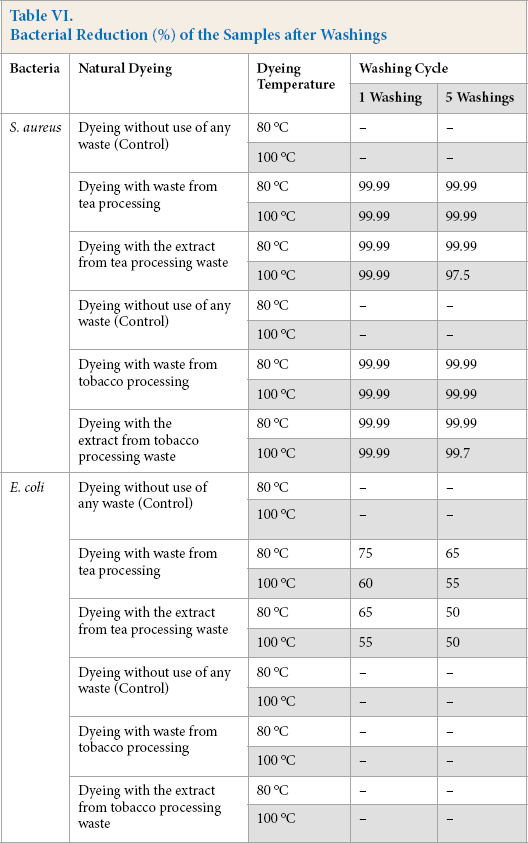
As a result, the tested herbal wastes can be useful for the antibacterial finishing of the cotton fabrics, especially at a dyeing temperature of 80 °C. Dyeing with the tea processing waste (directly or using the extract) gave the best results against both tested bacteria.
Conclusions
Today, people socialize in public areas quite a lot. Therefore, the probability of bacterial species spreading and reproducing in textile products is a concern. In this study, it was found that a cellulose-based fiber (cotton) can be dyed using cellulosic-based wastes and that an antibacterial effect can be achieved by using them. In addition, the dyeability of cotton with these wastes, the resulting color properties, and the fastnesses of the samples were investigated as well. The dyed samples demonstrated different bacterial reductions depending on the tested bacteria, waste type, and dyeing procedure. In general, waste from tea processing gave better results. In future studies, it may be of interest to test these wastes against different pathogens and on different fiber types.
Use of these materials and methods can aid in the recycling of industrial wastes. Furthermore, it is also anticipated that new areas of use may emerge for these cellulosic herbal industrial wastes.