






Abstract
The efficacy of aroma-therapeutic textiles was quantified by gauging the psychophysiological responses of twenty female subjects exposed to treated as well as untreated textile specimens. In congruence with previous studies, statistical analysis of the psychophysiological responses showed stress relief in subjects after exposure to the essential oils. Aroma-therapeutic textiles in this study were developed by finishing 100% cotton fabric with β-cyclodextrin and one of two essential oils using the sol-gel method. The comparative SEM analysis of treated versus untreated textiles revealed the presence of treatment materials on the surface of the cotton fabric.
Introduction
Stress is a condition that we all encounter at some stage of our life. Chronic stress, if left untreated, can lead to a variety of illnesses, including hypertension, heart disease, depression, memory impairment, and chronic fatigue syndrome. 1 Job related stress is estimated to cost more than US$300 billion a year in absenteeism, turnover, diminished productivity, medical, and insurance costs. 2 Finding a solution to the problem of stress is paramount as it is currently one of the most pervasive public health problems. Current anti-stress medicines have side effects that include cognitive impairment, depression, addiction, and abnormal behavior.3 TheJoint Commission on Accreditation of Healthcare Organizations (JCAHO) is in favor of complementary therapies that have a positive effect on pain and also help in improving patients’ health conditions. 4 One of the successful complementary therapies is aromatherapy. 4
Aromatherapy is a type of alternative medicine that uses essential oils or other aromatic plant compounds and is aimed at improving a person's health. 4 The positive effects of essential oils on the human body has been known to mankind for ages. Inhalation of essential oils stimulates part of the brain that is connected to the olfactory system and a signal is sent to the limbic area of the brain that controls emotions.5,6 This causes chemicals to be released which makes the person feel relaxed, calm, or even stimulated in some cases. Many research studies have scientifically proven the relaxation effect of essential oils.4–9 Lavender and cedar-wood essential oils are helpful in calming stress, anxiety, and reducing blood pressure.4,8 Moreover, lavandin, which is a variety of lavender, is successful in reducing preoperative stress in surgical pateints. 9 Aromatherapy is a low risk and cost effective alternate therapy for anxiety and stress relief. 9 Various psychological states of the human mind, such as chronic stress, anxiety, fear, and depression have negative outcomes in the body. 10 Essential oils such as lavender, cedarwood, bergamot, and rose have soothing effects on such psychological conditions.
Stress is defined as a menace stimulus that disrupts physiological or psychological homeostasis when encountering internal or external harmful events.11–13 Human response to stress, such as “fight or fight,” is associated with our sympathetic nervous system (SNS). Conversely, stress relief is activated by our parasympathetic nervous system (PNS). Both systems involve psychophysiological responses affecting heart rate, respiration rate, skin conductance, and skin temperature.
In the state of stress or SNS activity, heart rate and respiration rate increased, 14 and skin temperature decreased.15,16 Whereas, relaxation shows PNS activity, which was demonstrated by a decrease in skin conductance, heart rate variability (HRV), and respiration rate.17–23 In an experimental study conducted by Storm et al., 23 an increase in skin conductance was observed during stress. 24 Another study conducted on stress, depression, and their interaction with SNS and PNS responses showed that average skin temperature decreased significantly under stress, whereas, heart rate increased with stress. 14 Many studies reported a significant increase in skin conductance, HRV, and respiration rate in the state of stress as compared to the baseline.17–23
The concept of aromatherapy is used in this study to develop therapeutic textiles for stress relief. The aromatic essential oils of lavender and cedarwood were used to make inclusion compounds with β-cyclodextrin and then finished onto the surface of cotton textile materials. Cyclodextrins are cyclic oligosaccharides with a toroidal-shaped molecular structure (Fig. 1) that presents a hydrophilic exterior surface and a hydrophobic interior cavity that has an affinity for oils. The hydrophobic cavity binds oily substances very well and thus forms inclusion compounds. Cyclodextrins are known for their ability to form inclusion compounds with aromatic substances such as perfumes or other fragrances for long term storage purposes without the loss of scent.25,26 There-fore, β-cyclodextrin was chosen for this study because of its use in textile finishes, innoxiousness, and its ability to hold essential oils in the oleophilic cavity. 27 The hydrophilic exterior surface of cyclodextrins makes them an optimal choice for chemically bonding with cotton textiles for a long lasting surface treatment. Cyclodextrins can be incorporated onto cotton textile surfaces by covalent bonding, crosslinking agents, or graft polymerization. 28 β-Cyclodextrins are known for their eco-friendly and non-toxic nature. There are no known adverse effects to β-cyclodextrin use in oral, nasal, or dermal applications. 29 They are also used in the pharmaceutical, fragrance, room freshener, and cosmetic industries.28–30 There are many textile studies that have used cyclodextrins to bind essential oils and deposit these inclusion compounds onto textile surfaces.26,27,30 One successful method to achieve these results is the sol-gel method.26,30
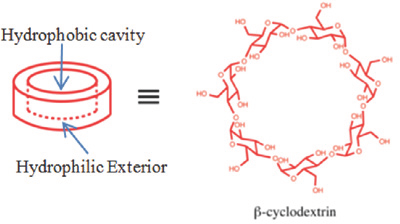
The chemical structure and shape of β-cyclodextrin.
While there are a number of studies on the use of β-cyclodextrin and aromatic compounds in the textile field, there is a dearth of literature that focusses on the therapeutic aspect of such textile materials. The current study is a unique attempt to develop not only aroma-therapeutic textiles for stress relief, but also to measure their efficacy by psycho-physiological analysis of human subjects exposed to these aroma-therapeutic textiles.
Methodology
Fabric Pre-Treatment
The fabric used in this study was 100% cotton jersey knit. Natural fibers have oils, waxes, minerals, and other impurities in them; scouring removes these impurities. To scour the fabric, it was immersed in a container with a solution of 2 g/L of sodium carbonate (soda ash) in water at 170 °F for 2 h. The fabric was then rinsed thoroughly and dried.
β-Cyclodextrin Finish Preparation
The finishing solution was prepared by using the sol-gel method that was adopted from Wang and Chen. 30 The sol-gel for this study was prepared from two precursors, 3-glycidyloxypropyltrimethodoxysilane (GPTMS) and tet-raethoxyorthosilicate (TEOS). TEOS acts as a sol and forms a gel when it is crosslinked with GPTMS. β-cyclodextrin (2.5 g) was dissolved in a mixture of ethanol (116 mL) and deionized water (36 mL) while stirring at a speed of 1000 rpm for 10 min. Meanwhile, TEOS (20.8 g) was added into a solution of HCl and deionized water maintaining the average pH of the solution at 3.5, which ranged between 3.0 and 4.0. GPTMS (23.7 g) was measured and added into the β-cyclodextrin solution along with TEOS solution. At this stage, 2.9 g of 1,2,3-butanetetracarboxylic acid (BTCA) was added to the solution. BTCA acts as a crosslinking agent and is safe to use, unlike formaldehyde. It forms an anhydride in the presence of sodium hypophosphite monohydrate at the curing stage of the finishing process. BTCA reacts with the hydroxyl groups of the cotton fabric, which aids in grafting β-cyclo dextrin onto the fabric surface. Several studies 25 , 26 , 27 , 30 have confirmed the cellulosic esterification of polycarboxylic acids such as BTCA. The solution was kept stirring main-taining the temperature at 104 °F for another 8 h. Hence, the resultant solution is a milky gel consistency emulsion (sol-gel). 26 , 30
Finish Application
The fabric was finished with the β-cyclodextrin finish solution using a pad-dry-cure method. A lab size padder was used to finish the fabric. The wet pickup of the fabric was 129%. The fabric was then dried at a temperature of 176 °F and cured for additional 5 min at 248 °F to ensure fixation of the finish to the fabric. After this step, the fabric was cut into 2 × 2 in. specimens. Ten, the essential oil (40% in ethanol) was sprayed on at a pressure of 2.86 kPa and at a distance of 10 in. from the fabric surface to saturate the whole surface area of the textile specimen. The spraying method was preferred over dipping or padding as the force of pressure involved in the spraying method helps the aroma molecule to reach and eventually ft into the cavity of β-cyclodextrin. 26 Moreover, spraying is a controlled application method that lowers waste and results in even distribution. 32 Subsequently, the fabric specimens were left to air dry. The average dry weight of fabric specimens prior to spraying the oil was 2.442 g and the average weight of the fabric specimens saturated with oil solution was 5.532 g. After drying, the textile specimens were mounted in 3 × 3 in. paper frames that exposed the specimens so that they could be held comfortably by the subjects for inhalation during the biofeedback experiment session.
Research Design
The present study has a pre-test/post-test experimental design. The study was conducted in an enclosed environmental chamber at ambient conditions of temperature and humidity to avoid any noise or distraction which may cause bias in the results. The experiment involved the testing of two specimens of aroma-therapeutic textiles (lavender and cedarwood) and one control.
Subjects
A total of twenty female students, aged 20-24 years, participated in this study. The subjects were recruited by announcements and flyers. Demographic information was collected and health related questions were answered by the subjects. It was ensured that all subjects had normal body mass index (BMI) values and none of them had any breathing disorders, asthma, cold, flu, or any other medical issues with their olfactory senses. These preconditions were important because the experiment involved recording the subjects’ physiological data while they perceived the stimuli using their olfactory senses.
Experimental Protocol
The experiment started with an acclimation period of 5 min, so that the subjects had an opportunity to acclimate to the setting and atmosphere of the experiment. The temperature and humidity of the experiment chamber varied between 70 to 75 °F and 64 to 67% relative humidity (RH). During this period, subjects were asked to relax while seated on a chair. After completion of the acclimation period, the subjects were hooked up with skin temperature, respiration, skin conductance, and blood volume pulse (to measure heart rate) sensors. Before putting the sensors on subjects’ finger tips, the skin surface was cleaned with rubbing alcohol to make sure there was no oil or dirt on the skin surface that may interfere with the results. 16 Before recording the actual data, a system behavioral test was conducted to make sure the sensors were working properly. The subjects were asked to breathe deeply and their skin surface was tapped mildly to observe any change in their physiological responses which ensured that the sensors were working properly.
The experiment involved four steps of data collection following the subject's acclimation to the environmental chamber; baseline, stressor, relaxant (textile specimen), and finally, post-baseline (Fig. 2). The steps from baseline to post-baseline were conducted three times to test three textile specimens. The baseline was measured for the next 2 min, followed by a 30 s exposure to a stressor. The stressor involved a mental arithmetic activity, which was a set of two-digit multiplication questions. Multiplication and division are considered more difficult and require more mental activity as compared to addition or subtraction. The mental arithmetic test was found to be a reliable stress inducer in many research studies.14,19,32 To induce more stress, the participants were asked to calculate the answers in their head. The presentation order of questions was randomized. After the stressor, one of the three textile specimens (control, lavender, and cedarwood) was presented to the subjects in random order. The textile treatment was perceived by the subjects through their olfactory senses for 5 min, followed by a post-baseline period of 2 min. They were instructed to keep their breath steady and not inhale or exhale deeply as this may affect their respiration data. This procedure was repeated two more times to record data for all the three textile treatments.

Steps of biofeedback experiment protocol.
Preliminary Data Analysis
The raw data obtained from the biofeedback equipment was extensive and complex. It was of utmost importance to scrutinize and refine the psychophysiological data for statistical analysis.
Mean Values and Standard Deviation
The Biotrace software of the biofeedback system allowed data export with 32 values per second. Since the experiment for this study was 33.5 min long, 64,320 raw data values for each of the four psychophysiological measures were generated for each subject. To condense these huge data sets, mean values were calculated for each time segment (i.e., baseline, stressor, textile treatment, and post-baseline). Consequently, a single value was obtained for each time segment of the data. The mean is a sensitive measure to identify any outliers; any artifacts were removed before calculating the mean values. The mean values were accompanied with standard deviation values for better comprehension of the data.
Root Mean Square Analysis
Due to inconsistences in skin temperature data, it was not considered for further analysis. After computing the mean values for each time segment, further analysis was conducted using root mean square (RMS) values. RMS is a statistical measure of the magnitude of varying quantity, which is especially useful when variants are positive and negative. RMS values for each time segment of both skin conductance and respiration rate were computed. There were 240 RMS values for each skin conductance and respiration rate data for all the subjects. However, in case of the heart rate data, HRV was calculated before conducting the root mean square analysis. At this stage, the researcher had RMS values for skin conductance, respiration rate, and HRV data, but these values needed to be further summarized to run the statistical analysis. Hence, the data were condensed by calculating the stress index values.
Stress Index Calculation
The root mean square values of each psychophysiological measure were further reduced by calculating the stress indices of this data. Calculating the index values of RMS data served two purposes: a) it reduced the data and made it more manageable, and b) it gave the researcher insight into the changes in each psychophysiological measure as a response to stress activity and textile treatments.
The indices for each measure were calculated in three steps. As mentioned earlier, RMS values of each segment of the data were calculated, thereby, generating a single value for multiple raw values. These values suggested the quadratic mean score of a subject's raw physiological data pertaining to a specific time segment. By quantifying these, thousands of raw physiological data values produced during the experiment for each psychophysiological measure were reduced and organized. This enabled the researcher to conduct further statistical analysis of the physiological data with confidence. The second step in calculating the indices was to compute decrease in stress and increase in stress by applying the formula as indicated in Fig. 3.

Steps of index calculation. S* is the mean value of physiological data during stress, T** is the mean value of physiological data during textile treatment, and Pbajr.3.5.4 is the mean value of the physiological data during baseline.
To obtain statistically meaningful results, a multivariate analysis of variance (MANOVA) was conducted on the stress indices data as calculated in the preliminary analysis stage. The data analysis included one independent variable (type of fabric) and three dependent variables—skin conductance, HRV, and respiration rate. In addition, there were three groups of independent variables—lavender, cedarwood, and control fabrics.
Results and Discussion
Aroma-Therapeutic Textiles
The presence of treatment on the fabric was demonstrated by comparing the results of scanning electron microscopy (SEM) analysis of the treated (Figs. 4a and b) and untreated textile (Fig. 4c) specimens. Hence, the deposition of β-cyclodextrin and essential oil on the fiber surface was suggested as supported by various empirical studies.30,31,33
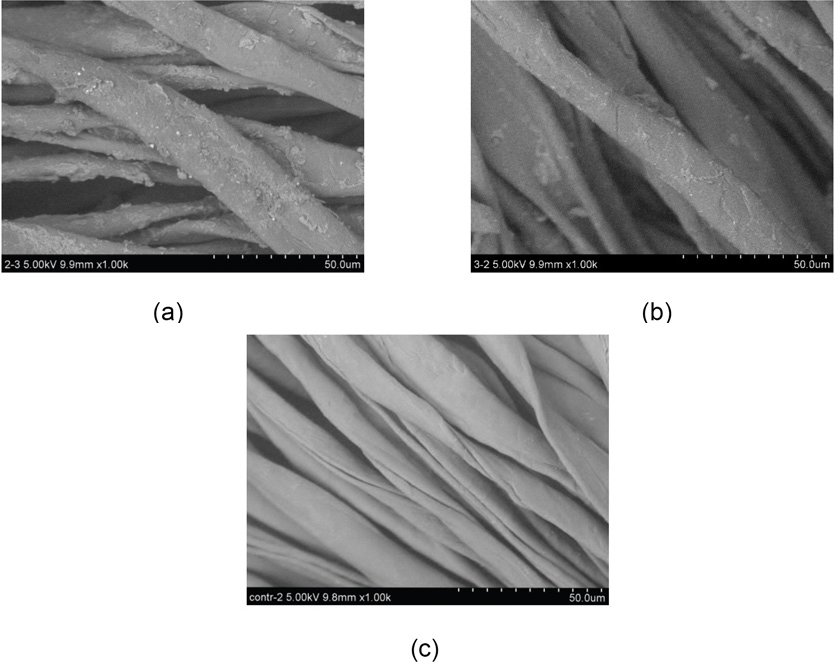
SEM Analysis: fiber view of (a) lavender, (b) cedarwood, and (c) controltextiles.
Efficacy Testing
The mean age of the participants was 21.7 years (SD ± 1.081) with a mean BMI of 22.645 (SD ± 2.244). The majority of the subjects reported themselves as white (17 subjects, 85%), while the remaining 3 subjects (15%) identified themselves as Asian.
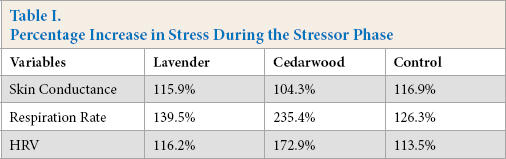
The results of “increase in stress” (i.e., the rate of change in psychophysiological data (Table I) from baseline to stressor) showed a pattern similar to past studies.13,16,17,20,21,34 Fig. 5 represents skin conductance data for all three textile specimens (i.e., control, lavender, and cedarwood). For skin conductance data as a measure of stress level, an increase of 116.9% was observed for the control textile treatment, followed by lavender (increase of 115.9%), and lastly, cedarwood with an increase of 104.3%. The respiration rate data showed the greatest change amongst all the psychophysiological measures, with a 235.4% increase in stress for cedarwood treated textiles, followed by a 139.5% increase for lavender, and finally, a 126.3% increase in stress was noticed for the control fabric. Likewise, for HRV, the pattern was similar to respiration rate data.

Example of skin conductance data. a = acclimation time, b = baseline, c = stressor, d = textile treatment phase, and e = post-baseline.
Percentage Increase in Stress During the Stressor Phase
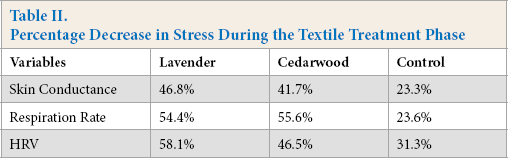
After calculating the percentage increase in stress, the percentage decrease in stress during the textile treatment phase was also calculated in similar fashion and reported in Table II. A maximum decrease in skin conductance was observed for lavender (46.8%), followed by cedarwood (41.7%), and control (23.3%) upon perceiving the textile treatment. Overall, a 55.6% decrease in respiration rate data was observed for cedarwood textiles followed by lavender, which showed a decrease of 54.4% in respiration rate. The control textile showed a decrease of 23.6% in respiration rate. Similarly, a maximum decrease in HRV was observed when subjects perceived the lavender textile treatment (58.1%) followed by cedarwood (46.5%), and control (31.3%). All subjects experienced stress during the stressor phase and also relaxation while perceiving the aroma-therapeutic textiles through their olfactory senses (Tables I and II). Now the question was whether the difference in performance of three textile treatments was significant or not. These results led to further statistical analysis of the data.
Percentage Decrease in Stress During the Textile Treatment Phase
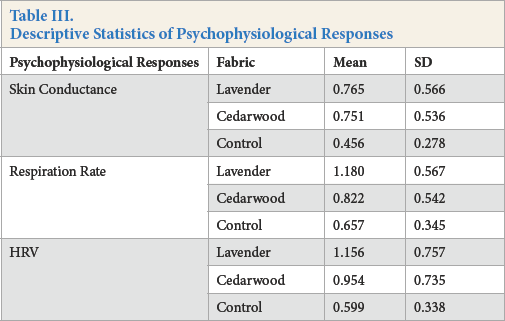
The results pertaining to descriptive analysis of the data are depicted in Table III. For skin conductance, respiration rate, and HRV indices, relatively higher values showed greater changes in baseline to stress and stress to textile treatment values. The indices were respective ratios of decrease and increase in stress values for each fabric. Lavender fabric had the highest mean, followed by cedarwood, and lastly, the control textile treatment. Thereby, on the average, lavender offered more relaxation than cedarwood and cedarwood more than the control textile treatment.
Descriptive Statistics of Psychophysiological Responses
As shown in Table IV, multivariate analysis of variance testing revealed a significant multivariate main effect for the type of fabric: Wilk's λ = 0.667, F (6,110.000) = 4.114, p < 0.001. A high observed power (0.997) of the test indicated that at least one out of the three fabrics was significantly different from others in terms of stress relief. Since the F test was significant, it was very important to conduct the post hoc analysis to find out which one of the three (lavender, cedarwood, and control) groups performed different than the others.
Multivariate Analysis of Psychophysiological Measures
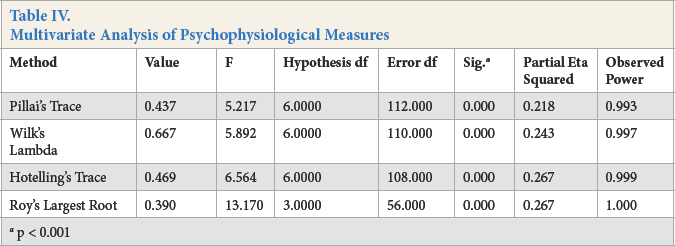
p < 0.001
With respect to type of fabric, a post hoc analysis (i.e., Bonfer-roni test) is reported in Table V. No significant difference (p > 0.05) was observed between the performance of textile specimens treated with lavender and cedarwood. However, results of the untreated textile specimen (control) were significantly different from lavender and cedarwood, both in relation to skin conductance and respiration rate. Interestingly, the analysis between cedarwood and control showed no significant difference in the case of HRV. In support of these findings, many empirical studies showed an association of SNS activity with increase in skin conductance, respiratory rate, and HRV.3,5,8,11,15,18,21,25 The SNS activity suggested the state of stress, and conversely a decrease in these parameters, showed PNS activity or relaxation. Tables IV and V showed that there was a statistically significant difference between the performance of aroma-therapeutic textiles and control fabric. Since the ratio of SNS to PNS activity was under scrutiny in the MANOVA test and the difference in performance of aroma-therapeutic textiles and control was significant, it can be stated that the aroma-therapeutic textiles provided relaxation in contrast to the control textile treatment.
Post Hoc Analysis
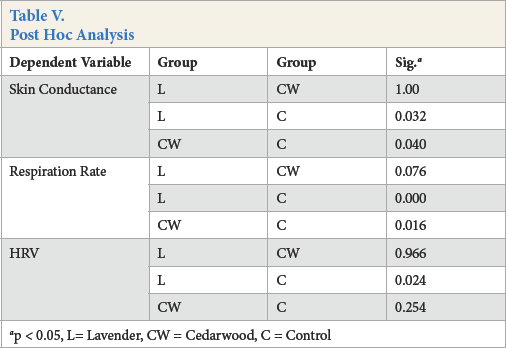
p < 0.05, L= Lavender, CW = Cedarwood, C = Control
Conclusion
Stress has become a part of our hectic daily lives and can have wide ranging effects on our emotions, mood, behavior, and most importantly, health. The aroma-therapeutic textiles developed in this study showed stress relief in twenty female subjects. It can be inferred from the results that there was a significant stress relief in the subjects by inhaling the lavender and cedarwood aroma-therapeutic textiles as opposed to the control textile. There was a statistically significant decrease in skin conductance, respiration rate, and heart rate (PNS activity) in the case of the aroma-therapeutic textiles in contrast to the control textile which did not have any aroma. There was not a statistically significant difference between the performance of the lavender and cedarwood aroma-therapeutic textiles. In support of previous studies,34–37 the findings of this study suggest that the essential oils are an effective remedy to stress.
Textiles are both personal and intimate to our lives; we are enveloped in them twenty-four hours a day whether asleep or awake. The potential impact that aroma-therapeutic textiles can have on the quality of our lives is immense and therefore worthy of further investigation. This study makes an important contribution to the literature on aroma-thera-peutic textiles by presenting a methodology that can be used to examine their efficacy for stress relief.
Footnotes
Acknowledgment
The authors of this paper would like to thank the AATCC Foundation student research support for funding this project. Also the authors extend their gratitude to Dr. Sharma, Professor, Department of Chemistry, Central Michigan University for providing his time and laboratory in partial completion of this project.