






Abstract
Swine are a frequent species of choice for testing new surgical procedures and for transplantation studies. However, information concerning best practice to prepare pigs for surgery and postoperative treatment and monitoring is limited, despite a perception that preoperative socialization is beneficial. Therefore we examined the effect of preoperative visits by project personnel on compliance of 26 National Institutes of Health (NIH) minipigs subject to corneal transplantation. We briefly describe sedation and anaesthesia protocols developed for surgery and multiple postoperative interventions in order to facilitate interpretation of data relating to pig compliance. Preoperative visit variables and measures of preoperative socialization were correlated with postoperative outcome. Principal component analysis (PCA) of postoperative outcome variables identified a factor accounting for 53.5% of the variance that was significantly associated with two factors derived from PCA of preoperative factors (accounting, respectively, for 54.7% and 26.0% of the variance; P = 0.019 for the overall model, P = 0.041 and 0.040 for factors 1 and 2, respectively), such that more time spent with pigs before surgery and higher socialization scores were associated with less postoperative stress and difficulty of eye medication. Moreover, two of the preoperative visit variables, time spent with only one person in the pen and time spent with two or more people in the pen, contributed predominantly to PCA factors 1 and 2, respectively, indicating that they were fulfilling two qualitatively different requirements for socialization. We conclude that NIH minipigs are fully compliant with anaesthetic and postoperative experimental procedures provided they are well-socialized to project personnel before surgery.
Swine are a frequently used non-rodent species in biomedical research, particularly as preclinical models of surgical and drug treatment protocols that may require long-term and/or intensive post-treatment monitoring. A number of smaller strains have been bred to improve ease of handling, but pigs are gregarious and intelligent, as well as potentially destructive animals, and require careful perioperative care to avoid stress-related responses that are detrimental to welfare 1 and may affect experimental outcome. Stress has been shown to affect immune responses in pigs. 2 There are anecdotal, but unconfirmed, reports that National Institutes of Health (NIH) minipigs 3 in particular can be aggressive and difficult to handle. We report herein the use of these pigs for ocular surgery and refute such assertions. There have been no previous reports to our knowledge of the use of NIH minipigs for such surgery and we describe the protocols adopted to prepare them for corneal transplantation and for frequent postoperative interventions, i.e. weekly clinical monitoring for up to 100 days, postoperative ocular drug treatment and periodic blood sampling from neck vessels. To determine the best husbandry protocols, time spent with pigs and level of socialization of pigs to personnel before surgery were recorded and correlated with postoperative outcomes, i.e. stress and difficulty of administering eye medication. Postoperative signs of stress were also correlated with operative variables, such as heart rate, blood pressure and duration of anaesthesia.
Materials and methods
Animals
Pigs were obtained from the Institute of Animal Health (Compton, UK) and were aged 3–5 months (18–40 kg) at transplantation. Care of animals and experimental procedures conformed to local ethical guidelines, the principles of the European Convention for the Protection of Vertebrate Animals used for Experimental and other Scientific Purposes and to the UK Animals (Scientific Procedures) Act 1986. Twenty-six swine leukocyte antigen (SLA)cc strain NIH minipigs that underwent corneal transplant surgery were included in the study. Corneal transplants were either autografts or allografts from SLAcc strain NIH minipigs, SLAdd strain NIH minipigs or SLAbb strain large Babraham pigs.
Husbandry
Except in the immediate postoperative period, pigs were maintained in groups of two to six animals in pens of minimum area 4.5 m × 2 m with straw and/or sawdust bedding and fed on grower pellets twice daily (Sow & Weaner, BOCM Pauls, Ipswich, UK). For environmental enrichment, they were provided throughout with rubber/plastic toys, which were cleaned and rotated frequently, cardboard boxes (Figure 1) and titbits such as apple, oat biscuits, dried fruit and unshelled peanuts, which were also used as rewards, e.g. after application of eye medication. Titbits were sometimes thrown around the pen to satisfy foraging behaviour.
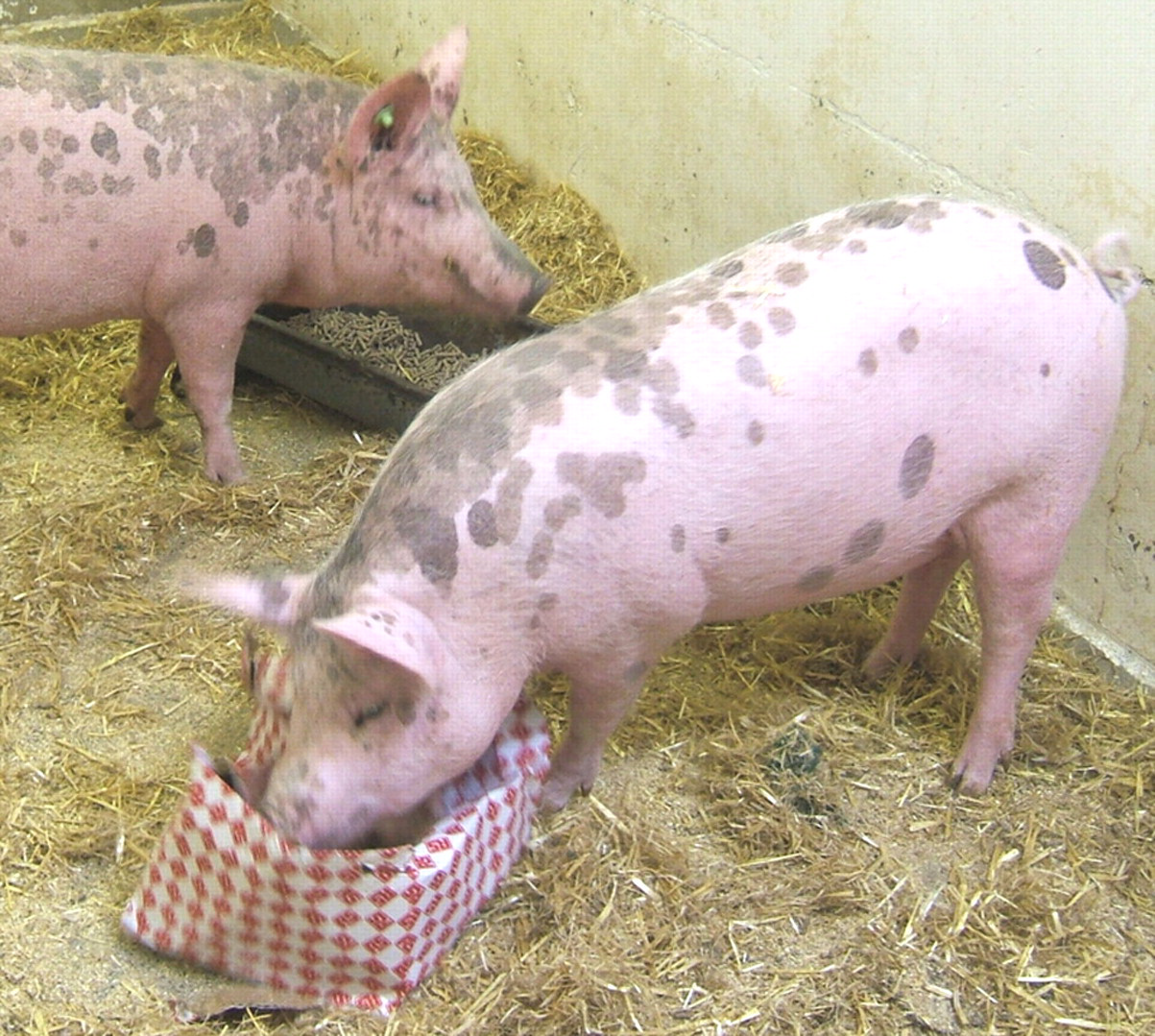
Graft recipients in a pen after surgery
Pigs were maintained in the unit for 9–90 days before transplantation. To accustom them to the project team, at least two members sat in the pen and interacted with the pigs, separately or together, as often as possible until surgery. Two to seven days before transplantation, pigs were transferred for acclimatization to raised, flat deck pens with plastic-coated stainless steel slatted flooring and with synthetic washable fleece mats as bedding (VetBed; Keith Rushfirth, Wakefield, UK), where they were housed individually for the first 10 days after surgery. This was to guard against ocular damage through physical interaction between pigs and to facilitate postoperative cleaning of the pen. A 70 cm high partition between adjacent flat decks proved too low to prevent pigs jumping over, so they were housed in separate rooms such that they could communicate vocally with each other periodically when doors were left open.
Sedation and anaesthesia
Two transplant operations were performed in one day by the same surgeon using eyes from one donor pig. Pigs were heavily sedated before anaesthesia in order to reduce stress associated with intravenous catheterization and transfer from pen to operating theatre. Therefore a premedication drug protocol (detomidine, ketamine, morphine intramuscularly) capable of producing intense sedation was chosen. After onset of recumbency, propofol was administered intravenously via an auricular vein catheter to facilitate transfer of the pig to the operating theatre. Topical anaesthetic (tetracaine hydrochloride) was applied before surgery. Following induction of anaesthesia with propofol and endotracheal intubation, anaesthesia was maintained with isoflurane vaporized in oxygen. Neuromuscular blockade was induced and maintained throughout corneal transplantation with atracurium intravenously; respiration was controlled using automatic intermittent positive pressure ventilation. Cardiorespiratory variables and body temperature were monitored continuously throughout anaesthesia. Isoflurane and atracurium administration were discontinued at the end of surgery and ventilation supported until the return of spontaneous respiration. Midazolam was given intravenously to smooth the return of the pig to the home pen. Animals were killed between days 34 and 103 after transplantation by intravenous injection of an overdose of pentobarbital sodium (Vericore Ltd, Dundee, UK; 200 mg/mL).
General postoperative care
Pigs were kept under a heat lamp and subdued lighting for the first 24 h after operation. Perioperative analgesia was provided with buprenorphine and meloxicam for the first 24 and 48 h after surgery, respectively. Chloramphenicol eye drops and/or ointment were applied to the eye twice daily for seven days to protect against localized anterior chamber or more severe intraocular infection (endophthalmitis). Ten days after operation pigs were returned to a regular pen, usually with a previous companion (Figure 1). On these and other occasions when they were placed with unfamiliar pig(s), usually when a companion was killed, all were transferred to a clean pen, preferably when sedated after eye examination.
Ocular monitoring
The anterior segment of the eye was examined for adverse effects of surgery and indicators of inflammation and rejection (details to be reported elsewhere). Assessment for the first six days after surgery could be adequately performed by eye on unrestrained pigs with the help of a torch (to which pigs had been exposed during preoperative visits). More detailed examination for quantitative scoring of inflammation was made by portable biomicroscopic slit lamp in the home pen on day 7 and at least weekly thereafter, for which sedation was required. Sedatives tested were azaparone and ketamine with and without detomidine or midazolam. During clinical rejection, eyes were examined under sedation 2–3 times per week. Procedure adopted for restraint and injection of pigs is described in the Results section.
Blood sampling
Blood (100 mL), to yield peripheral blood lymphocytes for immunological assays, was withdrawn at operation from a metatarsal artery of the recipient via a catheter preplaced for blood pressure measurement and at intervals after transplantation when pigs were sedated for eye examination. After ocular monitoring by slit lamp, pigs were turned and held in a supine position and 50 mL of blood was removed from the jugular vein by an experienced operator. Care was taken when probing for the neck vessel to minimize internal mechanical damage and potential scarring that might prejudice future withdrawal of blood.
Measurement of preoperative variables and postoperative outcome
Preoperative variables, i.e. time spent by pigs in the unit before surgery, time spent by operators with pigs before surgery (measured in five different ways) and level of socialization of pigs to personnel at intervals until surgery, using an ordinal scoring scale, were recorded as indicated in Table 1. A socialization scale was developed from previous experience and experience of socializing the first two pigs in the current study (Table 1). Scoring scales were also devised for postoperative stress during the first seven days, the maximum score reached being used in the analysis, and for difficulty of eye medication during the first six days (Table 1 and Figure 2).
Preoperative, socialization and postoperative variables analysed in the study
*Socialization score: 0, remains in corner; 1, approaches and sniffs; 2, allows touching; 3, allow petting/brushing; 4, playful, climbs on lap
**Time with someone in pen
†Maximum postoperative stress score, first seven days: 0, calm and affectionate; 1, loud, frequent grunting and/or pacing, but allows petting; 2, clearly nervous, i.e. noisy, jumpy, inclined to retreat, but still allows petting; 3, very nervous, reluctant to allow petting; 4, very nervous, reluctant to allow petting, jumped out of pen
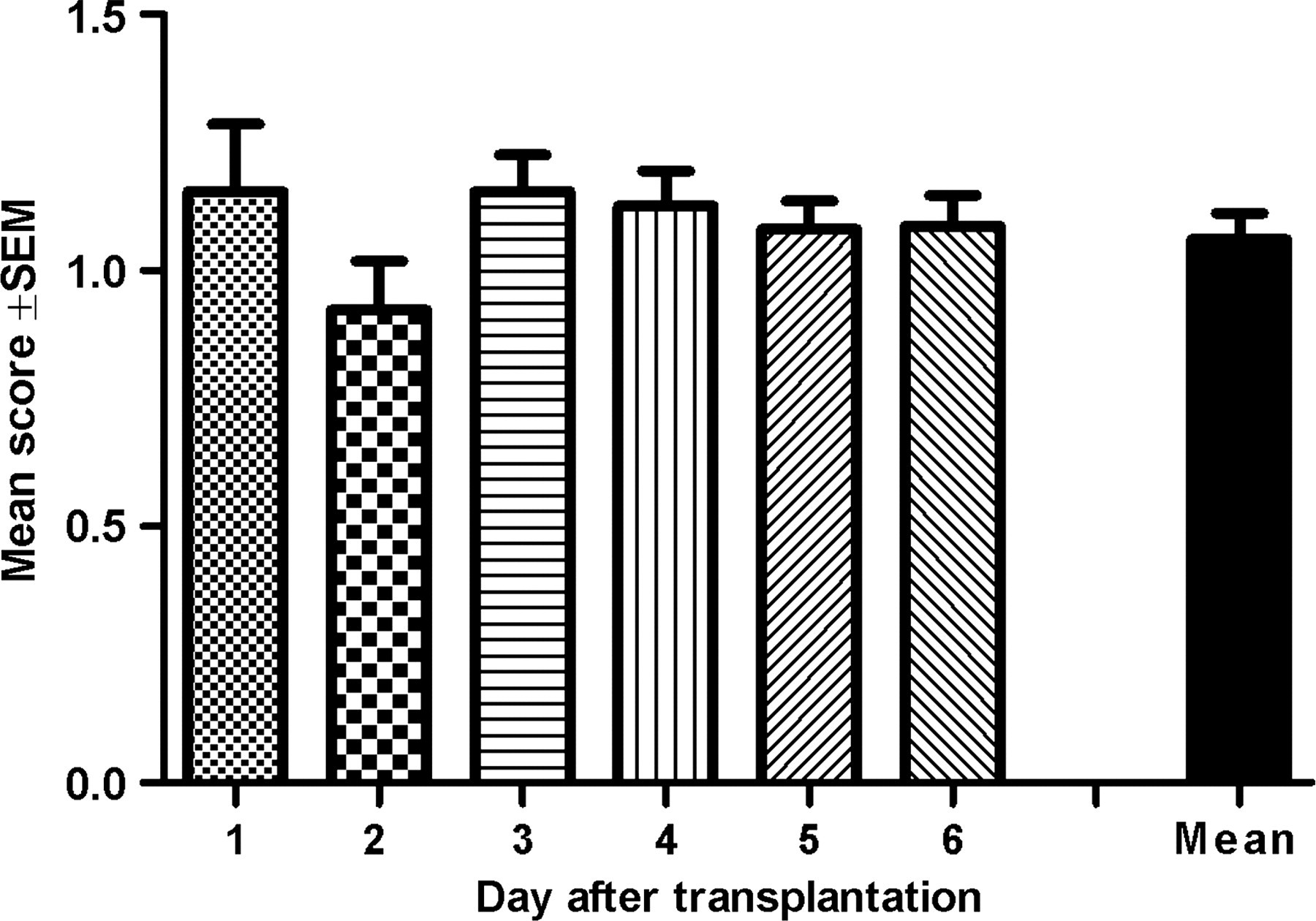
Scores for difficulty of eye medication during the first six days after transplantation: 0, no problem whatsoever; 1, some avoidance but drops/ointment delivered successfully; 2, drops and/or ointment difficult to apply or one omitted because of non-compliance; 3, totally non-compliant, no drops or ointment delivered. Of the two daily applications, scores represent the occasion when the pig was least compliant, i.e. presenting the greatest management problem. Animals were not scored on day 7, as the first eye medication of the day was applied after sedation for eye examination
Statistical analysis
P–P plots and Kolmogorov–Smirnov testing confirmed that the observational data collected conformed to a normal distribution. Since the data included a number of highly correlated variables (Table 1), principal component analysis (PCA) was performed to identify a smaller set of orthogonal, uncorrelated variables explaining the maximum amount of variance in the initial data. PCA on postoperative variables identified two factors with eigenvalues greater than 1, explaining 53.5% and 25.3% of the variance. Similarly, PCA of all the preoperative visit variables together with the socialization variables identified two factors accounting for 54.7% and 26.0% of the variance. Multivariate general linear modelling was performed to determine the relationship between the two postoperative (outcome) factors and the two preoperative (independent) factors. A separate univariate analysis was performed to determine whether postoperative stress was correlated with any measured intraoperative variable. Statistical analysis was performed using the PASW statistical package (IBM, Armonk, NY, USA).
Results
Associations between pre- and postoperative variables
Loading factors for principal component analysis
*Percentage variance explained
Preoperative socialization
The mean period of time pigs were housed before surgery was 41 days (Table 1). Twenty-five of 26 pigs were socialized for at least 20 days. Pigs were visited on weekdays on average 2.5 times per week for 5–60 min (mean 21 min). Although all pigs spent considerably more time with one person (LM), they responded similarly to their two most frequent visitors (LM and SM) and scores were recorded by whichever of these two had spent time in the pen on that occasion. There was a progressive increase in socialization score after arrival from a mean of 1.4 at day 7 (range 0–3) to 2.3 at day 21 (range 1–4) and 2.9 at surgery (range 1–4; Table 1). At surgery one pig had achieved a score of 1, six scored 2, 14 scored 3 and five scored 4. Socialization scores regressed temporarily if pigs were subject to stress, e.g. if social groupings were altered or in the case of veterinary intervention. If there were no such confounding factors, a score of 3 was achieved by an average of 2.7 h spent in the pen by one or more people, but the range was wide, from 1.3 to 7.3 h.
Postoperative behaviour
The first experimental intervention was preoperative sedation and for this to be performed optimally pigs needed to have reached a minimum socialization score of 3. All pigs were fully recovered from anaesthesia and eating normally by 6 h after surgery. They showed no obvious signs of ocular pain, in keeping with relatively low experience of pain among human transplant recipients. 4 We considered whether postoperative stress (Table 1) was linked to operative variables. However, it was not significantly linked to any variables routinely monitored during the operation (level of sedation after premedication before placement of an intravenous catheter, amount of propofol administered before anaesthesia, mean isoflurane concentration during anaesthesia, duration of anaesthesia, mean heart rate, mean arterial blood pressure, maximum or minimum mean arterial blood pressure or temperature at end of anaesthesia) (P = 0.57 for the overall model). Antibiotic eye medication was facilitated by the individual housing, whereby the people to whom pigs were already bonded (one or other of which applied the medication) became the sole pen companions, spending approximately 15 min with each pig on each medication visit. Thus, on only one of 150 occasions was it impossible to apply eye medication. Mean difficulty of eye medication over six days varied from 0.7 to 1.7 (Figure 2).
Social interaction among pigs
Maintaining pigs as far as possible with familiar companions both before and after surgery helped to minimize stress and consequent antisocial behaviour. We did not formally test the value of toys in reducing antisocial behaviour, but toys of most interest to pigs, and therefore contributing most to environmental enrichment, were those designed or able to hold titbits, e.g. hollow rubber kongs®, a large plastic perforated ball that could be suspended by a chain or closed cardboard boxes (synthetic tape removed; Figure 1) and strong paper, which could be ripped apart. When pigs were returned from flat decks to a regular pen with an original companion, aggressive behaviour, as witnessed in real time or indicated by multiple skin scratches, was rare. Placement with unfamiliar pigs usually elicited limited fighting for the first 2–3 days, which subsided as a hierarchy was established and never caused ocular damage. Males were no more aggressive than females. Pigs were kept in same sex groups where possible, but males and females were kept together until seven months of age without sexual interaction.
Postoperative sedation for ocular monitoring and blood sampling
A combination of azaperone and ketamine gave reasonable sedation for postoperative ocular monitoring, but after further trials, addition of detomidine was found to reduce the adverse effect of ketamine during recovery (for example disorientation) and was adopted, although it increased recovery time. Only on 4/262 occasions were pigs insufficiently sedated for full monitoring. The triple combination gave sufficient immobilization without loss of hearing and retained function of ocular muscles. Thus, if the eye was closed and/or had rolled up or down, pigs could be verbally coaxed to open/return it to a central position. Sedation was facilitated if there were not more than two or at most three pigs in a pen. For injection, pigs were restrained manually or, if too large, confined in a corner of the pen with the help of a board, usually separately but occasionally in pairs. To avoid vicious cycles whereby the procedure became increasingly difficult on successive occasions, care was taken to minimize the initial threat of the procedure, e.g. by greeting and petting on every occasion before the board was introduced, by slow movements and by familiar vocal and tactile communication throughout. This noticeably reduced signs of stress, e.g. squealing, flushing of the skin, attempts to escape, etc. Pigs were injected over the board in the back or rump using a 0.8 mm or 1.2 mm × 40 mm needle and 5 mL syringe. Insertion of the needle alone and waiting for the pig to calm before attaching the syringe assisted delivery of the entire contents of the syringe, reduced signs of pain (e.g. squealing, sudden movement) and reduced adverse responses on subsequent occasions. Care was necessary to ensure full drug delivery, since gauging top-up doses was problematic and topping up was of limited effect. Although we did not score ease of sedation in individual pigs and were thus unable to link this variable formally with socialization, previous experience with confining unsocialized pigs of this size strongly suggested that the level of socialization at this stage (i.e. a score of 3 or 4 for all pigs by 7 days after operation) was important to facilitate the sedation process. To maintain this level of socialization, short periods of time were spent with the pigs without experimental intervention throughout the postoperative period (5–10 min 2–3 times weekly). Details of clinical and other outcomes will be reported elsewhere (manuscript in preparation).
The sedation and stress-reducing protocols developed enabled blood to be obtained as required after ocular examination (from 12 pigs, repeated up to 7 times per pig at approximately 2-week intervals). Only on two occasions it was not possible to obtain the full 50 mL of blood.
Non-ocular adverse events
Adverse effects and physiological signs of stress included diarrhoea, which occurred sporadically after arrival in the unit, after operation or after change of social grouping, but resolved without treatment within 2–3 days, skin rashes and mild middle ear inflammation. Skin rashes were diagnosed by swab as greasy skin disease (caused by Staphylococcus hyicus) and appeared in eight pigs approximately two weeks after arrival in the unit as a pink rash on the body that gradually developed a brown, scabby appearance. S. hyicus is a normally harmless skin commensal, but can infect wounds caused by fighting. We suspect that straw may have been a contributory factor in our case, as the rash did not arise if straw was omitted from bedding. The rash did not appear to irritate the pig, was treated with oral (6 pigs) or intramuscular (2 pigs) antibiotic and resolved slowly over a period of 3–5 weeks, depending on severity. Three pigs still had a mild rash at the time of transplantation, which continued to resolve thereafter. There may have been an indirect effect of such adverse events on postoperative behaviour inasmuch as they reduced socialization scores before transplantation. A veterinary diagnosis of middle ear inflammation was made in two pigs (as a result of holding of the head to one side) at 64 and 65 days after surgery, respectively, both on the operated side and at the time of graft rejection. These were treated with oral antibiotic and resolved.
Discussion
The primary aim of socializing pigs to personnel before surgery was to make them as amenable to handling as possible when experimental interventions commenced. At the outset a minimum score of 3 was considered desirable for this purpose and time was allocated as far as possible to achieve this. Therefore relatively few pigs (7/26) had a score of less than 3 at surgery and only one pig scored 1. The power of the statistical analysis was therefore less than would have been the case had pigs been transplanted at a wider range of socialization scores. Nevertheless, some useful statistically significant associations emerged. The difficulty of postoperative management (stress and eye medication) was clearly linked to the measures taken to socialize the piglets beforehand, such that the more time spent with them before surgery, the easier they were to manage after surgery. Interestingly, time spent with only one person in the pen and time spent with two or more people in the pen contributed to PCA factors 1 and 2, respectively, indicating that they were fulfilling two qualitatively different requirements for socialization.
Based on these data we confirm that to minimize stress and facilitate handling, pigs should have achieved a socialization score of at least 3 (i.e. enjoy body petting) before experimental protocols requiring frequent interventions are implemented. The time necessary to achieve this was clearly affected by a range of factors such as whether stressful events occurred during the socialization period (such as rearrangement of social groupings) and the personality of the pig, as well as time spent by pigs with personnel. In particular, time spent with one person in the pen or with two people in the pen both contributed to the ease of postoperative management, but through different mechanisms, such that a range of types of contact with handlers is desirable. Although group size could not be subjected to statistically analysis because of constraints imposed by the primary aim of the study, fewer than four pigs in a pen appeared to facilitate socialization.
Pigs are recognized to be difficult animals to sedate effectively because they resent physical restraint and access to their blood vessels is limited. 5 Moreover, for this investigation the operating theatre was some distance from the home pen and in order to reduce the stress associated with transport, heavy sedation was induced with premedication drugs in the home pen. This protocol provided good sedation in 24/26 animals such that they became recumbent and did not respond to intravenous catheter placement. The addition of morphine will have provided analgesia prior to surgery. 6 Cardiorespiratory variables were maintained within normal limits during anaesthesia and the anaesthesia protocol, including the use of neuromuscular blockade and topical anaesthesia, provided adequate conditions for ocular surgery. Optimal postoperative analgesia protocols have not been formally evaluated in pigs but meloxicam and buprenorphine have been used to good effect for postoperative analgesia in previous studies. 7,8 The postoperative sedation protocol permitted thorough ocular examination (although awareness was maintained) and blood sampling on multiple occasions for each pig, while avoiding the stress associated with prolonged physical restraint.
Swine are the only large mammalian species in which strains inbred at the major histocompatibility complex are available. Such inbred strains are particularly useful for in-depth studies of immunity in transplant or other disease settings. As findings from rodent studies reveal more about the operation of the immune system and the potential for therapeutic intervention to control disease processes, pigs are likely to become increasingly valuable as preclinical disease models. We show here that NIH minipigs are fully compliant with experimental protocols and eminently suitable for this purpose, provided protocols used take proper account of their behaviour and welfare requirements.
Footnotes
Acknowledgements
We would like to acknowledge assistance of Lionel Wheeler in handling pigs. Financial support was provided by the UK Medical Research Council. SN was supported by a fellowship from the National Eye Research Council.