






Abstract
Induction of anaesthesia using a face mask may cause workplace pollution with anaesthetics. The aim of this study was to compare the effect of the use of a standard versus a scavenging double face mask on isoflurane pollution during induction of anaesthesia in experimental animals: six dogs, 12 pigs and five ponies. Pigs were anaesthetized only once using either mask type randomly (n = 6). Dogs and ponies were anaesthetized twice, using different mask types for each occasion in a random order with at least 14 days between experiments. The masks were attached to a Bain breathing system (dogs and pigs) or to a circle system (ponies) using a fresh gas flow of 300 or 50 mL/kg/min, respectively, with 5% vaporizer dial setting. Isoflurane concentrations were measured in the anaesthetist's breathing zone using an infrared photoacoustic spectrometer. The peak isoflurane concentrations (pollution) during baseline and induction periods were compared with Wilcoxon test in all species, and values between the mask types were compared with either Wilcoxon (ponies and dogs) or Mann–Whitney tests (pigs) (P < 0.05). Pollution was higher during induction when compared with baseline regardless of the mask type used but it was only statistically significant in dogs and pigs. Pollution was lower during induction with double versus single masks but it was only significant in pigs. Despite the lack of statistical significance, large and consistent differences were noted in all species, hence using scavenging masks is recommended to reduce isoflurane workplace pollution.
The administration of inhalation anaesthesia to experimental animals is a common procedure and is mostly carried out using isoflurane or sevoflurane. This technique carries the risk of workplace contamination by trace amounts of anaesthetic agents especially when the anaesthetic is administered using face masks.
Occupational exposure to inhalational anaesthetics has often been associated with health hazards such as reproductive toxicity and impairment of psychological functions. 1–8 To decrease the risk of potential health damage, the level of waste anaesthetic gas (WAG) concentrations at the workplace should be kept at a minimum. 4 In most countries, public health authorities recommend threshold values for various volatile anaesthetics to minimize possible health hazards.
Induction and maintenance of inhalation anaesthesia using a face mask are commonly used techniques in small laboratory animals like rodents where endotracheal intubation is often not an option. This technique can also be used in larger experimental animals to induce general anaesthesia when the research protocol requires induction of anaesthesia without concomitant drug administration or when anaesthesia is maintained without intubation of the trachea. However, in human anaesthesia mask induction is known to increase anaesthetic gas pollution and WAG concentrations frequently exceed limit values. 9–12 Therefore, Reiz et al. 13 introduced a scavenging face mask (double mask) and demonstrated that its use decreased occupational exposure during anaesthesia in humans. Scavenging double masks are commercially available for use with small animals like rodents. A standard veterinary face mask was modified to enable scavenging during inhalation anaesthesia and proposed for use with field castration of piglets. 14 There is little documentation of the efficiency of scavenging double masks in reducing occupational exposure when used for animals. 14–18
This paper describes the use of custom-made scavenging double masks in dogs, pigs and ponies and evaluates their efficiency with regard to occupational exposure to anaesthetic agents in comparison with standard masks.
Materials and methods
Animals
Six beagle dogs (2 female and 4 male, aged 2.7 ± 1.2 years, weighing 17.7 ± 2.2 kg), five Shetland ponies (stallions, aged 7.9 ± 3.5 years, weighing 116.4 ± 27 kg), 12 pigs (8 male, 4 female, aged 2 months, weighing 11.3 ± 1.7 kg), all university-owned, were enrolled in this study. All animals were anaesthetized for unrelated studies and the experimental protocols were approved by the Ethics Committee of the University of Veterinary Medicine and National Animal Care and Welfare Committee Austria. The physical status of all animals was categorized as ASA 1 (American Society of Anaesthesiologists) following a complete physical examination and routine blood examination in selected cases.
Study design
The dogs and ponies were anaesthetized twice, using either a double or a standard mask for induction in a random order with at least 14 days between experiments. Each pig was anaesthetized only once and anaesthesia was induced with a double mask on six pigs and with a standard mask on another six pigs in a randomized order. The same person performed all mask inductions. Blinding was not possible because the mask being used was obvious to the experimenters. Great care was taken throughout induction to maintain the best possible seal of the mask around the face, in order to minimize occupational exposure to anaesthetic vapour. The dogs and ponies were enrolled in a pharmacodynamic study and did not receive any medication or premedication. The pigs were scheduled for a surgical procedure and were premedicated with azaperone (2 mg/kg, Stresnil, Janssen Animal Health, Beerse, Belgium) intramuscularly at least 30 min before induction of anaesthesia.
The induction masks and scavenging system
The scavenging properties of the double mask used for pigs and dogs in the present study were evaluated previously in beagle dogs. 15 The double mask was made by connecting two different size transparent face masks to the connection piece of a commercially available double mask from human medicine (Double Mask system, Medicvent AB, Umea, Sweden). In dogs and pigs the inner and outer masks had a diameter of 90 and 120 mm, respectively, and the inner mask featured a rubber diaphragm (Midmark Corporation, Versailles, OH, USA) with an opening of 30 mm (Figure 1). For ponies the inner mask had a diameter of 155 mm (Plexiglas mask, Eickemeyer KG, Tuttlingen, Germany) and the rubber diaphragm opening was 70 mm. The outer mask had a diameter of 218 mm but was custom made because this size was not commercially available (Figure 2). The connection piece of the masks had two ports. One port was connected to the breathing system and the second port was connected via flexible tubing to a scavenging modality. A flow calibration device (Gould Godart Flow calibration set, Bilthoven, The Netherlands) was used as suction engine for scavenging. The evacuation flow was set to 17 m3/h for dogs and pigs and to 35 m3/h for ponies. Gas scavenged from the double mask was directed via flexible tubing to the open air using the flow calibration device and the excessive gas scavenged from the adjustable pressure limiting (APL) valve of the breathing system was directed to the hospital's central vacuum system.
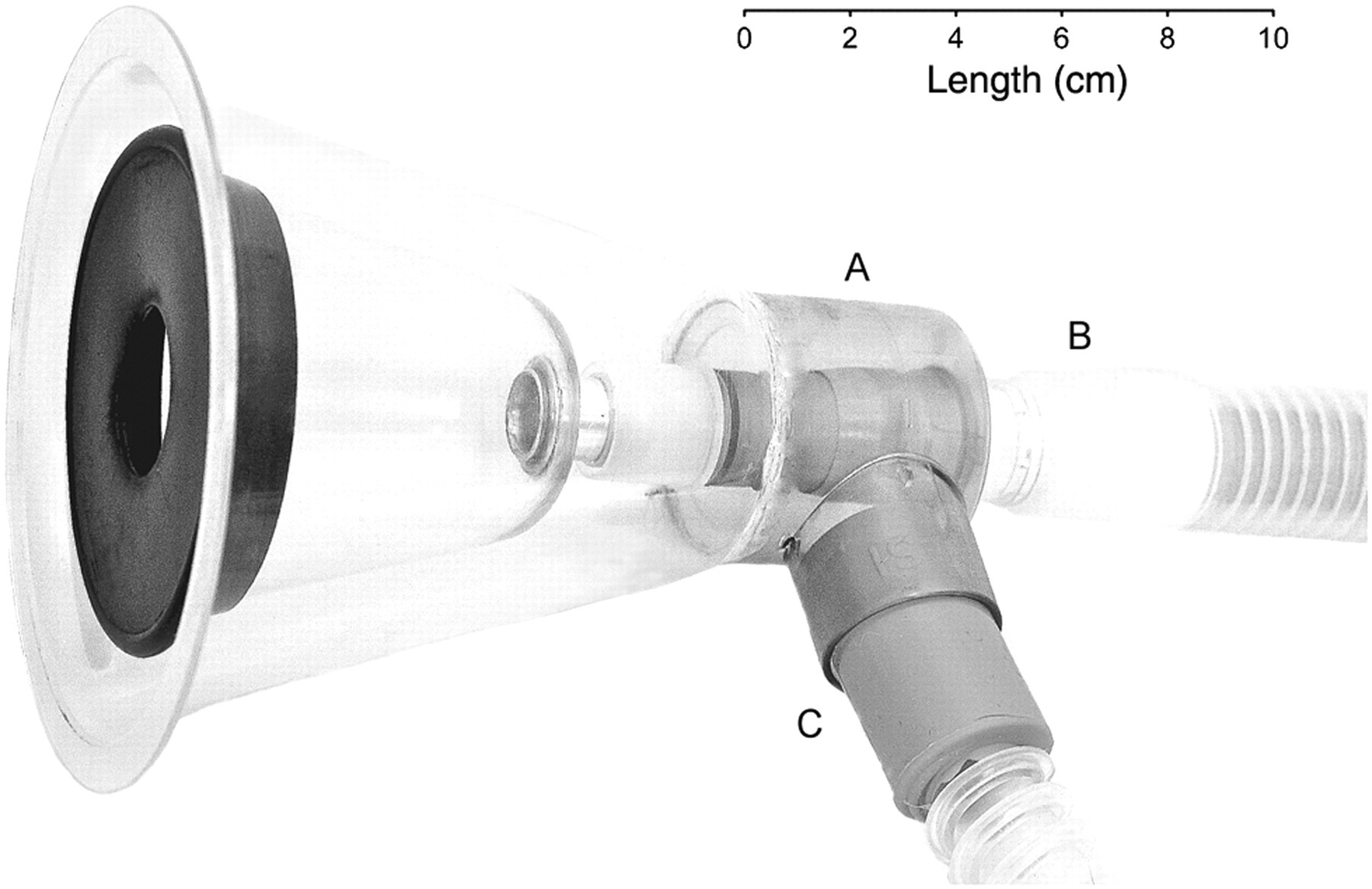
Custom-made double mask for dogs and pigs. The inner mask and outer mask are attached to a special connector piece (A). This allows the inner mask to be connected to the anaesthetic breathing system (B) and the outer mask to be connected with the scavenging hose (C)
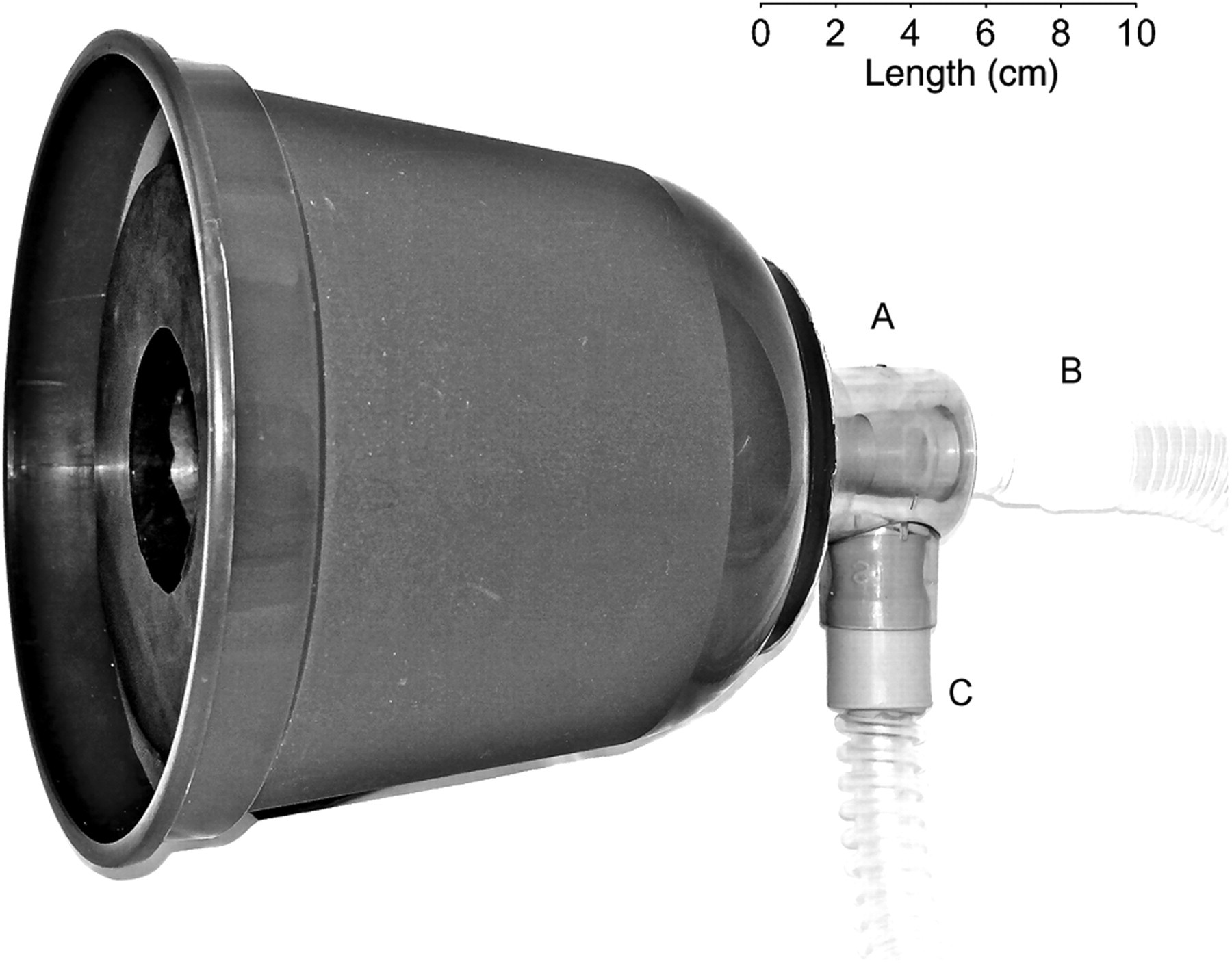
Custom-made double mask for ponies. The principles of its operation are similar to the mask in Figure 1
Anaesthetic induction
Anaesthetic induction was performed in large multipurpose rooms (dogs and pigs) with approximately 115 m3 volumes (width 8.2 m, length 5.2 m, height 2.7 m) and in a large animal recovery box of 80 m3 room volume (width 4 m, length 5 m, height 4 m) with the doors kept open to the operating theatre (ponies). Anaesthesia was induced with isoflurane (Isoba; Essex Tierarznei, Munich, Germany) vaporized in oxygen using an anaesthetic machine (Sulla 19; Dräger, Lübeck, Germany), an anaesthetic breathing system and a mask. In dogs and pigs a Bain coaxial breathing system with a fresh gas flow of 300 mL/kg/min and in ponies a circle breathing system with a fresh gas flow of 50 mL/kg/min were used. Mask application and induction were performed with the animals in sternal recumbency (pigs), sitting position (dogs) or standing (ponies) with manual restraint provided by one (pigs), two (dogs) or four (ponies) people. The vaporizer setting was initially set at 5% until the animal adopted sternal or lateral recumbency and subsequently decreased to 3% or 4% until the loss of palpebral reflex. At this moment fresh gas flow was discontinued, the mask was removed and the trachea was intubated for maintenance of anaesthesia in dogs and ponies. In pigs anaesthesia was continued using the mask.
Measurements
Isoflurane concentrations were measured with a photo-acoustic infrared spectrometer (Bruel & Kjaer 1302, Nærum, Denmark). The monitor was calibrated before, and checked after each experiment following the manufacturer's instructions for calibration. The sampling point was chosen to represent gas concentration in the room before and in the anaesthetist's breathing zone during the induction period. Therefore, the sampling tube was attached to the table (dogs and pigs) or to the wall 1.5 m above the floor (ponies) before induction or to the anaesthetist's chest at the level of the middle of the sternum during induction of anaesthesia. The sampling line was a 6 m long polyamide tube (Siegle, Regensburg, Germany). Although the sampling mode of the analyser was set ‘continuously’ (30 cm3/s), the internal processing for measurements enables measurements for the waste gas concentration to be effectively performed only approximately every minute. The measured concentration of isoflurane was expressed in mg/m3. Data were recorded using a laptop computer.
Data analysis
Data were collected during a 5 min period before mask induction (baseline), and throughout the period of mask induction until isoflurane administration was stopped to allow intubation (dogs, ponies) or until loss of palpebral reflex (pigs). The highest (peak) isoflurane concentrations recorded during baseline and induction periods were compared within each treatment group using Wilcoxon test and values for the different treatments were compared with either Wilcoxon (ponies and dogs) or Mann–Whitney tests (pigs) (SPSS 17.0, Chicago, IL, USA). A Kolmogorov–Smirnov test was performed to test for normal distribution of the data. A P value of less than 0.05 was considered statistically significant. Data are presented as median (range) in the text and table but as mean ± SD in the figure.
Results
The results are displayed in Table 1 and Figure 3. The Kolmogorov–Smirnov test did not detect significant differences from normal distribution. One pony was excluded because of repeated interruption of mask contact during induction. The duration of anaesthesia induction was 237 (180–320), 360 (300–480) and 110 (60–164) seconds in dogs, ponies and in pigs, respectively. Baseline peak isoflurane concentrations were low (4.26 [0.47–16.3] mg/m3; 0.57 [0.06–2.17] ppm). Mask induction, regardless of the mask type used, resulted in contamination of the anaesthetist's breathing zone with isoflurane, characterized by recorded peak isoflurane concentrations exceeding baseline peak values in all species examined (but it was not statistically significant in ponies). The highest recorded value was 5593.6 mg/m3 (746.2 ppm), which occurred during standard mask induction in a pig. The peak values during double mask induction were lower than when the standard mask was used but this was only statistically significant in pigs.
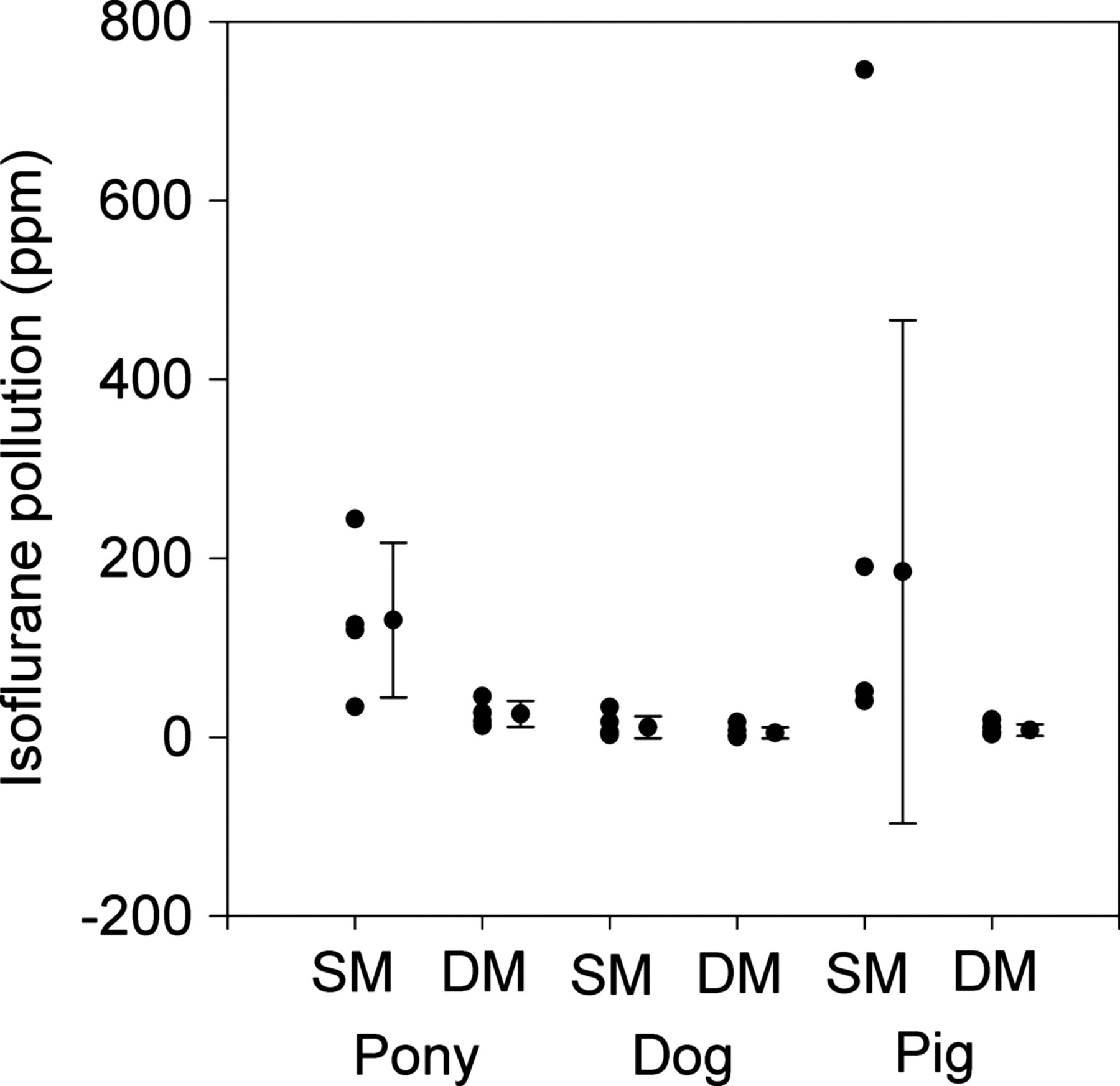
Peak isoflurane concentrations measured at the anaesthetist's breathing zone during induction of anaesthesia with the use of a standard mask (SM) or a scavenging double mask (DM) in ponies, dogs and pigs. Single closed circles indicate peak measurements in individual animals, closed circles with error bars indicate mean ± SD
Median (range) in mg/m3 and in ppm of peak isoflurane concentrations in the workplace during baseline and during mask induction with standard or scavenging double masks in three species of animals. Baseline was defined as a 5 min period before the beginning of isoflurane administration
aIndicate differences from baseline in the same treatment group bIndicate differences between the induction periods of the standard versus double mask treatment groups
Discussion
Mask induction of inhalation anaesthesia in dogs, pigs and ponies resulted in a high level of pollution in this study, which is in line with the findings in human anaesthesia. 9–12,19,20 The results of this study suggest that the use of a scavenging double mask reduces isoflurane waste gas concentrations in the breathing zone of the anaesthetist when compared with a standard mask. It has also been reported in human anaesthesia that the use of a double mask allowed adequate quality of anaesthesia induction and decreased the anaesthetist's exposure to trace amounts of anaesthetic agents. The double mask system reduced exposure to halothane from 2.9 ± 1.1 to 0.5 ± 0.1 ppm (mean ± SD) and to nitrous oxide (range) from 134–764 ppm to 9–42 ppm in humans. 9,13
There is little documentation concerning the efficiency of double mask systems in veterinary medicine and to the best of the authors' knowledge such systems for larger animals are not commercially available. The efficiency of a scavenging double mask, similar to the one used in this study, has been documented in sedated beagles in our institution but no comparison with a standard mask was made at that time. 15 The benefits of the use of a diaphragm have been demonstrated with standard conical facemask in rats and the addition of a diaphragm reduced peak isoflurane concentrations from >100 to 9.5 ± 1.7 ppm. 18 Pollution levels in the anaesthetist's breathing zone have been reported during during pig castration when a demand valve-operated scavenging mask was used. A mean value of 4 mg/m3 (0.5 ppm) isoflurane was measured by means of analysis of adsorption badges. 14,16
In the study presented, isoflurane workplace pollution was evaluated using peak concentrations. Although it is an indicator of the presence of pollution, it is not used as a standard for official monitoring of workplace contamination. Official recommendations for maximal allowable isoflurane exposure use the time-weighted average (TWA) value over an 8 h period. This recommended value for isoflurane concentration varies in different countries from 15 mg/m3 (2 ppm) to 380 mg/m3 (50 ppm). 8,21–23 Some countries have introduced short-term exposure limit (STEL) in the recommendations. This 15 min STEL should not be exceeded at any time during a workday, even if the 8 h TWA is within the threshold limit value. The STEL values for isoflurane as a sole anaesthetic agent in European countries vary from 30 to 150 mg/m3 (4 to 20 ppm). 8,21–23 Anaesthesia induction with a mask has a high potential for causing pollution but is usually a relatively short procedure. Currently, no recommendations exist for exposure limits during such a short duration procedure as induction of anaesthesia.
Our results vary much more than those reported in humans. But in general and despite high variability of the results, extreme WAG concentrations occurred more with the standard mask induction. The degree of WAG pollution can be influenced by several factors. In the present study, maximum isoflurane concentrations displayed by the analyser are the average over about 45 s. Therefore they may in fact not represent instantaneous peak values which may be even higher. Also the scavenging suction flow of the double mask can play a role in the efficacy of scavenging and it is expected that higher scavenging flows would be necessary to reduce anaesthetic pollution. The highest scavenging flow was 35 m3/h in ponies in this study, which is recommended by a manufacturer of a double mask system to be used with high fresh gas flows. Also it can be difficult in non-sedated or uncooperative animals to maintain an optimal seal at the mask–muzzle interface and pollution is likely to occur. Therefore the quality of restraint in this situation is important. The degree of workplace contamination during anaesthesia induction with a mask can also be influenced by the fresh gas flow used. In general, the use of low fresh gas flows during maintenance of anaesthesia significantly reduces the environmental concentration of anaesthetics. 8,24 However, during induction of inhalation anaesthesia, relatively high flows are recommended in order to quickly achieve the desired end tidal concentrations of oxygen and anaesthetic agent. In the present study, the flow rate during induction of ponies was the highest (approximately 5 L/min). This may have contributed to the higher peak concentrations recorded in ponies compared with dogs or pigs during scavenging double mask induction in spite of the fact, that higher scavenging flow was selected for ponies.
Scavenging double masks for larger experimental animals can easily be prepared from readily available components and apparatus. This study demonstrated that their use for induction of anaesthesia reduces exposure to trace amounts of anaesthetic. Although statistical significance was not always demonstrated in this study, lower WAG concentrations were detected during the use of scavenging double masks and in view of potential health hazard their use is strongly recommended.
Footnotes
ACKNOWLEDGEMENT
The authors thank Prof Dr W Sipos for the opportunity to perform a part of the study on surgical research cases in the Swine Clinic of the University of Veterinary Medicine Vienna, Austria.