




Abstract
Volatile agents for anaesthesia are widely used for anaesthetizing laboratory primates, and isoflurane is one of the most frequently used agents. Sevoflurane has been shown to offer a more rapid recovery than isoflurane in a number of species, but no comparisons have been made in non-human primates. This study compared the recovery characteristics of isoflurane and sevoflurane in rhesus macaques undergoing experimental neurosurgery. Twelve primates (7 males and 5 females) were randomly allocated to the treatment groups. They were sedated with ketamine (10 mg/kg) and anaesthesia was induced with propofol (usually 8 mg/kg intravenously [IV]). Anaesthesia was maintained with either sevoflurane (SEVO) (2.2 ± 0.4%) or isoflurane (ISO) (1.2 ± 0.2%) and alfentanil (0.2–0.5 µg/kg/min IV) for 332–592 min. Animals were mechanically ventilated. Meloxicam (0.3 mg/kg) and methylprednisolone infusion (5.4 mg/kg/h) were also administered. Time to extubation after cessation of anaesthesia was significantly shorter with sevoflurane (ISO: 7.0 ± 1.8 min; SEVO: 3.6 ± 1.5; *P = 0.005) as was the time to the animal sitting unaided (ISO: 15.7 ± 8.2 min; SEVO: 7.1 ± 1.7 min; *P = 0.004). No significant difference in the quality of recovery following isoflurane or sevoflurane anaesthesia was found. In conclusion, isoflurane and sevoflurane are both suitable volatile agents for the maintenance of general anaesthesia in rhesus macaques undergoing experimental neurosurgical procedures. The two volatile agents presented a similar emergence quality profile, however sevoflurane anaesthesia was associated with a faster recovery, offering the possibility of conducting earlier post-operative neurological assessment.
Non-human primates (NHPs), due to their physiological and anatomical similarities, are considered to be useful models in biomedical research and particularly in neuroscience. 1 Neuroscience studies often require prolonged anaesthesia for the implantation of devices (e.g. craniotomy chambers and headpieces) and for neurosurgical procedures (e.g. lesioning of specific brain regions). Volatile anaesthetics are frequently used for these procedures as they are relatively non-cumulative in their effects and enable rapid and easy adjustments to the depth of anaesthesia, depending on the degree of surgical stimulus. The low blood:gas partition coefficient of modern anaesthetic agents also allows for a rapid induction and recovery. 2 Isoflurane is widely used in all laboratory animal species and a recent review of the literature indicates a similar high level of use in NHPs (Bertrand, personal communication). Sevoflurane was introduced to clinical practice more recently than isoflurane and was advocated for neurosurgical procedures due to its shorter emergence time that would allow an earlier post-operative neurological examination. 3 Preliminary data from a retrospective study performed by Murphy and Baxter reported more rapid recovery times in macaque monkeys. 4 Sevoflurane is also considered to be less of an irritant in human airways, causing less coughing, with a smoother induction and a slightly better recovery.5,6 However sevoflurane can induce emergence delirium in humans. 7 In veterinary medicine, comparison of the speed and quality of recovery with isoflurane and sevoflurane in dogs and horses did not show significant differences, and the authors concluded both to be equally suitable for anaesthesia in these species.8,9 However the duration of anaesthesia in these studies was considerably shorter than that required for many NHP neurosurgical procedures.
This prospective study aimed to assess the quality of recovery following long-term maintenance of anaesthesia with either isoflurane or sevoflurane in rhesus macaques (Macaca mulatta) undergoing neurosurgical procedures.
Materials and methods
Humane care and use of animals
The animals were housed in a Home Office (United Kingdom authority) accredited facility and experiments were carried out in compliance with the UK Animal Scientific Procedure Act 1986 and the European Directive 2010/63/EU. The use of these animals for research was authorized by the UK Home Office (PPL60/4560; PPL70/7976; PPL60/4041; PPL60/4095), and the Newcastle Animal Welfare and Ethical Review body.
Animals
Animal characteristics.
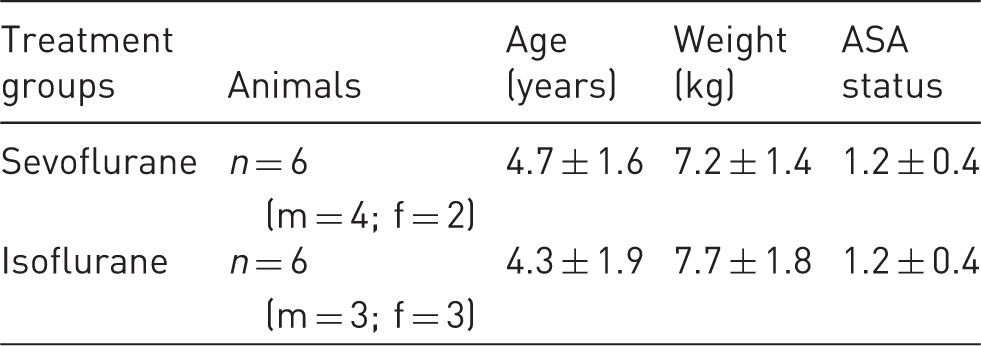
Data are presented as mean ± 1SD. n: total number of animals included in the treatment groups; m: number of male; f: number of female; ASA status: American Society of Anesthesiology physical classification status.
American Society of Anesthesia (ASA) physical status classification system.
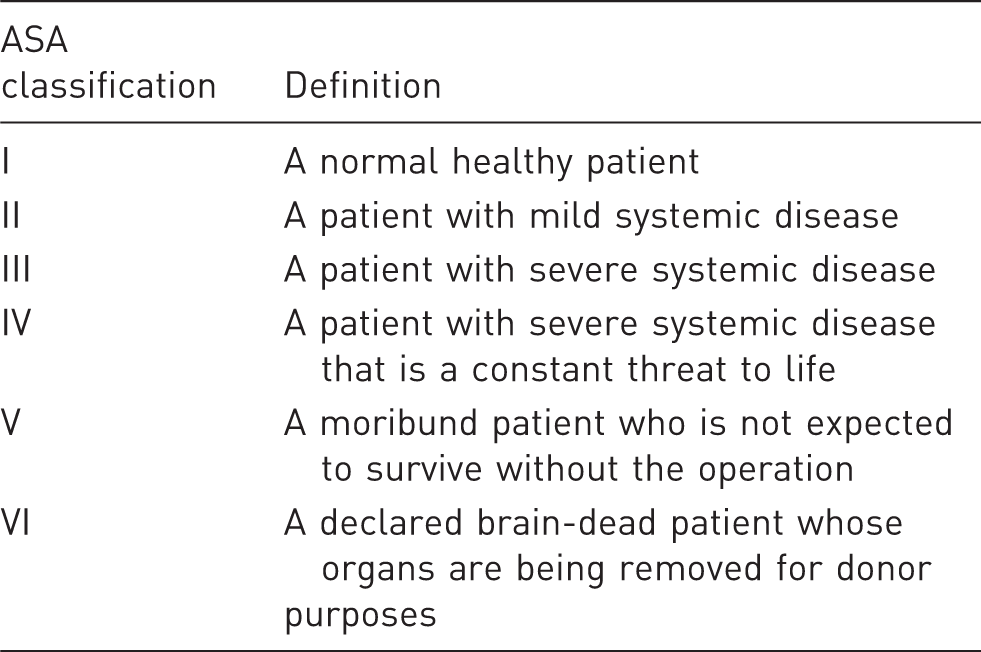
From the ASA website (https://www.asahq.org/resources/clinical-information/asa-physical-status-classification-system; consulted on 6 November 2016).
Anaesthesia procedure
Food was withheld for a minimum period of 12 h but the primates still had access to water. Animals were sedated in the holding unit with 10 mg/kg of ketamine hydrochloride intramuscularly (Ketaset 100 mg/mL solution for injection; Zoetis, London, UK). Once a level of sedation allowing safe handling was attained, the animals were transported to the anaesthesia preparation room. Animals received 100% oxygen delivered at 4 L/min via a facemask for 5 min and a dose of 0.3 mg/kg of meloxicam (Metacam 5 mg/mL solution for injection for dogs and cats; Boehringer, Bracknell, UK) was administered subcutaneously. One saphenous vein was catheterized and anaesthesia was induced with a slow intravenous administration of propofol (Fresenius Propoven 1% emulsion for injection or infusion; Fresenius Kabi Ltd, Runcorn, UK) to effect (usually 8 mg/kg) to enable endotracheal intubation. After intubation, the animal was connected to a circle breathing system (Clear–Flo™ circle breathing systems with soda lime; Intersurgical Ltd, Wokingham, UK) using a cuffed tube and mechanically ventilated (Merlin Small Animal Ventilator; Vetronic Services Ltd, Abbotskerswell, UK), with the respiratory frequency adjusted to maintain an expired carbon dioxide consistent with the surgical procedure (e.g. craniotomy required an end-tidal carbon dioxide [EtCO2] below 35 mmHg). Anaesthesia was maintained with either isoflurane (Isoflo 100% w/w inhalation vapour, liquid; Abbott Laboratories, Maidenhead, UK) or sevoflurane (Sevoflo 100% inhalation vapour, liquid for dogs; Abbott Laboratories) mixed with 100% oxygen as carrier gas, and the vaporizer (Sevoflurane Sigma Delta Vaporizer; Penlon Ltd, Abingdon, UK and Isotec 4 Isoflurane Vaporizer; Ohmeda, Keighley, UK) settings were adjusted to maintain an adequate surgical plane throughout the surgical procedure. Initially a fresh gas flow of 4 L/min was maintained, and the flow decreased after 10 min to between 0.3 and 1 L/min. Intravenous infusion of alfentanil (Alfentanil 500 µg/mL solution for injection; Hameln Pharmaceuticals, Gloucester, UK) at 0.2–0.5 µg/kg/min and methylprednisolone (Solu-Medrone 500 mg; Pfizer Ltd, Sandwich, UK) at 5.4 mg/kg/h were administered during the surgical procedures.
Anaesthesia monitoring
Physiological parameters were constantly monitored and recorded every 10 min. A VitaLogik 4500 monitoring system (Charter-Kontron Ltd, Milton Keynes, UK) was used to measure vital signs. Heart rate (HR) and oxygen saturation (SpO2) were assessed using an absorbance pulse oxymeter probe placed on a finger. Blood pressure was assessed using an oscillometric method with a blood pressure cuff (Critikon Dura-Cuf; GE Healthcare, Hatfield, UK) appropriate for the size of the animal. The cuff was placed to record the blood pressure from the brachial artery. The respiration rate (RR) and the EtCO2 were measured using a sidestream gas analyzer (sampling rate: 50 mL/min) integrated in the electronic monitoring system. The animal’s core and skin temperature were also monitored and were maintained using a homeothermic heating pad set at 38℃ (Homeothermic blanket system; Harvard Apparatus, Cambridge, UK) and a forced-air warming blanket set between 32 and 42℃ (Bair hugger model 505, Augustine Medical, Eden Prairie, MN, USA).
Recovery and video recording
At the end of the surgical procedure, alfentanil and methylprednisolone infusions were terminated and the primate was placed in lateral recumbency. Buprenorphine (Vetergesic multidose 0.3 mg/mL solution for injection for dogs, cats and horses; Ceva Animal Health Ltd, Amersham, UK), an intravenous dose of 20 µg/kg, was administered to reverse the respiratory depression caused by fentanyl and to provide post-operative analgesia. The concentration of gas administered was set at 2% for isoflurane and 3% for sevoflurane. The assist-mode ventilation of the ventilator was used during the resumption of spontaneous ventilation. Once spontaneous respiration was observed, the endotracheal tube was connected to a Bain system (Mapleson D deluxe Bain coaxial breathing system with a 2 L bag, 1.6 m length; Intersurgical Ltd) and the anaesthesia vaporizer turned off. Once the concentration of expired volatile agent was close to zero, the animal was disconnected from the breathing system and a short period was allowed to elapse (2–3 min) to ensure SpO2 remained above 85% when breathing room air. The endotracheal tube was removed once pharyngeal and laryngeal reflexes began to return, and the primate was placed in a recovery cage once it was able to maintain sternal recumbency. The animal was kept under continuous observation and transferred to the animal holding unit when it was judged to be stable by the attending veterinarian.
Emergence quality assessment
Anaesthesia emergence was video recorded to enable assessment of its quality. Recording was started at the end of the procedure and continued for a minimum of 15 min after the primate was placed in the recovery cage. The recovery quality was assessed with a clinical scoring scheme published previously (Figure 1).
10
Three video samples of 2 min duration, with a 5 min interval between samples, were scored (t0, t+5, t+12). The first sample commenced immediately the animal was placed in the recovery cage. Four treatment-blinded observers, who had not been involved in either the surgical procedures or the data collection for this study, scored the video.
Recovery clinical scoring scheme. System is based on 15 points with the principle that a higher score indicates a poorer recovery.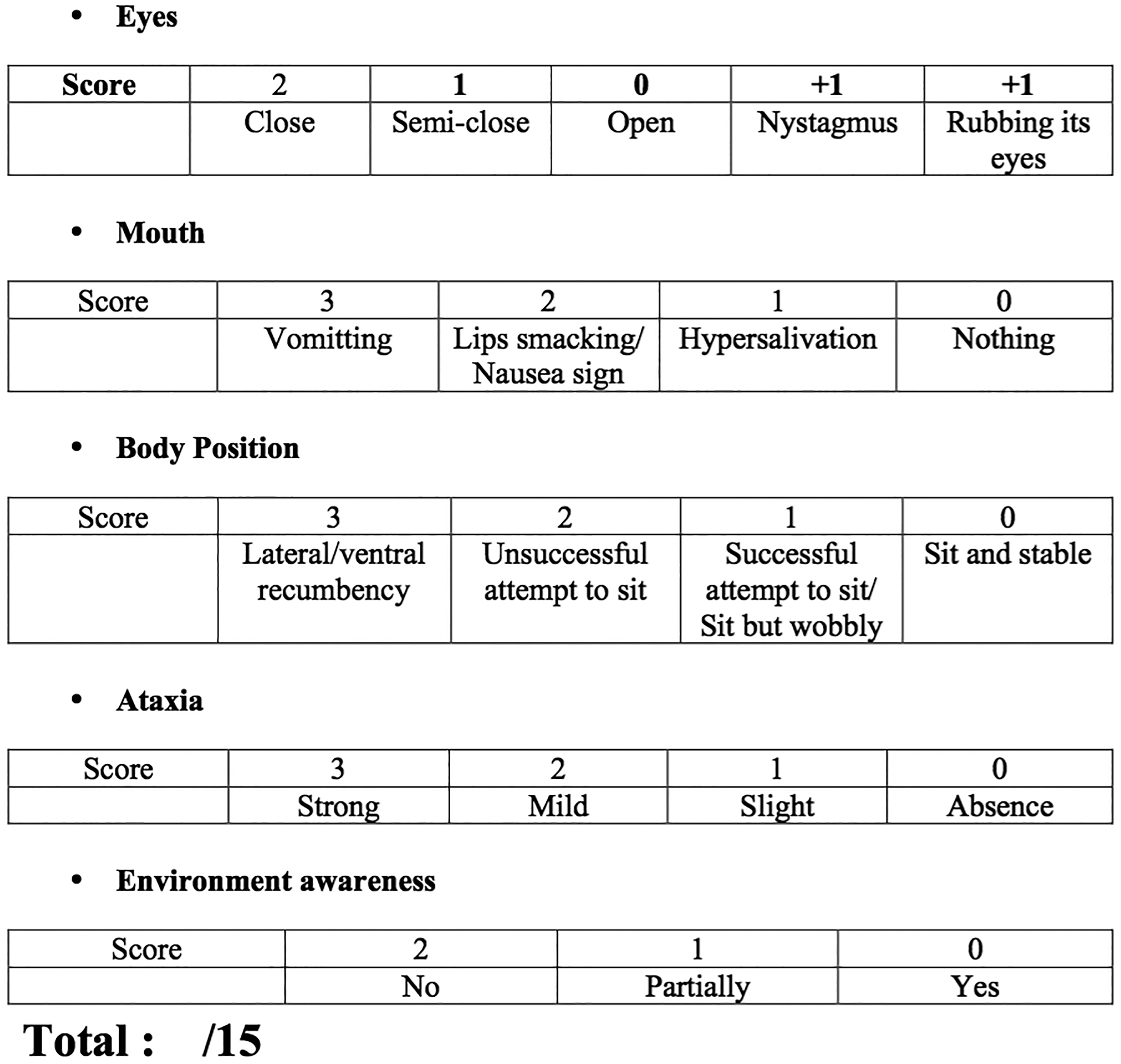
Statistical analysis
With the exception of the ASA category (which are ordinal data), normal distribution of the data was tested with the Shapiro–Wilk test. The Mann–Whitney U-test or Student’s t-test was used to compare the data according to the data type and distribution. The Friedman test was used to compare the recovery scores between each of the three time points in the two treatment groups. A P value of less than 0.05 was considered to be statistically significant. SPSS software (version 22; IBM, Armonk, NY, USA) was used to perform the analyses. Power analysis of the recovery time data was performed with G*Power (version 3.1.9.2) software (Franz Faul, University of Kiel, Kiel, Germany).
Results
Animal characteristics and treatment groups
The random assignment of primates to treatment groups resulted in the following group characteristics; in the sevoflurane group (SEVO), four males and two females; in the isoflurane group (ISO), three males and three females. The age, weight, and ASA status did not differ significantly between treatment groups.
Anaesthesia procedure
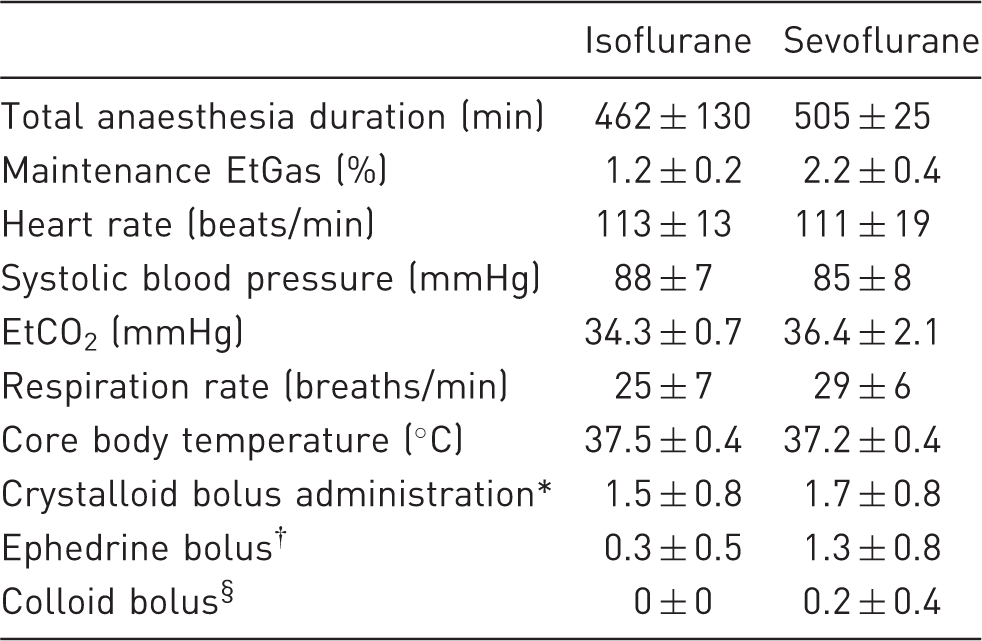
All the animals were successfully anaesthetized for the neurosurgical procedures. A surgical plane of anaesthesia was maintained with either 1.2 ± 0.2% of isoflurane or 2.2 ± 0.4% of sevoflurane. Heart rate and systolic blood pressure decreased once administration of the volatile agents commenced, and then stabilized (Figure 2). No major complications related either to the procedure or the anaesthesia occurred. If an animal developed moderate hypotension (systolic blood pressure < 75 mmHg) this was corrected by administration of Hartmann’s and/or colloid solution (Isoplex 4% w/v solution for infusion; Beacon Pharmaceutical, Tunbridge Wells, UK) bolus and/or bolus of 0.1 mg/kg of ephedrine intravenously (ephedrine hydrochloride injection 30 mg in 1 mL for slow intravenous injection; Martindale Pharmaceuticals, Romford, UK). There was no statistical difference in the duration of anaesthesia between the treatment groups and no difference in any of the physiological parameters monitored, with the exception of the EtCO2 (Table 3).
Cardiovascular parameters over the time. The data are presented as the mean ± 1SD. The plots at the right extremity of the graph represent data from only one animal so no SD is shown. Anaesthesia data. The data were collected over the maintenance period of anaesthesia and are reported as mean ± 1SD. *Crystalloid bolus dose of 10 mL/kg over 10 min; †Ephedrine (ephedrine hydrochloride injection 30 mg in 1 mL for slow intravenous injection; Martindale Pharmaceuticals, Romford, UK) bolus of 0.1 mg/kg intravenously; §Colloid bolus (Isoplex 4% w/v solution for infusion; Beacon Pharmaceutical, Tunbridge Wells, UK) dose of 3 mL/kg. EtCO2: end-tidal carbon dioxide; EtGas: End-tidal anaesthetic gas concentration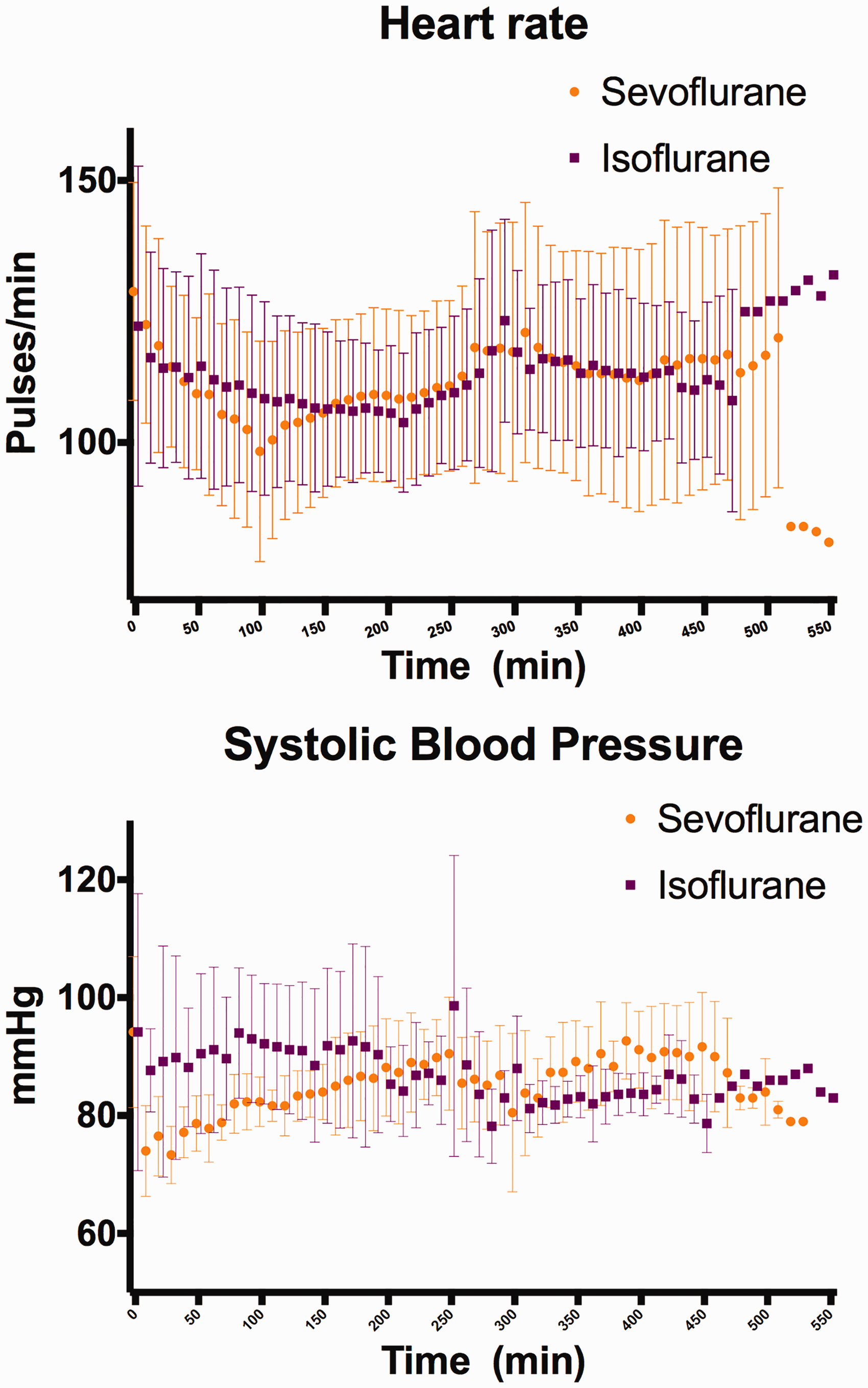
Emergence time
The time between discontinuing delivery of volatile anaesthetic and extubation was significantly different between the two treatment groups (ISO: 7.0 ± 1.8 min; SEVO: 3.6 ± 1.5; *P = 0.005; effect size = 2.052, power (1–β) = 0.892). The difference in the total emergence time (time from discontinuing delivery of volatile anaesthetic to the time at which the animal was sitting) between the treatment groups was statistically significant (ISO: 15.7 ± 8.2 min; SEVO: 7.1 ± 1.7 min; *P = 0.004; no power analysis was performed as the data were not normally distributed). The time between extubation and transfer of the animals to the recovery cage (ISO: 1.8 ± 1.6 min; SEVO: 1.5 ± 1.6 min; P = 0.589), and the time between moving to the recovery cage and their first attempt to sit (ISO: 6.9 ± 7.8 min; SEVO: 1.9 ± 0.5 min; P = 0.589) did not differ significantly between treatment groups.
Emergence quality
The primates in the sevoflurane group were moved to a recovery cage earlier than those in the isoflurane group (ISO: 8.7 ± 0.3 min; SEVO: 5.2 ± 0.7 min; *P = 0.001; effect size = 6.499, power (1–β) = 1), hence assessment of recovery was slightly earlier relative to the end of anaesthesia in this group. The Friedman test showed a significant improvement in the recovery quality over the time in the two treatment groups (ISO, *P = 0.002; SEVO, *P = 0.002). This was also demonstrated by the pairwise comparison between time points inside each treatment group (ISO: t0 = 6.9 ± 1.6 > t+5 = 4.5 ± 2.5 > t+12 = 2.6 ± 2.1; *Pt0 vs t+5 = 0.027, *Pt0 vs t+12 = 0.028, *Pt+5 vs t+12 = 0.027; SEVO: t0 = 6.6 ± 2.1 > t+5 = 4.2 ± 2.1 > t+12 = 1.8 ± 1.7; *Pt0 vs t+5 = 0.028, *Pt0 vs t+12 = 0.027, *Pt+5 vs t+12 = 0.028).
However no difference was found between the two treatment groups at any time point (Figure 3). The variability between the observers was also compared and no significant statistical difference was found.
Recovery quality results over the time. The results are presented as the mean ± 1SD of all the scores for each treatment group at each time point. Treatment groups were compared at each time point with the Mann–Whitney U-test. The following results are expressed as mean ± 1SD. t0, ISO: 6.9 ± 1.6, SEVO: 6.6 ± 2.1, P = 0.818; t+5, ISO: 4.5 ± 2.5, SEVO: 4.2 ± 2.1, P = 0.818; t+12, ISO: 2.6 ± 2.1, SEVO: 1.8 ± 1.7, P = 0.485).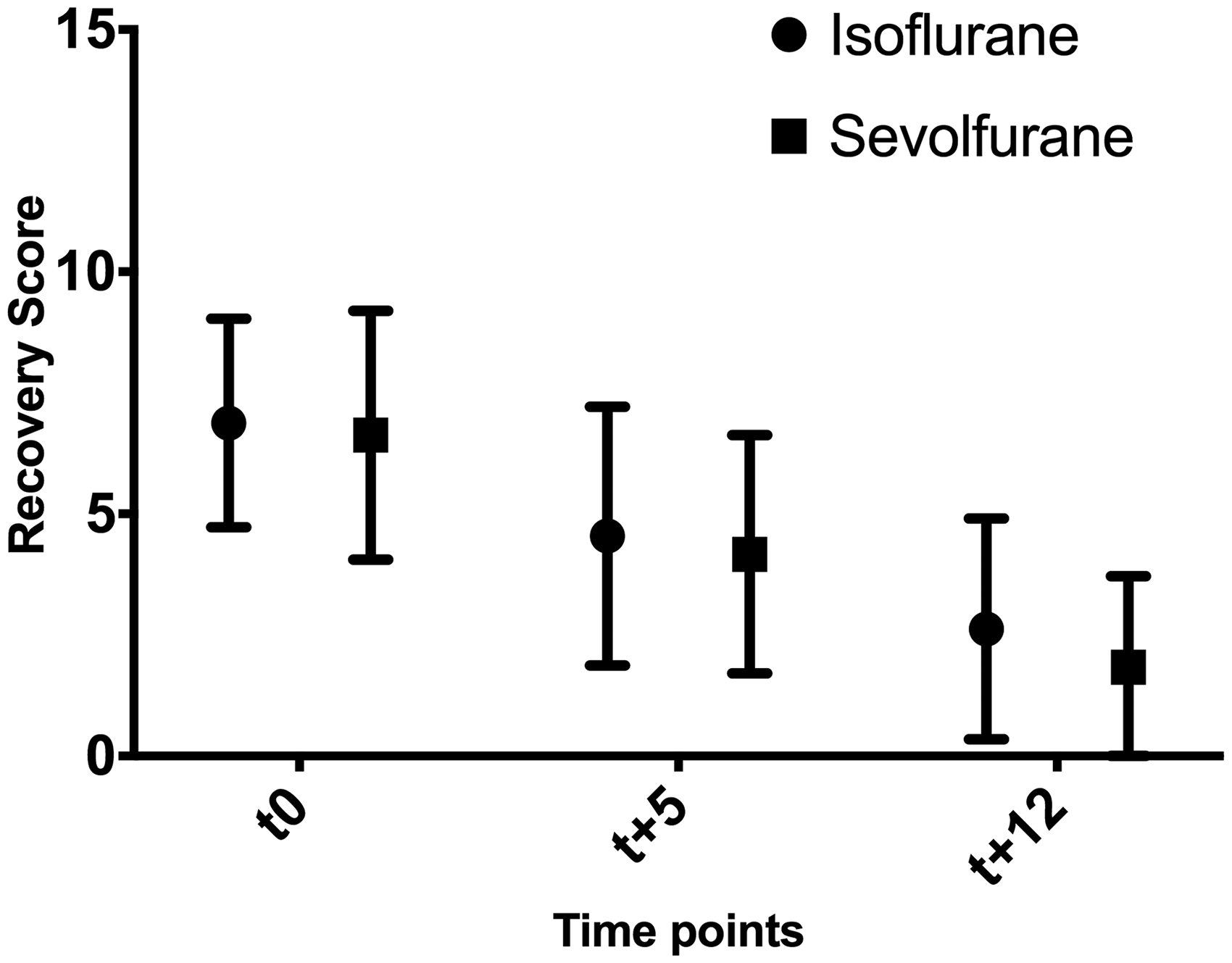
Discussion
The purpose of this study was to assess the quality of recovery from sevoflurane anaesthesia in comparison with isoflurane in rhesus macaques. Both agents, when administered in combination with an opioid, were suitable for the maintenance of general anaesthesia for long-term neurosurgical procedures. The most frequently encountered complication was moderate hypotension during anaesthesia. This is a well-recognized feature of anaesthesia with these agents in other species. 2 This side-effect was easily corrected by use of ephedrine or intravenous fluid administration. The concomitant administration of opioids reduced the concentration of volatile agent needed to maintain surgical anaesthesia, and this avoided more serious cardiovascular depression.11–13 Anaesthesia was maintained with approximately 1 × the minimal alveolar concentration (MAC) of isoflurane (1.28–1.46% 14 ). MAC of sevoflurane has not been established in rhesus macaques, but has been reported as 2% in cynomolgus monkeys, a value close to the 2% required for maintenance in this study. 15
A rapid recovery from anaesthesia following a neurosurgical procedure enables an early initial neurological assessment to be made, and supportive treatment to be commenced if necessary. 16 In the present study, animals recovered more rapidly following sevoflurane anaesthesia than isoflurane, however the differences were not large. The difference in emergence times was expected due to the difference between physical characteristics of the two agents, and is consistent with results in other animal species,8,9,17 and humans.5,18 The times between cessation of volatile agent administration and extubation found in the current study are shorter than those reported by Murphy et al. 4 This could be due to a number of factors such as the doses and agents used for premedication, induction, as adjuncts to anaesthesia and during recovery that differed between the animals that were assessed in the two studies.
The quality of recovery from anaesthesia is also an important factor following neurosurgical procedures. Excitement or vomiting during anaesthesia recovery could induce an increase in the intracranial blood pressure, and could predispose to cerebral oedema, haemorrhage and haematoma. 19 The scoring system used was developed in an earlier study of other anaesthetic agents in macaques and enabled discrimination between good and poor recoveries in this specie. 10 In the present study, all recoveries were smooth and no adverse effects occurred, with no differences in the quality of recovery between isoflurane and sevoflurane. This conclusion is consistent with reports in other species including dogs, 9 horses, 8 and also humans.7,20
In conclusion, isoflurane and sevoflurane can both be considered to be suitable volatile agents for the maintenance of general anaesthesia for neurosurgical procedures in rhesus macaques. These two volatile agents had a similar quality of recovery, however sevoflurane resulted in a more rapid recovery compared with isoflurane. This more rapid recovery of consciousness may be advantageous in enabling early post-operative neurological assessments.
Footnotes
Acknowledgments
The authors would like to thank Mrs Denise Reed, Ms Caroline Fox, Mr Ashley Waddle, Ms Stevie O’Keefe, Ms Carrie Todd, Mr Daniel Runhau, Ms Elizabeth Tursi and Ms Adele Kitching for their technical support and help during this work.
Declaration of Conflicting Interests
The author(s) declared no potential conflicts of interest with respect to the research, authorship, and/or publication of this article.
Funding
The author(s) received no financial support for the research, authorship, and/or publication of this article.