






Abstract
Summary
We reviewed the use of captive European starlings (Sturnus vulgaris) in scientific research published between 2000 and 2004. We estimated the numbers of birds used and documented their origin and the range of husbandry regimes employed with the aim of comparing current practice with the new European guidelines for husbandry of laboratory animals. Over the five-year period, 106 primary articles report the use of an estimated total of 2490 captive starlings. The majority of birds were caught from the wild either as adults or fledglings, and only 3% were hand-reared from chicks. There was considerable variation in husbandry. In the majority of cases, standards fell below those currently recommended as best practice in the UK and cited in new European guidelines. The median volume of home cages employed was 0.42 m3 (0.13–5.1 m3, interquartile range), whereas current recommendations suggest a minimum of 1.0 m3 for a singly-housed bird. The median volume of space allowed per bird was 0.13 m3/bird (0.08–1.05 m3/bird, Q1–Q3), whereas current recommendations suggest a minimum of 0.33 m3/bird. Only 27% of the articles mentioned providing any form of environmental enrichment for birds in their home cages. We recommend that more research be conducted into the welfare of starlings to inform legislation and guidelines, and thus maximize the welfare of captive animals.
The European Union (EU) is currently drafting revisions of legislation relating to the housing of laboratory animals. Major changes under consideration include mandatory minimum cage sizes, environmental enrichment and group housing, and limitations on the use of wild-caught animals in research (European Commission 2006). For commonly used laboratory species, these specifications are often evidence-based and are claimed to reflect current practice in many laboratories. However, this is not the case for many less common but nevertheless important laboratory species, in which there has been little welfare research, and for which husbandry is not standardized between laboratories. We review the use and husbandry of European starlings (Sturnus vulgaris) to quantify current practice, and thus assess the impact of adherence to new animal welfare guidelines in laboratories using this species.
The European starling is arguably the most widely used passerine species in fundamental biological research. A search on ISI Web of Knowledge reveals 392 articles listing ‘Sturnus vulgaris’ in the topic field in the five-year period from 2000–2004 (compared with only 276 listing ‘Taeniopygia guttata’, the zebra finch). For many years now starlings have been an important model species in studies of behavioural ecology, ecophysiology and the neuroecology of song production and perception (e.g. Powell 1974, Tinbergen 1981, Lima 1983, Kalcelnik 1984, Cuthill & Hindmarsh 1985, West & King 1990, Eens et al. 1991, Mountjoy & Lemon 1991). The popularity of starlings stems from a number of features that make them ideal experimental animals. Starlings acquire new tasks rapidly and can readily be trained on operant schedules making them ideal subject for studies of foraging behaviour (e.g. Bateson & Kacelnik 1995). Their complex songs and propensity for vocal mimicry make them interesting subjects for studies of bird song. Although not easy to breed in captivity, wild starlings are common in both North America and Europe populating nearly 30% of the world's land surface excluding Antarctica (Feare 1984), and are easy to catch in large numbers. They adapt well to a captive environment, and due to their social nature can be housed at relatively high densities in the laboratory.
The welfare of starlings housed in the laboratory is of particular concern for three reasons. First, as non-domesticated species starlings have not been selectively bred to cope in captive environments. Secondly, starlings used in laboratory research are often caught from the wild, and have therefore experienced the loss of their natural environment. Thirdly, wild starlings travel more than 20 km daily to and from their roosting sites (Feare 1984), and in carnivores a large natural range is a risk factor for poor welfare in captivity (Clubb & Mason 2003). There is currently little data available on the welfare of captive laboratory birds (Poole & Dawkins 1999). In starlings specifically, a handful of studies have addressed the effects of lighting quality (Greenwood et al. 2002, 2004) and environmental enrichment (Gill 1994, Gill et al. 1995) on welfare, but to date there are no studies on the effects of developmental history (wild-caught versus hand-raised or captive-bred), cage size or stocking density.
Laboratory animal research in many countries falls under the Council of Europe Convention, ETS 123 and the European Union Directive 86/609/EEC for the protection of vertebrate animals used for experimental and other scientific purposes. Appendix A of ETS 123 has recently been revised with the aim of increasing standards of welfare for laboratory animals and harmonizing practice across laboratories. Although the situation remains unresolved, it is possible that the revised Appendix A of ETS 123 may be transcribed into Annex II of European Union Directive 86/609/EEC. Also under consideration is the possibility of making elements of Annex II minimum standards that would be legally binding for all EU member states (European Commission 2006). In the revised version of ETS 123, general provisions for birds include group housing, environmental enrichment and use of captive-bred birds wherever possible (Hawkins et al. 2003). Although there are no specific provisions for undomesticated passerines such as the starling, readers are referred to the Laboratory Animals' supplement Laboratory birds: refinements in husbandry and procedures (Hawkins et al. 2001) that does provide guidelines specific to starlings. A minimum cage size of 1 m3 is recommended for a singly-housed starling, although group housing is preferable with a minimum cage size of 2 m3 for a group of two to six birds (i.e. a minimum space allowance of 0.33 m3/bird). Enrichment with natural branches, water baths, provision of cover, live invertebrate prey and a substrate of bark chippings are also recommended. Although adherence to these guidelines is not compulsory in the revised Council of Europe Convention (ETS 123), husbandry that strongly diverges from those recommended in this document is unlikely to be viewed as acceptable by the responsible authorities, at least until further research is produced. Furthermore, should the changes to Directive 86/609/EEC outlined above be agreed, general provisions could become mandatory for starlings housed in laboratories in EU countries. Therefore, all researchers in Europe will need to attend to both the Hawkins et al. (2001) and Hawkins (2003) documents (henceforth referred to as ‘new European guidelines’).
In this article, we review the use of captive European starlings in scientific research. A specific aim is to quantify current practice in the husbandry of starlings in relation to new European guidelines.
Materials and methods
Studies and extraction of information
Studies using captive European starlings (S. vulgaris) published between 2000 and 2004 were identified from searches on databases Agricola, Biosis, CAB, Cambridge Scientific Abstracts (BioSciences), PubMed (Medline), Web of Science and Zoological record. Searches were made between January and April 2005 using only the term ‘Sturnus vulgaris’ in the title/subject/keywords, and then relevant articles were selected by scanning the abstract or entire article if necessary. Articles were included in this review if they reported holding European starlings in captivity for one day or longer. A starling was deemed as captive if it was confined by a cage, aviary, room, box or any other form of restraint.
Basic information on the country of the research institution and any legislation or ethical guidelines reported, were extracted from each relevant article. We also extracted the number of male, female and total starlings used in the study, the origin of the birds, the length of time they had spent in captivity, any procedures carried out on the birds, the type of science being investigated and the fate of birds used. Details on husbandry and care included: the housing type and size, stocking density, type and availability of food and water, temperature, details of lighting and if any environmental enrichment was provided. Whether lighting was artificial or natural was noted. If lighting was artificial the hours of light and dark (lighting schedule), whether there was a gradual transition between these, the brightness, spectrum and rate of flicker, were also recorded.
Classifications, definitions and analysis
We used the database Biosis' Major Concept Terms to classify the type of science. The specific types of research conducted on captive starlings were identified by determining institutions with four or more publications in the review. Numbers of birds were calculated by summing the total numbers of birds in relevant studies. Medians (M) and interquartile ranges (Q1–Q3) were calculated for many aspects of husbandry using the number of articles.
Dimensions were calculated for the home cage, defined as the enclosure the birds spent most time in during the experiment. The length was defined as the longer of the two horizontal dimensions and the width the shorter (the height is assumed to be reported as the vertical dimension). The space available to captive starlings was expressed in four ways: total cage volume and cage volume per bird, floor area and cage aspect ratio. Volumes were calculated by multiplying the three cage dimensions and are always expressed in cubic metres. Home-cage volumes were divided by the maximum number of birds held in that home cage, to provide the volume per bird, which was expressed in m3/bird. Floor areas were calculated by multiplying the length and width (m2). Finally, aspect ratios were calculated to describe the shape of the profile of the cage, by dividing the length by the height. A cage with an aspect ratio <1 is taller than it is long; an aspect ratio of exactly one has a square profile; and a cage with an aspect ratio of >1 is longer than it is tall. Environmental enrichment was operationally defined as any item provided with the goal of improving the animals' welfare.
Scientific procedures were described as either invasive or non-invasive according to the UK Animals (Scientific Procedures) Act (1986). Non-invasive procedures fall into two categories: handle and restraint only, and attaching a foreign object. Non-invasive procedures were not included if they were deemed to be part of usual husbandry routines, such as trimming claws or bills.
Results
Studies: number, subject and geographical location
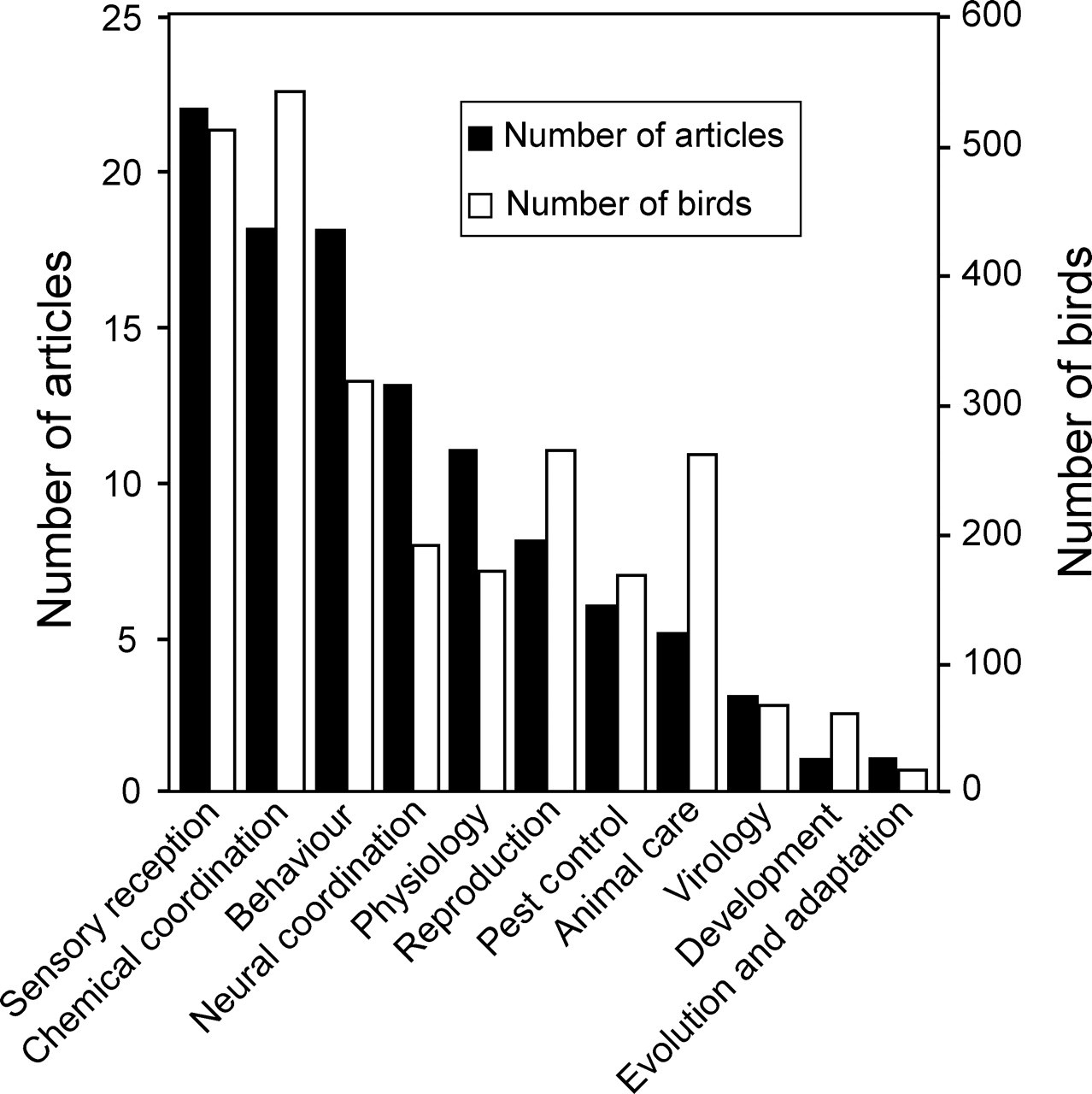
Information concerning the husbandry and care of captive starlings was extracted from a total of 106 research articles (see Table 1 for summary). The articles were published in 32 different journals, with the most articles sourced from Animal Behaviour (8 articles), General and Comparative Endocrinology (9 articles) and Hormones and Behaviour (7 articles). Studies spanned 11 categories of scientific research (Figure 1). Specific areas of research include: behavioural and cognitive ecology of foraging behaviour and mate choice (e.g. Maddocks et al. 2002a–c, Fernández-Juricic et al. 2004), song perception (e.g. Langemann & Klump 2001, Gentner et al. 2004), behavioural neuroendocrinology of singing and the stress response (e.g. Auger et al. 2002, Nephew & Romero 2003, Pinxten et al. 2003a,b) and photoperiodic control of reproduction (e.g. Dawson 2001).
The research was produced by 32 institutions, with the vast majority being conducted in either the UK (37 articles) or the USA (45 articles), the remaining research being conducted in other European countries, Belgium (9 articles), Germany (6 articles), France (4 articles), Sweden (2 articles), Italy (1 article), Slovakia (1 article) and Turkey (1 article).
Although no articles specifically cited European legislation, 44 articles did reference some type of guidelines the study had adhered to, most commonly national legislation; seven articles mentioned UK Animals (Scientific Procedures) Act (1986) (covering an estimated 375 birds) and 10 articles mentioned other national legislation (175 birds). Seventeen articles reported coverage by university guidelines or ethics committees (364 birds). The National Research Councils' Guide for the Care and Use of Laboratory Animals (1996) was cited by 16 articles (341 birds). Nine articles (322 birds) also cited the body that granted permission for capture of wild birds, and included English Nature, Scottish Natural Heritage and the US Department of Agriculture.
Bird numbers and origins
A total of 2490 starlings were used in the studies reviewed with 18, 8–29 birds (M, Q1–Q3) used per article. Number of birds used per article varied from a single bird in an experiment concerning the physiology and mechanics of flight (Rayner et al. 2001) to 132 birds used in Greenwood et al.'s (2002) study concerning preferred lighting environments. Birds were predominantly male, 742 males when compared with 346 females, although only half the articles reported information on sex.
Ninety-eight out of the total 106 articles provided some information concerning the origins of the birds used. Most studies used wild-caught birds (87 articles, 2153 birds), three articles used hand-raised birds (71 birds) and eight articles used a combination of hand-raised and wild-caught birds (165 birds). Only one article (2 birds) used captive-bred birds (Henry & Hausberger 2001).
Home cage
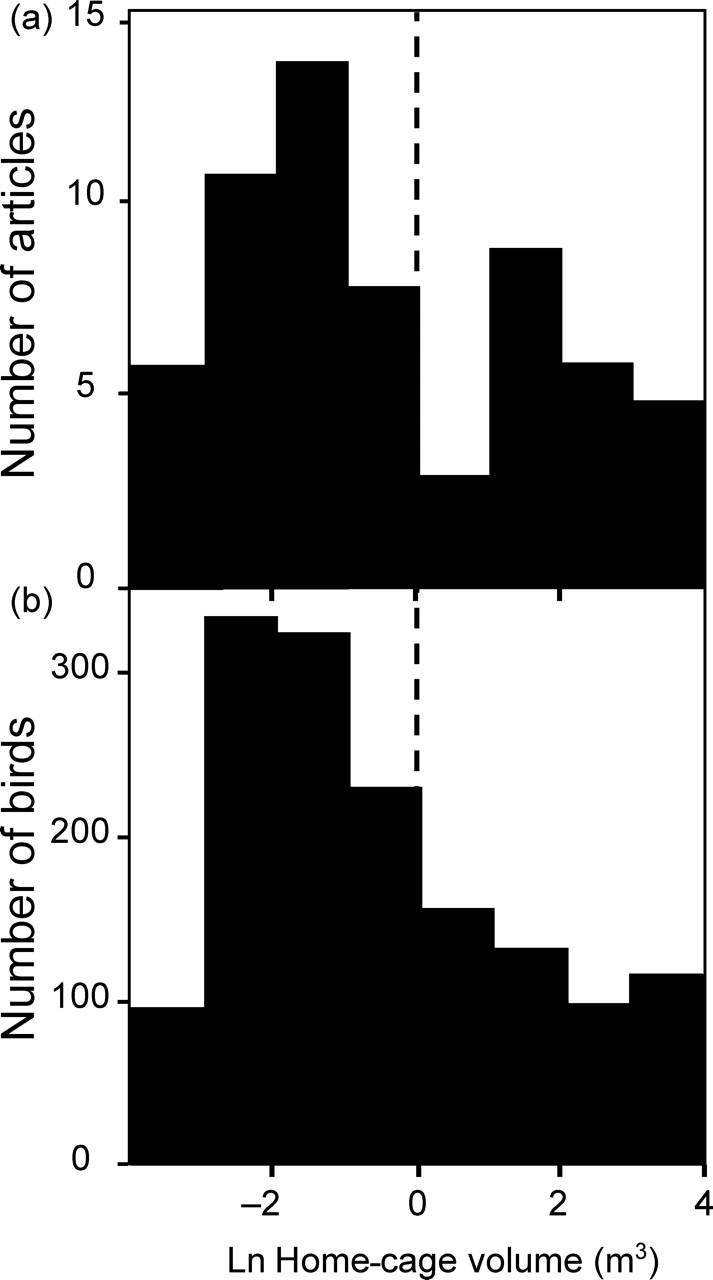
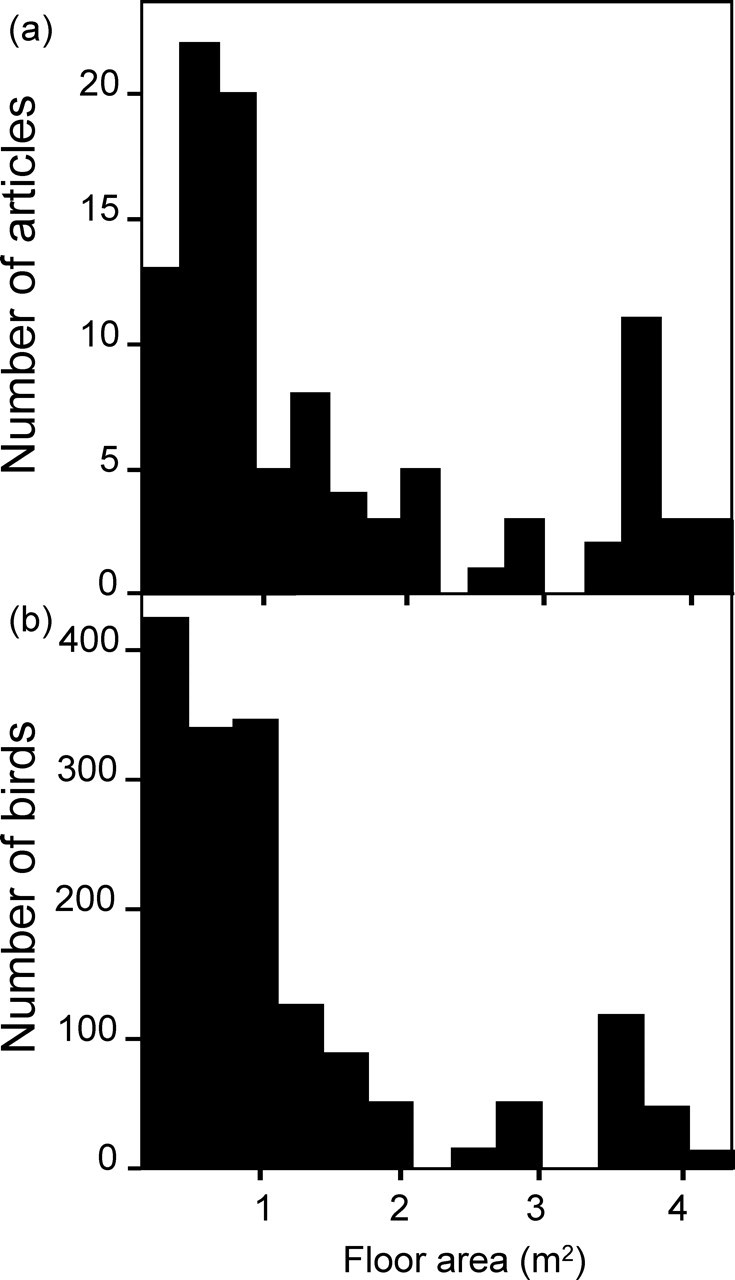
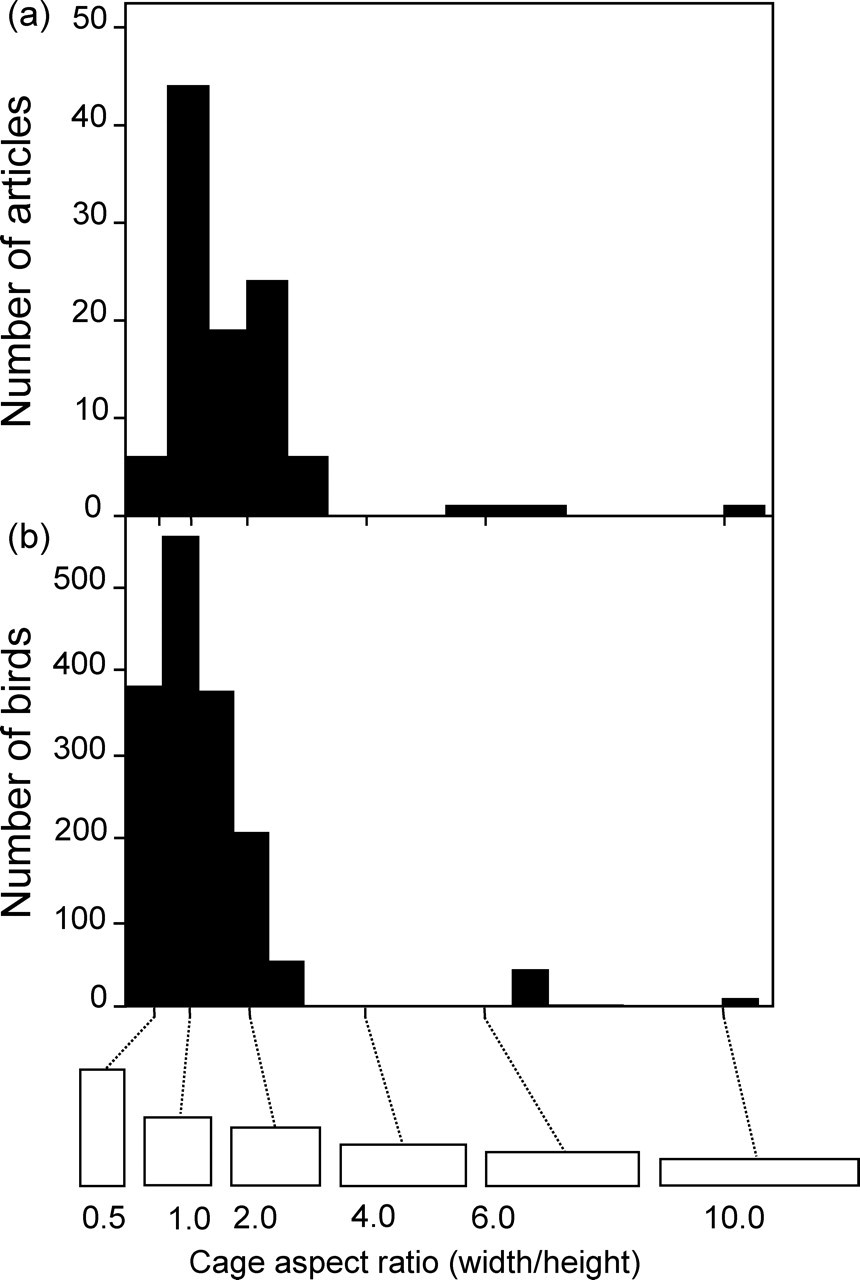
Of the 106 articles reviewed, 100 provided some information concerning the type of housing, but only 65 of these gave the exact cage dimensions. The enclosures varied in size and volume, ranging from 0.02 (Sayre & Clark 2001) to 720 m3 (Henry & Hausberger 2001; Figure 2). Many of the values fall within the lower range of volumes (M, Q1–Q3 = 0.42, 0.13–5.1 m3) with 65% (42 articles) falling below the 1 m3 threshold. The distribution of floor areas (Figure 3) was also positively skewed (M, Q1–Q3 = 0.75, 0.32–3.78 m 2 ). Most enclosures were longer than they were tall (Figure 4), with a median aspect ratio of 0.88, 0.32–0.63 (M, Q1–Q3).
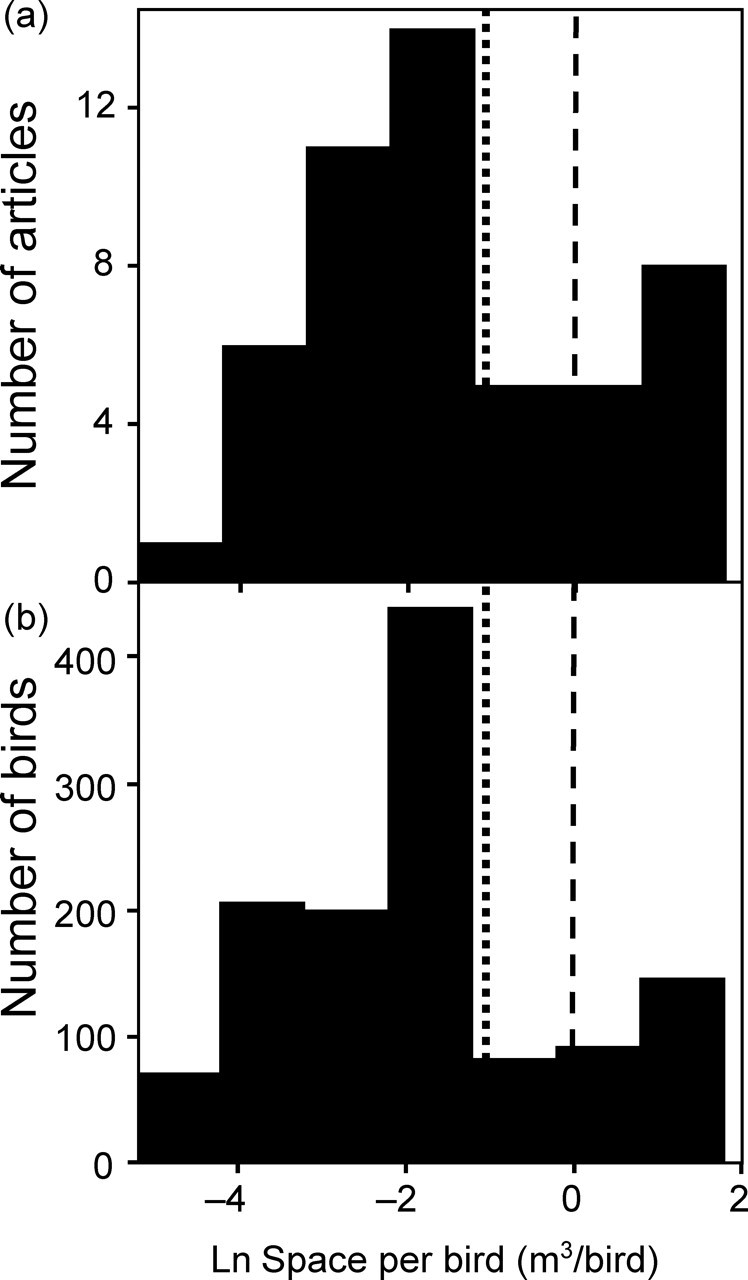
In the majority of articles birds were either housed singly (49 articles, 862 birds) or in small groups of 3–10 birds (38 articles, 1086 birds), although during the course of many studies birds experienced several different groupings (Table 2). For the 54 articles that included information on both home-cage dimensions and number of birds per cage, the volume of space per bird was 0.13, 0.08–1.05 m3/bird (M, Q1–Q3, Figure 5).
*A small group consists of 3–10 birds per enclosure
†A colony is more than 10 birds per enclosure
Food
In 54 out of 71 articles that provided the information, birds received food ad libitum (1455 birds). The remaining 17 articles (352 birds) used some degree of food deprivation. The basic diet most fed to captive starlings was dry food (63 articles, 1589 birds). Dry food included, turkey starter crumbs, Orlux pellets (Orlux, Wielsbeke-Ooigem, Belgium), Purina chick food (Purina, St Louis, USA), poultry pellets, dog food and wheat or barley. The diet of many birds was supplemented with fruit (7 articles, 193 birds), processed meat (6 articles, 179 birds), vitamin supplements (5 articles, 105 birds). Twenty-three articles reported feeding live invertebrate prey to captive starlings. Mealworms (Tenebrio molitor) were fed to birds in 22 articles (339 birds), six of these also provided the birds with natural forage (101 birds), and one article provided the birds with just natural forage (6 birds).
Environmental enrichment
The most commonly used forms of enrichment were nest boxes (16 articles, 468 birds) and water baths (15 articles, 306 birds). Fewer articles reported presenting birds with toys (3 articles, 88 birds), natural branches (3 articles, 45 birds) or foraging substrate (5 articles, 58 birds). A total of 29 articles reported the use of some form of environmental enrichment.
Environmental variables
All 106 articles provided information about lighting regimes used, but 41 gave information about temperature. Temperatures ranged from 12–28°C, with a median of 18 (15.75–21.50°C, Q1–Q3). A total of 95 articles used artificial lighting and although most reported the lighting schedule (83 articles; Tables 3 and 4) only 10 articles mentioned details of the lighting quality (e.g. light to dark transition, flicker rate, UV, spectrum, fluorescence, luminance).
L=light; D=dark
Scientific procedures
Non-invasive procedures that involved attaching a foreign object included, coloured leg rings, eye rings and in one particular study a gas mask fixed to a bird's head. Handle and restraint procedures involved measuring feathers with callipers, weighing, restraint in a cloth bag for up to 30 min and restraint in a wing cuff and head holder. Little consistency over reporting these non-invasive procedures was found and frequency of handling was never comprehensively reported, e.g. some articles referred to a regular weighing scheme but few specified whether weighing was remote or involved handling.
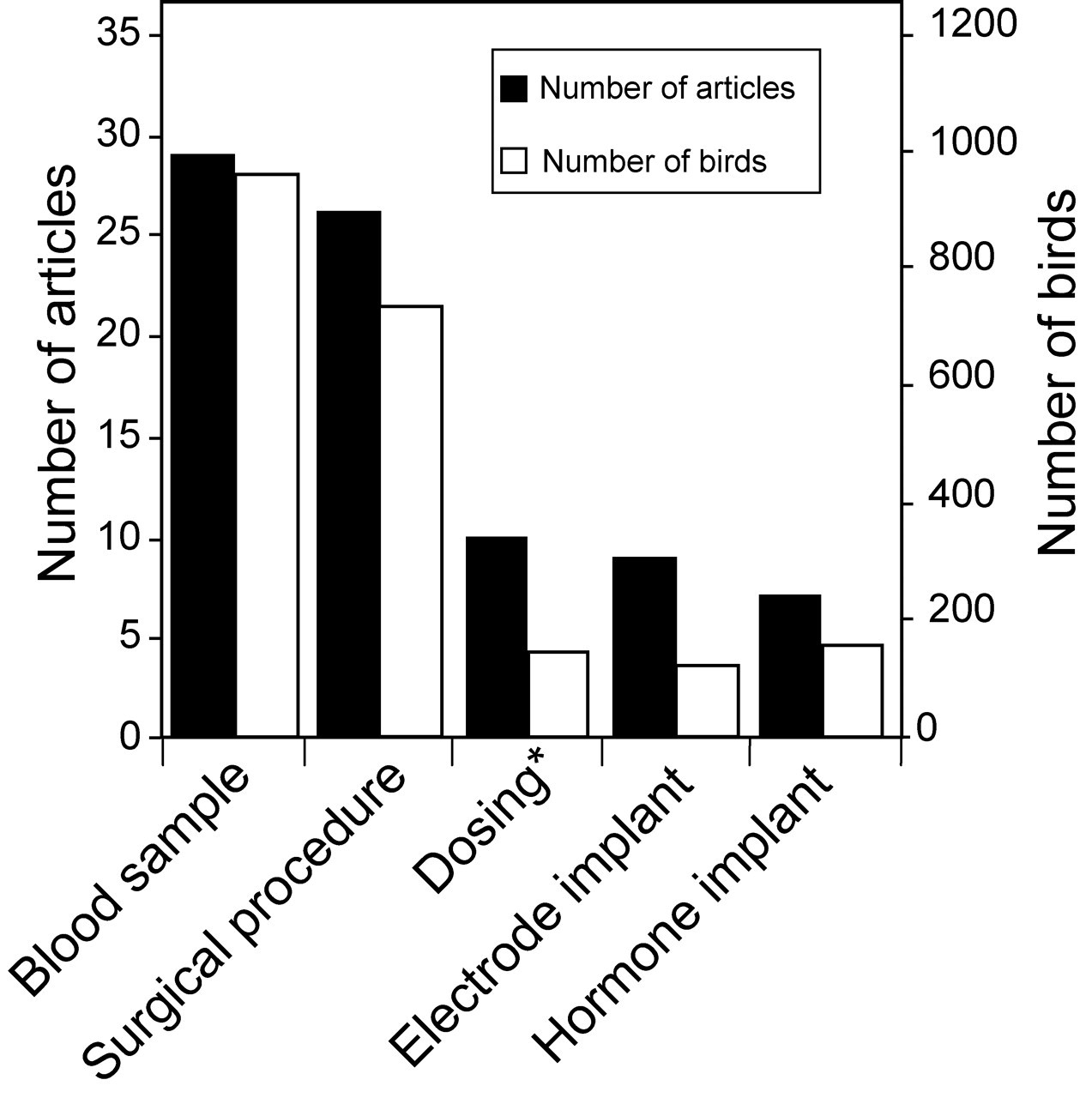
Invasive procedures were more reliably reported. More than half (56) of the articles reviewed involved some type of procedure that would in the UK need to be covered by a Home Office licence (Figure 6).
Only 33 articles reported information about the fate of birds after involvement in research. In 26 articles (754 birds), birds were euthanized at the end of experiments either by an overdose of anaesthetic or decapitation. Birds were released upon completion of six studies (84 birds) and two articles reported birds being retained for further study (42 birds).
Discussion
Out of the 106 articles and 2490 birds in this review, 61 articles (1383 birds) were conducted in EU countries that will be subject to new European guidelines for starling husbandry. A comparison of these new guidelines with current practice reveals that birds were only group-housed for the duration of experiments in 43% of articles, only 27% of articles referred to the use of environmental enrichment and only two birds in the entire review were captive-bred. Furthermore, the species-specific recommendations represent a departure from common practice, with the 1 m3 minimum cage volume not observed in 42 articles (1099 birds). The median volume of home cages was 0.42 m3, and the median space allowance per bird was 0.13 m3/bird, compared with the recommended 0.33 m3/bird. The advised enrichment with live prey was used in 23 articles (345 birds), water baths in 15 articles (306 birds), foraging substrate in five articles (58 birds), natural branches in three articles (45 birds) and the provision of cover was not mentioned in any article reviewed.
It is difficult to interpret how this divergence from recommended guidelines may impact the welfare of the birds involved, as there is so little literature concerning starling welfare. One factor that has been investigated is the effect of lighting quality on both starling welfare and behaviour (Maddocks et al. 2002a–c, Greenwood et al. 2004, Evans et al. 2006). Less than 10% of articles mentioned details of lighting environment aside from lighting schedules. This suggests that researchers may not be aware of the particular welfare needs of their study species, and raises concerns about the reporting of husbandry in published papers.
Although the husbandry standards reviewed in this article did fall below new European guidelines, it is not surprising given these guidelines arise from the first document to relate directly to starling welfare published in 2001 (Hawkins et al. 2001). Perhaps, a more surprising finding was the amount of methodological detail relating to the birds and their husbandry that could not be obtained from the articles. Basic information that was consistently not reported included: only half of the articles reported the sex of birds, only 41 articles reported temperature and only 33 articles reported the fate of birds. Journals differ in the amount of methodological detail required (Table 5). Many details not included in guidelines for authors are implicitly required for replication, but as this review demonstrates there is a lack of consistency in the reporting of methodological detail (for similar argument see Wurbel 2007).
√ = requirement,
We found considerable variance in the husbandry of captive starlings between institutions. Enclosure volumes, for instance, varied between 0.02 and 720 m3, aspect ratios varied from 0.31–10.20 and 12 different lighting schedules were employed from continuous lighting to 8 h of light. Minimum standards must be met to safeguard the welfare of experimental animals, for instance the cage mentioned above with a volume of 0.02 m3 (dimensions: 0.36 × 0.23 × 0.28 m) is clearly unacceptable for housing starlings since it is smaller than a starling's wingspan. However, optimal conditions will vary depending on the experiment being conducted. For example, in the case of cage size, the largest cages may not be preferable (for either birds or experimenters) if birds need to be caught on a regular basis. Within acceptable ranges, some degree of variance may actually be desirable to reveal interesting and unforeseen effects. For example, Bateson (2002) found small uncontrolled variations in temperature accounted for individual variation in foraging decisions.
It is clear from this review that current practice in laboratory starling husbandry is far from meeting new European guidelines. For example, the majority of articles used cages below the new minimum size recommended. It is vital that more research be conducted into the welfare of starlings, and other less commonly used species, to inform future guidelines and legislation, and thus maximize the welfare of captive animals.
Footnotes
Acknowledgements
This study was funded by a BBSRC Committee Studentship to LA and a Royal Society University Research Fellowship to MB. We thank Stephanie Matheson, Innes Cuthill and an anonymous referee for helpful comments on the manuscript.