




Abstract
Understanding stakeholder complexity remains a critical yet underexplored challenge in project management, particularly in public infrastructure projects where competing agendas and power asymmetries often determine success or failure. This study investigates stakeholder complexity through a comparative analysis of three municipal projects in South Africa. The findings reveal indicators of complexity related to stakeholder roles, agendas, power, and influence networks. These indicators help practitioners recognize when adaptive and intensive engagement strategies are required, bridging the gap between conceptual stakeholder models and their practical application in contested project environments.
Keywords
Introduction
In the lead-up to the 2010 FIFA World Cup in South Africa, significant investment was made in infrastructure projects, many of which attracted public attention and generated valuable lessons for project delivery. As Worsley (2020) and other studies show, some projects anticipated stakeholder complexity and implemented sophisticated engagement strategies from the outset, while others developed such strategies only reactively. This reflects a wider pattern observed internationally: Regardless of the technical scope, sector, or location, one of the most consistent determinants of project success or failure is the quality and timeliness of stakeholder engagement (Mok et al., 2017; Maqbool et al., 2020; Prebanić & Vukomanović, 2023). Projects that underestimated the intensity and nature of stakeholder interest often stalled, faced prolonged conflict, or were delivered with reduced impact.
In this article, stakeholder complexity is understood as the degree to which the diversity, power, and interrelationships of stakeholders—together with the fluidity of their interactions—affect a project’s capacity to deliver its objectives (adapted from Worsley, 2020; Aaltonen & Kujala, 2016). The article focuses on infrastructure projects characterized by both technical and stakeholder complexity—projects involving multiple actors, strong political visibility, and competing public interests.
While the literature supports the use of formal stakeholder analysis and engagement models—such as the stakeholder wheel (Bourne & Walker, 2005), the salience model (Mitchell et al., 1997), and Mendelow’s matrix (Mendelow, 1981)—practitioners frequently struggle to apply these tools effectively in real-world settings. The stakeholder salience model is among the most widely adopted frameworks, proposing that stakeholders gain prominence in project decision-making according to three attributes: power (their ability to influence outcomes), legitimacy (the perceived appropriateness of their involvement), and urgency (the immediacy of their claims). These dimensions together determine how much attention a stakeholder receives from project managers.
A Guide to the Project Management Body of Knowledge (PMBOK® Guide)—Seventh Edition (Project Management Institute [PMI], 2021) presents the salience model as one of the primary methods for stakeholder analysis, and it has been applied in research across diverse sectors (Bahadorestani et al., 2019; Kinnunen et al., 2014) and international projects (Aaltonen et al., 2008). Yet, research also suggests that stakeholder engagement models are often too conceptual (Jepsen & Eskerod, 2009), highly context-dependent (Walley, 2013), or introduced at the wrong stage of project development. This perception—that detailed front-end analysis may not be worth the effort—was commonly reported by experienced infrastructure project managers and is consistent with findings from South African projects analyzed by Worsley (2020). In practice, formal models such as salience were rarely used, even by certified professionals. More common were stakeholder logs or power–interest matrices applied informally and inconsistently, often too late to shape strategy. This highlights a broader gap: The absence of practical guidance on recognizing when a project context demands intensified stakeholder engagement—an issue that this article seeks to address.
The limitations of existing models become most apparent in complex projects, where stakeholder dynamics are numerous, unpredictable, and often politically charged. Technically complex infrastructure projects frequently exhibit equally high stakeholder complexity—driven by the diversity, salience, and interrelationships of actors involved (Flyvbjerg, 2014; Mok et al., 2015; Yang et al., 2014). In such environments, effective stakeholder engagement requires not only knowledge of the stakeholders themselves but also the ability to anticipate the conditions under which engagement must be more intensive or adaptive. Yet this is precisely where current models offer limited guidance.
To address this gap, the study compares three municipal infrastructure projects—two that achieved their objectives and one that faced strong stakeholder resistance and was terminated. This comparative design allows us to examine how stakeholder-related factors influence both successful and contested project environments. We propose that stakeholder complexity—understood as a combination of internal and external factors related to stakeholder mix, power dynamics, and legitimacy—can be used to identify early signals that more strategic and intensive engagement may be needed. In framing this definition, we build on Mok et al. (2017), who emphasize the multidimensional nature of stakeholder complexity, and Aaltonen and Kujala (2016), who conceptualize stakeholder landscapes as dynamic, uncertain, and politically embedded environments shaped by institutional contexts.
The study pursues two objectives. First, it contributes to stakeholder theory by advancing a stakeholder-centric perspective on project complexity—focusing on how stakeholder-related conditions contribute to dynamic and contested project environments. Second, it offers practical guidance for project managers by identifying empirically grounded indicators that signal when intensified stakeholder engagement is likely to be required. In doing so, the article responds to persistent challenges in the application of stakeholder analysis models and strengthens the link between conceptual frameworks and their effective use in practice. The study addresses two research questions: (1) What stakeholder complexity indicators can be identified both within and external to the project? and (2) How can these indicators support more targeted and effective engagement strategies?
The article is organized as follows: We begin by introducing the research on stakeholder classification, focusing on the framework used for the subsequent analysis. Next, we explore how stakeholder characteristics contribute to project complexity, including a detailed discussion of the concept of stakeholder complexity. We then outline the case study methodology employed for analyzing the three selected cases. The findings are presented as a set of indicators of stakeholder complexity, along with their implications for practitioners. Finally, we conclude with a discussion, key insights, and suggestions for future research.
Stakeholder Theory and Complexity Drivers
This section reviews the literature relevant to the study’s focus on stakeholder complexity; it is organized into two main parts. The first examines approaches to classifying stakeholders, which underpin stakeholder identification and prioritization in projects. The second explores how stakeholder characteristics can contribute to project complexity, distinguishing between stakeholder-side and project-side influences. Together, these strands provide the conceptual basis for the five drivers of stakeholder complexity identified in our empirical analysis.
Classifying Stakeholders
In the early 1980s, concerns about corporate governance and public accountability brought new attention to how organizations engage stakeholders. Freeman (1984) is widely credited as the father of stakeholder theory, focusing on the role of stakeholders in relation to “the firm.” Cleland (1988) was one of the first to highlight stakeholders in projects, though the topic only entered the PMI Project Management Professional (PMP)® certification in 2013.
PMI defines a stakeholder as “an individual, group, or organization that may affect, be affected by, or perceive itself to be affected by a decision, activity, or outcome of a project, program, or portfolio” (PMI, 2021, p. 31). In this article, the term “stakeholder” is used broadly to encompass both individuals and organized groups. Sometimes, these are formal entities, such as contractors, government departments, or associations; in other cases, they are individual actors or community representatives.
The PMI definition, traceable through successive editions of its PMBOK® Guide, reflects the influence of classical stakeholder theory and a desire for greater inclusivity. In 2001, PMI described stakeholders as individuals and organizations directly involved with the project and having a vested interest in its deliverables. By 2021, the scope had broadened to include any actor who may affect or perceive themselves to be affected by project-related activities. This more expansive definition encourages practitioners to think more broadly about stakeholders, though it also risks creating the impression that everyone is a stakeholder.
Stakeholder identification is, therefore, both a modeling challenge—deciding who counts as a stakeholder and anticipating their role—and a management challenge, requiring prioritization and judgement about which stakeholders to engage with and why (Vos, 2003). PMI guidance underscores that project managers should look beyond initiation and engage with stakeholders throughout, and even beyond, the traditional life cycle (Shenhar et al., 1997).
Winch (2010) describes stakeholders in terms of an internal–external distinction, although this is not always clear-cut. For example, whether contractors or consultants are “internal” often depends on contractual arrangements, which may change during the project. Freeman (1984) and others distinguish between primary stakeholders—whose involvement is essential for survival—and secondary stakeholders, who are less central but can still influence outcomes. While useful, this approach risks oversimplifying stakeholder dynamics. Research shows that secondary stakeholders can escalate their influence over time by mobilizing resources, asserting urgency, or leveraging institutional contexts (Mitchell et al., 1997; Aaltonen & Kujala, 2016). Ulrich (1983) offered another perspective, distinguishing between those who are “involved” and those who are “affected,” emphasizing participation, long-term impact, and social legitimacy.
Building on these foundations, Worsley (2020) proposed the distinction between role-based and agenda-based stakeholders, which is particularly useful in complex projects. Role-based stakeholders act through formal roles and responsibilities, while agenda-based stakeholders exert influence through their interests and informal power. This distinction helps project managers tailor engagement and select appropriate analysis tools to address both predictable and dynamic stakeholder influences.
Stakeholder Characteristics and Project Complexity
Extensive research has examined project complexity, with significant contributions from authors such as Maylor et al. (2008), Cooke-Davies et al. (2007), and Bosch-Rekveldt et al. (2011). These studies have informed how organizations classify projects and establish governance frameworks based on identified complexities.
Concentrating on stakeholder complexity, Aaltonen (2011) examines stakeholder analysis in project management through the lens of environmental interpretation. Aaltonen argues that stakeholder analysis is not simply about identifying and classifying stakeholders but about interpreting the complex and dynamic environment in which the project operates. This interpretation is an ongoing process, often described as “sensemaking,” where project managers read and interpret signals from stakeholders to shape their understanding of the environment and anticipate reactions. Sensemaking, as elaborated by Maitlis and Christianson (2014), is a continuous, socially constructed process through which individuals and groups interpret ambiguous cues and enact responses. Their work underscores its importance in navigating uncertainty and coordinating action, making it especially relevant to how project managers engage with stakeholder complexity.
Extending this interpretive perspective, project success is related to stakeholder perceptions, with value often judged subjectively by different groups. Understanding stakeholder positions is, therefore, a fundamental part of defining project success. Turner and Zolin (2012) argue that large projects require an approach that recognizes the multiple and sometimes conflicting success criteria of diverse stakeholders. By developing reliable scales to capture these various dimensions of success, project managers can more accurately forecast project outcomes and make informed decisions that enhance stakeholder satisfaction. As with Aaltonen (2011), they emphasize the need for ongoing communication and alignment with stakeholders to ensure project success across different perspectives.
Further developing these ideas, Worsley (2020) emphasizes that stakeholder complexity not only arises from the diversity and interdependence of stakeholders but also from the interactional dynamics that evolve throughout the project life cycle. Her work highlights that managing this complexity requires developing tailored engagement strategies that respond to the specific context of each project. Effective navigation of stakeholder complexity, therefore, depends less on static categorization and more on a project manager’s ability to adapt, align, and communicate across shifting stakeholder landscapes.
Aaltonen and Kujala (2016) introduce the concept of the stakeholder landscape, a more externally-oriented framework within which project stakeholders operate. Their framework categorizes the stakeholder landscape into four dimensions: complexity, uncertainty, dynamism, and institutional context. This landscape includes not only the stakeholders themselves but also the sociopolitical, economic, and cultural contexts that shape stakeholder behavior and expectations. The framework highlights the dynamic and interconnected nature of stakeholder networks and the influence of external forces on stakeholder actions and responses throughout the project's life cycle.
Together, these studies show that stakeholder complexity arises not only from the diversity and power of stakeholders but also from how project managers interpret and respond to shifting signals within a wider institutional and social context. Integrating these perspectives, this article examines stakeholder complexity through both internal and external lenses, considering how these factors may increase or mitigate complexity. By emphasizing the importance of ongoing communication, alignment, and adaptability, the review identifies the conditions under which more intensive engagement strategies may be required. These ideas form the theoretical foundation for the five empirically derived indicators of stakeholder complexity developed from our case study analysis.
Methodology
The qualitative research method employed in this study is the case study approach, which is well-suited for gaining insights into real-life situations. We use a multiple case study methodology combined with a comparative case study analysis, drawing on the work of Stake (2013) and Yin (2017). This approach is particularly effective for uncovering deep insights within complex and dynamic environments, providing a level of detail and contextual understanding that is often beyond the reach of other research methods.
To address the research questions, we selected three projects from the City of Cape Town as the unit of analysis: Case 1: The 2010 FIFA Integrated Transport Phase 1 Implementation—referred to as IRT Case 2: Athlone Mass Vaccination Centre Implementation—referred to as COVID-19 Case 3: The Bus Rapid Transit implementation Imizamo Yethu—referred to as BRT
These cases were selected because they are all municipal projects within the City of Cape Town’s delivery portfolio that involved large numbers of stakeholders and generated significant public interest. Each faced stakeholder complexity, but they differ in the engagement strategies adopted and in their ultimate outcomes. This combination allows us to compare how stakeholder complexity manifests in both successful and unsuccessful projects within the same institutional context.
The BRT project was marked by considerable community resistance and conflicting stakeholder agendas, which contributed to its failure. In this sense, it exhibits characteristics often associated with what Lehtinen et al. (2023) describe as “unwanted projects”—initiatives that lack stakeholder buy-in and are actively resisted by certain groups. Community opposition is a known factor in project underperformance or failure (van den Ende & van Marrewijk, 2019; Nguyen et al., 2019). The inclusion of this case enables a useful contrast with the more broadly accepted projects and allows us to explore how stakeholder complexity unfolds in both supportive and contested project environments.
Data Collection and Analysis Methods
Data was collected through interviews with project managers and workshops with team members. Access was also provided to project documentation, including plans, reports, and correspondence.
For the IRT and COVID-19 cases, the analysis was based primarily on primary data gathered directly from stakeholders. In addition, the IRT case drew on supplementary secondary material, including Boulle and van Ryneveld (2015).
In contrast, the BRT case relied on secondary data due to limited direct access to participants. This included written-up case studies from academic dissertations and publicly available documentation and research, notably Bristow (2015), Manuel (2019), and City of Cape Town Business Plan (2010). This difference in data sources reflects variations in the richness and immediacy of the evidence across the three cases.
The analysis followed an iterative, framework-informed approach. Initial open coding of interview transcripts, reports, and secondary materials was used to identify recurring patterns related to stakeholder complexity. These emergent themes were then compared across the three cases to evaluate their consistency and explanatory value. Through this process, and by engaging with relevant literature, the themes were refined into five overarching categories of stakeholder complexity, ensuring both empirical grounding and theoretical coherence.
In analyzing the three cases, it is tempting to focus on success factors—elements contributing to the projects’ successes or failures. While this focus is certainly interesting, it is not the primary aim of our investigation. Furthermore, as Yin (2017) points out, retrospective case reviews often encounter hindsight bias, where factors are highlighted based on their apparent significance after the outcomes are known. To mitigate this, methodological rigor was maintained, ensuring attention was restricted to factors with genuine predictive relevance.
The Case Studies
Case 1: The 2010 FIFA Integrated Transport Phase 1 Implementation (IRT)
In preparation for the 2010 FIFA World Cup, the City of Cape Town initiated the development of an Integrated Rapid Transit system to improve bus transport across the city. Phase 1 aimed to connect the airport with central and northern areas, addressing the demand for increased passenger traffic and providing better urban transport. It was known that the IRT project would face significant challenges, particularly from the existing private taxi and bus services that were vital to many local families’ incomes. The City had to navigate social and public order issues arising from potential competition between MyCiTi buses and the private taxis, which were managed by influential community members resistant to regulatory changes. To engage these stakeholders, a separate project was established to address their concerns, ultimately proposing new income schemes and pension packages to mitigate the impacts of the new transport system.
Case 2: Athlone Mass Vaccination Centre Implementation (COVID-19)
In 2021, the world faced the immense challenge of the COVID-19 pandemic, and the World Health Organization emphasized vaccination as a crucial tool in combating the virus. Recognizing its importance in public health, the South African government committed to covering vaccine costs, while provinces managed staffing and other expenses. The Western Cape Province launched an ambitious initiative, establishing over 150 vaccination sites, including large-scale mass vaccination facilities. A collaboration between the Municipality, the Province, Cape Town International Convention Centre (CTICC), and Discovery Health planned and executed the project between April and June 2021, with vaccinations running from July to December.
Mass vaccination hubs were established at the CTICC and Athlone Stadium, with Athlone featuring the province's first drive-through facility. Lean Institute Africa supported operations, refining processes through time studies and analysis. These sites achieved a daily throughput of 2,000 to 3,000 vaccines, leveraging existing infrastructure and partnerships to maintain high standards. The swift 30-minute vaccination process boosted public confidence and uptake.
Case 3: The Bus Rapid Transit Implementation Imizamo Yethu (BRT)
In Hout Bay, the introduction of the MyCiTi bus service in Imizamo Yethu (IY) significantly impacted the local taxi industry, which forms a crucial micro-economy. The MyCiTi bus implementation reduced the demand for taxis, affecting not only the drivers but also a wide range of individuals dependent on the industry, such as fare collectors, mechanics, and informal traders. Taxi associations reported substantial drops in revenue. The situation led to conflict, with some taxi members operating illegally, citing provocation by unmet compensation and unaddressed grievances. Despite early promises of consultation and support, many taxi operators felt neglected and disenfranchised by the City’s actions, leading to heightened tensions and threats of violence.
The City’s attempts to establish a turn-around facility for MyCiti buses within IY were met with resistance, caused in part by political disaffection and by the community’s prioritization of housing needs over transport solutions. The facility's construction was eventually cancelled due to safety concerns and community opposition, leaving unresolved tensions and highlighting the complex socio-economic and political landscape in Hout Bay.
Case Study Analysis
The analysis concentrated on exploring the characteristics of the three cases by examining both their shared features and distinct differences within their respective environments. This enabled us to assess how these elements influenced project outcomes and shaped stakeholder interactions. Table 1 provides a summary of these findings, followed by a discussion of the key differences and their implications.
A Comparison of the Cases
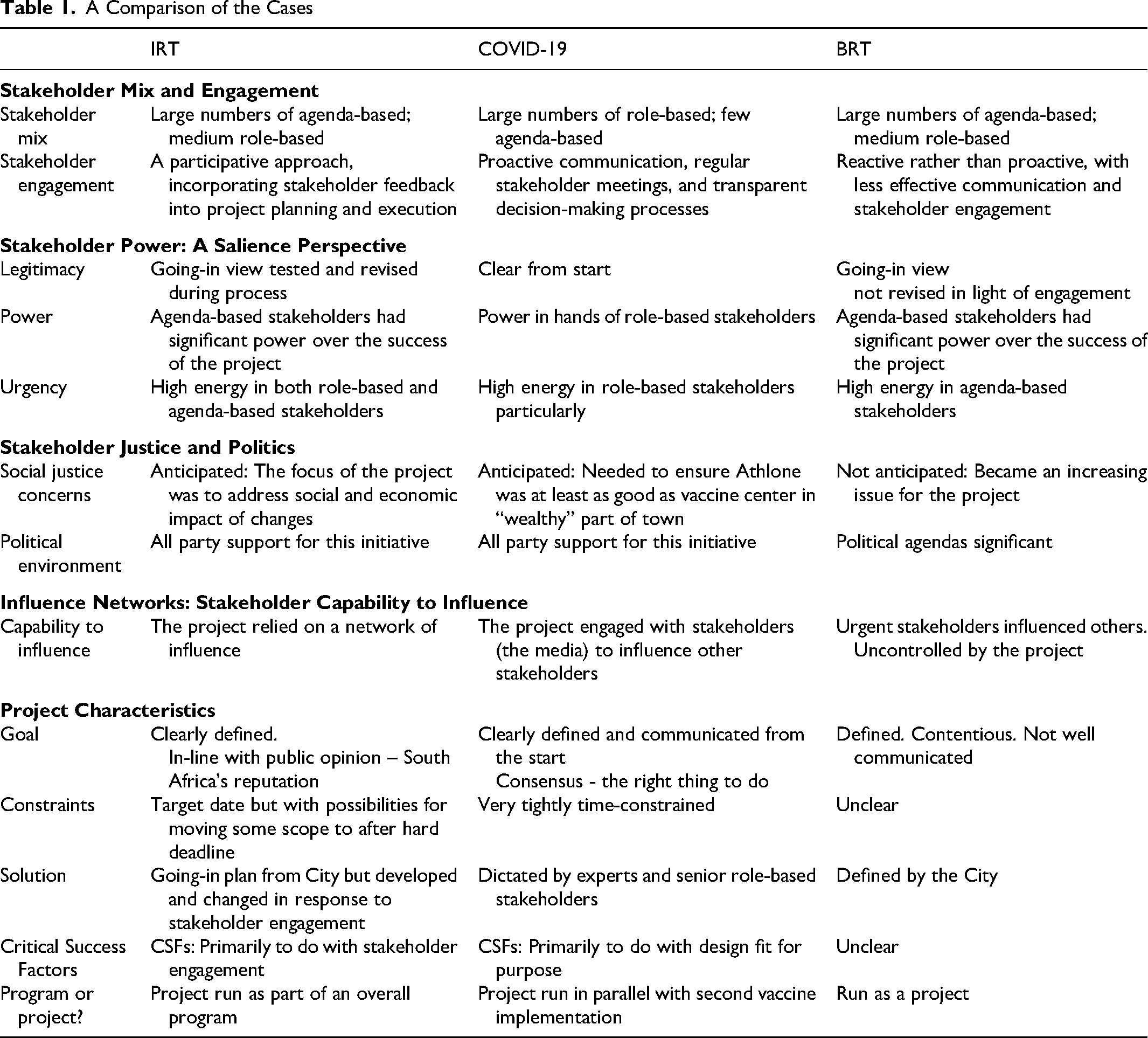
In the sections that follow, each of the factors outlined in Table 1 is examined in turn. For each, we draw on evidence from interview transcripts, workshop discussions, and secondary sources identified previously. Where secondary sources have been used, these are explicitly acknowledged.
Stakeholder Mix and Engagement
All three cases involved a substantial number of stakeholders. For the Athlone vaccination project alone, over 70 individuals and groups were identified. The other two cases also included multiple stakeholders, such as taxi associations, bus companies, and the public at large. However, the projects differed in their mix of agenda-based and role-based stakeholders.
In the COVID-19 case, there was a substantial number of stakeholders from both City and Provincial government, primarily role-based. The presence of these role-based stakeholders significantly influenced the strategies for stakeholder involvement and engagement. As noted by the project manager: “It was very important that we had the right people involved in the decision-making. When these decision-making meetings were approaching, we would communicate using every medium—first an email, then WhatsApp reminders, and finally a phone call to make sure they were going to be there.”
WhatsApp groups were frequently used to ensure fast communication and coordination, with the change manager overseeing 12 distinct groups: “We were very careful about getting the right people in the right groups. People on WhatsApp expect a fast response, so I was often responding to queries late into the evening.”
In the IRT case, the project manager emphasized the importance of engaging with taxi services (primarily agenda-based stakeholders), focusing on participation, and trust-building: “It was important that the taxi groups believed we were listening and that we would react to their input using their language, not ours. It was about creating trust with groups and individuals who traditionally did not trust the City.”
In contrast, despite involving many agenda-based stakeholders, the BRT case primarily relied on communication channels rather than true engagement. Attempts to involve the local community were poorly executed, leading to low turnout and feelings of exclusion. As Bristow (2015, p. 65) reports: “The City came to talk to the community about the new bus service that they want to implement… The meeting was held at night and the community of Imizamo Yethu could not get transport to the meeting.” Stakeholder groups felt their views were disregarded: “Our business is dying. We were not consulted and now we have just heard that a station will be opened just by the informal settlement… The City should have come down to speak to us” (Bristow, 2015, p. 68).
In the COVID-19 and IRT projects, stakeholder diversity was managed through clear role definition and structured communication. Role-based stakeholders—such as government officials, contractors, and operational teams—worked within established lines of authority, enabling coordination and timely decision-making. By contrast, the BRT project involved a more fragmented mix of agenda-based stakeholders, including community leaders and taxi associations, whose varied interests made it harder to achieve alignment. The greater the proportion of agenda-based stakeholders, the more complex and contested engagement became—often magnified when such stakeholders also held informal influence or urgency, as explored further in the following section on stakeholder power.
These differences suggest that stakeholder mix, rather than the total number of participants, was the more significant determinant of project complexity. Projects dominated by role-based stakeholders benefited from shared goals and governance structures that enabled coherence. Where agenda-based stakeholders predominated, engagement required greater sensitivity to relationships, trust, and informal influence. Managing this diversity effectively called for adaptive strategies that could bridge the divide between formal project processes and the social and political realities shaping stakeholder behavior.
Stakeholder Power: A Salience Perspective
Stakeholder salience—the degree to which stakeholders command attention and influence (Mitchell et al., 1997)—is shaped by three interrelated factors: power, legitimacy, and urgency. Together, these dimensions help explain why particular stakeholders become dominant actors in project decision-making and why others remain peripheral.
In the COVID-19 case, urgency was driven primarily by role-based stakeholders, who, given the critical public health context, imposed intense time pressures to accelerate the establishment of the vaccination center. When urgency combined with both legitimacy and power, these actors emerged as definitive stakeholders—those whose claims could not be ignored.
In both the IRT and BRT cases, urgency arose from taxi operators’ pressing need to protect their livelihoods. In the BRT project, these agenda-based stakeholders mobilized the local community, warning that the proposed turnaround facility would displace nine homes. Bristow (2015, p. 82) records that “influential members of the taxi associations managed to convince the community that this proposed plan was unfair… These members of the taxi associations threatened the City with violence if they tried to move the nine families.” Here, coercive power and moral appeals to fairness combined to generate disruptive urgency, demonstrating how agenda-based stakeholders can use influence networks to challenge formal authority.
Similarly, in the IRT case, the introduction of new MyCiTi buses posed a direct threat to existing taxi and bus services, affecting eight taxi associations, 950 taxis, and two bus companies. The project manager noted that “the taxi associations are managed by influential community members who are not averse to violent defense of their business interests.” This underscores how informal power, rooted in community leadership and economic dependence, can exert significant pressure on formal project structures.
Legitimacy—defined as the perceived appropriateness of stakeholder involvement—was comparatively stable in the COVID-19 and IRT projects, where institutional roles and governance frameworks clearly identified legitimate stakeholders. In the BRT case, however, legitimacy was highly contested. The City struggled to determine which taxi associations to engage with, consulting only those deemed directly affected. As a result, some excluded groups challenged both the process and the credibility of their representatives. One participant explained that “this is all because of the SANCO here that is not really SANCO… We have a group here with people who call themselves SANCO but they are not really registered” (Bristow, 2015, p. 69).
In summary, the interplay of power, legitimacy, and urgency varied markedly across the cases. In the COVID-19 project, power was institutional and largely constructive, enabling swift, coordinated action. In the IRT project, it was negotiated through legitimacy and trust, balancing competing agendas. In the BRT project, power was coercive and contested, amplifying urgency and eroding legitimacy. These contrasts reveal how the salience attributes interact dynamically to influence stakeholder behavior and shape project trajectories.
Social Justice and Politics
Across the cases, the pursuit of fairness and social justice emerged as a defining influence on stakeholder relations. In both the IRT and COVID-19 projects, issues of equity were explicitly acknowledged and integrated into early planning and decision-making. As the project manager for the Athlone vaccination center explained: “We were determined to ensure that the experience at Athlone was the same or better than the implementation in the center of town—the wealthier part of town.” To achieve this, the Athlone and city-center projects were managed as a coordinated program, enabling parity of service and reinforcing the principle of equitable delivery across communities.
For the IRT project, fairness was closely tied to economic justice. A critical success factor was ensuring that participation in the MyCiTi system would not disadvantage existing taxi operators. The national government publicly committed that no participating operator would be worse off in terms of income or employment (Boulle & van Ryneveld, 2015; CCT, 2010). This commitment underpinned the development of a compensation model that, while contested, provided a foundation for negotiation and eventual acceptance. As Worsley (2020) observed: “Consultation was based not on knowing what the solution was, but on facilitating stakeholders to identify the solution that could work for them.” Such participatory engagement was central to maintaining legitimacy and reducing perceptions of unfairness.
In contrast, the BRT project failed to embed social justice principles effectively. Consultation was incomplete and poorly timed, limiting genuine participation. The relocation of nine families to new housing—a decision viewed as arbitrary by other community members still waiting for homes—was perceived as a breach of distributive fairness. As Bristow (2015, p. 71) notes: “Here was a community desperate for houses, and they did not think it fair that nine families … got relatively nice homes while many other people on the housing list struggled in their shacks.” The decision fuelled community resentment and eroded trust in the City’s intentions.
The project also underestimated the role of political context. Local residents interpreted the City’s actions through a partisan lens, seeing the MyCiTi bus service as a Democratic Alliance (DA) initiative imposed on an African National Congress (ANC) ward. As one young resident remarked, “The reason why there was some conflict around the MyCiTi bus and the turnaround facility was because they live in an ANC ward and the MyCiTi bus service belonged to the DA” (Bristow, 2015, p. 75). This comment captures how political affiliation can frame perceptions of legitimacy and fairness, influencing engagement beyond the immediate project sphere.
Taken together, the cases demonstrate that social justice concerns—both distributive (who benefits and who bears costs) and procedural (who participates and how decisions are made)—can either reinforce or destabilize stakeholder relationships. Projects that explicitly embedded fairness and inclusion into their design, as in the IRT and COVID-19 examples, strengthened trust and legitimacy. Conversely, projects that overlooked these issues, as in BRT, encountered resistance amplified by political dynamics. Recognizing and managing the interplay between justice and politics is, therefore, essential to mitigating stakeholder complexity in contested environments.
Influence Networks: Stakeholder Capability to Influence
Stakeholder influence depends not only on formal authority but also on relationships, credibility, and positioning within wider social or professional networks. Across all three cases, influence was exercised both overtly—through decision-making power—and covertly, through the ability to shape opinions or mobilize others.
In the IRT case, the centrality of taxi association groups within the local transport network gave them exceptional reach. They could influence the behavior of taxi owners, drivers, and other industry actors, effectively shaping attitudes toward the project. Recognizing this, the City treated them as definitive stakeholders and invested heavily in securing their cooperation. Representatives were taken to Bogotá, Colombia, to see first-hand the public transport model on which Cape Town’s IRT was based (Boulle & van Ryneveld, 2015). This strategic exposure helped reframe perceptions and build credibility among association leaders, turning potential opposition into conditional support.
In the COVID-19 case, influence networks extended beyond formal governance channels to include trusted intermediaries such as the local media. As the change manager observed: “These groups were such an important part of our external communications strategy. In our best publicized communication, a horse and cart went through the drive-through—it was the media who approached us with the idea.” Media actors, often more trusted than official sources, amplified the City’s messages and strengthened community buy-in. As the same manager reflected: “It is not about who we can influence, but rather, who do we know who can influence others.” This highlights a sophisticated understanding of influence as relational rather than hierarchical—central to managing complexity in public-facing projects.
In the BRT case, influence rested with agenda-based stakeholders whose power derived from their embeddedness in the community. Taxi associations, integral to the social and economic fabric of IY, leveraged these ties to coordinate collective action. Their capacity to mobilize residents quickly and cohesively against the City’s turnaround proposal demonstrates how informal networks can eclipse formal engagement processes when trust in official actors is low.
In summary, the cases demonstrate that influence networks—whether institutional, media-based, or community-driven—play a pivotal role in shaping engagement outcomes. Projects that identified and leveraged existing influence pathways, as in COVID-19 and IRT, were better able to sustain cooperation and build legitimacy. In contrast, where informal networks were underestimated or excluded, as in BRT, they became sources of resistance. Mapping and engaging with these influence systems early on is, therefore, critical—not merely to identify who holds power, but to understand how that power is exercised within social and organizational networks.
Project Characteristics
While the previous sections have focused on comparing stakeholder attributes, it is equally important to consider how project characteristics themselves influence stakeholder complexity—either by shaping engagement capacity or by determining how sensitive a project is to stakeholder expectations. One critical factor is the clarity and alignment of project goals.
In both the IRT and COVID-19 projects, the goals were well defined and closely aligned with broader public values. Despite some skepticism toward vaccination, the COVID-19 program was perceived as a collective good, fulfilling the government’s responsibility to safeguard public health. Similarly, while the IRT program faced negotiation challenges with taxi operators, the overarching purpose of supporting the FIFA World Cup generated widespread social legitimacy. In each case, alignment between project objectives and societal values helped to stabilize stakeholder relationships and build shared purpose.
By contrast, the BRT project displayed features characteristic of what Lehtinen et al. (2023) describe as unwanted projects—initiatives that lack resonance with local stakeholders or are perceived as externally imposed. The project’s goals were poorly communicated and failed to connect with community priorities, leaving it without a compelling rationale that could unify support. This lack of a clear, value-based narrative amplified stakeholder skepticism and made consensus difficult to achieve.
Project constraints also play a decisive role in shaping the level of stakeholder engagement possible. The COVID-19 project illustrates how tight delivery timelines can narrow participation. The urgency to establish vaccination centers limited opportunities for broad consultation, concentrating engagement on role-based stakeholders able to act quickly. Questions concerning public acceptance and trust in vaccination were postponed to later phases, demonstrating how time pressure can force trade-offs between inclusivity and speed.
In summary, internal project factors—goal clarity, alignment with social values, and delivery constraints—function as amplifiers or dampeners of stakeholder complexity. Projects that are clearly positioned within a shared public purpose, as in IRT and COVID-19, tend to experience more constructive engagement and lower levels of conflict. Conversely, when objectives are ambiguous or misaligned with local expectations, as in BRT, even technically straightforward initiatives can become politically and socially complex. Recognizing these contextual conditions early allows project managers to calibrate their stakeholder engagement approach to the realities of the project environment.
Discussion: How the Five Drivers Interact
The case analysis surfaced five interrelated drivers—stakeholder mix, power, justice and politics, influence networks, and project characteristics. Here, we interpret how these dimensions interact to produce different levels of complexity and divergent outcomes across the three municipal projects. The IRT and COVID-19 cases succeeded largely because stakeholder relationships were anticipated, mapped, and actively managed during scoping; by contrast, BRT fell short primarily due to inadequate engagement with definitive agenda-based stakeholders. Importantly, being identified as “unwanted” (van den Ende & van Marrewijk, 2019) did not imply universal rejection: some users supported the BRT’s access goals, but power and legitimacy were unevenly distributed.
Stakeholder Mix
Stakeholder mix refers to both the number and diversity of stakeholders involved in a project, including current and anticipated future stakeholders, and whether they are primarily role-based (involved because of formal positions or responsibilities) or agenda-based (involved because of personal or group interests in the conduct or outcome of the project).
Increasing the number of stakeholders heightens communication demands and complicates decision-making, particularly when agendas diverge (Olander & Landin, 2005). Stakeholder heterogeneity also shapes the complexity of engagement needs over the project life cycle (Aaltonen & Kujala, 2016). Worsley (2020) notes that complexity is not simply a function of numbers, but also the proportion of agenda-based stakeholders, positioning projects along a stakeholder continuum from organization-neutral to stakeholder-led (Figure 1). At the high end of this continuum, stakeholder-led projects are typified by large numbers of stakeholders with considerable power and influence over the project, where the solution is shaped less by the presenting problem or opportunity and more by what stakeholders will commit to or allow.
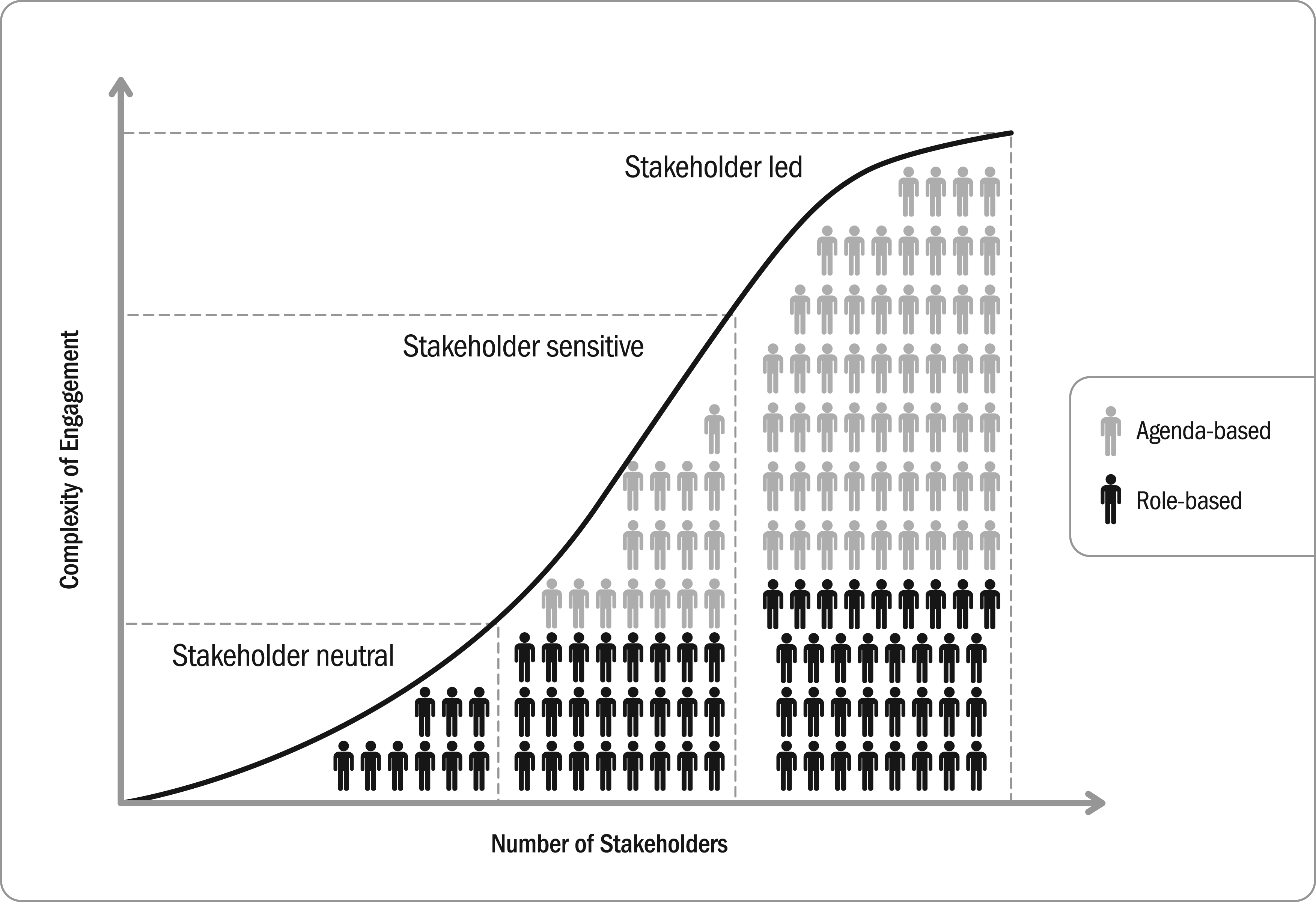
The stakeholder continuum.
However, the major difference among the three cases is not the total number of stakeholders but the mix of stakeholders. In the COVID-19 case, role-based stakeholders such as health officials, operational managers, and contracted suppliers predominated, with public perceptions addressed through separate communication initiatives. In contrast, the BRT and IRT cases featured large numbers of agenda-based stakeholders, including community groups, taxi associations, and political actors, whose interests significantly shaped project direction.
In summary, while projects with numerous role-based stakeholders encounter governance and communication challenges, those involving a higher number of agenda-based stakeholders require more targeted engagement and influence strategies. This supports the view that complexity is not a simple function of stakeholder quantity but of diversity in interests, agendas, and influence (Aaltonen & Kujala, 2016). Projects with a higher proportion of agenda-based stakeholders required adaptive engagement approaches to balance formal authority with informal power and trust-building.
Stakeholder Power
Stakeholder power was a decisive factor shaping project outcomes across all three cases, influencing whose interests dominated decisions and how legitimacy and urgency evolved over time. Following Mitchell et al.’s (1997) salience model, power interacts dynamically with legitimacy and urgency to determine which stakeholders gain prominence at different stages of a project’s life cycle.
In the COVID-19 vaccination project, power resided primarily with role-based stakeholders holding formal authority and access to critical resources. Senior executives exercised utilitarian power (Etzioni, 1964) through their ability to allocate funds and make strategic decisions. This formal legitimacy, combined with the urgency of the public health crisis, positioned them as definitive stakeholders whose claims could not be ignored. A senior City executive’s decision to include a drive-through vaccination facility illustrates how concentrated institutional power and high urgency can reshape technical priorities, even when project managers express reservations.
By contrast, in the IRT and BRT projects, power was more diffuse and contested. Agenda-based stakeholders—particularly taxi associations—relied on coercive and normative power, mobilizing social pressure and, at times, direct resistance to advance their interests. In the IRT project, such influence was moderated through sustained dialogue and negotiation, while in the BRT case, the same dynamics became destructive. Taxi groups leveraged their community legitimacy and networked influence to coordinate opposition, eventually halting progress. These patterns echo international findings by van den Ende and van Marrewijk (2019), who show how stakeholder resistance in infrastructure projects can escalate when informal authority challenges institutional power.
Taken together, the cases reveal that stakeholder power is neither static nor evenly distributed. It shifts as urgency, legitimacy, and context evolve. In COVID-19, power was institutional and constructive, enabling rapid coordination; in IRT, it was negotiated and relational, balanced through trust; and in BRT, it became coercive and destabilizing. These variations extend the salience model’s application by demonstrating how power operates as a context-dependent and evolving construct, shaped as much by political and social dynamics as by formal governance structures.
Social Justice
Social justice in projects concerns fairness in both outcomes and processes—how benefits and burdens are distributed and how decisions are made. Scholars emphasize that fairness is not a neutral concept but is shaped by the inclusivity of engagement and by underlying social and institutional values (Riley, 2008; Reed et al., 2009; Jeffery, 2009). In project contexts, justice depends on whose voices are heard, how they are represented, and whether participation is genuinely meaningful rather than procedural.
The three cases demonstrate how perceptions of justice directly affected legitimacy and trust. In the COVID-19 vaccination project, both procedural and distributive fairness were embedded from the outset. Governance structures were transparent, and the equitable treatment of communities—ensuring Athlone’s experience matched that of wealthier areas—reinforced a shared sense of purpose. Similarly, the IRT project treated fairness as an economic imperative: the government’s guarantee that taxi operators would be “no worse off” helped sustain legitimacy and mitigate resistance. In both cases, social justice was actively managed as part of the project’s moral and operational agenda.
In contrast, the BRT project failed to recognize justice as a determinant of project feasibility. Consultation processes were poorly timed and limited, leaving community members feeling excluded from decisions that directly affected them. The relocation of nine families to new housing—while others remained on waiting lists—was perceived as arbitrary and unfair, fuelling social tension and undermining procedural legitimacy. Political identity further complicated perceptions: Residents viewed the MyCiTi initiative as a party-political imposition, interpreting City actions through existing ANC-DA divides.
Across the cases, social justice emerges not as a peripheral concern but as a core driver of stakeholder behavior. Projects that embedded fairness and equity into their design and implementation, such as IRT and COVID-19, built legitimacy and resilience; those that neglected these principles, like BRT, encountered escalating opposition. Importantly, justice concerns rarely operate in isolation—they intersect with power, legitimacy, and political context to magnify stakeholder complexity. Recognizing this interplay early enables project leaders to address not only technical objectives but also the moral and political dimensions that underpin stakeholder acceptance.
Stakeholder Influence Networks
Stakeholder influence extends beyond formal authority to encompass relationships, credibility, and positioning within wider social and professional networks. Influence operates both directly—through decision-making roles—and indirectly, by shaping perceptions and mobilizing collective action. As Rowley (1997)and Aaltonen and Kujala (2016) observe, influence is embedded in the structure and dynamics of networks: actors with central or well-connected positions can access information and alliances that magnify their leverage, while dense networks of interrelated stakeholders can coordinate more rapidly and present a unified stance.
The cases demonstrate how influence networks can either enhance or undermine project outcomes. In the COVID-19 project, the City effectively leveraged existing governance and professional networks to build trust and ensure coherent communication under extreme time pressure. These formal channels were complemented by informal intermediaries such as local media, who amplified project messages and reached audiences less responsive to official sources. The understanding of influence as relational rather than hierarchical proved critical to maintaining legitimacy and public confidence.
In contrast, the IRT and BRT projects highlight how agenda-based networks can challenge institutional authority. Projects that mapped and engaged with these influence pathways early—such as COVID-19 and IRT—were able to harness networks constructively. Where influence was ignored or underestimated, as in BRT, informal actors filled the vacuum, often with destabilizing effects. Understanding who influences whom, and how that influence circulates through social and organizational systems, is therefore a defining capability for managing stakeholder complexity.
Project Characteristics
Project characteristics refer to internal factors such as timeframes, governance arrangements, and critical success criteria that shape a project’s delivery context. These features directly influence both the scope and depth of stakeholder engagement, determining how much complexity can be meaningfully managed. When a project operates under tight constraints—such as time, structure, or mandated outcomes—the capacity for dialogue and adaptation narrows accordingly.
This dynamic is evident in the COVID-19 vaccination project, where compressed timeframes and urgent public health objectives restricted engagement primarily to role-based stakeholders. Rapid delivery became the dominant success criterion, and stakeholder management focused on operational coordination rather than extensive consultation. While this approach limited inclusivity, it was effective within the constraints of urgency and accountability, illustrating how project design can deliberately narrow complexity to achieve time-sensitive goals.
In contrast, when project success depends on achieving stakeholder buy-in—as in the BRT case, where cooperation from taxi groups was essential—engagement becomes a central determinant of feasibility. Here, managerial structures and timelines failed to accommodate the necessary consultation depth, pushing the initiative into what Worsley (2020) terms the zone of infeasibility: a state in which internal delivery imperatives are misaligned with external stakeholder realities.
This finding aligns with the wider project complexity literature. Maylor et al. (2008), Cooke-Davies et al. (2007) and Bosch-Rekveldt et al. (2011) all demonstrate that internal constraints—time, cost, scope, and governance—shape how organizations classify projects and anticipate complexity. The present cases extend this insight by showing how these same constraints also condition stakeholder complexity: they determine not only what can be delivered, but who can be meaningfully engaged.
However, internal parameters alone do not explain outcomes. Aaltonen and Kujala (2016) highlight the influence of external institutional contexts—sociopolitical, economic, legal, and cultural factors that shape stakeholder expectations and behaviors. The BRT project exemplifies this tension: Rigid internal processes collided with an environment demanding inclusive, participatory consultation. The result was a mismatch between managerial rationality and social legitimacy.
Together, these findings suggest that managing stakeholder complexity requires balancing internal project control with external responsiveness. Recognizing that governance design, schedule pressure, and resource constraints all mediate the possibility of engagement reframes stakeholder management not as an add-on to project planning, but as a core determinant of feasibility and success.
Summary of Findings
Across the three cases, five interrelated sources of stakeholder complexity—stakeholder mix, power, social justice, influence networks, and project characteristics—were shown to interact dynamically, shaping both project processes and outcomes. These factors seldom act in isolation. Instead, stakeholder complexity emerges through their interdependence: Power becomes more disruptive when reinforced by dense influence networks; perceptions of injustice intensify when project structures limit engagement; and the salience of role-based versus agenda-based stakeholders shifts according to how project success is defined and constrained.
This dynamic interplay supports viewing stakeholder complexity as a systemic property of projects rather than as a collection of discrete variables. The findings confirm Aaltonen and Kujala’s (2016) assertion that stakeholder landscapes are fluid and evolving, while extending Mitchell et al.’s (1997) model of stakeholder salience by illustrating how legitimacy, power, and urgency co-evolve over the project life cycle. Similarly, Worsley’s (2020) stakeholder continuum is validated empirically here: projects at the stakeholder-led end of the spectrum demonstrate greater dependence on relational trust, adaptive engagement, and political sensitivity.
Together, these insights advance a stakeholder-centric understanding of project complexity. They suggest that project outcomes are shaped as much by the configuration and interaction of stakeholder forces as by traditional project management parameters such as scope, time, and cost. This reinforces the importance of reading and adapting to the evolving stakeholder landscape as a strategic competence.
Finally, the findings carry practical significance. By identifying early indicators of stakeholder complexity—such as diversity of agendas, concentration of informal power, or perceived inequities—project managers can anticipate where engagement must deepen or where project structures may need to flex. Understanding these dynamics provides not just an explanatory lens for past outcomes but also a diagnostic tool for managing complexity proactively in future projects.
Conclusions and Implications
This study highlights the critical role of early identification and engagement of stakeholder complexities in shaping project outcomes. The contrasting experiences of the IRT, COVID-19, and BRT cases demonstrate how proactive engagement and planning can enable success, while inadequate attention to stakeholder power and competing agendas can lead to failure.
This framework of five interrelated drivers—spanning stakeholder mix, power, justice, influence networks, and project characteristics—offers both a conceptual lens and a practical diagnostic for anticipating where engagement is likely to prove most challenging. Managing stakeholder complexity requires not only initial analysis but continuous interpretation, adaptation, and scenario planning throughout the project life cycle.
The findings extend current academic debate by showing how stakeholder salience (Mitchell et al., 1997) and environmental interpretation (Aaltonen, 2011) interact in practice. Stakeholder power, legitimacy, and urgency evolve over the project life cycle, reinforcing the idea of stakeholder landscapes as dynamic systems shaped by institutional and political contexts. This bridges theory and practice by linking abstract models of stakeholder complexity with evidence from infrastructure delivery.
The research also highlights that different stakeholder configurations demand different engagement strategies. Projects dominated by role-based stakeholders may benefit from structured governance tools, decision-making frameworks, and clear communication protocols. In contrast, agenda-based stakeholders—those driven by shared values, identities, or grievances—require more adaptive, socially informed approaches that draw on political and cultural awareness. Embedding complex projects within broader programs can also help by allowing differentiated engagement of distinct stakeholder groups. Ultimately, sustainable project success depends less on adherence to universal tools and more on a project manager’s ability to interpret the stakeholder landscape and respond with context-sensitive strategies.
Beyond its theoretical contribution, the study provides actionable insights for practitioners managing complex stakeholder environments. The following section translates these comparative findings into practical guidance for diagnosing and responding to complexity across different project contexts.
Implications for Practitioners
While formal stakeholder analysis tools were rarely used by the project managers interviewed, the power–interest or Mendelow grid was the most common, and often of limited value. Placing the sponsor or funder in the “top-right corner” seldom revealed anything beyond what was already known. This reflects a broader challenge in practice—the tendency to apply simplified models without sufficient contextualization.
Our findings suggest that the identification and engagement of role-based and agenda-based stakeholders require distinct but complementary approaches. When role-based stakeholders predominate, practitioners can strengthen governance and decision-making through techniques such as RACI (responsible, accountable, consulted, informed) matrix modeling, structured communications planning, and defined reporting pathways. Conversely, when agenda-based stakeholders are central, models such as stakeholder salience become more powerful when combined with social and political analysis. Tools such as the sociodynamic model (d’Herbemont & César, 2018;Walley, 2013), the Vested Interest–Impact Index (Bourne & Walker, 2005), and concepts like meaningful engagement (Jeffery, 2009) and social justice (Riley, 2008) offer valuable means to understand motivations and perceptions of fairness.
Projects that combine both stakeholder types—those at the stakeholder-led end of Worsley’s (2020) continuum—can be managed more effectively within program structures. The IRT case demonstrates this value: Appointing a project manager with local knowledge of the taxi industry enabled trust-building and negotiation, while technically-focused managers concentrated on engineering delivery. The BRT project, lacking this structure, struggled to secure legitimacy or alignment. This reinforces Turner and Müller’s (2005) argument that aligning project managers’ skills and leadership styles with the project’s stakeholder profile is critical.
To prevent projects from entering the “zone of infeasibility,” practitioners must reconcile internal constraints—time, governance, and scope—with the external realities of stakeholder power, justice, and influence. Only by balancing these two dimensions can projects achieve both technical feasibility and social legitimacy.
Limitations and Future Research
This study’s focus on municipal infrastructure projects provides valuable insights into public-sector stakeholder dynamics but may limit generalizability to private or technology-based contexts where stakeholder structures differ. Social justice and political influences, for instance, may be less explicit in corporate projects, though analogous issues of fairness and legitimacy often arise in other forms.
The case analysis adopted a primarily inductive, bottom-up approach. Complementary top-down studies, using theoretical frameworks such as Aaltonen and Kujala’s (2016) stakeholder landscape, could provide additional validation and extend understanding of how these complexity drivers interact.
A key area for further investigation is why stakeholder analysis models remain underused in practice. While this research points to the need for clearer guidance on selecting appropriate tools, experience with postgraduate students suggests that deeper conceptual misunderstandings of terms such as power and urgency may also be involved.
Future research could, therefore, explore how existing models might be adapted to reflect the fluidity of stakeholder relationships—accounting for shifting legitimacy, urgency, and influence over time—and how these tools can be aligned with the dynamic, uncertain environments in which contemporary projects operate.
Footnotes
Declaration of Conflicting Interests
The author(s) declared no potential conflicts of interest with respect to the research, authorship, and/or publication of this article.
Funding
The author(s) received no financial support for the research, authorship, and/or publication of this article.

Author Biographies
She has lectured on the taught Master’s Program in Project Management in the Faculty of Engineering and the Built Environment for the past 20 years, teaching Human Resources and Interpersonal Communication, and has served as course convener since 2020. She is the author of Stakeholder-Led Project Management: Changing the Way We Manage Projects (2nd edition) and co-creator of the Success Stories Shared initiative, which captures and disseminates examples of successful project practice across the South African project community.
Alongside her academic work, Louise has been a project management consultant in Europe and South Africa for more than 30 years, supporting major organizations in establishing and improving project, program, and portfolio management practices. She can be contacted at lworsley@pi3learning.com