




Abstract
Construction projects are fraught with the challenges of cost overruns, schedule deviations, and not meeting expectations. Underlying these failures are factors related to complexity, stakeholder management, and external social dynamics. The literature review highlighted research gaps, leading to conceptualizing the research aim. The study explored the roles of project complexity, stakeholder engagement, and social dynamics in the UK construction project management sector. A survey research strategy combining qualitative interview questions was employed to extract data from project professionals across the UK. Convenience sampling resulted in a high response rate from seventy-three (73) participants across the UK. Four main themes emerged: project complexity and lessons learned; stakeholder engagement and social climate; project failures and conflicts; and project success. System thinking causal loop diagramming was applied in amalgamating implications drawn from the findings. The implications noted that challenges in governance, regulation, and legislation, coupled with stringent cost and schedule targets, added to project complexity, effective stakeholder engagement, clear communication, and understanding of social contexts were crucial for project success where complexities of stakeholders and social dynamics proved difficult.
Plain Language Summary
This study considered the relationship between the challenges encountered in construction project, and how people are managed and externally influenced. The context of the study is the UK. 73 interviews were conducted and analysis was done manually. The findings reflected the need for more effective people management in all construction projects.
Introduction
Common reasons for construction project failure were identified as cost overruns, schedule slips, and under-delivering on expectations (Nguyen & Chileshe, 2015; Omotayo, Kulatunga, & Awuzie, 2022; Urgilés et al., 2019). However, there are underlying causes of project failure that pertain to complexity, stakeholder management and external social dynamics. The perception of success or failure has been defined as being dependent on who has established the metrics and is making the assessment (Young, 2013), with a need for project management to clearly define the success factors (Müller & Jugdev, 2012) and that as projects are unique (Association for Project Management [APM], 2012, 2020; Project Management Institute [PMI], 2017) success can be judged differently (Bredillet, 2010). However, two-thirds of the projects from the UK construction industry, oil and gas sectors, and government projects are said to fail by not meeting the defined primary objectives from the iron triangle, that of time, cost and quality (Lock, 2018; NAO, 2011). It would suggest that the project management profession may need to re-evaluate the approach to project delivery.
Project performance could also suffer due to allowances needing to be made for cognitive errors and human biases (Cascetta et al., 2015; Heathcote, 2022). Specifically, relating project performance to the impact on accurate planning and cost predictions within project delivery could support the point that careful consideration needs to be given to team selection, engagement, and the culture created within organizations delivering projects (Andrić et al., 2019). It is clear then that a performance-related issue has existed significantly. In contrast to this, the need for project management to be viewed as a social process is a relatively new concept and discussion topic, with suggestions being made for a need to move away from the standard project delivery tools and techniques associated with the hard paradigm and to focus on the social structure and interactions that take place within project delivery (Cicmil et al., 2006, Heathcote & Coates, 2018, Pollack, 2007; Winter et al., 2006). The APM and the Project Management Institute (PMI) body of knowledge both define projects as “a unique, transient endeavor undertaken to achieve planned objectives” (APM, 2012, p. 12) and “a temporary endeavor undertaken to create a unique project service or result.” (PMI, 2017, p. 4). Therefore, it is evident that project delivery is not a routine operation for any organization. Other authors support this principle by identifying that no two projects are identical. Lock (2018) notes novelty as the principle identifying characteristic and that it can be a step into the unknown, fraught with risk and uncertainty. This would suggest then that a flexible approach to delivery could be required rather than rolling out a standard set of defined project management planning tools and techniques, such as Gantt charts, Work Breakdown Structures (WBS), Building Information Modelling (BIM), Excel and contractual agreements that force clients and contractors to act in an adversarial manner with conflicting goals and transferring risks between the organizations (Heathcote et al., 2018) rather than taking a collaborative team approach to project delivery.
With such a complex breadth of factors to be considered, it is no surprise that many companies exist offering personality profiling tools and techniques, such as “Belbin” and “Myers-Briggs,” and that various authors have discussed their views and opinions on its relevance and importance (Clifton, 2008; Johnson, 2017; Maylor, 2010; Reiss, 2007). It could therefore be that a key piece in the jigsaw to delivering successful projects is the social processes within and that selecting the right project team members, made up of a mix of employees with relevant skills, experiences, attributes and knowledge consideration being given to cultural traits could affect the success to create a fully functional cohesive project team (Gladwell, 2009). This would suggest demonstrable flaws within the discipline of project management through the lived experience of project deliveries and the potential for further opportunities to be realized.
Literature Review
Project Complexities in Construction
Project complexities in construction have been a focal point of academic research due to their profound impact on project success. Luo et al. (2017) studied into the relationship between project complexity and success in complex construction projects, highlighting the absence of a mature scale for measuring the complexity of such projects. This sentiment is echoed by Ma and Fu (2020) who emphasize the need to understand the influence of project complexity on mega construction project success. Their qualitative comparative analysis method offers a nuanced approach to dissecting the intricate interplay between complexity and success. Luo et al. (2020) further contribute to this discourse by introducing a hybrid SEM–FCM method, to stress the importance of this research for project managers aiming to achieve project success (PS) in intricate construction endeavors. Marnewick et al. (2017) broaden the scope by exploring the symbiosis between information system project complexity and project success, suggesting that the dynamics of project success are not solely confined to construction. Müller et al. (2011) pivot the discussion toward leadership, examining its competences on project success across varying project complexities. Their findings underscore the pivotal role of leadership in navigating the challenges posed by complex projects. Mata et al. (2023) introduce an intriguing dimension by examining the impact of absorptive capacity on project success, highlighting the mediating role of strategic agility and the moderating influence of project complexity.
Stakeholder Engagement in Construction Projects
Stakeholder engagement has emerged as a pivotal element in the success of construction projects. Buertey et al. (2016) highlighted the repercussions of inadequate stakeholder consultation and engagement, suggesting that the success of projects is intrinsically linked to the depth and quality of stakeholder involvement. This sentiment is also echoed by Saad et al. (2022) in advocacy for the incorporation of best stakeholder management and engagement practices in construction project planning and execution. Saad et al. (2022) further posit that the impact of stakeholder management on project success is moderated by the awareness of stakeholder management, implying that a conscious understanding and application of stakeholder management principles can amplify project success. Rowlinson and Cheung (2008) argued that stakeholder engagement and management play a crucial role in aligning participants and harmonizing their perspectives on project management. Rowlinson and Cheung (2008) suggested that a concerted focus on stakeholder engagement can bridge the gap between diverse stakeholder perspectives, fostering a cohesive approach to project success. Klaus-Rosińska and Iwko (2021) studied small construction companies and elucidated the often-underestimated significance of stakeholder management as a determinant of project success. Klaus-Rosińska and Iwko (2021) contend that construction projects involves a plethora of stakeholders, each bringing unique expectations and perspectives. Thus, effective stakeholder management becomes not just beneficial but essential for the sustainable success of construction projects. Stakeholder engagement is not merely an ancillary aspect of construction projects but a central pillar underpinning their success. Effective stakeholder management, underlined by awareness, alignment, and empowerment, can significantly enhance the prospects of project success in the construction domain (Buertey et al., 2016; Klaus-Rosińska & Iwko, 2021; Rowlinson & Cheung, 2008; Saad et al., 2022).
Social Dynamics of Project Successes and Failures
Project success is among the top priorities for project managers (PM) and stakeholders. Success in projects is not directly proportional to the quality of project management (Reiss, 2007). The theory of project management described within the PMBOK, produced by APM and PMI, explains a structured, methodical process to maintain stability, order and control throughout the project delivery. Nevertheless, many PMs and academics speak of project actuality and the lived experience being very different to the text (Cicmil et al., 2006; Heathcote, 2022), at times being more akin to that of jugglers and plate-spinners (Winter & Thomas, 2004) than that of the controlled method explained within the PMBOK.
Poor project performance in the UK construction industry has been noted as concerning by Barlow (2000), with Merrow (2012) reporting that only 22% of mega projects could be classed as successful of the 78% deemed to be unsuccessful. Merrow (2012) stated that the reasons for failure were attributed to cost overruns at 33%, time overruns at 30% and the remaining failures being assigned to not delivering the intended benefits in the first 2 years due to production issues. This issue is not isolated to the oil and gas sector alone. The National Audit Office (NAO) examined 40 major government projects and reported that 66% were either completed over schedule, over budget or did not deliver the intended outcomes (NAO, 2011). Additionally, 5 years later, a briefing from the same department summarized that 34% of major projects were highlighted to be at risk of successful delivery unless action was taken (NAO, 2016). The same report, repeated 2 years later, echoed this stating that 21% of projects leaving the portfolio had significant issues needing to be addressed (NAO, 2018). Therefore, it is evident that across a broad range of sectors, the project management profession continues to struggle to deliver an acceptable level of successful projects to meet stakeholders’ expectations. The current situation is not showing any improvement. Suggestions have been made that there is an increasing emphasis within project delivery toward that value creation, as opposed to product creation (Heathcote, 2016; Winter et al., 2006). That value case benefits realization and whole life costs should be considered to aid with correct project selection and achieve successful outcomes. Cicmil et al. (2006) identify systemic models produced to analyze why complex projects can fail. One important finding was that conventional actions taken to accelerate an already failing project by the management teams could exacerbate the issues, as the actions taken were unsuitable or damaging, suggesting that a more unconventional approach, such as the lean or agile methods, would have been more suitable.
Cicmil et al. (2006) identify that project management has been criticized for its reliance on the functionalist and instrumental views of time, cost and quality. Cicmil et al. (2006) opined that by researching project actuality, it will be possible to attempt to answer some of this critique, with consideration being given to the value, social settings, human interactions and holistic thinking. Cicmil et al. (2006) also suggested that further understanding of human actions is required along with a theoretical shift from normative approaches of project performance toward a developmental one that focuses “on practical action, lived experience, quality of social interaction and communicative relating, operations of power in context, identity, and the relationship between agency and structure in project environments.” (Cicmil et al., 2006, p. 684). Winter et al. (2006) argued that projects are more complex and unpredictable than the deterministic model defines and that new ways of thinking would be required, suggesting that focus should be toward the flux of change, the social interaction and human action with the framing of the project.
Research Gap: The Interrelationship Between Project Complexities, Stakeholder Engagement, and Social Dynamics Roles in Construction Project Outcomes
Project complexity and stakeholder engagement are hinged on social contexts, which are often exogenous. Conversely, project successes and failures depend on the hard and soft paradigms as discussed by, Heathcote (2022), Koskela and Howell (2002), Pollack (2007), and Stingl and Geraldi (2017). The aforementioned authors conducted their studies without considering the interconnectivity between the dynamic realities of project complexity, stakeholder engagement and social contexts. The studies elucidated in the review were also conducted before the 2020 decade. This study intends to expound on the new era of project success and failures through the lenses of project leaders in the UK, considering the latest information technology (IT) and managerial behavioral changes.
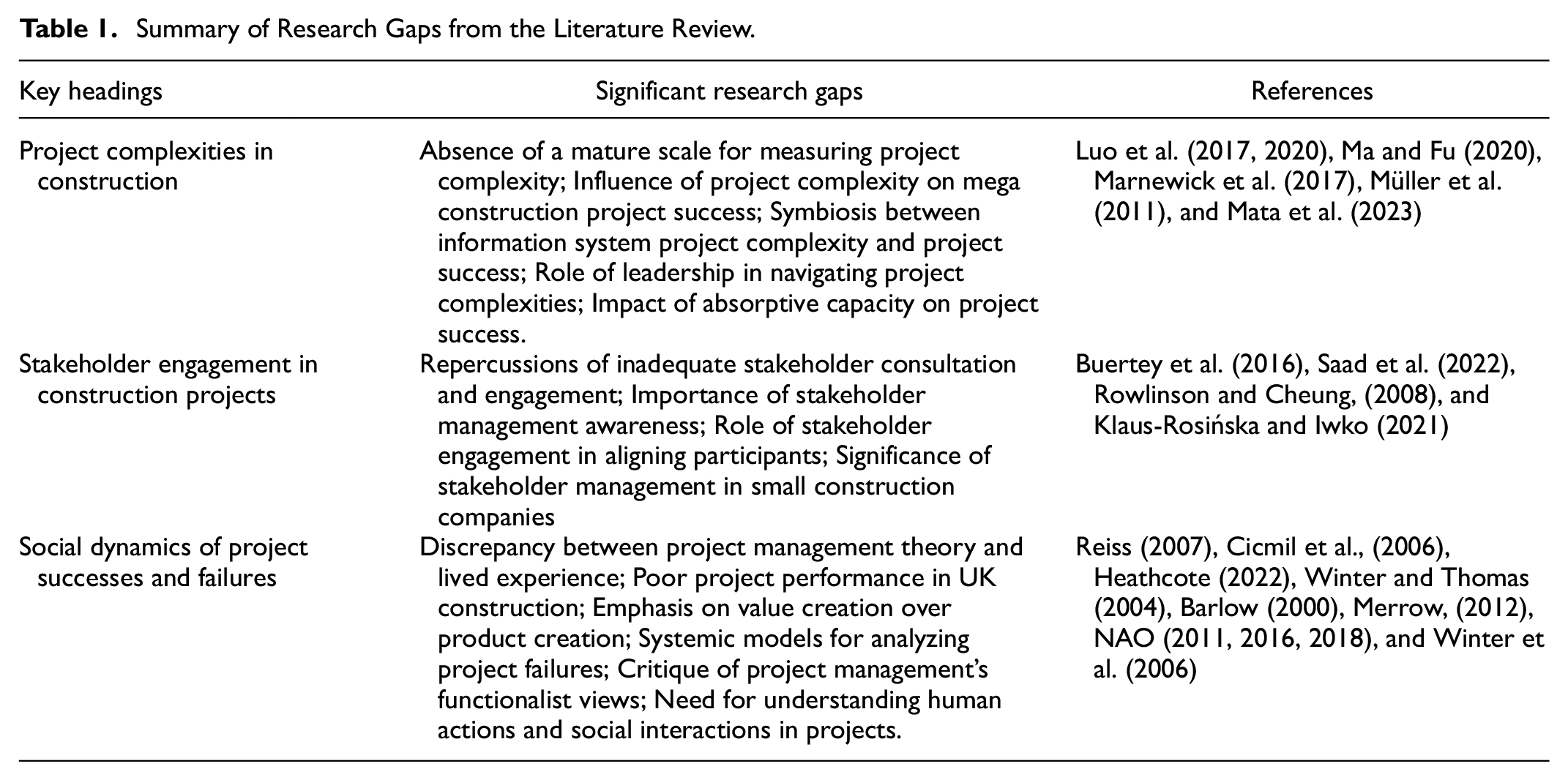
The research gaps identified from the literature review sections as presented in Table 1 led to the conceptualization of research aim. This research aims to investigate the interconnected roles of project complexity, stakeholder engagement, social dynamics, and other critical factors in influencing the outcomes of construction projects with a focus on the UK construction project management sector. The primary objectives are to identify and synthesize themes of construction project success from the UK context and explicate panaceas intricate panacea for project success in all construction project sectors such as energy, building, civil, and oil and gas. Hence, stakeholders from these categories of projects will form the cohort of respondents as applied in the method and materials section.
Summary of Research Gaps from the Literature Review.
Methods and Materials
The survey research strategy encompasses qualitative interviews and quantitative questionnaires (Melnikovas, 2018; Wisker, 2018). This study’s qualitative interview approach of surveys was chosen because it enables the respondent to share their professional and individual experiences (Omotayo & Kulatunga, 2015). Convenience or accidental sampling, a non-probabilistic sampling approach which depends on the ease of accessibility of the researcher to reach participants, was applied in this study (Saunders et al., 2019; Wisker, 2018). This approach allows the researcher to reach a broader sample frame of participants when compared with purposive, quota or snowballing sampling techniques. Hence, the targeted sample frame across the United Kingdom (UK) was construction professionals cutting across construction, energy, oil and gas construction and the general infrastructure sectors. The interview participants were recruited through LinkedIn. Five (sessions) joint interviews mimicking focus groups were conducted for 45 min on MS Teams to elicit the themes of construction project success failures, complexity and social constructions from dynamic perspectives. The interview questions achieved a high response rate of seventy-three (73) participants across the UK. It focused on a target audience of project management professionals employed as project sponsors, directors, managers, engineers, planners, and other key project management office team members within the UK Construction Industry. The broad range of questions asked during the interview were:
What key factors have led to successful project delivery?
What key factors have led to unsuccessful project delivery?
What key factors were implemented for a failing project to bring it back under control, and was the approach taken successfully?
Have you experienced conflict within the delivery of projects, if so, what was the source of the conflict, and how was it resolved?
What could have been done better or should be repeated to create or maintain an effective social climate within project delivery?
How do you believe projects could be executed better?
What do you believe is key to future successful project deliveries?
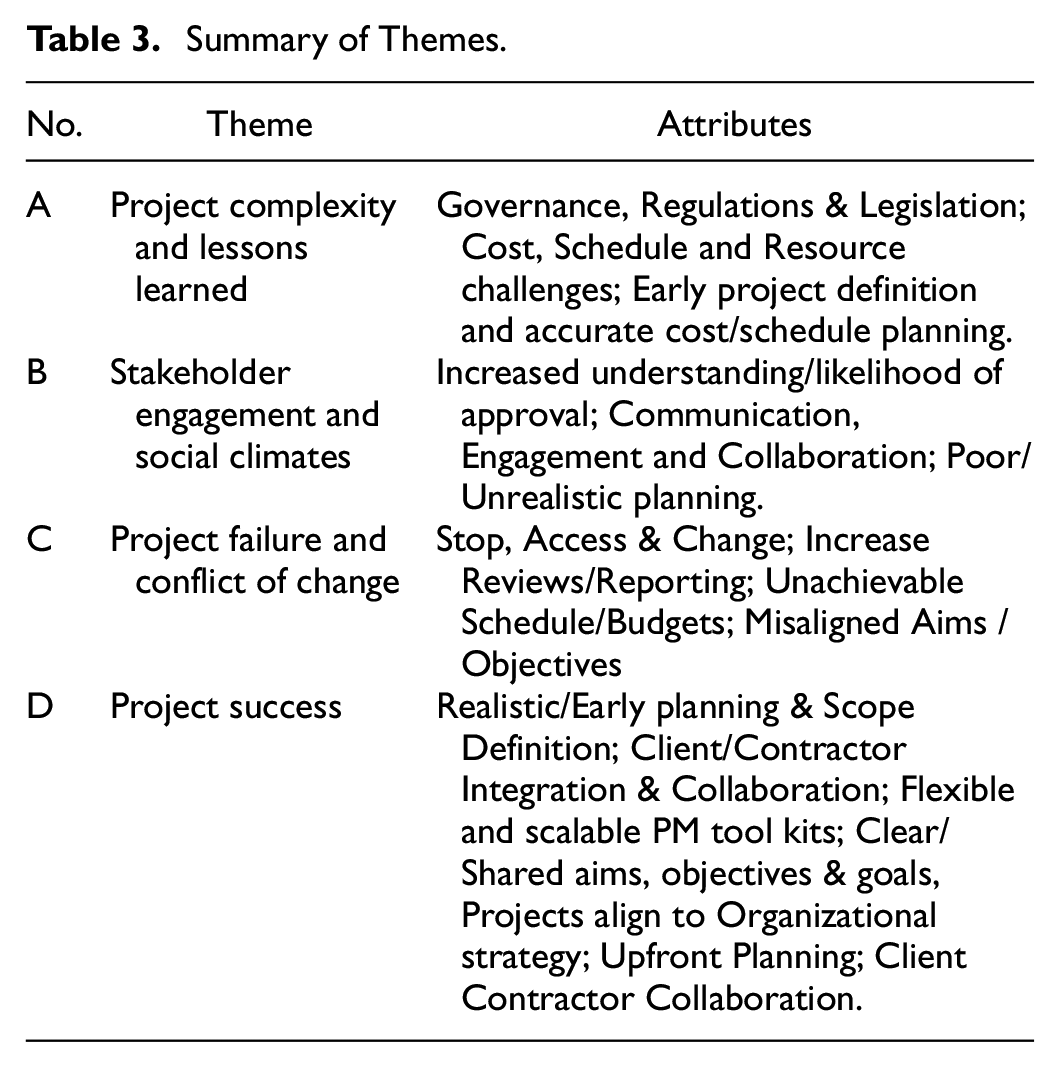
The findings of this study were further analyzed using system thinking to connect the relationship between project complexity, stakeholder engagement, and dynamic roles that influence project outcomes. Systems thinking in the context of this study is a non-linear approach to connecting the dots between specific variables within a structure (Awuzie et al., 2021; Omotayo, Kulatunga, & Awuzie, 2022). The causal loop diagramming approach within systems thinking illustrates the associations between attributes and typologies. Consequently, Table 3 was used as the basis for designing the causal loop diagram. The “+” and “–” individually denote positive and negative influences. “R” and “B” represent reinforcing and balancing loops. The arrows signify the direction of the loop.
The research design for this study as illustrated in Figure 1 presented an overarching overview of the study’s approach to the research methods, data collection, thematic analysis, system thinking and eventual presentation of the narrative surrounding the implications of the study. The next section explains the profile of the research participants prior to thematic analysis.
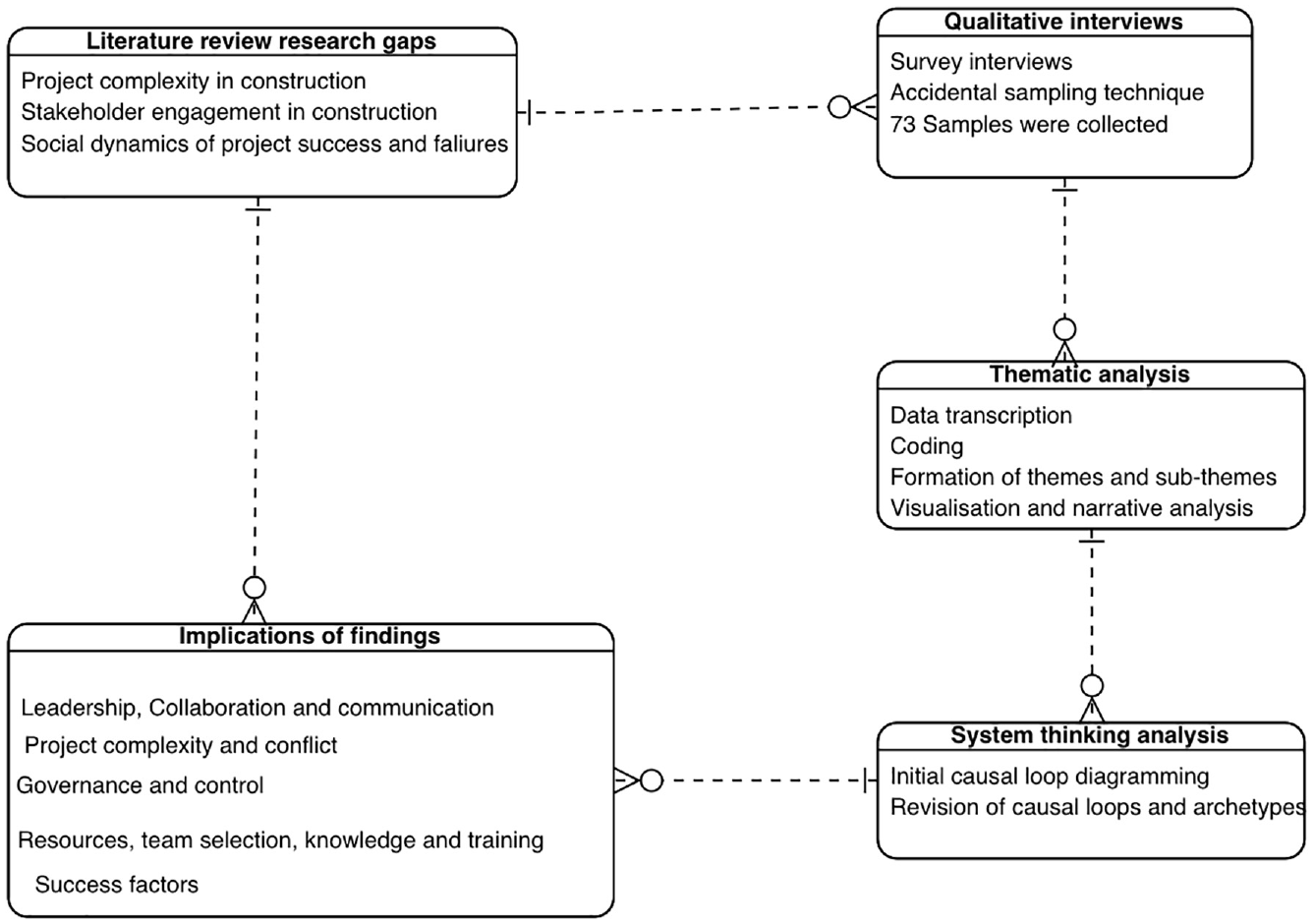
Research design conceptual framework.
Interviewees’ Profile
This extensive qualitative data collection from 73 interviewees currently practising project management supported a detailed analysis of the trends and themes within project delivery performance, along with gathering views and opinions on areas that the profession could look toward for improvements. The data was initially analyzed in detail to ensure the authors had familiarity, in-depth knowledge and engagement with the feedback. Responses to the open-ended questions were consolidated into tables, allowing an initial analysis to be carried out before being grouped into broader categories for a summary of the findings, with codes assigned for later thematical analysis. This allowed the responses to be grouped into seven data segments, as expanded on in the following subsections, before moving forward with the analysis to search for and review themes within the data.
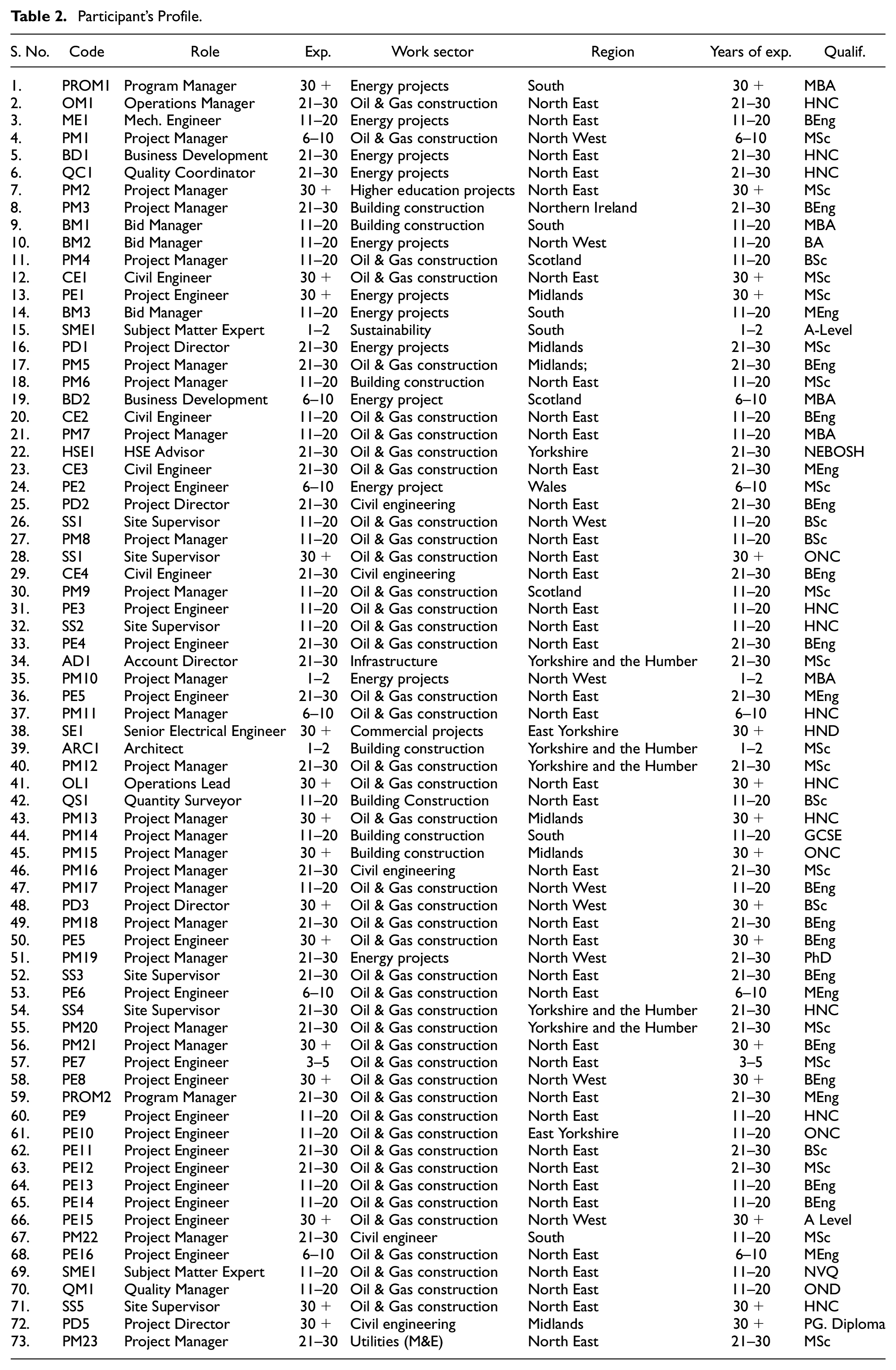
Table 2 provides a comprehensive list of professionals from construction, energy, and engineering sectors. The roles range from Program Managers to Site Supervisors, with specific experience brackets, such as “30+” indicating over 30 years, 21 to 30 years experience, 11 to 20 years, 6 to 10 years, and 3 to 5 years and 1 to 2 years of experience . The work sectors are diverse, encompassing areas like “Energy projects,”“Oil & Gas construction,” and “Building Construction.” Each professional is associated with a specific region in the UK, such as “South,”“North East,” and “Yorkshire and the Humber.” The “Years of exp.” column reiterates the experience bracket, while the Qualif, column denotes their highest educational or professional qualification, with designations like “MBA,”“BEng,” and “HNC.” The table serves as a detailed roster of professionals, highlighting their expertise, work domain, and academic credentials. The findings produced by the interviewed were analysis thematically and the findings presented in charts and tables. The narrative of findings applies specific quotes from the respondents to support the discussions.
Participant’s Profile.
Analyses
Interview Thematic Analysis
The data collected from the interview process was analyzed manually using the thematic process to identify codes with similar occurrences. The thematisation process applied the percentage of occurrence of semantics applicable to the aim of the study, which is to create an interconnected role between project complexity, stakeholder engagement, social dynamics, and other critical factors in influencing the outcomes of construction projects with a focus on the UK construction project management sector. The following thematic steps as applied by Schmidt and Hunter (2015) and Omotayo, Awuzie, et al. (2022):
Transcription of the audio-visual data into texts.
Categorization of the transcribed data to produce contexts.
The research aim informing the study was used in categorizing the attributes and was analyzed quantitatively (in percentages of co-occurrence in this study).
The categories with the highest frequencies of co-occurrence were combined as themes.
The themes were broken down into codes to present the research outcomes descriptively in an explanatory manner.
Review of themes to check if they work well.
Defining and naming themes for identification of sub-themes
Narrative analysis to present and discuss findings using the codes, contexts of participants and scholarly works.
Table 3 presents the four (4) themes extracted from the analysis, including project complexity and lessons learned, stakeholder engagement and social climates, project failure and conflict, and project success. The subsequent section disc uses the contexts of the themes using the codes from Table 3 and associated quotes from the interview participants. The table categorizes various themes and attributes related to project management. Theme A, titled “Project Complexity and Lessons Learned,” was hinged on Figures 2a and b, and this discusses the challenges faced in governance, regulations, legislation, cost management, scheduling, and the importance of early project definition. Figures 3a and b produced Theme B, “Stakeholder Engagement and Social Climates,” emphasizes the significance of understanding stakeholders, effective communication, collaboration, and the pitfalls of poor planning. Figures 4a to c is about Theme C, “Project Failure and Conflict of Change,” which highlights issues like abrupt stops, increased reviews, unattainable schedules or budgets, and misaligned objectives. Lastly, Figures 5a to c generated Theme D, “Project Success,” which outlines the attributes contributing to a project’s success, including realistic planning, integration between clients and contractors, flexibility in project management tools, clarity in aims and objectives, and alignment with organizational strategies. The next section expounds on the four themes produced from the analysis.
Summary of Themes.

Theme A showing the attributes of project complexity and lessons learned: (a) project complexity and (b) lessons learned.
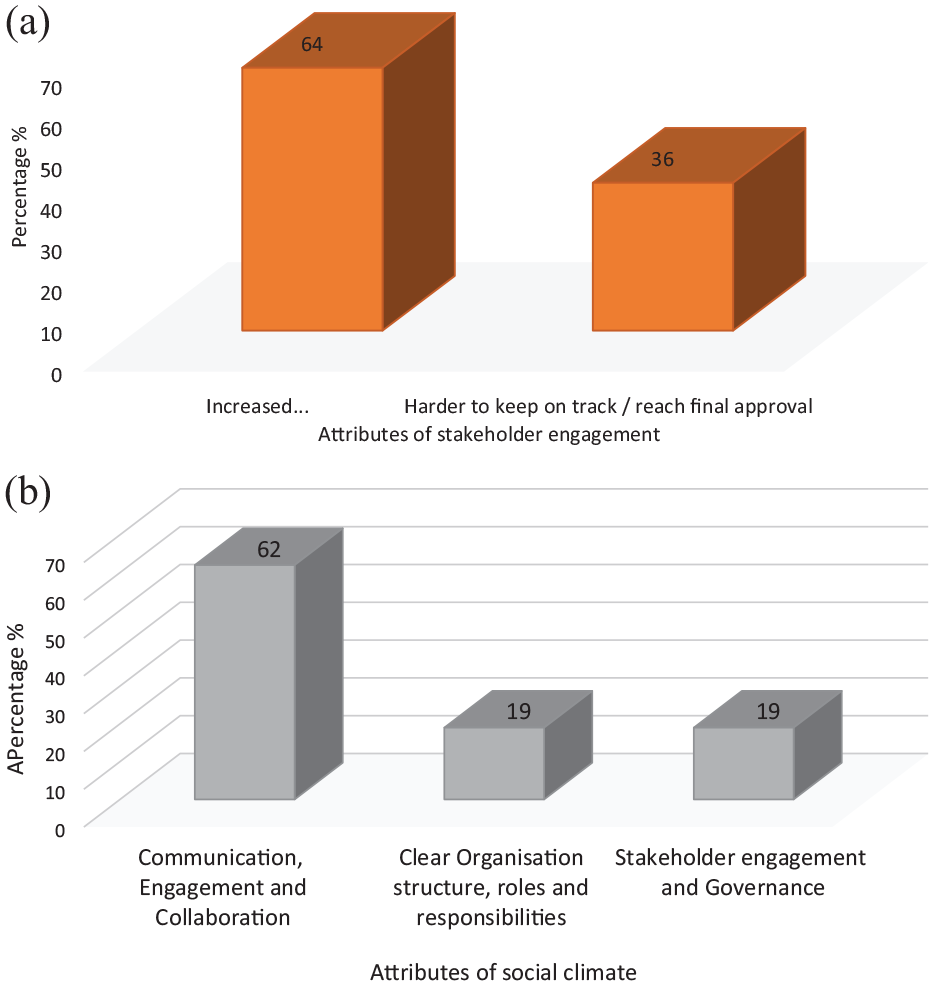
Theme A showing the attributes of stakeholder engagement and social climate in construction: (a) stakeholder engagement and (b) social climate.

Theme C shows the attributes of failure causes, regaining control and conflict causes: (a) failure causes, (b) regaining control, and (c) conflict causes.

Theme D shows success factors, improvement opportunities, and future success attributes: (a) success factors, (b) improvement opportunities, and (c) future success.
Discussion of Findings
Theme A—Project Complexity and Lessons Learned
Theme A focused on project complexity seemingly increasing and incorporating lessons learned from previous project deliveries, aiming to highlight gaps and opportunities for further development. This identified that increased governance, regulations and legislation, as challenging cost, schedule and resource targets, contributed to making project deliveries more complex. Interviewee PD5 noted that the “Increased number of interfaces and stakeholders” contributed to this complexity. Interviewee PM23 also noted that: “…the same complexity remains, sometimes the controlling bureaucracy gets overwhelming; that’s not the project, though really.”
A review of the data from lessons learned for the same group identified that opportunities could exist by implementing FEL for the project design, performing accurate planning and producing realistic budgets and schedules along with the creation of a collaborative work environment, with interviewee PE3 acknowledging a key learning being “the relationship between contractor, or at least their supervisor and the client end user is paramount,” a point supported by Heathcote (2022) whilst discussing contract strategies to avoid adversarial relationships. During the COVID-19 pandemic, construction projects suffered from project delays (Ogunnusi et al., 2021). Project complexity in construction is malleable and unexpected events can turn the tide toward unfavorable uncertainties.
Theme B—Stakeholder Engagement and Social Climates
Theme B targeted the subject of collaborative stakeholder engagement and the social climates within project teams to identify any correlation between the two topics that could be explored further. Pollack (2007) noted that the social construct of projects is key to allowing stakeholder engagement. The findings suggested that achieving a high level of stakeholder engagement increases the likelihood of project approval by having an aligned understanding within the project team. Interviewee PM12 stated that they ensure the stakeholder’s “views were aired, considered, and documented,” and interviewees CE3 and PM2 supported this, acknowledging that stakeholder management is integral for project team formation. The outcomes suggest that success could be realized through having a project climate that promoted team engagement, collaboration and strong communication, with PE1 declaring that “regular face-to-face meetings with all relevant parties” were key to maintaining the effective social climate. Cascetta et al. (2015) and Erkul et al. (2019) agreed that small groups make collaborative stakeholder engagement and project social climates more efficient. The culture of information flow in managing stakeholders’ expectations within project organizations plays an important role in project success.
Theme C—Project Failure and Conflict of Change
Theme C concentrated on historic projects, specifically looking at causal factors that led to their failure, conflicts within the delivery and how control was regained to identify trends and opportunities within the data that could be implemented into future project deliveries to increase the likelihood of success. The findings from the analysis highlighted that historic project failures stem from adversarial relationships, as noted by interviewee PD2. Weak PM skills set through lack of communication and poor teamwork, unrealistic or poor planning, weak business cases and poor scope definition were also noted by CE1. These are all required strengths that the PMI (2017) suggest the PM should hold. When reviewing causal factors of conflicts within project teams, similar themes were highlighted, identifying that contributing factors were “unachievable schedule and budgets” as noted by interviewee QS1, misaligned aims, objectives and goals, lack of dedicated resources, clash of personalities, poor communication and adversarial relationships. To regain control, it is suggested that the project would need to stop to assess the current situation, implement change, increase project reviews and reporting, review the resource availability and suitability and consider team-building exercises to improve collaboration, integration and engagement. Interviewee PE3 also stated that A “Change of project leader, additional resource, Additional meetings between client and contractors..” might be necessary to bring the project back on track. The project manager’s skills in managing budgets, schedules, budgets, stakeholders and risks portend the probable outcomes of project success or failure (Kineber et al., 2021; Omotayo, Kulatunga, & Awuzie, 2022). Construction projects of varying scales or complexity correlate with disputes that may emerge (Omotayo, Kulatunga, & Awuzie, 2022). Simpler projects with shorter durations and lower costs have fewer risks and vice versa.
Theme D—Project Success
Theme D centered on what the coded group identified as key factors needing to be incorporated into future projects to ensure successful delivery. This identified that success is likely to be achieved through the organization being people focused, having the right resources in place, with common aims, objectives and goals and having projects that are aligned to the organizational strategy, with interviewee PM9 noting that “leadership, behaviors and integration to create a successful operating environment” was crucial. A set of flexible and scalable tools and techniques, with “clear gate reviews” (PROM1), a fixed scope, realistic budget and schedule achieved through upfront “interactive planning session” (PM7), client and contractor collaboration and implementing lessons learned, alongside upskilling of PMs and the project teams through training and development were all key contributors to success. These are all areas identified by Young (2013) and Omotayo et al. (2020) when discussing how to create success, suggesting that the discipline has not moved very far within the last decade.
System Thinking Causal Loop Diagram: Relationship Between Themes Through
Themes B and D underscored that a positive social atmosphere contributed to better project outcomes. Theme B emphasized that collaborative stakeholder engagement raised the chances of project approval. Theme A revealed that increased governance, regulations/legislation, stringent cost/schedule/resource objectives, and a growing number of interfaces/stakeholders led to heightened project complexity and interfaces with themes B and D. Theme C demonstrated that adversarial relationships, inadequate communication/teamwork, and poor planning resulted in conflict and failure. Theme D pinpointed adherence to governance, such as stage gate reviews, and employing scalable delivery tools and methods as essential for success. Theme D recognized training, development, and upskilling as vital elements in highly effective teams and successful projects. Themes B and D reiterated that a positive social environment led to enhancements in project delivery. Themes C and D found that unrealistic planning and imprecise scope definition contributed to project failures, while communication, collaboration, and trust were recommended to improve success rates. Theme D suggested that organizations should focus on people, shared objectives, collaboration, and engagement and ensure the availability of appropriate resources.
Figure 6 applied the systems thinking causal loop diagram to demonstrate the interplay between the themes and their associated drivers. The themes in Figure 7 indicate the dominant process success associated with reinforcing loop R1 to emphasize the relevance of client/contractor integration and collaborations in projects as part of upfront planning. Hence, early contractor involvement can promote project success. In Figure 8, R2, project failures are grounded on stoppages, increased reporting, cost, and scheduling challenges. In Figure 9, project failure is also influenced by misaligned and unachievable project objectives and budgeting. R3 and the balancing loop B1 drive project complexity, lessons learning, and stakeholder and social climate. Hence, unrealistic planning, communication and engagement with relevant stakeholders are integral to overall project success.
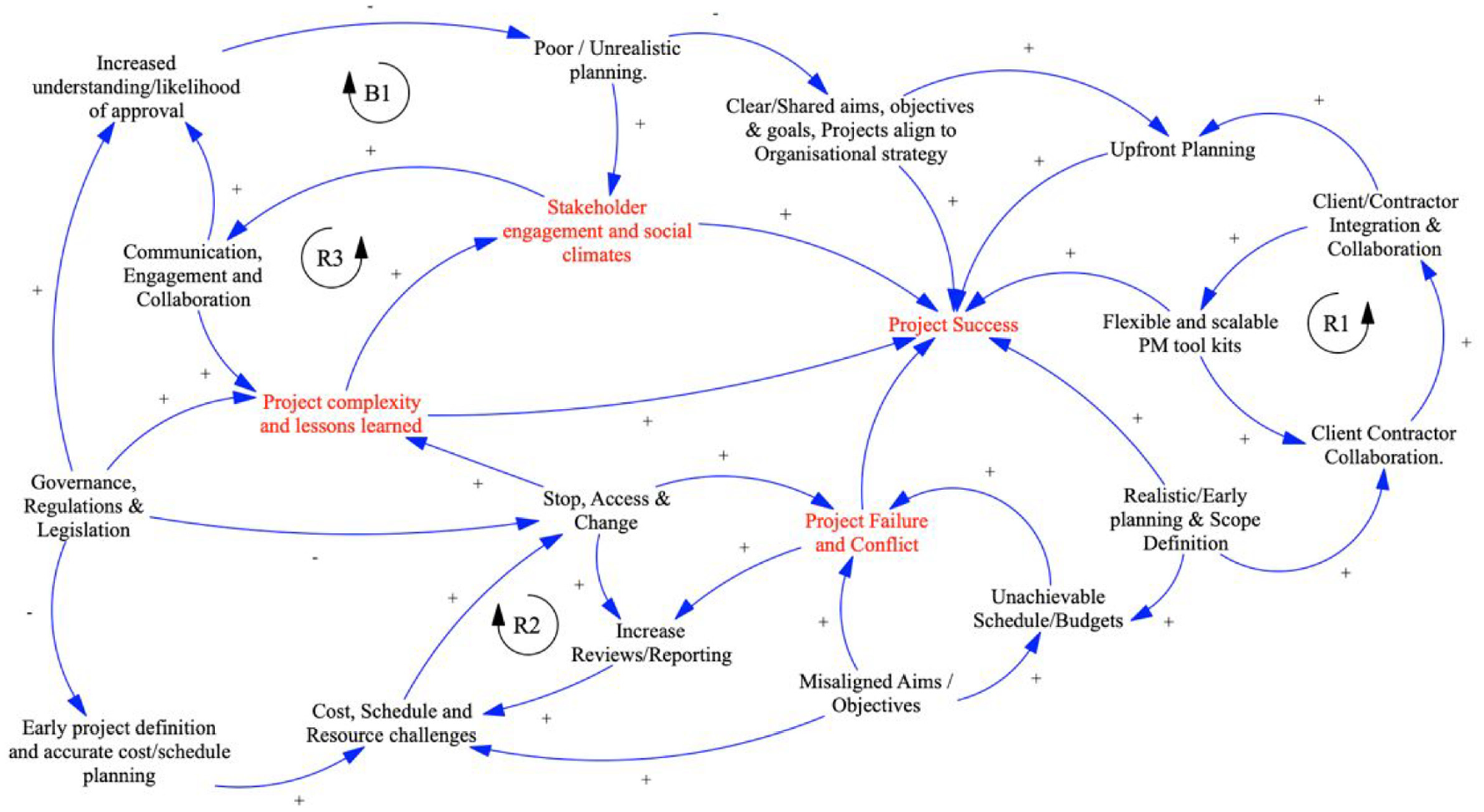
Causal loop diagram showing the relationship between the themes.

Reinforcing loop 1.
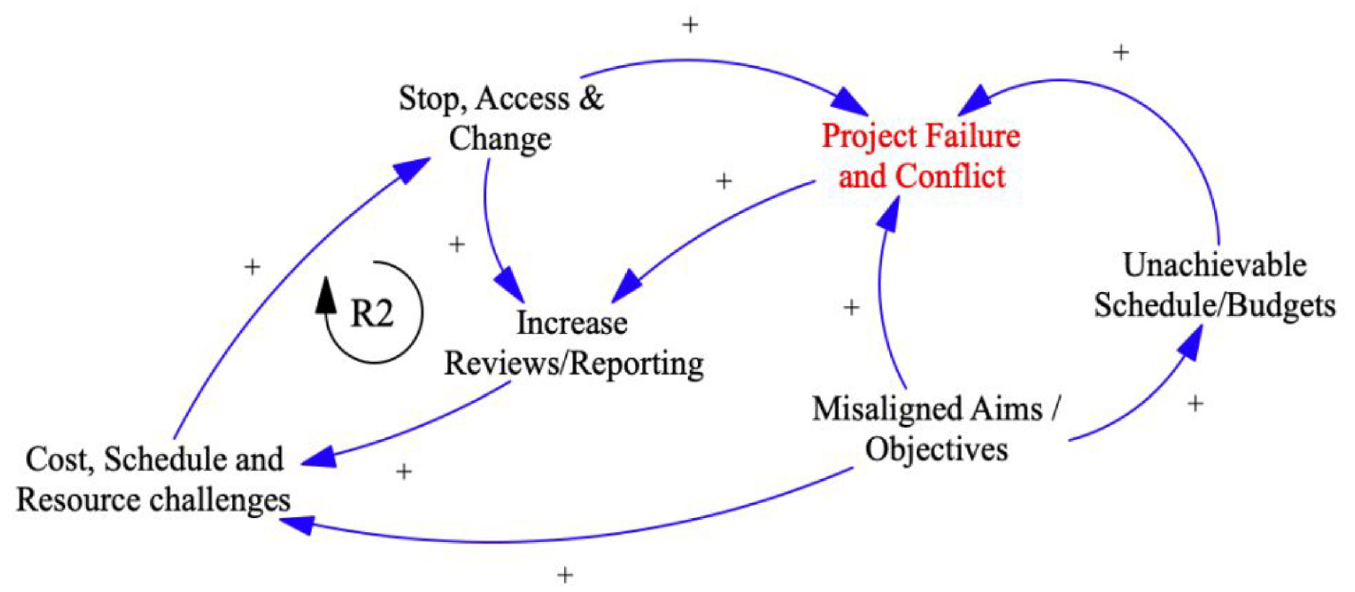
Reinforcing loop 2.

Balancing loop 1 and reinforcing loop 3.
Implications of Findings
Leadership, Communication, and Collaboration
Results from the questionnaire suggest that most of the leadership and management roles within the delivery of projects are occupied by employees with qualifications of degree level or above. However, good leadership skills, maintaining regular communication to create a collaborative working environment with a high level of team engagement and a clear vision of the project objectives and goals through routine update meetings were essential to achieving project success. This is supported by research from Dalcher (2017) and Heathcote (2022), where addressing leadership and people elements were identified as key to advances in project management. Being an inspirational and charismatic PM, supervisor or leader was identified as essential in positively impacting the project outcome. The benefits associated with this leadership style included increased motivation, engagement and collaboration, and a positive culture for team members going the extra mile to deliver projects. To maintain an effective social climate within project teams, effective, regular and clear face-to-face communication was identified as key to creating a feeling of safety and security. This allowed innovation to thrive, supporting team members to be open with their ideas and solutions and to act on their feeling of intuition. Hargadon and Sutton (2000) and Sinek (2011) acknowledged that the leader’s role is to create an environment that fosters idea generation.
Pollack (2007) and Heathcote (2022) proposed a move from stakeholder management toward engagement, as this integration and collaboration can be linked to project success. The results from the questionnaire suggest that stakeholder involvement in projects largely takes a collaborative discussion-based approach. By taking this open approach, an efficiency improvement and a reduction in decision-making time were noted, along with an increased likelihood of project approval through having shared objectives and goals. However, it was also noted that the unstructured nature of the collaboration could make it difficult to reach definitive decisions, agreements and approvals.
Project Complexity and Conflict
Results from the questionnaire suggest that project delivery is becoming ever more complex, an idea supported by research from Crawford et al. (2006), with increasingly difficult environments acknowledged as the main cause of this complexity. Key reasons given for this were noted as a drive toward internationally delivered projects with multiple office locations and teams, sustainability needing to be factored into the project design and operational environments becoming more challenging, restrictive and interrelated with logistical requirements to install new equipment and systems without downtime occurring within the existing facilities. APM (2012) and Lock (2018) acknowledge that projects are unique, filled with uncertainty and novelty being their defining characteristic. Poor scope definition, resource availability and competency, firmer regulations, tightened legislation, and increased commercial expectations contributed to project complexity.
The main sources identified for conflict were predominantly considered cost or time. The root causes of this conflict were identified to be centered around the initial schedules and budgets needing to be more realistic and achievable. Misaligned aims, objectives, priorities and values between departments or between the client and contractor are also identified, along with personality clashes within the project teams. The contract type utilized most by the participants’ organizations was Fixed Price, with either NEC or Bespoke organizational agreements being the most common form of contract. Heathcote et al. (2018) and Harrison and Heathcote (2022) acknowledge that having correct contractual terms is the key to collaboration and avoiding acting adversarial by transferring risks between client and contractor. Routes for resolving conflict relied upon effective communication with open and honest discussions to seek awareness and understanding of each party’s point of view to gain trust and alignment with common objectives.
Governance and Control
A medium to a high level of structured project governance, with a suite of procedures, tools and techniques available for use and a Matrix-style organizational structure, were identified as the most prominent scenarios. Formal project progression review meetings are being held within most of the organizations, and a high proportion of participants had experiences of projects being put on hold or terminated due to the project no longer meeting the organizations’ strategy and vision due to a change in the project scope, increased cost or duration. This is referred to as a Go/No Go decision point by Young (2013). A high proportion of the participants had experienced projects not following defined organizational governance and procedures. When this occurred, increases to the project risk, rework, cost and schedules were all noted, along with a reduction in scope definition, efficiency, change control process, general communication, clarity, and coordination. Additionally, when the organization’s governance and procedures were not followed, with unconventional behaviors coming into effect, this led to a culture of mistrust, negativity and conflict, ultimately ending in a breakdown of the relationship. Good documentation was critical for recording key decision points, risk register and change control updates and for updating the routine cost and schedule reviews, with good communication and management of all records.
Almost all participants agreed that control tools, rooted in the hard paradigm (Pollack, 2007), were a key element in the communication of the scope and in assisting the decision-making in resolving an issue. It was also agreed that they are essential to accurate monitoring and controlling a project through to a successful outcome. The participants identified that the key was the initial strategy, planning and scope definition, aligning the teams’ expectations and setting realistic budgets and schedules. Suitable and sufficient risk management and change control processes must be followed with clear communication and engagement throughout the team.
The questionnaire identified that a range of control tools and techniques are in use; however, network diagrams and cost breakdown structures were seldom utilized and there is a clear trend that BIM is yet to see a great uptake, perhaps due to it still being viewed as a comparatively new and revolutionary concept (Kymmell, 2008). Suggestions for improvements to existing tools and techniques included improving the synergy and integration of the organization’s software and project management systems and having a suite of standardized and scalable tools and techniques depending on the organization’s needs and the project size. A conceptual proposal for this could be to create a 5x5 risk matrix based on a probability impact matrix principle (APM, 2018), replacing probability and impact with project value and complexity. Each axis would be assigned a descriptive or numeric value - supported by a further table explaining the detail behind each selection – which could then be adapted and aligned to the organization’s specific requirements. Application of the organizations’ tools and techniques would then be assigned based on the matrix score, making them flexible and scalable to both the project size and the organization’s needs.
Resource, Team Selection, Knowledge, and Training
Almost all participants reported that lessons learned were being captured and implemented, and there was an acknowledgement of receiving mentoring or training in the management of projects noted. However, the majority also identified insufficient training to meet their needs. An immediate constructive outcome from mentoring was the ability to share learnings and receive advice and guidance in an informal setting, along with a long-term benefit from networking, career progression and personal development with self-reflection noted for the mentors. Crawford et al. (2006) highlighted the point of knowledge transfer and succession planning.
The correct selection and development of individual project team members with awareness and acknowledgement of their motivators and drivers were key to understanding strengths and weaknesses and ensuring engagement and motivation to maximize the productivity of each member and the team. Poston (2009) and Parijat and Bagga (2014) referred to Maslow’s Hierarchy of needs and Vroom’s expectancy theory, identifying the requirement to satisfy an individual’s basic needs before motivations and self-fulfillment can be addressed only then will individuals achieve their full potential.
Success Factors
The dominant reasons given for the lack of success in delivering the projects on time or to the budget were highlighted as an unclear or changeable project brief and scope creep, lack of support, engagement, collaboration and trust. Unclear objectives and goals, poor communication, coordination and insufficient resources also led to failure. Regaining control of a failing project requires time to stop, assess, replan, and re-baseline. The results suggest that this would necessitate support from senior management and a potential increase of project resources with regular progress reviews and reporting being put in place. It may also require a change of leadership and a refocus toward team building, engagement and integration and rebuilding trust through open and honest communication.
The top contributors to the successful delivery of projects were effective communication, integration and engagement within the team; having true collaboration with openness, trust and honesty throughout; having a defined project brief with clear scope and aims accepted and agreed upon by all involved in the project. Participants recognized that routes to increasing the likelihood of future success in project delivery came from both the hard paradigm of control tools and the soft paradigm of the social construct. This included a greater level of upfront planning, fixing the scope early with realistic budgets and schedules being set. However, this poses difficulties with the recognition of human biases and cognitive errors affecting the accuracy of planning and cost prediction, and the requirement for an effective social construct based on trust and honesty needs to be in place to support this (Cicmil et al., 2006; Heathcote & Coates, 2018; Pollack, 2007; Winter et al., 2006).
Another critical factor to success was resource selection, availability and individuals’ skills being matched to the project’s requirements, with continuity of resources throughout the project. It was seen that diverse teams were highly regarded with a climate of empowerment, positivity, success and collaboration, allowing cross-departmental and cross-organizational teamwork with balanced workloads and support from the senior management teams and stakeholder engagement. The use of incentives and team events to maintain humor and fun, along with rewarding success, were recognized as being important, as was not overcomplicating matters and keeping it simple with a common sense, flexible and balanced approach, with a passionate PM and leadership team who have respect for the entire project team, were also identified.
Conclusion, Limitations and Further Studies
The study identified and explored four main themes of modern project management, project complexity and lessons learned. Stakeholder engagement and social climate; project failures and conflicts; and project success. The finding revealed that irregularities in governance, regulation, legislation, stringent cost, schedule, and resource targets contribute to project complexity. Construction project complexities must be demystified for project success. Additionally, the social contexts of projects that involve communication, community and stakeholder engagements interchange with resource efficiency and management. Effective stakeholder engagement and a positive social climate within the project team, facilitated by clear communication, collaboration and engagement, increase the likelihood of project acceptance and overall success. Previous project failures and conflicts were often due to antagonism, poor communication, unrealistic planning, and weak project management skills. Successful projects, by contrast, were characterized by people-centered organization, coordinated goals and objectives, and provision of the necessary resources, tools, and techniques. Our findings also highlight the importance of learning from previous experiences, improving project management skills through training and development, and implementing a flexible and scalable project management toolkit. This study highlighted the important interplay of these various factors in determining project outcomes and provided valuable insights for improving the execution of future construction projects. To increase your chances of success in this ever-evolving industry, there is a need to foster a collaborative environment, manage project complexity, and focus on continually learning from experiences in a post-pandemic era where artificial intelligence (AI) and IT plays a significant role.
Future studies can apply a mixed method which would not only depend on the quantitative method to identifying typologies related to project success and failure from IT governance in construction project delivery is essential. With the emergence of generative AI and other IT tools future of project management depends on the standards set by corporate governance in project delivery. The question of “to what extent would AI change the dynamics of project success and failure” were not addressed in this study, and further studies are essential. Additionally, the dynamic simulation after conducting the stock-flow diagram from the system thinking causal loop analysis can be based on diverse project scenarios.
Footnotes
Declaration of Conflicting Interests
The author(s) declared no potential conflicts of interest with respect to the research, authorship, and/or publication of this article.
Funding
The author(s) received no financial support for the research, authorship, and/or publication of this article.

Data Availability Statement
Data for this study are available upon request.