




Abstract
Trust issues and collaboration inefficiencies are ongoing challenges in the construction industry, leading to great monetary and resource loss. Blockchain technology has a unique potential to foster trust through attributes of immutability, transparency, and decentralization, but the precise impact of blockchain on trust dynamics among project stakeholders has not yet been thoroughly explored. Blockchain-based interorganizational trust was developed as a conceptual model. This model provides a framework with seven propositions to explore blockchain’s influence on interorganizational trust. The findings indicate blockchain’s potential to strengthen system-based trust, which in turn enhances both affect-based and cognition-based trust.
Keywords
Introduction
Trust is perceived as an intangible and abstract concept (Hijazi et al., 2021) and has significant influence within the construction industry. The presence or absence of trust can shape the complex dynamic of project management and directly affect project cost and schedule (Lau & Rowlinson, 2009). In fact, trust acts as a cornerstone of collaborative efforts, as it impacts the efficacy of communication among involved parties and affects the overall success rate of construction projects (Khalfan et al., 2007; Lu et al., 2023).
Historically, the ramifications of mistrust in the construction sector have been profound (Badi, 2023; Hijazi et al., 2021). Projects plagued by mistrust often encounter delays, cost overruns, and conflicts. Given the critical role of trust in projects, scholars have explored various aspects of trust, including the categorization of trust types (Wong et al., 2008), its broader implications and benefits (Hijazi et al., 2021; Manu, 2014), and the impact of relational contracting on trust among stakeholders (Latham, 1994; Sheng et al., 2020; Walker & Lloyd-Walker, 2016).
Contracts establish legal obligations and rights; however, they may not be sufficient in fostering genuine trust (Elbashbishy et al., 2022; Hijazi et al., 2021). Use of technology has been identified as an effective tool to overcome trust issues (Lu et al., 2023; Qian & Papadonikolaki, 2021; Yan & Holtmanns, 2008). However, a significant knowledge gap remains in discerning technology’s role in interorganizational trust (Qian & Papadonikolaki, 2021).
With the advent of Industry 5.0, which emphasizes the integration of people, processes, technology, and information—guided by principles of human-centricity, sustainability, and resilience—there is an increasing need for more rigorously integrated approaches to achieving innovative outcomes (Ikudayisi et al., 2023). While the technological advancements of Industry 4.0 provided the groundwork and infrastructure, Industry 5.0 calls for a more focused examination of how to enhance efficiency, particularly in areas such as collaboration, coordination, communication, automation, identification and data analytics, which are major technological principles of Industry 5.0 (Ivanov, 2023). Blockchain is emerging as one of the key technological enablers of Industry 5.0 due to its inherent capabilities in decentralization, transparency, and automation (Leng et al., 2022). By improving trust, fostering seamless communication, and enabling secure and transparent collaboration, blockchain plays a crucial role in supporting the integration of human, system, and process elements in construction, paving the way for more resilient and efficient project management in line with Industry 5.0 goals.
In the construction industry, blockchain has emerged as a promising tool to combat mistrust and enhance collaboration among parties (Goh et al., 2019). There have been several efforts to understand blockchain’s impact on trust. For example, Lu et al. (2023) developed a deployment framework, pinpointing the stakeholders who could leverage blockchain to rebuild trust. Qian and Papadonikolaki (2021) examined the effects of blockchain on trust in the construction supply chain and identified three main trust functions of blockchain: tracking, contracting, and transferring. Despite blockchain’s potential to increase trust among project parties (Elbashbishy et al., 2022), a critical question remains largely underexplored: How does blockchain technology precisely influence trust? More specifically, what are the relational factors that are influenced by blockchain, and which specific blockchain attributes affect these factors?
This study seeks to develop a conceptual model focusing on the trust-building mechanisms of blockchain within the construction industry. Specifically, we targeted how blockchain enhances interorganizational trust dynamics and identified unique elements of blockchain that set it apart from centralized applications in the context of interorganizational trust. To this end, the literature on blockchain applications in construction was analyzed to identify blockchain-related constructs contributing to trust. Expanding on the identified constructs and drawing from previous foundational theoretical frameworks on trust, this research develops the blockchain-based interorganizational trust conceptual model. This model elaborates how blockchain-enabled factors act as antecedents to various trust-building components, ultimately influencing different forms of trust in construction.
Background
Origin, Types, and Theories of Trust
Trust has been examined across disciplines, including philosophy, management, economics, psychology, and sociology. Trust’s multifaceted nature influences its definition by the domain and context of study (Rousseau et al., 1998). Rousseau et al. (1998) defined trust as “a psychological state comprising the intention to accept vulnerability based upon positive expectations of the intentions or behavior of others” (p. 395). Many scholars concur that trust inherently involves risks. These risks are due to uncertainties stemming from incomplete knowledge of others, their motives, and their potential reactions to internal and external changes. Consequently, trust can be closely linked with intentions and beliefs. The former pertains to the willingness to become vulnerable in a risky situation, whereas the latter revolves around the expectation of not being harmed by the actions of others in such precarious contexts. Trust is fundamentally an expectation that trustees will refrain from opportunistic behavior, even when faced with the temptation of realizing short-term gains (Laan et al., 2011).
Trust between individuals and organizations can stem from a variety of sources or perspectives. Drawing from Laan et al. (2011), two contrasting definitions of trust’s origins emerge. One aligns with the microeconomic perspective, emphasizing risks associated with relationships and the rational evaluation of those risks and benefits. The other leans toward a psychological root, explaining trust without considering its calculative nature and viewing it as stemming from a socially oriented perspective (Kramer, 1999; Laan et al., 2011; Lindenberg, 2000; Nooteboom, 2002; Rousseau et al., 1998). These two perspectives align with Rousseau et al.’s (1998) categorization of trust as calculative and relational, respectively.
Trust types range from personal relationships to intricate societal interactions such as those between institutions. Interpersonal trust reflects the confidence that individuals in one firm place in specific individuals within a partner firm, emphasizing personal relationships and direct interactions. In contrast, interorganizational trust denotes a shared and collective orientation among members of one organization toward a partner organization, shaped by organizational culture and prior interfirm experiences (Huang & Wilkinson, 2013; Zaheer et al., 1998).
When examining trust in the context of individuals versus interorganizational relationships, a significant shift is observed, moving the focus of trust from personal interactions toward systematic processes. Lewis and Weigert (1985) define this as “system-based” trust, which arises from bureaucratic safeguards and sanctions. Wong et al. (2008) proposed that this trust is rooted in formalized procedures, irrespective of personal attributes. Key elements in establishing system-based trust include organizational policy, communication infrastructure, and contractual agreements (Wong et al., 2008). An efficient communication system is vital, as it ensures clarity, reduces the risk of misunderstandings, and consequently strengthens trust (Gayeski, 1993). Furthermore, a robust communication framework mitigates risks and reinforces the reputations of involved parties (Wong & Cheung, 2004; Zaghloul & Hartman, 2003).
Trust in Construction Management and Its Implications
The lack of trust between stakeholders is a significant challenge in construction projects (Hijazi et al., 2021). Major construction projects are often characterized by high levels of complexity and uncertainty (Hargaden et al., 2019; Laan et al., 2011; Wu, Zhang, et al., 2022) due to their vast scale, prolonged durations, and unique design (Brookes et al., 2017). The inherent complexity of construction projects, coupled with constant changes in requirements and the difficulty of determining the required level of trust, make the establishment of a reliable trust system challenging (Kadefors, 2004; Shemov et al., 2020; Wang et al., 2017). These factors can give rise to opportunistic behaviors, such as failing to honor obligations, withholding vital information, and not bargaining in good faith (Wu, Zhang, et al., 2022), leading to confrontational relationships and mistrust (Galvin et al., 2021; Lu et al., 2016).
Given the fragmented nature of the construction industry, ineffective integration of parties (Vrijhoef, 2011), and diverse expectations of stakeholders (Wu, Zhang, et al., 2022), trust becomes pivotal in interorganizational relationships and plays a significant role in the success of projects (Khalfan et al., 2007; Lu et al., 2023). High levels of trust among stakeholders can improve the performance of tasks, cost adherence (Lau & Rowlinson, 2009), and project delivery (Shemov et al., 2020; Wang, Han, et al., 2019). In response to these challenges, the industry is actively investing in strategies to cultivate a culture of trust, honesty, and shared values (Orgut et al., 2020). These efforts include the development of new procurement methods (Latham, 1994; Sheng et al., 2020; Walker & Lloyd-Walker, 2016) and the adoption of advanced technologies (Lu et al., 2023; Qian & Papadonikolaki, 2021; Yan & Holtmanns, 2008).
Blockchain’s Main Components for Establishing Trust
Blockchain technology is a specific type of distributed ledger technology (DLT) in which blocks of transactions are interconnected through cryptographic hash functions (Li & Kassem, 2021). Blockchain technology relies on certain components, which enable applications with key properties of immutability, decentralization, and transparency. These components are cryptography, consensus mechanisms, DLT, and smart contracts. (Yaga et al., 2019). As shown in Figure 1, these components collectively enable the creation of an immutable, traceable, and transparent distributed ledger, in which users are held accountable for their transactional involvement. The state of this ledger is updated and verified through a decentralized network of agents and an established consensus mechanism to ensure the ledger’s integrity and consistency. In addition, smart contracts serve as trusted intermediaries, facilitating the automation of business logic through decentralized applications.
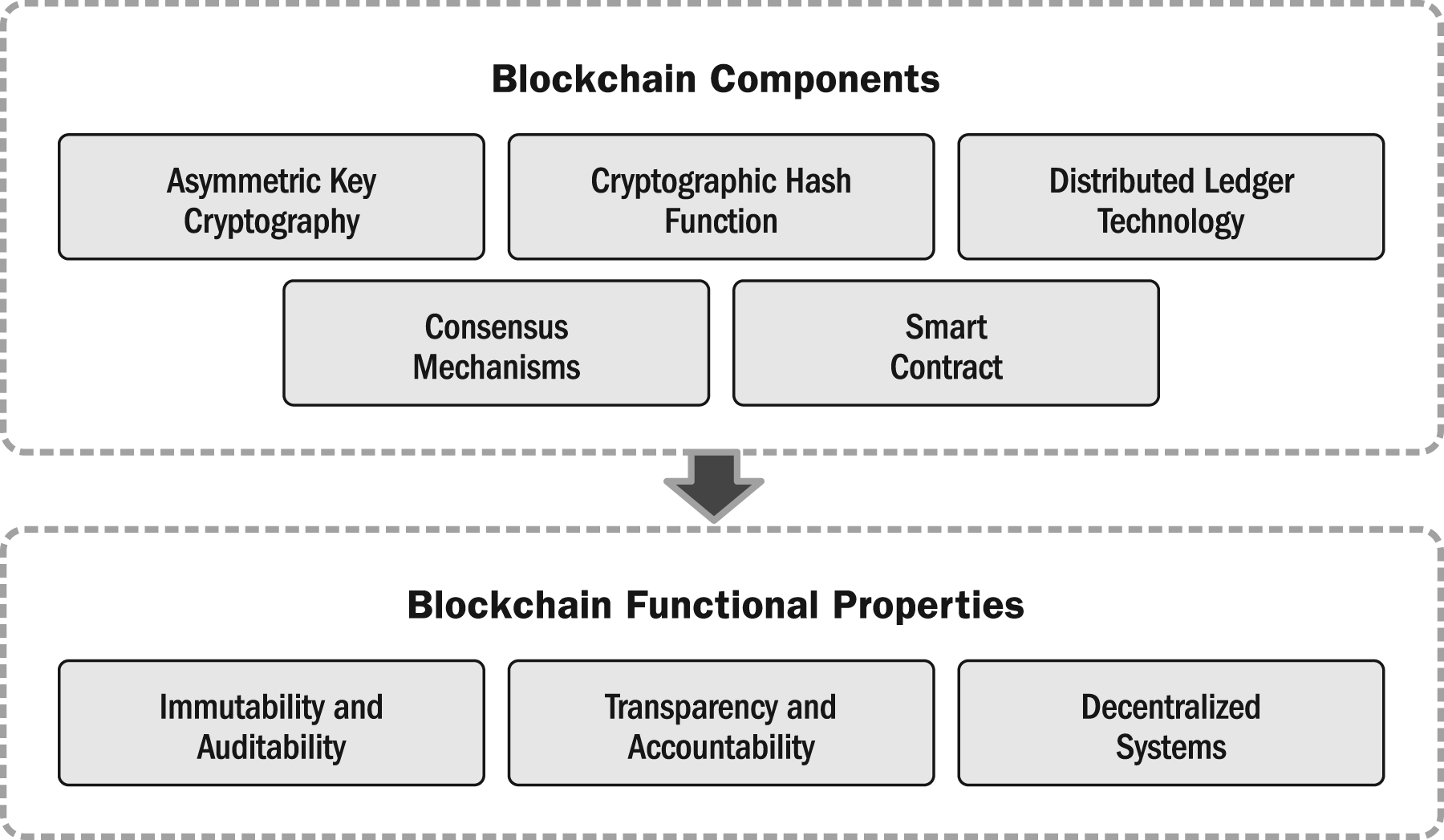
Blockchain components and properties.
Blockchains are categorized as permissionless and permissioned (Lu et al., 2022). In a permissionless blockchain, anyone can participate in publishing new blocks, and the right to access ledger data and issue new transactions remains public. In contrast, a permissioned blockchain restricts block creation and transaction verification to specific users. Depending on the blockchain’s design, the right to append or query the permissioned blockchain can be either public or private (Mingxiao et al., 2017; Yaga et al., 2019). Immutability offered by blockchain ensures that after data are added, they cannot be manipulated or tampered with. This characteristic enhances data security and trustworthiness, as stakeholders can be confident that the information is genuine and unaltered. A key advantage stemming from immutability is auditability. Every transaction on the blockchain is timestamped and linked to the preceding transaction, forming an unbroken chain of records. This allows stakeholders to trace and verify a transaction’s origin.
Transparency and Accountability
Blockchain applications can enhance transparency and trust in construction (Kifokeris & Koch, 2019; Tezel et al., 2021). However, there has been little focus on transparency and understanding its relationship with trust. Transparency, a key factor for developing interorganizational trust (Laan et al., 2011), can be defined as “the perceived quality of intentionally shared information from a sender” (Schnackenberg & Tomlinson, 2016, p. 1788). Transparency has been studied across disciplines. In political and policy planning research, transparency is usually explored in three areas: its public value to fight corruption, the promotion of open decision-making by governments and nonprofits, and its role in improving governance (Ball, 2009). Transparency in economics is more concerned with informational transparency on business-to-business transactions.
Quality of information is an essential element for improving transparency (Cheng et al., 2021). Information quality can be improved by increasing its levels of disclosure, clarity, and accuracy (Schnackenberg & Tomlinson, 2016). Information disclosure refers to the sharing of information openly and in a timely manner (Bloomfield & O’Hara, 1999; Schnackenberg & Tomlinson, 2016). Clarity can be improved through information interpretability, which is the ability for shared data to be easily understood and effectively applied across platforms and organizations (McGaughey, 2002; Nicolaou & McKnight, 2006). Blockchain facilitates disclosure by providing open and equitable access to data through its distributed ledger and enhancing information relevance (Clark Williams, 2008). In addition, blockchain enables standardization and enforcement of information and business logic requirements, ensuring the relevance and clarity of data.
When evaluating the accuracy of information, data reliability becomes more important than data completeness (Angulo et al., 2004). Blockchain fundamentally enhances data reliability, as the immutability of its records guarantees data integrity. Stakeholders become inherently accountable for their entries, and any discrepancies can be quickly identified through audits.
The lack of accountability can lead to disputes, cutting corners, blame shifting, and poor data quality, all of which can result in cost overruns, accidents, and low productivity (Lu et al., 2021; Zhong et al., 2020). Transparency and accountability are interlinked concepts where it is generally believed that transparency fosters accountability (Fox, 2007; Rizal Batubara et al., 2019). Identifiability, monitoring and evaluation, and social presence are three systemic mechanisms that ensure accountability in blockchain applications. Identifiability refers to the ability to link individuals’ actions to their identities. Monitoring involves tracking individual actions, along with the awareness that activities can be assessed according to established rules. Finally, social presence refers to individuals adjusting their behavior in the presence of others (Rizal Batubara et al., 2019).
Decentralization: A Driver of Trust and Transparency
Decentralization has been viewed as an optimization mechanism for distributing authority among peers (Hoffman et al., 2020; Hooghe & Marks, 2003). It is also defined as independent decision-making that improves the robustness of complex systems (Bakule, 2008). Across many fields, decentralization often serves as a foundational principle for fostering collaboration among diverse stakeholders.
In the context of computers and technologies, researchers have criticized monopolistic powers of technology providers on the World Wide Web, which was originally designed to be distributed and universal. Blockchain and DLT have been embraced as a potential solution to establish decentralization (Hoffman et al., 2020). Decentralization through blockchain should be undertaken with the primary goal of empowering individuals or groups. Thus, when designing a decentralized system, the emphasis should be on who it benefits, rather than just how it operates (Hoffman et al., 2020; Liesbet & Gary, 2003). Overlooking the stakeholders and their roles in a decentralized system could lead to misaligned solutions, turning the technology into “a solution looking for a problem” (Hoffman et al., 2020, p. 12).
In construction projects, discussions about decentralization often focus on advancements in technology and digital collaborative tools. Hence, information management and improving information flow are the main concerns of decentralization (Zhang et al., 2022; Zhong et al., 2020). Decentralized information management offers enhanced transparency, security, and trust, as the data are less vulnerable to single point of failure or potential manipulation risks (Berdik et al., 2021).
The continual exchange of information and communication throughout the project life cycle generates vast amounts of data (Martínez-Rojas et al., 2016). Handling large volumes of data in multistakeholder project environments presents challenges such as maintaining data integrity, preventing data silos, overseeing data life cycle management, minimizing information loss, and ensuring interoperability. The industry has increasingly gained interest in digital tools to overcome these barriers. However, many of these digital solutions have been developed and researched with the underlying assumption of using centralized systems for communication and data flow (Bucher & Hall, 2022). Such centralized approaches can be counterproductive, often introducing inefficiencies, potentials for data fraud and opacity, and further disputes and breakdown of trust (Zhong et al., 2022).
Model Development Workflow
Conceptual models provide a theoretical framework by uncovering unexplored relationships between constructs, introducing new elements, and determining how components of a process contribute to specific outcomes (Jaakkola, 2020). As depicted in Figure 2, the development of the proposed conceptual model comprised three steps: identifying key constructs, determining foundational theories to build upon, and examining the relationships between identified constructs and existing frameworks.
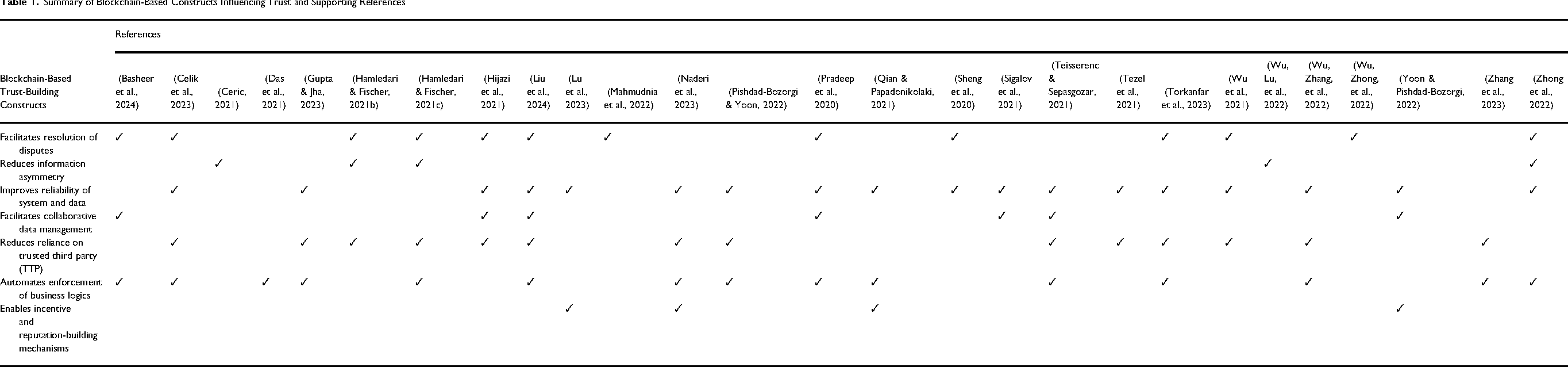
The literature analysis was conducted by reviewing articles from three major databases: ASCE, Web of Science, and Scopus. Our search criteria required that the title include the term “blockchain,” and that the topic—defined as the article title, abstract, or keywords—contain the term “construction” along with either “industry,” “project,” or “building.” The review revealed seven constructs that serve as core trust-building elements in blockchain applications and use cases within the construction domain. Table 1 summarizes the identified constructs and their supporting references. These constructs were expanded using three foundational frameworks: Iacobucci and Hibbard’s (1999) business marketing relationship (BMR) framework, Wong et al.’s (2008) trust framework in construction, and Rousseau et al.’s (1998) classification of trust.
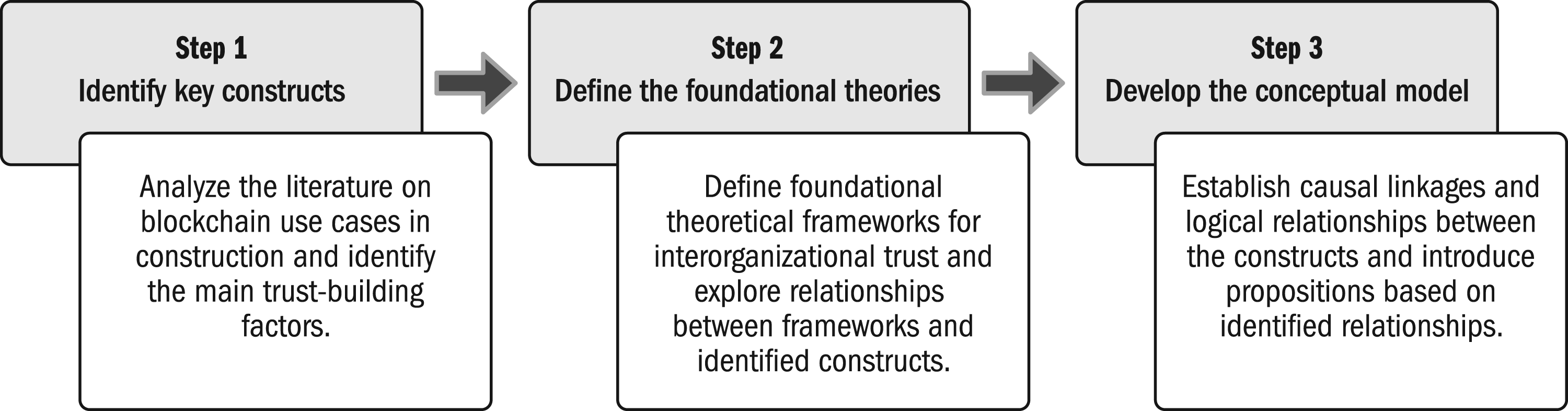
Model development steps.
Summary of Blockchain-Based Constructs Influencing Trust and Supporting References
Foundational Theories
Trust is recognized as a crucial factor for developing and sustaining long-term and effective cooperative relationships (Huang & Wilkinson, 2013). Studies in marketing and business examined the relationship and dynamic of parameters affecting trust (Huang & Wilkinson, 2013; Iacobucci & Hibbard, 1999; Morgan & Hunt, 1994). Iacobucci and Hibbard (1999) developed a generalized conceptual model, the BMR, which identifies key constructs that influence trust and commitment in business relationships. These constructs include commitment, cooperation, communication, absence of conflict, and balance of power.
The BMR framework offers a structure for understanding trust components within customer–seller relationships. Given the lack of well-established interorganizational trust theories specific to construction, the BMR model provides a valuable perspective for examining the ability of blockchain technology to reshape interorganizations’ trust dynamics. The second set of frameworks outlines the key mechanisms through which trust is built between organizations. By integrating these theories with the concepts identified in the literature review, we developed the blockchain-based interorganizational trust model.
Commitment refers to an explicit or implicit promise between partners in an exchange, signifying the continuation of their relationship (Dwyer et al., 1987). Iacobucci and Hibbard (1999) elaborate on this, noting that commitment can encompass both calculative and affective facets. The calculative dimension is generally rooted in pragmatic considerations such as fears of reputational harm or economic interdependence. In contrast, the affective dimension arises from the emotional connections and bonds that develop between partners.
Cooperation highlights the mutual efforts that partners invest for shared benefits. Effective communication ensures transparency, clarity, and mutual understanding, which are pivotal for a successful business relationship. Ideally, relationships would feature an absence of conflict, allowing for seamless collaboration with minimal disagreements. This is further underscored by the role of dispute resolution in fostering more creative and productive partnerships (Anderson & Narus, 1990; Morgan & Hunt, 1994). Lastly, a balanced power dynamic ensures that neither party holds excessive influence or control over the other.
The second set of adopted theories includes the trust classification introduced by Rousseau et al. (1998), and Wong et al.’s (2008) trust framework in construction relationships. Rousseau et al. (1998) identified three primary types of trust: calculative, relational, and institutional. Calculative trust is grounded in the rational choice of the trustor and their perception of the trustee’s positive intentions and relationships benefits. Relational trust emerges from continued interactions over time between the trustor and trustee. The knowledge that the trustor gains through the interactions with trustee forms the basis of relational trust. Institutional trust is rooted in societal and organizational structures. Institutional trust encourages relationship building through the actors’ awareness of the system’s integrity and support. As a result, this type of trust provides a stable foundation that facilitates the development of both calculative and relational trust.
Based on their framework, Wong et al. (2008) identified three distinct types of trust specific to construction contracting: cognition-based, affect-based, and system-based. Cognition-based trust is founded on the cognitive rationalization of someone’s trustworthiness. The cognitive assessment of trustworthiness can be based on one’s knowledge of organizational status and records or continuous communications. Affect-based trust is constructed through ongoing interactions and the development of mutual bonds that make individuals attached and thoughtful of others. Wong et al. (2008) describe system-based trust to be based on formalized procedures, irrespective of personal attributes. Key elements in establishing system-based trust include organizational policy, communication infrastructure, and contractual agreements (Wong et al., 2008). The cognition-based, affect-based, and system-based trust in Wong et al.’s (2008) framework correspond to institutional, calculative, and relational trust in Rousseau et al.’s (1998) classification.
A Conceptual Model for Interorganizational Trust
As shown in Figure 3, the blockchain-based interorganizational trust model consists of three components. First, it identifies which blockchain-based concepts and advantages serve as antecedents to trust dynamics. These, in turn, influence trust mechanisms within the construction industry, ultimately impacting interorganizational trust. In the following sections, the rationale behind these linkages and the resulting propositions are explained in detail. The model culminates in the development of seven propositions, which articulate the logical relationships between the concepts.
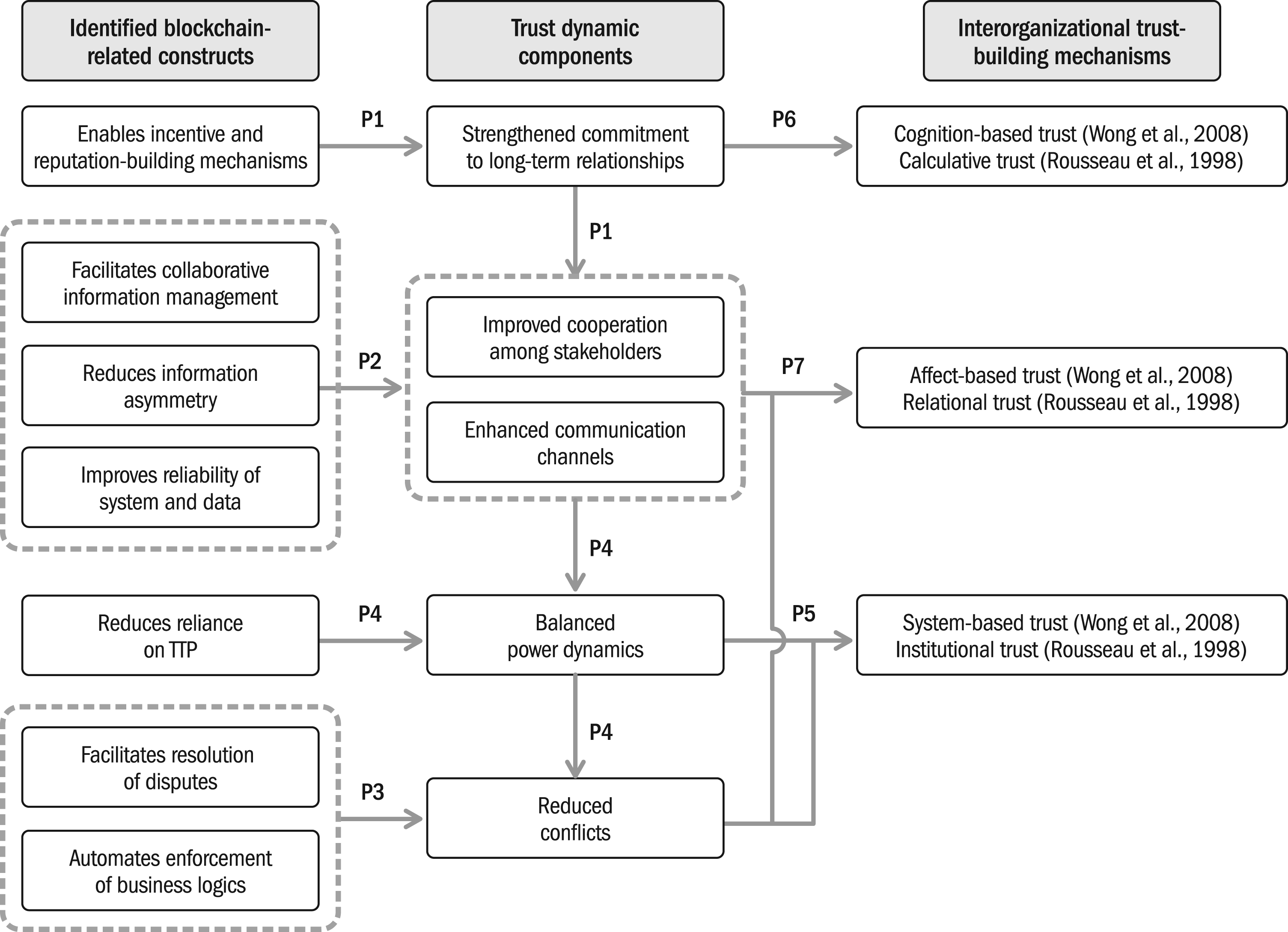
Blockchain-based interorganizational trust model.
Strengthening Commitment to Long-Term Relationships
Blockchain technology can be leveraged to establish incentive mechanisms within interorganizational relationships and encourage commitment through the deterrence of reputational harm or loss of financial benefits (Almasoud et al., 2020; Naderi et al., 2025). Reputation and prior experience of contractors are among the primary factors influencing trust within the construction supply chain (Qian & Papadonikolaki, 2021). Traditional reputation systems in construction have relied on word-of-mouth, historical performance data (including reference letters), and reviews. However, these methods are susceptible to bias, misinformation, and limited accessibility. The advent of blockchain technology promises to address these issues through its inherent features of immutability and traceability. These features allow stakeholders to confidently verify the authenticity and accuracy of information, thereby providing a robust basis for selecting suppliers with demonstrably better reputations (Yoon & Pishdad-Bozorgi, 2022). Blockchain offers a transparent and immutable record of actions, decisions, and behaviors over time. These records incent the parties to maintain a positive reputation and commit to their relationships.
Financial rewards can also reinforce commitment and strengthen long-term interorganizational trust by aligning mutual interests and promoting sustained collaboration (Bresnen & Marshall, 2000). Incentive-based contractual arrangements, wherein financial rewards are tied to a contractor’s ability to meet specific performance objectives, can foster commitment and collaborative behavior (Rose & Manley, 2010). Moreover, monetary incentives can serve as powerful motivators for proactive information sharing (Wolfe & Loraas, 2008). The integration of blockchain with crypto-economic elements provides a unique method for incentivizing prompt information sharing, facilitating more effective communication, and fostering greater trust among parties (Hao et al., 2019; Wang & Shi, 2019; Yoon & Pishdad-Bozorgi, 2022). Performance criteria can be predefined and embedded within smart contracts, enabling the automated issuance of digital tokens based on parties’ compliance or contributions. These tokens can then be redeemed as payment, establishing a transparent, performance-driven reward system that further promotes trust and cooperation in construction project environments (Ballandies, 2022).
Improving Communication and Cooperation
Effective communication and trust are essential for the successful execution of construction projects (Ceric, 2021). Advancements in blockchain technology introduced new opportunities in project management for enhancing transparency and traceability, and reducing information asymmetry, while enabling peer-to-peer collaboration to improve the flow of information (Udokwu et al., 2021). Blockchain technology shows promise in decentralizing information systems, automating processes, enhancing the reliability of information, and fostering collaboration and trust (Liu et al., 2023).
Collaborative Information Management
Blockchain technology requires parties to communicate and collaborate to maintain the ledger. The type of blockchain influences the extent of this collaboration. Permissionless blockchains require parties to collaborate and share information using the platform; however, the maintenance and validation of transactions are managed by consensus mechanisms. In permissioned blockchain, parties must actively collaborate to maintain a reliable and trusted ledger. The consensus mechanisms and established endorsement policies demand close collaboration among participants to ensure the validity of transactions and the accurate maintenance of the ledger.
Information Asymmetry
The complex flow of information, the multitude of parties involved, and the self-interest motives of participants can lead to communication gaps and information asymmetry (Ceric, 2021; Heiskanen, 2017). Information asymmetry refers to the uneven distribution of information when one party in a transaction has access to better quality data than another party (Cheng et al., 2021).
Information asymmetry, common in the construction industry (Dolla et al., 2020; Forsythe et al., 2015), can lead to power imbalance, adverse selection, and opportunistic behavior (Akerlof, 1978; Feldmann & Müller, 2003; Holmström, 1979; Mocan, 2007; Zavolokina et al., 2021). These issues can contribute to higher costs, decreased efficiency, and even project failure (Li et al., 2020). Blockchain technology can reduce information asymmetry by enabling decentralize systems and the distributed storage of information on ledgers. This allows for equal and transparent access to information by all involved parties (Hamledari & Fischer, 2021c).
System and Data Reliability
Reliability and trustworthiness of systems and data are common concerns when collaborating through digital tools. Two factors contributing to the trustworthiness of information management systems are the ability to link information to the individuals responsible for its dissemination, and the principle of non-repudiation (Marsh & Dibben, 2003). Blockchain’s capability to authenticate recorded information strengthens accountability, potentially reducing opportunistic behaviors and mitigating conflict among involved parties (Wu et al., 2021). In addition, blockchain enhances data provenance by ensuring immutability and authenticity of information origins (Celik et al., 2023). The non-repudiation component of blockchain further guarantees that the involvement of parties in transactions is provable and undeniable. This is a feature that centralized systems like building information modeling (BIM) cannot fully offer (Chen & Luo, 2014; Turk & Klinc, 2017; Wu et al., 2021).
The security of both information and systems is essential for establishing a trustworthy environment for collaboration. Blockchain can enhance system and information security by minimizing risks such as single points of failure (Hunhevicz & Hall, 2020), reducing data fraud and tampering risks (Wu et al., 2021; Zhang et al., 2023), protecting intellectual property (Hijazi et al., 2021; Mason, 2019; Mathews et al., 2017; Vadgama, 2019), reducing privacy and authenticity risks (Celik et al., 2023; Erri Pradeep et al., 2019; Opoku et al., 2021), and preventing the loss of critical information (Das et al., 2021). As a result of enhanced data and system security, stakeholders are likely to place higher trust on the overall reliability of the system.
Reducing Conflicts
The system and data reliability offered by blockchain technology can provide an effective solution for managing conflicts, particularly in data-driven industries such as construction. Blockchain supports conflict reduction by helping to avoid conflicts or manage them effectively (Gupta & Jha, 2024; Safa et al., 2019; Shojaei et al., 2019; Wahab et al., 2023). Blockchain’s immutable and transparent ledger serves as a robust framework for tracing transactions, establishing accountability, and promptly resolving dispute (Saygili et al., 2022; Son & Lien, 2022). The automated enforcement of business processes through smart contracts reduces the potential uncertainties, ensures execution of the agreed-upon terms, and minimizes opportunistic behaviors and potential points of conflicts between the parties (Abdul-Malak & Hamie, 2019; Hamledari & Fischer, 2021c; Padroth et al., 2017). The absence of conflict fosters positive outcomes and commitment in the relationship, which can ultimately enhance trust between parties.
Blockchain’s decentralized nature presents a paradigm shift in how construction disputes are managed. By reducing centralized controls, blockchain decreases unnecessary bureaucracy, promotes an open communication environment, and makes the resolution process more transparent and efficient (Mahmudnia et al., 2022). Numerous studies have highlighted the potential of blockchain applications to manage conflicts effectively and enhance trust. For instance, Zhong et al. (2022) proposed a blockchain-based on-site construction environmental monitoring system to address issues in centralized systems such as information asymmetry and stakeholder disputes. Sheng et al. (2020) developed a blockchain-based framework for managing quality information, aimed at creating a transparent system and reducing disagreements among parties. Blockchain also provides credible evidence for quality inspections, thereby addressing the frequent lack of documentation, which is a focal point for disputes during inspections (Wu et al., 2021).
Automated Enforcement of Business Logics
The effective execution of project management processes between organizations requires the establishment of trust. Traditionally, this trust has been established through the use of contractual agreements (Stahnke et al., 2020). The conventional administration of contracts and reliance on third parties often involve manual procedures (Gad et al., 2016) and subjective decisions, which can lead to errors, unexpected outcomes, and potential conflicts among parties. Blockchain technology can support trust formation among stakeholders by using smart contacts, which ensure compliance with business logic through automated, transparent, and guaranteed execution of contracts (Stahnke et al., 2020). This automation facilitates business transactions, reduces friction, and minimizes unexpected outcomes (De Filippi & Wright, 2018; Hamledari & Fischer, 2021c).
While smart contracts offer automation and precision in enforcing agreements, it is equally important to acknowledge the role of negotiation in fostering healthy relationships and building trust (Yates, 2011; Yiu & Lai, 2009). One could argue that implementing control mechanisms through smart contracts does not inherently generate goodwill-based trust and may, in some cases, limit the flexibility required for effective dispute resolution (Fu & Luo, 2023). Given the dynamic and complex nature of construction projects, complete automation of contractual processes and elimination of human negotiation may be an unrealistic or overly ambitious objective. In an ideal system, smart contracts will not replace the role of human negotiation; but rather, they serve to reduce the frequency and intensity of disputes by providing a transparent and predefined decision-making framework. Their deterministic nature ensures data clarity, minimizes ambiguity, and enhances predictability, thereby lowering the potential for conflict. Furthermore, blockchain’s inherent immutability and traceability enhance accountability and provide verifiable evidence, supporting more efficient and equitable resolution of disputes when they arise (Saygili et al., 2022).
Balancing Power Dynamics
The centralized nature of construction management processes, such as payments handling, can result in inefficiencies, bottlenecks, and delays (Hamledari & Fischer, 2021a). Blockchain can, particularly through smart contracts, reduce the need for trusted intermediaries and streamline operations. Instead of central authorities, such as financial institutions processing payments for example, power is equitably transferred to the stakeholders. This redistribution mitigates opportunistic behaviors and creates a more transparent and accountable ecosystem (Hamledari & Fischer, 2021c; Wu, Zhang, et al., 2022). Hence, when examining the essence of decentralization and the question of who benefits from decentralization, it becomes evident that decentralization can redistribute power.
Reducing reliance on intermediaries requires parties to transform from depending on third parties to actively collaborating on information management. The reduced influence of intermediaries can foster more dynamic and continuous interactions among stakeholders, leading to the formation of stronger bonds and mutual connections. Furthermore, relying on third parties can sometimes result in disputes due to opportunistic behavior and fraud (Torkanfar et al., 2023). This balanced power dynamic contributes to reduced conflict, increased commitment, positive outcomes, and greater trust.
System-Based Trust Development
Trust and control both aim to reduce the likelihood and consequences of unfavorable outcomes. Control includes formal (e.g., contracts) and informal (e.g., monitoring arrangements) mechanisms. This distinction gives rise to two contrasting perspectives. One views control as replacing trust, in that an increase in control might decrease trust. The other perspective argues that trust and control can coexist and reinforce each other, that is, an increase in control could enhance trust. However, when control becomes overly intrusive, it can undermine genuine trust (Farid, 2021; Kadefors, 2004). This excessive reliance is often termed “deterrence trust,” where actions are driven more by fear of penalties, such as strict contractual consequences, than genuine trust. Rousseau et al. (1998) argue that such deterrence isn’t authentic trust. Moderate nonintrusive controls can contribute to the formation of system-based trust. Blockchain offers two main control mechanisms: (1) decreasing conflicts through the guaranteed execution of contracts and immutable data records, and (2) reducing the need for third-party involvement and creating a balanced power dynamic, thereby lowering the chances of adverse outcomes. As a result, blockchain-based systems can contribute to the development of system-based trust.
By reducing reliance on third-party intermediaries and enabling decentralized decision-making, blockchain promotes a more balanced distribution of power across stakeholders (Wu et al., 2025). This redistribution of authority minimizes the concentration of control and creates a more equitable collaborative environment, thereby lowering the probability of adverse outcomes and fostering trust (Zhu & Cheung, 2020). Furthermore, blockchain’s transparent data environment enables real-time access to shared information, increases accountability and reduces the potential for information asymmetry, which is a common source of mistrust in construction projects (Forsythe et al., 2015; Wu et al., 2024).
Features like smart contracts and auditability contribute to a conflict-free environment, effectively serving as controls to discourage unfavorable behaviors. However, it is important to recognize that construction projects are dynamic and often involve evolving conditions that require contextual interpretation and flexibility. In such situations, the automated execution of smart contracts may struggle to accommodate nuances, unforeseen scenarios, or ambiguities that cannot be easily codified (Ghodoosi, 2021). This lack of adaptability may lead to disputes over the interpretation of contract terms or whether obligations have been fulfilled as intended (Dixit et al., 2022). Therefore, while smart contracts offer transparency and reduce opportunistic behavior, they must be complemented by semiautomated mechanisms that allow for human judgment, negotiation, and discretionary decision-making in cases where interpretative flexibility is required (McNamara & Sepasgozar, 2020). Balancing automated enforcement with human oversight can help preserve trust in the system by ensuring that fairness and context-specific resolution are not sacrificed in pursuit of rigid procedural control.
Cognition-Based Trust Development
Cognition-based trust stems from one’s perception of another based on available knowledge and information. This type of trust arises when one believes that a relationship is beneficial, and that potential benefits outweigh the risks. So, this type of trust is informed by prior interactions or credible signals indicating another party’s positive intentions. This type of trust is crucial at the beginning of a relationship, particularly when there is a limited history of interactions.
Blockchain has the potential to strengthen cognition-based trust by recording the transaction histories of contractors and subcontractors. For instance, it would be feasible to design a blockchain-based rating system, similar to blockchain-based reputation systems in e-commerce (Zhou et al., 2021). Such a system could provide invaluable insights into the credibility and reliability of contractors and subcontractors involved in construction projects (Janampa et al., 2023). Furthermore, blockchain-facilitated incentive mechanisms, such as monetary rewards for participation and information sharing, can reinforce cognition-based trust by establishing a rational basis for expecting mutual benefits from cooperation.
Affect-Based Trust Development
Unlike cognitive trust, affect-based trust is not grounded in calculated risks or opportunities. Instead, it develops gradually through repeated interactions, emotional bonds, and psychological connections. Consistent and positive interactions are essential for building and sustaining this type of trust. Blockchain technology can enhance collaboration and communication, both of which are fundamental to fostering affect-based trust. By improving collaborative information management, reducing information asymmetry, and ensuring data reliability, blockchain helps create a transparent and cooperative environment. These elements contribute to the sustainable and enduring development of affect-based trust among project stakeholders. Additionally, successful conflict resolution and positive outcomes from disputes are key factors in building affect-based trust. Blockchain’s ability to facilitate effective conflict resolutions further supports the formation of affect-based trust.
Discussion
When evaluating the role of blockchain in changing interorganizational trust within construction projects, three questions must be considered: (1) Is blockchain able to enhance or replace the trust? (2) What sources of trust are replaced by blockchain? and (3) Can blockchain augment existing trust mechanisms?
There are two opposing views regarding the influence of blockchain on trust dynamics within the construction industry. One perspective suggests that blockchain transfers trust from organizations and stakeholders to the system itself (Hunhevicz & Hall, 2020; Morteza et al., 2021; Werbach, 2018). This establishes what’s often referred to as a “trustless” or “trust-free” platform (Das et al., 2021; Sigalov et al., 2021; Wood, 2014). According to this view, participants don’t need to rely on one another (Atzori, 2015; Hawlitschek et al., 2018). Project stakeholders can conduct transactions over the internet without requiring trust or a trusted third party, particularly in processes such as supply chain management, BIM data management, and architectural design (Dounas et al., 2021; Hunhevicz & Hall, 2020; Tezel et al., 2021; Wang, Singgih, et al., 2019). To provide a more precise understanding of “trustless,” we can refer to the definition given by Kiviat (2015): “Value exchanges over computer networks that can be verified, monitored, and enforced without central institutions (for example, banks) (p. 569).” The alternative viewpoint suggests that blockchain technology does not eliminate the need for trust but fosters it by reshaping the dynamics of trust and collaboration. Based on this view, transparent and distributed access to project data enhances collaboration and trust (Badi, 2023; Li et al., 2019; Qian & Papadonikolaki, 2021; Vigna & Casey, 2019; Wu, Zhang, et al., 2022). Supporting this perspective, Zhang et al. (2023) argue that one of the fundamental objectives of implementing blockchain technology is to foster robust trust among participants.
When considering the functionality of blockchain and smart contracts in the context of interorganizational trust, it becomes clear that they operate in a manner similar to traditional control mechanisms. They can either remove the need for trust or serve to foster it. Therefore, the impact of blockchain on trust dynamics is highly context-dependent and varies according to the complexity of the business logic embedded in transactions between parties and the system’s design.
Processes such as payment execution, despite their high complexity, may involve more clearly defined, rule-based conditions that make them more amenable to automation. In such cases, sensor-based progress tracking can be integrated with smart contracts to enable automated payment execution and reduce the need for intermediaries (Hamledari & Fischer, 2021a; Pham et al., 2024). In contrast, processes such as safety management or design coordination are more complex and multifaceted, making full automation less feasible currently. In such cases, blockchain applications primarily focus on data management to enhance trust and collaboration by providing transparent, traceable, and immutable records of project data, rather than replacing trust altogether (Erri Pradeep et al., 2021; Morteza et al., 2021).
Another factor affecting the application of blockchain on trust dynamics is the system design. Systems based on permissionless blockchain, with their robust consensus mechanisms and security features, often eliminate the need for TTP and promote trust in the system itself (Hamledari & Fischer, 2021a; Saygili et al., 2022; Torkanfar et al., 2023). On the other hand, permissioned blockchains, while potentially having reduced system trust and security, place a higher emphasis on trust among its users or the TTP (Hunhevicz & Hall, 2020; Li et al., 2022). In essence, the architecture and classification of the blockchain profoundly shape trust dynamics. While permissionless blockchains lean toward constructing trustless environments, permissioned blockchains lay the groundwork for cultivating trust among participants.
In a trustless environment parties can conduct transactions of economic value without needing to trust one another. In the context of blockchain and smart contract applications in the construction industry, this can become a reality when the design of the smart contract and its encoded business logic effectively minimize uncertainties in the transaction. By eliminating opportunities for opportunistic behavior, such smart contracts can assure parties of each other’s benevolent actions. However, in industries like construction, characterized by their complexity and high levels of uncertainty, achieving a fully trustless environment seems far more challenging. That said, there may be specific aspects of transactions where smart contracts can be employed, effectively eliminating the need for third-party intermediaries. Therefore, while blockchain can indeed obviate the need for trust in certain scenarios, it’s crucial to note that in such applications, the technology doesn’t necessarily foster trust between the involved parties.
The blockchain-based interorganizational trust model developed herein demonstrates that blockchain's capabilities and influence on trust components facilitate the formation of trust among stakeholders. Blockchain benefits were shown to positively influence all three sources of trust: cognition-based, affect-based, and system-based. These three trusts have a dynamic interrelationship throughout the course of project and the stakeholders’ relationship. As illustrated in Figure 4, cognition-based trust plays a significant role in influencing trust levels at the beginning of a relationship, especially when there is no history of prior interactions. Over time, affect-based trust improves because of repeated successful interactions. System-based trust serves as the foundation for both affect-based and cognition-based trust, providing a stable basis for trust building over time.
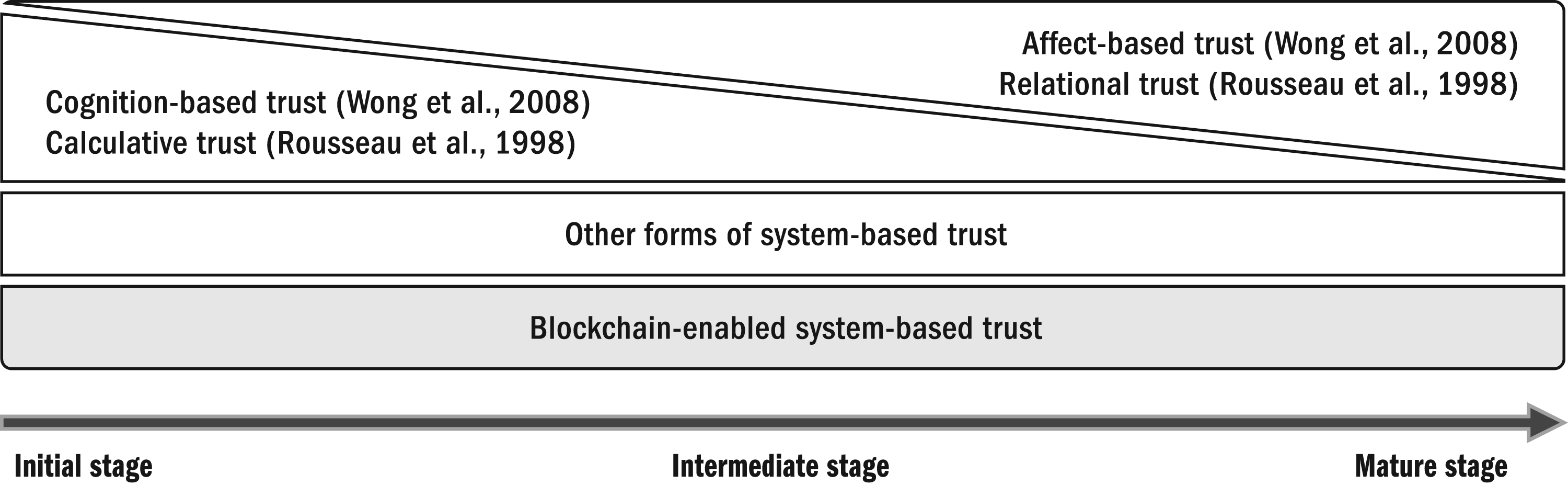
Evolution of trust mechanisms over time in blockchain-enabled projects.
In the context of construction project management, the interplay among cognition-based, affect-based, and system-based trust evolves alongside the project life cycle and the nature of stakeholder interactions. At the project initiation phase, cognition-based trust becomes particularly critical, as stakeholders often rely on perceived competence, credentials, and technological assurances—such as blockchain-enabled transparency and immutable records—to build confidence in unfamiliar partners. As the project progresses into execution phases, affect-based trust becomes more prominent, reinforced through ongoing collaboration, consistent performance, and shared experiences among parties. Here, blockchain applications that enable real-time information sharing and traceable interactions help cultivate stronger relational bonds by reducing misunderstandings and fostering cooperative behavior. System-based trust continues to underpin both phases, providing a reliable foundation through automated enforcement mechanisms (e.g., smart contracts) and decentralized data governance.
Limitations and Future Work
Trust is a complex and multidimensional concept. Although the primary focus of this research was to investigate the role of blockchain in fostering trust between organizations, it’s recognized that this study doesn’t capture the full depth of factors influencing trust. One significant area that needs to be further studied is the ability of blockchain to enhance interpersonal relationships and trust between individuals within and across the organization. Additionally, the effects of blockchain use cases on intraorganizational trust and organizational culture have not been examined.
A significant achievement of this research was the development of a conceptual model (i.e., blockchain-based interorganizational trust model), particularly for the construction industry. However, the effectiveness and generalizability of this model still requires further validation. To solidify its theoretical robustness and practical applicability, empirical testing is essential. In this regard, we propose that future studies operationalize the model’s constructs through measurable indicators. This involves translating abstract concepts such as information asymmetry, reliance on TTP, balanced power, and various forms of trust (e.g., system-based, cognition-based, and affect-based trust) into observable variables. For example, survey items may include for information asymmetry: “The use of blockchain-based applications in this project ensures that all stakeholders have equal access to critical project information, minimizing information withholding or manipulation”; and for cognition-based trust: “I trust our project partners more because blockchain provides a transparent record of their past performance and compliance with project obligations.”
Such indicators can be incorporated into structured surveys or interviews and analyzed using techniques such as structural equation modeling (SEM) or partial least squares (PLS) to empirically examine the relationships proposed in the blockchain-based interorganizational trust model. Additionally, qualitative case studies can be employed to explore contextual dynamics, implementation barriers, and stakeholder perceptions in real-world projects. These empirical strategies offer a robust pathway for grounding the blockchain-based interorganizational trust model in evidence and refining its propositions.
Although the model emphasizes blockchain’s potential to enhance trust, it is important to acknowledge that in some scenarios, blockchain might eliminate the necessity for trust altogether by creating a trust-less environment. This scenario offers exciting opportunities for future research, particularly regarding the creation of quantitative tools to evaluate the strength of blockchain systems in either reinforcing or circumventing trust.
Finally, the model’s focus on the construction industry is both its strength and its limitation. While it provides detailed insights specific to this field, the inherent complexities of the construction sector suggest that our model might need adjustments or modifications to be relevant to other industries.
Conclusion
This research presents a blockchain-based interorganizational trust conceptual model to examine how blockchain technology influences the trust dynamic in interorganizational relationships within construction project management. The model implications are captured in seven research propositions, demonstrating how blockchain can contribute to the establishment of system-based trust, affect-based trust, and cognition-based trust. This model represents the first formalized attempt in construction and project management to develop a trust model for blockchain applications.
Theoretically, this study advances the understanding of trust dynamics by emphasizing the foundational role of system-based trust in enabling affect-based and cognition-based trust. Practically, the model guides firms and policymakers in identifying how blockchain features can strengthen specific trust mechanisms based on project context. It offers a strategic framework for technology adoption and governance decisions in blockchain-enabled construction environments.
