




Abstract
This article explores the role that technology plays in creating and fostering transparency in global supply chains. Transparency is deemed vital in the creation of sustainable and resilient supply chains and overall effective corporate governance. There are two distinct orientations toward the use of technology by multinational corporations (MNCs) in creating sustainability transparency within their global supply chains: control and relational. A control orientation views technology as a tool to gather the ever-increasing levels of sustainability data on supplier practices in an efficient, secure, and progressively automated manner. A relational orientation adopts a view where technology is a tool to help build social relations and improve dialogue and collaboration on sustainability throughout the supply chain. A key difference in the two orientations lies in the mindset of the MNC manager toward the development of supply chain sustainability transparency. The article illustrates the effective application of both approaches and offers advice to managers on the design choices they need to consider in choosing technologies.
Keywords
The past three decades have seen supply chains become increasingly globalized, complex, and diffuse. For example, IKEA 1 has approximately 1,600 suppliers spread across 50 different countries, while Nestlé 2 has approximately 150,000 direct and indirect suppliers spread across 187 countries. The reasons for this global dispersal of supply chains are numerous, ranging from access to raw material and utilizing lower labor costs to gaining tax advantages and ease of market access. As supply chains geographically disperse and lengthen, their tiers deepen, often leading to chains in excess of five tiers as suppliers subcontract to subsuppliers again and again. This global dispersal of the supply chain means that a substantial amount of an MNC’s global social and environmental impact may fall within the extended supply chain and outside of its own direct operation. For example, Marks and Spencer (M&S), the major U.K. food, clothing, and homeware retailer, estimates that 90% of its environmental impact is attributable to the operations of its suppliers. 3
While MNC operations are increasingly outsourced and offshored to affiliated or legally independent contractors, there is common agreement that MNCs remain ethically responsible for the conduct of these suppliers. 4 As large brand companies like Nestlé, 5 IKEA, 6 and PUMA 7 have experienced, poor practices in their supply chains, particularly in the environmental and social sphere, can pose a significant threat to brand reputation and ultimately to shareholder value. Managers now need improved transparency around supplier sustainability practices and processes to better manage these risks, while stakeholders such as shareholders, regulators, and nongovernmental bodies expect to be informed of compliance levels and of any problems encountered. 8
By supply chain sustainability transparency (from here on called supply chain transparency), we mean the open sharing and disclosure of social and environmental information across and occasionally outside the supply chain, which includes the quality, quantity, understandability, and timeliness of this information. In a global supply chain context, transparency reporting tends to include issues such as supply chain membership, material provenance and traceability, and financial transparency. There is also a growing focus on a range of social, environmental, and corporate social responsibility (CSR) indicators such as water usage, emissions, energy usage, waste and recycling levels, working conditions, hours worked per week, and living wages. 9
While improved supply chain transparency is generally regarded as a positive development for strategic insight and oversight, it can impose a significant cost burden on the MNC and raises a range of operational challenges for supply chain, procurement, and CSR managers. This growing demand for data also causes difficulties for suppliers as they grapple with onerous, growing, and frequently conflicting demands for data from diverse sources within the MNC. A key risk here is that efforts by the MNC to improve transparency across the supply chain may damage relationships and produce unintended consequences. For example, it could entrench poor reporting practices among suppliers as they grapple with the growing demand for more data and simultaneous demands for increased volume, efficiency, and quality. This risk reinforces the need for ever-tighter monitoring of suppliers creating a potentially vicious cycle of control.
From reviewing the academic literature and from our own research, we see a number of key overlapping factors that challenge the development of transparency in global supply chains:
Distance: As supply chains become globally dispersed, the actors become increasingly physically remote, reducing access and visibility, with significant variations in time zone.
Cost: Multiple cost challenges include the cost of hardware and software to create and maintain transparency systems; the burden for the MNC is in terms of headcount, physical presence on the ground, data analysis, and the burden on suppliers in terms of investment and time.
Regulatory Difference: MNCs need to understand and take account of variations in local, legal, intellectual property, environmental, and social regulation. A “one-size-fits-all” approach is unlikely to work across geographies.
Industry Norms: MNCs need to be aware of the institutionalized norms that develop within industries. These set expectations about the desired approach to and standards of monitoring of suppliers.
Cultural Difference: MNCs must take account of national cross-cultural differences such as varying social norms, language differences, and social expectations in transparency and relationships.
Capabilities and Infrastructure: MNCs need to consider the technological capacity and capabilities of their supplier and subsuppliers as well as the relevant national and local information technology (IT) infrastructure of the supplier to support and sustain any transparency system.
Verifiability: MNCs have to consider the accuracy and reliability of the data being gathered and reported, as well as whether key emerging concerns are being flagged in a timely manner and dealt with appropriately.
Trust: MNCs also have to consider the need for and challenge of developing trust and dialogue with suppliers who may have little or no physical face-to-face interaction with the MNC.
Technology to the Rescue?
Technology is frequently proffered as a panacea to overcome the many challenges of supply chain transparency. Much of the marketing promise of the IT vendors and management consultants’ technological solutions offer to provide an efficient one-way mirror into the workings and practices of suppliers. However, our research suggests that in engaging with suppliers, the MNC manager must carefully consider both the type of tools and technologies they deploy and the primary purpose to which these are deployed.
We present a view of technology as any system, tool, or configuration of hardware and software that is purposefully designed and used by people to accomplish action or mutual interaction. We hold a view that any understanding of technology must include the purpose to which the designers intend it for, the manner of its usage in the field, and an understanding of the institutional context in which the technology is developed. 10 This broad and human-centric view of technology encompasses a wide spectrum of physical digital technologies ranging from blockchain and artificial intelligence (AI) to quick response (QR) codes, enterprise resource planning (ERP) systems, and tracking and surveillance technologies. However, our view of technology extends beyond the traditional view of technology as digital hardware and software to include a range of IT-enabled socially focused tools or processes aimed at improving dialogue and interaction across the supply chain. Examples of these latter “dialogic technologies” would be communities of practice, roundtables, multistakeholder initiatives, and learning forums.
Research Design and Methodology
Due to the emerging nature of the field of supply chain transparency, our research adopted an exploratory approach consisting of a qualitative study of 12 MNCs across three industry sectors focusing on product-oriented industries. We followed a multiple-case study approach that allowed for greater external validity and robust theory building. 11 To ensure a sample suitable for exploring technology use in supply chain transparency, we chose a range of exemplar companies. These are companies that publish data on their suppliers, have a supply chain focus in their reporting rather than just a company focus, and have been cited by the media as using technology for supply chain transparency. The comparison of industry groupings allowed for an exploration of varying transparency practices both within and across industry sectors.
Data Collection
The research involved interviews with multiple MNCs. It included secondary data, including CSR reports of each case company from 2014 to 2019 and information available on company websites. Using purposive sampling, we selected companies with multibillion-dollar revenues from the Forbes list, as research states that only companies with multibillion-dollar revenues were disclosing sustainability information publicly. 12 These companies were all engaged in using technologies with their suppliers. Twelve MNCs were selected as cases from the following three industries: apparel, electronics, and other consumer goods (which include food, home, and personal care companies).
A semi-structured interview protocol was used to collect the data, questions were structured around the drivers of and strategic importance of transparency, if transparency with suppliers was important, descriptions of relationships with suppliers, the types of technology that were being used to foster transparency with suppliers, the roles that the technologies were fulfilling in that process, and general questions on the cultural values and strategy of the company and their approach to supplier management. The appendix details the semi-structured interview protocol we used. Interviews of between one and two hours in length were conducted, recorded, transcribed, and qualitatively analyzed by the team.
Data Analysis
We analyzed the data qualitatively following a thematic analysis approach. 13 To reach a consensus on what was emerging from the data, we used constant comparison techniques and interpretive analysis and, using an abductive approach, revisited the literature and the data as new themes emerged. 14 This approach enabled us to guide the initial empirical investigation and modify emerging frameworks as new empirical and theoretical insights were gained. 15 This approach is particularly suited to theory development and elaboration in a dynamic and relatively new field. 16
Technologies Adopted to Make Supply Chains Transparent
Across all our case companies, we found considerable support that supply chain transparency was regarded as a key and growing strategic concern. We also found broad agreement that technology was playing a central role in the process of ensuring effective transparency. The technologies we encountered ranged from highly integrated systems used by some MNCs to more basic stand-alone systems relying on electronically submitted Excel spreadsheets or simple text messaging systems. Only a few of our MNCs had developed supply chain systems that integrate seamlessly with existing business functions such as procurement, quality, and risk management. We also found variation in the sophistication of technologies used across the three industry sectors. For example, the electronics sector, unsurprisingly, was ahead of the curve in terms of spend, complexity, and the overall integrative nature of the technologies in use. The systems in the food and other consumer goods sectors were much less developed, challenged by the highly dispersed nature of their product and the relatively low technological sophistication of many of the suppliers in their supply chains.
Figure 1 illustrates the main tools and technologies used by the companies in our study. The technologies in the outer ring were common across all our cases, and those in the inner layer were less commonly used. These technologies are used to gather, interrogate, and disseminate supplier sustainability data.
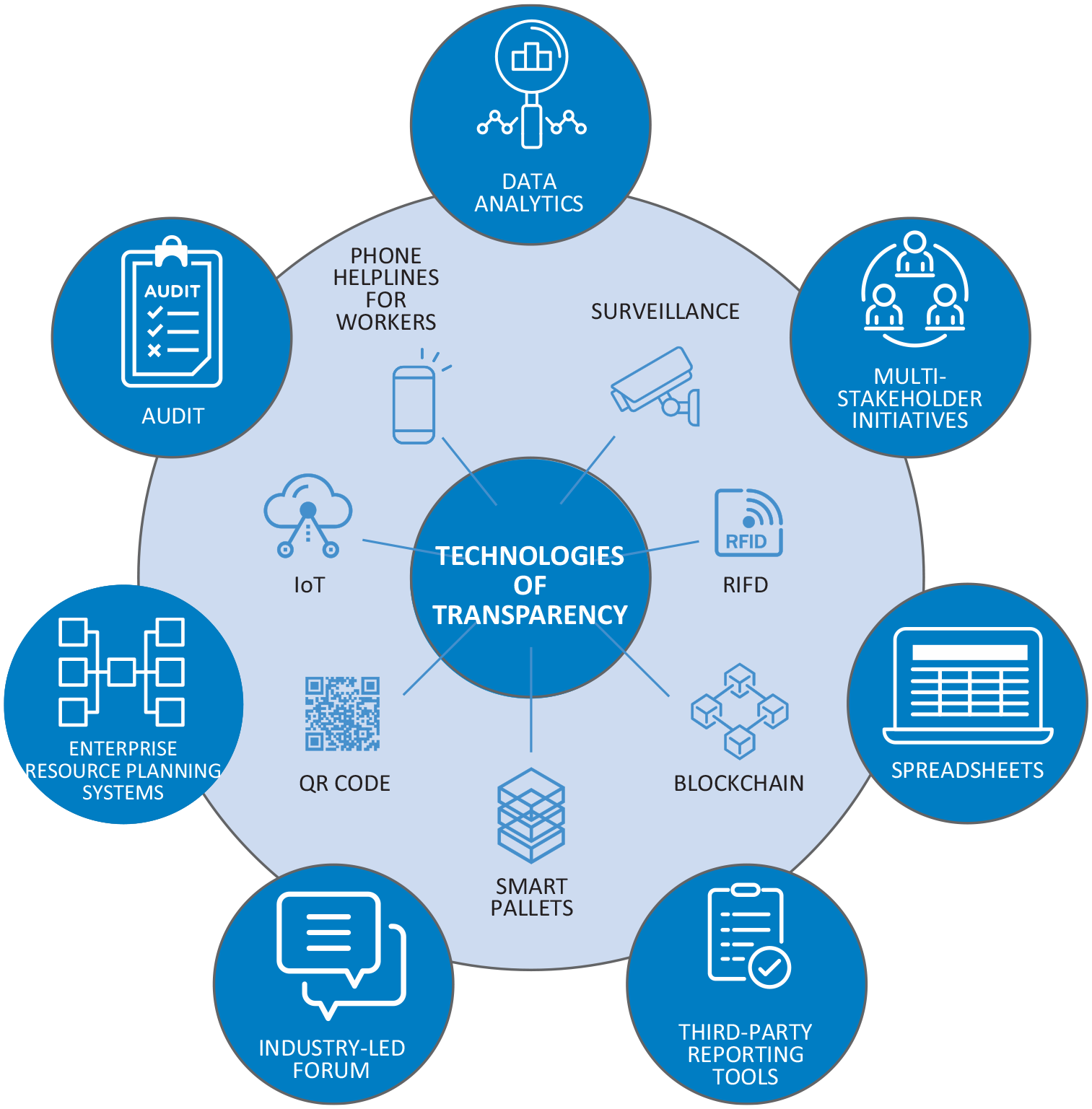
Technologies of supply chain transparency.
Data Gathering Technologies
Supplier information is gathered by our case companies using a wide range of technologies. These include most of the technologies listed in Figure 1. What follows is a list of these tools and technologies with illustrative examples of their use by the companies.
Audit
Unsurprisingly, the audit is the most prevalent information-gathering mechanism utilized by all our case MNCs in gathering supplier data. Audits are a safeguard mechanism that provides assurance to stakeholders that the product or service is free from material misstatement and compliant with necessary regulations or standards. While the audit is typically seen as a process, we present it here as a technology in that we see it as a purposively designed monitoring system of inspection and control, one increasingly mediated by and integrated with information technologies. The approach to developing and administering audits varied across our study firms, reflecting considerations over available levels of expertise, cost, and complexity of administration. Our case companies used four distinct approaches to the use of audits, but with some overlaps. These are the following:
Internal Audit: Here, MNCs design and administer their own audits of suppliers. Most of the audits are supplier self-assessment, with some audit teams visiting suppliers if they are in a high-risk region or if there have been instances of noncompliance. The auditing technologies in use range from simple electronic spreadsheets to cloud-based systems involving hundreds of detailed questions. For example, the IKEA Supplier Sustainability Index audit contains hundreds of questions. The Body Shop uses its internally developed Ethical Sourcing Program. Most of the other companies use self-assessment audits based on third-party audit protocols. Figure 2 details PUMA’s audit process, which uses the third-party audit database Fair Factory Clearinghouse (for compliance data) and the Sustainable Apparel Coalition’s (SAC) Higg platform for environmental data (Higg Facility Environmental Module [HIGG FEM]). PUMA has also developed a customized environmental data collection tool to supplement the third-party audit process.
Industry-Led Audit Platforms: Industry-led audit platforms reduce costs and the need for dedicated and experienced audit staff on the ground. They can also mitigate the costs and dangers of audit fatigue. These platforms are generally founded by companies in that industry and provide tools and technologies for supplier sustainability self-assessment. In the electronics sector, the Responsible Business Alliance (RBA), formerly the Electronic Industry Citizenship Coalition, was founded by eight leading companies in the electronics sector. In the apparel sector, the SAC was created by Wal-Mart and Patagonia, whereas the Ethical Trade Initiative was created by a consolidation of both companies and civil society organizations, including NGOs and unions. The third-party platform—used by all the electronics companies in our sample and also by many of the other major brands and suppliers in the electronics industry—is the RBA Validated Assessment Program (VAP) Audit Protocol, carried out by RBA-certified third-party audit companies. 17 For example, Dell requires all their high-risk production suppliers to undergo regular social and environmental audits on a two-year cycle. 18 In the apparel sector, all the apparel companies use the SAC Higg index technology, but most of these companies supplement this with their own systems or with other industry-led or third-party platforms. M&S, for example, also uses both Sedex and the Ethical Trade Initiative, whereas H&M uses an independent third-party audit platform of the Fair Labor Association (FLA).
Independent Third-Party Audit Platforms: These typically online or cloud-based platforms are oftentimes started by or with the leadership of sustainability activists and civil organizations. Like the industry-led platforms, these audits are self-assessment audits, but some also have bidirectional functionality and are focused not only on auditing but also on relationship-building with suppliers. Nestlé uses SGS, a third-party verifier, in a unidirectional manner to gather environmental data from suppliers. PUMA uses the Social and Labor Convergence Program and HP uses Verité for data gathering to ensure fair labor globally. Similarly, the Body Shop uses NGOs to administer social sustainability audits in certain countries, particularly in China. Other examples with multidirectional information use include Johnson & Johnson, which works with the EcoVadis Sustainable Procurement Program to assess and train suppliers through the EcoVadis Academy, and Dell, which uses the services of BSR to gather water data from suppliers and to provide them with planning, training, and support. A Global IT Company uses ELEVATE for assessing suppliers on environmental and social sustainability and to providing them with support and expertise.
External Certification: A final audit-related option requires a supplier to acquire external certification for sustainability (e.g., ISO 14001 or SA8000) as a precondition of becoming a trusted supplier. This was the least discussed method by the case companies, with only H&M requiring ISO 14001 from suppliers and Nestlé requiring Rainforest Alliance certification for a limited amount of its cocoa supply.
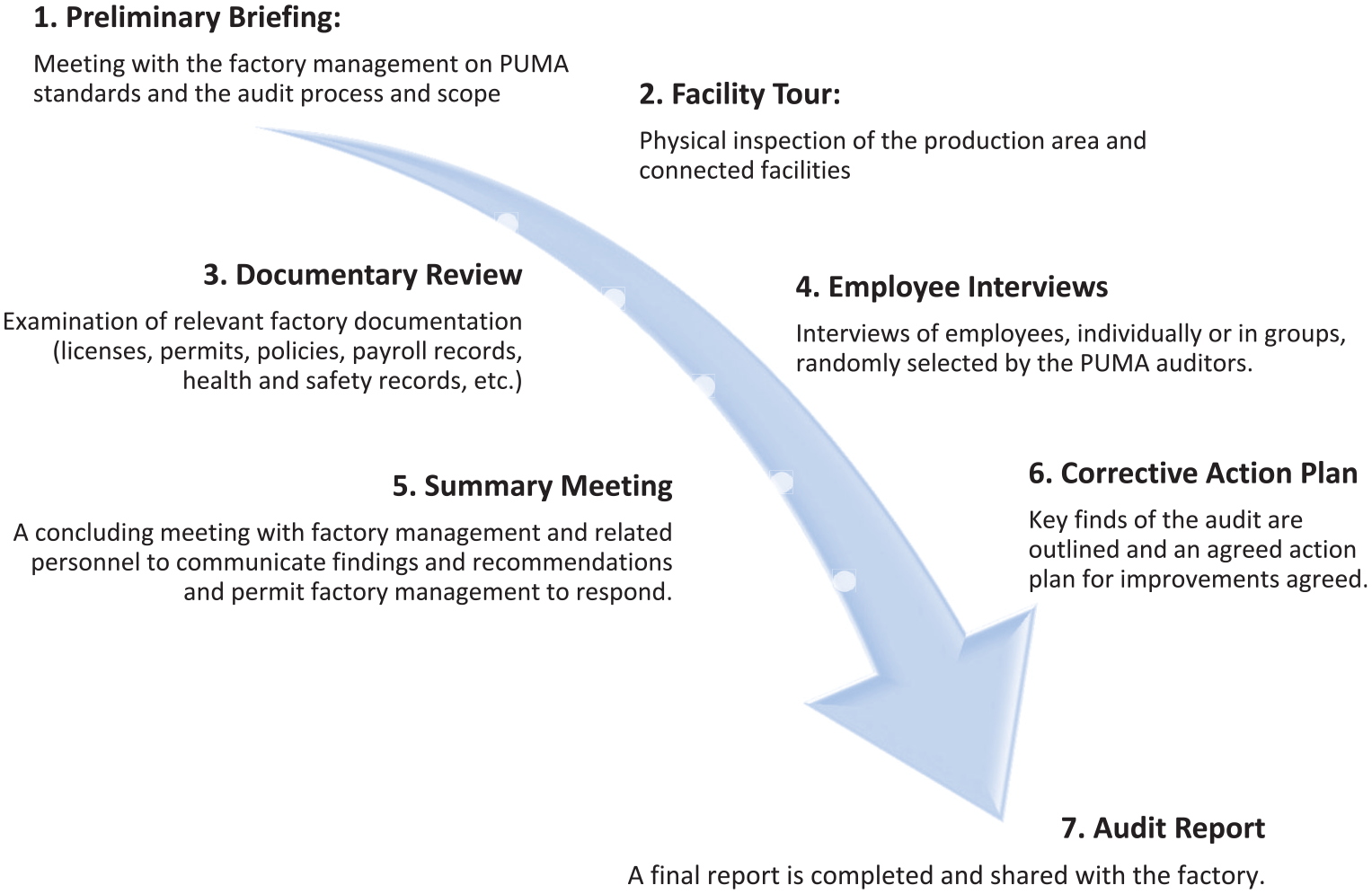
PUMA’s supplier audit process.
Other Reporting Platforms
Anonymous surveys are occasionally used to supplement the audit process, particularly for social issue auditing. For example, M&S—the UK food, fashion, and homeware company—uses a real-time mobile platform called Laborlink owned by ELEVATE, a leading business risk and sustainability solution provider, 19 to survey workers on working conditions in supplier factories. Laborlink is a platform that enables workers to provide free, real-time, and anonymous feedback on working conditions. Workers are provided with a telephone number to contact on an instruction card and get a free automated call back from Laborlink. The employee can utilize the Laborlink platform on their own time and, via interactive voice response technology, is guided through a simple multiple-choice survey on working conditions, including pay, working hours, child labor, health and nutrition, bullying, and sexual harassment. Laborlink transfers the data to the MNC. Dell also gathers data on the health and safety of workers in supplier firms via a mobile phone survey using a mobile application.
Occasionally, an MNC and its stakeholders want direct oversight of their suppliers’ activities. Onsite visits, as part of the audit process or as a separate activity, are frequently used to improve the quality of feedback and to improve on-the-ground observation of supplier practices. For example, in 2015, Dell introduced annual in-person tours of supplier manufacturing facilities in China for key enterprise customers where they could meet with workers and experience working and living conditions in Chinese first-tier supply factories. Dell now offers virtual reality tours of suppliers’ manufacturing facilities using filmed customer and stakeholder tours and worker engagement sessions. 20 Onsite visits are also seen as a key activity in developing relationships with suppliers.
Tracking and Surveillance Technologies
We encountered the effective use of a number of tracking and surveillance technologies across our sample. These technologies tend to automate the data gathering process and remove reliance on input or interpretation from suppliers.
As goods move across geographical zones, the Internet of Things (IoT) facilitates tracking the physical progress and location of an item in real time. Additional functionality includes monitoring of in-transit environmental conditions to ensure product traceability and safety. For example, Johnson & Johnson uses track-and-trace sensors that travel with their shipments creating “end-to-end visibility.” 21 Sensors track location, departure and arrival times, and any interferences that might impact the quality of the product. Smart pallets with RFID (radio-frequency identification) tags or embedded sensor technologies enable real-time gathering of information such as location, movement, type, and weight of the load and prevailing temperature and humidity. Some pallets have daylight sensors that can establish whether a shipping container has been opened during transit. Companies such as HP, H&M, and Johnson & Johnson use the IoT to provide security of provenance and to track the movement of goods (utilizing RFID and sensor technologies).
We also found evidence of the use of surveillance technologies to monitor suppliers. For example, Nestlé employs the Starling Satellite Service 22 to monitor its palm oil supply chain. Starling was created by Airbus, the Forest Trust, and SarVision and uses high-quality satellite and radar imagery to produce land cover maps and data for users on forest cover change. This near real-time monitoring helps Nestlé verify its sustainability standards and associated “No Deforestation” commitments. The Starling platform, a mix of technology, field experience, and data analytics, enables firms like Nestlé to proactively identify if deforestation is occurring in its supply chain area, to target problem areas, and to engage with suppliers to stop this behavior.
Blockchain
A further data gathering technology we encountered was blockchain. It is a digitally shared private or public distributed database of transactions or events that is verified by the network of users. In a supply chain, blockchain can aid transparency by improving traceability of materials, compliance levels, and fraud prevention. Suppliers enter data onto the online ledger and it cannot be tampered with after inputting. One advantage of blockchain is the speed with which data can be analyzed once entered into the ledger. In 2017, for example, IBM in collaboration with a large retailer undertook a pilot to test the effectiveness of blockchain to trace a package of sliced mangoes back to the source. Using existing paper-based records, it took six days, 18 hours, and 26 minutes to trace the source back to its origins on a farm in Mexico. The equivalent blockchain search took 2.2 seconds. 23
Nestlé customers have been accessing blockchain technology since April 2019. Nestlé is building on their pilot of blockchain technology as a founding member of IBM Food Trust, a technology designed to improve customer trust in food. They paired this technology with QR codes to allow customers to track the complete process from farm to production to warehousing. 24
Nestlé has also been advancing their supply chain transparency further with the use of blockchain, in collaboration with OpenSC. 25 OpenSC was co-founded by World Wildlife Fund and Boston Consulting Group to drive responsible production and consumption through supply chain transparency and traceability technology. Businesses such as Nestlé use the OpenSC platform to verify, trace, and share data. 26 Nestlé are a pioneer in this space, announcing their initial pilot program in July 2019 that will utilize the platform to share reliable and accessible information with their customers. The initial focus will be on tracing milk from New Zealand to Nestlé plants in the Middle East.
Dialogic Technologies
While all the companies in our study were concerned that their suppliers were compliant with internal and external regulatory requirements, and frequently used a relatively common technological infrastructure, a number of companies saw diminishing returns from gathering ever-increasing volumes of data from suppliers. They were also concerned about the reliability of much of this remotely gathered data. These companies have turned to what we refer to here as dialogic technologies to develop other mechanisms to improve the quality of data flow and associated level of supplier engagement. While these would fall outside the conventional scope of what we understand as technologies, we see these as purposefully designed systems aimed at fostering dialogue and information sharing across the supply chain and improving transparency practices among suppliers. As such, they fall within the definition of technology adopted here. Examples of these dialogic technologies we encountered in our study include the following:
Two-Way Communication Systems: Here, MNCs engage in prompt clarification of sustainability compliance requirements and provide codes of conduct early in a relationship with a supplier. Proactive communication with suppliers lets them have advance communication of topics such as impending regulatory and compliance changes, minimizing surprises, and providing sufficient time for suppliers to adapt their data gathering and reporting systems. Multiple electronic channels are used, such as webinars (e.g., RBA Learning Academies provide webinars) or electronic newsletters with suppliers. What makes this different from one-way communication systems is the concern with ensuring reciprocity of information flows between the MNC and its suppliers. An excellent example here is the M&S Sustainability Scorecard initiative, 27 which is an online tool aimed at improving supply chain sustainability performance and practices. The scorecard uses three pillars—Environment, Human Resources and Ethical Trade, and Lean Manufacturing—to track and benchmark suppliers on a bronze, silver, and gold rating system. Suppliers self-assess using an online questionnaire and are then subject to an annual inspection by M&S audit staff. The Sustainability Scorecard is a core component of M&S’s Supplier Collaboration Program, which aims to facilitate supplier exchange meetings, provide developmental opportunities, and deliver improved ways of working.
Multiple Stakeholder Initiatives (MSIs): An MSI is a horizontal form of collaboration that requires the involvement of multiple actors in an industry, including MNCs, suppliers, NGOs, governments, academia, trade unions, and other stakeholders. Examples of MSIs are the Forest Stewardship Council and the Better Cotton Initiative. They are often formed for one specific issue in a sector (such as conflict minerals or responsible forestry or fishing) or are based on specific events such as the Alliance and Accord agreements signed after the Rana Plaza collapse in Bangladesh. Industry roundtables are also common platforms to share and gather supply chain data among key industry players, such as the Roundtable on Sustainable Palm Oil or the Roundtable on Responsible Soy Association. H&M is a member of the Ethical Trade Initiative and several other MSIs.
Company and Industry-Led Forums: Similar to MSIs, these are led by one or several companies or are led by an industry association. Other stakeholders are included but are not primary founders or decision makers. For example, the RBA is one of the world’s largest industry coalitions. It includes all our electronics case companies and focuses on advancing sustainability across supply chains and globally. All members commit to, and are held accountable to, a code of conduct, which consists of social, environmental, and ethical standards. Not only does the RBA provide a set of tools for members to support them in reaching these standards, including the Responsible Mineral Initiative and Responsible Factory Initiative platforms for risk assessments, a self-assessment questionnaire, and the validated audit process (as previously described), but it also engages in dialogue with NGOs, academics, workers, and other stakeholders and provides other services for companies, such as the Responsible Labor Initiative, as they move toward creating “a responsible global electronics supply chain.” 28 Another example is the Billion Dollar Roundtable, 29 a forum created in 2011 to share and celebrate best practices in supply chain diversity across 10 industry sectors. Members include IBM, Dell, and Johnson & Johnson.
Supplier Support and Engagement Systems: H&M have developed their Sustainable Impact Partnership Program, where they first assess suppliers to ensure compliance with the H&M Sustainability Commitment. They then use the audit data to engage with suppliers to jointly assess their strengths and weaknesses. Based on validated supplier self-reports, H&M encourages suppliers to set their own developmental goals, priorities, and focus areas to strengthen their sustainability performance. H&M works with key suppliers providing targeted support through online capacity-building workshops, analysis of their supplier management systems, and training processes. H&M provides benchmark data to suppliers so that they know where they stand in relation to other suppliers. Through the H&M capacity-building program, suppliers are connected remotely with in-house expertise in areas such as clean water, supply chain, and industrial relations expertise. This builds long-term and mutually rewarding partnerships between H&M and its suppliers. 30 The system also allows for the capture of information on the disposal, recyclability, and reuse of the materials as part of its closed-loop approach.
A number of our cases—including Dell, a Global IT Company, HP, and M&S—also had online or electronic “feedback loops” built into their systems where noncompliance issues were flagged and an investigatory process and requirement for a corrective action plan generated. For example, with Dell, the system flags supplier noncompliance but also contains a feedback loop where suppliers are required to create a corrective action plan and root cause analysis to address any issues identified during an audit, and closure audits are undertaken to confirm corrective actions have been completed. Dell actively assists suppliers in this process and helps in their ongoing capability development. 31 In return, Dell’s Sales and Procurement specialists openly share customer data with suppliers, including forecasted sales dollars, sales quantities, and parts requirements. Dell then receives data about how well suppliers can support these forecasts. This process enables Dell to reduce the overall frequency and burden of the audits on suppliers and to target attention on high-risk suppliers.
Kering, the luxury group, has also developed a sophisticated bespoke system for measuring the environmental impacts of its activities. Kering measures four tiers of their supply chain, from direct operations to production of raw materials. They collect and validate the data and use this information to increase awareness of environmental impacts across the supply chain. These data are shared with nongovernmental organizations (NGOs), other companies, and industry groups and provide an unparalleled insight into environmental impact in society at large, as well as the monetary value for a company by providing a different way of thinking of environmental impacts across the supply chain, showing where progress can or is being made. 32
Data Dissemination Technologies
Data dissemination technologies transfer information and learning from the focal company back to suppliers and/or to a wider network of stakeholders such as shareholders, customers, external regulatory bodies, and interest groups. Feedback to suppliers is normally handled via the audit process and reinforced with the provision of online or on-the-ground technical support. Some firms use supplier newsletters where particular supplier best practice stories are shared and impending changes and improvements are highlighted.
Summary data are typically released to the public in the form of sustainability reports that normally appear on the MNC’s website in an integrated annual report, a normal annual report, or a sustainability report. To try and improve the impact and understandability of these data, firms such as M&S and Nestlé have used visual interactive maps and supplier stories in the dissemination process.
At a customer level, we found frequent use of QR Codes. These are matrix-type barcodes that convey information to any customer with a smartphone via a QR reader. QR codes can be attached to or embedded in a product. It is anticipated that linking QR codes and blockchain technology will give unprecedented insights into issues such as provenance, pesticide use, or genetic modification in food. This level of visibility increases consumer trust across product ranges through the halo effect of good business practice. For example, Nestlé has been using QR codes on their KIT KAT® chocolate bars to provide information on raw materials, manufacturing, packaging, distribution, and a range of other environmental information. Their QR codes also provide links to information assuring the consumer that the cocoa and sugar used in the product is certified FairTrade and also gives the source of the milk used in the bar. 33
Finally, some firms have turned to the point of sale to better disseminate information to the customer. For example, when shopping on H&M’s Conscious clothing line, the customer can simply click on the item to find the background information, such as the name and address of the factory where the garment was made, what materials were used, and encouragement to return your product to store at end of life. Customers can access these data on their phones also.
Orientation and Its Impact on Choice and Use of Technologies
Our case companies tend to adopt a relatively common set of tools and technologies in attaining a baseline or minimum critical requirement of sustainability data from suppliers. This baseline reflects information requirements of external regulation and associated internal supplier contractual obligations. Once that required baseline data are acquired, we find a clear divergence of approaches in how technology is used to drive improved transparency along the supply chain.
Our initial thematic coding of the data identified three core aims to which the technologies detailed above are applied to developing transparency with suppliers’ compliance, capability building, and value-adding. Compliance is using technology to ensure that suppliers are compliant with appropriate sustainability regulatory requirements and standards and to demonstrate to stakeholders that the MNC is taking appropriate actions to ensure sustainability compliance. Capability building focuses on using technology to facilitate feedback and the transfer of sustainability skills and learning back to suppliers. The aim here is to help suppliers develop, to ensure they can meet the MNC’s standards, and to have a successful relationship with the MNC. Value adding is where technologies are used to actively seek the collaboration of suppliers in sustainability change and innovation, meeting the challenges of a changing market and creating new revenue streams and markets. This can lead to a more overall competitive and innovative supply chain. We also find that the directionality of information flows is important and found that the same tools and technologies can be used differentially to produce different types of information flows ranging from unidirectional (to the MNC), bidirectional (back and forth between the supplier and the MNC), and multidirectional (between multiple stakeholders). Using this initial coding frame, we mapped our case companies as illustrated in Figure 3.
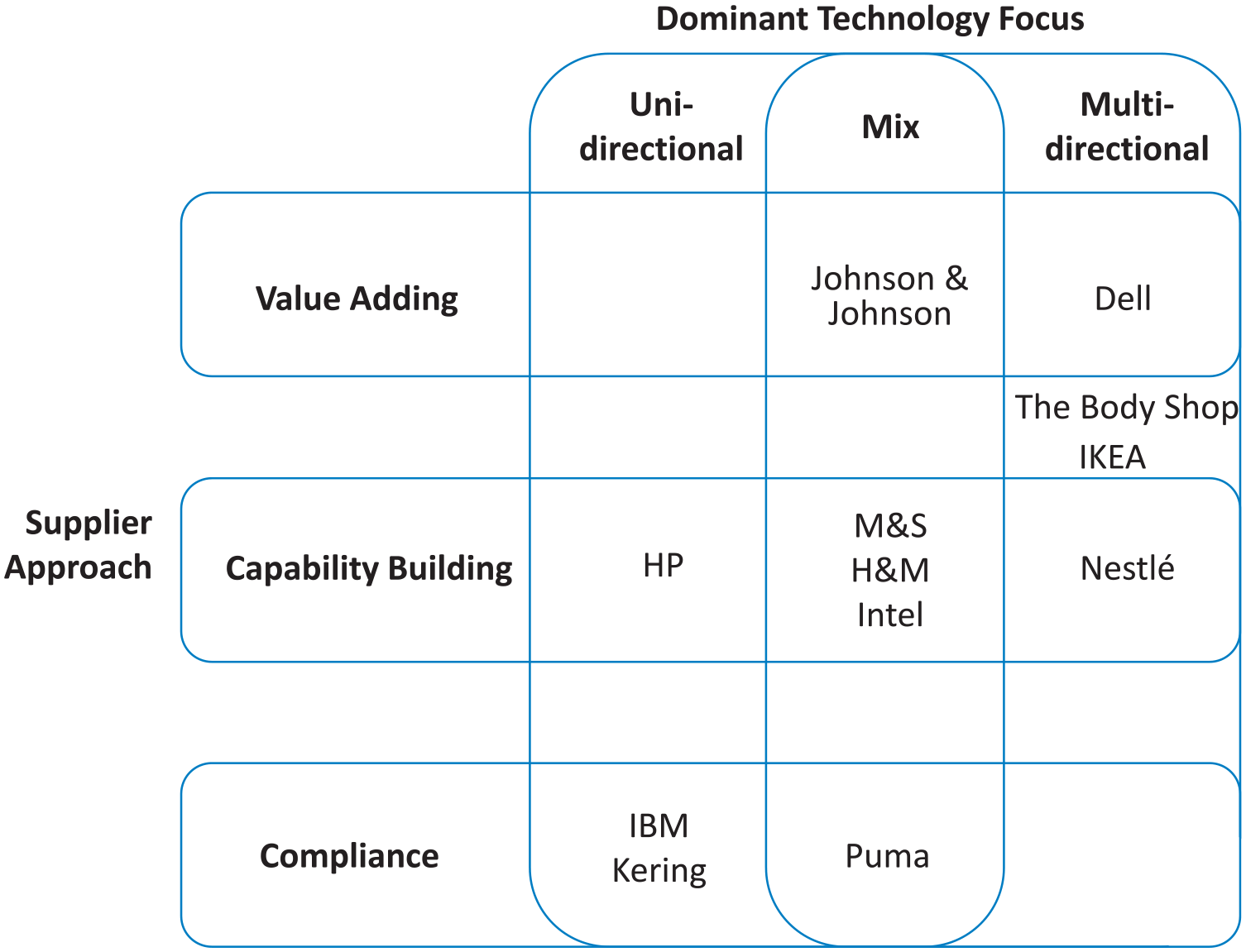
Initial mapping of case companies.
A more refined analysis of our data set led to a further collapsing of the thematic codes giving rise to the identification of two distinct mindsets or orientations adopted by MNCs in their use of technology to foster transparency across their supply chain. We label the two orientations as control and relational.
With a control orientation, we find companies using technologies primarily to ensure suppliers comply with required standards and contractual obligations related to sustainability. The underlying relationship between the MNC and its suppliers is largely a contractual and transactional one. The mindset and approach to supplier management involve using technology to increase the firm’s capacity to gather, collate, and analyze ever-increasing volumes of data related to the workings and activities of their suppliers. Here, the power and reach of technology are used to ramp up the quantity, detail, speed, and verifiability of data from suppliers. Technology is used primarily as a control device, providing a mechanism to improve the penetrative gaze of the MNC into the layers of the supply chain and increasing the efficiency and verifiability of this process by substituting or simplifying human input. These technologies tend to be imposed on suppliers who have little or no input into the development or modification of these technologies. We find a tendency to outsource the audit process to third parties to reduce costs and a trend toward a requirement for industry-led self-assessment of suppliers. This is often a prerequisite for supply chain membership. The electronics industry appears to have advanced this approach most successfully to date.
With a relational orientation, tools and technologies are utilized to open lines of communication and dialogue within the supply chain network to achieve better mutual flexibility and understanding around sustainability. Here, instead of technology primarily used to monitor and ensure compliance, it is used to bring members of the supply chain closer and improve data sharing, openness, and levels of trust within the supply chain network. By working from a philosophy of gathering minimal critical levels of sustainability data from suppliers, there is a realization of the growing costs and diminishing returns associated with gathering and processing ever-increasing levels of supplier data. This approach also acknowledges the potential unreliability of much so-called “objective” audit data and the inflexibility of relying on a fixed 12- or 24-month audit cycle. Once a supplier demonstrates that they can be trusted and are supplying minimally required compliance data, the emphasis shifts to using technology to develop the relationship and include the supplier in a process of continuous improvement and mutual innovation. With this shift, we find a subtle change in the types of tools and technologies used with a greater emphasis on the use of dialogic technologies to improve the level of social connectedness. We also found an increased concern by the MNC about the burden and sustainability of data gathering on the supplier. Here, the view of suppliers shifts from a simple instrumentally calculative one to one that views suppliers as potential long-term partners. This orientation is durable and developmental. For example, both IKEA and H&M advocate phased planning, support, collaboration, and mutual development with suppliers in the development of their transparency systems. The overall orientation by these companies is to use technology to reduce the required level of data but improve its salience—less but better data. Ultimately, the espoused intention of a number of our relational cases is to have the suppliers better understand the business priorities and internalize the cultural values of the MNC, thus behaving as the MNC would. As trust with tier 1 suppliers and their competence develops, we also find an increasing shift toward the use of self- and industry-led audits by suppliers. This is often accompanied by a devolution of responsibility for monitoring and developing lower-tier suppliers to tier 1 supplier helping to reduce costs for the MNC.
Our central point here is not that you need different technologies to deliver the different orientations but that the same tools or technology can be used to achieve different strategic supply chain transparency outcomes depending on the intent and nature of its usage. While certain technologies are clearly more disposed toward one orientation over the other (e.g., satellite surveillance and blockchain to control and two-way voice systems and MSIs to relational), our main message is that it is not the type of technology that is key but the ultimate use to which the technology is put in sourcing, gathering, interrogating, and disseminating data.
A good illustration of this dual purpose of technology is the example of the audit. Companies that view auditing from a control orientation see it as a mechanism for ensuring suppliers reach certain prespecified contractual standards. In most of these companies, successfully complying with the audit is a prerequisite for joining and continued membership of the supply chain. An example of the use of an audit in Control mode is IBM, where suppliers are expected to conform to the sustainability codes of conduct set out, possibly due to the levels of trust engendered by founding the RBA and trust and confidence in its tools and technologies allowing it to focus on other strategic issues. Kering’s sophisticated software also allows them an unprecedented level of insight into their supplier practices, so they are able to collect millions of data points to ensure compliance across multiple tiers and issues. As Kering is a holding company rather than a retail organization, its control orientation comes from managing the sustainability data of its multiple brand companies.
Companies that view auditing from a relational orientation tend to view this technology as an essential data source and feedback mechanism for managing supply chain relationships, improving communications, and developing supplier sustainability capabilities. The audit is not merely a compliance activity, but is the starting point in an ongoing process of feedback, remediation, improvement, and development. Some companies—such as Dell, Johnson & Johnson, and (to some extent) the Body Shop and IKEA—take the relational orientation further and actively harness a relational orientation to spot sustainability trends in process innovations, develop new and more sustainable materials and products with suppliers while also using supplier sustainability knowledge to identify potential new markets. This would seem to be a strategic intent based on seeing sustainability as a competitive advantage.
Finding the Right Balance between Control and Relational Orientations
Both the control and relational orientations offer clear advantages and disadvantages. The control orientation potentially offers improved centralized control, better data security, and the capability to rapidly and efficiently gather fine-grained detail on supplier practices through multiple tiers. It is also based on a simple transactional form of trust premised on suppliers meeting clearly specified contractual and reporting obligations. However, it also risks creating a top-down, command-and-control compliance culture leading to rigid instrumental relationships across the supply network. It may also produce an intrusive sense of surveillance among suppliers or lead to unthinking compliance and inaccurate reporting, including the withholding or manipulating of data. It may also carry a heavy and expensive administrative burden on both the MNC and suppliers. Aside from the costs of purchasing, developing, and maintaining the necessary technological infrastructure, the vast information-gathering capabilities of these new technologies also run the risk of producing information overload within the MNC, overwhelming its processing capacity with a growing flood of data. While, in some instances, the ability to rapidly release data can safeguard MNC reputations, an overload of information can also potentially give rise to accusations of green-, clean-, or white-washing when these data are released in an inappropriate manner to stakeholders.
A relational orientation may help create a longer-term and more developmental-focused view across the network. It can reduce the considerable burden of data gathering and analysis, improve the depth and criticality of the data obtained, and bring about improved flexibility and innovation across the supply network. Its potential downsides are the additional time and cost incurred in actively developing interpersonal trust and improving social relations and practices across the supply chain, investing heavily in social mechanisms to break down cross-cultural challenges, and coaxing suppliers to internalize the values and strategic priorities of the MNC. It also involves a relaxation of centralized control and a potential increase in risk associated with the reduction in surveillance and in placing trust in suppliers and their subsuppliers to self-manage. The data sharing implicit in this orientation also increases risks in relation to the potential loss of intellectual property.
In our study, MNCs cited different situations to justify their respective orientations and use of technologies in advancing transparency in their supply chains. These contingency factors, in large measure, relate to those factors identified earlier in this article and can guide other MNCs in their decision process. Within this study, the following factors were identified (in a descending scale of priority):
Supplier Capabilities and Infrastructure: Suppliers’ characteristics, including their technological capabilities and the prevailing IT infrastructure and distance, are key determining factors in the types of tools and technologies in use. Certain technologies require a sophisticated complementary set of competencies within the supplier and need to be supported by a robust local IT infrastructure. If the supplier’s technological environment is poor and technological competence is low, a relational orientation seems essential. If the environment is established and supplier competence high, this opens up the option of a control orientation. For example, the Body Shop’s suppliers do not lend themselves to a strong control orientation due to technological unsophistication and in environments that preclude certain tools and technologies. However, if supplier competence is high, as manifested through IBM’s history of working with and training suppliers through the RBA capability building programs, then a control orientation becomes a possibility.
MNC Strategic Intent: All our case companies emphasize the importance of sustainability in their corporate strategy and of how the culture of the company influences their choice and use of technology for fostering sustainability transparency. Those MNCs leaning more toward a control orientation tend to need or have strong central control of their supply chain while pursuing strategies of quality and risk minimization. Examples within our study include IBM and Kering (see Figure 3). Those emphasizing a Relational orientation tend to prioritize sustainability, long-term relationships, and (in some instances) pursue collaborative sustainability innovation with suppliers. Examples here include Dell and the Body Shop. Other companies such as PUMA appear to have achieved a deliberate balance between the two orientations.
MNC Attitude Toward the Supplier: Those adopting a control orientation tend to frame suppliers more as contractual factors of production. The key decision parameter is defined as adherence to contractual metrics and clear punishments for noncompliance. Both IBM and Kering stressed compliance as an expectation and had a lower tolerance for noncompliance. Among those emphasizing a relational orientation, the language around suppliers is one of collaboration and cultural compatibility. H&M, in particular, spends a significant amount of time onboarding suppliers and search for suppliers who want to develop with them, whereas the Body Shop sees infractions of compliance as the starting point for developing, supporting both suppliers and communities surrounding suppliers. Dell goes even further and views trusted suppliers as an essential part of their emphasis on sustainability as a competitive advantage.
Verifiability: Where verifiability of sustainability data is problematic and untrustworthy—for example, with remote supplier location or due to the nature of the product (e.g., cotton, certain agricultural products, or conflict minerals)—our study finds a tendency toward a relational orientation. Some firms also adopted multiple orientations to better match the requirements of their products. For example, IBM predominantly uses a control orientation for sustainability, but for conflict minerals they adopt a relational orientation known as “neighboring.” In addition, where verifiability can be clearly established, or is externally certified, companies move toward a control orientation. Johnson & Johnson, although they classify as a relational orientation for most of their supplies, adopt a control orientation for standard ingredients and materials.
Supplier Reputation: With large, well-established, high-quality suppliers and small new suppliers, companies tend to favor a control orientation. With large, high-quality suppliers, there appears to be implicit trust in the quality of the data supplied and a greater tendency to rely on third-party industry auditing as an ongoing prerequisite for supply chain membership, typified by the IBM and Kering approach. With small or new suppliers where competence and trust are not yet established, there is an orientation toward control with frequent onsite audits. For example, the Body Shop’s audits emerge from audit-centric to relational and developmental, once trust is established.
Conclusions
Globally dispersed supply chains are a reality for many MNCs today and appear to offer both considerable risk and opportunity in equal measure. Supply chain transparency across the supply chain is vital to the efficient, flexible, resilient, and sustainable operation of today’s global companies. Technology plays a central and growing role in the creation of global supply chain transparency. There is no single technological “silver bullet” that can tackle the complex challenges of fostering true global supply chain transparency. Managers have considerable discretion in the choice of tools and technologies they can deploy in driving transparency in their supply chains, but they need to think carefully about the impact of their design choices. We emphasize the dual and parallel role of technologies embraced under the control orientation (to make things visible and governable) and the relational orientation (to improve dialogue and mutual benefit). The key challenge for managers lies in getting the right balance between these dual roles bearing in mind the key contingencies. Managers must also be mindful of the message that the use of certain technologies will convey to suppliers. It may be challenging to stress collaboration and openness with a supplier while a drone flies overhead.
Footnotes
Appendix
Notes
Author Biographies
Paul McGrath is Associate Professor at UCD College of Business, University College Dublin, Ireland (email:
Lucy McCarthy is Senior Lecturer, Department of Management, University of Bristol, Bristol, UK (email:
Donna Marshall is Professor of Supply Chain Management at UCD College of Business, University College Dublin, Ireland (email:
Jakob Rehme is Professor at the Department of Management and Engineering, Linköping University, Sweden (email: