




Abstract
Government-sponsored public–private partnership (PPP) projects in the United Kingdom face particular complexity and uncertainty challenges because of the country’s specific socioeconomic context. This research investigates the role of governance and stakeholder management in PPP-based sustainable projects by conducting a mixed methods approach, which includes a quantitative survey and a qualitative case study inference. The results show that project governance and stakeholder management have a significant positive impact toward sustainable development and PPP project success. Whereas the negative impact of opportunism over contractual governance and stakeholder management is insignificant. Similarly, the negative effect of project uncertainty over contractual governance is insignificant toward sustainable development.
Keywords
Introduction
Researchers in the field of project management have frequently referred to project governance as an essential component of problem-solving throughout the project’s formulation and management (Cicmil et al., 2016; Flyvbjerg, 2013; Khan et al., 2019). The framework within which decisions for project planning and implementation are made to achieve the intended business or strategic purpose is what constitutes project governance (Bekker & Steyn, 2007). To address the needs of a wide range of stakeholders, executive planning pays close attention to the concept of project governance. The goal of stakeholder involvement in this article is to achieve project values and possible stakeholder satisfaction throughout the project life cycle (Bahadorestani et al., 2020). Ineffective stakeholder management has been cited by several academics as the primary cause of project failure (Aaltonen, 2011; Atkin & Skitmore, 2008; Olander, 2007; Yang et al., 2011). The perceptions and expectations of the stakeholders have had a significant impact on the success or failure of many initiatives (Bourne & Walker, 2008). Stakeholders in construction projects have the power to influence project scope, resource distribution, communication etiquette, and regulatory changes.
Good governance is essential for better project performance since it is a cost-effective and time-effective means of increasing project stability, success, and productivity (Samset & Volden, 2016; Sirisomboonsuk et al., 2018). Despite this, studies in the areas of project governance and stakeholder management are emerging, but the research arena is still open to examining the process and behavior by which stakeholders relate to the project governance (Derakhshan et al., 2019). Project governance and the performance of United Kingdom public sector infrastructure have been examined by several researchers. Few local studies (Shier & Handy, 2016; Park et al., 2017), on the other hand, look at the interplay among public sector project governance, stakeholder management, and its performance toward project success. To preserve the long-term viability of the United Kingdom city managers must balance the use of scarce resources. The balance refers to human resources from an operational point of view, namely programs that execute sustainable development. Public–private partnership (PPP) refers to a partnership between public and private organizations. To gauge the United Kingdom’s environmental performance, the government has established 68 grand indicators (DEFRA, 2008). In the worldwide construction industry, similar technologies have been developed, however they are limited to measuring building performance. When it comes to measuring the environmental impact of a building, Building Research Establishment Environmental Assessment Methodology (BREEAM) is a popular approach (Shiers et al., 2006). Everything from design, management, and energy efficiency to waste recycling is included in the scope of this program. Each of the numerous versions can be used for a wide range of purposes, from assessing residential properties to commercial office spaces. Despite these advancements, mainstream assessment tools all focus on environmental concerns in the design and construction stage, but they do not consider their balance with social and economic factors. Many of these tools neither focus on the early stages of a project nor do they cover the entire project life cycle; as a result, there is no way to measure the procurement process as a whole. Therefore, it is necessary to address the role of governance and stakeholder management and its contribution toward sustainable development in the United Kingdom.
The research aims to understand best project management practices in alignment with stakeholder management to effectively improve the delivery of PPP-sustainable construction projects. Project governance and stakeholder management approaches are at best vague and disconnected in the previous studies (Li et al., 2019; Derakhshan et al., 2019) especially when it comes to public-sector infrastructure initiatives. Policymakers and decision makers lack a framework for overcoming infrastructure projects’ performance-related challenges. Project governance in the PPP sector is examined in this study, which will aid policymakers and corporate leaders in building policy frameworks and implementation mechanisms to improve project performance. The importance of high-quality infrastructure for long-term, broadly shared economic prosperity cannot be overstated. Most of the preceding literature focuses on either construction project success or sustainable development but has not explored the role of governance and stakeholder management in public–private partnership sectors toward the success of sustainable construction projects.
Literature Review
PPP in Construction
The construction sector is vital to government infrastructure development and progress. According to Hampson et al. (2014), the industry generates between 10% and 30% of a country’s gross domestic product (GDP) and provides a diverse spectrum of jobs and job prospects. However, the industry’s prospects and destiny over the next decade will be determined by the re-engineering and restructuring of the industry’s procurement approach (Angeles & Walker, 2000). This means that the company’s procurement procedure will need to be more inventive. PPPs privately financed projects, and build-own-operate transfer are among the novel procurement processes mentioned (Jefferies, 2006; Lu et al., 2019).
The Canadian Council for PPP offers the following definition of PPP: Public–private partnerships, a collaborative effort that draws on both the public and private sectors’ unique strengths and resources to address specific public needs (Canadian Council for Public-Private Partnerships [CCPPP], 2007). To date, PPPs have been widely accepted as a viable method of providing value for money public infrastructure and services in the United Kingdom. About 15% of infrastructure spending in the United Kingdom and 8% in Australia are now spent on PPP projects (Liu et al., 2015). PPP, on the other hand, is critical to the development of infrastructure in underdeveloped countries. All the way up to service provisions based on the use of public facilities, private engagement can be found in a variety of ways. This could even extend to the complete privatization of public infrastructure and the associated services (Liu et al., 2005). PPP mechanisms may include service contracts, leasing, joint ventures, concessions, and privatization as private involvement grows (Li et al., 2005).
PPP in Sustainable Construction
Research in this area of PPP focuses on sustainable construction, which is a strategic goal of development of the city and emphasizes the creation and management of finite human resources at the operational level. Since involvement and engagement by different stakeholders determines sustainable development, and human and social resources are a distinct sort of resource (Swiadek & Tomaszewski, 2011), the resources will become capital only when they create specific advantages (Matysiak, 2008).
PPP is a contractual method for infrastructure projects that is used by public and private sectors. Long-term relationships between a public sector as buyer and seller and several private sector enterprises that provide design, construction, and maintenance of infrastructure as well as various other associated services are common. When it comes to PPPs, there are a variety of configurations (Hodge & Greve, 2018) that are shaped by historical precedents (Buljevich et al., 1999; Davies & Eustice, 2005). Design-build contracts for public utilities are the most common form of agreement. Depending on the nature of the contract, the advantages are shared proportionately between the parties, based on the resources committed, the duties assumed, and the risk accepted (Buljevich et al., 1999; Yescombe, 2013). As a result, both the government and the public benefit from the provision of public services and infrastructure
The Role of Project Governance
McGrath and Whitty (2015) offer a basic definition of project governance that is in line with the more specific notion of general governance. They define project governance as a method for directing, controlling, and holding project teams accountable. There are many ways to think about governance, but the most common is to think of it as a collection of rules that regulate the way organizations are run. When it comes to keeping track of the many parties engaged in a project’s life cycle, project governance involves more than just starting and ending projects (Heide, 1994). Organization of these interactions with internal stakeholders, such as project teams and firm management, and actors outside the organization, such as suppliers and clients, appears to be essential for project success. Although governance focuses primarily on managing, it does not impose authority over internal and external stakeholders to guarantee compliance, but rather establishes a solid relationship and makes positive decisions for the project (Moldoveanu & Martin, 2001). The governance of project management processes, from project conception to execution, is also an emphasis of this discipline (Turner & Keegan, 2001).
Project Governance in PPP Construction Project Success
As defined by the World Bank, PPP is a “long-term contract between a private party and a government institution, for supplying a public asset or service, in which the commercial party takes significant risk, and remuneration is related to performance” (World Bank, 2014, p. 28). PPPs are characterized by a specific set of formal rules that can guarantee the supply of public goods and services by specifying obligations, roles, and the mission of a temporal coalition (Bygballe et al., 2016). For a project’s final success (as opposed to just the promise of value creation), contracts are only legally binding promises to act in the future. The final project outcome, however, is dependent on how well specialized public and private resources are aligned to achieve that goal (Kivleniece & Quelin, 2012). According to conventional governance theory, partners’ contributions to project success are ensured by appropriately aligning formal regulations with trade conditions (Chang & Chen, 2016). Therefore, it is hypothesized that:
Studies on governance also show that the success of PPP initiatives depends greatly on the presence of components of relational governance (Tang et al., 2010). PPP contract terms are used as a reference point to emphasize ideals, such as communication, inclusivity, and open discussion, to connect public administration’s accountability and transparency standards with private enterprises’ profit-oriented rationale (Ling et al., 2014).
Project Governance Toward Sustainable Development
Sustainability is a complex notion that deals with various stakeholders and multiple time and space scales (Martens, 2006). When the development aim is not clearly defined and is subject to alter throughout the process, it implies a process of constant change and evolution. A pluralistic approach is needed to deal with the challenges of sustainable development as it can deal with different actors at multiple levels, as well as help to create a common vision and resolve trade-offs. Sustainable development can be guided through the use of governance. The concept of government, on the other hand, is far from simple. There are rules, stakeholders, and processes in place to achieve a common goal (Kemp & Martens, 2007). Thus, it can be hypothesized that:
The literature explains the discussion on this hypothesis. It is possible that diverse perspectives on sustainable development could lead to distinct governance models. Deliberative processes with important stakeholders, engaging corporate and civil society organizations, and overruling other societal organizations may be used in the formation of sustainable development strategies and goals.
Stakeholder Management in PPP Projects
Since the project can be seen as a coalition of stakeholders, it is crucial to keep an eye on stakeholder management. Clients, engineers, and contractors are the three major players in any building project alliance. The overall performance of a construction project is determined by the interactions and interrelationships among the participants (Maqbool et al., 2023). They are obligated to ensure that every project is completed on time and on budget. The complexity of current construction projects has necessitated the use of stakeholder concepts in the management of construction projects. Mismanaging these various stakeholders can result in disastrous implications for projects, such as litigation and time overruns, if they are not properly handled (Chinyio & Olomolaiye, 2010).
Managing stakeholders in an organized way has become necessary due to the growing recognition of stakeholders’ importance as a crucial factor in project success. Cleland and Ireland (2007) stated that it is important for project managers to be able to identify and understand project stakeholders, as well as how to manage them and deal with their potential parochial concerns.
There are long-term agreements and intricate relationships in PPPs (Smyth & Edkins, 2007). Dynamic relationship frameworks cause partners’ obligations to fluctuate during and across phases (Zou et al., 2014). This is because relationships are dynamic and change over time (De Schepper et al., 2014). For the user-fee variant of PPP, the public is a key financial contributor and so has molded the rationale for stakeholder management in PPP projects. Several studies have looked at these PPP characteristics and explored the causes of stakeholder opposition and the implementation of stakeholder management, and they have offered techniques for managing stakeholder populations.
To have a beneficial impact on a PPP project, firms must identify and manage their stakeholders (Bourne & Walker 2008). As part of the effort to avoid project failure, stakeholders should be considered as clients (Newcombe, 2003). Key to PPP projects’ success is the analysis of their interests, roles, and responsibilities as well. Project stakeholder identification and involvement at each project step should be considered important. For a PPP project to succeed, careful consideration of the project’s objectives, conflicting interests, and project demands must be considered. Thus, it can be hypothesized as that:
Some of the key points taken into account when managing project stakeholders from a sustainable development perspective include examining and balancing the economic, ecological, and social interests of the project stakeholders (Gareis et al., 2013). Sustainable development can be achieved by balancing the long- and short-term perspectives, as well as those of future stakeholders; and evaluating the spatial scales of local, regional, and global project stakeholders who are even further a part of the whole project context (Maqbool et al., 2022). So, it can be hypothesized that:
The Role of Opportunism in PPP Projects
For over two and a half decades, literature has explored opportunism (Williamson, 1985). Opportunism can be described as self-interest seeking with guile and incorporates deception, based on transactional cost economics and agency theory (Macneil, 1981). By understanding opportunism, companies may analyze their position relative to that of their trade partners and identify areas where they are prone to falling prey to opportunistic behavior (Hawkins et al., 2008). Numerous causes of opportunism have been recognized in literature, including governance structures (Wang & Yang, 2013). While there is a wealth of literature on opportunism, our knowledge of the nomological network, particularly the causes of opportunism, is still quite basic. The existing research has mostly focused on the individual characteristics of these governance arrangements and their impact on opportunism. A considerable portion of the research, for instance, examines if formalized governance model or informal governance standards impact opportunism (Liu et al., 2009). Limited research has looked at how different systems of governance interact to influence opportunistic behavior (Kang & Jindal, 2015).
In practice, opportunism may occur in any situation, and organizations frequently use many types of governance to regulate their partners’ opportunistic actions (Wathne & Heide, 2000). Furthermore, because connections, particularly commercial ones, are complex and include both the economy and politics (Arndt, 1983; Stern & Reve, 1980), hybrid governance systems may be required to manage potential opportunism. Multiple governance structures, on the other hand, may result in duplicate rules and even confusion among channel participants (Rindfleisch et al., 2010; Srinivasan & Brush, 2006). Organizations would be able to build an ideal structure to optimize relationships and productivity if they had a better knowledge of the causes of opportunism under diverse governance types. Thus, it can lead to important hypotheses such as:
Uncertainty in PPP Construction Projects
Many project management studies have long included the topic of uncertainty. Primary uncertainty, which represents a lack of understanding about natural situations, such as the uncertainty surrounding natural phenomena, and secondary uncertainty, which reflects a lack of knowledge about the activities of other project participants, are two categories of uncertainty identified by Koopmans (1957). Williamson (1985) believes that Koopmans’ secondary ambiguity is of a benign nature, requiring no purposeful nondisclosure of facts. Subsequently, a few researchers used the terms environmental and behavioral uncertainty to describe the frequency and unpredictable nature of environmental changes encompassing projects over time (Fink & Harms, 2012), and behavioral uncertainty to explain the complexity in anticipating and understanding the actions of an exchange partner (Zhou & Poppo, 2010). Primary uncertainty and environmental uncertainty are similar concepts as they all stem from external causes outside the project’s scope such as market volatility. Secondary uncertainty, behavioral uncertainty, and internal uncertainty are all relative as they are indicative of a scenario in which one participant is unable to assess or quantify the performance of the other (Zhou & Poppo, 2010).
Even though this classification was not created with construction projects in mind, it does give a useful framework for analyzing uncertainty concerns in the field. Construction projects are subjected to inclement weather and unforeseeable ground conditions outside the control of contractual parties (Pang et al., 2015). Furthermore, unlike many other businesses, construction is a complicated mix of divergent demands, skills, and techniques that makes evaluating performance significantly challenging. As a result, in building projects, both dimensions of uncertainty are essential to consider. Thus, in the given situation of PPP projects, it can result in the following hypotheses:
Research Framework
Companies around the world are attempting to implement a sense of corporate governance. In the wake of capitalism’s rise, corporations grew more powerful, while governments around the world were forced to submit to corporate power and influence.
The aim of Transaction Cost Theory is to see the corporation as a collection of individuals with varying viewpoints and goals. In determining price and output, the structure and organization of a company can be a significant factor. According to Transaction Cost Theory, organizations’ managers are opportunists who manipulate transactions to suit their own interests (Williamson, 1993). In political theory, as opposed to the traditional method of buying sway in elections, political theory advocates building a constituency through grassroots activism. This means that an organization's governance may be influenced by political influence. Governance changes can be greatly influenced by the political paradigm of corporate governance that has been used (Hawley & Williams, 1996). However, it is not possible to describe effective and good corporate governance using only one theory; rather, it is preferable to mix many theories, including those that highlight laws and legislation as well as stronger enforcement surrounding good governance practice and moving beyond the norms of a mechanical corporate governance approach. Based on literature and mentioned theoretical guidelines a framework of project governance, as highlighted in Figure 1, is developed to test in this research.
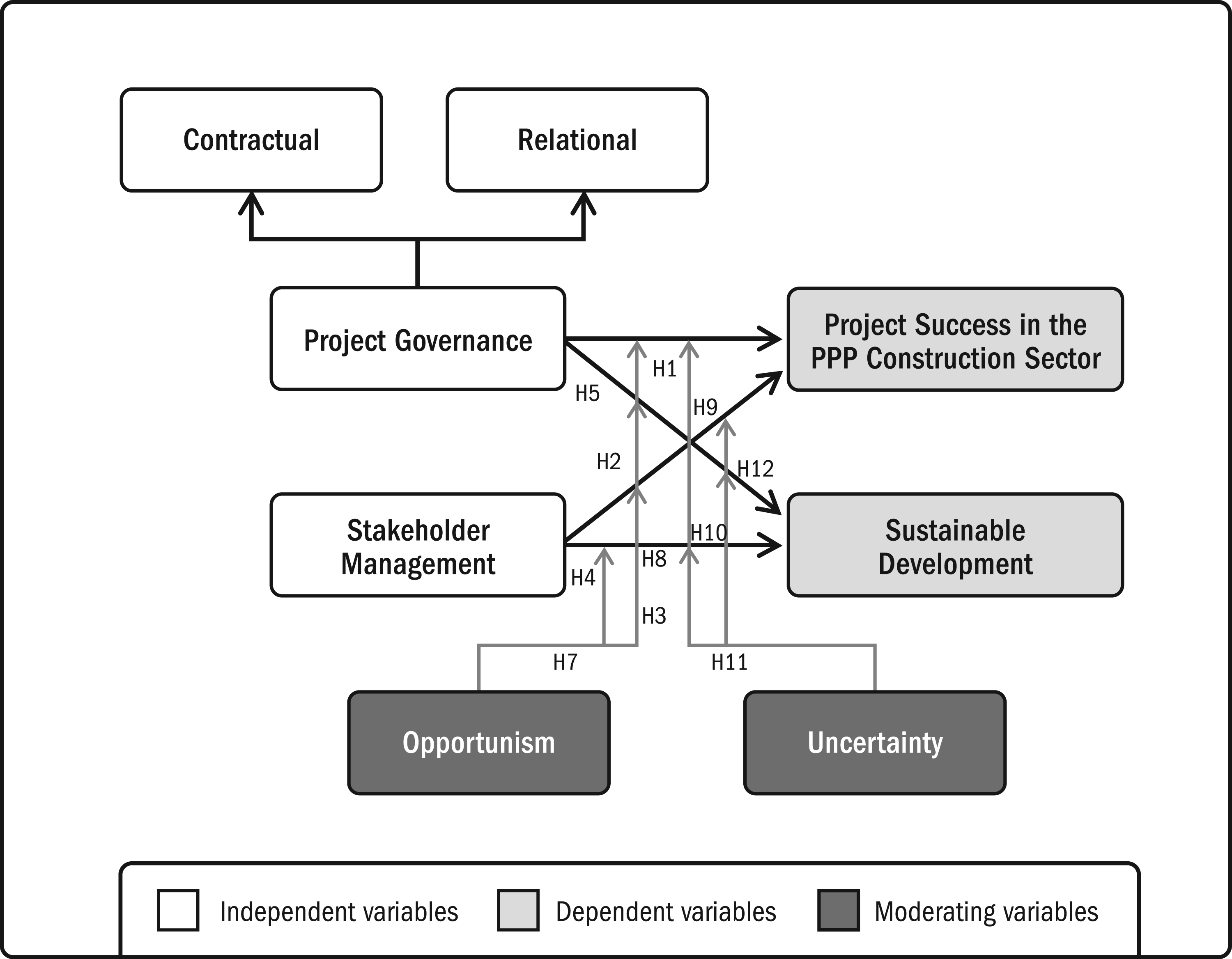
Theoretical framework of governance.
Methodology
Research Approach
Researchers can concurrently answer confirmatory and exploratory questions using mixed methods research. Researchers can confirm an influence on a phenomenon, using statistical analysis of quantitative data, before investigating the reasons for the observed effect through case study data or surveys (Tashakkori & Teddlie, 2003). For this research a mixed methods approach is undertaken, which includes a quantitative study through questionnaire survey and a qualitative approach using a case study. Incorporating a variety of approaches, the research can yield more accurate conclusions because it examines evidence from different angles.
Research Philosophy
Positive interpretation is based on the ontological concept and doctrine that truth and reality are free and independent of the viewer or observer, according to various studies (Ryan & Julia, 2007). Positivism can be defined as the belief that truth is self-governing, independent, and objective (Urquhart et al., 2010). In this research a positivist philosophical approach has been carried out. Proponents of positivism believe there is a scientific and empirical basis for examining and analyzing real-world events in a manner that is clear and rational. An important criterion for judging a scientific theory’s soundness and validity is if the researcher’s facts are based on reliable, consistent, and verifiable information obtained via the use of one’s senses. Thus, this research strategy was used to investigate the research questions as it follows a more scientific approach.
Research Method
The most suited methodology for this research is the mixed methods approach, which includes quantitative and qualitative analyses. Confirmation and comprehension of results are the two main goals of adopting mixed approaches (Thurmond, 2001). According to the literature, the term confirmation refers to the convergence of findings from two different datasets. The second purpose of mixed methods research is comprehension, which combines qualitative and quantitative research approaches to create a more thorough and detailed explanation of the topic under study and/or explain specific data abnormalities. Some people believe that comprehension accelerates a researcher’s understanding of a phenomenon (Morse, 2003). It is proposed that confirmation is linked to the understanding process, demonstrating that the two ideas are not mutually contradictory.
Quantitative Method: Questionnaire Survey
Quantitative data can be gathered through the use of questionnaires in order to ensure the results are consistent and coherent for analysis (Buckingham & Saunders, 2004). The researchers have used a web-based questionnaire survey with 5-point Likert scale questions to gather relevant data to perform analysis. In data analysis, a Likert scale has four to five Likert items that can be combined with other Likert items to provide an aggregate value (Boone & Boone, 2012).
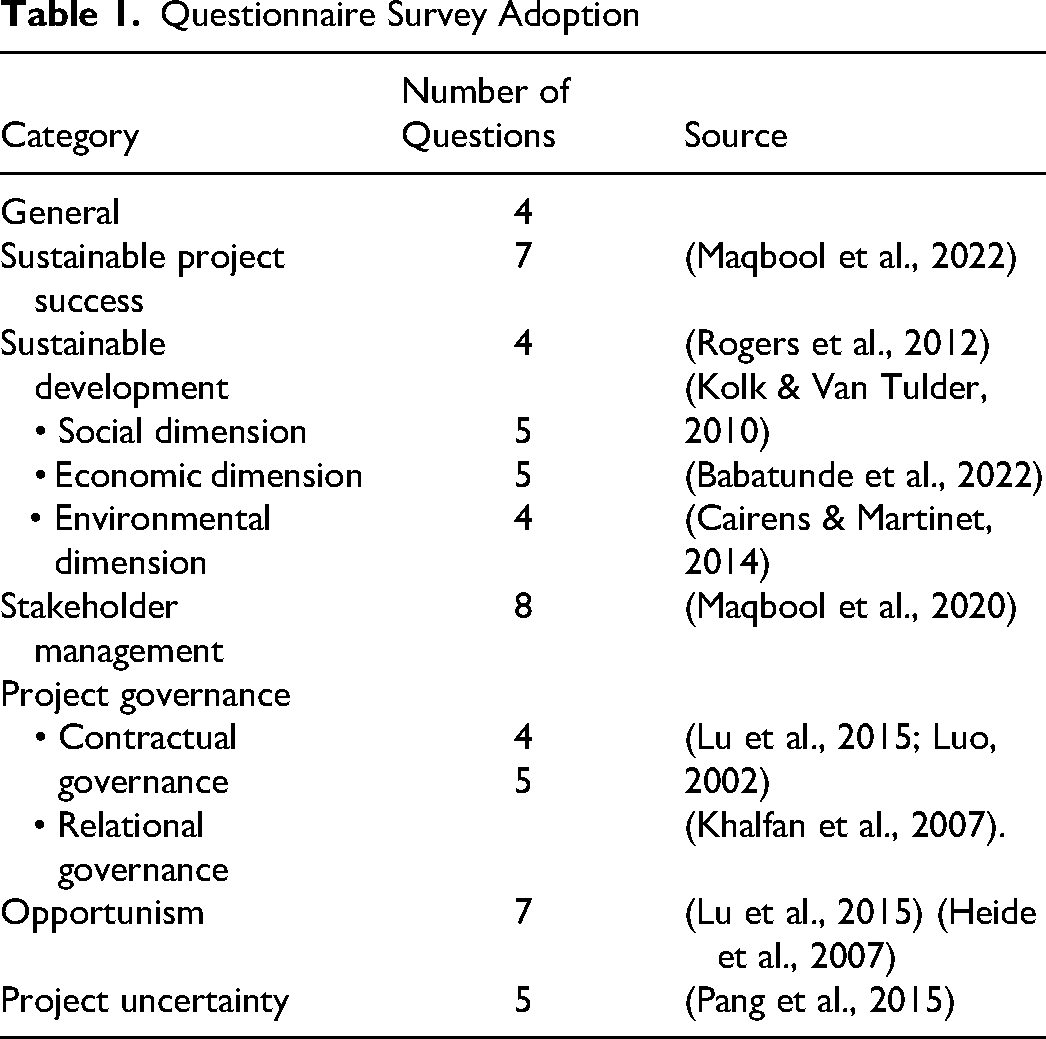
The questionnaire survey collected a total of 251 responses from the United Kingdom. The respondent’s population was chosen through snowball sampling from professionals in the construction industry. Snowball sampling is a selected design procedure that is typically carried out using networks. It is useful when the researchers know little about the group or organization to be researched (Etikan et al., 2016). The survey questions were derived from existing literature and research publications that are connected to the fundamental notions of this study, as shown in Table 1.
Questionnaire Survey Adoption
Qualitative Method: Case Study
The case study method is becoming more common among qualitative researchers (Thomas, 2011). Several authors have contributed to analytical advancements, expanding the market of case study methodologies across professions (Creswell, 2013; Denzin & Lincoln, 2011). In this research, the researchers have adopted a case study on “The London Olympic Games 2012,” which is a PPP- based project. The significance and estimates for the 2012 Olympic Games were based on: (1) inattention to risk under governance mechanism; (2) bias in decision-making; and (3) opportunism and uncertainty in project management and administration, which were all factors contributing to the project. While these elements are magnified in their context of planning and budgeting, estimates at various phases of the process serve different goals and require diverse levels of expertise and scrutiny.
Results and Analysis
Quantitative Analysis: Questionnaire Survey
Prior to performing the quantitative data analysis, screening and initial checks were carefully performed to understand the reliability and validity of the quantitative data. Diverse techniques exist for evaluating the scale’s accuracy and dependability. Test-related research relies heavily on the alpha coefficient, which is unquestionably one of its most essential and widespread statistics (Cronbach, 2004). The range of Cronbach’s alpha value from 0.6 to 0.7 is regarded as acceptable, whereas 0.7 and above is deemed good (Amirrudin et al., 2021). Skewness and kurtosis are estimates of the third and fourth standardized moments of the population distribution, respectively. It is recommended that the kurtosis value should be between -7 and 7 and the skewness should be between -2 and 2 (Yen & Fitzpatrick, 2006). The results of Cronbach alpha, mean standard deviation, skewness, and kurtosis for each variable were tested, and the results were observed to be satisfactory.
To determine whether the data is suitable for further analysis, the Kaiser-Meyer-Olkin (KMO) test is used. If there are significant values (sig) or probabilities (p) less than 0.05 in the KMO value, the data is already qualified for additional factor analysis. To determine if an observed correlation matrix is spherical, researchers use Bartlett’s Test of Sphericity. The results of the KMO and Bartlett tests and the values are significant for this research.
Correlation Analysis
The accuracy of a choice to forecast the value of a single variable has been demonstrated to be qualified by measurements of dependency or correlation (Hall & Holmes, 2002). Using SPSS, a correlation study was performed to determine the link between the variables. In order to carry out this experiment a set of variables were utilized, which included the two independent variables project governance and stakeholder management, the two moderating variables opportunism and project uncertainty, and the two dependent variables sustainable project success and sustainable development. Using Pearson’s correlation as a bivariate analytic approach, the statistical association between continuous variables can be represented by coefficient value values. Bivariate model parameters are evaluated in a single model to account for possible correlation between variables.
Table 2 shows that there is a highly significant connection between all the stated variables at p = 0.001. The p value must be less than or equal to 0.05 to be considered significant, according to the general significance rule. It is also possible to confirm the existence of a strong positive correlation between all the variables.
Bivariate Correlation Matrix
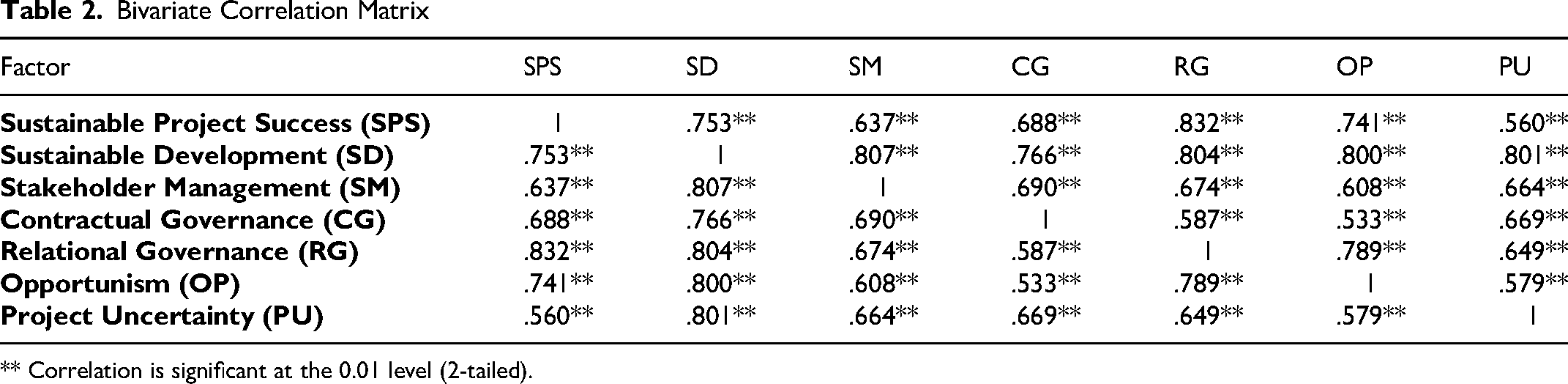
** Correlation is significant at the 0.01 level (2-tailed).
Moderation Analysis-Hierarchical Multiple Regression (HMR)
Scientific hypotheses and correlations among experimental, relatively non, or other data can be thoroughly examined using a variety of strong multiple regression methods. HMR is commonly used in data analysis to explain and predict a dependent variable by means of a collection of independent predictor factors (Cohen & Cavanagh, 2011). Researchers are generally interested in testing hypothesis and studying the influence of numerous predictor variables sequentially, so that the relative relevance of a predictor may be appraised based on how much it adds to the prognosis of a criterion, over and beyond that which can be accounted for by other key predictors. Hierarchical regression was developed to assess such theory-based assumptions.
Table 3(A) represents the overall regression model with predictor variables as contractual governance, relational governance, stakeholder management, opportunism, project uncertainty accounting for 89% of the variance in sustainable development. When controlled by the moderating factors project uncertainty and opportunism, the variables display 5% of variance in sustainable development. Also, Table 3(A) illustrates that contractual governance when controlled by project uncertainty does not have a significant influence over sustainable development.
Results of Hierarchical Multiple Regression Analysis (HMR)
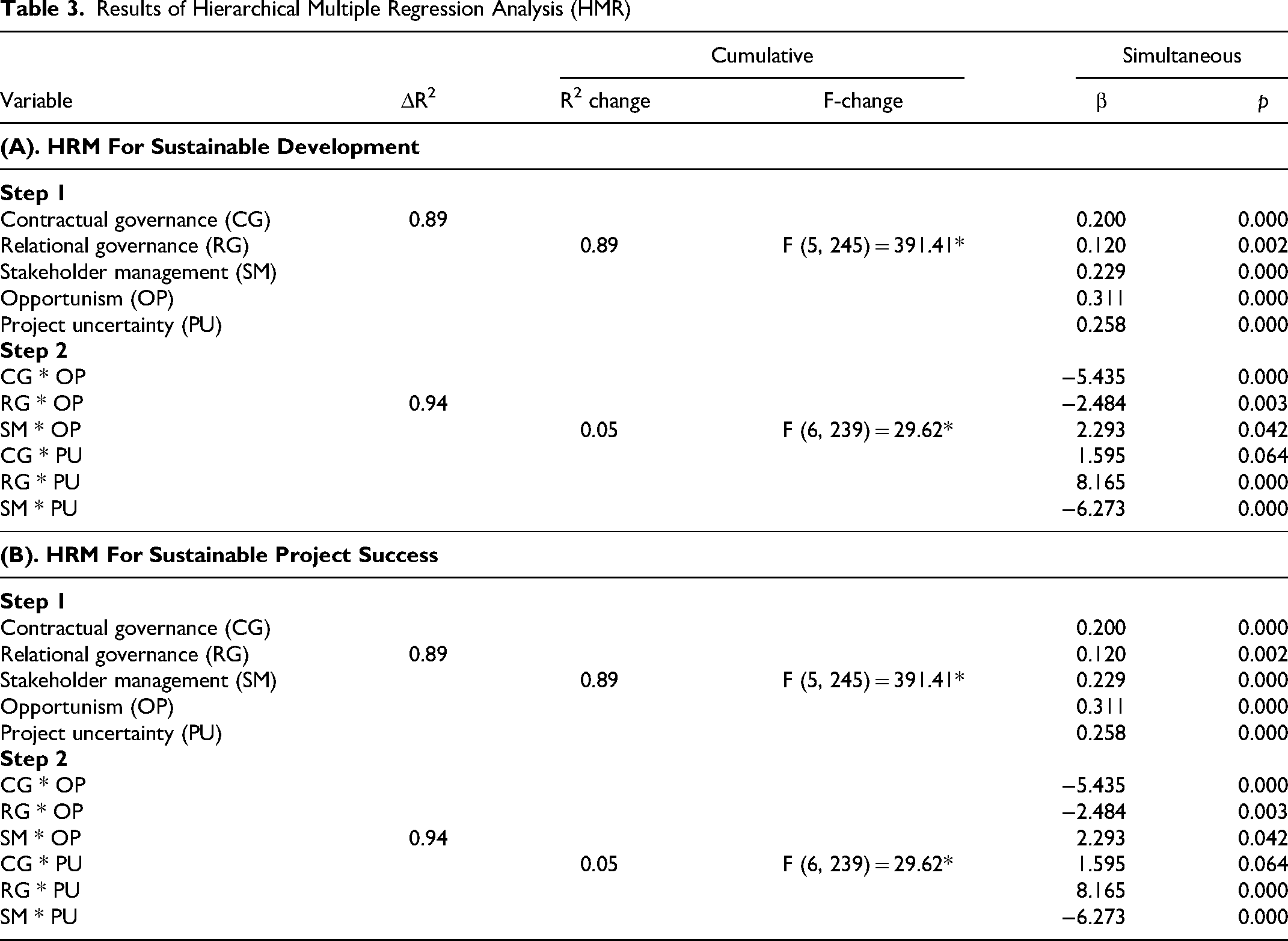
Table 3(B) represents the overall regression model with predictor variables as contractual governance, relational governance, stakeholder management, opportunism, and project uncertainty accounting for 78% of the variance in sustainable project success. When controlled by the moderating factors of project uncertainty and opportunism, the variables display an 8% variance in sustainable project success. Also, Table 3(B) illustrates that contractual governance and stakeholder management when controlled by opportunism do not have a significant influence over sustainable project success.
Qualitative Analysis: Case Study of the London Olympic Games 2012
A Sustainable PPP Project
The goal for the London Olympic Games 2012 was “to hold an inspiring, safe, and inclusive Olympic and Paralympic Games and create a lasting legacy for London and the United Kingdom” (CSL2012, 2011, p 7). Sustainability goals have been added to London’s candidate file under the banner of a one-planet Olympics to help forward this objective (ODA, 2007). They were drawn from national and regional policies, as well as past games, to ensure that the agreements reflected the best practices in sustainable development. A sustainable development strategy was adopted in January 2007 by the Olympic Delivery Authority (ODA) in response to these elevated promises, which was based around 12 major themes (ODA, 2007).
The following are the goals of the London Olympic Games 2012: • First and foremost, the goal of the Olympic and Paralympic Games is to inspire athletes, spectators, and the Olympic Family. • To minimize the use of public funds and provide a lasting legacy, the Olympic Park and all venues must be completed on schedule, within the agreed budget, and according to specifications. • This goal is aimed at ensuring that London’s East End is regenerated in a way that is both environmentally and economically sustainable. • Preparation, competition, and post-event evaluations should show significant gains in Olympic and Paralympic performance, as well as involvement at the grassroots level, over the entire duration of the Games.
Approach to Sustainability
The master planning and design of every project, from conception to completion, was anchored by sustainability goals, methods, and targets. Environmental assessments, including carbon dioxide, water, materials, waste, and biodiversity targets, played a role in the design of projects that needed to be Building Research Establishment Environmental Assessment Methodology (BREEAM) outstanding (Shiplee et al., 2011).
As a result of comprehensive engagement with key stakeholders, including central and municipal governments (as well as business sectors, local communities, and nongovernmental organizations), the sustainable development strategy was produced. Consequently, a goal of reducing carbon dioxide emissions from permanent buildings by 50% was set, as was a goal of reducing potable water consumption by 40%, and a plan of reusing, recycling, or recovering demolition materials in the amount of 95%. The delivery of 45 hectares of new biodiverse habitats will be majorly attributed to the use of legally sourced and environmentally friendly timber (Waterman, 2007).
Governance and Stakeholder Contribution
The Olympic, ODA, and executive management boards of the ODA have built a comprehensive governance system to assure high-level leadership on the major themes. All these decisions were made by the ODA board of directors, and they were responsible for ensuring that all the ODA’s priorities were given prominence. For the implementation of a sustainable development plan, the ODA formed an independent sustainability board, which was presided over by the ODA chair. The sustainability team’s efforts revolved around effective communication. Obtaining long-term results necessitated cooperation and dedication from all stakeholders, from the client all the way down to the subcontractors. To cultivate an environment where contributions to all the organization’s core topics were acknowledged and rewarded, raising awareness was done in conjunction with strong leadership. In recognition of their efforts in greening the development, contractors and subcontractors were given pin badges, with the most exceptional contributions being recognized at an annual awards ceremony.
To ensure that the most important themes were integrated into the procurement process, a balanced scorecard technique was used. There was a weighted system used to evaluate bids, taking into account not just the usual factors, such as price and schedule, but also the contractor’s approach to certain critical topics. As part of the NEC3 Engineering and Construction Contract, the standards, advice, and tools were incorporated into the works information and design briefs (ICE, 2005). A few important components, such as aggregate, concrete, garbage, and fuel, were bought centrally because of their economies of scale. Contractors were responsible for reaching most of their sustainability requirements through their own supply chains. The bulk rail delivery of aggregates was bought under a central contract, and contractors were expected to obtain their aggregates from this central provider. With this method, traffic was diverted off the road, supplies to the Olympic Park were improved, and an on-site storage facility was created to support a just-in-time delivery strategy.
Challenges in the Economical and Technical Dimensions of the Project
Underestimation of the Olympic costs in London in 2012 can be attributed to a number of issues, including government inattention to risk and decision-making bias, but evidence points to the impact of scope creep on the technical designs and structural requirements for venues and infrastructure, as well as on the accounting used to classify the cost. The costs of construction of venues and infrastructure have risen significantly since the specimen bid, probabilistic cost assessment, candidature file submitted to the IOC, and the government-amended expenditure. This is due to the increased size and complexity of the main Olympic site and its associated infrastructure, as well as rising costs for existing designs.
According to Arup (2002) and PricewaterhouseCoopers (2003), probabilistic cost assessments, infrastructure, and event facilities would only cost £403 million in total. Venue and infrastructure costs were projected at £2,670 million (London 2012 Ltd, 2004) at the time of the bid, although the government invested roughly £810 million in “non-Olympic” infrastructure and the £650 million Olympic Village was to be financed through a public–private partnership (National Audit Office, 2007).
Thus, the Olympics are more than just a six-week event, but the preparations for the Games since 2005 and the legacy they leave behind are equally essential. It had been a major legacy goal to revitalize East London and reduce social disparities in the host boroughs after the war.
Discussion
Criticality of Results: Quantitative Analysis
Project Governance Effect on PPP Construction Project Success
Good project management can help ensure that risks are properly allocated. It could improve the performance of a PPP-funded tollway project. Since project governance has an impact on PPP project success, this part will give findings as well as results (Tang et al., 2010). To verify this statement two analyses were conducted—the bivariate correlation analysis and the linear regression analysis.
The correlation analysis was conducted to understand the relationship between project governance (PG) and sustainable project success (SPS). To understand the contribution of project governance even better, the analysis was done separately on contractual governance (CG) and relational governance (RG) and its relationship toward SPS. The correlation analysis was carried out in SPSS 26 software, and the matrix displayed a very strong Pearson correlation with an r value of 0.688 and 0.832 for CG and RG, respectively, toward SPS. Also, this relationship has a significant p value of 0.000. The second was the linear regression analysis, which was done through SPSS software, and it displayed a strong relationship between PG toward SPS as it also displayed a significant p value of 0.000. Hence, from these two analyses it could be understood that project governance positively impacts the growth of PPP project success proving the hypotheses statements H1.
Project Governance Effect on Sustainable Development
Project governance may play a part in the government’s relationship orientation impacting project sustainability, however the mechanism for this function requires theoretical derivation and empirical proof. To validate the statement, bivariate correlation analysis and linear regression analysis were carried out.
In the bivariate correlation matrix, the Pearson correlation value for contractual and relational governance is 0.766 and 0.804, respectively, which is generally displayed to be r > 0.5 and a significant p value of 0.000. When undergoing a direct relationship analysis for PG and SD through linear regression analysis it displayed a stronger r value of 4.242 and a significant p value of 0.000, which should generally be less than 0.05. Therefore, project governance significantly improves the role of sustainable development validating the hypotheses H2.
Stakeholder Management Effect on PPP Construction
To ensure the success of projects, it is necessary to manage stakeholders in a disciplined way because of their importance
Stakeholder theory embraces a sustainable development viewpoint, which considers and balances the economic, environmental, and social interests of all stakeholders. Other researchers have also shown that few organizations consider sustainability while planning or managing their initiatives (Eid, 2009; Gareis et al., 2013; Silvius et al., 2012). In accordance with linear regression analysis and correlation matrix, which was explained in the previous section, the matrix displays a stronger r value of 0.807 and a positive significant p value of 0.000. Considering the direct relationship between stakeholder management and sustainable development, it displays a stronger variance of more the 50% with an r = 5.721. Hence, it verifies that stakeholder management positively impacts sustainable development, thus H4 is also accepted.
Opportunism and Uncertainty Toward PPP Construction Projects
When it comes to the success of a partnership and the advantages it has over the competition, the efforts of the partners working together are what matter most, according to transaction cost economics (TCE). There will be consequences for the opposite party when one party commits to opportunistic behavior and commits to breaching a contract, concealing information, or failing to fulfill its duties or looking for another partner or stopping to spend important resources on a project (Kang & Jindal, 2015). Detection, supervision, and control (i.e., paying for the improvement of the project) will be significant transaction costs for the affected organization to prevent these self-seeking activities. When an organization feels they are being exploited, the organization may no longer wish to maintain or cultivate the relationship. Under these conditions, the collaboration that was supposed to produce the required level of quality for a project will fall apart.
Figure 2 explains that the negative impact of opportunism over contractual governance and stakeholder management is insignificant.
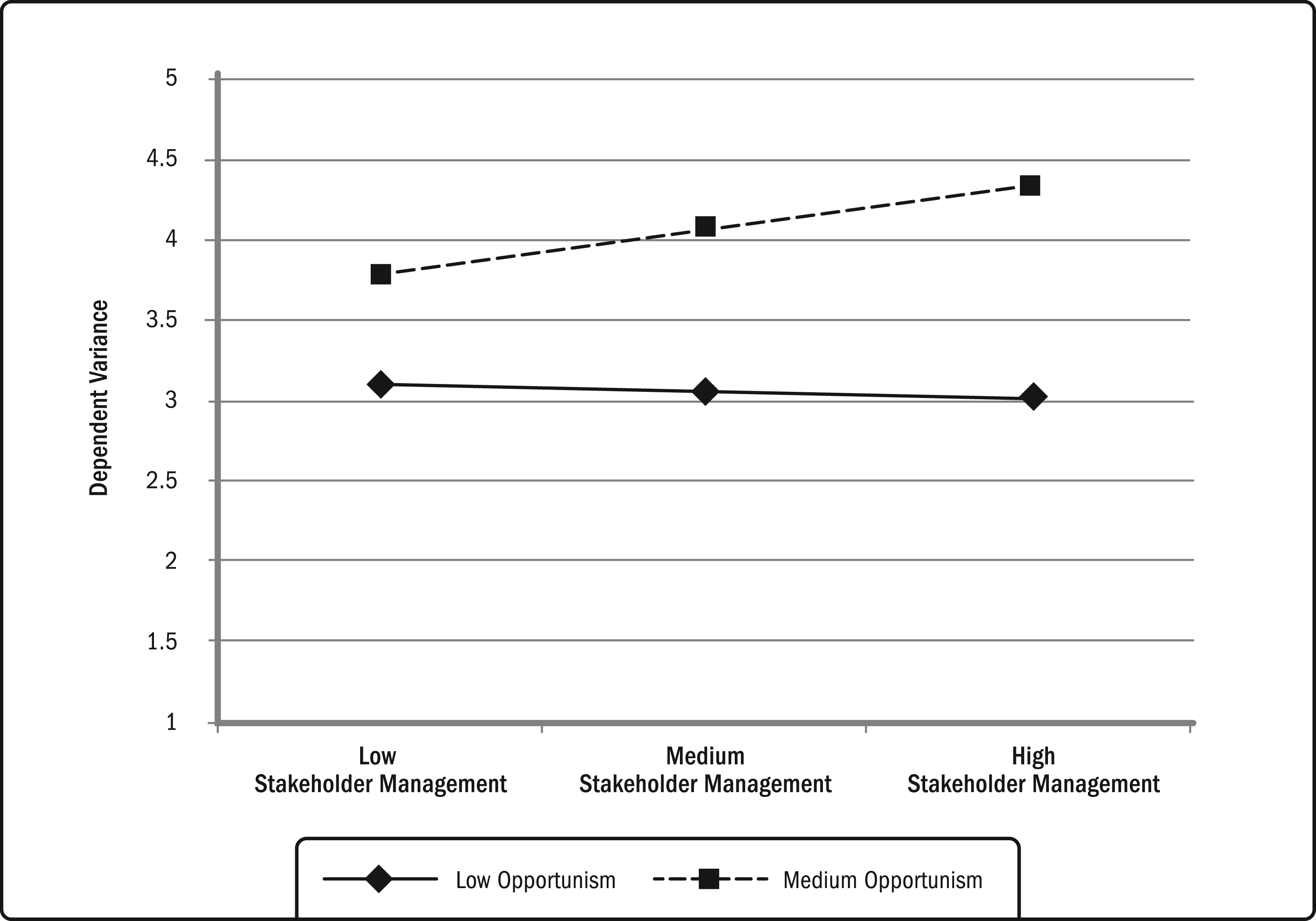
Opportunism over stakeholder management is insignificant.
Similarly Figure 3 proves that the negative effect of project uncertainty over contractual governance toward sustainable development is insignificant.
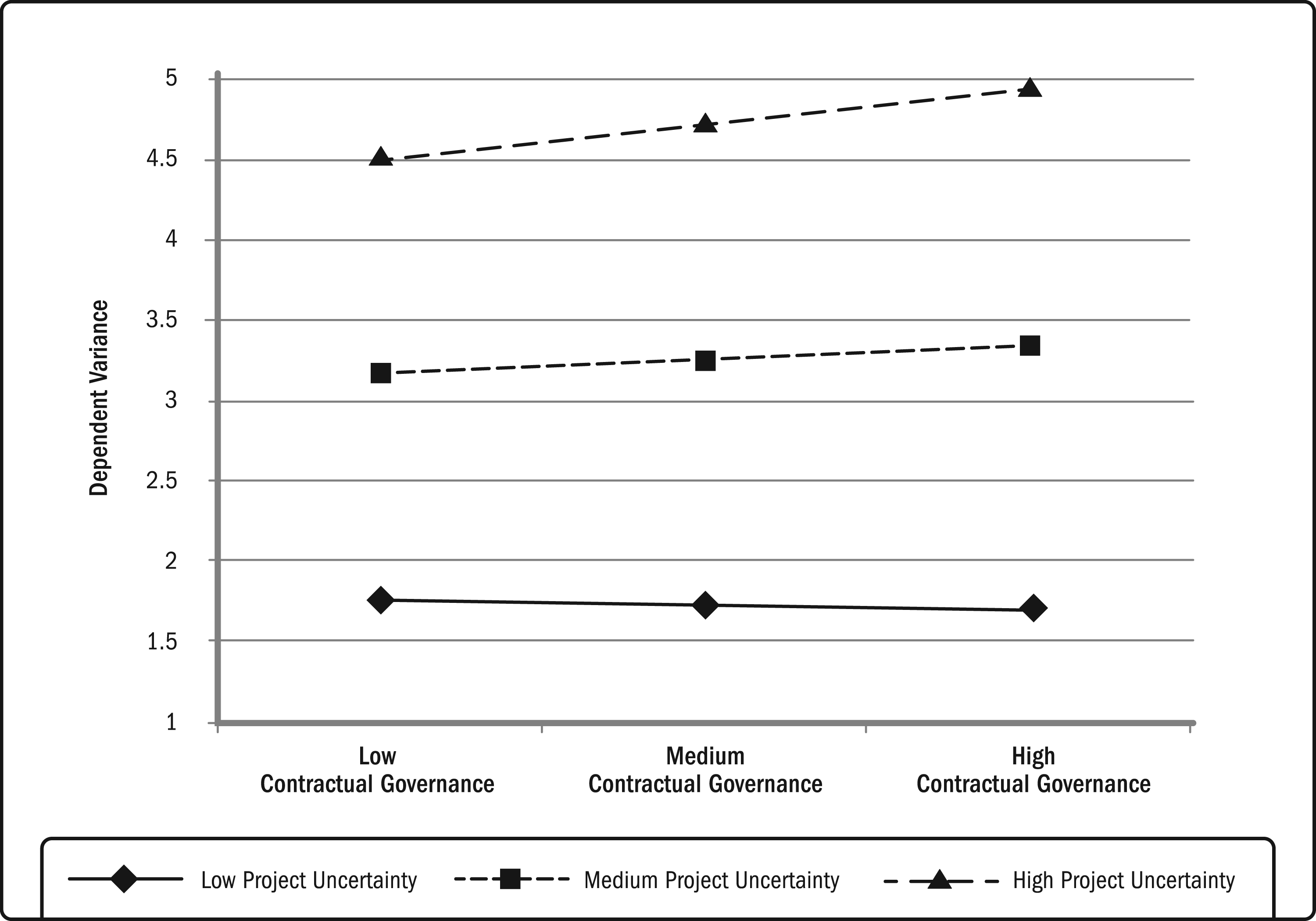
Project uncertainty over contractual governance is insignificant
The hierarchical multiple regression analysis was carried out to study the moderating effect of opportunism and uncertainty over sustainable project success and sustainable development. The analysis illustrates that contractual governance and stakeholder management when controlled by opportunism does not have a significant influence over sustainable project success (β = -0.261 and p = 0.878). When undergoing the moderation analysis for the second dependent variable (SD), Table 3(A) illustrates that contractual governance when controlled by project uncertainty does not have a significant influence over sustainable development (β = 1.595 and p = 0.064). But according to bivariate correlation analysis, there is significant correlation between contractual governance and stakeholder management over opportunism, and hence H5 is partially valid and H7 is invalid. Contractual governance and project performance were found to have a negative and insignificant relationship at a low degree of stakeholder management, indicating that moderation does not occur at this level. Regression coefficients, on the other hand, are significantly higher at the medium and high levels of stakeholder management, confirming the moderate influence. All stakeholders who potentially have an impact on the project’s performance goals are involved in the project network in the governance of the project as well.
Theoretical Linkages
This research has adopted certain theoretical perspectives to support the findings of the analysis. Identifying whether components of stakeholder theory are relevant to the study of corporate governance is fundamental. Some of these theoretical viewpoints are as follow: • Stakeholder Theory of Governance: Theories regarding how certain stakeholder groups should exercise supervision and control over management, such as which parties, other than shareholders, should be recognized in the organization, and how the board should work (Goergen et al, 2017). • Stakeholder Theory of Corporate Law: A hypothesis on how the ideas and practices favored by the ontological, deontic, and governance approaches to stakeholder theory should be incorporated into standard corporate law. For starters, managers who advocate nonprofit-maximizing tactics of fulfilling stakeholder interests would have to be protected from shareholder and capital sector contempt under such an approach (Behringer & Szegedi, 2016). Managers will need to be capable of fending off hostile takeovers when other investors think they can make more money by changing managers and strategy.
Linking Case Study Findings to Quantitative Results
It has been well documented that huge PPP projects like the London Olympic Games 2012 have a significant impact on urban governance (Girginov, 2017; Smith, 2012). Since the dawn of the new millennium, both the historical legacy and the underlying governance concerns have been gradually being revealed. “Governing systems are necessary for the fulfillment of any social, economic, or physical legacy to direct and steer collective efforts toward a consensus amongst connected different stakeholders” (Girginov 2017, p 544). Governance as an element of urban sustainability is referred to when dealing with how to achieve effective economic, social, and physical outcomes.
A person’s notion of leadership differs depending on the situation in which they operate. It is the leader’s responsibility to organize the various parties involved in a “mega-complex event’s program in the face of significant internal and external problems” (Richards & Palmer, 2010, p. 130). It is common for municipal mayors to use the Olympics as an opportunity to promote their city and their role in administering it on a global scale. For the Olympics, in general the prime minister and mayor of London will share leadership responsibilities. Leaders of an event must motivate and empower their co-leaders and express a clear goal to all participants (Allen, 2005; Maqbool et al., 2018). To ensure the long-term viability of the governance of events, the collective strength of all stakeholders is equally crucial. PPP projects require political support, but without cultural sensitivity, decision-making, planning, communication, and team development a leader can’t succeed (Richards & Palmer, 2010). If a city’s mayor or government is replaced, the Olympic project’s future could be in jeopardy if the realignment of powers is not handled properly. One of the most important components of a successful event is the ability of the city and its event partners to work together effectively. However, creating an environment and goals that encourage this cooperation appears to be tough. The interdependent resources of multiple players must be combined for governance to work effectively. These disparate interests can be brought together by looking at various aspects of organizational governance.
Conclusion
The research highlights the contribution among the role of project governance, stakeholder management, and its contribution toward achieving sustainable project success in the PPP sector as well as its impact on the overall sustainable development. It also reveals the negative interaction of opportunism and uncertainty among project governance, stakeholder management, and sustainable project success and sustainable development. The validation of these results was undergone with the mixed methods approach, which is the qualitative case study approach and the quantitative questionnaire survey. Using snowball sampling, the quantitative questionnaire survey approach is used to collect relevant data for analysis. Bivariate correlations and hierarchical multiple regression were used to assess the research hypotheses in accordance with the literature findings. Apart from this, the 2012 London Olympics case study was undertaken for future mega-events and megaprojects. The research from the London 2012 Olympics gave insights into governance of a PPP-based sustainable construction project. The results from both the quantitative and qualitative analyses explain a strong positive relationship between project governance and stakeholder management with sustainable construction project success. Project governance and stakeholder management are intertwined in this study, which makes an important contribution to understanding how to improve the PPP projects’ success to gain overall sustainable development. To improve project performance, public sector organizations need to examine their project evaluation and monitoring methods by including aspects of portfolio direction, financing, efficiency and productivity, transparency, and reporting to strengthen the governance system. The hierarchical multiple regression analysis was conducted to find the impact of opportunism and project uncertainty on sustainable development, and project success revealed that it has a marginal effect on project success in the context of countries such as the United Kingdom. As a result of this research, a model for stakeholder management in the interaction between project governance and public sector infrastructure project performance is developed. Project managers working on PPP projects should benefit from focusing on all aspects of project governance to improve effectiveness.
Footnotes
Declaration of Conflicting Interests
The author(s) declared no potential conflicts of interest with respect to the research, authorship, and/or publication of this article.
Funding
The authors received no financial support for the research, authorship, and/or publication of this article.
