




Abstract
Objective:
It has been reported that employment during student enrollment, in rigorous health care programs, impedes college success and may be a barrier to successful graduation. Furthermore, student’s prior education is typically viewed as a positive predictor of success in college. The aim of this study was to examine whether a relationship exists between employment status and prior education, compared with academic and clinical success for Diagnostic Medical Sonography (DMS) or Radiography (RT) students, in a large community college.
Materials and Methods:
There were 26 imaging student participants consented to this study. This convenient sample included 10 DMS and 16 RT students, enrolled in an associate degree in applied sciences program. A survey was administered that collected demographic data on the students in both programs. Data collection began at the start of each respective program and again one year later. Student academic and clinical grades were examined over a period of three college semesters.
Results:
The analysis of the findings did not show a significant relationship between employment status, prior education, student academics, and clinical success among the participating DMS or RT students.
Conclusion:
The results of this study provide limited evidence that there was no significant relationship between employment status, prior education, and academic and clinical success among this cohort of DMS or RT students. These findings also suggest that students’ employment did not impede success for these DMS and RT students. In addition, this research shows that students’ prior education had no effect on their success in their DMS and RT programs. Further research should be conducted to investigate whether these findings are similar in other imaging programs.
Keywords
According to Miller et al., 1 approximately 57% of college students work while attending school. Riggert et al. 2 reported that college student employment has been increasing steadily for at least four decades. Working during college can potentially impede academic and clinical achievements because it takes time and energy away from studying, attending classes, and completing homework. However, it depends on various factors such as the number of hours worked, nature of the job, student’s time management skills, individual capacity to balance work, and school responsibilities. Typically, students who are enrolled in rigorous programs like Diagnostic Medical Sonography (DMS) or Radiography (RT) are advised to either not work at all or only very work minimal hours.
Unfortunately, some students must work to afford the costs associated with attending college. There is an abundance of literature that shows the negative impact of employment on students’ academic performance. For example, Salamonson et al. 3 suggested that hours spent in paid work, during school, had a negative impact on nursing students’ grade point averages (GPA). Students who work during the school year face the potential of sleep deprivation and its effects, since they must balance between school and work responsibilities, along with social life. 4 Clement 5 claims that many community college students face external barriers such as job and family responsibilities that negatively impact their academic success and retention. Furthermore, community college students often fail or drop classes due to such personal obstacles.
Hansen et al. 6 emphasized that there are many risk factors that could interfere with students’ academic success including having significant work commitments. Laberge et al. 7 stated that work-related fatigue is a potential hazard for students’ health, academic achievement, and occupational safety. The research conducted by Nonis and Hudson 8 demonstrated significant negative relationships comparing time at work with students GPA. Their results suggest that as time at work increases, the student’s academic performance decreases.
Research has demonstrated that the amount of work hours has a different effect on academic performance. For example, Miller et al. 1 revealed that working 20 or more hours per week was significantly associated with lower academic performance. However, working fewer than 20 hours per week was not associated with lower academic performance. Similar results were reported by Turcotte et al. 9 who asserted that employment in small amounts can even have a positive effect on studies. However, in large amounts of 20 hours per week or more, it can become a barrier to academic performance.
There are some inconsistencies and contradictions in the literature regarding the effect of work on the college performance. According to Riggert et al., 2 the impact of student employment on academic measures has varied from positive to negative across studies and the estimated impact of student employment on academic performance has been small. However, at high levels of employment, the negative impact of employment is evident. Dundes and Marx 10 found that the academic performance of college students who worked was comparable to non-workers. Remarkably, the academic performance of students who worked 10 to 19 hours per week was superior to all other students, working and non-working.
Prior Education
Most health care programs establish selective admission requirements that include various criteria including completion of several prerequisite courses. Such programs are highly competitive, have a limited number of available spots, and must carefully select the most qualified applicants. Determining the best and appropriate admissions policy has been a major concern in higher education, over the past decade. Niles 11 emphasized that students with prior health care–related education and had been previously successful would have a higher sense of self-efficacy, which increased their chances of program success. Research shows that students benefit from university-level education such as academic study skills, before they start they start their university curriculm. 12
The study conducted by Anderton and Chivers 13 has validated that first-year anatomy and physiology as an indicator of performance, specifically in health science. Similarly, Harris et al. 14 emphasize that success in basic science courses, required for almost all undergraduate programs in health sciences, correlated with future success in their professional program. Lynagh et al. 15 confirmed that the strength of prior academic results in a consistent and strong predictor of first year student’s academic outcomes. Crowther and Briant 16 concluded that university entrance scores appear to be the best predictor of academic success.
Based on previous published works, the aim of this study was to examine whether a relationship exists between employment status and prior education, regarding academic and clinical success for DMS or RT students, in a large community college.
Materials and Methods
This proposed study received institutional review board approval (IRB # 2019-20-0081) to conduct educational research, in May 2020. Written consents were obtained from all participants after they were informed of the objective and design of the study. They were also told that they were free to leave the study at any time. The participants were students who actively attended a DMS or RT program that culminated in an associate degree in applied sciences. The DMS program is seven semesters in length and the RT program is six semesters in length. This study allowed the researcher to evaluate the academic success of the same cohort of students, over one year. The data collection took place over the semesters that comprised the school year 2020 to 2021. All data gathered remained anonymized throughout the study. The program curriculum for both DMS and RT programs included didactic and clinical education. Students in both programs were engaged in academic, laboratory, or clinical education, for 40 hours per week. Due to COVID-19 pandemic, students had virtual theory lectures through Microsoft Teams and in-person laboratory skills training throughout this study. Both programs had several prerequisite courses. The DMS program required completion of the following prerequisite courses: Rhetoric 1, College Algebra, Principles of Biology, Anatomy and Physiology 1 and 2 with laboratory, Basic Physics, and General Psychology. The RT program required completion of the following prerequisite courses: Rhetoric 1, Elementary Algebra, Principles of Biology, Anatomy and Physiology 1 and 2 with laboratory, General Psychology, and Medical Terminology. The DMS program was accredited by the CAAHEP, upon recommendation of the JRC-DMS, but the RT program was not accredited.
Participants’ Geographic Area
This study was conducted at a community college located in the Chicago, Illinois area. The college’s district spans seven counties and covers 1442 square miles, as well as serves students from 44 zip codes. In 2019, the district had a population of 734,761 residents with 370,626 women and 364,315 men. Within the college district, out of 24 public feeder high schools, three showed significantly lower income than others. The college enrollment consisted of 56.6% female students and 43.4% male students. 17
Study’s Participants
The participants of this study were enrolled in a DMS or RT associate degree in applied sciences program in a community college. The sample included 10 DMS and 16 RT students. A total of 26 students participated in the complete study.
Participant Selection
The cohort was a convenient sample of students enrolled in the DMS and RT programs. Therefore, all students were asked to voluntarily participate in the study. The selection process did not include randomization. All members of this student cohort were included in the study. The sample consisted of the students who were accepted into the programs using a point-ranking system via an anonymous selection process.
Research Design
The study followed a longitudinal quantitative correlational research design. According to Creswell, 18 a longitudinal research design allows the researcher to collect data about trends with the same population and changes in a cohort, over time. A correlational research design can help to predict or explain relationships among variables. 18 In the case of this study, a survey questionnaire was administered online due to the COVID-19 pandemic. The survey consisted of eight questions and took approximately 2 minutes to complete. The survey question concerning student prior education was phrased as follows: “What is the highest level of school you have completed or the highest degree you have received prior to your enrollment into this program?” The survey question concerning student employment was worded as follows: “Which of the following categories best describes your employment status?” A SurveyMonkey link to the questionnaire was emailed to the students, along with the consent form. The rate of questionnaire return was 100% for the DMS students and 72.7% for the RT students.
Data Analysis
Students’ academic GPA of the selected program courses was used to measure their academic success. Academic success is defined as academic achievement, satisfaction, acquisition of skills, competencies, persistence, attainment of learning objectives, and career success. 19 It is measured by achieving a course score of 75% or higher in the academic or clinical courses taken during the program. Prior education status and employment status of the participants were collected, coded, and tabulated.
The independent variables were academic and clinical GPA. The dependent variables were employment status and prior education. All variables provided nominal data. The Statistical Package for the Social Science (IBM SPSS Statistics for Windows, Version 27.0.; IBM Corp., Armonk, New York) was used for data analysis. A chi-square test was used to investigate if a relationship exists between academic GPA, clinical GPA, employment status, and prior education for DMS and RT programs. Laerd 20 explains that the chi-square test for independence is used to determine whether there is a relationship between two categorical variables. The P-value was set at .05, a priori.
Results
The descriptive statistics for characterizing the student cohort are provided. Table 1 illustrates the descriptive data for the DMS students. Table 1 also indicates that only 20% of the DMS participants were employed part-time, but not in health care. The remaining 80% of participants were unemployed. Fifty percent of the participants reported having a prior associate degree, 20% had a high school degree, and 10% had no completed degree prior to the start of the DMS program.
Education Level and Employment Status of Diagnostic Medical Sonography Students.
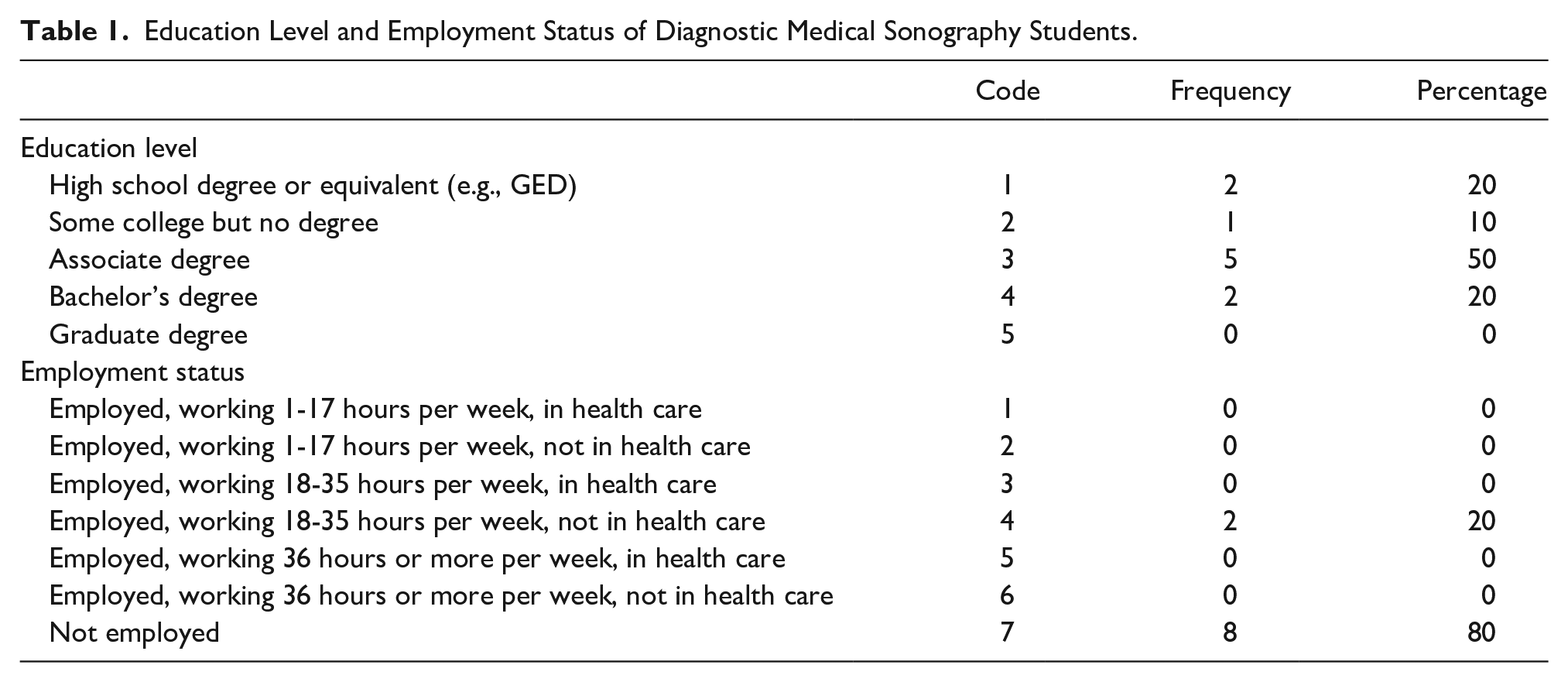
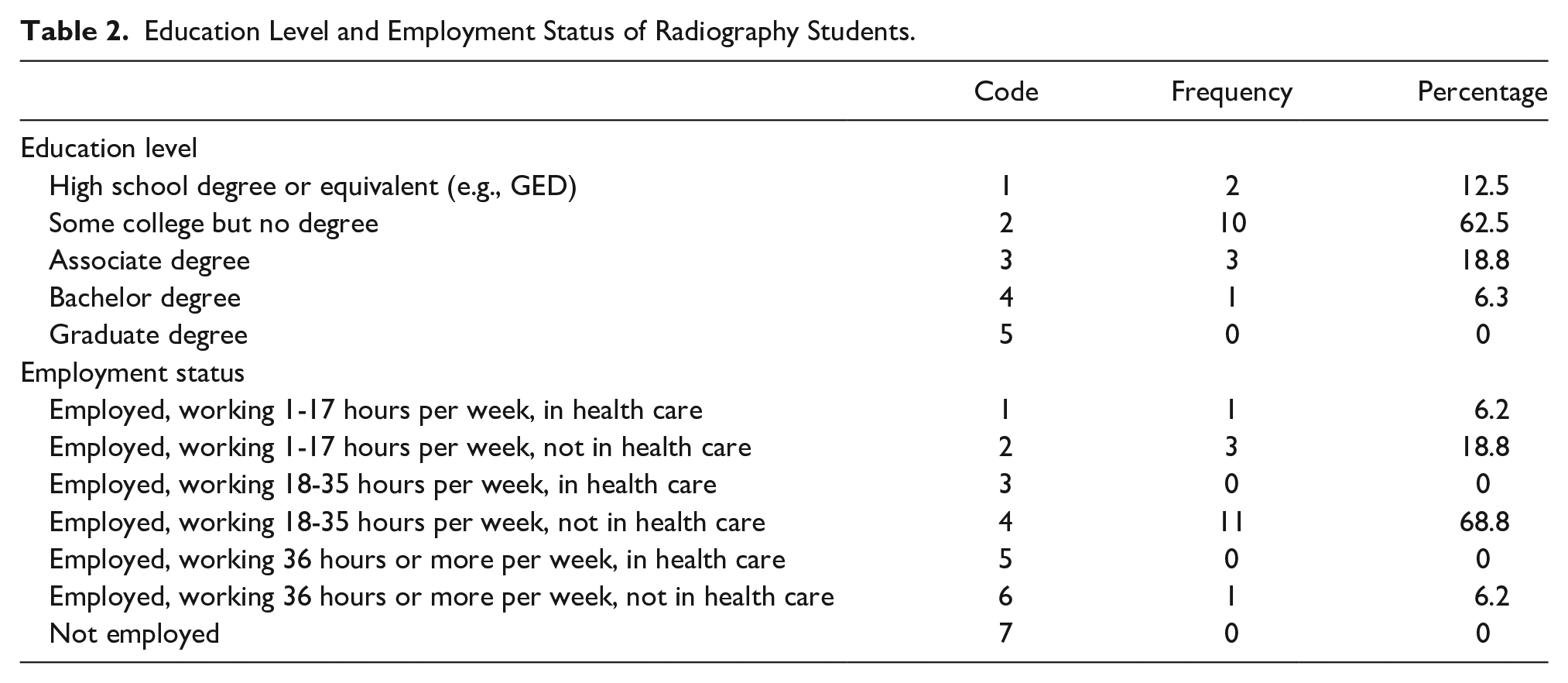
Table 2 illustrates prior education status and employment status of the participants for the RT students. Table 2 shows that all participants were employed during the program. The majority (68.8%) of the RT participants were employed part-time, but not in health care. The largest group (62.5%) of participants reported having some college education but did not complete a degree prior to the start of the RT program.
Education Level and Employment Status of Radiography Students.
Responses from the demographic survey were collected and analyzed to determine whether a relationship exists between employment status, prior education, academic, and clinical success, for DMS and RT students. Frequencies were computed to establish whether the difference between these variables existed and to determine whether they were statistically significant. The chi-squared test was used to investigate if a relationship exists among the above demographic survey responses and academic or clinical student success in the program. The results for the two programs are reported in Tables 3–10.
Chi-Squared Test of Average Academic GPA and Employment Status for Diagnostic Medical Sonography Students.
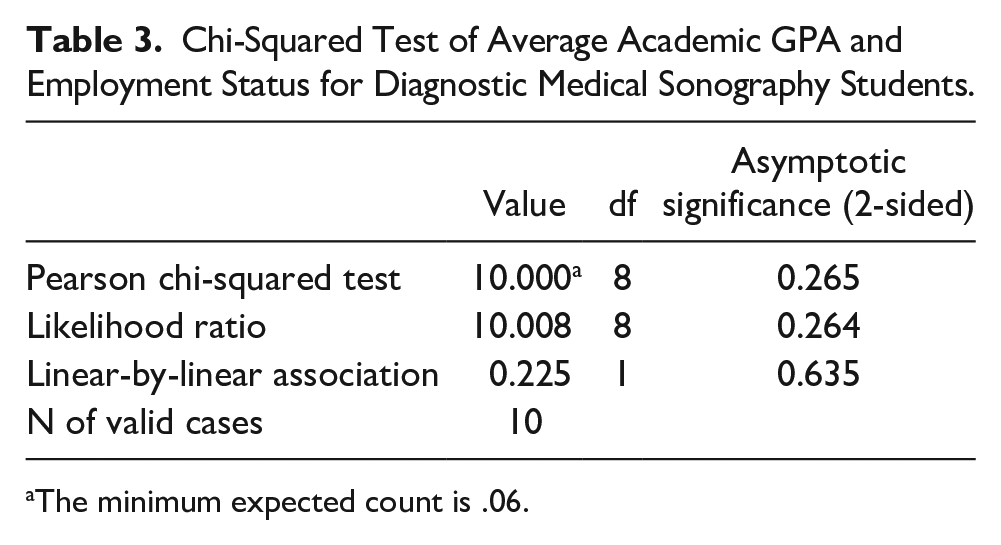
The minimum expected count is .06.
Chi-Squared Test of Average Academic GPA and Employment Status for Radiography Students.
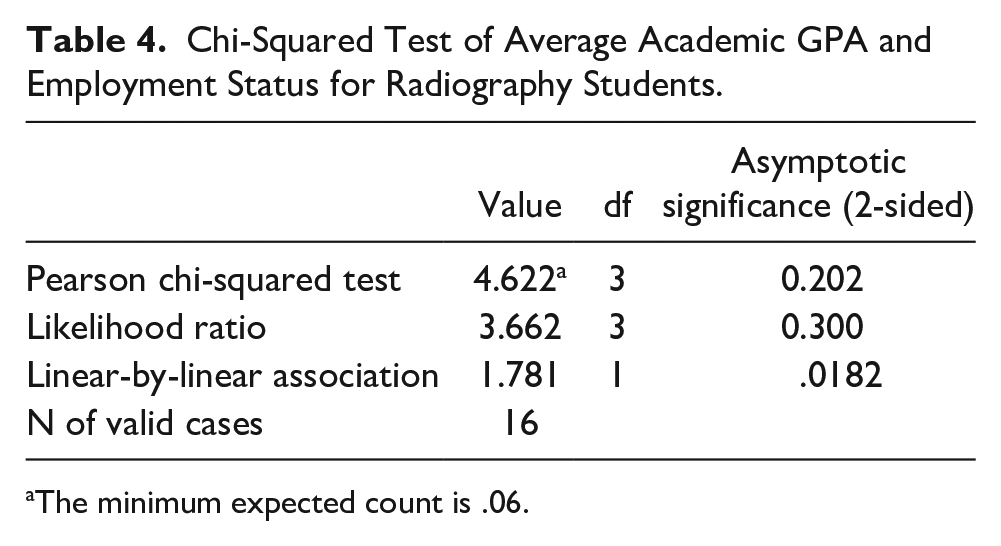
The minimum expected count is .06.
Chi-Squared Test of Average Clinical GPA and Employment Status for Diagnostic Medical Sonography Students.
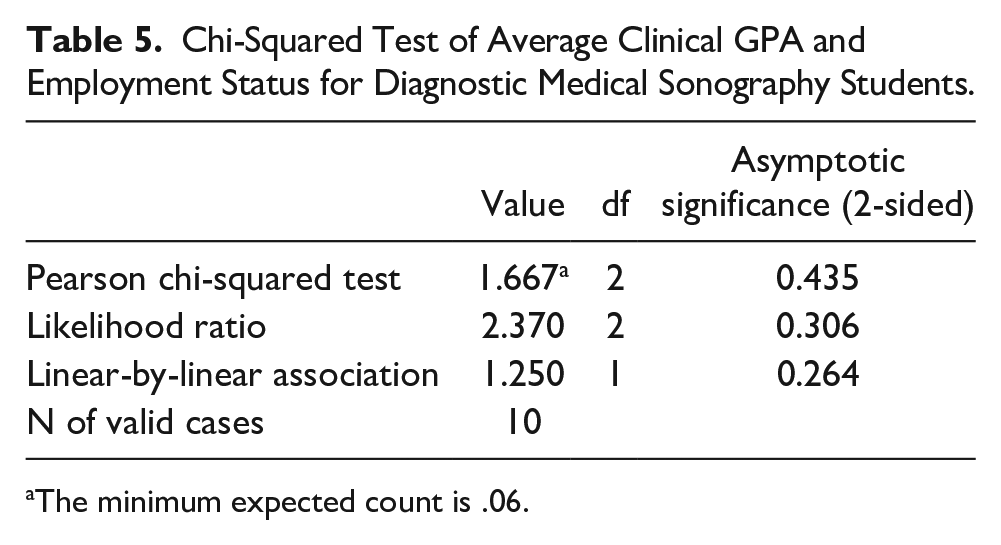
The minimum expected count is .06.
Chi-Squared Test of Average Clinical GPA and Employment Status for Radiography Students.
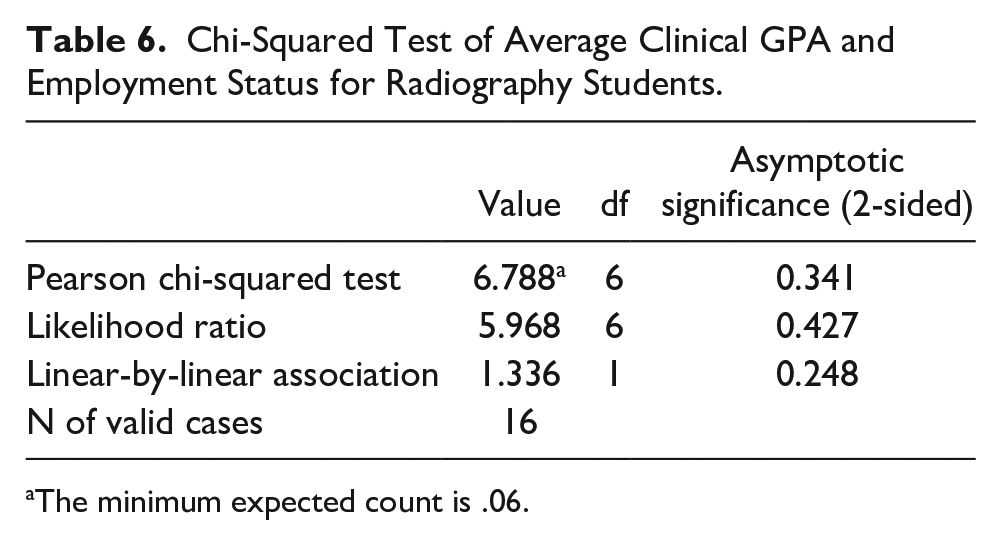
The minimum expected count is .06.
Chi-Squared Test of Average Academic GPA and Prior Education Level for Diagnostic Medical Sonography Students.
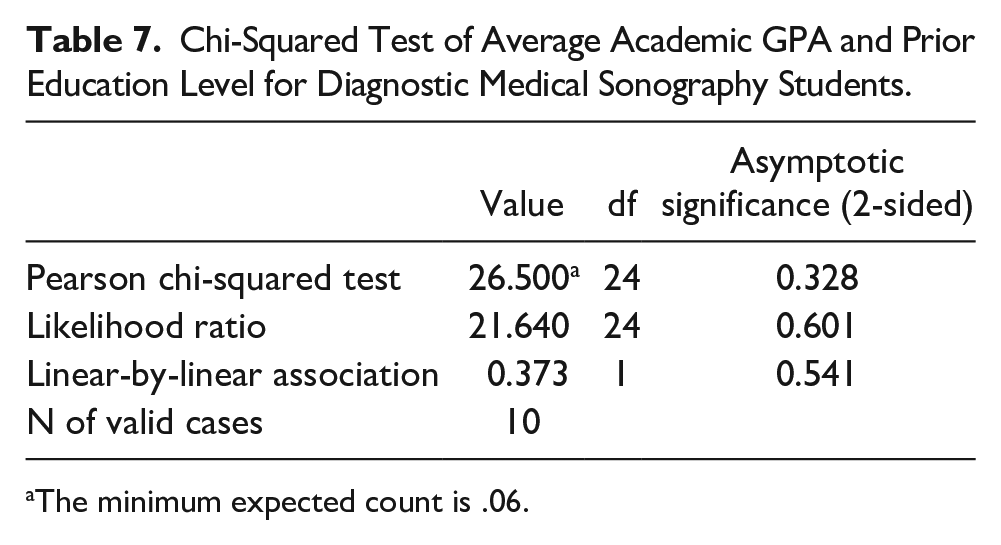
The minimum expected count is .06.
Chi-Squared Test of Average Clinical GPA and Prior Education Level for Diagnostic Medical Sonography Students.
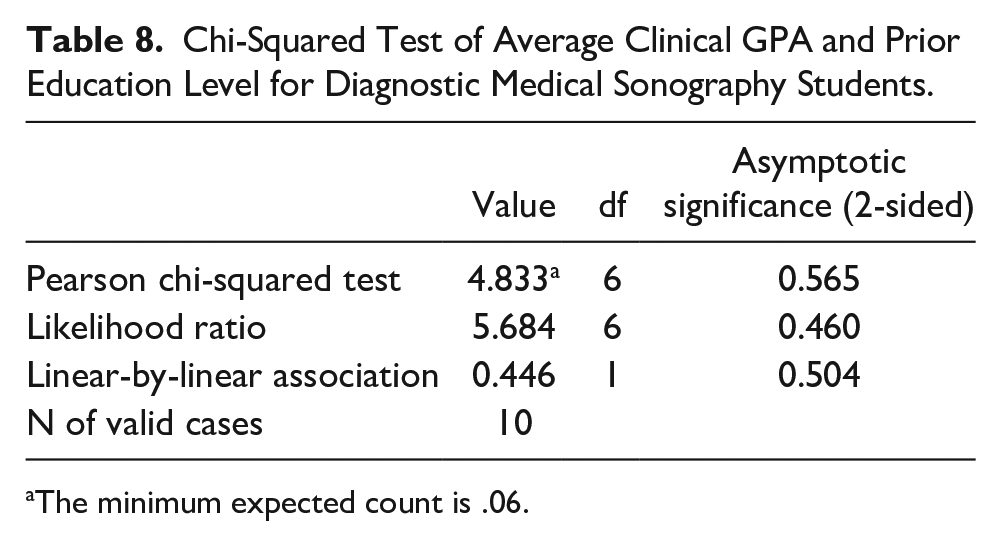
The minimum expected count is .06.
Chi-Squared Test of Average Academic GPA and Prior Education Level for Radiography Students.
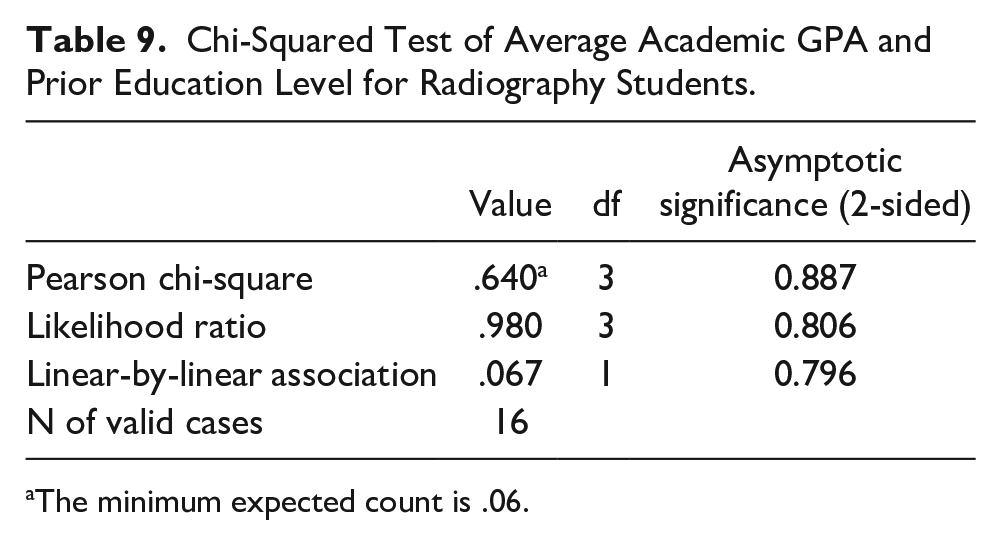
The minimum expected count is .06.
Chi-Squared Test of Average Clinical GPA and Prior Education Level for Radiography Students.
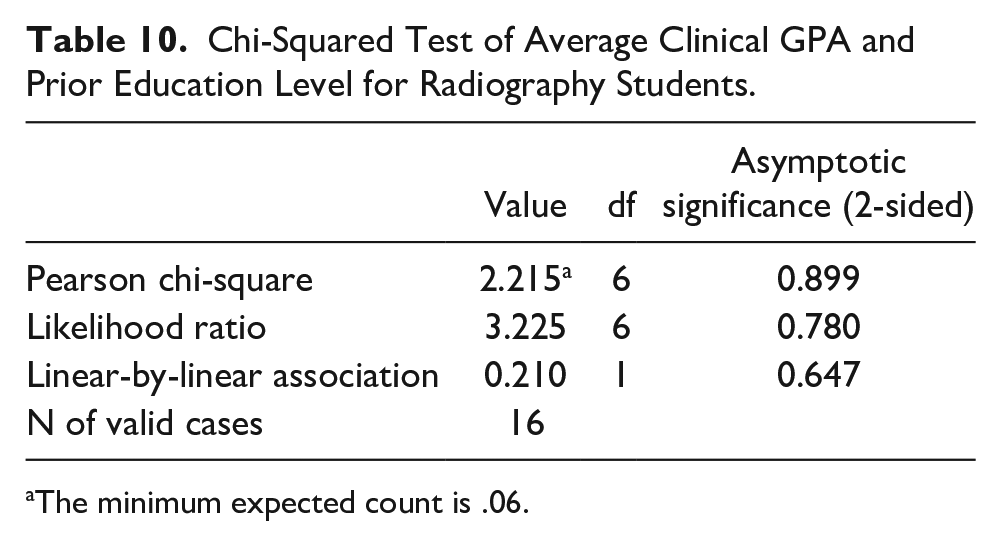
The minimum expected count is .06.
Employment Status for Diagnostic Medical Sonography Students
The chi-squared test was used to investigate if a relationship exists between the average academic GPA and employment status for DMS program. The results are reported in Table 3. Table 3 shows that the chi-squared analysis resulted in a P-value of .265 exceeding the threshold of .05 and therefore does not demonstrate a relationship between student academic success as measured by the average academic GPA throughout three academic semesters and employment status among DMS students.
Employment Status for Radiography Students
The chi-squared test was used to investigate if a relationship exists between the average academic GPA and employment status for the RT program. The results are reported in Table 4. Table 4 shows that the chi-squared analysis resulted in a P-value of .202 exceeding the threshold of .05 and therefore does not demonstrate a relationship between student academic success as measured by the average academic GPA throughout three academic semesters and employment status among RT students.
Diagnostic Medical Sonography Students’ Academics and Employment Status
The chi-squared test was used to investigate if a relationship exists between the average clinical GPA and employment status for DMS Students. The results are reported in Table 5. Table 5 shows that the chi-squared analysis resulted in a P-value of .435 exceeding the threshold of .05 and therefore does not demonstrate a relationship between student clinical success as measured by the average clinical GPA throughout two clinical semesters and employment status among DMS students.
Radiography Students’ Academics and Employment Status
The chi-squared test was used to investigate if a relationship exists between the average clinical GPA and employment status for RT program. The results are reported in Table 6. Table 6 shows that the chi-squared analysis resulted in a P-value of .341 exceeding the threshold of .05 and therefore does not demonstrate a relationship between student clinical success as measured by the average clinical GPA throughout two clinical semesters and employment status among RT students.
Prior Education Results Among Diagnostic Medical Sonography Students
The chi-squared test was used to investigate if a relationship exists between the average academic GPA and prior education level for DMS program. The results are reported in Table 7. Table 7 shows that the chi-squared analysis resulted in a P-value of .328 exceeding the threshold of .05 and therefore does not demonstrate a relationship between student academic success as measured by the average academic GPA throughout three academic semesters and prior education level among DMS students.
The chi-squared test was used to investigate if a relationship exists between the average clinical GPA and prior education level for DMS program. The results are reported in Table 8. Table 8 shows that the chi-squared analysis resulted in a P-value of .565 exceeding the threshold of .05 and therefore does not demonstrate a relationship between student clinical success as measured by the average academic GPA throughout three academic semesters and prior education level among DMS students.
Prior Education Results Among Radiography Students
The chi-squared test was used to investigate if a relationship exists between the average academic GPA and prior education level for RT program. The results are reported in Table 9. Table 9 shows that the chi-squared analysis resulted in a P-value of 0.887 exceeding the threshold of .05 and therefore does not demonstrate a relationship between student academic success as measured by the average academic GPA throughout three academic semesters and prior education level among RT students.
The chi-squared test was used to investigate if a relationship exists between the average clinical GPA and prior education level for RT program. The results are reported in Table 10. Table 10 shows that the chi-squared analysis resulted in a P-value of 0.899 exceeding the threshold of .05 and therefore does not demonstrate a relationship between student clinical success as measured by the average clinical GPA throughout two clinical semesters and prior education level among RT students.
Discussion
Employment Status
To investigate if a relationship exists between the average academic, as well as clinical GPA and employment status for DMS and RT programs, the chi-squared test was used. The findings of this study did not demonstrate a significant relationship (P > .05) between academic or clinical success and employment status, among DMS or RT students.
Clement 5 asserted that many community college students face external barriers, such as a job that negatively impact academic success and retention. Furthermore, Baert et al. 21 reported a negative relationship between hours worked and academic performance for students with a primary orientation toward work, versus school. However, the results of this study demonstrated that being employed did not seem to adversely affect the success of the students in either program.
These study findings may indicate that the students enrolled in the DMS and RT programs, at a large community college, found a way to manage their time efficiently because having less time for school. It did not negatively impact their academic or clinical success in the program. Furthermore, the data in Table 2 show that 100% of students in the RT program were employed, in comparison to only 20% students in the DMS program. This observation may speak to the academic rigor of each program and can be a factor in academic and clinical success, in each respective program. Baert et al. 21 emphasized that students should be informed about all assets and risks related to student work, including its trade-off with educational outcomes advisement and not to prioritize their jobs over their studies.
Prior Education
To investigate if a relationship exists, between the average academic as well as clinical GPA and prior education level for the DMS and RT programs, the chi-squared test was used. The findings of this study did not demonstrate a significant relationship (P > .05) between academic or clinical success and student’s prior education, among this cohort of students. There were differences among prior education among the two groups. As reported in Table 2, the largest group (62.5%) of RT participants reported having some college education but did not complete a degree, prior to starting the RT program. Conversely, Table 1 demonstrated that the largest group (50%) of DMS participants reported having a prior associate degree, 20% high school degree, and 10% did not completed degree prior to the start of the DMS program. These results suggested that students with or without a prior degree can balance their academic and personal lives successfully.
It is important to note that students enrolled in these programs must demonstrate the necessary skills and knowledge to gain acceptance into the programs, by satisfying the assigned admissions requirements. Therefore, all applicants have a general satisfactory knowledge base to be successful in these programs. In fact, some students completed their prerequisite courses many years before applying to the program. To remedy these admission criteria, all applicants are required to take the most current version of the Test of Essential Academic Skills (TEAS) exam. The completion of the TEAS, qualified students, as well as earning points toward their program admission. This requirement ensures that all students are selected fairly and have a solid current subject knowledge, to be successful in the program. There are many studies that report a significant positive correlation between academic and clinical success, with the TEAS exam scores, across various health care programs.22 –25 This underlying relationship may have contributed to the outcome of this research.
Limitations
This study has four internal validity threats (selection, maturation, mortality, and testing). The interactions with selection internal validity threat exist because although the participants are an imaging professional student cohort, they belong to two different professions (DMS and RT). The maturation internal validity threat is an issue because the participants’ maturation level may have increased during the length of the study. Some of the participants withdrew from the program for various reasons which resulted in the mortality internal validity threat. It is worth noting that the RT programs’ attrition rate was about 22.7% compared with the DMS programs’ 0% attrition rate. The outcomes of the current study’s RT class were typical, compared with the college’s previous RT graduates. The outcomes of this study’s DMS cohort were comparable to the previous graduates, except that attrition rates typically range between 0% and 18%. Since the participants were enrolled in two different programs, there were some differences between the two programs, such a varied number of clinical hours, schedules, lectures and laboratory content, levels of rigor, clinical requirements, and clinical experience. For example, throughout the two clinical semesters, DMS students had 675 clinical hours and RT students had 512 clinical hours. Both groups had regular exams, quizzes, class discussions, homework assignments, case studies, lab proficiencies, clinical competencies, etc. Student testing in the DMS program was administered 100% online and in the RT program 100% on paper.
This study has external validity threats such as the interaction of setting and treatment; therefore, it limited the generalization of the results. This threat can be attributed to this cohort of students having different personalities, learning styles, etc., which may not necessarily represent a newly recruited student cohort, at another college. In addition, it is important to underscore the gender differences, with these DMS students being mostly female, and these RT students having an even distribution of men and women. Furthermore, this study was completed at a large suburban community college, and therefore, the findings of this study may not apply to a small suburban community college or a large 4-year institution elsewhere. Since the data were collected based on a convenient sample of respondents, this small sample size is another important limitation.
Conclusion
In summary, results of this study provide limited evidence that there were no significant relationships between employment status and prior education to academic, as well as clinical success in the examined DMS or RT students. The findings of this study suggest that this cohort of students’ employment did not impede success for DMS and RT students. In addition, this research demonstrated that students’ prior education had no effect on their success in these DMS and RT programs. Due to the small sample size, the results of this study cannot be assumed to apply to all programs. Further research should be conducted to investigate whether these findings are like other imaging programs. This research could lead to further studies exploring relationships between other potential external barriers to student success in imaging and health care programs.
Footnotes
Ethics Approval
Ethical approval for this study was obtained from the Institutional Review Board of the University of St. Francis, Joliet, IL (IRB # 2019-20-081).
Informed Consent
Written informed consent was obtained from all subjects before the study.
Animal Welfare
Guidelines for humane animal treatment did not apply to the present study because no animals were used during the study.
Trial Registration
Not applicable.
Declaration of Conflicting Interests
The author declared no potential conflicts of interest with respect to the research, authorship, and/or publication of this article.
Funding
The author received no financial support for the research, authorship, and/or publication of this article.
