




Abstract
Objective:
Most health care programs have competitive entry and selective admission procedures. The purpose of this study was to investigate the relationship between cognitive variables such as the Test of Essential Academic Skills (TEAS) composite scores, the preprogram academic grade point average (GPA), as well as clinical GPA for diagnostic medical sonography (DMS) or radiography (RT) students.
Materials and Methods:
The participants of this study were 26 imaging students. The convenient sample included 10 DMS and 16 RT students, enrolled in an Associate Degree in Applied Sciences program, within a community college. The student’s program success was examined over a period of one academic year.
Results:
The analysis of the findings determined that a significant relationship existed between some of the cognitive variables such as the TEAS composite scores, academics, as well as the clinical success for the DMS students. However, these RT students did not show the same outcome. In addition, there was no significant relationship between preprogram GPA and academic as well as clinical success, for either educational program.
Conclusion:
The results of this study provide empirical evidence that a strong relationship may exist between the TEAS composite scores, academics, as well as clinical success for the DMS students. This is an important finding that may support the use of the TEAS test, as part of the admission process, for other DMS programs.
Keywords
The purpose of this study was to determine whether there was a relationship between cognitive variables such as preprogram grade point average (GPA), the Test of Essential Academic Skills (TEAS) composite scores on academics, as well as clinical success for the diagnostic medical sonography (DMS) and radiography (RT) students. A plethora of research exists that indicates that cognitive tools are reliable predictors of academic success of students who are enrolled in health care, as well as non–health care programs.1–3 The aim of this study aim was to attempt to close that gap in knowledge and assist health care programs with strengthening their admission process.
In this study, cognitive variables were the TEAS composite scores and preprogram GPA. According to Garcia, 4 cognitive skills are the skills that involve a conscious intellectual effort such as thinking, reasoning, or remembering. The TEAS examination is recognized to be a statistically significant predictor of early and ongoing nursing program success. 2 There is plenty of evidence in the literature indicating that cognitive tools are reliable predictors of academic success, for students enrolled in health care and non–health care programs.1–3
Materials and Methods
This proposed study received institutional review board (IRB) approval to conduct educational research in May 2020. The participants were students who actively attended a DMS or RT program that culminated in an Associate Degree in Applied Sciences. The research followed a longitudinal quantitative correlational research design. This study allowed the researcher to evaluate the academic and clinical success of the same cohort of students, over three consecutive college semesters. According to Creswell, a longitudinal research design is one in which the researcher collects data about trends with the same population and changes in a cohort, over time. 5 A correlational research design can help to predict or explain relationships among variables. 5
The data collection took place over the semesters that comprised the school year of 2020–2021. The preadmission TEAS composite scores and preadmission GPA, for students accepted into the DMS and RT programs, were gathered in summer 2020. Quantitative data were gained from the GPA of preadmission general education courses, GPA of program academic courses, GPA of clinical education courses, and preadmission TEAS composite scores. In addition, the student demographic surveys were used to obtain demographic data, of the sample cohort of students.
The TEAS composite scores, used for admission purposes, were collected and analyzed to determine whether a relationship existed between cognitive variables and student success. Students’ academic GPA of the selected program courses were used to measure their academic success and the GPA of students’ clinical courses were used to measure clinical success of the students, throughout the program. All data gathered remained anonymized, throughout the study. The four variables assessed in this study were GPA of preadmission general education courses, GPA of clinical courses, GPA of program courses, and preadmission TEAS composite scores.
Variable 1. TEAS composite score assessed students’ preparedness for the selected program that was obtained through the Assessment Technologies Institute prior to the student’s admission. 2
Variable 2. Preprogram GPA measured success of the program academic courses that the participants have taken. Variable 2 was measured by the GPA of preadmission general education courses.
Variable 3. Average academic GPA measured success of the program academic courses that the participants have taken. Variable 3 was measured by the average GPA of all academic program courses.
Variable 4. Average clinical GPA measured success of the program clinical courses that the participants had completed. Variable 4 was measured by the average GPA of all clinical program courses.
The Participants’ Geographic Area
This study was conducted at a community college located in Chicago, Illinois area. The college’s district spans seven counties and covers 1442 square miles, as well as serving students from 44 zip codes. In 2019, the district had a population of 734 761 residents with 370 626 females and 364 315 males. Within the college district, out of 24 public feeder high schools, 3 showed significantly lower income than others. The college enrollment consisted of 56.6% female students and 43.4% male students. 6
The Study’s Participants
The participants of this study were enrolled in a DMS or RT Associate Degree in Applied Sciences program, in a community college. The sample included 10 DMS and 16 RT students. A total of 26 students participated in this study.
Participant Selection
The research was based on a convenient sample of students enrolled in the DMS and RT programs. Therefore, all students were asked to voluntarily participate in the study. The selection process did not include randomization. All members of this student cohort were included in the study. This sample of students were also accepted into their programs using a point-ranking system via an anonymous selection process. The student demographic survey was used to collect additional quantitative data.
Research Design
The study was based a longitudinal quantitative correlational research design. 5 The researcher evaluated academic and clinical success of the same cohort of students over the course of 1 year and explored correlations between these variables. All participants in this study completed two clinical rotations in the hospitals or outpatient centers, during the three academic semesters, that were near the college. The three academic semesters included both didactic and laboratory education, on the college campus.
The TEAS composite examination scores, academic GPA, clinical program GPA, and preprogram GPA served as instruments to measure students’ cognitive skills. The TEAS composite examination scores and preprogram GPA of general education courses were collected as part of the admission process and verified by three people, serving on the admission committee. Students’ academic GPA was collected after the students completed three semesters of program courses. Students clinical GPA was collected after the students completed two semesters of clinical courses. Quantitative data were gained from the GPA of preadmission general education courses, GPA of academic program courses, GPA of clinical education courses, and pre-admission TEAS composite scores. In addition, the student demographic survey was used to obtain data for this student cohort. The survey was offered online due to the COVID-19 pandemic. A SurveyMonkey link to the survey was emailed to the students, along with the consent form. The rate of survey return was 100% for the DMS students and 72.7% from the RT students.
Data Analysis
The preprogram TEAS composite scores, GPA of three academic, and two clinical semesters were gathered to triangulate data analysis. The TEAS and all GPA scores were entered by the researcher in an Excel spreadsheet for analysis. Preprogram GPA and preprogram TEAS composite scores were dependent variables. Program academic and clinical GPA were independent variables. All four variables provided nominal data. The Statistical Package for the Social Sciences (SPSS) version 27 was used for data analysis. Statistical analysis required the use of a Pearson and Spearman rho correlations, Shapiro-Wilk, and analysis of variance (ANOVA), to describe characteristics of the student sample.
The Shapiro-Wilk test was used to determine whether data were normally distributed. The Shapiro-Wilk test was selected due to the small sample size (n < 50 participants). The parametric Pearson correlation test was used to determine whether a relationship existed among the TEAS composite scores, preprogram GPA, academic GPA, and clinical program GPA, at the completion of three consecutive semesters, as well as the statistical significance. The Pearson correlation coefficient is a parametric “measure of the strength of a linear association between two variables, denoted by r.” 7 The nonparametric Spearman rho correlation test was used to determine whether any relationship existed between cognitive variables such as TEAS composite scores, preprogram GPA, academic GPA, clinical program GPA, and student success, as measured by the academic and clinical program GPA. 7 The Spearman rho correlation coefficient is “a nonparametric measure of the strength and direction of association that exists between two variables.” 7 In addition, the ANOVA test was used to determine whether any statistically significant difference existed between the means of the cognitive variables such as the TEAS composite scores, preprogram GPA, academic GPA, clinical GPA, at the students’ completion of three consecutive semesters. It was also important to determine and how significantly these variables were related. Statistical significance was determined a priori and set at P ≤ .05.
Results
The sample included 10 DMS and 16 RT students. The total cohort consisted of 38.5% of DMS students and 61.5% RT students. Nine (90%) of the DMS students were female and one (10%) was male. Twelve (75%) RT students were female and four (25%) were male. The gender bias was likely due to a female dominance of these imaging professions. The participants were of mixed racial backgrounds. Racial demographic data among the DMS students were 8 (80%) white, 1 (10%) Hispanic, and 1 (10%) Asian ethnicity. Racial demographics among the RT students were 10 (62.5%) white, 5 (31.25%) Hispanic, and 1 (6.25%) Asian student.
The number of clinical hours varied between the two educational programs. The RT students completed 256 clinical hours, in the first clinical semester and 256 hours in the second semester. The DMS students completed 375 clinical hours, in the first clinical semester and 300 hours in the second semester. Therefore, the DMS students completed 163 clinical hours more than the RT students throughout the two clinical semesters.
DMS Students
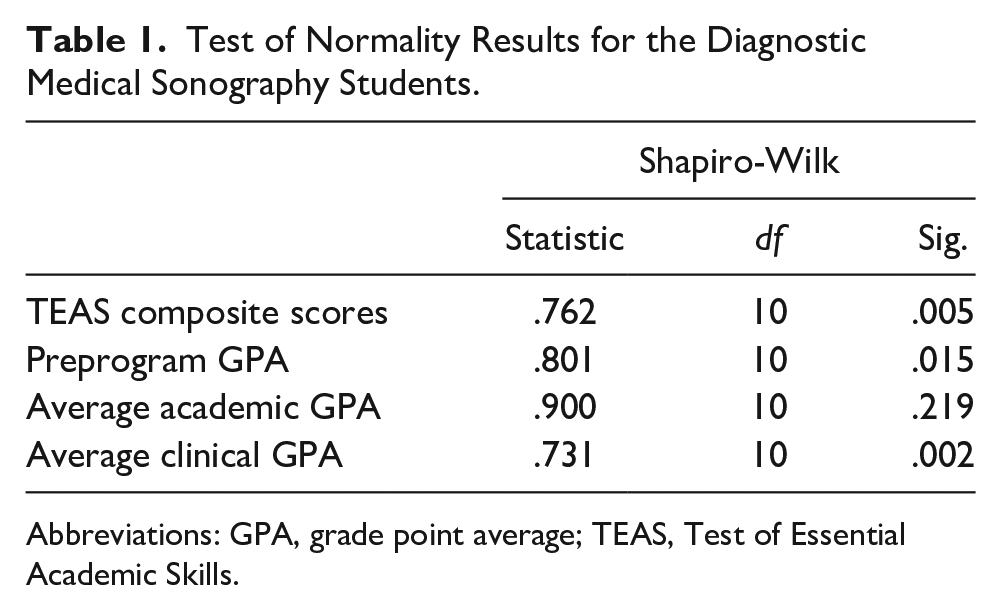
The test of normality was used to determine whether data were normally distributed for DMS students. The results of this test are shown in Table 1. As can be seen in Table 1, the Shapiro-Wilk statistic for the average academic GPA had a P value of >.05 (P = .219) which indicated that these data were normally distributed. Therefore, the Pearson correlation was used for normally distributed data such as the average academic GPA. The results are provided in Table 2.
Test of Normality Results for the Diagnostic Medical Sonography Students.
Abbreviations: GPA, grade point average; TEAS, Test of Essential Academic Skills.
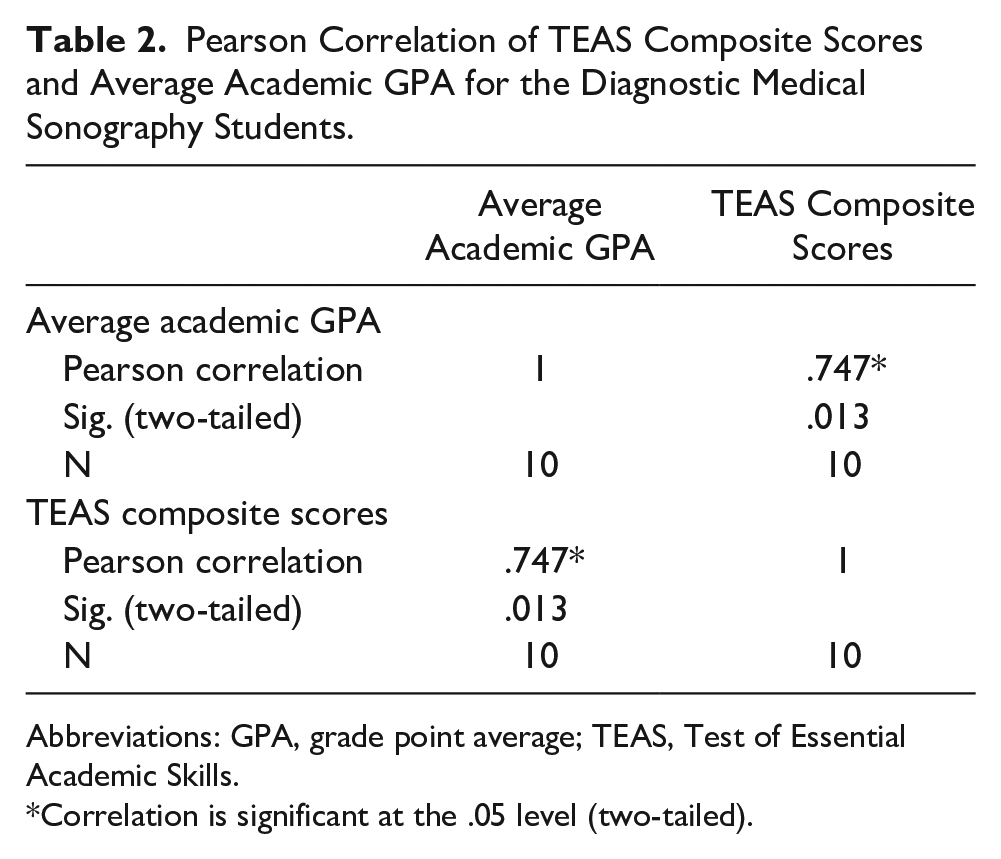
Pearson Correlation of TEAS Composite Scores and Average Academic GPA for the Diagnostic Medical Sonography Students.
Abbreviations: GPA, grade point average; TEAS, Test of Essential Academic Skills.
Correlation is significant at the .05 level (two-tailed).
In Table 2, the Pearson correlation was .747 and a P value of .013, based on the TEAS composite scores and the average academic GPA. This finding indicated that there is a strong relationship between the TEAS composite scores and academic success, for the DMS students.
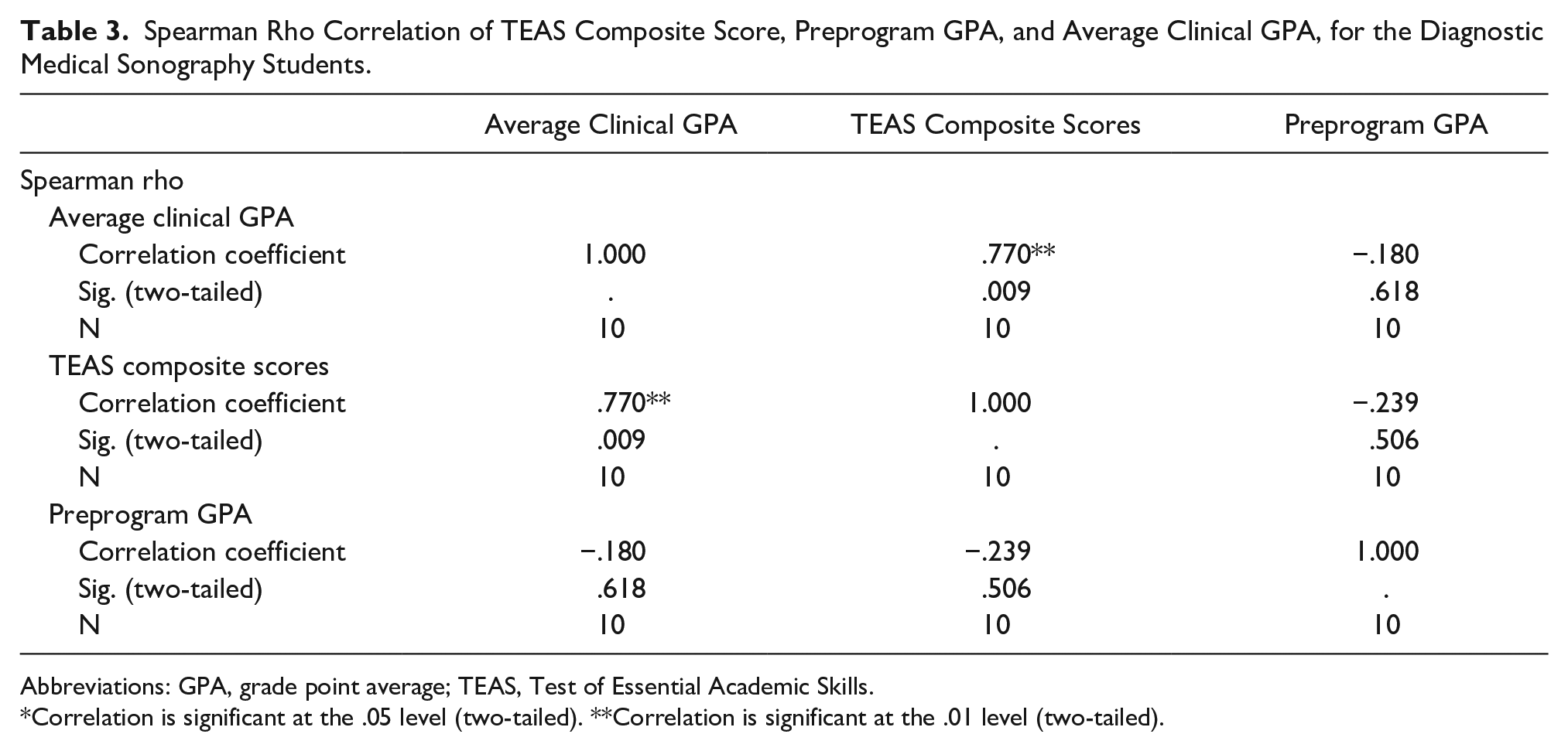
As Table 1 demonstrates a P value of <.05 for the TEAS composite scores, preprogram GPA, and average clinical GPA, this would indicate that these data are not normally distributed. Therefore, the nonparametric Spearman rho correlation was used for these variables. The results are shown in Table 3.
Spearman Rho Correlation of TEAS Composite Score, Preprogram GPA, and Average Clinical GPA, for the Diagnostic Medical Sonography Students.
Abbreviations: GPA, grade point average; TEAS, Test of Essential Academic Skills.
Correlation is significant at the .05 level (two-tailed). **Correlation is significant at the .01 level (two-tailed).
Table 3 indicates that the Spearman rho between the TEAS composite scores and the average clinical GPA was .770, at a P value of .009. This finding suggested that there was a strong relationship between the TEAS composite scores and clinical success, for the DMS students. However, the Spearman rho is less than .5 between the preprogram GPA and TEAS composite scores, as well as the average clinical GPA. This indicates that there is no relationship between these variables for the DMS students.
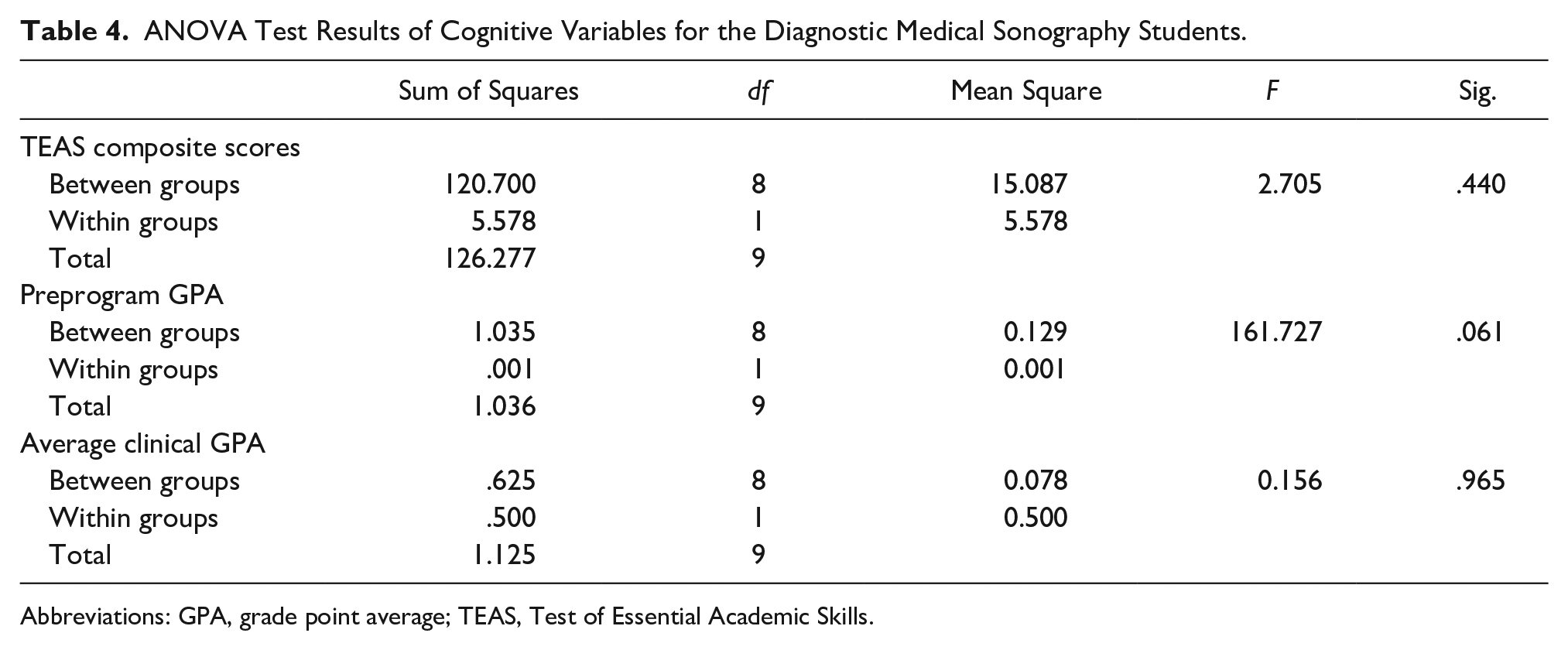
The ANOVA test was used to determine whether any statistically significant difference existed between the means of the TEAS composite scores, preprogram GPA, academic GPA, clinical GPA at the completion of three consecutive semesters. It was also important to determine how significantly these variables were related for the DMS students. The results are provided in Table 4.
ANOVA Test Results of Cognitive Variables for the Diagnostic Medical Sonography Students.
Abbreviations: GPA, grade point average; TEAS, Test of Essential Academic Skills.
Table 4 indicates that the between-groups and within-groups ANOVA values were at significance levels greater than .05 (between-groups TEAS composite scores = .440, preprogram GPA = .061, average clinical GPA = .965). Therefore, a significant relationship does not exist between these cognitive variables for the DMS students.
RT Students
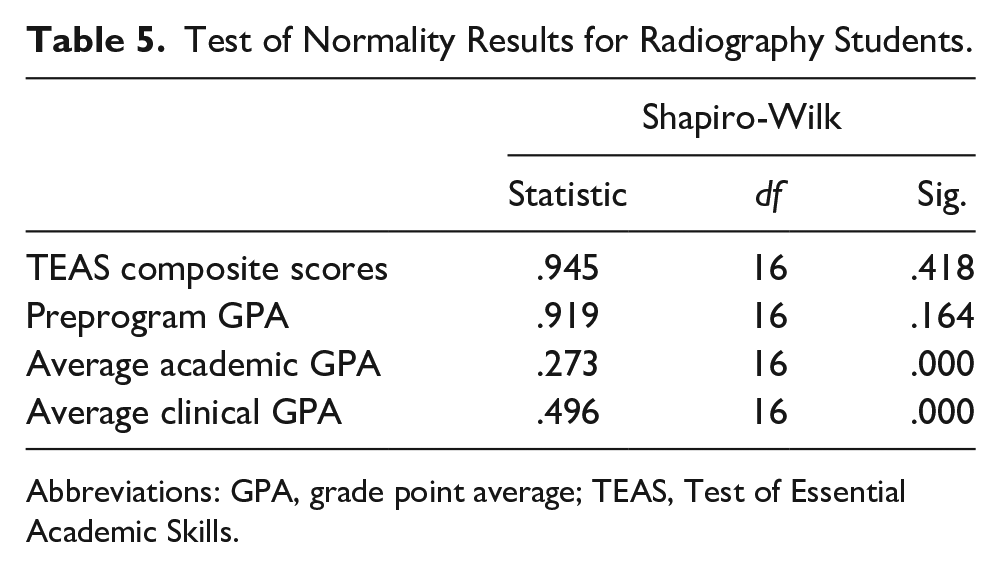
The test of normality was used to determine whether data were normally distributed for RT students. The Shapiro-Wilk test of normality was selected because of the small sample size within the RT program (n < 50 participants). The results of this test are shown in Table 5.
Test of Normality Results for Radiography Students.
Abbreviations: GPA, grade point average; TEAS, Test of Essential Academic Skills.
As seen in Table 5, the Shapiro-Wilk statistic for the TEAS composite scores (P = .418) and preprogram GPA (P = .164) was not significant, as the P values were >.05, which indicated that data were normally distributed. The average academic GPA (P = .000) and average clinical GPA (P = .000) P values were <.05 which also indicated that data were not normally distributed. Therefore, the parametric Pearson correlation test was used for the TEAS composite scores and preprogram GPA. The nonparametric Spearman rho correlation test was used for the average academic and clinical GPA.
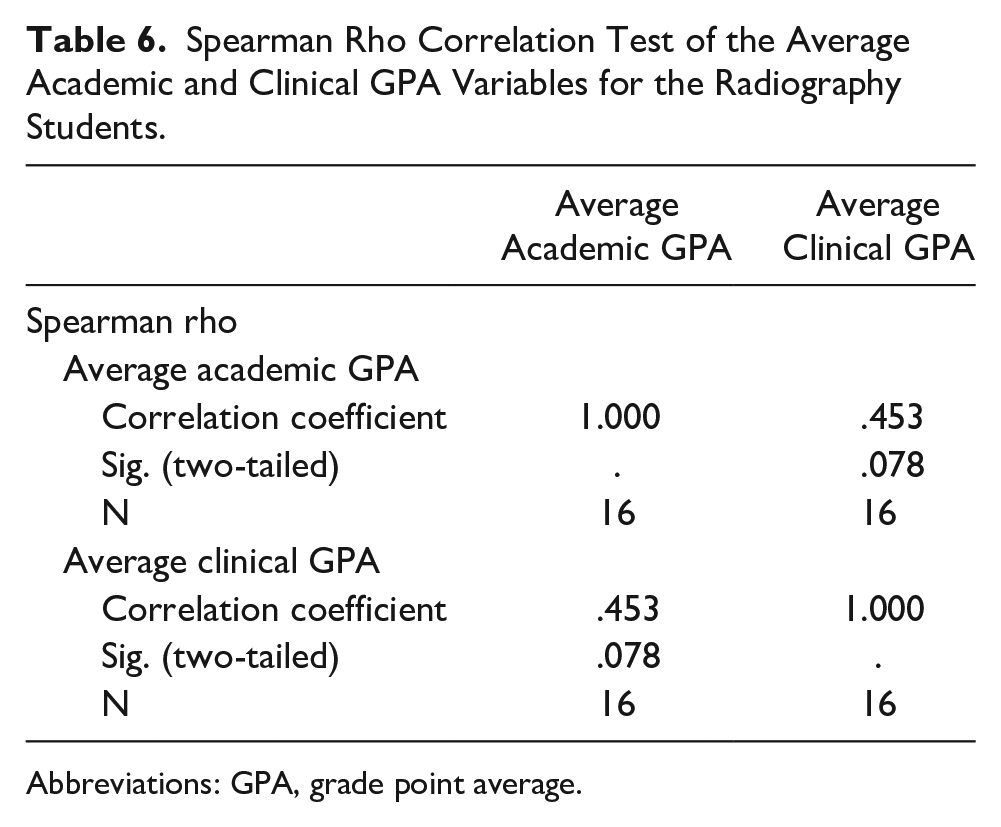
Table 6 shows that the Spearman rho between the average academic GPA and the average clinical GPA was .453, at a P value of >.05 (P = .078). Therefore, no statistical significance between these cognitive variables was found. This finding would suggest that there is no relationship between the student academic or clinical success for the RT students.
Spearman Rho Correlation Test of the Average Academic and Clinical GPA Variables for the Radiography Students.
Abbreviations: GPA, grade point average.
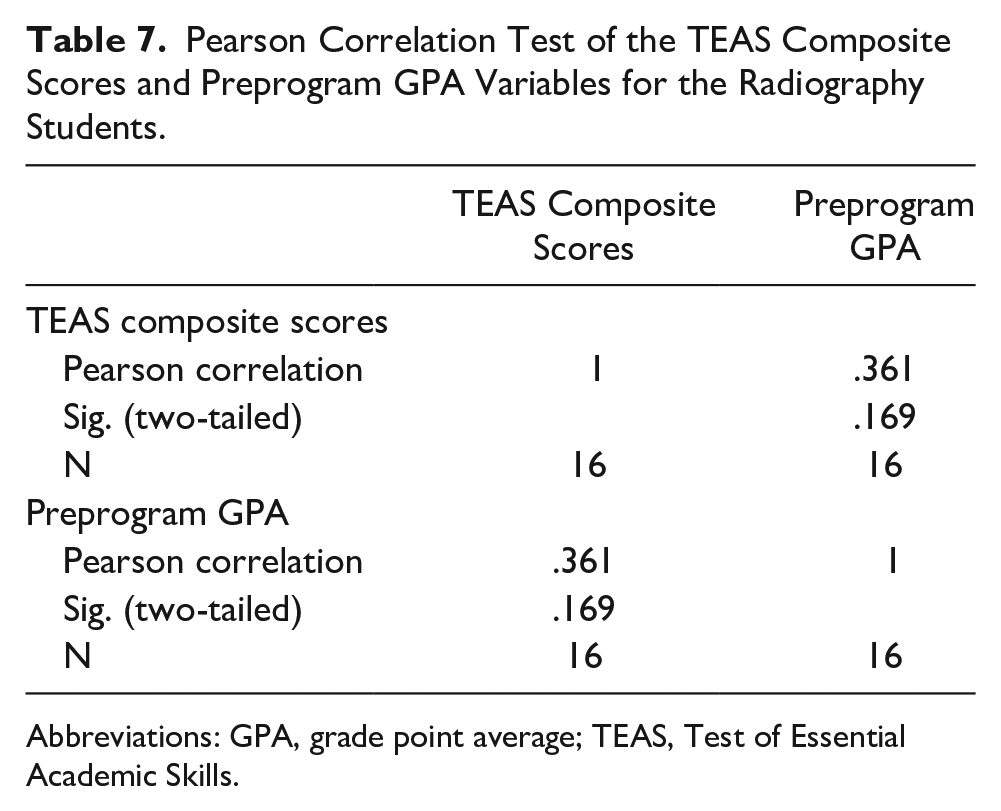
Table 7 demonstrates that the Pearson correlation was .361 at a P value of >.05 (P = .169), and therefore, no statistical significance was found among the cognitive variables, TEAS composite scores, and preprogram GPA. This finding suggested that no relationship existed between the student TEAS composite scores and preprogram GPA for the RT students.
Pearson Correlation Test of the TEAS Composite Scores and Preprogram GPA Variables for the Radiography Students.
Abbreviations: GPA, grade point average; TEAS, Test of Essential Academic Skills.
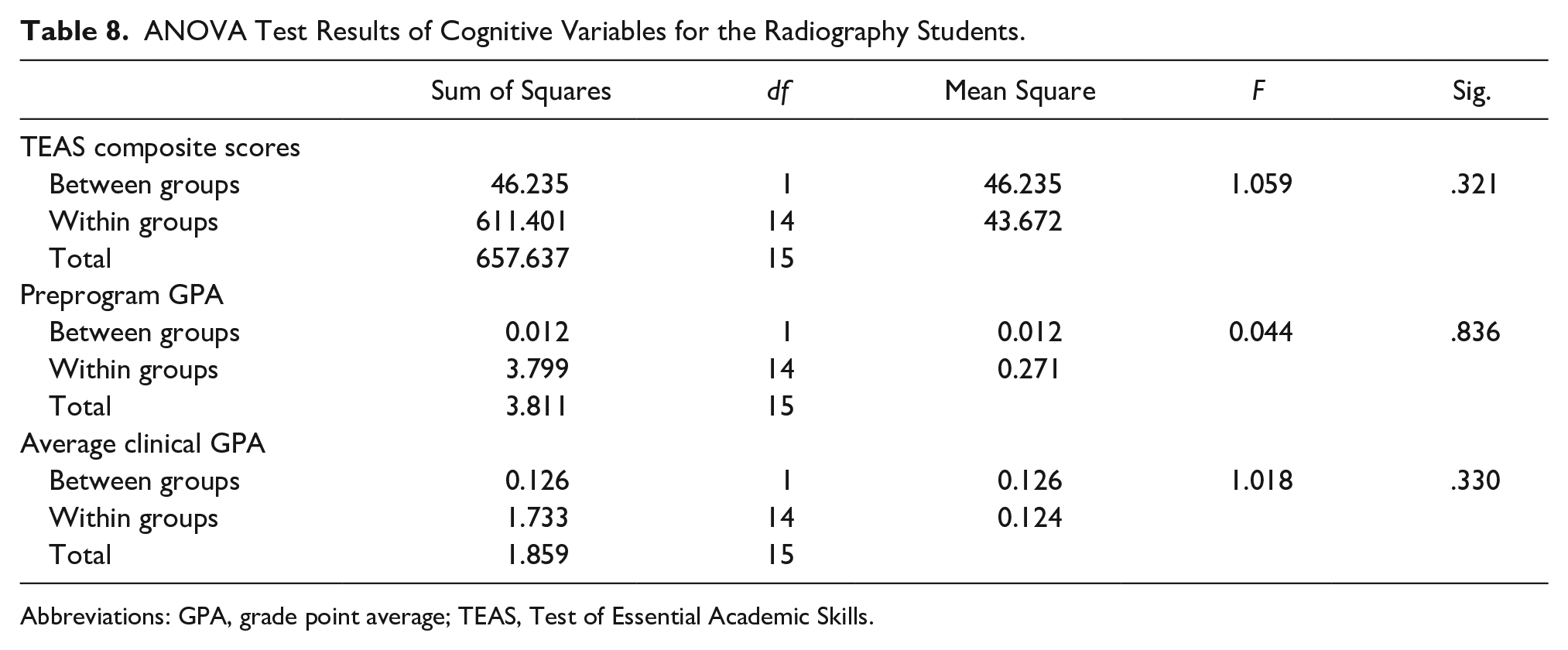
The ANOVA test was used to determine whether any statistically significant difference existed between the means of the TEAS composite scores, preprogram GPA, academic GPA, and clinical GPA at the completion of three consecutive semesters. In addition, it was important to determine how significantly these variables were related for the RT students. The results are provided in Table 8.
ANOVA Test Results of Cognitive Variables for the Radiography Students.
Abbreviations: GPA, grade point average; TEAS, Test of Essential Academic Skills.
As seen in Table 8, the between-groups and within-groups ANOVA values were at P values >.05 (between-groups TEAS composite scores = .321, preprogram GPA = .836, and average clinical GPA = .330). This indicated that there is no relationship among cognitive variables such as the TEAS composite scores, preprogram GPA, average academic GPA, and clinical GPA for the RT students. These findings indicated that there are statistically significant variances between the means of these variables.
Discussion
Community colleges are an integral part of the higher education system. They often help students with technical or occupational skills and prepare them for in-demand careers, in allied health and public services. 8 Community colleges, in collaboration with public health agencies, can enhance health care education, by providing specialized associate degrees that serve workforce needs. 9 As a result, many DMS and RT professionals are educated at community colleges. As most health care programs are competitive and have selective admission, it is crucial for colleges to identify students who are more likely to succeed, in such rigorous programs. Therefore, most health care programs use selective admission processes to achieve this goal. Historically, colleges relied on measures of cognitive ability and academic success to make decisions about which applicants are accepted into the health care programs. Colleges based their selections on high school grades and other standardized test scores. 10 Allensworth and Clark 11 reported that there was a strong and consistent relationship of high school GPAs and college graduation. However, there was a weak relationship between American College Testing (ACT) scores and college graduation, indicating that college admission might be overly focused on test scores.
Admission requirements and procedures vary for different colleges as well as different programs. According to Easton et al., 12 colleges take grades into account when making admission decisions. However, grades have been criticized for being skewed suggesting that teachers apply an unequal or nonobjective set of standards when they assign grades. 12 Davidovitch and Soen 13 have suggested that there are no absolute predictors of student college success. This indicates that traditional tools such as psychometric scores or admission grades alone are unable to predict student college success. In contrast, Calvin 14 stated that the supporters of the use of standardized tests in college admissions assert that standardized tests do substantially improve the predictability in the admission process. Hughey and Menser 15 emphasized that prerequisite course performance should be used as part of the admission process in the RT programs, to improve student graduation rates. In addition, some programs use noncognitive methods as success markers, such as student interviews. Both these applicants and faculty indicated that the interview process was fair, simple, nonthreatening, and allowed them an opportunity to meet in-person. 16
As the admission processes vary from college to college, it is still unclear what admission criteria in the medical and allied health are best to ensure student success. There is a need for further research on applying cognitive and noncognitive factors, as admission measures for health programs and determine whether these factors are reliable predictors of student success. 17
There is plenty of evidence in the literature indicating that cognitive tools are reliable predictors of academic success for students who are enrolled in health care as well as non–health care programs.1–3 Furthermore, an interesting study that was conducted by Wambuguh et al. determined that the TEAS scores and pre-admit science GPA predicted nursing program outcomes. Their study led to the following results: nursing students with TEAS ≥ 82 had 8% greater probability of graduating and 13% greater probability of a GPA ≥ 3.25, compared with students with TEAS < 82. Nursing students with pre-admit science GPAs ≥ 3.8 had 14 % greater probability of a GPA ≥ 3.25 compared with students with pre-admit science GPAs < 3.8. 18
The current study investigated whether cognitive variables such as the TEAS composite scores and preprogram GPA have a relationship on student success. To determine whether any relationship exists between cognitive variables such as TEAS composite scores, preprogram GPA, and student success, as measured by the academic GPA, clinical program GPA, therefore, the Pearson correlation and Spearman rho correlation tests were used. A strong relationship between academic success (r = .747 at the .013 level of significance), clinical success (r = .77 at the .009 level of significance), and the TEAS composite scores for the DMS students was found. These findings are in line with the outcomes of prior research studies that exist in the literature.2,3
There was no relationship between the preprogram GPA, academic GPA, clinical success, and TEAS composite scores for the DMS students. Furthermore, there was no relationship between cognitive variables such as TEAS composite scores, preprogram GPA, academic GPA, clinical program GPA, student academic, or clinical success for the RT students.
To determine whether any statistically significant difference exists between the means of the cognitive variables such as the TEAS composite scores, preprogram GPA, academic GPA, clinical GPA at the completion of three consecutive semesters among the DMS and RT students and how significantly these variables are related, the ANOVA test was used. There was no relationship among cognitive variables such as TEAS composite scores, preprogram GPA, average academic and clinical GPA for the RT or DMS students.
Furthermore, there was no relationship between the preprogram GPA and academic or clinical success for the DMS students. The inconsistency of these findings can be explained by the differences in teaching, grading, as well as slightly different clinical hours and experiences in the clinical settings in each program. In addition, these results can be attributed to the differences of the admission requirements and variance in the academic rigor in each program. For example, in 2020, the average TEAS composite score for the students admitted into the RT program was 78.58% compared with 87.53% for the DMS students. This is indicative of the higher caliber students admitted into the DMS program. These observations might be contributing factors explaining the results of this study.
Limitations
This study has four internal validity threats that must be discussed such as the interactions with selection, maturation, mortality, and testing. The interactions with selection internal validity threat exist because even though the participants are an “imaging professionals” student cohort, they belong to two different professions, DMS and RT. The maturation internal validity threat is an issue because the participants’ maturation level may change throughout the length of the study. Some of the participants withdrew from the program for various reasons which resulted in the mortality internal validity threat. It is worth noting that the RT programs’ attrition rate was about 22.7% compared with the DMS programs’ average attrition rate of 0%.
This study has external validity threats such as the interaction of setting and treatment because it limits the generalization of the sample. This threat lies in the fact that students in this sample have different personalities, learning styles, and so on, and may not necessarily represent the same sample, if replicated at another college. In addition, it is important to note that the DMS students were mostly female and the RT students have a more even distribution of gender. Furthermore, this study was completed at a large community suburban college and therefore the findings of this study may not apply to a small suburban community college or a large 4-year institution elsewhere. As the data were collected based on a convenient sample of respondents, small sample size is another important limitation.
Conclusion
The findings of this study provided limited evidence that there may be a strong relationship between the TEAS composite scores, academics, as well as clinical success, in this DMS student cohort. This may be a significant finding that supports the use of the TEAS test, as part of the admission process, for health care programs. Interestingly, in this RT student cohort, this did not result in the same outcome. Therefore, further research should be conducted to investigate whether these findings are similar in other imaging programs. This research could lead to further studies exploring relationships between other cognitive variables and student success in various imaging and health care programs.
Footnotes
Ethical Approval
This study was approved by the Institutional Review Board of the University of St. Francis, Joliet, IL under IRB # 2019-20-081.
Informed Consent
Written consent was obtained from all participants after they were informed of the objective and design of the study, and they were free to leave the study at any time if they wished.
Declaration of Conflicting Interests
The author declared no potential conflicts of interest with respect to the research, authorship, and/or publication of this article.
Funding
The author received no financial support for the research, authorship, and/or publication of this article.
