




Abstract
Objective:
This study assessed the use of Aloe vera lotion as an alternative coupling medium for ultrasound imaging.
Materials and Methods:
A prospective analytical research design was adopted. A total of 50 subjects who consented were randomly recruited into the study from the University of Calabar Teaching Hospital (UCTH), Calabar and the Gijuwie Medical Diagnostics, Calabar. A total of 50 image pairs were obtained on scanning with Aloe vera lotion (Image A) and commercial ultrasound gel (Image B) for comparison. Image quality was assessed using anatomical details (AD) and visualization of hyperechoic structures (VHS) as criteria.
Results:
A substantial agreement was seen among raters (A: k = 0.658, B = 0.691; P < .05) with acceptable level of consistency (Cronbach’s alpha scores of 0.701 and 0.825 for Aloe vera lotion and commercial gel, respectively) based on AD. Images recommended as acceptable by raters was 91.7% for Aloe vera lotion and 81.7% for commercial gel. Both methods demonstrated almost perfect agreement (kappa > 80; P < .05) with each other based on AD and VHS (Table 3).
Conclusion:
Aloe vera lotion, which is locally available and relatively affordable, has the potential to be used as acoustic coupling medium in diagnostic sonography.
Ultrasonography is one of the most widespread diagnostic imaging tools. However, the commercial coupling gel used for sonographic examinations is quite expensive and not readily available in remote areas, particularly in some remote locations. Ultrasound coupling gel helps to eliminate pockets of air found between the transducer and the skin, which enhances the transmission of sound and the production of echoes needed for image formation.1–3
Few ultrasound coupling gels are produced in sub-Saharan Africa, including Nigeria. This is an indication that these coupling gels are imported with unintended consequences, including increased cost and low availability, to remote areas.4–6 The role of a coupling gel, in diagnostic sonography, explains why its purchase constitutes an important part of the annual budget in hospitals including diagnostic facilities, as its market is extremely competitive, rapidly growing, and extensively affecting new products.5,7,8 All of these generate the need for an alternative, especially in the low-resource setting. Aloe vera (Aloe barbadensis miller), which belongs to the Asphodelaceae (Liliaceae) family, is currently one of the herbal remedies in the treatment of skin reactions and other human diseases globally.9–12 This plant has triangular fleshy leaves with serrated edges and yellow tubular flowers. Its fruits contain numerous seeds with clear parenchymal gel from the center of the leaf. 12 Aloe vera leaves have two types of exudates, which include the latex and gel; latex, which is found between the plant’s outer skin (rind) and the pulp, yellow-brownish, has a bitter taste due to 80 chemical constituents present, which are mostly phenolic in nature.10–12 In addition, Aloe vera has moisturizing and antiaging agents such as muco-polysaccharides, which absorb into the skin binding moisture and therefore aiding in skin hydration, including other benefits such as antibacterial/antiviral activity, anti-inflammatory effects, and wound healing.10,11,13,14
Documented alternatives such as oil and cornstarch, used as coupling media for sonography, can have negative effects on the transducer, as well as are scarce and expensive.15,16 These challenges necessitate the need for an alternative coupling gel that will be relatively cheap, readily available, and not affect the patient’s skin, hence the need for investigating the applicability of Aloe vera lotion for diagnostic medical sonography.
Materials and Methods
Research Design
The study adopted a prospective analytical research design. A total of 50 subjects were referred for an abdominal sonogram, who consented and were recruited into the study from the University of Calabar Teaching Hospital (UCTH), Calabar and the Gijuwie Medical Diagnostics, Calabar. A total of 50 sonographic image pairs (two images per subject) were acquired by a single sonographer with 10 years of experience in sonography. The sonograms were created using either the Aloe vera lotion or the commercial ultrasound gel as a couplant. Technical parameters such as time gain compensation, overall gain, depth, and zoom were kept fixed during sonographic acquisition.
Aloe vera Gel Preparation
Freshly harvested Aloe vera leaves were obtained from a vendor at a local market, within the study area. The product was authenticated and certified in the Department of Plant and Ecological Studies, Faculty of Biological Sciences, University of Calabar, Calabar, Nigeria (see Figure 1). The freshly collected Aloe vera leaves were kept vertically for 10 minutes in a bowl to drain out its yellow resin, which may elucidate skin irritation. The Aloe vera leaves were thoroughly washed, the outer green peeled off, and were cut into smaller sizes for fast blending. With a sterilized spoon, the Aloe vera leaves were scooped into an electric blender and blended for 5 minutes. This was allowed to settle for about 10 minutes and then transferred into a clean jar or airtight plastic container, covered to avoid contamination, and stored in a refrigerator.
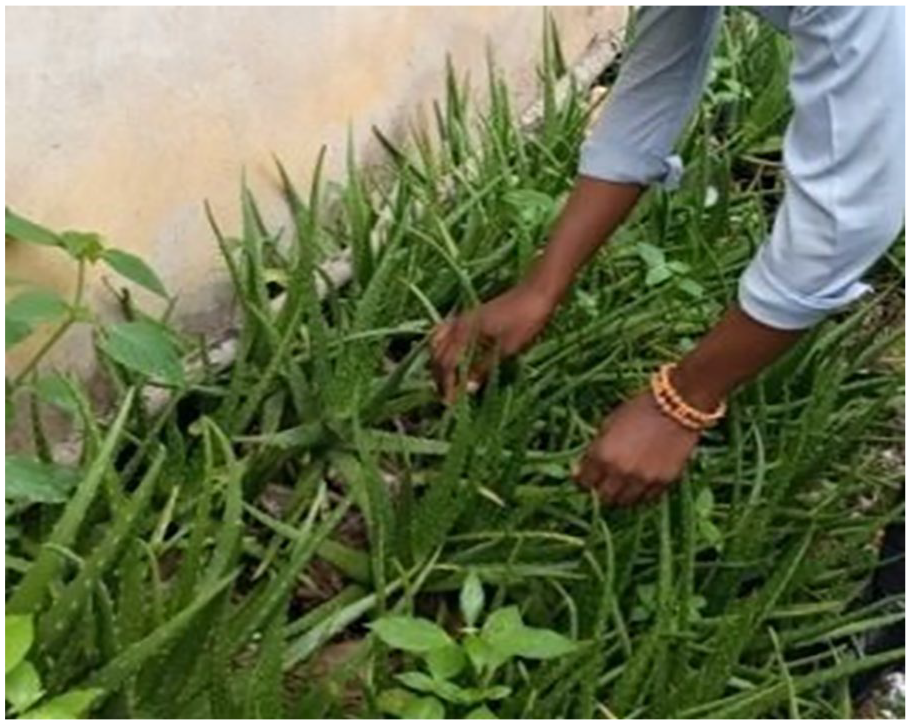
The harvesting of Aloe vera leaves for use in the research study.
Procedure for Data Collection
The subjects were directed to the sonographic examination room. Each subject was asked to lie on the examination table in a supine position, exposing the abdomen and placing their hands behind the head. The liver was selected as the organ of interest and images acquired in the axial plane at the level of the xiphoid-sternum, using a certain amount of Aloe vera lotion. Afterward, the Aloe vera lotion was thoroughly wiped off the skin and the transducer before applying the same amount of commercial coupling gel using the same scan plane and ultrasound equipment system settings.
From the total of 50 image pairs obtained, 10 image pairs were reported to be normal (without pathology) and were selected for scoring by three observers (two sonologists and one sonographer), as well as the image pairs being anonymized (see Figure 2). Selected images were assessed based on the following parameters: anatomical details (AD) and visualization of hyperechoic structures (VHS). A 4-point Likert scale was used to grade the image scores as 1 = poor, 2 = fair, 3 = good, and 4 = very good. In addition, the raters provided recommendations for use of couplant A (Aloe vera lotion) or B (commercial coupling gel), and these recommendations were based on image quality, indicated by a “Yes” or “No” response.
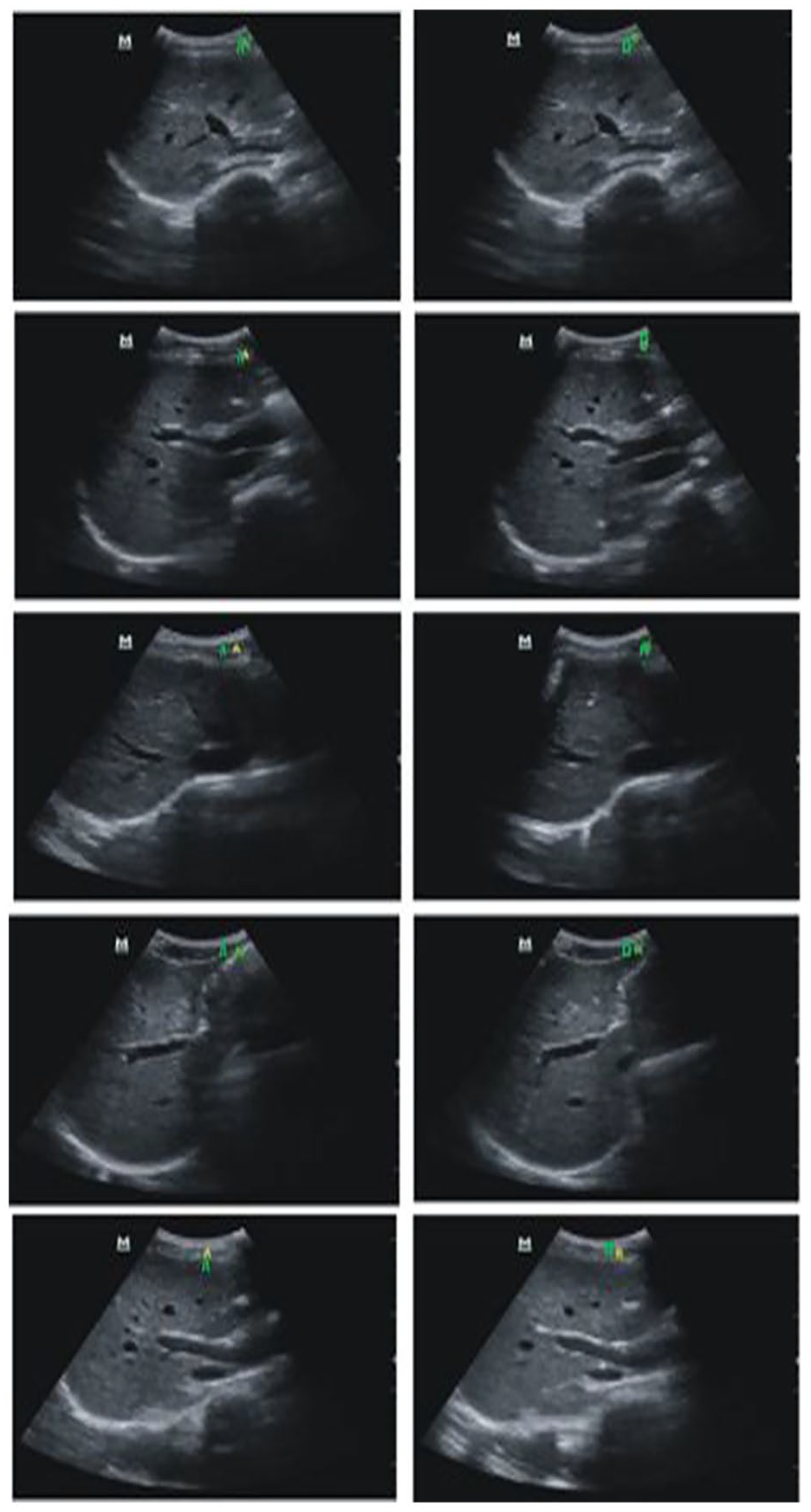
Pairs of sonograms of the liver acquired using Aloe vera lotion and commercial coupling gel.
Data Analysis
Percentages were computed for the raters’ recommendations for use of couplant A (Aloe vera lotion) or B (commercial coupling gel). Reliability analysis to compare agreement and consistency between raters for image performances of both couplant A (Aloe vera lotion) and couplant B (commercial coupling gel) was conducted. Related-samples Wilcoxon signed-rank test compared the median of differences between the ratings for images acquired using both types of couplant. Data obtained were analyzed using the Statistical Package for the Social Sciences (SPSS Inc., Chicago, IL, USA) version 20.0, and the level of significance was set at P < .05.
Results
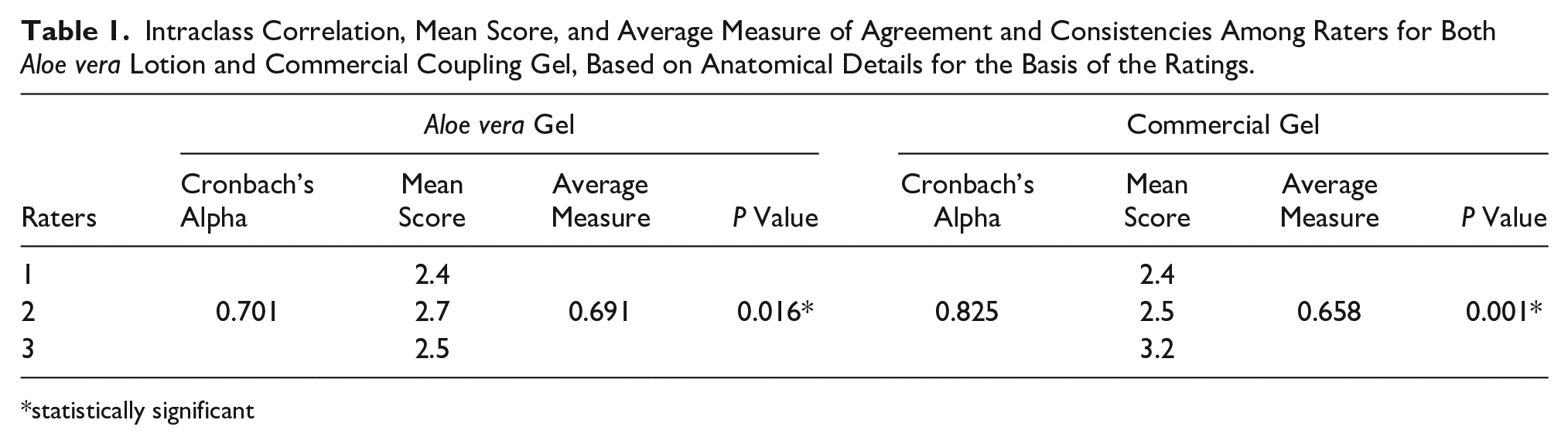
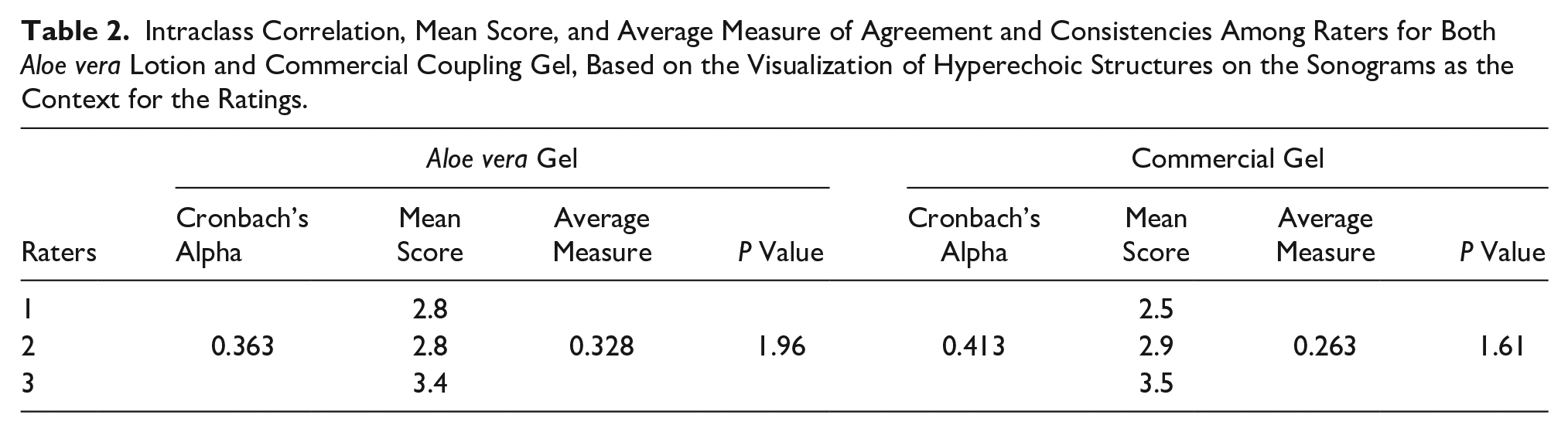
A substantial agreement was seen among raters (A: k = 0.658, B = 0.691; P < .05) with acceptable level of consistency (Cronbach’s alpha scores of 0.701 and 0.825 for Aloe vera lotion and commercial coupling gel, respectively) based on AD. The highest mean score (3.2) among raters was obtained using the commercial coupling gel (See Table 1). However, for the VHS, there was no acceptable consistency (Cronbach’s alpha <0.70) and agreement among raters for VHS (P > .05) (see Table 2). The proportion of Aloe vera lotion–based sonographic images, recommended by raters, was 91.7% (8.3% not recommended), while 81.7% of the sonographic images acquired using the commercial coupling gel were recommended (18.3% not recommended) based on image performance (quality) using these types of couplant (see Figure 3). Both methods (Aloe vera lotion and commercial coupling gel sonograms) demonstrated almost perfect agreement (kappa >80; P < .05) for AD (see Table 4) and VHS (see Table 3), with acceptable consistencies (AD: Cronbach’s alpha = 0.851; VHS: Cronbach’s alpha = 0.863). No statistical difference was seen in the median scores for the image quality parameters (AD and VHS) between Aloe vera lotion and commercial coupling gel (P > .05) (see Table 5).
Intraclass Correlation, Mean Score, and Average Measure of Agreement and Consistencies Among Raters for Both Aloe vera Lotion and Commercial Coupling Gel, Based on Anatomical Details for the Basis of the Ratings.
statistically significant
Intraclass Correlation, Mean Score, and Average Measure of Agreement and Consistencies Among Raters for Both Aloe vera Lotion and Commercial Coupling Gel, Based on the Visualization of Hyperechoic Structures on the Sonograms as the Context for the Ratings.
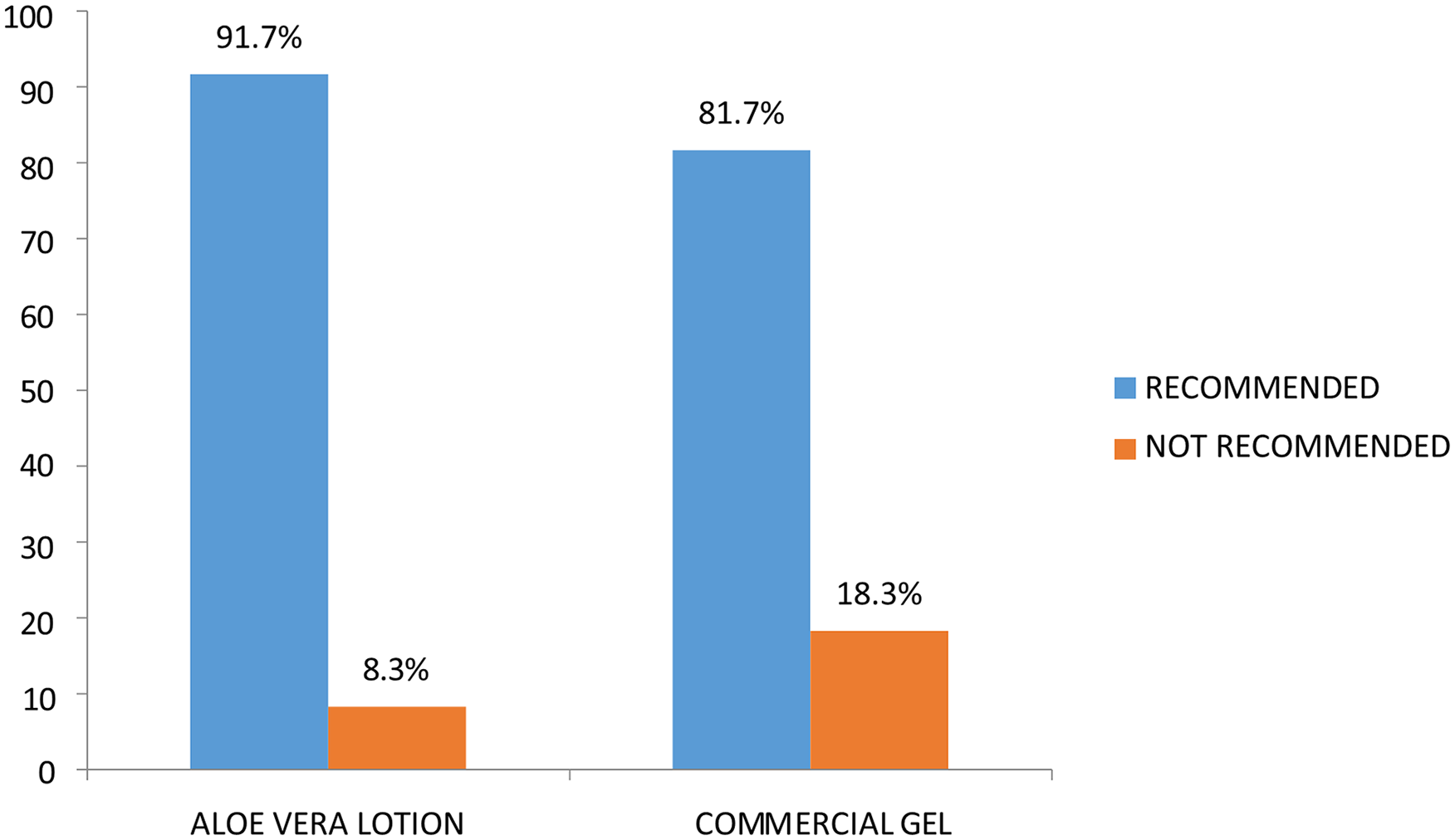
The recommendations for the use of Aloe vera lotion and commercial coupling gel for sonography, based on the image review process.
The Agreement Between Aloe vera Lotion and Commercial Coupling Gel Based on the Visualization of Hyperechoic Structures on the Sonograms as the Context for the Ratings.
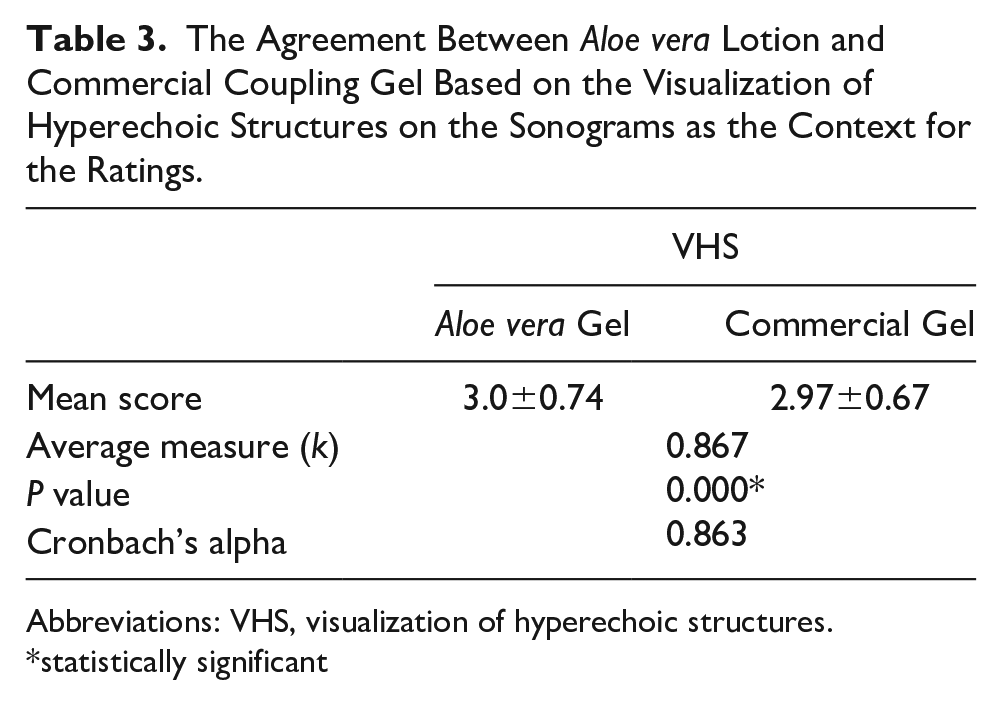
Abbreviations: VHS, visualization of hyperechoic structures.
statistically significant
The Agreement Between Aloe vera Lotion and Commercial Coupling Gel and Aloe vera lotion Images Based on Anatomical Details as the Context for the Ratings.
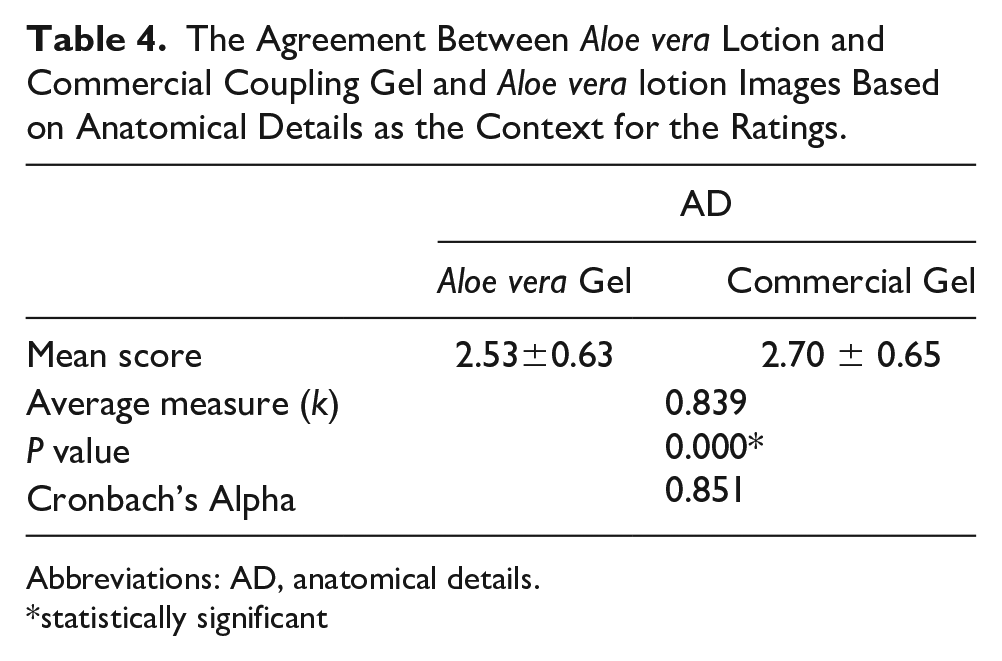
Abbreviations: AD, anatomical details.
statistically significant
Related-Samples Wilcoxon Signed-Rank Test to Compare the Median Differences Between the Ratings of Subjects Imaged With Aloe vera Lotion and Commercial Coupling Gel.
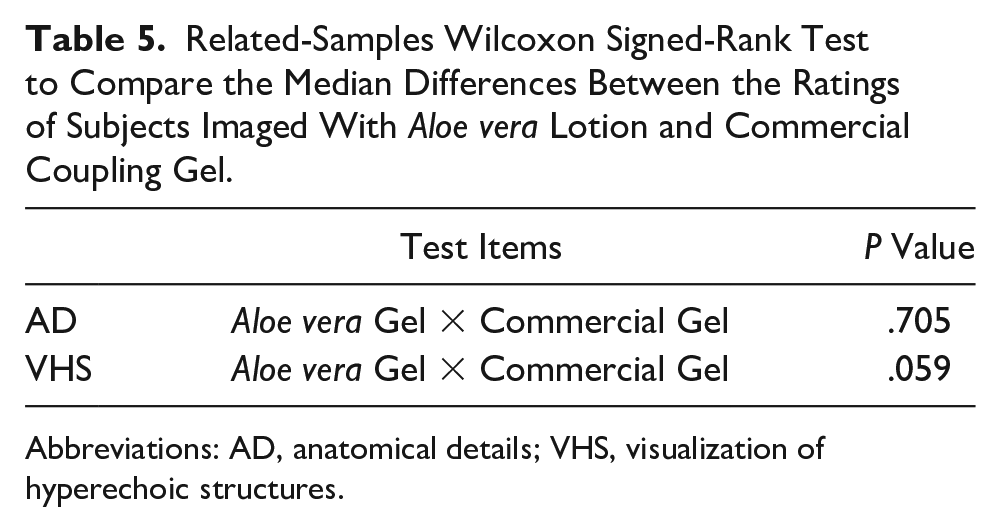
Abbreviations: AD, anatomical details; VHS, visualization of hyperechoic structures.
Discussion
Poor availability of commercial coupling gel and its high cost pose a barrier to sustain the use of sonography, particularly in the study location. The applicability of Aloe vera lotion as an alternative coupling gel, for diagnostic sonography, was investigated. The study yielded substantial agreement among raters of image pairs (Aloe vera lotion and commercial coupling gel) based on AD as well as the image quality assessment criterion. Also, there were acceptable consistencies in the ratings of the acquired sonograms using both types of couplant (see Table 1). These indicate an acceptable performance of both coupling media, in terms of their ability to optimally transmit sound across the skin and the suitability of Aloe vera lotion to be used as a couplant for sonography. Results of the present study are similar to works with olive oil as a viable coupling alternative. 17 However, olive oil has the disadvantage of affecting the plastic parts of the transducer. 15
Based on VHS, on the contrary, no agreement among raters was achieved (see Table 2). Such variations and inconsistency of rating have an underpinning factor, which may not be linked to sound transmission efficiency of the varied types of couplant, but to factors such as visual acuity of the raters, fatigue, and some environmental conditions under which the image pairs were looked at. Aloe vera lotion and commercial coupling gel image pairs demonstrated a near-perfect agreement (see Tables 3 and 4), with comparable mean ranks imaging, compared with the commercial coupling gel. Both media demonstrated comparable scores in terms of their median values for AD and VHS (see Table 5). This performance evidenced by the equivalent acceptable and diagnostic image quality scores further explains the applicability and reliability of Aloe vera lotion as a useful alternative to commercial coupling gel for sonography, in resource-poor settings. The results of this study are similar to works with shea butter and cassava flour as viable coupling media for sonography, reported as having substantial image performances compared with commercial coupling gel.18,19 The Aloe vera lotion has potential to improve sonographic imaging, compared with commercial coupling gel, and was recommended by the raters as a suitable alternative in resource-poor settings (see Figure 3). Therefore, the Aloe vera lotion, which is locally available and relatively affordable, may be used as an alternative commercial coupling gel.
Limitations
This research is not without limitations, and the main caution is the research design and the convenient sample of participants enrolled in the study. Another issue is the suitability of the Aloe vera lotion, in terms of safety, consistency, and shelf life, which was not determined. Also, to reduce bias and provide more power, a less subjective method of rating image quality would add more credence to the study.
Conclusion
Aloe vera lotion has suitable acoustic transmission compared with commercial coupling gel. In areas where resources are scarce and supply chain issues may exist, Aloe vera lotion may be an alternative coupling medium to provide sonographic imaging. The use of Aloe vera lotion, as an alternative, has a potential to provide and encourage public and private investments.
Footnotes
Acknowledgements
The authors wish to acknowledge the support of the management and staff of the Department of Radiology, University of Calabar Teaching Hospital (UCTH), Calabar, and the Gijuwie Medical diagnostics, Calabar, for providing the facilities used in the study.
Ethical Approval
Ethical approval was not sought for the study.
Informed Consent
Informed consent was not sought for the present study because all case data was de-identified and/or aggregated and followed ethics committee or IRB guidelines (also referred to as the Honest Broker System).
Animal Welfare
Guidelines for humane animal treatment did not apply to the study.
Trial Registration
Not applicable.
Declaration of Conflicting Interests
The authors declared no potential conflicts of interest with respect to the research, authorship, and/or publication of this article.
Funding
The authors received no financial support for the research, authorship, and/or publication of this article.
