




Abstract
Self-centering buckling-restrained braces (SCBRBs) can be an effective seismic retrofitting measure for older steel moment frame buildings designed based on outdated design provisions. SCBRBs can considerably improve the strength and ductility capacity and are particularly efficient at mitigating residual deformations, a critical parameter often adopted as a demolition metric. However, this retrofit strategy can simultaneously lead to an increase in seismic demands on floors because of increased lateral stiffness which increases the potential for damage to non-structural elements (NSEs). Damage to NSEs can render buildings unoccupiable for an extended period even if the structural damage is minor. In this study, the seismic resilience of a case study moment-resisting steel frame building is compared to one retrofitted with SCBRBs. In particular, the effect of the SCBRB retrofit on NSEs is examined and their contribution to the total expected economic losses is quantified. Furthermore, various scenarios are evaluated in which NSEs are also retrofitted to illustrate their importance to functional recovery. Analysis results reveal that damage to the ceiling system and partition walls, which can be amplified as a result of added lateral stiffness from SCBRBs, can significantly delay the recovery process. Moreover, recovery delays associated with mechanical components can be reduced by enhancing the seismic behavior of integral items such as elevators. These results demonstrate how retrofit strategies that alter a building’s seismic response such as SCBRBs can have unintended consequences on NSEs and adversely impact seismic resilience.
Keywords
Introduction
Traditionally, earthquake-resistant structural design principles have focused on ensuring structural integrity and occupant safety. However, a paradigm shift over the past decade has led to resilience becoming a prevalent concept in earthquake engineering. Rapid functional recovery and re-occupancy of buildings is critical to meeting resilience goals. In a seismic event, a resilient building is capable of quickly returning to normal operation, but many existing buildings, especially those designed before modern seismic design provisions, are not capable of meeting this goal and demolition may be the more economically agreeable option than allocating resources toward restoration (Almufti and Willford, 2013). Moreover, even if a building manages to withstand a major earthquake without collapsing, it often remains highly vulnerable to subsequent aftershocks. For instance, the 2010 Christchurch earthquake was followed by more than 10,000 aftershocks, leading to significant property losses (Howes and Cheesebrough, 2013). More recently, the Mw 7.8 Pazarcik earthquake which struck Turkey in February 2023 caused over $34 billion in direct damage to buildings and infrastructure with aftershocks expected to further increase this total (World Bank, 2023).
Self-centering buckling-restrained braces (SCBRBs) can help improve a building’s post-earthquake structural repairability by improving the strength and ductility of existing seismic force resisting systems and significantly reducing permanent deformations. The mechanism of energy dissipation in SCBRBs relies on a buckling-restrained steel core, complemented by self-centering action generated through high tensile capacity materials or prestressed elements (Christopoulos et al., 2008; Zhou et al., 2022). Various researchers (Carofilis et al., 2022; Eatherton et al., 2014a; Ghowsi and Sahoo, 2020; Miller et al., 2011, 2012) have also explored the use of shape memory alloys (SMAs) to achieve self-centering in SCBRBs. Most notably, Miller et al. (2012) and Eatherton et al. (2014b) conducted a comprehensive study on the behavior and seismic performance of SCBRBs where the self-centering mechanism relied on pre-tensioned superelastic nickel-titanium (NiTi) SMA rods. The prototype showed good energy dissipation and self-centering ability, suggesting strong potential as a resilience-enhancing retrofit for existing buildings.
However, structural interventions aimed at improving the lateral resisting system can introduce unintended side effects (Cosgun et al., 2022; O’Reilly and Sullivan, 2018; Thermou, 2014). Recently, Carofilis et al. (2022) conceptualized and numerically investigated SCBRBs with prestressed iron-based SMA (Fe-SMA) tendons. It was noted that while the SCBRBs notably reduced lateral displacements and residual deformations in the study building, there was a significant increase in floor accelerations as a result of the increased lateral stiffness. Several studies have already shown that increasing the lateral stiffness of buildings by means such as buckling-restrained braces (BRBs) can lead to increased story shear forces and floor accelerations (Kumar et al., 2007; Qiu and Zhu, 2016; Tremblay et al., 2008; Zhang et al., 2022). Moreover, Tremblay et al. (2008) suggest that buildings equipped with self-centering energy dissipative braces can experience larger floor accelerations compared to conventional non-self-centering BRBs because the flag-shaped hysteresis of self-centering braces can increase the inconsistencies in story shear forces which can in turn produce short-duration, high-amplitude floor acceleration pulses. Similar observations were made by Zhang et al. (2023) comparing an SCBRB system to conventional BRBs. SCBRBs led to amplified peak floor accelerations (PFAs) compared to BRBs, and it is further noted that self-centering devices with limited energy dissipation tend to generate higher PFAs (Zhang et al., 2023).
This study quantifies the structural and non-structural impact of an SCBRB seismic retrofit. A six-story steel moment frame building in a high seismicity region is used as a case study building, and comparisons are made between the building in its as-built and retrofitted states. The response of the building is numerically simulated using OpenSees with emphasis on identifying damage to acceleration and drift-sensitive non-structural elements (NSEs) and the total economic losses incurred during seismic events. Based on the outcomes, three NSE retrofit scenarios in the retrofitted state are proposed and evaluated. These scenarios are aimed to achieve an overall enhancement in functionality and recovery time for the structurally retrofitted SCBRB frame building. The results underscore the importance of retrofitting NSEs in parallel with structural retrofits which stiffen the seismic force resisting systems and highlight the impact of NSEs on building functionality and subsequent recovery after an earthquake.
Research motivation
This article examines how seismic response modification due to SCBRBs can impact the performance of NSEs under earthquake loading and quantifies how NSE damage can affect seismic resilience by estimating the time to restore normal operation functions. High floor acceleration response in buildings during seismic events is closely related to the seismic performance of NSEs such as ceiling systems, piping/duct systems, and electrical systems. Ensuring serviceability of NSEs is critical to rapid recovery following an earthquake. The impact of NSE damage on post-earthquake functional recovery has been well-documented in recent earthquake events. The Santiago International Airport remained closed for several days following the 2010 Chile earthquake due to severe damage to NSEs. Miranda et al. (2012) note that the significant damage to piping and ceiling systems was the result of pounding between these systems. Likewise, in the aftermath of the 2011 Tohoku Earthquake, damage reports in major cities like Tokyo and Sendai predominantly featured non-structural issues, such as damage to ceiling systems and the collapse of older autoclaved aerated concrete (ACC) façade panels, as well as the overturning of contents (EERI, 2011). In the case of the Virginia Earthquake in the same year, NSE damage led to the closure and reduced functionality of several buildings, including schools (EERI, 2011). Almufti and Willford (2013) underscored in the Resilience-Based Earthquake Design Initiative (REDi) guidelines the essential primary services for a facility. These encompass the restoration of critical services such as power, water supply, fire sprinklers, lighting, heating, ventilation, and air conditioning (HVAC) systems, alongside ensuring the safe operation of elevators. While mitigating structural damage and ensuring life safety are still paramount in seismic retrofit design, this study highlights how structural upgrades can have unintended negative consequences on NSEs which can delay post-earthquake recovery processes.
Case study building
Building configuration
The building is part of the comprehensive set of archetype structures developed for the 1994 SAC steel project in California (ATC, 1994), specifically tailored for the seismic risk context of Los Angeles. The design of the building is seismically deficient by modern standards with non-ductile beam–column connections characteristic of steel buildings constructed prior to the 1994 Northridge Earthquake. The seismic performance of this building has been studied by Tsai and Popov (1988), Hall (1995), and Chalarca (2022). The numerical model used in this study was adopted from Chalarca (2022). The building, illustrated in Figure 1, was designed in accordance with the guidelines outlined in the 1994 Uniform Building Code (UBC) (ICBO, 1994). The beams and columns consist of W-shaped steel profiles with an expected yield strength of 290 MPa. The building was modeled using OpenSees based on techniques and assumptions outlined in Chalarca (2022) with some modifications based on the guidelines in FEMA 440 (Federal Emergency Management Agency (FEMA), 2005). This includes modeling techniques for beams and columns, as well as modeling of brittle joint failure.
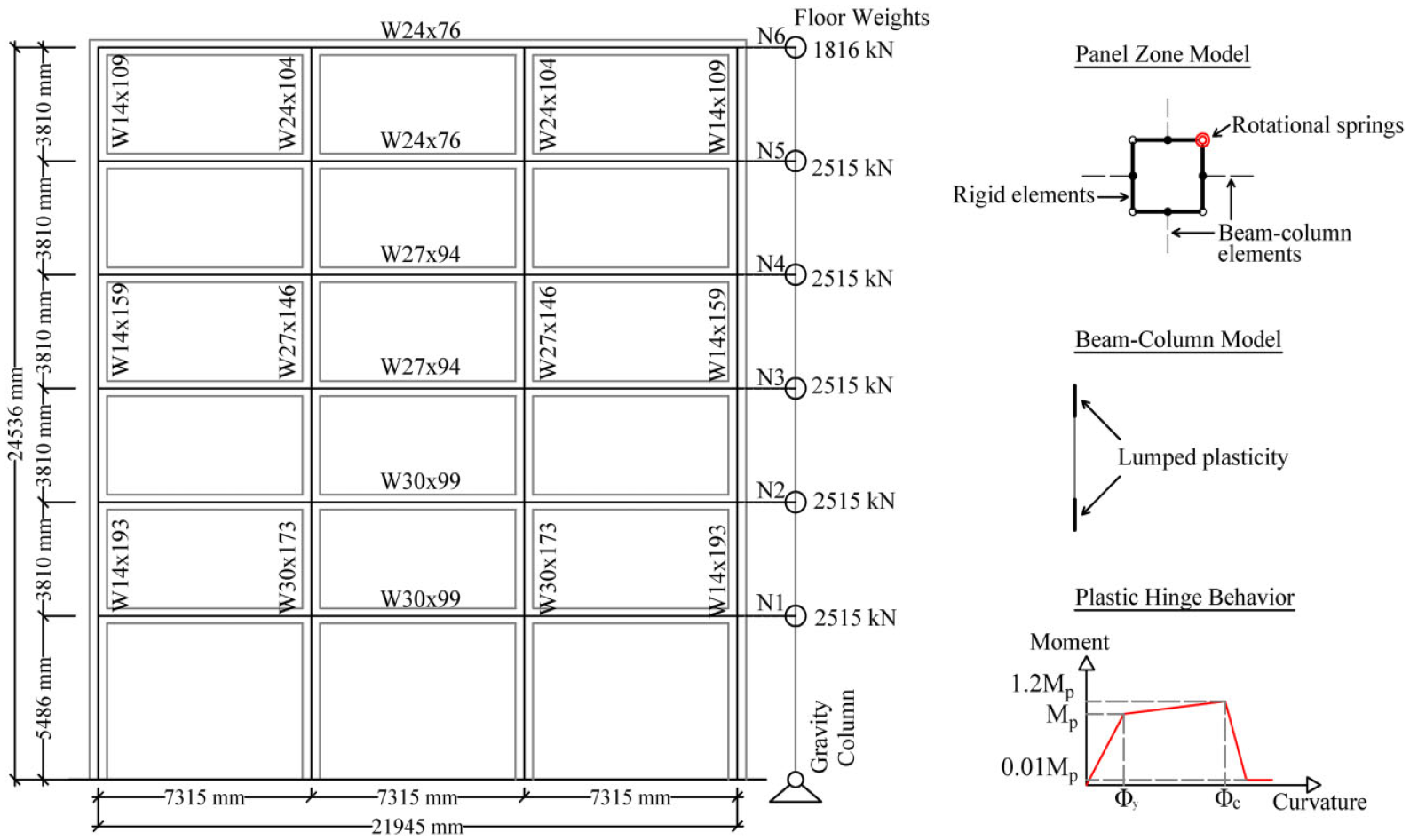
As-built configuration of the case study building.
The steel02 material and beamWithHinges command was used to model the beams and columns in OpenSees. Lumped plasticity was assumed at the ends of the beams and columns. The plastic hinges were characterized by a bilinear hysteretic behavior with a curvature strain hardening ratio of 0.02 and their length was set equal to 90% of the associated member depth. To capture the potential failure of the beam–column connections and explicitly model sideway collapse of the archetype frames, a flexural strength degradation model was introduced at the end of the column and beam elements. This model reduces the flexural strength of the elements to 1% of its initial value once a plastic rotation of 0.03°radian is exceeded (Figure 1). The beam–column joints were assumed to be brittle, characteristic of the seismic design practices prevalent prior to the Northridge earthquake. The panel zones of the beam–column connections were modeled by following the procedure suggested by Gupta and Krawinkler (1999), in which a series of rigid pin connected elements compose the panel zone and all the shear deformations are concentrated in a plastic rotational spring in one of the corners. The effect of interior gravity columns was captured using a leaning gravity column and 2% Rayleigh damping was applied to the first and second modes of vibration.
The SCBRB considered in this study is based on the prototype developed by Miller et al. (2012). The design is depicted in Figure 2a. This brace consists of a central BRB core, SMA tendons, middle and outer tubes, and an inner tube within the BRB core to prevent buckling of the steel core. Notably, the SCBRB developed and tested by Miller et al. (2012) utilizes pre-tensioned superelastic nickel-titanium (NiTi) SMA to provide self-centering. Miller et al. (2012) found that the SCBRB prototype had significant load carrying capacity even after fracture of the BRB core, which demonstrates the inherent redundancy of SMA rods. When implemented in concentrically braced frame systems as exemplified in Figure 2b, it is expected that peak drifts and ductility demand during earthquakes show an elastic-perfectly-plastic behavior, demonstrating the excellent energy dissipation and equivalent viscous damping of SCBRBs. In an analytical study, Eatherton et al. (2014b) showed that SCBRB frame buildings experience virtually no residual drift (RD) even if the bracing system does not have full self-centering ability.
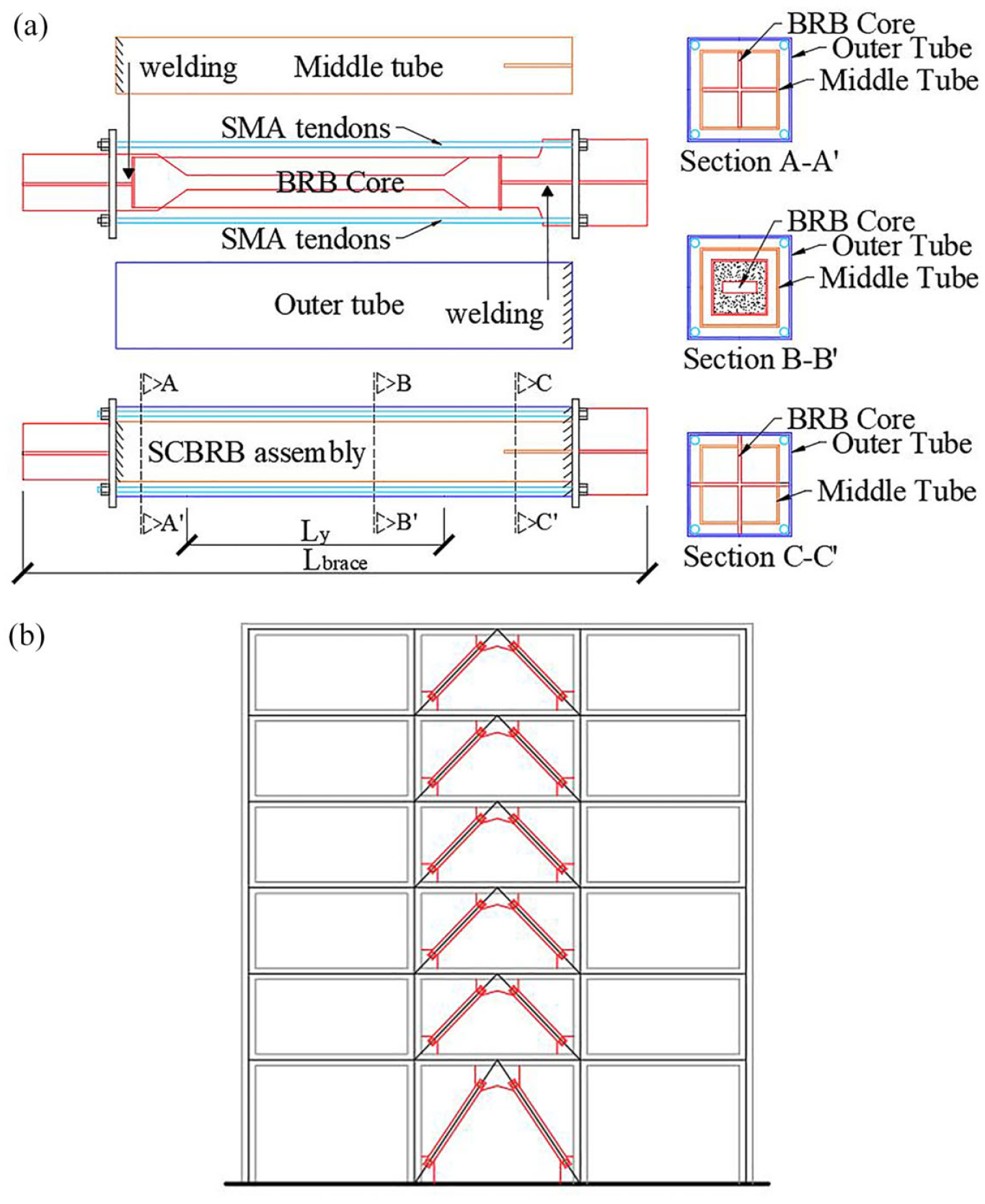
(a) SCBRB prototype, (b) retrofitted building configuration.
This SCBRB retrofit strategy shown in Figure 2b is a promising solution for mitigating the seismic deficiencies in the case study building (Figure 1). Specifically, whereas the non-ductile moment connections can lead to undesirable failure mechanics and large permanent deformations, the SCBRB system offers superior stiffness and self-centering capabilities. Given the symmetrical configuration of the building, the SCBRBs are strategically positioned in the middle bay in this study.
SCBRB design
The equivalent lateral force procedure outlined in ASCE 7-16 (American Association of Civil Engineering (ASCE), 2017) was used to determine the seismic loads and design the SCBRBs. This approach aligns with the methodology employed by Eatherton et al. (2014a). Equation 1 was used to estimate the fundamental period of vibration (Ta) of the structure where Ct and x are building period coefficients set as 0.0731 and 0.75, respectively, for steel buckling-restrained braced frames (ASCE, 2017). The variable hn denotes the total height of the building taken as 24,536 mm (Figure 1):

The estimated fundamental natural period of was 0.81 s. The design spectrum for Los Angeles, considering soil type Dmax with SDS = 1.0 and SD1 = 0.6, was selected for the SCBRB design. This design spectrum reflects medium-high seismicity. For the design response acceleration obtained from the design spectrum, response modification factor R = 8, and importance factor Ie = 1.0, the seismic response coefficient Cs was estimated as 0.093 (ASCE, 2017). In ASCE 7-16, R = 8 is reserved for the most ductile systems, including conventional BRB frames. A separate response modification factor is not specified for SCBRBs, but R = 8 has been commonly used in the literature for SCBRB frames (Eatherton et al., 2014a; Qing et al., 2021). Zhang et al. (2018) investigated the impact of several design factors for self-centering steel frame systems and concluded that R = 8 is reasonable for their design. These factors yield a design base shear force (Vs) of 1332.5 kN. It was assumed that the concentric bracing system carries 75% of the seismic action (999.4 kN) while the moment-resisting frame resists the remaining 25% (333.1 kN). This seismic action is then distributed across each floor as described in ASCE 7-16 (ASCE, 2017). The axial force in each brace was then determined from statics.
The detailed design of the SCBRBs is based on the seismic design provisions in ANSI/AISC 341-16 (AISC, 2016). The factored axial capacity of the brace

where ϕ = 0.9 and the factored axial capacity

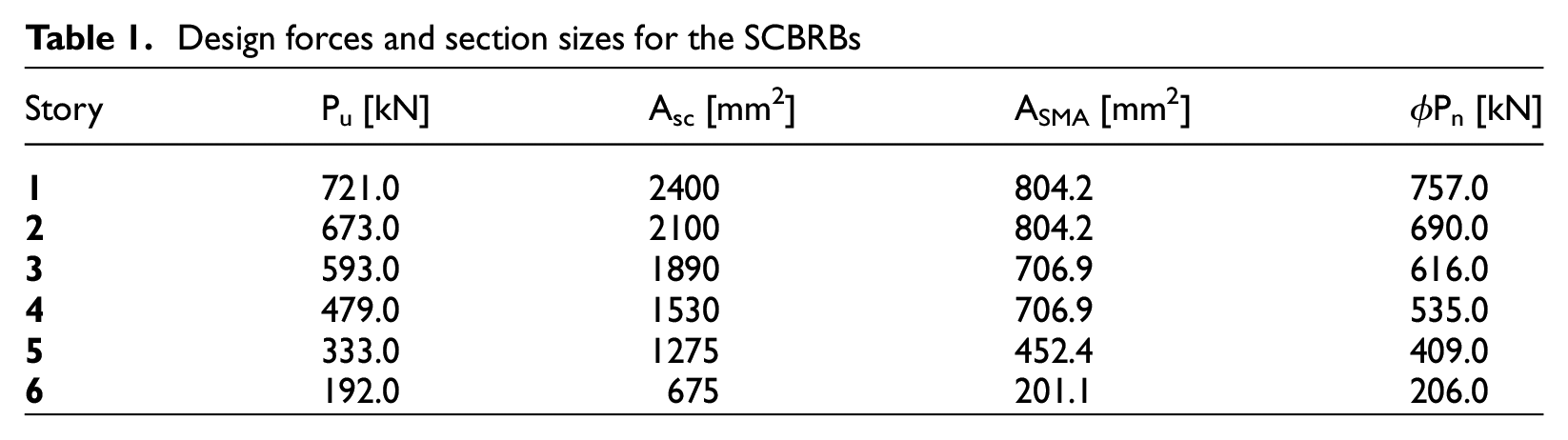
The parameters β and ω correspond to SCBRB yielding and strain hardening while αsc is the self-centering ratio which defines the separation between the initial SMA pretension force and the strain hardened SCBRB steel core force. Adopting values from Miller et al. (2012), β and ω were taken as 1.2 and 1.3, respectively, and the self-centering ratio αsc = 1.0. The SMA initial stress (FSMA) and BRB yield stress (Fsy) were taken as 300 and 250 MPa, respectively, based on properties reported in Vasudha and Rao (2020), and Miller et al. (2012). The required cross-sectional area for the steel core (Asc) and SMA (ASMA) were determined using the expressions provided in Miller et al. (2012). For this analytical study, sections for the inner, middle, and outer tubes in the SCBRB system were not explicitly detailed since these are designed to remain elastic and buckling is prevented. These sections can be easily designed following the methodologies established by previous studies, such as Eatherton et al. (2014a), Lin and MacRae (2012), and Takeuchi and Wada (2018). Table 1 summarizes the design forces, required cross-sectional areas for the SCBRB core, and superelastic SMA cross-sectional area required for the tendons.
Design forces and section sizes for the SCBRBs
SCBRB modeling
To simulate the behavior of SCBRBs in OpenSees, their two primary actions, energy dissipation and self-centering, were modeled separately and then combined as two springs acting in parallel. This is illustrated in Figure 3. The self-centering behavior was modeled using an elastic-bilinear material. The initial stiffness of this material is derived from both the middle and outer steel tubes and the SMA tendons. However, when the internal force in the brace surpasses the prestressed SMA force (i.e. PSMA), the stiffness of the SMA material takes over. The prestressed SMA rods allow the brace to return to its original undeformed configuration upon unloading. Energy dissipation is primarily provided by the yielding of the steel core. This was modeled using an elastoplastic material.
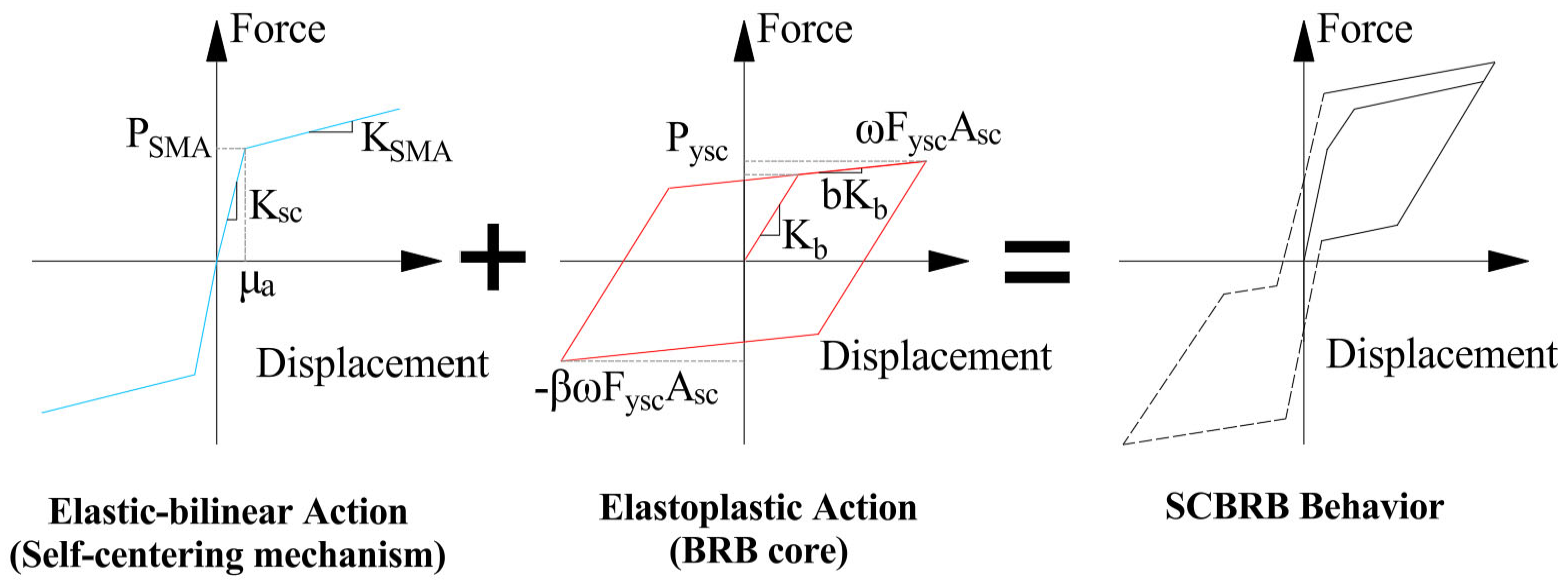
SCBRB model.
The total stiffness of the BRB (Kb) was estimated using the simplified relationship developed by Nippon Steel Engineering (n.d.), shown in Equation 4. This equation takes into account the yielding length (Ly) and the steel modulus of elasticity (Es). The total stiffness of the BRB depends on not only the yielding core but also the elastic regions (FEMA, 2011a). The factor of 0.83 in Equation 4 provides a close approximation of the stiffness contributions from the elastic regions of the BRB:

The initial stiffness of the SCBRB assembly (Ksc) is a result of the stiffness provided by the middle and outer tubes (Kmind and Kout) and the stiffness of the prestressed SMA (KSMA). These parameters can be determined from Equations 5 and 6, respectively. The modulus of elasticity of the SMA (ESMA) was adopted as 30 GPa which is in line with Miller et al. (2012).
As the brace undergoes deformation, the stiffness of the device decreases once the prestressing force of the SMA (PSMA) is exceeded, or when the deformation in the brace exceeds μa, as described in Equation 7. As shown in Figure 3, μa corresponds to the point at which the stiffness of the brace is solely governed by the restoring action of the SMA tendons, meaning that the self-centering mechanism has been activated:



In the case of the steel core of the brace, it begins to absorb energy once the core yields and undergoes plastic deformations. The post-yield stiffness of the brace core captured by coefficient b in Figure 3 was assumed to be 10% of the initial stiffness. The overall behavior of the braces agrees well with the experimental results from Miller et al. (2012) as observed in Figure 4a. Figure 4b shows the hysteretic behavior of the designed SCBRBs. The brace demonstrates effective energy dissipation with low residual deformation.
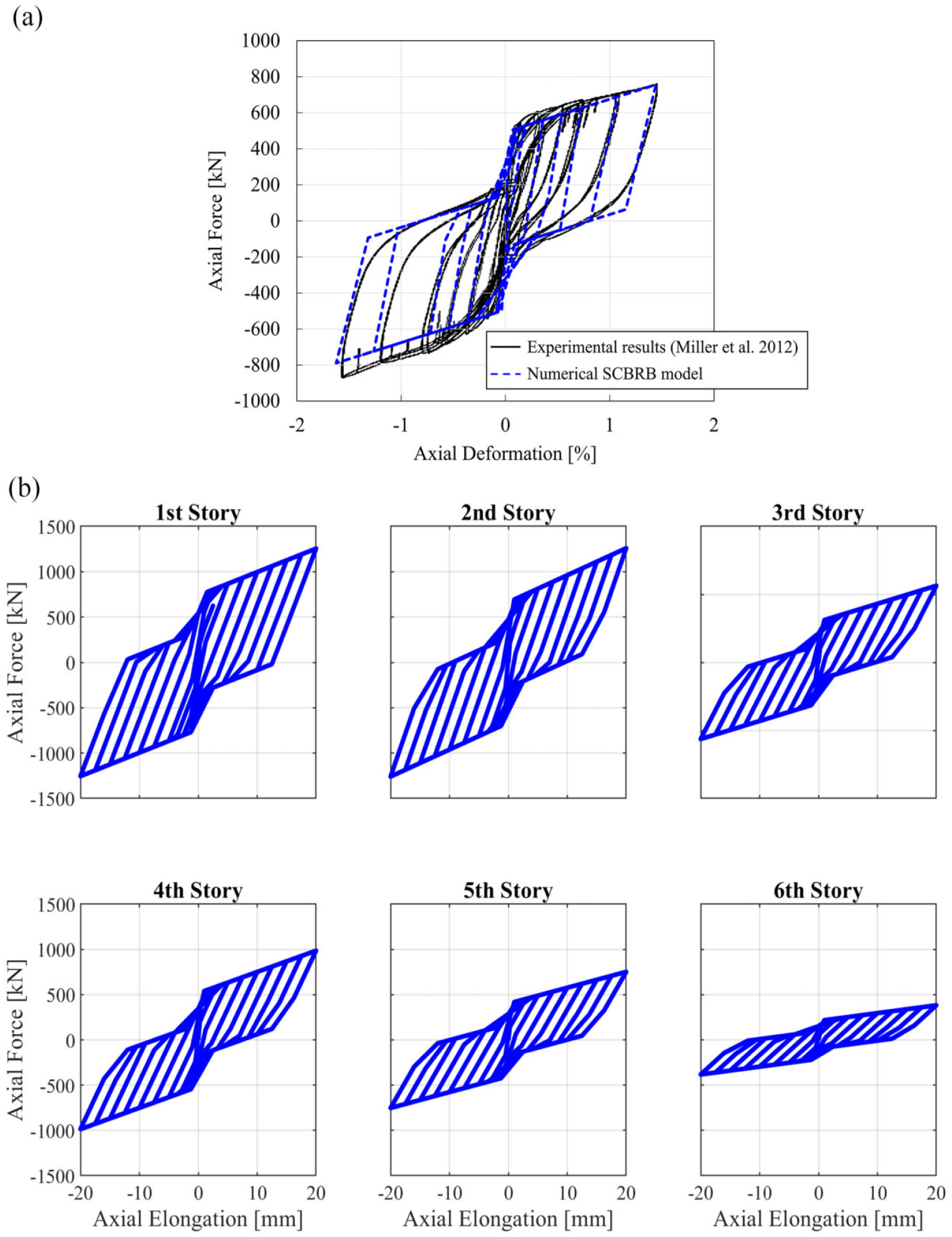
Hysteretic behavior of SCBRB, (a) simulated SCBRB behavior compared to the experimental results of Miller et al. (2012), (b) SCBRB designed for each story of case study building.
Non-structural elements
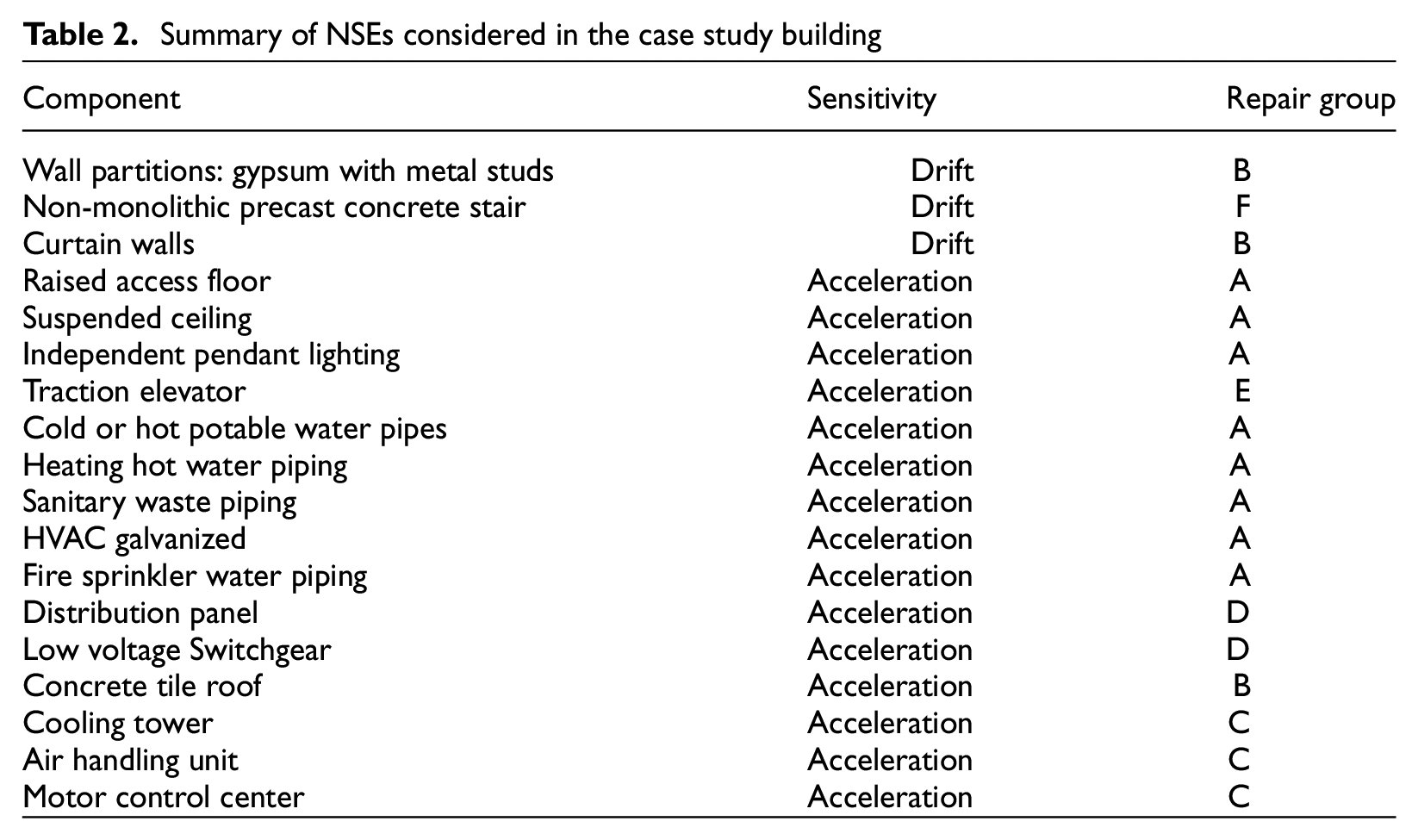
Damage to NSEs can account for a substantial portion of the total building replacement cost after an earthquake. Structural components typically comprise 15% to 25% of the construction cost of a typical mid-rise building, with the remaining 75% to 85% attributed to NSEs (FEMA, 2011b). Furthermore, damage to NSEs can account for up to 80% of the total financial losses in buildings in an earthquake event (Miranda and Taghavi, 2003). NSEs can be categorized based on the seismic demand parameter to which they are sensitive to. Drift-sensitive NSEs are those elements susceptible to floor displacement or drifts. Damage to these elements is closely linked to the story drift. Examples of drift-sensitive NSEs include wall partitions and glass facades, both of which are particularly sensitive to displacement (Merino et al., 2019). Acceleration-sensitive NSEs are primarily influenced by inertial forces resulting from horizontal and vertical accelerations experienced by the supporting structure. Examples of acceleration-sensitive NSEs include pipe systems, ceiling systems, as well as anchored or free-standing mechanical equipment (Merino et al., 2019). Almufti and Willford (2013) further categorize common NSEs into repair groups. These are interior repairs (A), exterior repairs (B), electrical repairs (C), mechanical repairs (D), elevator repairs (E), and stair repairs (F). Table 2 lists key NSEs considered to be a part of the case study building in this study as identified in Appendix C of Chalarca (2022).
Summary of NSEs considered in the case study building
Seismic assessment
Ground motion records
A set of 20 ground motion records provided by FEMA P695 (FEMA, 2009) was chosen for conducting time history analyses. These 20 records include 10 far-field motions, 5 near-field motions with no pulse, and 5 near-field motions with a pulse-like characteristic. The ground motions were scaled such that the median spectrum corresponds to the ASCE 7-16 design spectrum for the city of Los Angeles with a 10% probability of exceedance in 50 years. Figure 5 shows the 20 scaled records.
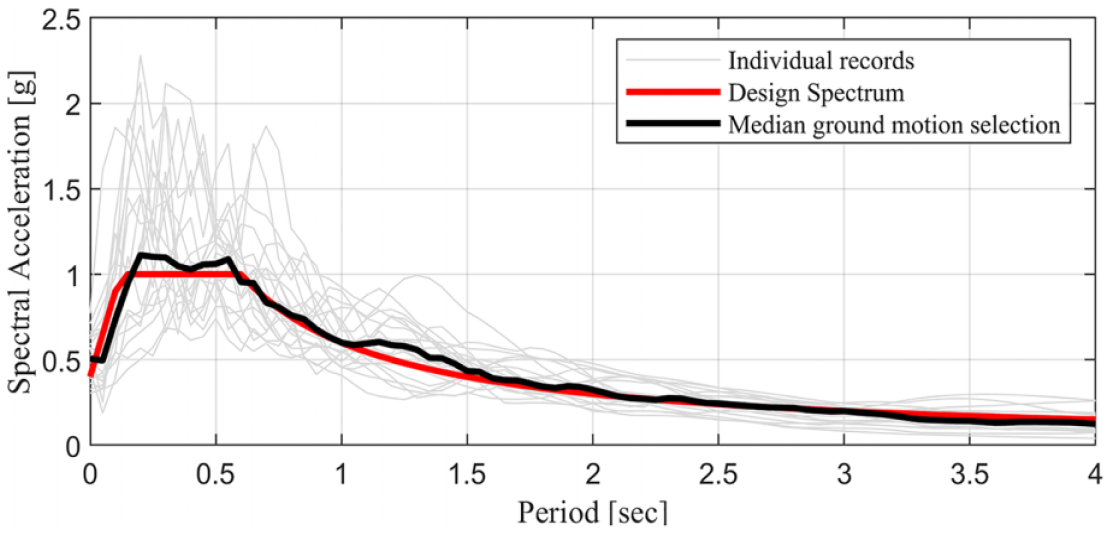
Ground motion records used for time history analyses.
System-level seismic demand
Figure 6 provides an overview of key seismic demand parameters, including PFA, peak story drift (PSD), and RD, obtained from the set of 20 ground motions. Each plot also includes the median demand.
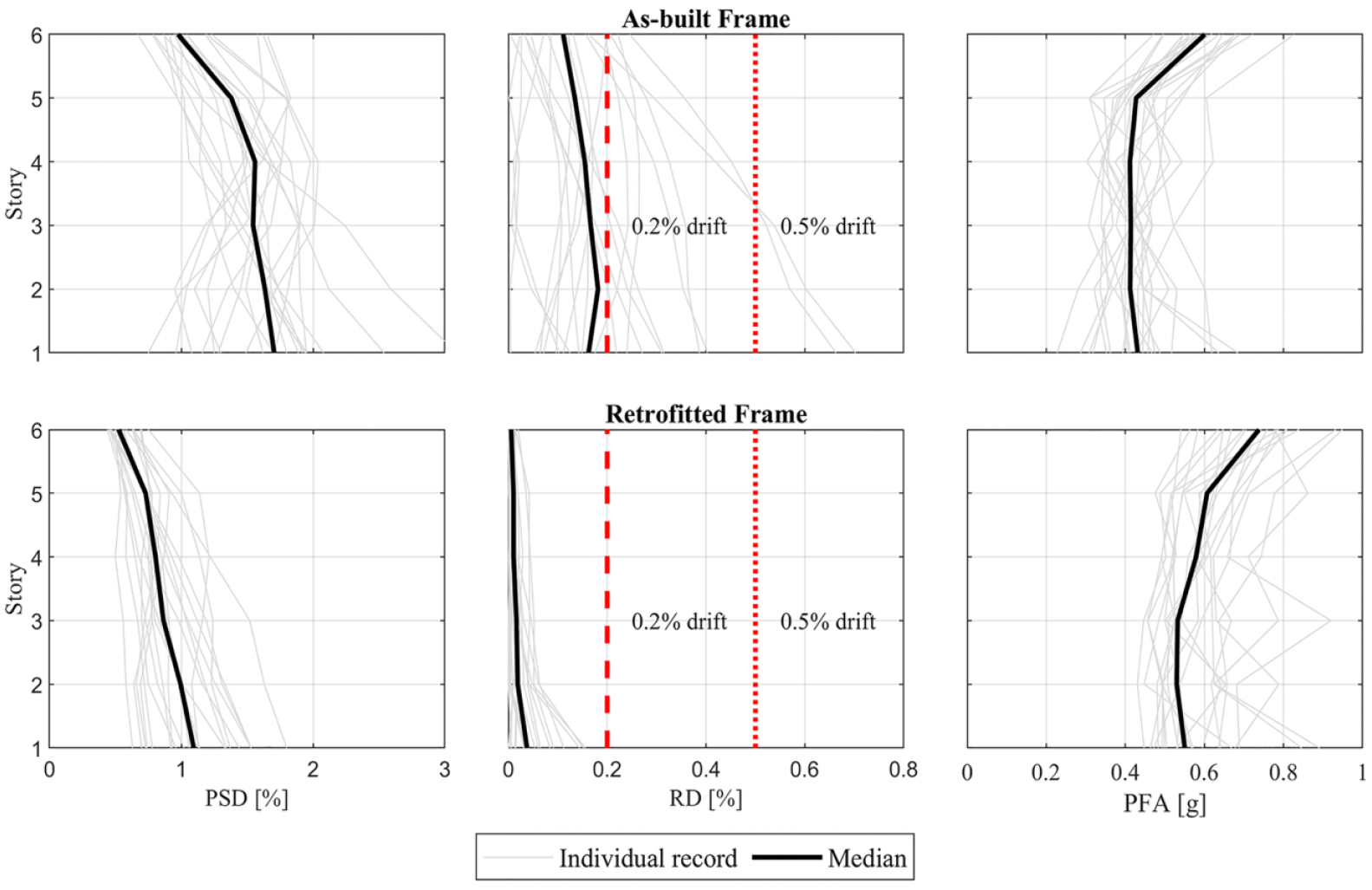
Seismic demand parameters.
As observed in the PFA profiles, larger floor accelerations are anticipated at the top story of the as-built frame. This higher demand has a direct impact on the seismic performance of acceleration-sensitive NSEs located at this story (e.g. electrical or mechanical equipment, piping systems, and ceiling components). The median PFA is relatively constant between the first and fifth stories of the as-built frame with a magnitude around 0.4 g which is not sufficient to cause damage to acceleration-sensitive NSEs. Damage states for drift- and acceleration-sensitive NSEs defined by Ramirez and Miranda (2009) are summarized in Table 3. In comparison, the median PFA observed at the top floor is significant enough to cause moderate damage to acceleration-sensitive NSEs.
Damage state definitions for NSEs (Ramirez and Miranda, 2009)
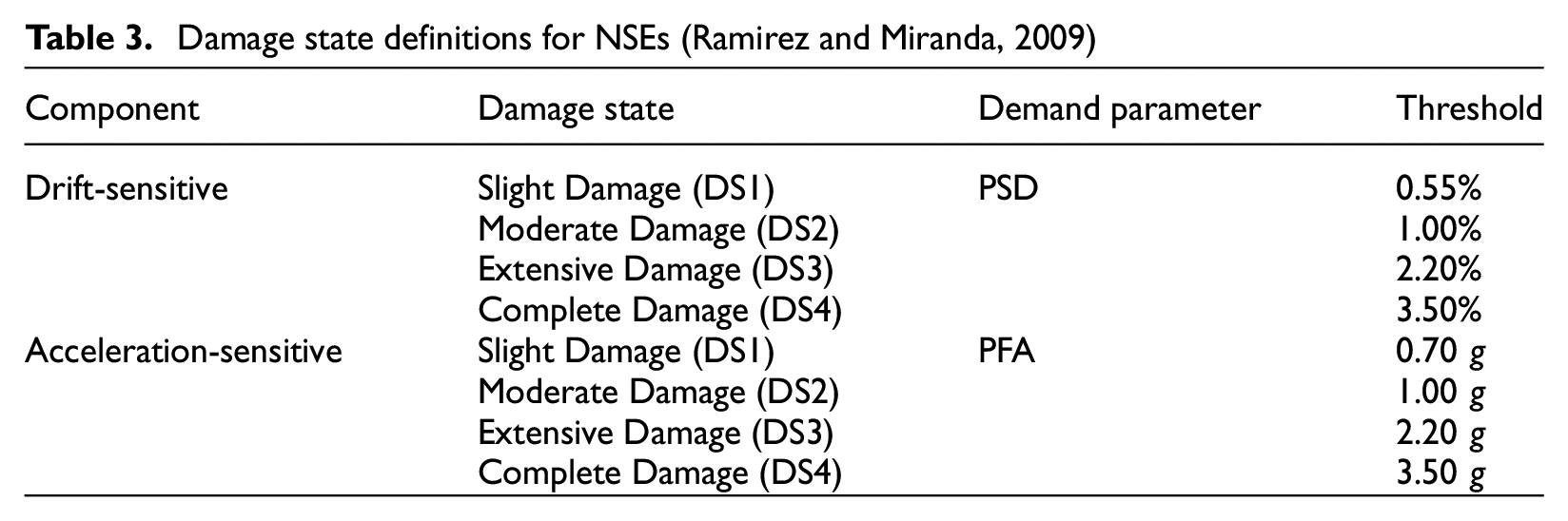
In the case of PSD, lateral deformations are concentrated at the first story, indicating a soft-story mechanism. This behavior was commonly observed in steel frame buildings predating the Northridge Earthquake (ATC, 1994). Large story drifts are induced in the structure, indicating that some structural elements have exceeded yielding deformation capacity and/or deformation associated with the maximum strength, followed by strength and stiffness degradation. Most of the ground motions in the suite resulted in PSDs ranging between 1% and 2%, suggesting potential for slight to moderate damage to drift-sensitive NSEs. In a few instances, story drifts exceeded 2% in the as-built building which can potentially cause moderate to extensive damage to drift-sensitive NSEs. Ground motion records producing the largest PSDs were found to have high spectral accelerations in the plateau range of the design spectrum (Figure 5), which suggests greater influence from short periods of vibration.
RD of 0.2% is commonly adopted as the allowable out-of-plumb limit (FEMA, 2012a) for steel structures and is typically associated with minor structural damage and repairs to NSEs. RD of 0.5% is known as the repairability limit (FEMA, 2012a) which is the threshold at which structural repairs are still considered economically viable compared to demolition and reconstruction. For buildings exhibiting RDs greater than 0.5%, structural repair is generally not economically justifiable. About 10% of the ground motions (2 out of 20) considered in this study caused RD in the as-built building to exceed 0.5%, and half of the records (10 out of 20) resulted in the building exceeding the out-of-plumb limit of 0.2%. Ground motion records causing the repairability limit to be exceeded had noticeably higher spectral accelerations in the plateau period range of the design spectrum (Figure 5). The fundamental period of vibration of the as-built frame is 1.51 s, with the second and third vibration modes having periods of 0.51 and 0.27 s, respectively. As shown in Figure 5, the spectral accelerations corresponding to the fundamental period are lower compared to those associated with the second and third modes, where spectral accelerations are significantly larger. This suggests contributions from higher modes may be significant in the as-built building.
The introduction of SCBRBs into the building has a noticeable effect on the seismic response and expected damage levels. The greater stiffness and structural capacity of the SCBRB system reduces structural deformations and inelastic demand. Notably, RD is significantly reduced with the out-of-plumb limit (0.2%) never being exceeded under any of the considered ground motions. The maximum RD was generally observed in the first story but did not exceed 0.16%. The addition of SCBRBs also reduced the PSD by up to 60% compared to the as-built frame which suggests damage to NSEs susceptible to lateral displacements (e.g. partition walls, ceiling system, windows, exterior walls or façade) would be relatively minor. These are significant performance improvements that underscore the potential benefits of implementing SCBRBs as a seismic retrofit measure in aging moment-resisting frame buildings. In contrast to these results, however, the median PFA increased by 20%, ranging from 0.6 to 0.8 g at the top story. The higher floor acceleration demand could considerably increase the damage to acceleration-sensitive NSEs such as the elevator system, lighting systems, and pipes.
Floor response spectra
Analysis of floor response spectra, obtained from recorded floor displacements and accelerations response time histories at each story of the building, provides valuable insight into the dynamic response of NSEs. The floor response spectra shown in Figure 7 were obtained from non-linear response history analyses as outlined in ASCE 7-16 (ASCE, 2017). Floor displacements were first extracted from the dynamic response time history of the case study building models which were then used as the input motions for the floor response spectra. These spectra represent the peak response on each floor across a range of periods for NSEs. A damping ratio of 5% was assumed for the NSEs. Commentary to ASCE/SEI 7-16 (ASCE, 2017) categorizes NSEs as flexible when their fundamental period is longer than 0.06 s and rigid when their fundamental period is shorter than 0.06 s.
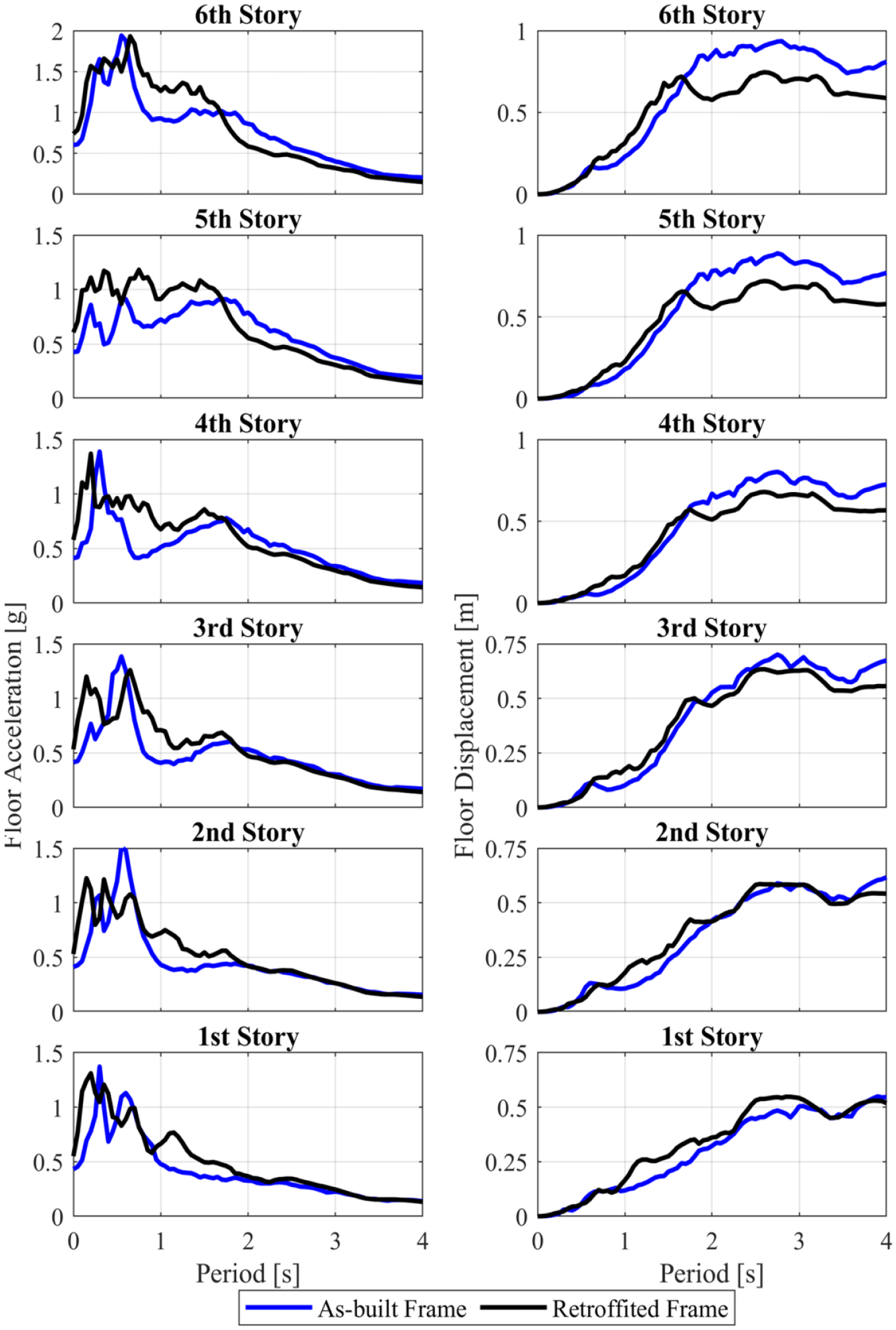
Median floor response spectra.
In the as-built building, floor spectral accelerations exceed the moderate damage state (DS2) threshold of 1 g (Table 3) in the 0.2–0.75 s period range. Acceleration-sensitive NSEs such as switchboards (fundamental period of 0.3 s (ASCE, 2017)) and transformers (fundamental period of 0.2 s (ASCE, 2017)) would be expected to sustain moderate damage in this case. Outside of this range, however, floor spectral accelerations are generally low in the as-built building. It can be seen that with the introduction of SCBRBs, floor spectral accelerations can become considerably amplified in the retrofitted building particularly for periods shorter than 0.25 s and in the 0.5–2 s period range. Greater amplification is observed at higher stories with floor spectral accelerations exceeding 1 g over a wide period range in the fifth and sixth stories which result in moderate damage to a large number of acceleration-sensitive NSEs.
Interesting observations can also be made from the floor displacement response spectra. For NSEs with fundamental period shorter than 0.5 s, floor spectral displacements are nearly identical between the as-built and retrofitted frames. In the first three stories, spectral floor displacements are slightly higher in the retrofitted frame in the 0.5–2 s period range. However, in the long period range (>2 s), floor displacements are noticeably lower in the retrofitted frame, especially at higher stories. In general, floor displacements increase over the height of the building in both the as-built and retrofitted buildings which indicates amplification effects caused by higher modes of vibration. Although floor spectral displacements are amplified in the short period range when SCBRBs are introduced, SCBRBs effectively reduce drift levels below the moderate damage threshold (Figure 6).
Loss and seismic resilience assessment
Expected economic losses
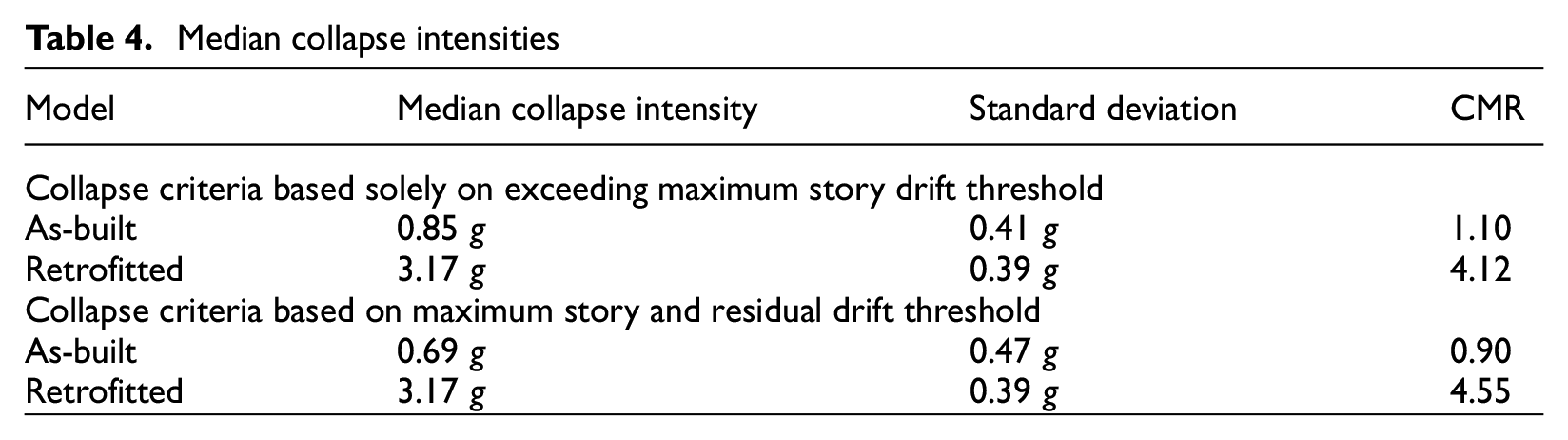
To assess losses, the probability of collapse of the building before and after SCBRB retrofitting was first determined through incremental dynamic analysis (IDA) (Vamvatsikos and Cornell, 2002). Collapse criteria were based on drift thresholds for the as-built and retrofitted frames. For the as-built frame, the drift threshold for collapse was taken to be 5% based on FEMA 356 (FEMA, 2000). This threshold was chosen in consideration of the fact that the original building was designed based on design provisions of 1994 UBC preceding the Northridge earthquake (ICBO, 1994). With the SCBRB retrofits, a higher drift of 10% was selected to define the collapse case based on previous studies (Fang et al., 2023; Zhu et al., 2021). While a 5% drift may result in SMA tendon rupture in the SCBRB which would compromise the self-centering ability, it is assumed that this will not compromise the overall building stability. Table 4 presents the median collapse intensities and standard deviation of record-to-record variability for both buildings obtained through a lognormal distribution and maximum likelihood approach (Baker, 2015). These values characterize the probability of structural collapse used to develop collapse fragility functions. Only the maximum drift criterion was used to define the collapse vulnerability of the buildings and in the subsequent loss assessments. However, it is interesting to note that if RD is also introduced as a collapse criterion, the number of collapse cases in the as-built building increases by 20% while it remains unchanged in the retrofitted building highlighting the effectiveness of the SCBRB retrofit. The table also includes the collapse margin ratio (CMR) defined as the ratio of the median collapse intensity to the spectral acceleration of the Maximum Considered Earthquake (MCE) ground motion (SMT) which is 0.77 g for the selected seismicity location. The CMR provides insights into a building’s collapse vulnerability. A structure is considered safe against collapse when this ratio is greater than 1.0. For the as-built frame, the CMR is close to 1.0 while it is significantly greater than 1.0 for the retrofitted building, indicating a considerably lower probability of collapse. The collapse fragility curves are shown in Figure 8.
Median collapse intensities
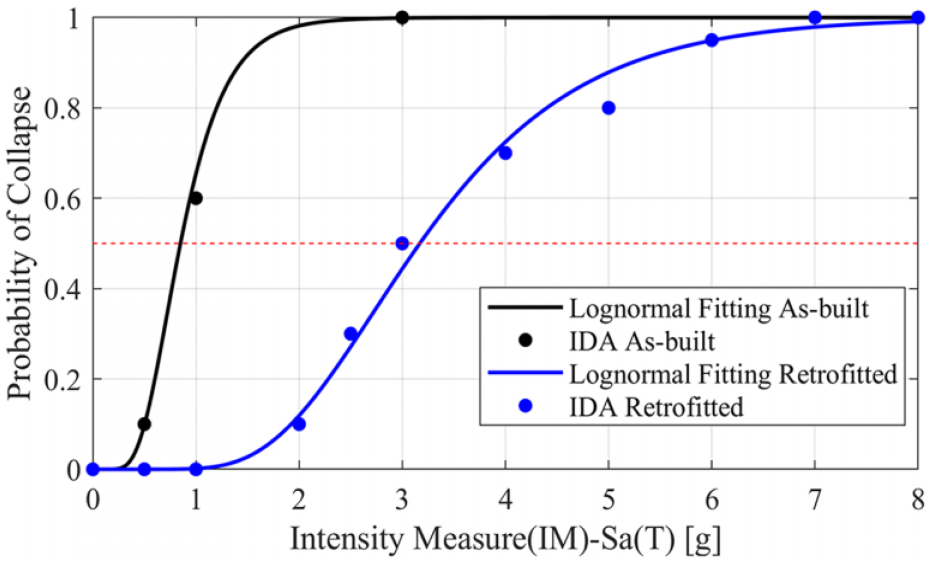
Collapse fragility of the as-built and retrofitted building using maximum story drift threshold as collapse criteria.
The loss assessment was conducted using the PACT (FEMA, 2012b) software for a total of 200 realizations of damage states from a Monte Carlo simulation. The total replacement cost of the building was estimated to be $13 million in 2022 US dollars based on the work of Chalarca (2022). The cost of the SCBRB retrofits was not included in the total replacement cost to focus the comparison on expected losses associated with damage to the existing structure and NSEs. The outcomes of the collapse assessment (median collapse intensity and standard deviation) are used to obtain the collapse and non-collapse cases in the Monte Carlo simulation. Since the standard deviations presented in Table 4 correspond to record-to-record variability, a variability of 0.15 was adopted as the modeling uncertainty and the total variability was obtained from a square root of sum of squares approximation (FEMA, 2012a). When the simulation results in a collapse, the expected economic loss is the total replacement cost of the building. For a non-collapse case, the expected loss is associated with the level of structural and non-structural damage realized in the simulation.
Fragility and consequence functions for the NSEs in the case study building were adopted from the FEMA P-58 database (FEMA, 2012a, 2012b). All structural and non-structural components considered for the loss estimation analysis (listed in Table 2) and the fragility functions adopted from the library of PACT can be found in Appendix C of Chalarca (2022). Curtain walls, concrete tile roof, wall partitions, raised access floor, suspended ceiling, independent pendant lighting, prefabricated steel stairs, and traction elevator which applies to most California installations prior 1976 (FEMA, 2009) are the most significant NSEs in the case study building by volume. The results of the loss assessment are summarized in Figure 9a. The total expected financial loss is $1,360,000 in the as-built case and $890,625 for the retrofitted building, 10.5% and 6.9% of the total replacement cost of the building, respectively. Figure 9b shows a breakdown of how much each building component contributes to the losses according to the repair sequence groups (Table 2). Typical components constituting the interior repair group (A) are partition walls, ceiling systems, piping systems, HVAC systems, and lighting systems. Exterior repairs (B) include NSEs such as windows, exterior closing, or façade, whereas transformers, distribution panels, and motor control center are considered part of a group of electrical repairs.
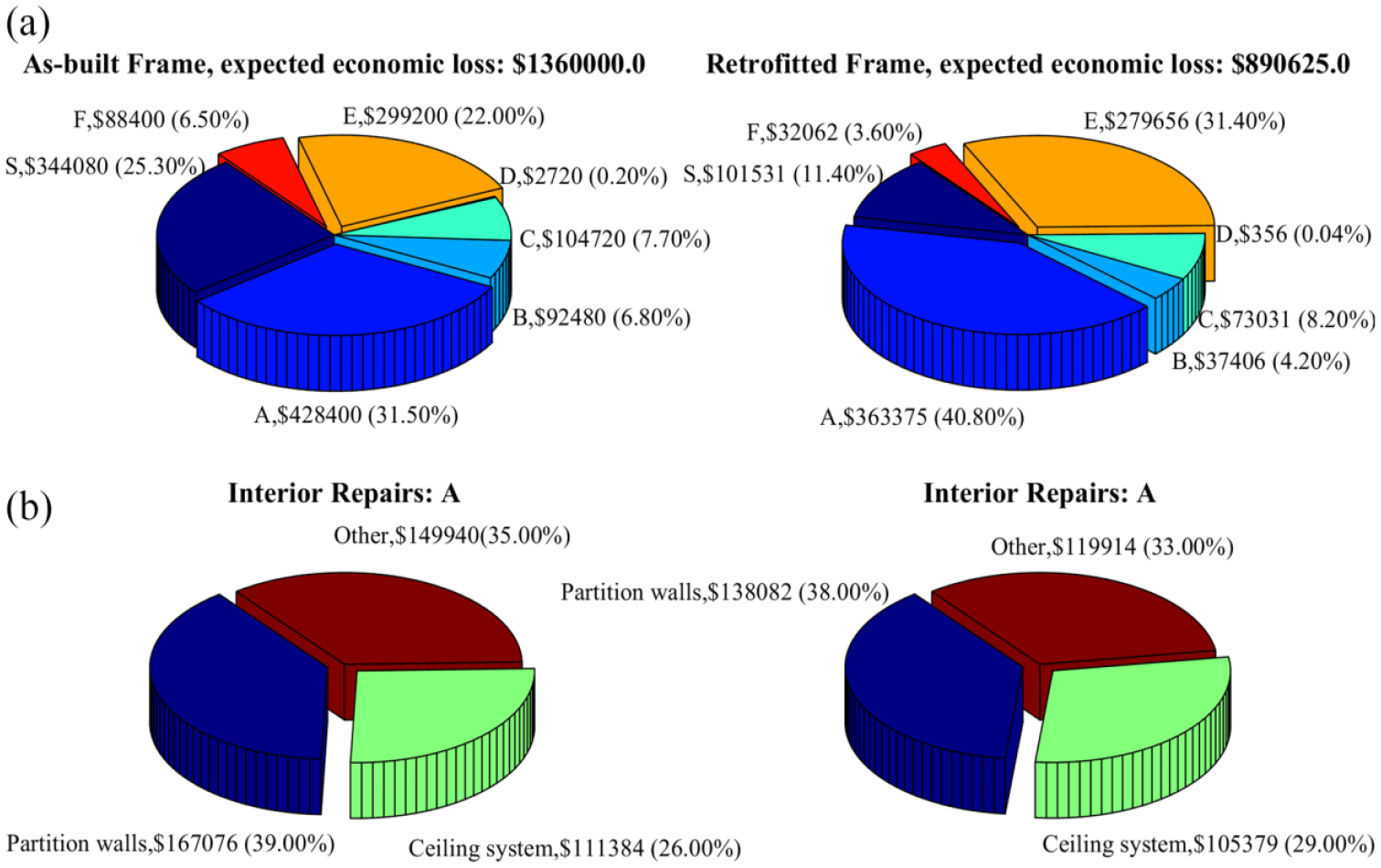
(a) Breakdown of expected losses categorized in terms of repair groups, (b) interior repairs.
As expected, the SCBRB retrofit considerably reduces losses associated with structural damage (S) from $344,080 (25.3% of total losses in the as-built building) to $101,531 (11.4% of total losses in the retrofitted building). Furthermore, as a result of SCBRBs significantly reducing lateral displacement, losses associated with drift-sensitive NSEs, including exterior repairs (B), electrical repairs (C), mechanical repairs (D), and stair repairs (F), are also considerably reduced. Losses attributed to these components amounted to $288,320 in the as-built building (21.2% of total losses) but was reduced by nearly 50% to $142,855 in the retrofitted building (16.04% of total losses). In comparison, with the SCBRBs leading to marked increases in floor accelerations in the retrofitted building (Figure 7), losses associated with damage to acceleration-sensitive interior components (A) and the elevator system (E) were only marginally reduced. The estimated losses due to damage to interior components (A) was $428,400 in the as-built building and $363,375 in the retrofitted building. Elevator repairs costs are nearly identical at $299,200 and $279,656 in the as-built and retrofitted buildings, respectively. Interior repairs have the most significant contribution to economic losses, and it is known that damage to interior components (e.g. ceiling systems, pipe systems, and HVAC) can delay the functional recovery of a building after an earthquake (Almufti and Willford, 2013). From Figure 9, it is highlighted that partition walls and ceiling system are the NSEs contributing the most to the financial losses of interior repairs, with a contribution of 39% and 26%, respectively. Similarly, these NSEs constitute 38% and 29% of the losses in the retrofitted building respectively.
Improving the seismic performance of NSEs
The response simulation and loss assessment showed that interior repairs, particularly partition walls and ceiling systems are likely to have the largest contribution to losses in both the as-built and retrofitted buildings. In addition, considering the importance of accessibility to post-earthquake functional recovery post-earthquake (Almufti and Willford, 2013), improving the seismic performance of stairs and elevators in the building is also crucial. Therefore, it was determined that minimizing the damage to these specific NSEs is imperative to enhancing the overall seismic resilience of the structure. It is worth noting that while electrical repairs (C) are integral to building functionality, their contribution to economic losses is relatively low compared to interior repairs (Figure 9), suggesting relatively minor damage. Consequently, these components were not prioritized for subsequent analyses.
Based on the floor response spectra in Figure 7, it is possible to estimate the seismic demand on each NSE. By analyzing the seismic demand, retrofitting measures such as those outlined in FEMA E-74 (FEMA, 2011b) can be strategically implemented to improve the seismic performance of these NSEs. Figure 10 shows common retrofitting measures for partition walls, ceiling systems, and stairs described in FEMA E-74 (FEMA, 2011b).
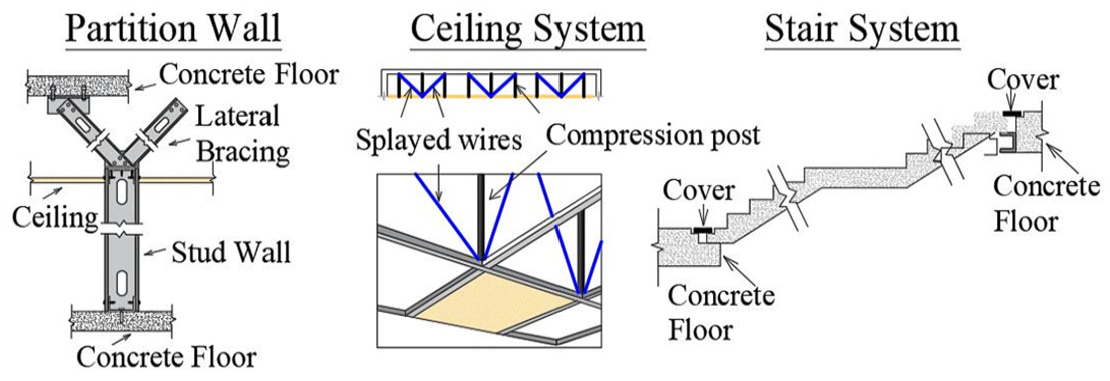
Common retrofitting techniques for partition walls, ceiling systems, and stairs (FEMA, 2011b).
The retrofit measure for partition walls entails installing stud braces spaced at 1.2–2.4 m to help resist lateral loads more effectively. In the case of the ceiling system, a simple retrofit is to add lateral bracing and supplementary hanger wires. For stairs, introducing slots to allow the unrestricted sliding of the stringer can enhance their seismic performance and safety (FEMA, 2011b). Table 5 presents three NSE simple retrofit scenarios. The scenarios address specific NSE groups categorized by whether they are drift-sensitive or floor acceleration–sensitive. For the elevator system, it is assumed that the existing traction elevators are replaced with hydraulic elevators which are known to have superior seismic performance (FEMA, 2012b). The expected performance of the retrofitted NSEs was adopted from the PACT library (FEMA, 2012b).
NSE retrofit scenarios
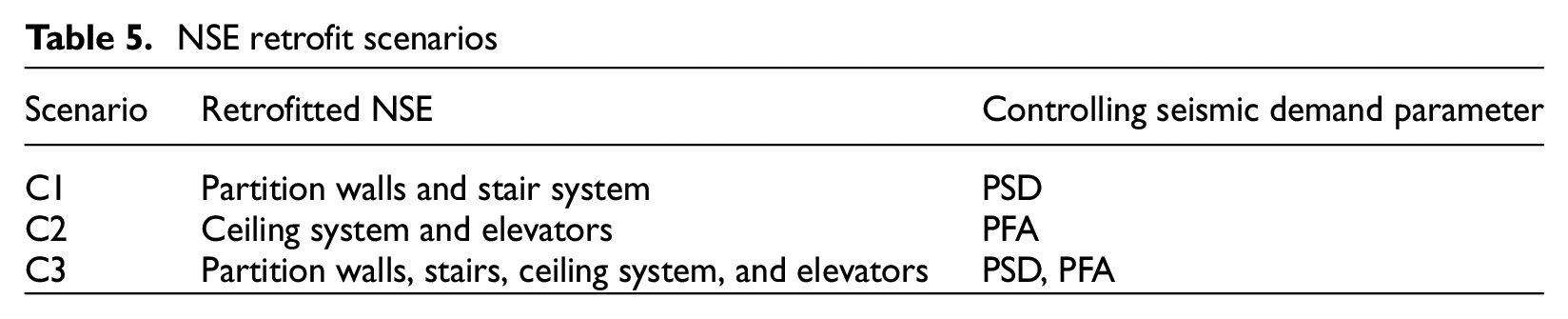
Figure 11 shows the expected economic losses represented as a percentage of the building’s replacement cost before and after the SCBRB structural upgrade, and after both the structural and NSE upgrade scenarios are implemented. As observed in the previous section, the SCBRB system considerably reduces expected economic losses by a total of 34.5% with a large portion of this reduction attributed to decreased lateral displacements resulting in structural damage mitigation. In the case of the NSE retrofitting strategies, implementing C1 in addition to the SCBRBs reduces losses by 42.3% compared to the as-built frame. C2 achieves an even more substantial loss reduction at 49.9%, and the most significant drop is accomplished by C3, with a 56% reduction in losses.
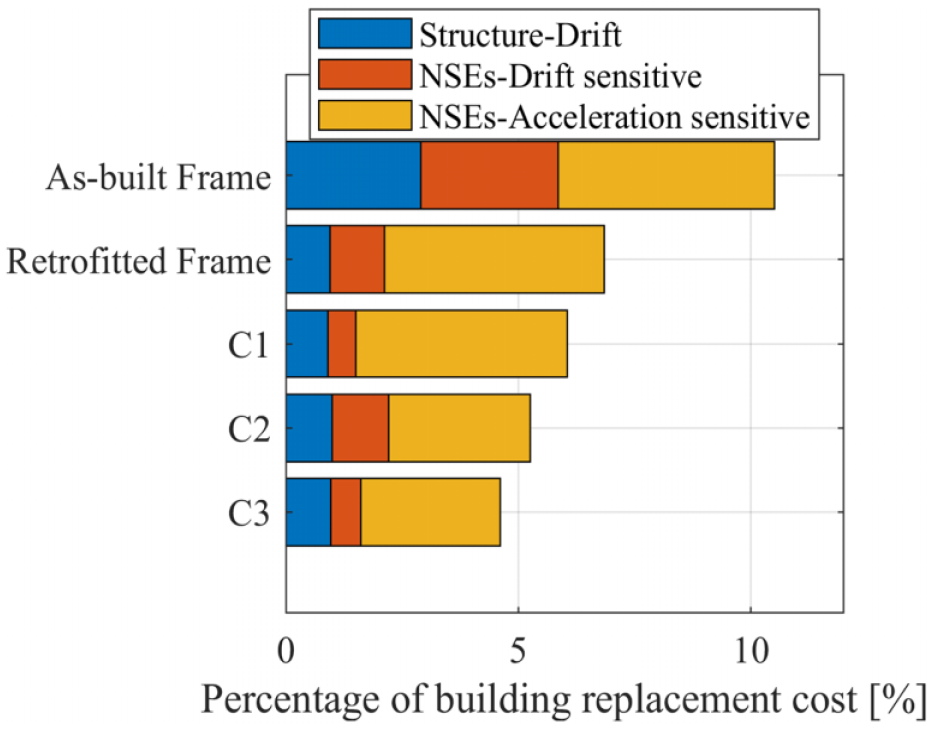
Expected economic losses considering seismically improved NSEs.
The enhanced seismic performance provided by C2 and C3 is evident when compared to the as-built frame and shows that majority of the losses can be attributed to acceleration-sensitive NSEs. Retrofit scenario C1 does not yield a similar level of loss reduction as C2 and C3 because it only addresses drift-sensitive NSEs which have a relatively lower contribution to the overall losses. It is also worth noting that even after retrofitting the select acceleration-sensitive NSEs, acceleration-sensitive NSEs are still the largest contributor to the total economic losses. In comparison, improving the seismic behavior of select drift-sensitive NSEs in C1 and C3 reduced associated losses by nearly 50% compared to the case with only the SCBRBs.
Functionality curves
In addition to estimating losses, functionality curves were also developed to assess the resilience of the building before and after the SCBRB seismic retrofit and the non-structural upgrades described above. Functionality curves depict how a structure gradually restores its normal operation activities over time and provide a visual representation of seismic resilience. A typical functionality curve is shown in Figure 12 where damage sustained in an earthquake is shown as a sharp initial drop in functionality. The extent of this loss of functionality depends not only on damage to the structural system but also on the NSEs. A building is considered 100% functional when it incurs no expected financial losses and is completely non-functional if it reaches 0% functionality or when losses equal 100% of the replacement cost.
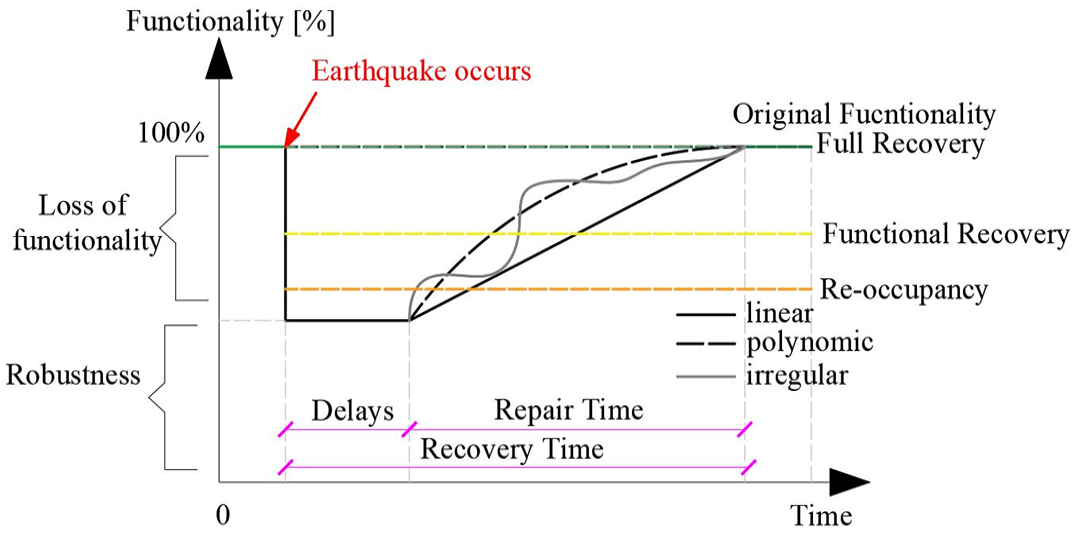
Sample functionality curve with various recovery patterns.
As shown in Figure 12, the post-earthquake recovery process can be represented as a function of time. Recovery rates are difficult to predict accurately as they are dependent on a wide range of factors, including utility disruptions (e.g. electricity, water, gas, and telecommunications) and delays associated with various impeding factors. In functional recovery, impeding factors include the time needed to complete post-earthquake building inspections, secure financing for repairs, obtain permits, attain engineering services, and mobilize contractors and equipment. Accounting for these delays is essential to accurately quantify a building’s recovery process and establish a comprehensive building repair schedule.
In this study, only the linear recovery curve was considered to provide a simple assessment and comparison of the functional recovery times. Re-occupancy of a building is generally deemed possible when it is safe enough to be used for shelter (i.e. no risk of structural collapse) even if building services (e.g. power, water, and HVAC systems) are not available. Partial functionality refers to the state where re-occupancy is established, and primary functions are partially regained such that portions of the building can be operative while it is being repaired. Finally, full recovery is assumed to be achieved when the only remaining repairs are primarily for aesthetic purposes (e.g. painting) (Almufti and Willford, 2013). The aim of the analysis in this study was to estimate the time required to full recovery considering the various structural and non-structural retrofits.
The time required to achieve full functional recovery for the case study building and various retrofit cases was estimated using the ATC-138 (ATC, 2021) framework in conjunction with the MATLAB codebase developed by Cook and Issa (2022) based on a probabilistic performance–based earthquake engineering framework. Simulations of component damage from an FEMA P-58 assessment are provided as input (i.e. PACT outputs from a loss assessment) as well as other building information such as tenant units, location, occupancy, structural and non-structural components associated with each tenant-unit. ATC-138 estimates delays associated with impeding factors for each system given the simulated damage. The MATLAB script returns the simulated impeding factors broken down as inspection, financing, engineering mobilization, design, permitting, and contractor mobilization. For this study, utility disruptions were not considered. Figure 13 shows the functionality curves for the case study building before and after retrofits.
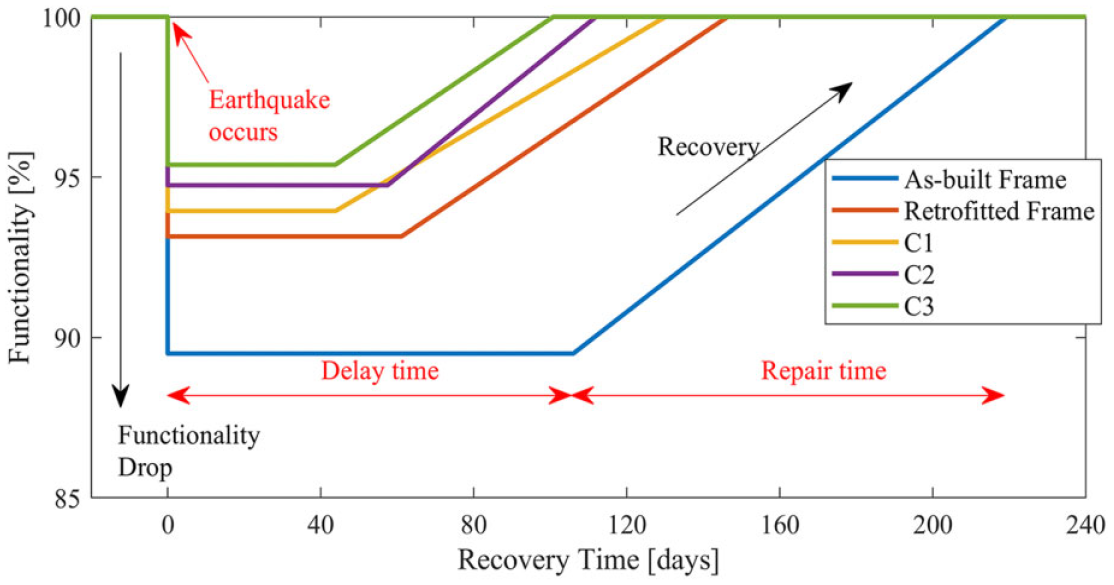
Functionality curves for the case study building and retrofit scenarios.
After an earthquake, the as-built building suffers a 10.5% drop in functionality which requires a total recovery time of over 7 months (219 days) to fully restore. Nearly 4 months of this recovery time is attributed to impedance factors while 3 months (93 days) is needed to carry out the actual repairs. Structurally retrofitting the building with SCBRBs shortens the total recovery time to under 5 months (146 days). Notably, the SCBRB retrofit drastically reduces delays due to impeding factors by 36% to 81 days compared to the as-built case.
The functionality curves also clearly demonstrate the significance of NSEs on functional recovery. Addressing drift-sensitive NSEs through retrofit scenario C1 in addition to implementing SCBRBs marginally improves the total recovery time to 130 days. The most significant improvement to the overall recovery time is observed when acceleration-sensitive NSEs are also retrofitted. When acceleration-sensitive NSEs are upgraded (scenario C2) along with the SCBRBs, the total recovery time is reduced to 112 days. This represents a 49% decrease compared to the as-built case and a 24% improvement over implementing just the SCBRBs. The estimated repair time in this case is just over 1 month (35 days) but impeding factors are expected to take slightly longer compared to scenario C1 which indicates that the drift-sensitive NSEs considered in this scenario (e.g. stairs) can exert a significant influence on impeding factors. Finally, when both drift- and acceleration-sensitive NSEs are upgraded (scenario C3), the total recovery time is further reduced to 101 days, less than half of the estimated total recovery time of the as-built building. In this case, the impedance factors are expected to extend over 64 days with a repair time of 37 days. Compared to the building with just the SCBRB structural upgrade, the addition of scenario C3 provides a further 31% improvement to the overall recovery time.
The REDi guidelines (Almufti and Willford, 2013) provide a useful rating system for the seismic resilience of buildings in which downtime, direct financial losses, and occupant safety are the key criteria. Based on this rating system, the as-built building fails to meet even the lowest rating (Silver). Implementing the SCBRBs and NSE retrofit scenario C1, C2, or C3 makes the building eligible for a REDi Silver rating, as their functional recovery takes less than 6 months, and their direct financial losses remain under 10% of the total building value.
Conclusion
This study explored the impact of SCBRB retrofits for steel frames by considering a six-story case study building and quantifying losses and building-specific functional recovery. SCBRBs are a highly effective structural retrofit measure, reducing PSD by up to 60% and keeping the RD below the allowable out-of-plumb limit for all the earthquake ground motions considered in this study. Furthermore, whereas the drift levels observed in the as-built building can be expected to lead to slight to moderate damage in drift-sensitive NSEs, the damage to drift-sensitive NSEs would be relatively minor in the SCBRB system. In contrast to these results, however, implementation of the SCBRBs increased PFAs by up to 20%. In the SCBRB, retrofitted building floor spectral accelerations are considerably amplified for periods shorter than 0.25 s and in the 0.5–2 s period range. In particular, floor spectral accelerations exceeded 1 g over a wide period range in the fifth and sixth stories which result in moderate damage to a large number of acceleration-sensitive NSEs. These results suggest seismic response modification resulting from structural retrofits like SCBRBs can have unintended, undesirable consequences.
The loss assessment showed that while implementing SCBRBs considerably reduces losses associated with structural damage and drift-sensitive NSEs (e.g. exterior repairs, electrical repairs, mechanical repairs, and stair repairs), losses associated with damage to acceleration-sensitive interior components and elevator system were only marginally reduced. Even though lower financial losses are expected with the SCBRB, retrofit not addressing vulnerable acceleration-sensitive NSEs such as ceiling systems, elevators, mechanical and electrical components could impede the building recovery process after an earthquake.
This study also considered three NSE retrofit scenarios addressing drift-sensitive components only, acceleration-sensitive components only, and the combination of both and estimated the functional recovery time based on a probabilistic performance-based earthquake engineering framework. Results showed that implementing these upgrades in addition to SCBRBs can substantially shorten functional recovery times. Addressing drift-sensitive NSEs only marginally shortened the total recovery time compared to the SCBRB retrofitted building. However, when both drift- and acceleration-sensitive NSEs were retrofitted, the total recovery time was reduced by more than 30% compared to implementing SCBRBs only and reduced direct financial losses from 10.5% to just 4.6% of the total replacement cost of the building. This underscores the importance of NSEs in the seismic resilience of buildings.
Footnotes
Declaration of conflicting interests
The author(s) declared no potential conflicts of interest with respect to the research, authorship, and/or publication of this article.
Funding
The author(s) disclosed receipt of the following financial support for the research, authorship, and/or publication of this article: The research described in this paper was supported, in part, by the Natural Sciences and Engineering Research Council of Canada (NSERC) Discovery Grant (RGPIN-2023-03729).
Availability of data and materials
The FEMA P696 ground motion suite used in this research is discussed in FEMA (2009) and is available for download at https://sp3risk.com/ground-motion-sets/. The PACT software used for the loss assessment (FEMA (2012b)) is available at https://femap58.atcouncil.org/pact. The MATLAB codebase used for the functional recovery time estimation is available at https://github.com/OpenPBEE/PBEE-Recovery. All models and data from the current study are openly available at  .
.